What Every Homeowner Needs to Know About Damaged Roofs
Damaged roofs are one of the most urgent — and most misunderstood — home repair problems a property owner can face. Your roof is your home’s first and only barrier against wind, rain, hail, and everything else the sky throws at it. When that barrier fails, the consequences move fast: water intrusion, mold, structural rot, and costly interior repairs.
Here’s what you need to know right away:
- 6 main causes of roof damage: storms and rain, hail, snow and ice, algae and moss, trees, pests, and structural issues
- Key warning signs: missing or lifted shingles, granules in gutters, water stains on ceilings, dented metal flashing, and soft spots on the roof deck
- Repair vs. replace: roofs under 10-15 years old with limited damage can often be repaired; roofs over 20-25 years or with widespread damage typically need full replacement
- 99% of severe storm damage cases require a full roof replacement, not a patch
- Act fast: 16.6% of storm-affected homeowners need emergency response within 24 hours to prevent interior water damage and mold
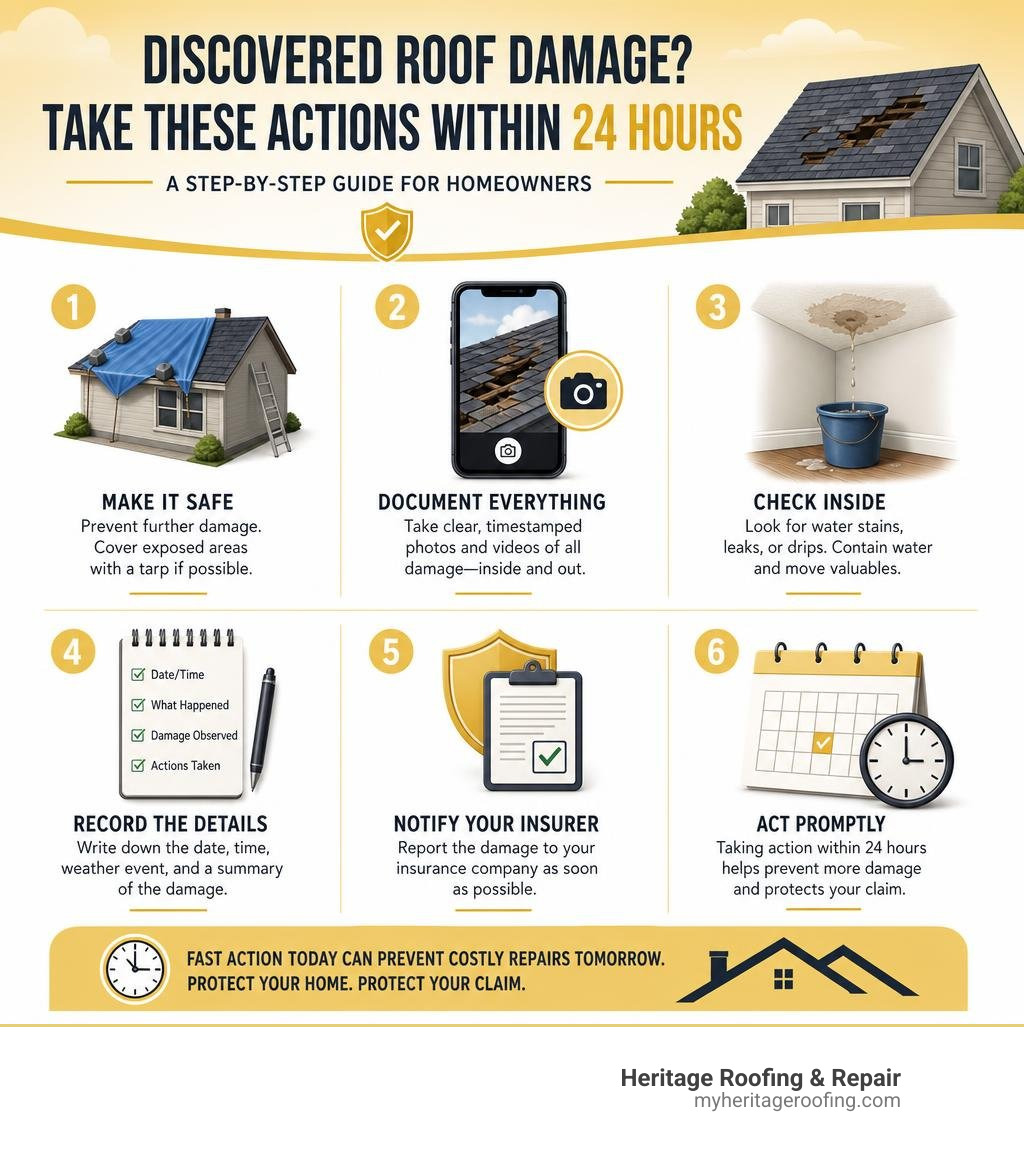
- Document everything: timestamped photos of all damage are essential before filing an insurance claim
- File your claim promptly: most policies require filing within 12 months of the storm event
If your roof has been damaged by a recent storm or you’ve noticed early warning signs, Heritage Roofing & Repair serves homeowners across Berryville and Northwest Arkansas with professional inspections, repairs, and insurance claim support.
This guide covers everything from identifying damage types to navigating insurance claims and choosing the right repair or replacement materials. Whether you’ve just been through a storm or are doing routine maintenance checks, the information here will help you make confident, informed decisions.
I’m Rex Wisdom, owner of Heritage Roofing & Repair — a family-owned business with over 50 years of collective experience helping homeowners throughout Northwest Arkansas address damaged roofs caused by everything from severe hailstorms to slow-building structural issues. If you have questions after reading, my team is ready to help.
Common Causes and Types of Damaged Roofs
A roof does not simply wear out in a vacuum. It is constantly bombarded by physical, biological, and environmental forces. Understanding what causes damaged roofs is the first step toward effective remediation. When severe weather strikes Northwest Arkansas, the physical forces unleashed on your shingles can be catastrophic.
To help you visualize how these different forces impact your home, let’s look at a quick breakdown of the primary threats:

Identifying Weather-Related Damage on Shingles
Weather damage can range from glaringly obvious structural destruction to subtle compromises in your shingle integrity.
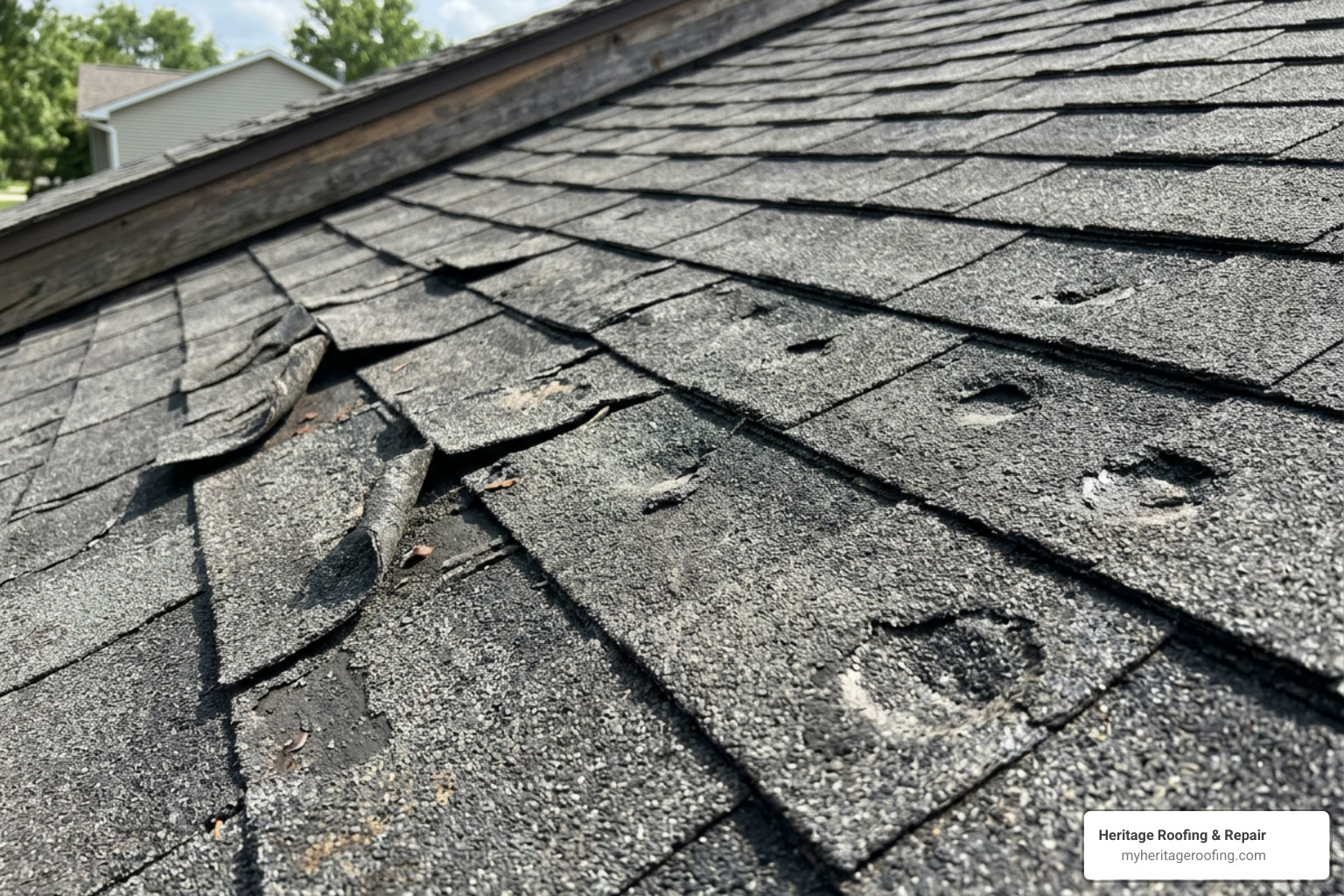
- Hail Impact Damage: Hailstones act like tiny, high-velocity hammers. Hail must generally be at least 1 inch to 1 1/4 inches in diameter to fracture heavy composite or wood shake shingles, though smaller hail can easily bruise lightweight or aging materials. When hail strikes an asphalt shingle, it creates a random, circular “bruise” in the shingle mat. This impact knocks away the protective mineral granules, exposing the dark asphalt layer underneath to the sun’s harsh UV rays. Over time, these exposed spots become brittle, crack, and turn into active leaks.
- Wind-Lift & Tear Damage: High winds do not just blow shingles off; they create aerodynamic uplift. Wind-lifted shingles occur when strong gusts break the adhesive sealant strip that bonds shingles together. Once this seal is broken, the shingle flutters and lifts. Even if the shingle settles back down and looks completely normal from the ground, the protective seal is gone. Water can now blow underneath during the next rainstorm. If you want to dive deeper into how wind forces affect your home’s structure, refer to our comprehensive A-Z Guide to Wind Damage on Roofs.
- Ice Dams & Snow Loads: During the winter months in places like Berryville and Harrison, snow can accumulate on your roof. If your attic is poorly insulated, heat escapes and melts the snow from underneath. This melted water runs down to the cold roof edge (overhang) and refreezes, forming an ice dam. Water then backs up behind this dam, seeps under the shingles, and rots the plywood roof decking.
Spotting Biological and Environmental Threats to Damaged Roofs
Not all damage is delivered in a single dramatic storm. Biological elements and surrounding vegetation can slowly degrade your roof over several years.
- Moss and Algae Growth: Blue-green algae spores settle on roofs when dust and organic material accumulate. While algae causes unsightly black streaks, it is mostly cosmetic. Moss, however, is a physical threat. Moss grows in the cool, shaded gaps between shingles, forming thick mats that hold onto rainwater like a sponge. This constant moisture rots the edge of the shingles and allows water to seep directly into the roof sheathing.
- Overhanging Tree Limbs: Tree branches that touch or hang close to your roof pose a double threat. During windy days, they scrape back and forth across the roof surface, acting like sandpaper and stripping away vital protective granules. Additionally, falling limbs during storms can crack shingles or puncture the roof deck entirely.
- Pest Infestations: Squirrels, raccoons, mice, and birds love warm attics. They will chew through soft wood, damage plastic vent covers, and tear up shingles along the roof edge to gain entry. Once inside, they destroy insulation, chew electrical wiring, and introduce moisture and rot.
To catch these biological and physical threats before they turn into major structural issues, read our detailed guide on Spotting Trouble: A Homeowner’s Guide to Roof Damage.
How to Inspect and Document Roof Damage Safely
After a severe weather event, your immediate goal should be assessing the state of your roof. However, safety must always take precedence over personal documentation efforts. We strongly advise against climbing onto a wet, steep, or storm-damaged roof. Falls from ladders and roofs are a leading cause of residential injuries.
Instead, perform a safe ground-level inspection. Walk around the perimeter of your property using binoculars or your smartphone’s optical zoom to check for:
- Missing, torn, or lifted shingles.
- Dented metal components (gutters, downspouts, valley flashing, and roof vents).
- Significant piles of shingle granules accumulated at the bottom of your downspouts.
- Fallen tree limbs or debris resting on the roof.
Modern professional roofers use advanced drone photography to safely capture high-resolution imagery of every square inch of your roof without ever stepping foot on a ladder. To understand our safe, high-tech inspection protocols, take a look at our resource, Don’t Get Caught Off Guard: A Complete Guide to Roof Inspections.
Essential Photos Required for Insurance Claims
If you plan to file an insurance claim, your photos are your best ally. Insurance adjusters require clear, objective visual proof that the damage was caused by a sudden, covered event rather than gradual wear and tear. Use these guidelines to build an airtight photographic record:
- Wide-Angle Overview Photos: Take wide shots of your entire home from all four corners of your property. This establishes the context and proves the overall impact of the storm.
- Close-Up Damage Details: Use optical zoom to capture close-ups of specific issues, such as cracked shingle mats, missing pieces, or hail bruises. Tip: Place a coin or a tape measure in the frame next to the damage to give the adjuster a clear sense of scale.
- Soft Metal Damage: Photograph dented gutters, mailboxes, metal siding, and roof vents. Adjusters look at these soft metals first because they easily record impact marks and corroborate hail claims.
- Interior Water Damage: Photograph any water stains, damp walls, or ceiling leaks inside your living space.
For visual examples of what real hail impacts look like to an adjuster, review Hail Damage to Roofs: Real Examples and Photos.
Checking for Hidden and Interior Signs of Damaged Roofs
Sometimes, the most dangerous damage is the kind you cannot see from your yard. After a storm, grab a flashlight and head up to your attic to check for these hidden warning signs:
- Active Leaks and Water Stains: Look for dark water rings or active dripping along the rafters and the underside of the roof deck.
- Damp or Compressed Insulation: Wet insulation loses its R-value and indicates that water is bypassing your shingles and underlayment.
- Visible Daylight: If you can see beams of daylight peeking through the roof boards in your attic, you have a direct pathway for water intrusion.
- Musty Odors and Mold Growth: Persistent dampness in the attic quickly breeds mold, which can compromise your indoor air quality and structural lumber.
To prevent these hidden issues from destroying your home’s interior, follow the steps outlined in The Ultimate Storm Damage Survival Guide for Your Roof.
Repair vs. Full Replacement: Making the Right Decision
One of the most common dilemmas homeowners face after a storm is deciding whether to patch up individual problem areas or invest in a full roof replacement.
To help simplify this decision-making process, we have compiled a quick-reference comparison table:
| Decision Factor | Localized Roof Repair | Full Roof Replacement |
|---|---|---|
| Roof Age | Relatively new (typically under 10–15 years old). | Approaching or exceeding 20–25 years. |
| Damage Extent | Isolated to a single slope or a small, confined area. | Widespread across multiple slopes or structural layers. |
| Active Leaks | Single, easily identifiable leak source. | Multiple active leaks or extensive water intrusion. |
| Shingle Availability | Matching shingles are readily available in the local market. | Shingles are discontinued, weathered, or impossible to match. |
| Structural Integrity | Roof deck, rafters, and decking are fully intact. | Soft spots, sagging, or rotted decking identified. |
| Previous Repairs | Few or no previous repairs on the roof surface. | History of multiple localized patches and recurring leaks. |
When Localized Repairs Are Sufficient
If your roof is relatively young and the damage is highly localized, a professional repair is often the most sensible and cost-effective route. For example, if a strong gust of wind peels back a few shingles on a single slope, we can easily replace those specific pieces without disturbing the rest of the system.
However, this approach relies heavily on finding matching shingles. If your existing shingles are weathered or discontinued, localized patches will result in a mismatched, patchy appearance that can hurt your home’s curb appeal. For targeted solutions to localized wind issues, see our guide on Wind Damage Roof solutions.
When Full Roof Replacement is Necessary
While localized repairs are great for minor issues, severe weather events often cause widespread, structural damage that repairs simply cannot fix.
Definitive Industry Fact: In major storm corridors, 99% of severe storm damage inquiries involving structural compromise require a full replacement rather than localized patching.
This is because wind and hail damage is rarely confined to a single spot. If a hailstorm batters your roof, it weakens the entire shingle system. Patching a few visible spots leaves hundreds of other bruised, compromised shingles vulnerable to premature failure.
Furthermore, the financial stakes of a replacement are significant. The national average sale value for a full roof replacement is $25,307, with severe storm restorations involving structural timber repairs reaching as high as $57,146.
If you are facing widespread storm damage, attempting to patch your roof is a short-term band-aid that will cost you more in recurring repairs down the road. For a comprehensive look at your options, consult our Hail Damage Roof Complete Guide.
Navigating the Insurance Claims Process for Storm Damage
Filing an insurance claim for a damaged roof can feel incredibly overwhelming. Insurance policies are packed with complex legal jargon, and navigating the process while dealing with active leaks is stressful.
The most important thing to keep in mind is that homeowners insurance is designed to cover sudden, accidental damage caused by storm events (such as hail, wind, and fallen trees). It does not cover damage resulting from neglect, lack of maintenance, or normal wear and tear. To understand how insurance companies draw the line between covered storm damage and uncovered leaks, read Roof Leaks and Insurance: What’s Covered and What’s Not.
Understanding Policy Timelines and Requirements
Timing is everything when it comes to insurance claims. Most standard homeowners policies require you to file a claim within 12 months of the storm event. However, some regional policies have much stricter windows — requiring notice within 60 to 90 days.
Delaying your claim makes it incredibly difficult to prove that the damage was caused by a specific storm rather than gradual, long-term degradation. When filing, you will also need to understand how your policy pays out:
- Actual Cash Value (ACV): Pays out the depreciated value of your roof based on its age. If your 15-year-old roof is damaged, the payout will be significantly lower than the cost of a new roof.
- Replacement Cost Value (RCV): Pays the actual cost to replace your roof with materials of like kind and quality in today’s market, minus your deductible.
For a step-by-step walkthrough of how to prepare for your claim, consult From Dents to Done: The Ultimate Hail Damage Repair Handbook.
Handling Claim Denials and Adjuster Disputes
It is not uncommon for an insurance adjuster to deny a claim or offer an estimate that is far too low to cover the actual cost of repairs. If this happens to you, do not panic. You have rights as a policyholder:
- Request a Second Inspection: If you believe the adjuster missed significant damage, you can request a re-inspection with a different adjuster.
- Involve Your Roofer: Have a trusted, licensed roofing contractor present during the adjuster meeting. We speak the same language as insurance adjusters and can point out hidden damage they might otherwise overlook.
- Use Standardized Estimating Software: Reputable local roofers use Xactimate — the same line-item estimating software used by major insurance carriers — to ensure our pricing and scope of work align perfectly with industry standards.
Emergency Temporary Repairs vs. Permanent Restoration
When a severe storm tears through Northwest Arkansas, there is often a gap between the moment your roof is damaged and the day permanent repairs can begin. During this period, temporary emergency mitigation is critical to protect your home.
Executing Safe Emergency Mitigation
Definitive Industry Fact: In major storm corridors, 16.6% of affected homeowners require emergency response within 24 hours to prevent interior water damage and mold growth.
If your roof is leaking actively during or immediately after a storm, your first priority is protecting your family and belongings inside:
- Move electronics, furniture, and valuables away from the leak.
- Place buckets or plastic bins under the drips to catch incoming water.
- Do not climb onto a wet, slick, or wind-damaged roof to apply a tarp yourself.
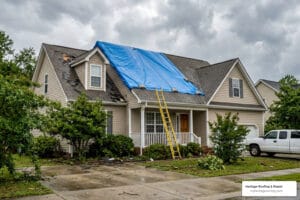
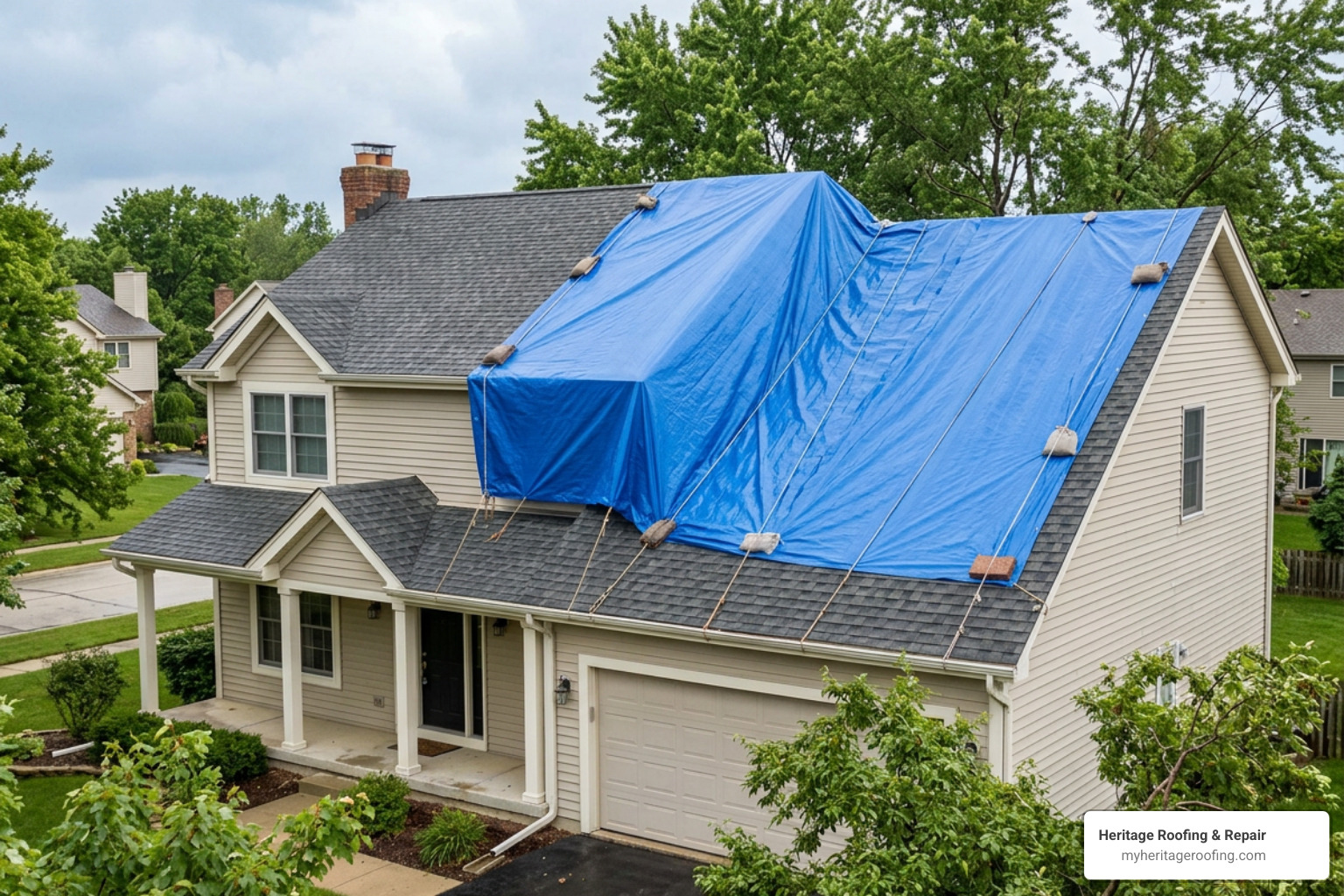
Professional roofers can safely install heavy-duty, industrial-grade plastic tarps secured with wooden batten strips. This temporary seal stops active water intrusion and buys you precious time while your insurance claim is processed and permanent materials are ordered.
Upgrading Materials During Permanent Restoration
When it is time for permanent restoration, you have a golden opportunity to upgrade your roof’s defense system.
Definitive Industry Fact: During claim-funded roof replacements, 67.5% of homeowners choose architectural asphalt shingles due to their balance of cost and durability, while 17.9% upgrade to standing-seam or ribbed metal roofing systems for maximum impact resistance.
Upgrading to Class 4 impact-resistant shingles or metal roofing is one of the smartest investments you can make. Not only do these materials withstand severe hail and high winds far better than standard 3-tab shingles, but they can also qualify you for annual insurance premium discounts of 5% to 20%.
To explore your material upgrade options and find professional support after a major storm, read When the Sky Falls: Finding Help After Storm Damage.
Preventive Maintenance to Reduce Future Roof Damage
While you cannot control the weather, you can control how prepared your roof is to handle it. Proactive, preventive maintenance is the absolute best way to extend your roof’s lifespan and minimize the risk of sudden storm damage.
Here is a checklist of high-impact maintenance tasks every homeowner should perform:
- Keep Tree Branches Trimmed: Maintain at least a 10-foot clearance between your roofline and any overhanging tree limbs. This prevents branch scraping, reduces shade (which discourages moss growth), and eliminates the risk of falling limbs during high winds.
- Clean Your Gutters Regularly: Clean your gutters at least twice a year (in the spring and fall). Clogged gutters cause rainwater to back up under your shingles, leading to rotted roof decking, fascia boards, and rafters.
- Seal Potential Pest Entry Points: Inspect your roof’s edge, soffits, and fascia boards for any small gaps or chew marks. Seal entry points with heavy-duty wire mesh or professional roofing sealant to keep destructive pests out of your attic.
- Optimize Attic Ventilation: Ensure your attic has a balanced system of intake vents (soffits) and exhaust vents (ridge vents). Proper airflow keeps your roof deck cool, which prevents winter ice dams and protects shingles from premature heat damage in the summer.
- Schedule Annual Professional Inspections: A professional eye can spot tiny, hidden issues — like a cracked pipe boot flashing or a loosening sealant strip — and fix them before they turn into major, expensive leaks.
Frequently Asked Questions About Damaged Roofs
How long do I have to file an insurance claim after a storm?
Most standard homeowners insurance policies require you to file a claim within 12 months of the storm event. However, some insurance carriers require notice within 60 to 90 days. We always recommend filing as soon as possible after discovering damage to prevent your claim from being denied due to delay.
Will filing a storm damage claim raise my insurance rates?
No, insurance companies generally cannot raise your individual premium rates for filing a claim caused by an Act of Nature (such as wind, hail, or lightning). However, your rates may still rise collectively if your entire zip code experiences a widespread natural disaster and rates are adjusted regionally.
Can I perform DIY repairs on a storm-damaged roof?
We strongly discourage DIY repairs on storm-damaged roofs. Climbing onto a damaged roof carries severe fall and injury risks. Furthermore, improper DIY patches can easily void your shingle manufacturer’s warranty and may lead to insurance adjusters denying future coverage because the repairs were not performed to professional building codes.
Conclusion
Managing a damaged roof is a race against time. Whether you are dealing with the sudden aftermath of a severe Northwest Arkansas hailstorm or addressing slow-building biological threats like moss and pest intrusion, taking immediate, informed action is the key to protecting your home and your wallet.
Always prioritize safety by inspecting your roof from the ground, documenting every issue with high-quality photos, and partnering with a trusted, local professional who can navigate the insurance claims process alongside you.
At Heritage Roofing & Repair, we have spent over 50 years providing dependable, affordable, and high-quality craftsmanship to our neighbors in Berryville, AR, Harrison, AR, and across the broader Northwest Arkansas region. If you suspect your roof has sustained storm damage or is simply showing signs of wear, we are here to help.
If you live in the Harrison area, you can visit our dedicated Harrison, AR Roofers page to connect with our local team. If you have recently experienced severe weather and need an honest, professional assessment, schedule your inspection today via our Storm Damage Roof Repair page.
Local Contact Information
Heritage Roofing & Repair
3458 Arkansas State Hwy 221, Berryville, AR 72616
(870) 654-1164