When Every Hour Counts: What to Do After Storm Damage Hits Your Roof
Storm damage roofing contractors are specialists who inspect, repair, and replace roofs damaged by severe weather — and knowing how to find a trustworthy one fast can save you thousands of dollars and prevent serious secondary damage to your home.
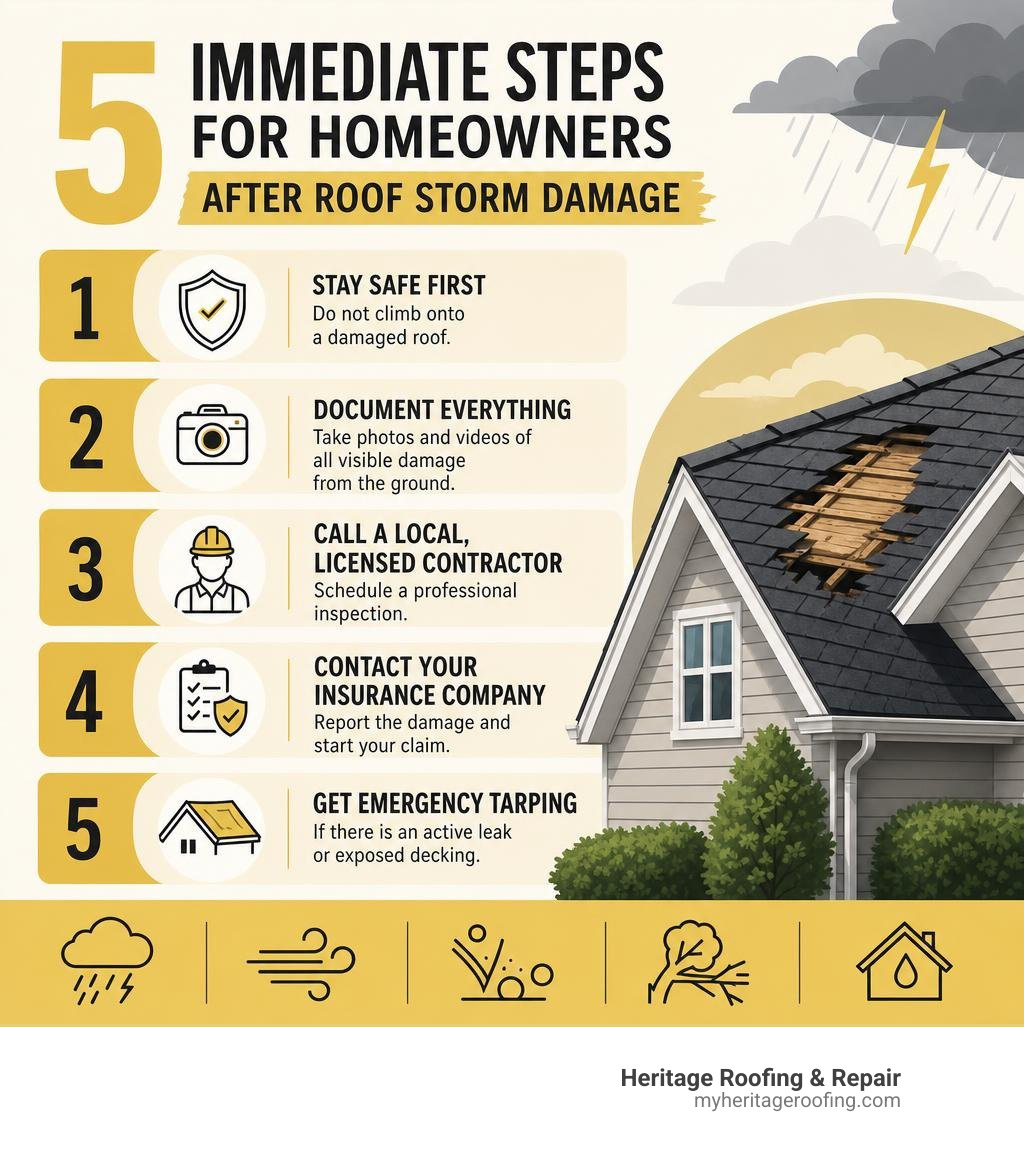
Here’s what to do right after a storm damages your roof:
- Stay safe first — do not climb onto a damaged roof
- Document everything — take photos and videos of all visible damage from the ground
- Call a local, licensed roofing contractor for a professional inspection (not a door-to-door stranger)
- Contact your insurance company to report the damage and start your claim
- Get emergency tarping if there is an active leak or exposed decking
A storm can strike without warning. One moment your home is protected — the next, you’re staring at missing shingles, a water stain spreading across your ceiling, or worse. The decisions you make in the hours and days after a storm can be the difference between a smooth insurance claim and a costly nightmare.
Severe weather caused $152.6 billion in insured losses across the U.S. in 2023 alone, with roof damage accounting for the largest share. Yet many homeowners don’t know where to turn — or end up trusting the wrong contractor at the worst possible moment.
That’s exactly what this guide is designed to fix. Whether you’re dealing with hail dents, wind-torn shingles, or a tree through your attic, the right trusted local roofing company makes all the difference.
I’m Rex Wisdom, owner of Heritage Roofing & Repair — a family-run business that has served Berryville and Northwest Arkansas for over 50 years, helping homeowners navigate storm damage roofing contractors, insurance claims, and full roof restorations. In this guide, I’ll walk you through everything you need to know to protect your home, your wallet, and your peace of mind.
If you need to reach us directly, our contact details are:
Heritage Roofing & Repair
3458 Arkansas State Hwy 221, Berryville, AR 72616
Phone: (870) 654-1164
Basic storm damage roofing contractors glossary:
Identifying the Impact: Common Types of Roof Storm Damage
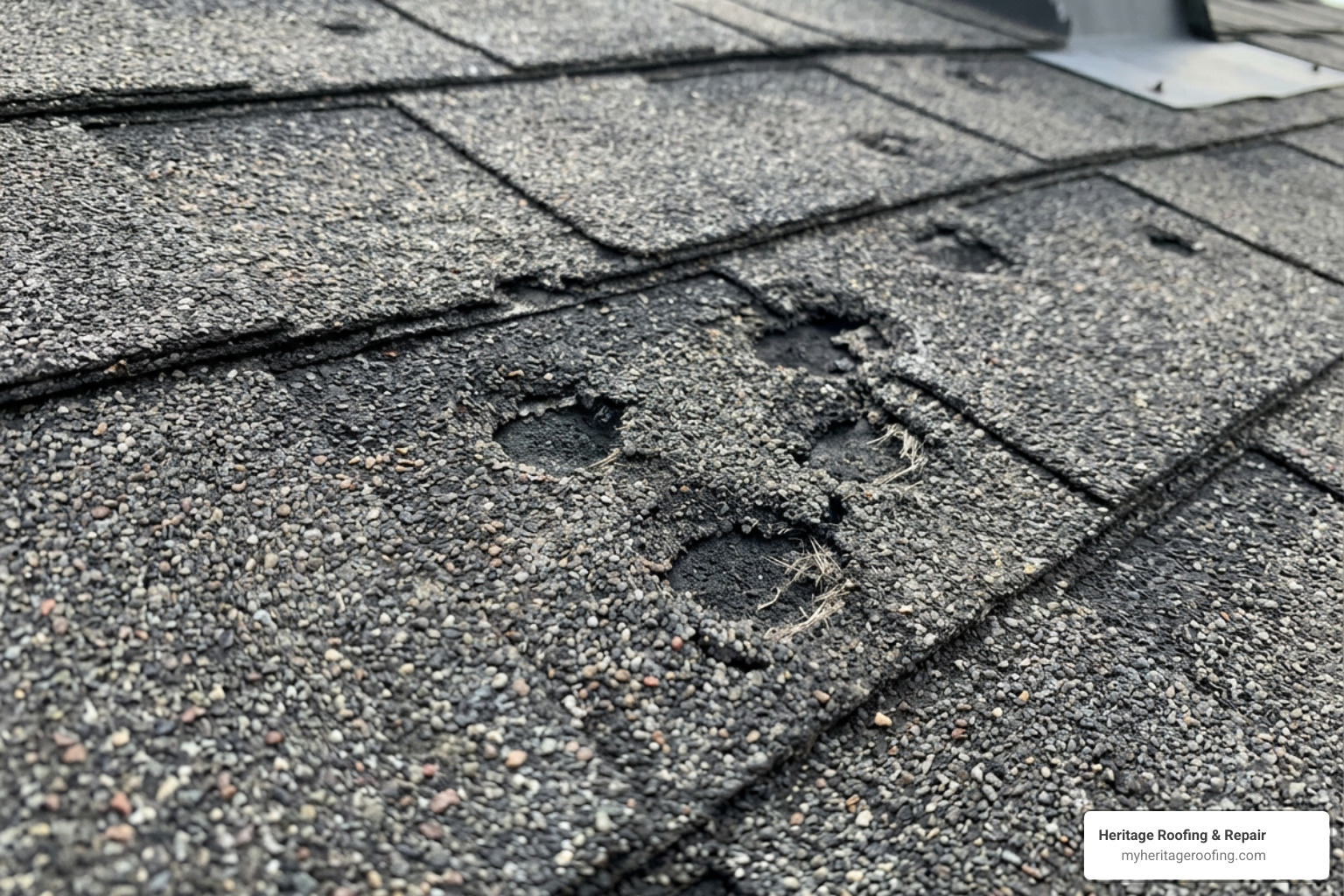
When a severe weather front sweeps through Northwest Arkansas, it rarely delivers just one type of hazard. Your roof must withstand a brutal combination of elements, each leaving a distinct footprint of destruction. Understanding these different types of damage is the first step in planning your recovery and securing a reliable professional storm damage roof repair.
Hail Damage: The Silent Destroyer
Hail damage is the leading cause of homeowners insurance claims in the U.S., accounting for 40% of all claims between 2018 and 2022. During peak storm seasons in Arkansas, hailstones ranging from pea-sized to baseball-sized can pummel your roof at terminal velocity.
When hail strikes an asphalt shingle, it creates a circular “bruise.” This impact knocks loose the protective ceramic granules, exposing the underlying fiberglass mat to solar UV radiation. Over time, the sun degrades this exposed mat, causing it to become brittle and leak. Because these bruises are often invisible from the ground, hail damage is notoriously easy to miss until water starts dripping through your ceiling.
Wind Uplift: Tearing Your Defense Apart
High winds do not just blow straight across your roof; they create aerodynamic lift. As wind rushes over your roofline, it acts like an airplane wing, creating a vacuum that pulls upward on your shingles.
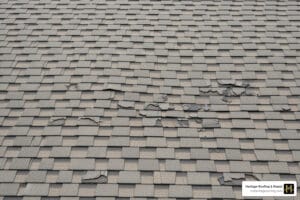
- Creased Shingles: Strong gusts bend shingles backward, leaving a dark, horizontal crease where the fiberglass has fractured.
- Torn or Missing Shingles: If the wind is strong enough, it will tear shingles completely off the roof deck, leaving exposed wood vulnerable to immediate rain intrusion.
- Unsealed Shingle Strips: Even if shingles look intact, wind can break the seal of the self-sealing adhesive strip, allowing subsequent rains to blow directly underneath.
Ice Dams and Heavy Winter Weather
While winter storms are less frequent in Arkansas than spring tornadoes, they can be incredibly destructive. Ice dams form when heat escaping from your attic melts snow on the upper sections of your roof. The runoff flows down to the cold eaves, where it refreezes into a thick barrier of ice. Subsequent meltwater backs up behind this ice dam, finding its way under shingles and into your exterior walls.
Fallen Trees and Flying Debris
High-velocity winds can easily snap limbs or topple entire oak and pine trees onto your home. This causes immediate, severe structural damage that requires emergency stabilization. Beyond the obvious impact, flying debris like windblown branches, metal siding, and loose gutters can scrape across your roof, gouging shingles and destroying flashing.
If you find yourself in the aftermath of a major storm, checking local emergency updates via Benton County emergency management resources can help you coordinate safe recovery efforts while we dispatch emergency tarping crews to secure your property.
Spotting the Unseen: How to Identify Hidden Roof Damage
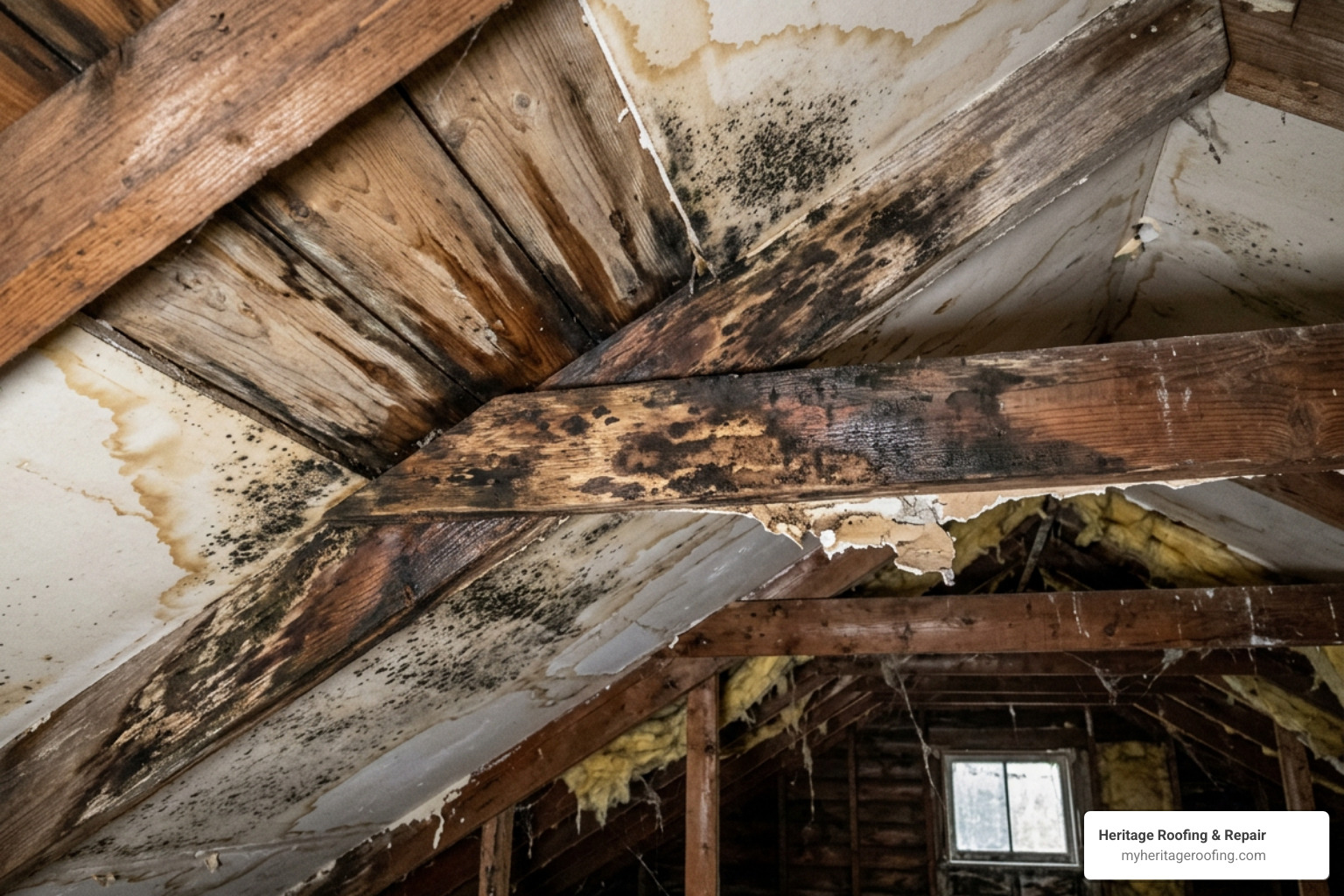
Not all roof damage makes itself obvious with a giant hole or a pile of shingles in your yard. In fact, some of the most expensive roof repairs stem from slow, hidden leaks that went unnoticed for months. To protect your home, you need to know how to spot the subtle warning signs using a comprehensive guide to storm damaged roofing assessment.
Granule Loss in Your Gutters
Asphalt shingles are coated with mineral granules to protect them from UV rays. While some granule loss is normal as a roof ages, a sudden storm will knock millions of these granules loose. If you clean out your gutters after a storm and find what looks like piles of dark sand, your shingles have likely lost their protective barrier and are rapidly aging.
Micro-Fractures and Sub-Surface Bruising
Hailstones can crack the fiberglass backing of a shingle without breaking the surface asphalt. These micro-fractures act like tiny pathways for water, slowly drawing moisture through the shingle via capillary action. Over several freeze-thaw cycles, these cracks expand, eventually rotting the wooden roof deck beneath.
Attic Moisture and Mold
Your attic is the window into your roof’s health. After a major storm, grab a flashlight and head upstairs. Look for:
- Dark Water Stains: Check the underside of the roof decking, especially around chimneys, vents, and valleys.
- Musty Odors: A sudden damp smell in your attic indicates trapped moisture and active mold growth.
- Clumped or Wet Insulation: Wet insulation loses its R-value and indicates water is bypassing your shingles and underlayment.
Advanced Inspection Technologies
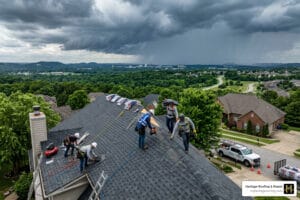
When we perform a storm damage inspection, we do not just rely on the naked eye. Professional storm damage roofing contractors utilize high-tech tools to find what others miss:
- Drone Mapping: High-definition aerial drones capture 4K imagery of steep, hard-to-reach roof sections, documenting damage safely and precisely.
- Infrared Thermal Imaging: Thermal cameras detect temperature differences on your roof and ceiling. Because wet materials hold heat differently than dry ones, infrared scans can pinpoint hidden moisture traps behind drywall and under shingles.
The First 30 Days: Documenting Damage and Navigating Insurance Claims
When it comes to filing a storm damage insurance claim, time is your enemy. Homeowners who file storm damage claims within 30 days of an event are 65% more likely to receive full insurance coverage. Conversely, waiting months to file makes it incredibly difficult to prove that the damage was caused by a specific weather event rather than general wear and tear.
Over 1.5 million homeowners filed hail damage claims in 2023. To ensure your claim is approved and not lost in the shuffle, follow this step-by-step storm damage roof replacement checklist:
- Record the Exact Date and Time: Insurance companies require a specific storm date to cross-reference with local meteorological data.
- Take Comprehensive Photos: Take photos of your entire property from multiple angles, including dented gutters, damaged siding, window screens, and any shingles on the ground.
- Get a Professional Estimate: Never rely solely on the insurance adjuster’s initial assessment. Always get an independent, detailed inspection report from a trusted local contractor.
- Submit a Supplement if Needed: In 60% to 70% of storm restoration projects, contractors must submit “supplements” — requests for additional funds to cover hidden damage (like rotted decking) or local building codes that the insurance adjuster missed.
To help you understand your options, here is a quick breakdown of how professional contractors evaluate whether your roof needs a simple repair or a complete replacement:
| Damage Criteria | Repair Recommended | Full Replacement Recommended |
|---|---|---|
| Wind Damage | Less than 25% of shingles affected; localized damage. | More than 25% of the roof surface has torn, missing, or creased shingles. |
| Hail Impact | Sparse, cosmetic dents on a relatively young roof. | Widespread bruising (8+ hits per 100 sq. ft.) across multiple slopes. |
| Roof Age | Roof is under 10 years old with pliable shingles. | Roof is over 15-20 years old; shingles are too brittle to repair. |
| Deck Integrity | Solid wooden decking with zero signs of rot or sagging. | Soft spots, water-logged decking, or widespread mold growth. |
Choosing Wisely: How to Hire Reputable Storm Damage Roofing Contractors
In the wake of a severe storm, our neighborhoods are often flooded with out-of-state contractors commonly known as “storm chasers.” These companies travel from state to state following weather maps, signing up as many homeowners as possible, sub-contracting the labor to the cheapest crews, and then disappearing before the warranties can even be printed.
When you are hiring premier storm damage repair experts, you must verify their credentials to protect your investment. Legitimate local contractors should easily provide:
- General Liability Insurance: Protects your home and property in case of accidental damage during the project.
- Workers’ Compensation: Ensures that if a roofer is injured on your property, you are not held legally or financially liable.
- GAF Master Elite Certification: A prestigious credential held by only the top 2% of roofing contractors nationwide, allowing them to offer extended lifetime warranties.
- HAAG Certification: Engineering-level training that certifies an inspector to scientifically identify wind and hail damage, which carries immense weight with insurance adjusters.
If you are located in Harrison, verifying a contractor’s local standing through the City of Harrison AR local resources or checking for local business registrations can save you from predatory out-of-state operations.
Red Flags to Avoid When Vetting Storm Damage Roofing Contractors
Be on high alert for these common post-storm scams:
- Deductible Waivers: If a contractor offers to “waive,” “absorb,” or “cover” your insurance deductible, run. In many states, including Arkansas, this practice is illegal and constitutes insurance fraud.
- High-Pressure Sales: Avoid door-to-door salesmen who demand an immediate signature on a “contingency agreement” before providing a detailed estimate.
- Out-of-State Plates: Check the vehicles parked in your driveway. If they have out-of-state license plates or temporary magnetic signs, they are likely storm chasers. Read our guide on how to avoid getting ripped off on storm damaged roofs for more protection tips.
Why Local Expertise Matters
A reputable contractor will always have a physical local office, a local phone number, and deep roots in the community. When you work with a local specialist for local storm damage repair solutions, you can rest easy knowing that if you ever have an issue with your roof in the future, we will still be here to honor our workmanship warranties.
Frequently Asked Questions About Storm Damage Roof Repair
Will my insurance premium increase if I file a storm damage claim?
Generally, insurance companies cannot raise your individual rates for filing a claim caused by natural disasters or “Acts of God.” However, premiums may rise across an entire zip code or region after a major storm event, regardless of whether you personally filed a claim.
What financing options are available for storm damage restoration?
While insurance often covers the bulk of storm damage restoration, you are still legally responsible for paying your deductible. To make this manageable, reputable contractors offer low-interest financing options, flexible payment plans, and zero-down promotional terms. This ensures you can secure your home immediately without waiting for insurance checks to clear.
What should I do if my insurance claim is denied?
If your claim is denied or underpaid, you have the right to dispute the decision. You can request a re-inspection from your insurance company and have your trusted local roofing contractor present to walk the roof with the adjuster, ensuring all documented damage is properly reviewed.
Conclusion
When severe weather strikes, taking prompt action is the single best way to protect your home and secure your peace of mind. Delaying repairs only invites mold, structural rot, and expensive interior damage.
At Heritage Roofing & Repair, we have spent over 50 years providing dependable, affordable, and quality craftsmanship to our neighbors in Northwest Arkansas. We handle the entire process — from emergency tarping and drone-assisted inspections to navigating complex insurance claims — so you don’t have to face the storm alone.
For immediate assistance or to schedule your free, comprehensive storm damage inspection, contact us today.
Heritage Roofing & Repair
3458 Arkansas State Hwy 221, Berryville, AR 72616
Explore our Fayetteville AR roofing services for local support.