Wind Damage on Roofs Is More Common — and More Costly — Than Most Homeowners Realize
Wind damage on roofs is one of the leading causes of homeowners insurance claims in the United States, yet most homeowners don’t spot it until water is already dripping through the ceiling. Here’s what you need to know at a glance:
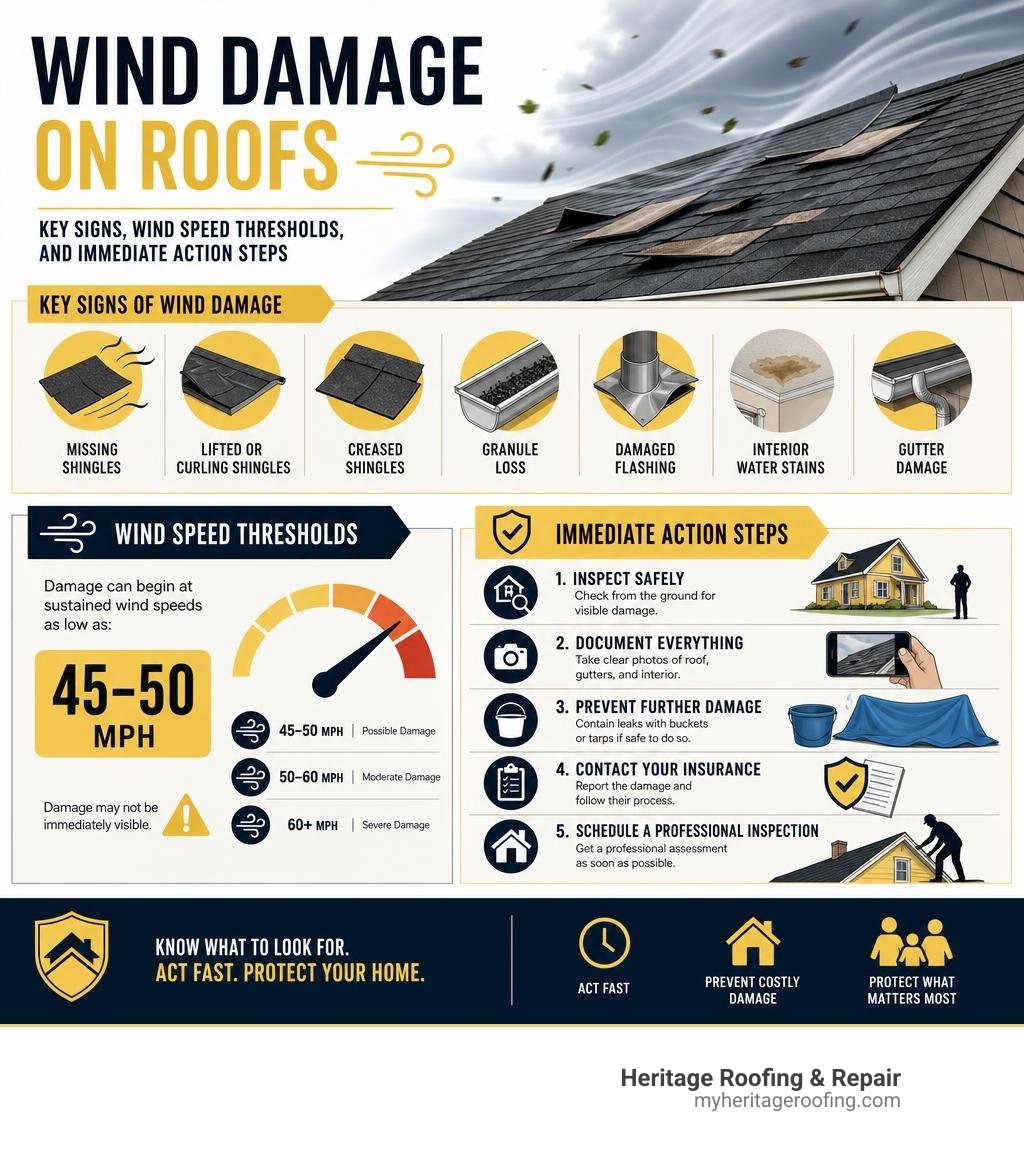
Quick answers — what wind damage on roofs looks like:
- Missing shingles — blown off entirely, often found in the yard or gutters
- Lifted or curling shingles — edges pulling away from the roof surface
- Creased shingles — fold lines from repeated flapping in the wind
- Granule loss — coarse, sand-like buildup collecting in gutters
- Damaged flashing — loose or bent metal around chimneys, vents, and valleys
- Interior water stains — ceiling or attic moisture appearing days after a storm
- Gutter damage — bent, sagging, or detached sections
Damage can begin at sustained wind speeds as low as 45–50 mph — and it doesn’t always show up right away. Broken adhesive seals, fractured shingle mats, and compromised flashing can quietly allow water intrusion for months before you notice a leak. That’s what makes wind damage so dangerous: the roof can look fine from the driveway while serious structural harm is already underway.
In 2022, wind and hail together accounted for 40.7% of all homeowners insurance claims, with the average claim costing $13,511. For homeowners in Berryville and throughout Northwest Arkansas, where severe thunderstorms and downbursts are a real seasonal threat, knowing what to look for — and acting fast — can be the difference between a simple repair and a full roof replacement. Our local roofing experts at Heritage Roofing & Repair are here to help you catch problems early.
I’m Rex Wisdom, owner of Heritage Roofing & Repair, a family-owned business that has been protecting homes in Northwest Arkansas from wind damage on roofs for over 50 years. In that time, I’ve inspected hundreds of storm-damaged roofs — and I’ve learned that the homeowners who fare best are the ones who know what to look for and move quickly once a storm passes.
Understanding Wind Damage on Roofs: The Physics of Uplift
To protect your home, you must first understand how wind actually interacts with your roof structure. Wind does not act like a giant broom sweeping shingles off your roof; instead, it behaves much like the air moving over an airplane wing.
When high-velocity winds hit the side of your home, they are forced upward and over the roofline. This transition creates a localized drop in air pressure directly above the roof surface. Because the air pressure inside your attic remains higher, it pushes upward against the roof decking and shingles. This phenomenon is known as uplift force or negative pressure.

Wind damage on roofs rarely occurs uniformly across the entire surface. Instead, the highest wind pressures and turbulence concentrate along the perimeter of your roof system. This includes:
- Eaves and Rake Edges: The perimeter edges where wind first meets the roof line.
- Corners: High-turbulence zones where wind wraps around the building structure.
- Ridges and Hips: The highest points of the roof where air must accelerate to pass over.
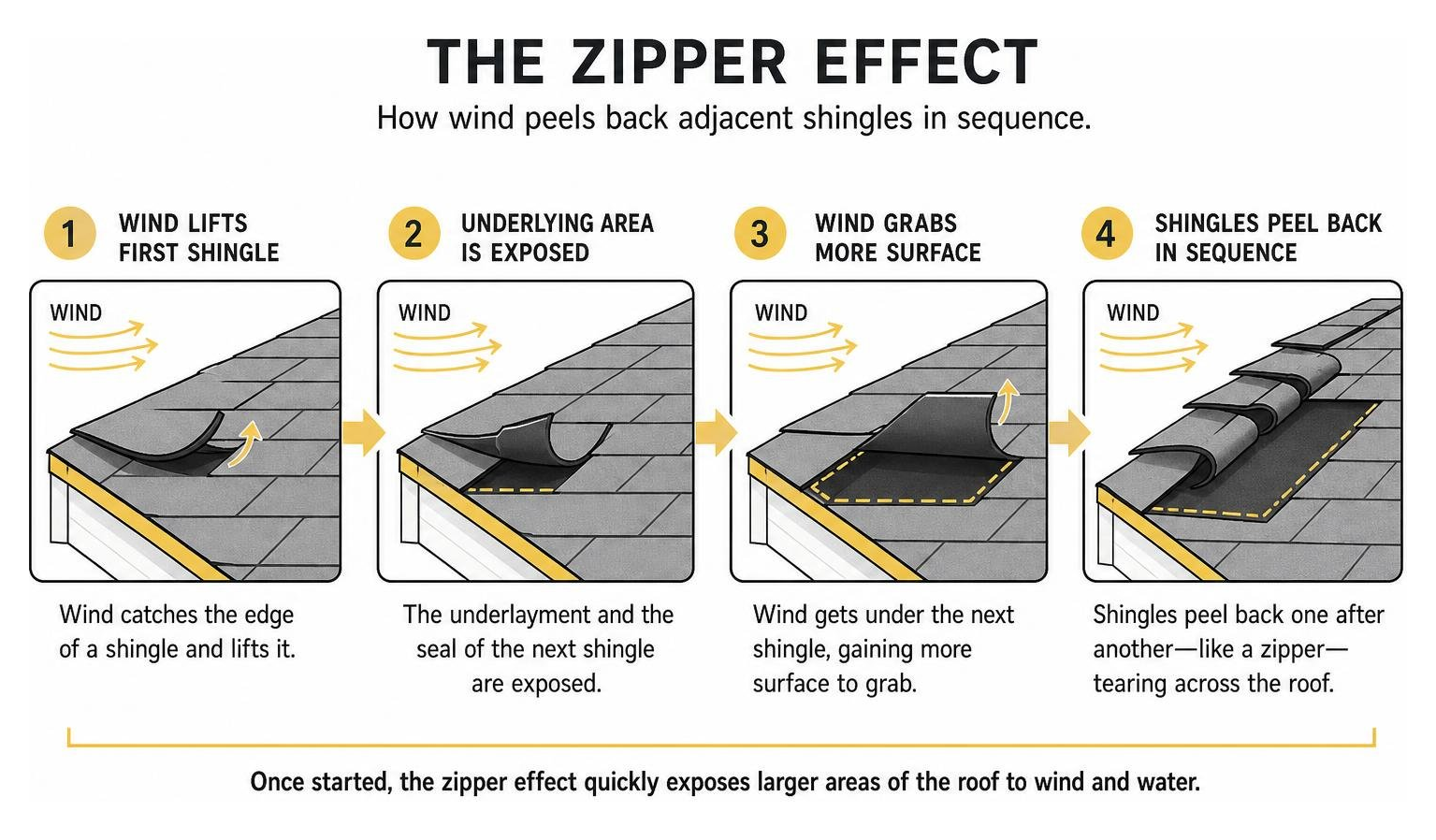
Once the wind manages to lift a single shingle edge, it exposes the underside of the adjacent shingles. This initiates a progressive peeling effect, often referred to in the roofing industry as the “zipper effect.” As wind gets underneath the exposed underlayment, it gains more surface area to grab, tearing away entire rows of shingles in sequence.
For a closer look at regional weather patterns that cause this level of uplift in our area, you can track recent activity using the Hail Map for Berryville, AR.
Key Signs of Wind Damage on Roofs
Identifying wind damage requires knowing both the obvious and the subtle indicators. While some signs can be spotted easily from your driveway, others require a closer, professional look.
Missing, Lifted, or Creased Shingles
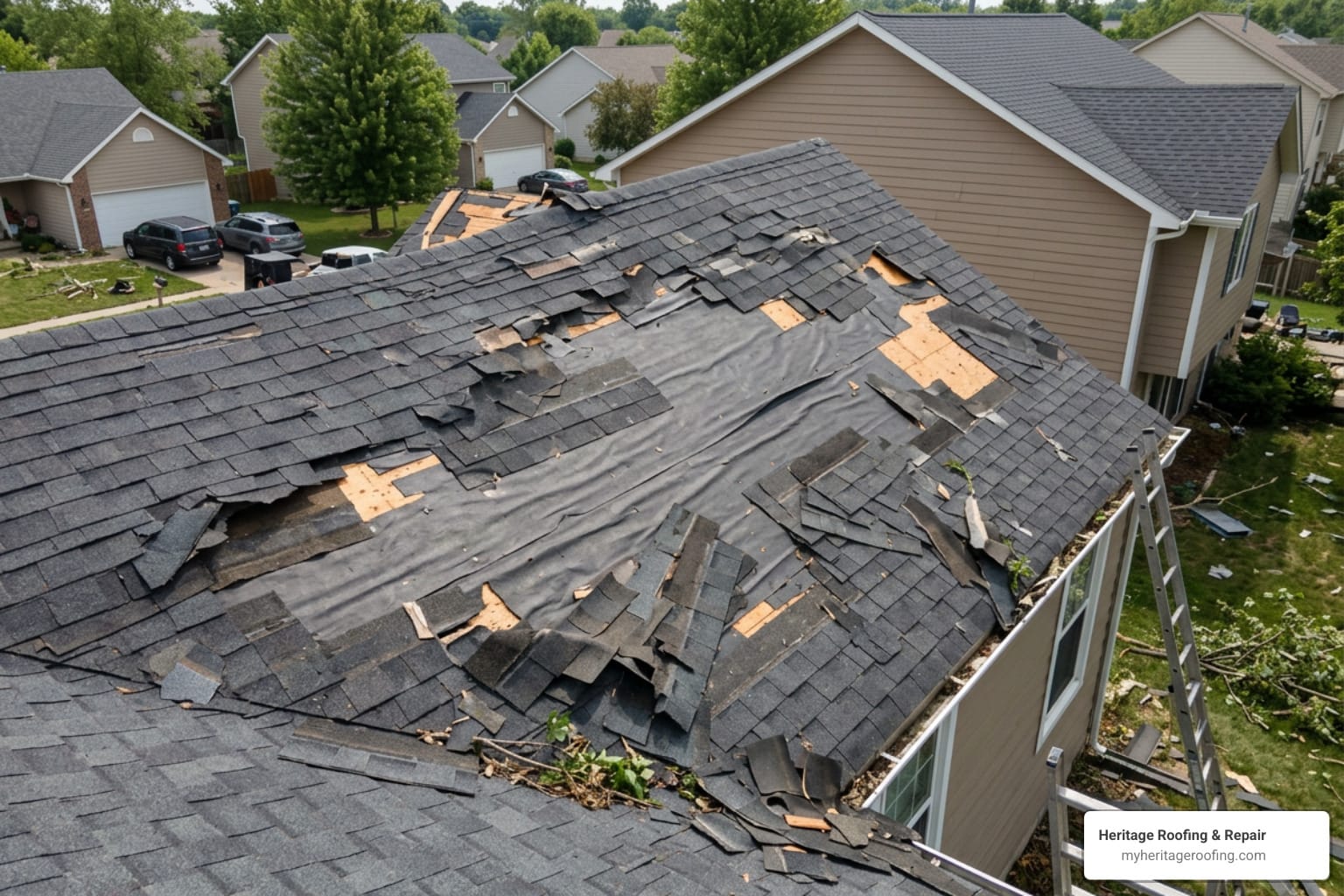
The most straightforward sign of wind damage is missing shingles. When wind speeds exceed the rating of your shingles or the strength of their adhesive seals, the shingles detach completely and end up scattered across your yard.
However, creased shingles represent a far more insidious problem. When wind lifts a shingle without tearing it completely off, the shingle will flap violently up and down. This repetitive motion bends the shingle, breaking the internal fiberglass mat and leaving a dark, horizontal crease line across the top of the tab.
Even if the shingle settles back down and looks normal from the ground, its structural integrity is gone. The fractured fiberglass can no longer shed water effectively, and the next rainstorm will drive moisture straight through the crease.
Granule Loss and Gutter Accumulation
Asphalt shingles are coated with mineral granules that serve as a shield against heat and ultraviolet (UV) radiation. High winds, especially when accompanied by wind-driven rain or debris, strip these granules away.
When shingles flex and flap in the wind, the physical stress causes the granules to slough off. This debris washes down your roof and collects in your gutters, resembling coarse, dark sand. If you notice a sudden buildup of granules in your downspouts after a storm, your shingles have suffered significant wear and are now highly vulnerable to accelerated UV degradation and cracking.
Damaged Flashing, Vents, and Chimneys
Your roof’s flashing — the thin metal strips installed around chimneys, dormers, valleys, and vents — is designed to seal transition points. Because flashing is rigid and located at high-pressure intersections, wind can easily get underneath loose edges. Bent, lifted, or missing flashing opens a direct pathway for water to enter your home’s interior walls and attic space.
Wind Speed Thresholds and Damage Severity
Not all winds are created equal, and different velocities cause distinct types of roof damage. The age and installation quality of your roof play massive roles in how well it tolerates these forces.
Low to Moderate Winds (45–55 mph)
Sustained winds or gusts between 45 and 55 mph are generally considered non-severe by meteorologists, but they are strong enough to cause slight damage to weak residential roofing systems. If your roof is older, has suffered from poor installation, or has existing seal failures, these moderate speeds can easily lift loose shingles and expose underlying decking.
Severe Winds (58–74 mph)
Once wind speeds reach the 58 to 74 mph range, they are officially classified as severe by the National Oceanic and Atmospheric Administration (NOAA). Winds of this magnitude can:
- Rip healthy, properly installed shingles off the roof deck.
- Damage soffits and fascia boards.
- Lift ridge caps and peeling back valley linings.
- Drop tree limbs and flying debris directly onto your roof.
Hurricane-Force Winds (75+ mph)
Winds exceeding 75 mph cause widespread, severe structural damage. At this level, entire sections of decking can be torn away, and even metal roofing systems can experience failure if their fasteners are compromised.
Hidden Damage and Distinguishing Wear from Storm Loss
One of the biggest mistakes a homeowner can make is assuming their roof is fine because there are no shingles lying in the yard. Wind can cause severe, invisible damage that only a professional roof inspection can uncover.
Uncovering Hidden Wind Damage on Roofs
When wind lifts a shingle, it often breaks the manufacturer’s self-sealing adhesive strip without tearing the shingle itself. Once this seal is broken, the shingle will never reseal on its own. It remains loose, acting like an unlatched trapdoor. During the next rainstorm, wind-driven water will blow upward underneath the loose shingle, bypassing your roof’s natural shedding system.
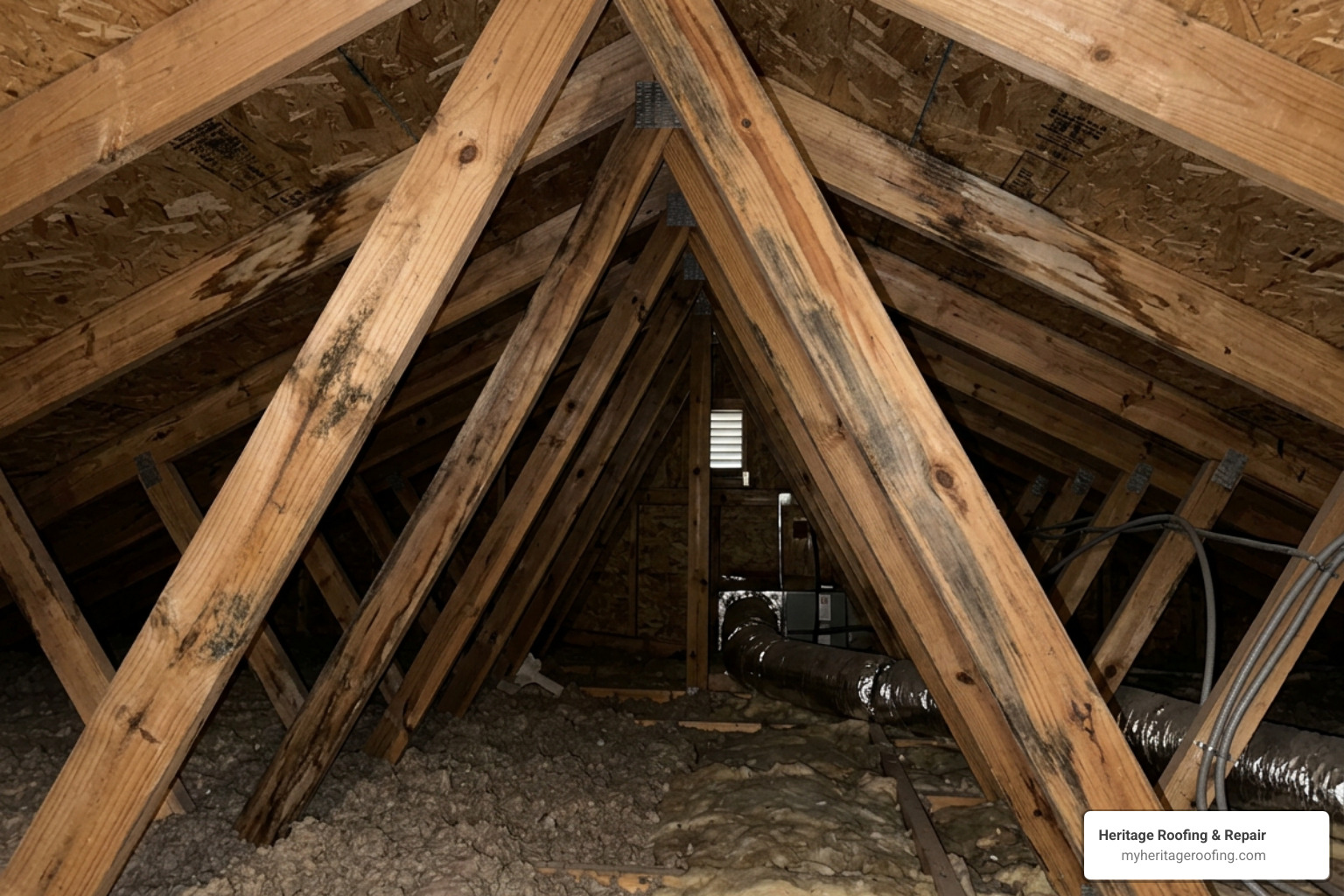
To detect this hidden damage before it causes structural rot, we recommend checking your attic for these warning signs:
- Daylight: Look for pinpricks of light shining through the roof deck boards.
- Wet Insulation: Feel around for damp or packed-down fiberglass batting.
- Water Trails: Use a flashlight to trace dark water stains along rafters and roof trusses.
Distinguishing Wear and Tear from Wind Damage on Roofs
Insurance adjusters are trained to look for specific physical indicators to determine if your roof damage was caused by a sudden storm or simply by natural aging. Understanding these differences is crucial when preparing to file a claim.
| Damage Indicator | Wind Storm Damage | Normal Wear & Tear / Manufacturing Defects |
|---|---|---|
| Pattern of Loss | Localized, directional (concentrated on windward sides, edges, and corners). | Uniform across the entire roof surface. |
| Shingle Condition | Sharp, clean creases; torn tabs; broken adhesive seals. | Brittle, curling, clawing edges; uniform granule thinning. |
| Seal Integrity | Clean separation of adhesive strips with debris caught inside. | Dried out, non-sticky adhesive without storm-related debris. |
| Tear Direction | Horizontal creases across the shingle face. | Vertical cracking, thermal splitting, or blistering. |
Improper installation methods, such as “vertical racking” (installing shingles straight up the roof rather than in a diagonal pattern), can reduce the nail count by 25% and make shingles highly susceptible to wind uplift. For a deeper technical breakdown on diagnosing these issues, consult the National Roofing Contractors Association’s guide on Roof Repair After Strong Winds.
Post-Storm Action Plan: Inspection, Documentation, and Insurance
If a severe storm has recently swept through your area, taking immediate, structured steps is essential to protect both your home and your insurance rights.
Step 1: Prioritize Safety First
Never climb onto a roof after a storm. Wet shingles, loose debris, and compromised structural decking make DIY roof walks incredibly dangerous. Instead, perform a safe ground-level inspection using a pair of binoculars to scan your roof line, valleys, and ridges.
Step 2: Build Your Paper Trail
Document everything. Take high-quality, timestamped photos of your yard, fallen tree limbs, damaged gutters, and any shingle fragments you find on the ground. If you have interior leaks, photograph the water stains immediately. For a complete step-by-step safety checklist, read our comprehensive guide on The Ultimate Storm Damage Survival Guide for Your Roof.
Step 3: Secure the Property
If you have active leaks, you must take reasonable steps to prevent further interior damage. This usually involves installing an emergency tarp over the affected area. Keep all receipts for temporary repairs, as insurance companies typically reimburse these mitigation costs.
Local Office Information for Storm Documentation
For homeowners documenting storm damage in Berryville and the surrounding Northwest Arkansas area, the local Heritage Roofing & Repair office information is:
Heritage Roofing & Repair
3458 Arkansas State Hwy 221, Berryville, AR 72616
Phone: (870) 654-1164
Navigating the Roof Insurance Claims Process
Windstorm damage is a standard covered peril under most homeowners insurance policies. However, filing a claim can feel like navigating a maze.
To ensure your claim is treated fairly, we highly recommend having a trusted local roofing contractor present when the insurance adjuster inspects your roof. A professional roofer can point out hidden damage – such as unsealed shingles and micro-fractures – that an adjuster might overlook.
For detailed strategies on maximizing your coverage and avoiding common filing mistakes, check out our Roof Insurance Claims Ultimate Guide.
Repair vs. Replacement: Making the Right Decision
When your roof suffers wind damage, you are faced with a critical decision: should you patch the damaged areas or replace the entire roof? The right choice depends on several factors:
- The Extent of the Damage: If only a few shingles blew off a relatively new roof, a localized Roof Repair is often the most practical and cost-effective solution.
- The 25% Rule: Many local building codes state that if more than 25% of a roof slope is damaged, the entire slope or the entire roof must be replaced to meet current safety standards.
- The Age of the Roof: Patching an older roof that is nearing the end of its 15-to-20-year lifespan is like putting a brand-new tire on a car with a blown engine. It is usually wiser to invest in a full restoration.
- Material Matching: Asphalt shingles fade over time due to UV exposure. Replacing a section of shingles on an older roof will result in an unsightly, mismatched patch. If your insurance policy includes matching coverage, you may be eligible for a full replacement to maintain your home’s aesthetic value.
If you are facing widespread storm damage and need to plan your next steps, consult our checklist on going From Chaos to Clarity: A Storm Damage Roof Replacement Checklist.
Frequently Asked Questions about Roof Wind Damage
Can wind damage a roof without causing immediate leaks?
Yes. Wind frequently breaks the adhesive seals beneath shingles without tearing them away. While your roof may look perfectly intact from the ground, these unsealed shingles allow water to blow underneath during subsequent rains, leading to slow, hidden rot in your roof deck and attic.
Does homeowners insurance cover wind-blown shingles?
Yes, windstorm damage is almost always a covered peril under standard homeowners policies. However, coverage depends on proving the damage was caused by a specific storm event rather than general neglect or wear and tear. Having a detailed professional inspection report is key to getting your claim approved.
How can I prevent future wind damage to my roof?
You can significantly reduce your risk by upgrading to high-quality, wind-rated materials. For example, upgrading to Class 4 impact-resistant shingles can withstand winds up to 110-130 mph. Additionally, ensuring your contractor uses a six-nail fastening pattern instead of the standard four nails provides superior wind resistance. Keeping nearby trees trimmed at least 10 feet away from your roof line also prevents falling branches from causing physical damage. For preventative assessments in the Boone County area, review our local guidance for homeowners looking for roofers in Harrison, AR.
Conclusion
Your roof is your home’s first line of defense against the elements. Ignoring the subtle signs of wind damage today can lead to costly structural repairs, mold remediation, and interior damage tomorrow.
At Heritage Roofing & Repair, we have spent over 50 years helping homeowners in Berryville, Fayetteville, Harrison, and across Northwest Arkansas protect their properties. We specialize in navigating the complex insurance claims process and providing the quality craftsmanship your home deserves.
If you suspect your roof has been compromised by recent high winds, don’t wait for the next storm to test it. Schedule a professional, worry-free wind damage roof inspection today.