Why Identifying Wind Damage Roof Issues Matters for Your Home
Wind damage roof problems are more common than homeowners realize. Strong winds can compromise your roof’s integrity in ways that aren’t immediately obvious, and ignoring them can lead to costly structural damage. For homeowners in Northwest Arkansas, understanding these risks is the first step in protecting your home’s roof.
After a storm, a professional roof inspection in Harrison, AR is crucial to uncover hidden issues. Wind creates powerful suction forces that lift and tear at materials, especially at the vulnerable edges and corners. Once a single shingle’s seal is broken, a chain reaction can follow, with each storm causing more damage.
I’m Rex Wisdom, Owner of Heritage Roofing & Repair. My family has helped Northwest Arkansas homeowners with wind damage roof issues for over 50 years. Our experience shows that early detection and professional assessment are key to protecting your home and avoiding expensive emergency repairs.
For more information, explore these resources:
The Science of Wind: How Gusts Attack Your Roof
Understanding wind damage roof problems starts with knowing how wind behaves. It’s not just a simple pushing force; the physics are more complex.
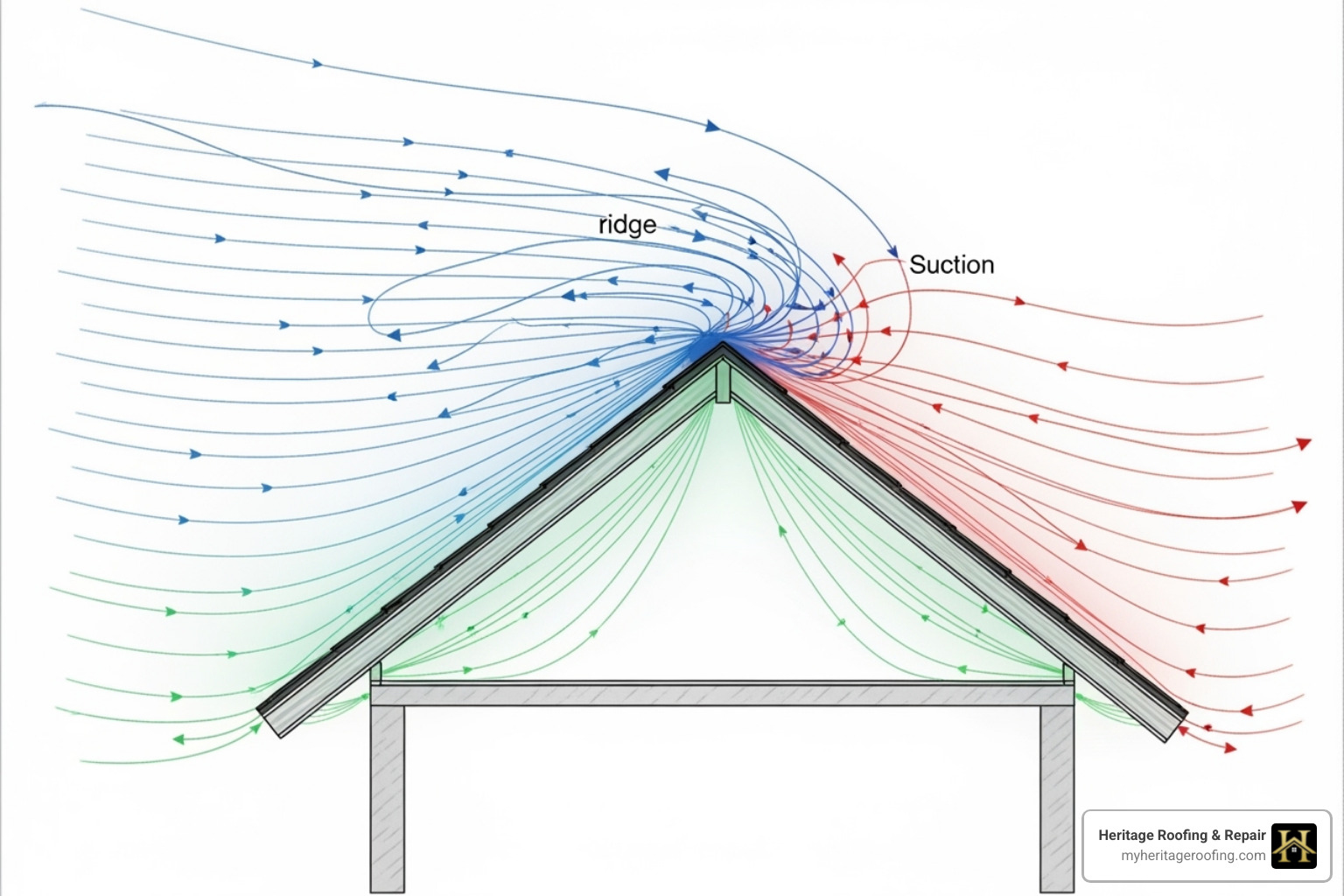
When wind hits your home, it creates two forces. Positive pressure is the expected pushing force on the windward side. The real troublemaker is negative pressure, or uplift. As wind flows over your roof’s curve, it speeds up and creates a low-pressure area above the surface, similar to an airplane wing. This produces a powerful suction that tries to lift roofing materials off your home. This negative pressure is often far more destructive than the direct pushing force.
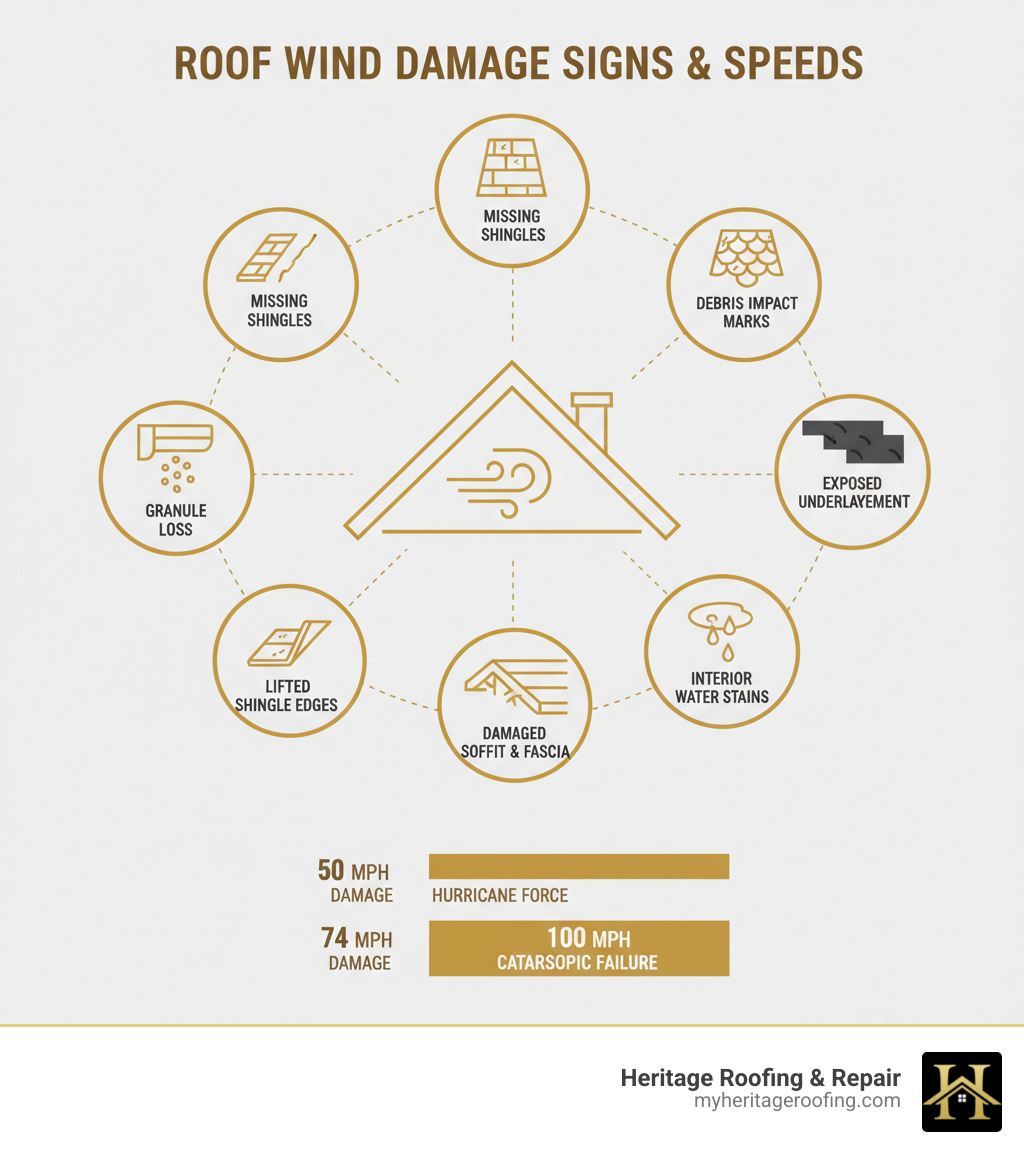
Wind speeds are a critical factor. Damaging winds start at 50 to 60 mph, common in severe thunderstorms. Once winds reach 74 mph or greater, they are classified as hurricane-force winds by the National Hurricane Center, capable of causing widespread destruction.
Direct vs. Indirect Wind Damage
At Heritage Roofing & Repair, we look for two types of wind damage roof issues.
Direct damage occurs when wind physically tears, lifts, or displaces roofing materials. This includes shingles being blown off or flashing getting mangled.
Indirect damage, or “missile damage,” happens when wind hurls objects at your roof. Tree limbs are common culprits, but even small items can cause punctures, dents, and cracks. A small puncture from a branch can lead to a significant leak, which is why a thorough inspection after any storm is critical.
Why Roof Edges and Corners Are Most Vulnerable
Roof edges and corners experience concentrated suction forces. As wind flows around the building, it creates powerful vortices at these points. The National Roofing Contractors Association reports that most wind damage begins at the roof edge.
Wind gets under the outermost shingles, breaking their adhesive seal and creating uplift. Once a seal is compromised, the wind can peel back the shingle, exposing the underlayment. This starts a peeling effect, where the first lifted shingle makes it easier for the next one to tear off. What begins as a small breach can spread across large sections of your roof during a storm. This is why we pay special attention to these vulnerable spots during inspections.
A Homeowner’s Checklist: 7 Telltale Signs of Wind Damage
After a storm rolls through Northwest Arkansas, it’s natural to worry about your roof. While a professional should always perform a close inspection, there are several warning signs you can spot safely from the ground.
The key word here is safely. Never climb onto a damaged or wet roof. Use binoculars or a camera with a good zoom to scan your roofline from the ground, documenting anything that looks out of place. Don’t forget to check your attic and ceilings for interior signs of trouble.

Let’s walk through the most common signs that your roof has taken a beating from the wind.
1. Missing, Lifted, or Creased Shingles
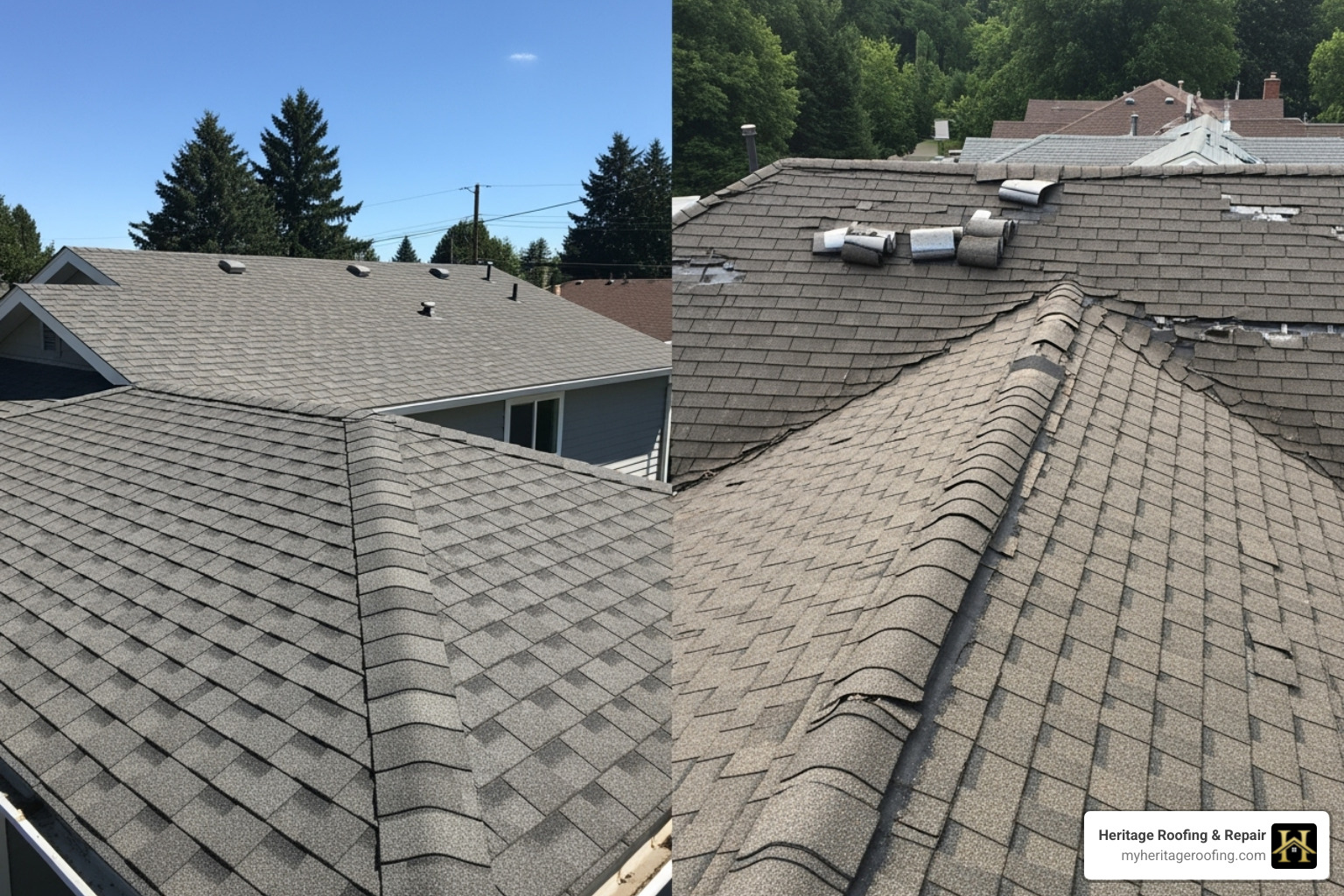
This is often the most obvious sign of wind damage roof problems. Missing shingles leave your underlayment exposed to the elements, creating a direct path for water. However, damage can be serious even if shingles are still attached. Lifted or curled shingles indicate that the crucial adhesive seal has been broken by wind getting underneath. This allows wind-driven rain to seep in. Creased shingles, which have been bent by high winds, create a permanent weak spot prone to tearing and leaking. If you see these issues, your roof needs professional storm damage roof repair to solve the problem correctly.
2. Excessive Granule Loss in Gutters
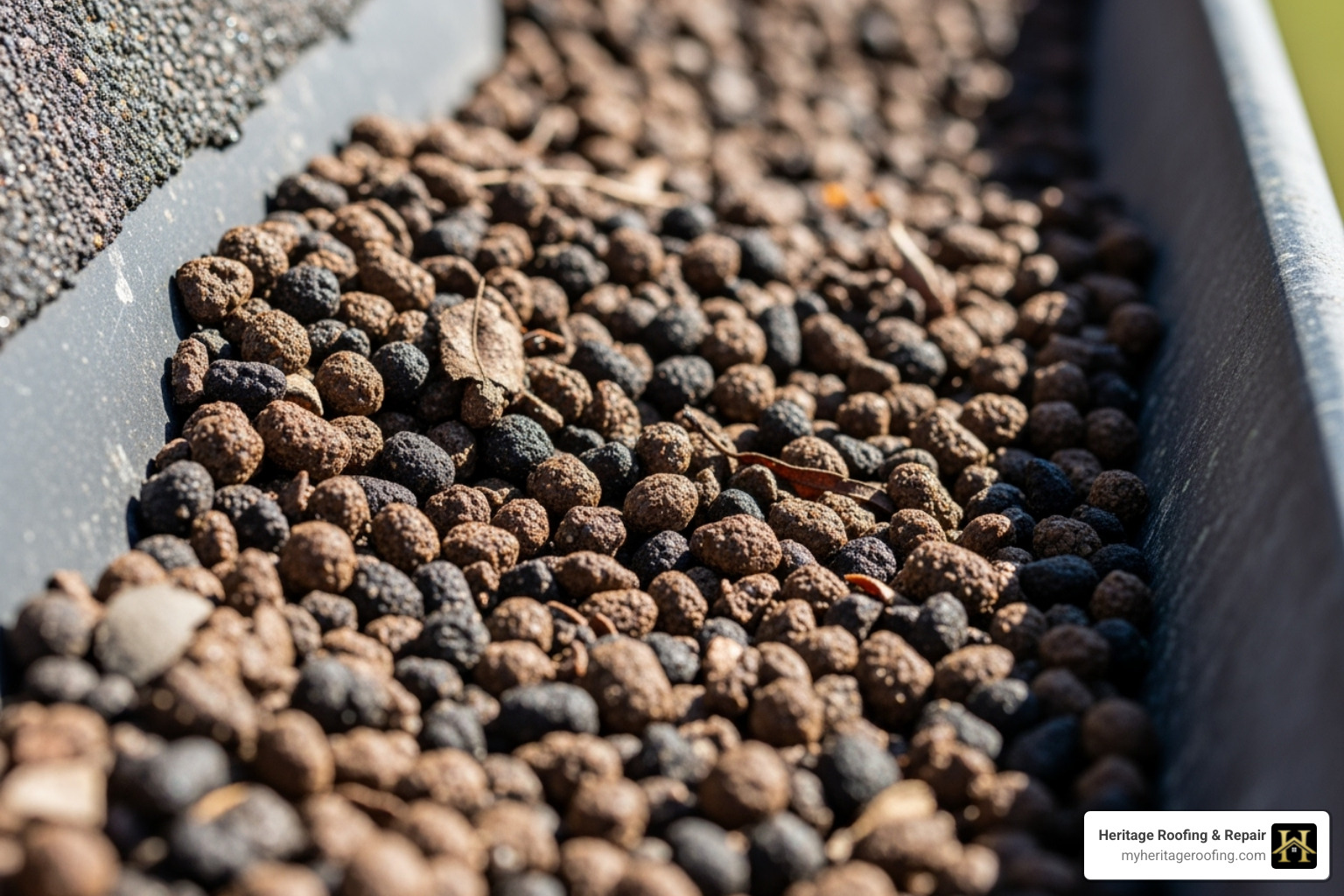
The sand-like granules on asphalt shingles protect them from UV rays and fire. While some shedding is normal, finding large amounts in your gutters after a storm is a clear sign of wind damage roof issues. This excessive loss creates “bald” spots on shingles, exposing the underlying asphalt to the sun. This accelerates aging and reduces your roof’s ability to keep water out.
3. Damage to Soffit, Fascia, and Gutters
Your soffit (the underside of the roof’s overhang), fascia (the trim board at the roof’s edge), and gutters are often damaged by high winds. Look for cracked fascia boards, loose soffit panels, or sections pulling away from the house. Wind can also bend, dent, or detach gutters. According to Angi, checking gutters is a critical post-storm step. Damaged gutters can’t direct water away from your home, leading to potential foundation issues.
4. Interior Signs: Leaks and Water Stains
Sometimes the most serious wind damage roof problems appear inside your home, meaning water is already getting in. In the attic, look for drips, damp spots on wood, or wet insulation. On your living levels, watch for water stains on ceilings or peeling paint near the ceiling line. A persistent musty smell can also indicate hidden moisture and mold growth. These interior signs are what happen when small exterior problems go unaddressed, turning a lifted shingle into a major expense involving water damage, mold, and ruined insulation.
Why Some Roofs Fail: Key Factors That Increase Wind Damage Risk
Not all roofs react to a storm the same way. Understanding what makes your roof vulnerable to wind damage roof problems can help you take proactive steps before the next storm.
Roof Age and Material Condition
A roof’s ability to resist wind declines with age. The adhesive sealant on asphalt shingles is most effective in the first few years; afterward, it gradually loses its grip. As shingles age, they become brittle and are more easily lifted or torn by wind. A storm that is minor for a new roof can be disastrous for a 15-year-old one.
Corroded fasteners also lose their holding power, allowing materials to loosen. The type of material matters, too. Laminated architectural shingles generally outperform standard 3-tab shingles in high winds. When selecting roofing materials for durability, metal roofs are considered one of the most wind-resistant options due to their interlocking design.
Installation Quality and Roof Design
Even premium materials will fail if installed incorrectly. Poor craftsmanship is a leading cause of premature wind damage roof failures. Research after major hurricanes has shown that incorrectly fastened shingles are a common problem, with issues like high nailing or an insufficient number of nails. Missing starter strips at the roof’s edge also create weak points that wind can exploit.
Your roof’s shape also plays a role.
- Gable roofs (triangular ends) are vulnerable to uplift at the sloped edges, where wind can catch and peel back shingles.
- Hip roofs (sloped on all four sides) are more aerodynamic and generally perform better, though they are not invincible.
- Flat roofs are susceptible to uplift forces across their large surface area, often resulting in torn membranes.
Steeper roof pitches tend to deflect wind more effectively than lower slopes, which can experience greater uplift pressure. The difference in craftsmanship often becomes clear when one home’s properly installed roof weathers a storm while a neighbor’s loses shingles.
After the Storm: Your Next Steps for a Wind Damage Roof
Finding a wind damage roof after a storm is stressful. Taking the right steps immediately can prevent further damage, protect your family, and simplify your insurance claim.
Prioritize Safety and Document Everything
Your safety comes first. Never climb onto a damaged roof. Wet, unstable surfaces are extremely dangerous.
- Inspect from the ground with binoculars.
- Watch for downed power lines. If you see any, stay away and call your utility company.
- Wear sturdy boots and gloves when walking your property to avoid sharp debris.
- If you see sagging roof sections or structural damage, evacuate if necessary and call a professional. Our Emergency Roof Repair Complete Guide covers these urgent situations.
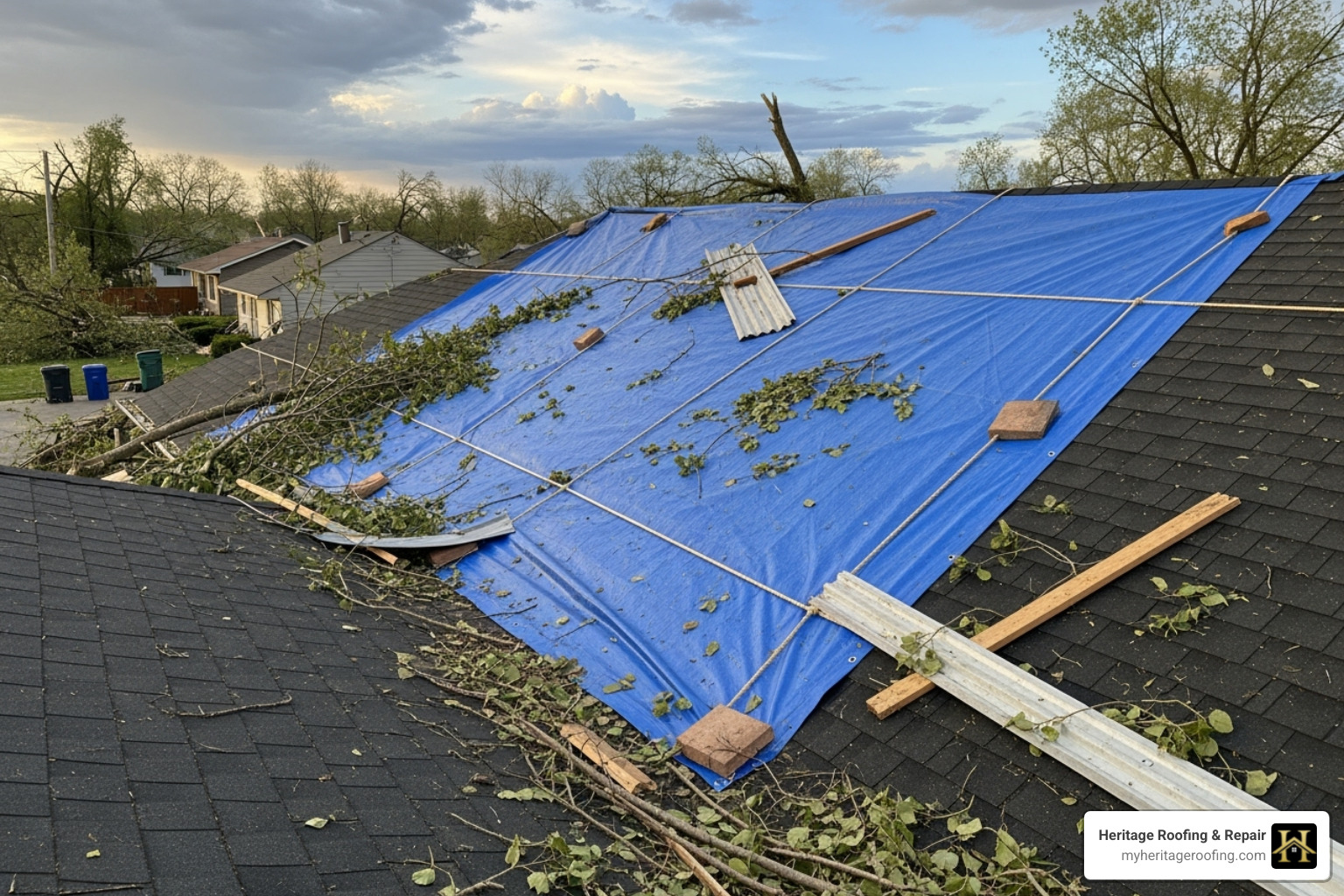
Documentation is essential for insurance claims. As soon as it’s safe, take photos and videos of all damage from multiple angles. Capture missing shingles, granule loss, damaged fascia, and any interior leaks. Photographing other property damage, like a downed fence, helps demonstrate the storm’s severity. Keep detailed notes and save receipts for any temporary repairs, like tarping a hole.
Understanding Insurance Coverage for a Wind Damage Roof
The good news is that wind damage to a roof is typically covered by standard homeowners insurance as an “Act of God.” However, coverage isn’t guaranteed. Insurers may deny a claim if they believe the damage resulted from poor maintenance or an old roof. This is why having a history of regular inspections is so valuable.
Before you need it, review your policy for your deductible (some policies have a separate, higher wind/hail deductible) and coverage limits. File your claim promptly, as most policies have time limits. Your insurer will send an adjuster to assess the damage. Having a professional roofer present during this inspection is highly recommended. We speak the same language as adjusters and can point out damage they might miss.
If your claim is denied or the settlement is too low, you have options. Our Roof Insurance Claims Ultimate Guide walks you through this process in detail.
Contacting a Local Roofing Expert in Berryville, AR
For homeowners in Northwest Arkansas, a prompt professional assessment is critical to prevent secondary damage. When you suspect wind damage roof issues, you need a team you can trust. At Heritage Roofing & Repair, we’ve spent over 50 years helping our neighbors recover from storms. We offer free storm damage assessments and will work directly with your insurance company to ensure you get the coverage you deserve.
Heritage Roofing & Repair
3458 Arkansas State Hwy 221, Berryville, AR 72616
(870) 654-1164
Frequently Asked Questions about Roof Wind Damage
Secure Your Home from Future Wind Damage
Protecting your home from the unpredictable forces of nature is a continuous effort. Understanding the science behind wind damage roof issues, knowing the telltale signs, and taking prompt action after a storm are crucial steps in safeguarding your investment. Early detection, professional assessment, and timely repairs are the keys to maintaining your roof’s integrity and ensuring your peace of mind.
At Heritage Roofing & Repair, we pride ourselves on being your trusted partner in navigating the challenges of wind damage. With over 50 years of experience serving Northwest Arkansas, our team provides dependable, affordable, and quality craftsmanship, specializing in storm damage repair and insurance claims. We’re committed to helping you protect your home, today and for years to come.
Don’t let a minor wind issue turn into a major headache. Get a free storm damage estimate in Harrison, AR today and let us help you secure your home against the elements.