Standing Seam Metal Roof vs. Asphalt Shingles: The Fast Answer
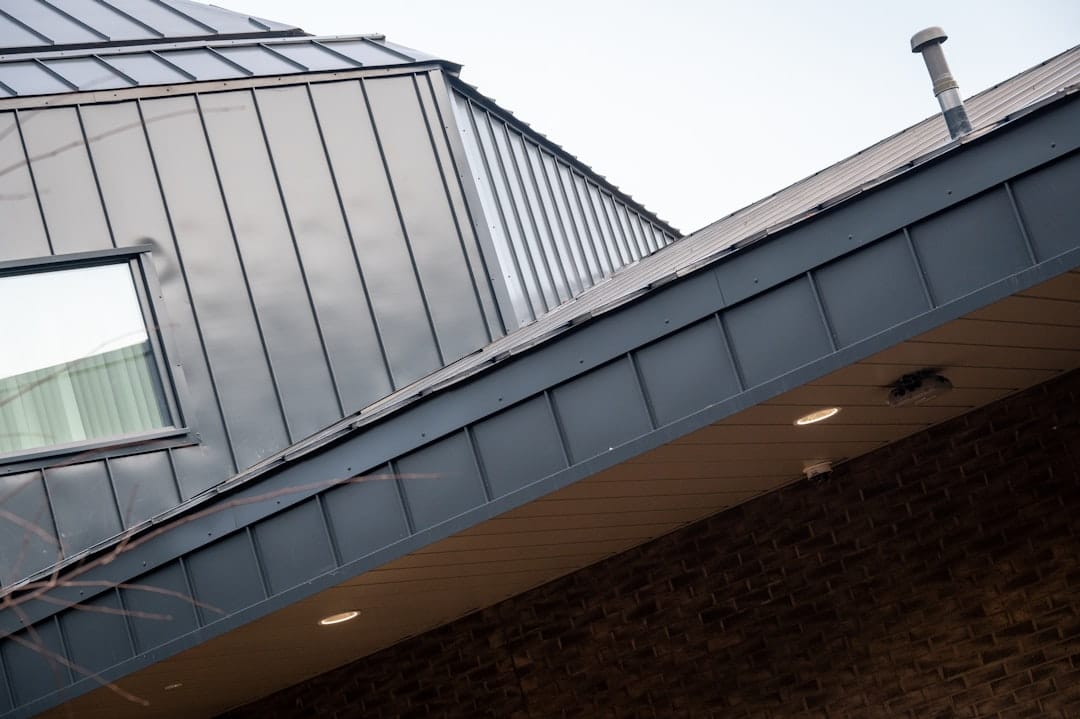
A standing seam metal roof is a premium roofing system made of wide, flat metal panels connected by raised vertical seams that sit above the panel surface. Those raised seams hide all the fasteners — meaning no exposed screws, no rust streaks, and no leak-prone holes in your roof.
As of April 2026, homeowners are increasingly turning to trusted roofing contractors in Northwest Arkansas to upgrade their properties. Here’s how it stacks up against asphalt shingles at a glance:
| Feature | Standing Seam Metal | Asphalt Shingles |
|---|---|---|
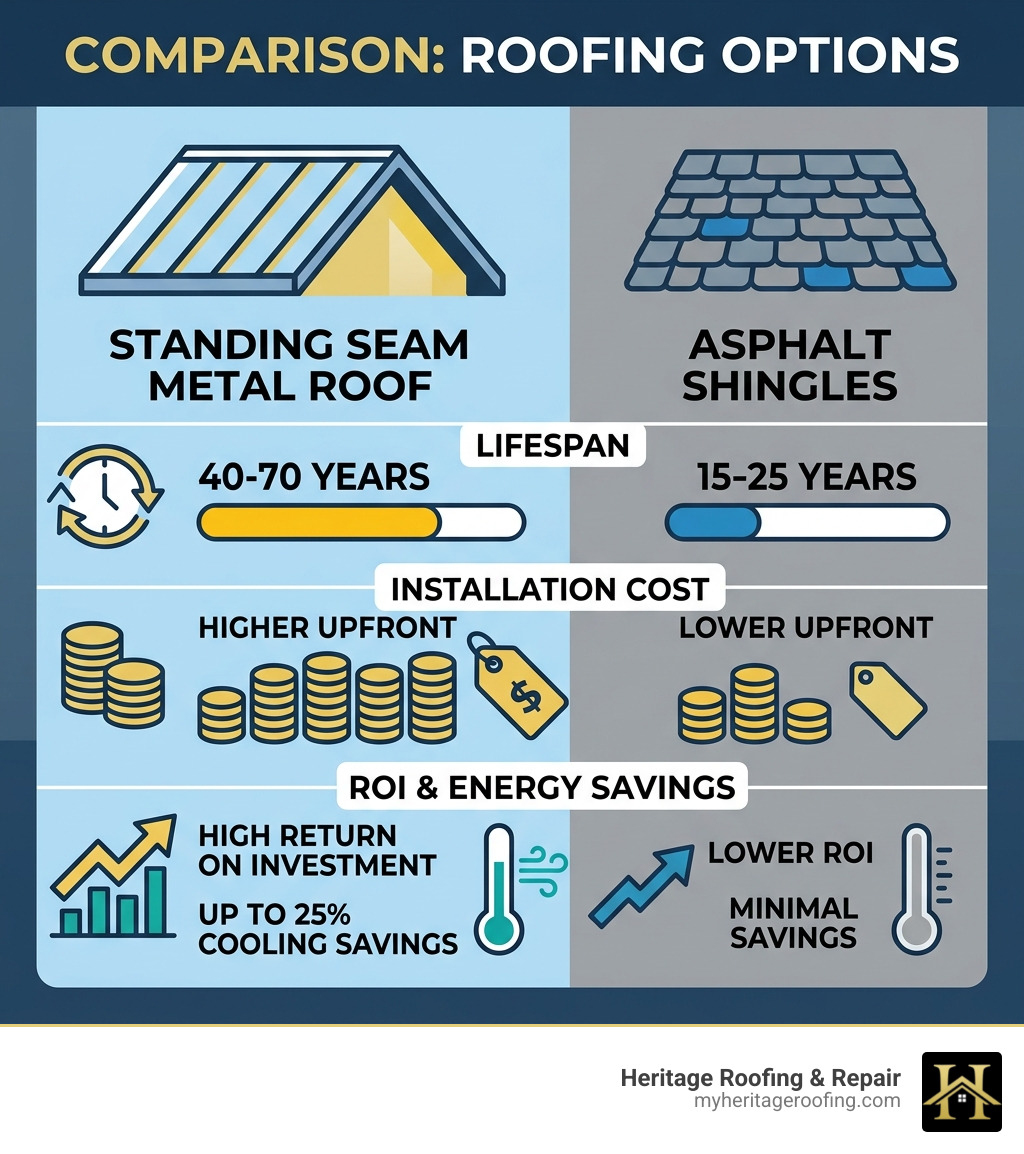
| Lifespan | 40-70 years | 15-25 years |
| Wind resistance | Up to 160-180 mph | 60-130 mph |
| Energy savings | Up to 25% on cooling | Minimal |
| Home value increase | Up to 6% | Minimal |
| Installation cost | $11.50-$20.50/sq ft | $3.50-$6.50/sq ft |
| Maintenance | Very low | Moderate |
| Solar panel ready | Yes (no drilling) | Limited |
More homeowners across Northwest Arkansas are ditching aging asphalt and choosing metal roofing — and it’s easy to see why. A standing seam system can last two to three times longer than traditional shingles, handle severe storms without flinching, and actually lower your monthly energy bills.
The higher upfront cost is real. But when you factor in fewer replacements, lower maintenance, and stronger storm protection, the numbers tell a clear story.
I’m Rex Wisdom, owner of Heritage Roofing & Repair — a family business with over 50 years of roofing experience serving Berryville and Northwest Arkansas, including installing standing seam metal roofs on homes and commercial buildings throughout the region. I’ll walk you through everything you need to know to make the right call for your property.
Simple standing seam metal roof glossary:
The Ultimate Guide to the Standing Seam Metal Roof
When we talk about a standing seam metal roof, we are describing a specific type of concealed-fastener system. Unlike corrugated metal roofs where screws are drilled directly through the face of the metal, standing seam panels use clips and interlocking edges to stay in place. This design creates a smooth, industrial-chic look that architects and homeowners in Northwest Arkansas absolutely love.
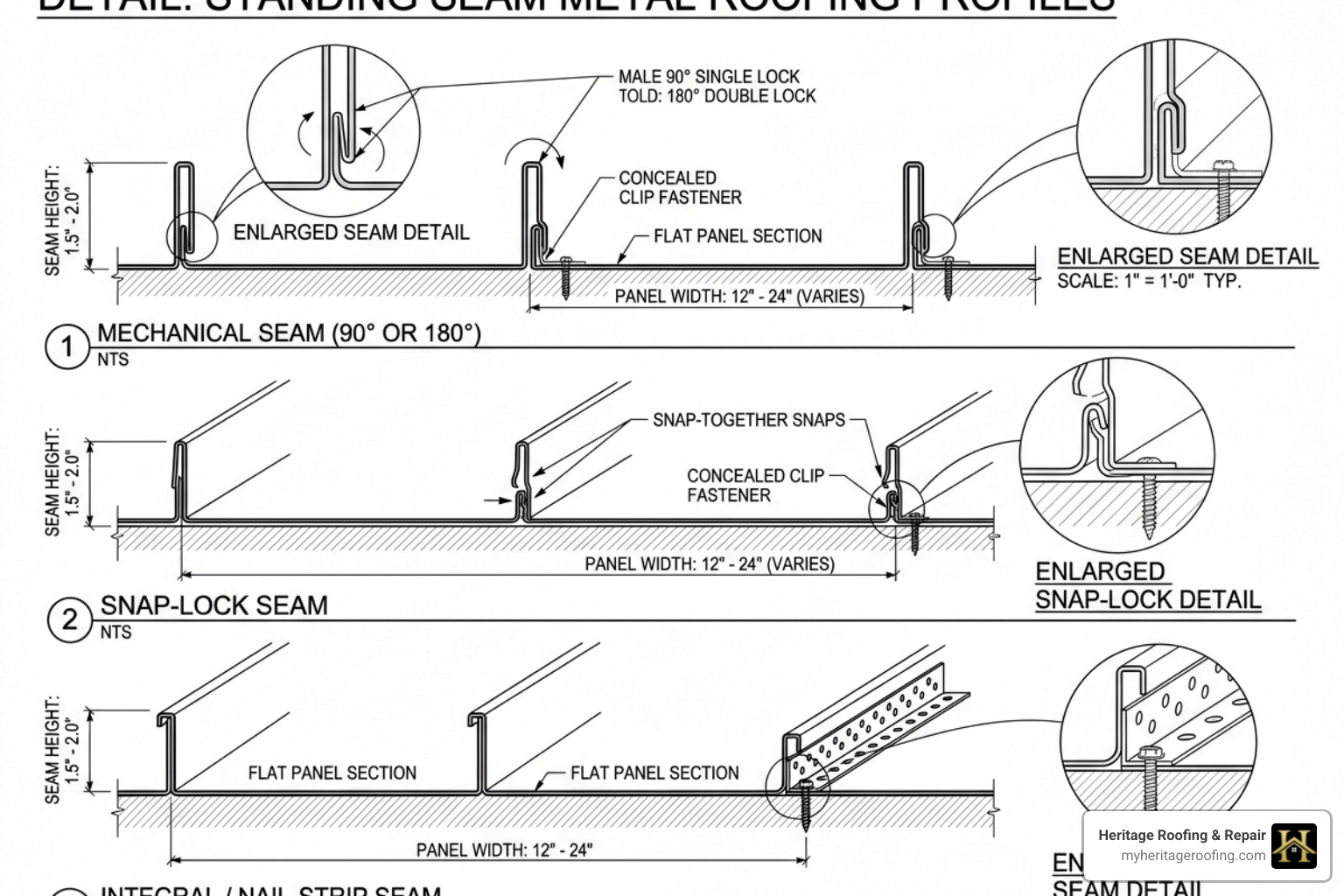
The “standing seam” refers to the vertical legs that rise up from the flat part of the panel. These seams are typically between 1 and 3 inches high, with 1.5 and 2 inches being the most popular choices for local residential projects. Because the fasteners are hidden beneath these legs, they are protected from the rain, UV rays, and the expansion and contraction that often causes leaks in other roof types.
Customizing Your Standing Seam Metal Roof: Colors and Gauges
One of the best parts of choosing a metal system is the ability to tailor it to your home’s aesthetic. Most homeowners we work with in Fayetteville and Harrison choose between 24-gauge and 26-gauge steel. In metal, a lower number means thicker material. 24-gauge is the industry standard for high-end residential work because it is sturdy enough to resist “oil canning” (that wavy look metal can get) and provides excellent hail damage protection.
For those living closer to the moisture of our local lakes or looking for a lighter material, .032 aluminum is a fantastic alternative. No matter the material, the finish is what does the heavy lifting. We recommend Kynar 500 or Hylar 5000 PVDF coatings. These aren’t just “paint”; they are high-performance resins that prevent peeling and fading for decades. In fact, many PAC-CLAD panels offer a 35-year non-prorated finish warranty.
Panel widths usually range from 12 to 19 inches. If you have a unique architectural feature like an entryway or a barrel vault, standing seam is incredibly versatile—it can be curved to a minimum radius of 9 feet. For more on these specialized designs, check out our Curved Metal Roofs Northwest Arkansas Tips.
Material Options: Steel, Aluminum, and Beyond
The “metal” in standing seam metal roof can mean several different things:
- Galvalume Steel: This is the most common choice. It’s steel coated with an alloy of aluminum and zinc, offering the best of both worlds: the strength of steel and the corrosion resistance of aluminum.
- Aluminum: Naturally rust-proof, making it ideal for humid environments. It’s lightweight but slightly softer than steel.
- Copper and Zinc: These are the “forever” metals. They develop a beautiful natural patina over time and can last 70 to 100 years. They are premium options that offer a truly unique look for historic or high-end homes.
Regardless of the material, these systems are engineered to handle thermal movement. Metal expands when it gets hot and shrinks when it cools. Because standing seam uses non-penetrating clips, the panels can “slide” slightly as they breathe, preventing the buckling or warping seen in cheaper metal roofs.
Local Service Information: Heritage Roofing & Repair 3458 Arkansas State Hwy 221, Berryville, AR 72616 (870) 654-1164
Snap-Lock vs. Mechanical Seam: Choosing Your Profile
Not all standing seams are joined the same way. The two main types you’ll encounter are Snap-Lock and Mechanical Seam. Choosing between them depends on your roof’s pitch and the weather conditions in your part of Northwest Arkansas.
| Feature | Snap-Lock | Mechanical Seam |
|---|---|---|
| Installation | Panels “snap” together | Seams are folded by a machine |
| Minimum Pitch | 3:12 | As low as 0.5:12 |
| Wind Resistance | High | Extreme (Hurricane-grade) |
| Labor Cost | Lower | Higher |
| Ideal For | Residential homes | Low-slope or commercial |
Snap-Lock Systems for Residential Use
Snap-Lock is the go-to for most residential standing seam roofing projects. As the name suggests, the panels feature a male and female leg that click together. This system uses floating clips fastened to the roof deck, allowing the panels to move freely during temperature changes.
With a standard 1.75-inch vertical rib, Snap-Lock systems provide those clean, dramatic shadow lines that make a house pop. They require a minimum roof slope of 3:12, which covers the vast majority of homes in Berryville and Fayetteville.
Mechanical Seam for High-Wind Environments
For roofs with a very low pitch (below 3:12) or for buildings in areas prone to extreme wind, a mechanical seam is the superior choice. After the panels are laid down, a specialized electric seaming machine runs along the ribs, crimping them together in either a 90-degree (single lock) or 180-degree (double lock) fold.
This creates a virtually airtight, watertight seal. In fact, some double-locked systems are rated for winds up to 160-180 mph. While the labor is more intensive, it provides the ultimate peace of mind for commercial applications or homes in high-wind corridors.
Performance and ROI: Why Metal Rocks Harder than Shingles
If you’ve ever lived through an Arkansas spring, you know our weather doesn’t play around. From golf-ball-sized hail to straight-line winds, your roof is your first line of defense. This is where the standing seam metal roof truly earns its keep.
Why a Standing Seam Metal Roof Outlasts Traditional Shingles
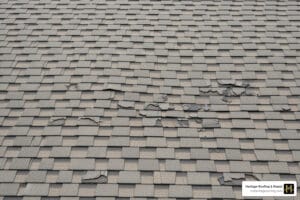
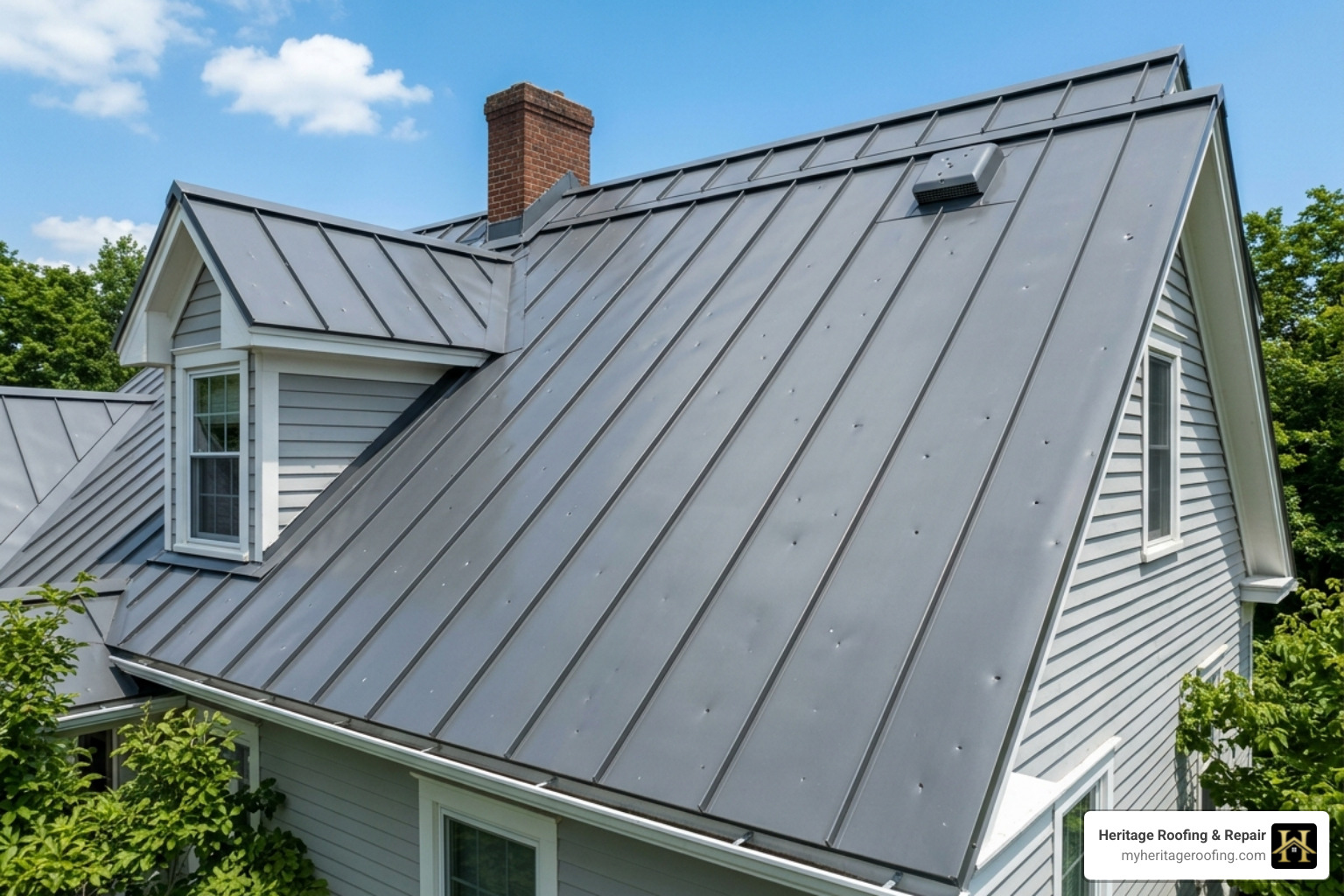
The average asphalt shingle roof in our region lasts about 15 to 20 years before the grit starts to wear off and the shingles begin to curl. A standing seam metal roof, however, is a 50-year-plus investment. Because the fasteners are concealed, there are no gaskets to dry rot and no exposed screw heads to rust.
Beyond durability, a metal roof is a smart financial move. Studies show that a quality metal roof can increase a home’s resale value by up to 6%. Furthermore, it provides superior fire resistance (usually a Class A rating) and can withstand heavy hail impact that would leave a shingle roof needing a full residential metal roof replacement.
Energy Efficiency and Environmental Impact
Metal is one of the most eco-friendly roofing materials available. Most panels contain at least 25% recycled content and are 100% recyclable at the end of their long life. But the real “green” benefit is the “Cool Roof” technology.
According to a study by the Oak Ridge National Laboratory, metal roofs with reflective pigments can reduce heat transfer into the home by significant margins. In fact, some stone-coated and standing seam options can reduce cooling costs by up to 25%. While asphalt shingles absorb heat and radiate it into your attic, metal reflects up to 70% of the sun’s energy. This keeps your AC from working overtime during those humid July afternoons in Harrison.
Installation, Maintenance, and FAQ
Installing a standing seam metal roof is a precision job. It requires a solid substrate (usually plywood or OSB) and a high-quality synthetic underlayment. Because the panels can be long—sometimes up to 35 or 45 feet—on-site roll-forming is often used to ensure a perfect fit without the need for leak-prone horizontal laps.
Is a standing seam metal roof noisy in the rain?
This is the number one question we get! The answer is a resounding no—as long as it’s installed correctly. Unlike a barn or a shed where the metal is exposed to the interior, a residential home has solid wood decking, thick insulation, and a ceiling. These layers act as a sound barrier. Most homeowners find the sound of rain on a metal roof to be no louder than on an asphalt roof.
Can I mount solar panels on a standing seam roof?
Standing seam is actually the best roof for solar. Because of the raised seams, we can use non-penetrating clamps that grip the seam itself. This means your solar installer doesn’t have to drill a single hole in your roof to mount the racks. It preserves your watertight warranty while making the installation faster and cleaner.
What maintenance is required for metal roofing?
One of the biggest perks is that maintenance is minimal. We recommend:
- Annual Inspections: Just to check that flashings around chimneys and vents are still tight.
- Debris Clearing: Keep valleys and gutters free of leaves and branches to prevent moisture traps.
- Scratch Repair: If a falling limb scratches the finish, a simple touch-up pen with manufacturer-approved paint will prevent any surface rust.
Most premium panels, like those from PAC-CLAD, come with extensive warranties, often covering the finish for 35 years. For more details on the process, see our durable metal roof installation page.
Conclusion
At Heritage Roofing & Repair, we’ve spent over 50 years helping our neighbors protect their homes. We know that choosing a new roof is a big decision, and while asphalt shingles are a budget-friendly choice, the standing seam metal roof is the undisputed champion of longevity and performance.
Whether you are dealing with a recent storm or just want to upgrade to a “forever roof” that lowers your energy bills, our team is here to help. We specialize in navigating insurance claims and providing quality craftsmanship that stands the test of time.
Choosing a standing seam system is an investment in your property’s future, offering unmatched protection against the elements in Northwest Arkansas. For a free estimate on your next project, contact the experts at our Fayetteville roofing location.