What Every Homeowner Needs to Know About Roof Replacement
Roof replacement is one of the largest investments you will make in your home — and one of the most important ones for protecting everything inside it. When you need professional roofing services in Arkansas, understanding the process is key to securing your investment.
Here is a quick summary of what you need to know:
- Average cost: $6,000 to $30,000 nationally in 2026, with most homes averaging around $11,000 for architectural asphalt shingles
- When to replace: When your roof is 20+ years old, has widespread shingle damage, sagging, or recurring leaks
- Common materials: Asphalt shingles (20–25 years), metal (40–75 years), slate (50–100+ years)
- Typical timeline: 1 to 3 days for most residential homes
- Insurance: Covers sudden damage (hail, wind, fire) — not age-related wear
- ROI: A new roof returns roughly 60–70% of its cost in added home value at resale
A roof does more than keep rain out. It protects your structure, insulates your home, and directly affects your insurance coverage. Ignore the warning signs long enough and a repair bill becomes a full replacement — plus interior water damage on top of it.
Whether your roof took a hit from a recent Arkansas storm or is simply reaching the end of its life, understanding the full picture helps you make the right call — and avoid costly mistakes along the way.
As the owner of Heritage Roofing & Repair, I’m Rex Wisdom, and my family has been handling roof replacement and repair across Berryville and Northwest Arkansas for over 50 years. In this guide, I’ll walk you through everything — costs, materials, insurance, and how to choose a contractor you can actually trust.
Our Berryville Location
Heritage Roofing & Repair
3458 Arkansas State Hwy 221, Berryville, AR 72616
Phone: (870) 654-1164
When to Repair vs. Replace Your Roof: Key Decision Metrics

Knowing whether to repair a localized leak or commit to a complete roof replacement is a common dilemma for property owners. Making the wrong choice can lead to wasted money on temporary fixes or premature capital expenditures.
To make an informed decision, you must evaluate the roof’s aging cycle, its overall structural integrity, and the frequency of leaks. For an in-depth baseline, check out our Residential Roofing Replacement Guide 2025 to understand how these systems age in our specific Ozark climate.
Definitive lifespans of common roofing materials under normal conditions include:
- Three-tab asphalt shingles: 15 to 20 years.
- Architectural asphalt shingles: 25 to 30 years.
- Standing-seam metal roofing: 40 to 75 years.
If your roof is approaching or has exceeded these age thresholds, structural components begin to break down systematically, making a full replacement the most financially sound choice.
When to Choose a Full Roof Replacement Over Repairs
A complete roof replacement is necessary when the protective properties of your roofing system have failed globally.
Look for these critical indicators of systemic failure:
- Widespread Shingle Curling or Buckling: This indicates that the asphalt binder has dried out, making the shingles highly vulnerable to wind uplift.
- Severe Granule Loss: Finding heavy accumulations of dark, sand-like granules in your gutters means your shingles have lost their UV protection, which accelerates cracking and water infiltration.
- Sagging or Drooping Roof Deck: This is a major warning sign of rotting structural decking or rafters, requiring immediate attention to prevent structural collapse.
- Daylight in the Attic: If you can see beams of light piercing through your roof boards from inside your attic, water is actively finding its way in.
- Recurring, Compounding Leaks: When you repair a leak in one spot only for another to appear a few feet away, the underlayment has degraded beyond spot-repair viability.
The 30% Rule of Thumb
As a certified standard endorsed by the National Roofing Contractors Association (NRCA), if cumulative repair costs over a 12-month period exceed 30% of the total estimated cost of a new roof, a full replacement is the most cost-effective long-term option. Continuing to patch a dying roof is simply paying for a new roof in expensive installments without actually getting one.
Cost-Effective Alternatives to a Complete Tear-Off
If your roof has minor damage and has not reached the end of its natural lifespan, several cost-effective alternatives can delay a full replacement:
- Localized Professional Repairs: Replacing a few missing shingles or resealing degraded pipe boot flashing can easily resolve isolated issues without a major overhaul.
- Shingle Rejuvenation (Bio-Oil Treatments): For aging but structurally sound asphalt shingles, applying plant-based bio-oil treatments (such as Roof Maxx) can restore the essential petrochemical oils that keep shingles flexible. This treatment can cost up to 80% less than a full replacement and extend the roof’s life by up to five years per application.
- Metal Overlays: If permitted by local building codes and structurally feasible, installing a lightweight metal roof directly over a single layer of existing asphalt shingles can save thousands of dollars in tear-off and disposal costs.
- Protective Roof Coatings: For low-slope or flat roof systems, applying an elastomeric or silicone coating can seal minor cracks and reflect solar heat, extending the system’s life by a decade.
Key Factors That Influence Roof Replacement Cost
In 2026, a typical single-family home can expect a full roof replacement to cost between $6,000 and $30,000. The national average sits around $11,000 for an architectural asphalt shingle roof on a 2,000-square-foot home.
However, because every home is unique, several variables drive this price up or down. To understand how these numbers apply directly to your property, read our Average Roof Replacement Cost analysis.
Generally, the total cost of a roof replacement is broken down as follows:
- Materials: 30% to 40% of the total cost.
- Labor: 40% to 50% of the total cost.
- Tear-off, disposal, permits, and equipment: 10% to 20% of the total cost.
Roof Size, Pitch, and Architectural Complexity
Roofing contractors calculate estimates based on “squares.” One roofing square is equal to a 10-foot by 10-foot area, or 100 square feet of roof surface.
Beyond sheer size, the shape of your roof greatly influences labor costs:
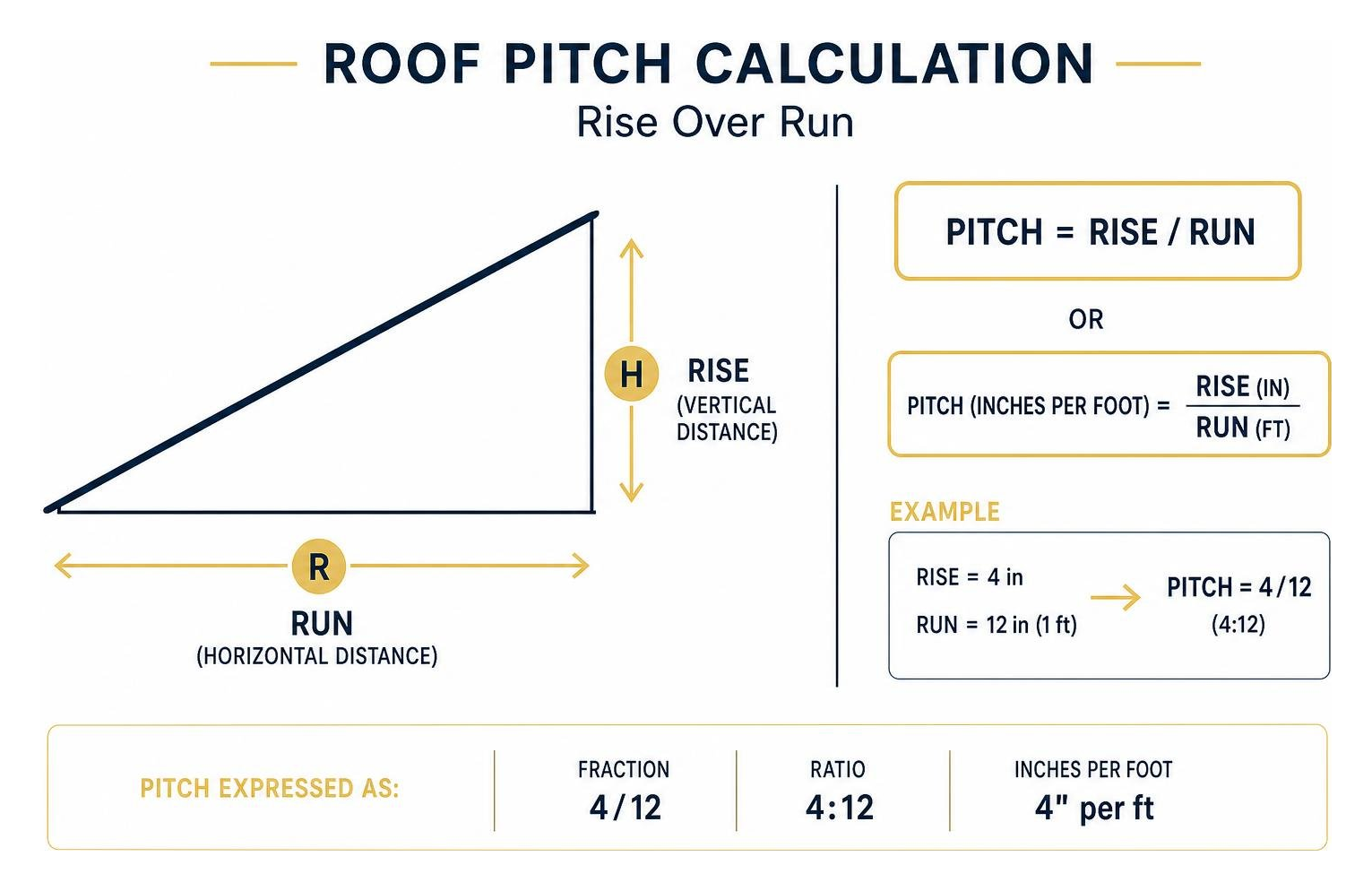
- Roof Pitch (Slope): The steepness of your roof affects both safety and speed. A roof pitch above 7:12 or 8:12 is considered non-walkable and requires specialized safety equipment, scaffolding, and harnesses. This can increase labor costs by 20% to 50% compared to a flat or low-slope roof.
- Architectural Complexity: A simple up-and-down gable roof is fast and inexpensive to replace. Conversely, a multi-plane roof with dormers, valleys, hips, and chimneys requires extensive custom flashing work and material cutting, which increases labor time and material waste.
For a comprehensive breakdown of how these architectural elements impact your budget, refer to the Forbes Home Roof Replacement Cost Guide.
Hidden Costs and What to Look for in a Quote
When reviewing a roof replacement estimate, the lowest price is rarely the best deal. Low-ball estimates often omit critical project components that will later appear as expensive change orders once your roof is torn apart.
Be sure to review our guide on The Price of Protection: Navigating Roof Replacement Quotes to protect yourself from these common traps.
Watch out for these potential hidden costs:
- Rotted Wood Decking: A quality contractor cannot install new shingles over rotted plywood or OSB sheathing. Your estimate should clearly state a per-sheet replacement cost for decking (typically $60 to $120 per sheet) so you aren’t shocked if water damage is discovered during tear-off.
- Tear-Off and Disposal Fees: Removing old shingles costs roughly $1.00 to $2.00 per square foot. Ensure your quote explicitly includes the cost of tearing off existing layers, renting a dumpster, and paying local landfill disposal fees.
- Permit Fees: Local building codes in Fayetteville, AR, Harrison, AR, and Berryville, AR require official permits for structural roofing work. Your contractor should handle pulling these permits, and the cost should be clearly itemized.
How Solar Panels and Skylights Affect Installation
If your roof features modern upgrades, they will add complexity and cost to your replacement project:
- Solar Panel Coordination: You cannot properly install a new roof underneath active solar panels. They must be safely decommissioned and removed by a licensed solar technician before roof tear-off, and reinstalled afterward. This process typically adds $2,000 to $4,000 to the project. For a real-world look at how this coordination works, read about this San Jose Roof Replacement With Solar Panels Case Study.
- Skylight Replacement: If you have skylights that are over 10 to 15 years old, replace them during your roof installation. Installing a new roof around an old skylight often compromises the new flashing, leading to leaks down the road.
- Valley Flashing: High-stress roof intersections should utilize open metal valley flashing. This provides a clean, durable path for rainwater runoff, preventing water from backing up under shingles.
Comparing Roofing Materials: Cost, Lifespan, and Durability
Choosing the right material is a balance between upfront installation costs and long-term value. To explore all your options in detail, see our Roofing Materials Overview.
| Material Type | Average Cost (Per Sq. Ft. Installed) | Expected Lifespan | Wind Resistance Rating | Durability & Maintenance |
|---|---|---|---|---|
| 3-Tab Asphalt Shingles | $4.00 – $5.50 | 15 – 20 Years | Up to 60 MPH | High maintenance; prone to wind damage |
| Architectural Shingles | $5.00 – $7.00 | 25 – 30 Years | 110 – 130 MPH | Highly durable; excellent wind resistance |
| Standing-Seam Metal | $12.00 – $18.00 | 40 – 75 Years | Up to 140 MPH | Low maintenance; fire-resistant; sheds ice/snow |
| Composite Slate | $14.00 – $22.00 | 50+ Years | Up to 110 MPH | Lightweight; mimics natural slate; impact-resistant |
| Clay / Concrete Tile | $12.00 – $25.00 | 50 – 100 Years | Up to 130 MPH | Extremely heavy; requires structural reinforcement |
| Natural Slate | $20.00 – $35.00 | 100+ Years | Up to 150 MPH | Virtually indestructible; very high cost and weight |
Asphalt Shingles vs. Metal Roofing
For most homeowners in Northwest Arkansas, the choice comes down to asphalt shingles or metal roofing.
Asphalt Shingles
Standard 3-tab shingles are the most budget-friendly option, but they have shorter lifespans and lower wind ratings. We highly recommend upgrading to Asphalt Shingles of the architectural variety.
These dimensional shingles are thicker, carry a Class A fire rating, and feature wind warranties up to 130 MPH (conforming to Class F ASTM D3161 standards). They offer the best balance of affordability, curb appeal, and storm protection.
Metal Roofing
While a standing-seam Metal Roofing system requires a larger upfront investment, it is often the most cost-effective option when evaluated on a “cost-per-year-of-service” basis.
Metal roofs reflect solar heat, helping lower your summer cooling bills in Arkansas. They are virtually maintenance-free and easily withstand severe hail and high winds.
Premium Materials: Tile, Slate, and Synthetics
For high-end or historic homes, premium materials offer unmatched aesthetics and longevity:
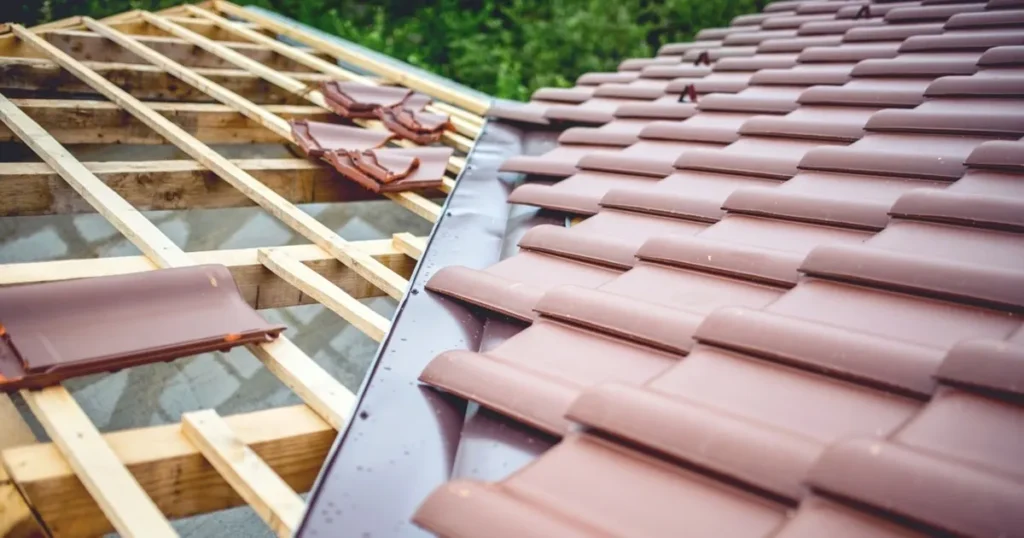
- Clay & Concrete Tile: Highly popular for Mediterranean-style homes, Tile Roofing easily lasts over 50 years. However, tiles are incredibly heavy, and your home’s framing must be certified by a structural engineer to support the load.
- Composite & Synthetic Slate: If you love the look of natural slate but want to avoid the extreme weight and high cost, Composite Slate is an excellent alternative. Made from recycled polymers, these shingles offer a 50+ year lifespan at a fraction of the weight.
The Step-by-Step Installation, Vetting, and Insurance Process
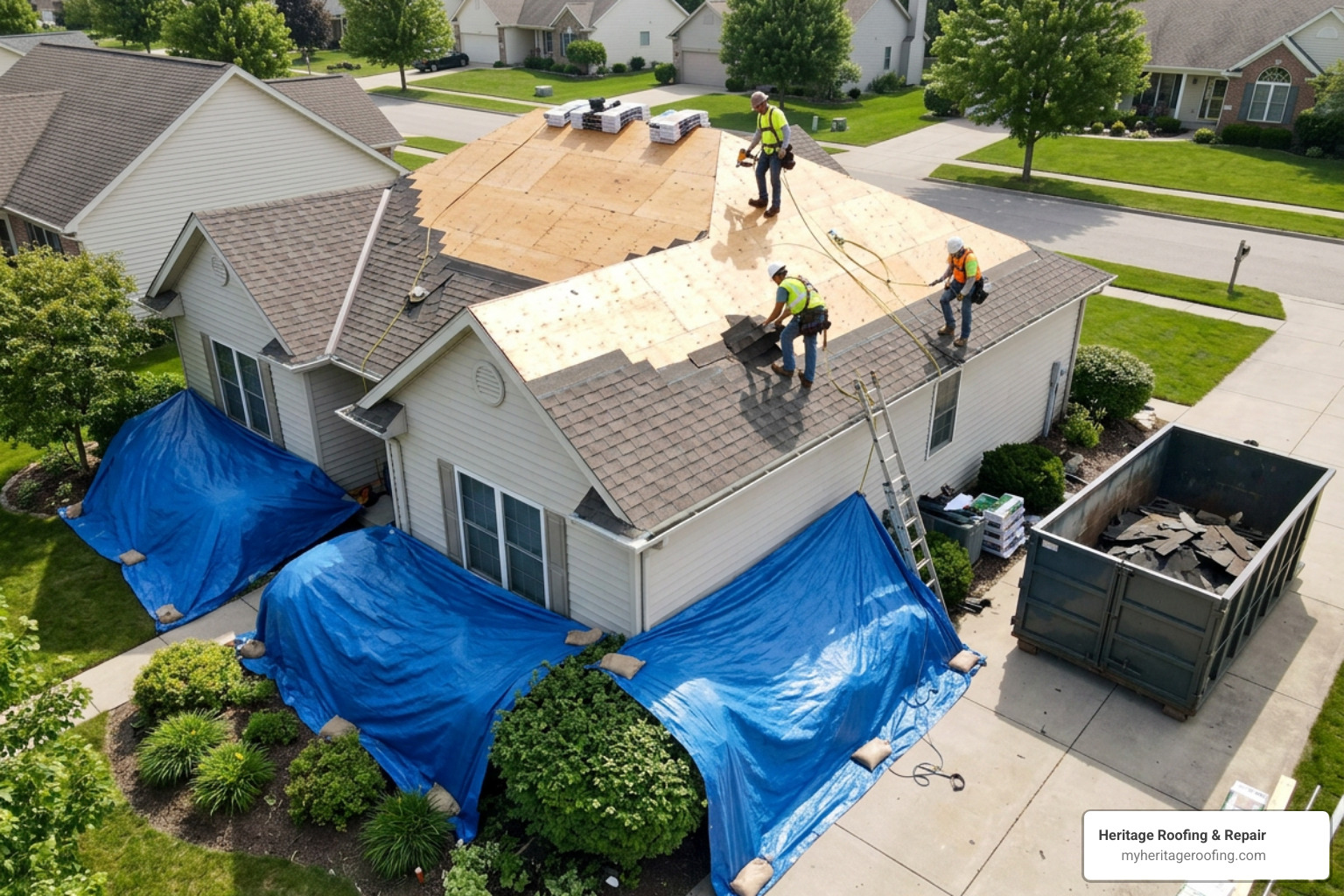
A successful roof replacement relies on a structured process, thorough contractor vetting, and a clear understanding of your insurance policy. For a deep dive into what to expect, review our New Roof Installation Complete Guide.
Step-by-Step Roof Replacement Process
Most residential roof installations are completed in 1 to 3 days. Here is what happens on your property:
- Property Protection: The crew places heavy-duty tarps over your landscaping, decks, and siding to protect your property from falling debris.
- Tear-Off: The old shingles and underlayment are completely stripped down to the bare wood deck. To understand the labor and disposal costs involved in this stage, read What Does a Roof Tear Off Cost in Today’s Market.
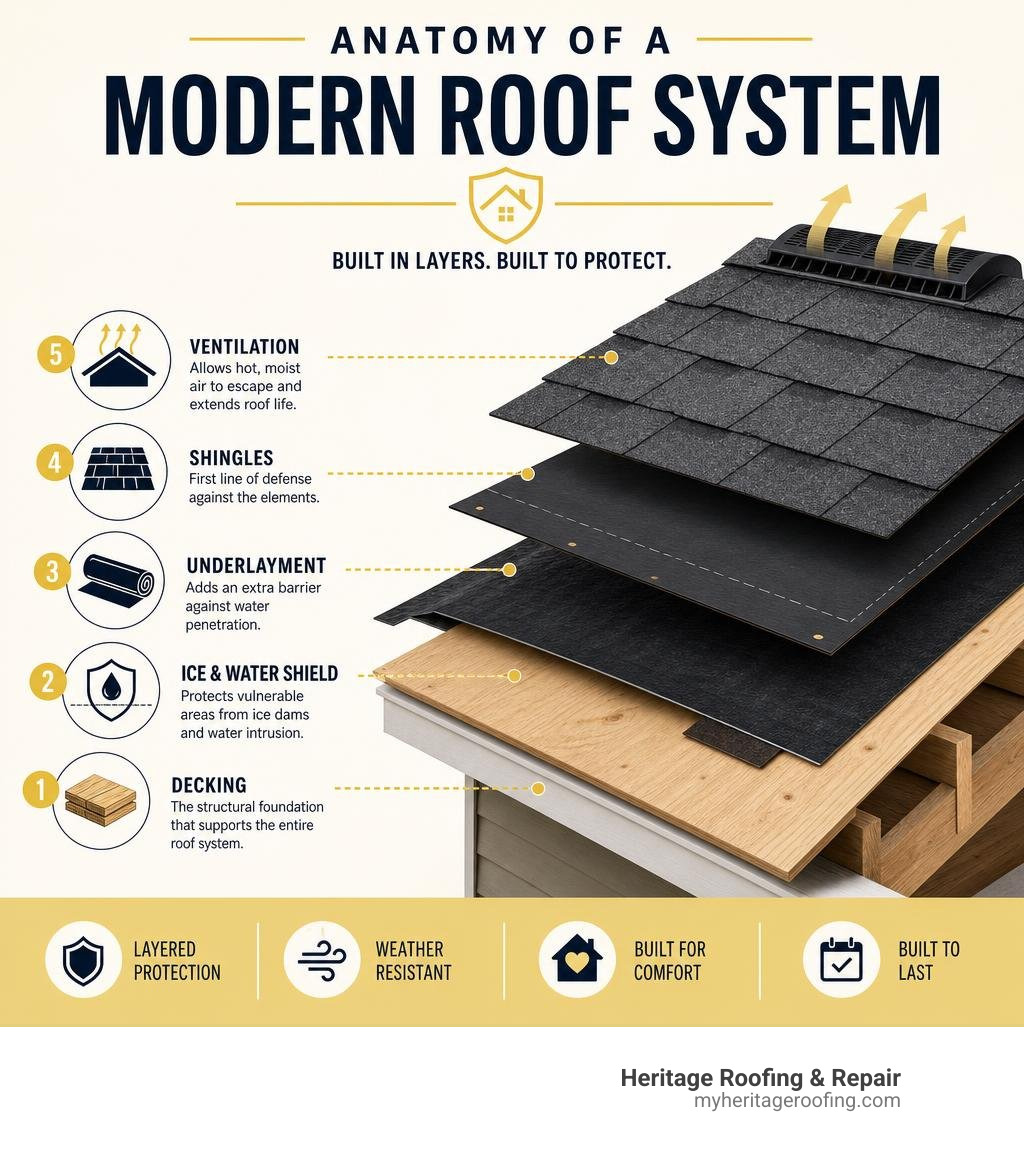
- Deck Inspection: We inspect the plywood decking for soft spots, rot, or water damage, replacing any compromised sheets to ensure a solid foundation.
- Underlayment & Ice/Water Shield: We install a heavy-duty synthetic underlayment over the entire deck, along with a self-adhering ice-and-water shield in high-risk areas like valleys and eaves to prevent leaks from ice damming.
- Shingle Installation: The new roofing material, starter shingles, drip edges, and flashing are meticulously installed.
- Ventilation Upgrade: We install ridge vents and verify that your attic ventilation is balanced to prevent heat and moisture buildup.
- Cleanup & Magnetic Sweep: The crew cleans up all debris and runs a powerful magnetic sweep across your yard and driveway to collect loose nails.
Questions to Ask a Roofing Contractor Before Hiring
To protect your home and avoid storm-chasing scams, vet your contractor thoroughly. You can consult the Federal Trade Commission (FTC) Guide on Hiring Contractors for general safety tips.
When interviewing local roofers in Northwest Arkansas, always ask:
- Are you locally licensed and insured? (Verify their general liability and workers’ compensation policies independently).
- Do you use subcontractors, and are they covered under your insurance?
- Will you provide a detailed, itemized written estimate?
- Do you pull the local building permits yourself?
For regional comparison, you can check local listings such as THE BEST 10 ROOFING IN FAYETTEVILLE, AR on Yelp or Top 10 Best Roofers in Harrison, AR on Angi to verify a contractor’s local standing.
Understanding Actual Cash Value (ACV) vs. Replacement Cost Value (RCV)
If your roof was damaged by wind or hail, your homeowner’s insurance policy should cover the cost of replacement. However, how much you pay out-of-pocket depends on your policy type:
- Replacement Cost Value (RCV): An RCV policy covers the full cost of replacing your roof with materials of like kind and quality in today’s market. Once your claim is approved, you are only responsible for paying your deductible.
- Actual Cash Value (ACV): An ACV policy only covers the depreciated value of your roof based on its age. If a 20-year-old roof is damaged, the insurance payout will be significantly lower, leaving you to pay the difference.
For step-by-step guidance on navigating this process, read How to File Roof Replacement Insurance Claim with Adjuster and Mastering the Roof Replacement Insurance Process.
Material Warranties vs. Workmanship Warranties
A comprehensive roof warranty consists of two distinct parts:
- Manufacturer Product Warranty: This covers defects in the roofing materials themselves (typically 20 to 50 years).
- Contractor Workmanship Warranty: This covers installation errors and labor.
The “Installation Loophole”
Many homeowners assume a lifetime manufacturer warranty covers everything. However, if your roof leaks due to poor installation, the manufacturer will deny the claim, and you will be left responsible if your contractor does not offer a matching workmanship warranty.
Ensure your contractor’s labor warranty is clearly stated in writing. For more information, check out our Roofing Warranty Guide.
Frequently Asked Questions
How long does a typical roof installation take?
Most residential roof replacements take 1 to 3 days of active labor. Highly complex, steep, or very large roofs may take 3 to 5 days. Weather delays, such as rain or freezing temperatures, can also extend this timeline.
Can I install a new roof over my existing shingles?
While some local building codes permit a second layer of shingles (a “layover”), we strongly advise against it. Layovers trap heat, which shortens the lifespan of your new shingles by 10% to 20%. They also add excessive weight to your home’s structure and prevent contractors from inspecting the underlying wood deck for rot. Additionally, many manufacturers will void their warranty if shingles are installed over an old layer.
Does a new roof increase my home’s resale value?
Yes, a new roof is a highly desirable feature for buyers. It significantly boosts curb appeal and typically recovers 60% to 80% of its cost in increased home value at resale. Conversely, an old, failing roof can reduce your home’s value by more than the actual cost of a replacement, as buyers will discount their offers to account for the immediate expense.
Conclusion
Your roof is your home’s primary line of defense against the elements. Trusting your roof replacement to experienced, local professionals ensures your family stays safe, your property value is protected, and your installation is backed by dependable warranties.
If you suspect your roof has storm damage or is simply reaching the end of its life, don’t wait for the next heavy rain to find out. Contact the team at Heritage Roofing & Repair today for an honest, professional assessment.
To schedule your free roof inspection, visit our Contact Us page or learn more about our comprehensive Roof Replacement Services.