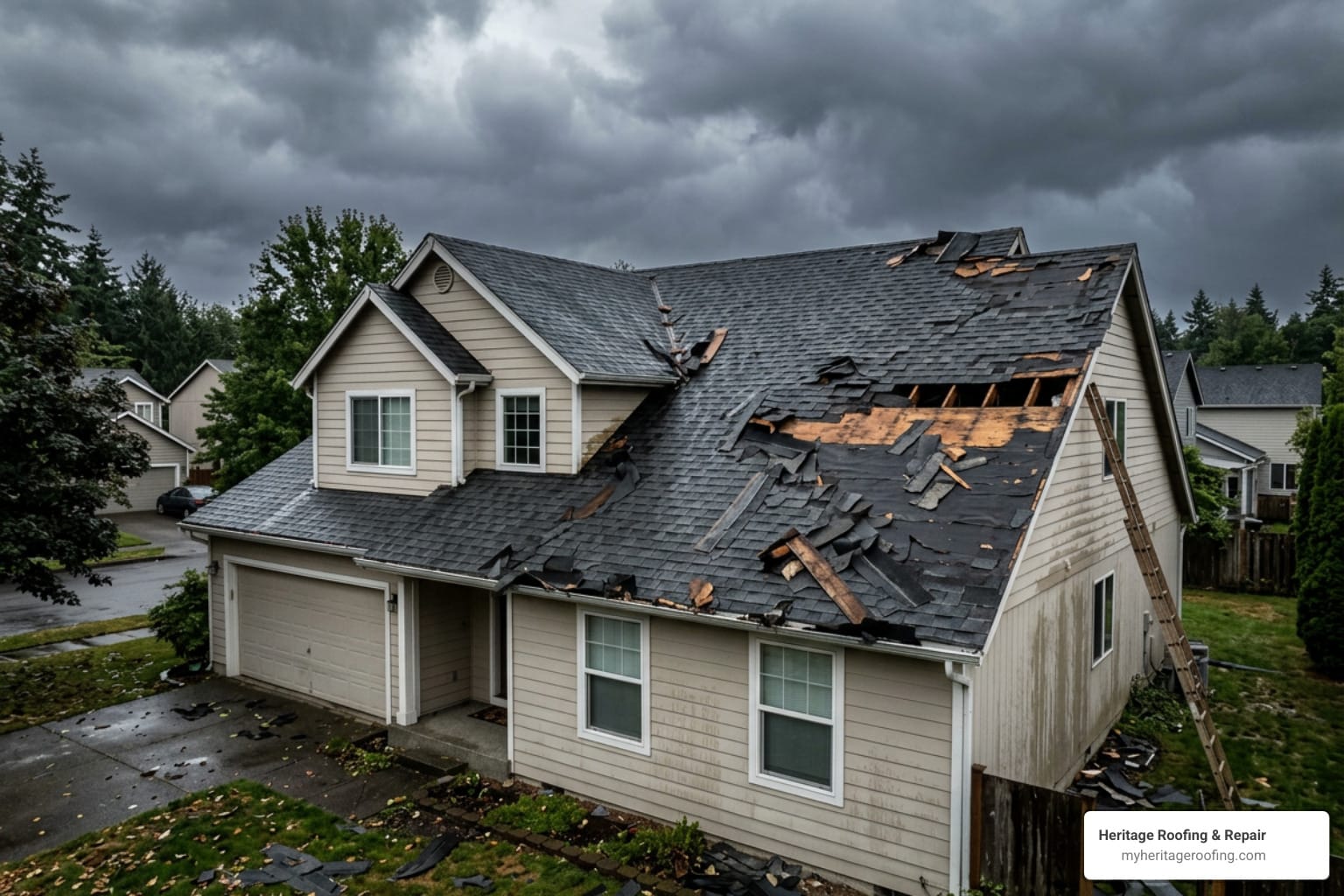
What to Do When You Have a Storm Damaged Roof
A storm damaged roof is one of the most stressful things a homeowner can face — and one of the most time-sensitive. If your home has been hit by severe weather, partnering with a trusted local roofing company is the fastest way to secure your property and prevent costly secondary damage. Here is a quick overview of the most important steps to take right away:
Quick Answer: Storm Damaged Roof — What to Do First
- Stay safe — do not climb on the roof during or right after a storm
- Check for visible damage from the ground — missing shingles, sagging areas, debris
- Look inside — check ceilings and attic for water stains or moisture
- Document everything — photograph all damage before touching anything
- Call your insurance carrier — report the damage and get a claim number
- Schedule a professional inspection within 48 hours — many types of damage are not visible from the ground
- Request emergency tarping if there is an active leak or exposed decking
Storms don’t give you much warning — and they don’t always leave obvious clues behind. Wind, hail, and falling debris can weaken your roof without a single visible hole. In fact, hail and wind damage account for approximately 60% of all homeowners insurance claims related to roof damage in the United States. Left unaddressed, even minor storm damage can lead to leaks, mold growth, insulation failure, and far more expensive repairs down the road.
Northwest Arkansas is no stranger to severe weather. From spring hailstorms to high-wind events, roofs across the region take a beating every year. Whether your home just came through a major storm or you simply want to know what to watch for, this guide walks you through everything — from identifying damage to filing an insurance claim and choosing a contractor you can trust.
For homeowners and business owners in Berryville, Heritage Roofing & Repair has been the go-to resource for storm damage roof repair for over 50 years. I’m Rex Wisdom, owner of Heritage Roofing & Repair, and in five decades of hands-on work with storm damaged roofs across Northwest Arkansas, I’ve seen how fast a small problem can become a major one when action is delayed. This guide is built on that experience — so you know exactly what to do, in the right order, without the guesswork.
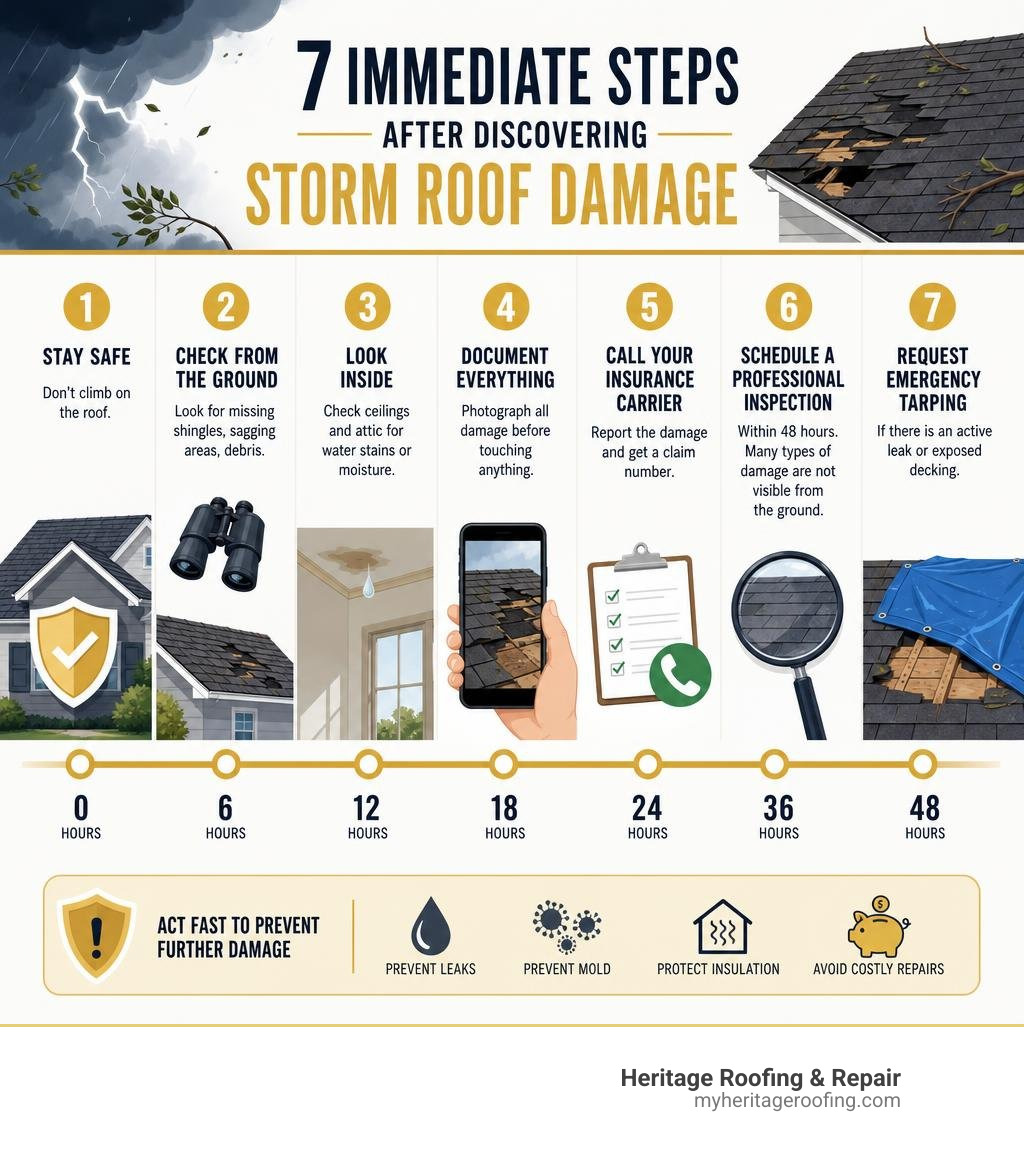
Simple guide to Storm damaged roof:
Our Berryville Location
Heritage Roofing & Repair
3458 Arkansas State Hwy 221, Berryville, AR 72616
Call (870) 654-1164
How to Identify a Storm Damaged Roof

Identifying a storm damaged roof is the critical first step toward protecting your home from structural deterioration. While some issues are glaringly obvious—such as a fallen oak tree resting on your ridge cap—most storm-related vulnerabilities are subtle. To check your roof thoroughly, you must know what signs to look for both outside and inside your home.
When a severe storm system rolls through Northwest Arkansas, it brings a combination of high winds, impact forces, and heavy precipitation. The most common visible signs of exterior roof damage include:
- Missing Shingles: High winds can easily peel shingles completely off the roof deck, leaving the black underlayment or bare wood exposed to rain.
- Lifted or Creased Shingles: Wind doesn’t always blow shingles away; sometimes it lifts them up, breaking the sealant strip beneath. When the wind subsides, the shingle settles back down, but its sealing integrity is gone. Look for creased lines near the top of the shingle where it folded back.
- Granule Loss: Hail impacts and torrential rain wash away the protective mineral granules on asphalt shingles. Check your downspouts and gutters; if you see piles of dark, sand-like granules, your shingles have lost their primary shield against UV rays.
- Dented or Loose Flashing: Chimneys, valleys, and vents are sealed with metal flashing. Severe storms can bend, lift, or completely detach these protective metal strips, creating immediate entry points for water.
To execute a systematic evaluation of your property, reference The Homeowners Handbook A Step by Step Guide to Residential Roof Inspection for Storm Damage to ensure you do not miss vital structural indicators.
Safe Ground-Level Inspections Using Binoculars
We cannot stress this enough: never climb onto a wet, storm-damaged roof yourself. Slippery shingles, structural instability, and high winds make roof-walking incredibly dangerous, especially in the immediate aftermath of a storm. Instead, we advocate for a thorough, ground-level assessment using a pair of binoculars.
Stand in your yard at various angles where you have a clear line of sight to the roof slopes. Use your binoculars to scan the surface methodically from the eave line up to the ridge. Look closely for lifted shingles, exposed nails, and bent metal vents.
Additionally, turn your attention to the ground and your gutters. Walk around the perimeter of your home and look for pieces of shingles, metal flashing, or broken slate on the lawn. Inspect your gutters from the ground or a secure ladder—if they are sagging, clogged with storm debris, or overflowing with granules, it is a clear indicator that your roof took a severe hit. For a detailed breakdown of what to look for from the ground, consult The Homeowners Guide to Storm Damaged Roofing Assessment.
Hidden Signs of a Storm Damaged Roof
Not all storm damage is visible to the untrained eye, even with binoculars. In fact, some of the most destructive storm impacts are completely hidden from view.
Hail bruising is a prime example. When hail strikes an asphalt shingle, it may not crack it immediately. Instead, it creates a “bruise” on the underside of the shingle, crushing the fiberglass matting. Over the next several months, the crushed fibers decay, the granules shed, and a leak develops long after the storm has passed.
Other hidden issues include micro-cracks in tile or slate roofing and minor structural shifting caused by extreme wind loads or heavy debris impact. This shifting can pull apart the joints in your roof framing, leading to slow leaks. Furthermore, water can seep through compromised shingles and saturate your attic insulation. Because wet insulation loses its thermal resistance, you might notice unexplained energy bill spikes before you ever see a water spot on your ceiling. Nearly 50% of a home’s energy use goes toward heating and cooling, which can skyrocket if storm damage compromises your attic’s thermal envelope.
If you live in Fayetteville or surrounding areas, you can learn more about identifying these stealthy issues by reading our guide on Fayetteville Storm Damage.
Assessing Different Types of Weather Damage by Material
Different storm elements affect roofing materials in vastly different ways. While a hailstone might shatter a clay tile, it will merely dent a metal panel or bruise an asphalt shingle. Understanding these material-specific vulnerabilities is essential when evaluating a storm damaged roof.
- Wind Uplift: High winds create pressure differentials as they pass over your roof. This aerodynamic lift pulls upward on shingles, panels, and tiles. If the wind speed exceeds the material’s wind rating, the fasteners can pull through, or the adhesive bond can fail entirely.
- Hail Impact: Hail damage is mechanical. The kinetic energy of falling ice fractures rigid materials and punctures or bruises flexible ones.
- Tree and Debris Impact: Falling limbs cause localized structural damage, puncturing the roof membrane, cracking rafters, and tearing away gutters.
To help you visualize how different weather events impact various roofing materials, we have compiled this comparative table:
| Roofing Material | Wind Uplift Vulnerability | Hail Impact Vulnerability | Debris Impact Vulnerability |
|---|---|---|---|
| Asphalt Shingles | High (can lift, crease, or blow off if adhesive fails) | High (causes granule loss, bruising, and mat fracture) | Moderate (punctures and tears easily under branch impact) |
| Metal Panels | Low (highly wind-resistant when properly fastened) | Low to Moderate (dents easily, but rarely punctures) | Low (resists punctures, though heavy limbs will dent panels) |
| Clay / Concrete Tile | Moderate (heavy but can lift if individual fasteners loosen) | High (shatters or cracks under large hail impacts) | High (extremely brittle; easily broken by falling limbs) |
If your property has sustained any of these material-specific impacts, you can explore targeted restoration options on our Storm Damage Repair Services page.
Asphalt Shingles vs. Metal and Tile Vulnerabilities
Asphalt shingles are the most common roofing material in Northwest Arkansas, but they are also the most vulnerable to storm forces. High winds can easily strip older shingles away, especially if they have become brittle with age.
Metal roofing, on the other hand, is incredibly resilient against wind. High-quality standing-seam metal roofs can withstand winds up to 140 mph without budging. However, metal is highly susceptible to aesthetic hail damage. While a hailstorm won’t typically cause a metal roof to leak, it can leave behind dozens of unsightly dimples that lower your home’s curb appeal and property value.
Clay and concrete tiles offer excellent wind resistance due to their weight and interlocking designs, but their brittle nature makes them highly vulnerable to both hail and falling tree branches. A single large hailstone can crack a tile, allowing water to penetrate the underlayment below. To understand how these material vulnerabilities apply to NWA’s unique climate, check out our resource on Local Storm Damage.
Preventive Measures to Mitigate Future Storm Impact
While you cannot control the weather, you can prepare your roof to survive it. Investing in preventive measures today can save you thousands of dollars in emergency repairs tomorrow.
First, consider upgrading to Class 4 impact-rated shingles during your next roof replacement. These shingles are modified with synthetic polymers (SBS) that make them rubber-like and highly flexible, allowing them to absorb the impact of large hailstones without cracking.
Second, ensure your roofer uses a six-nail fastening pattern rather than the standard four-nail pattern. This simple upgrade significantly increases the wind uplift resistance of your shingles.
Finally, perform regular maintenance: trim overhanging tree branches back at least 10 feet from your roofline, and clean your gutters twice a year to prevent water from backing up under your shingles during heavy downpours. For more practical advice on preparing your home, read our guide on How to Repair Storm Damage to Your Home.
The Step-by-Step Post-Storm Action Plan
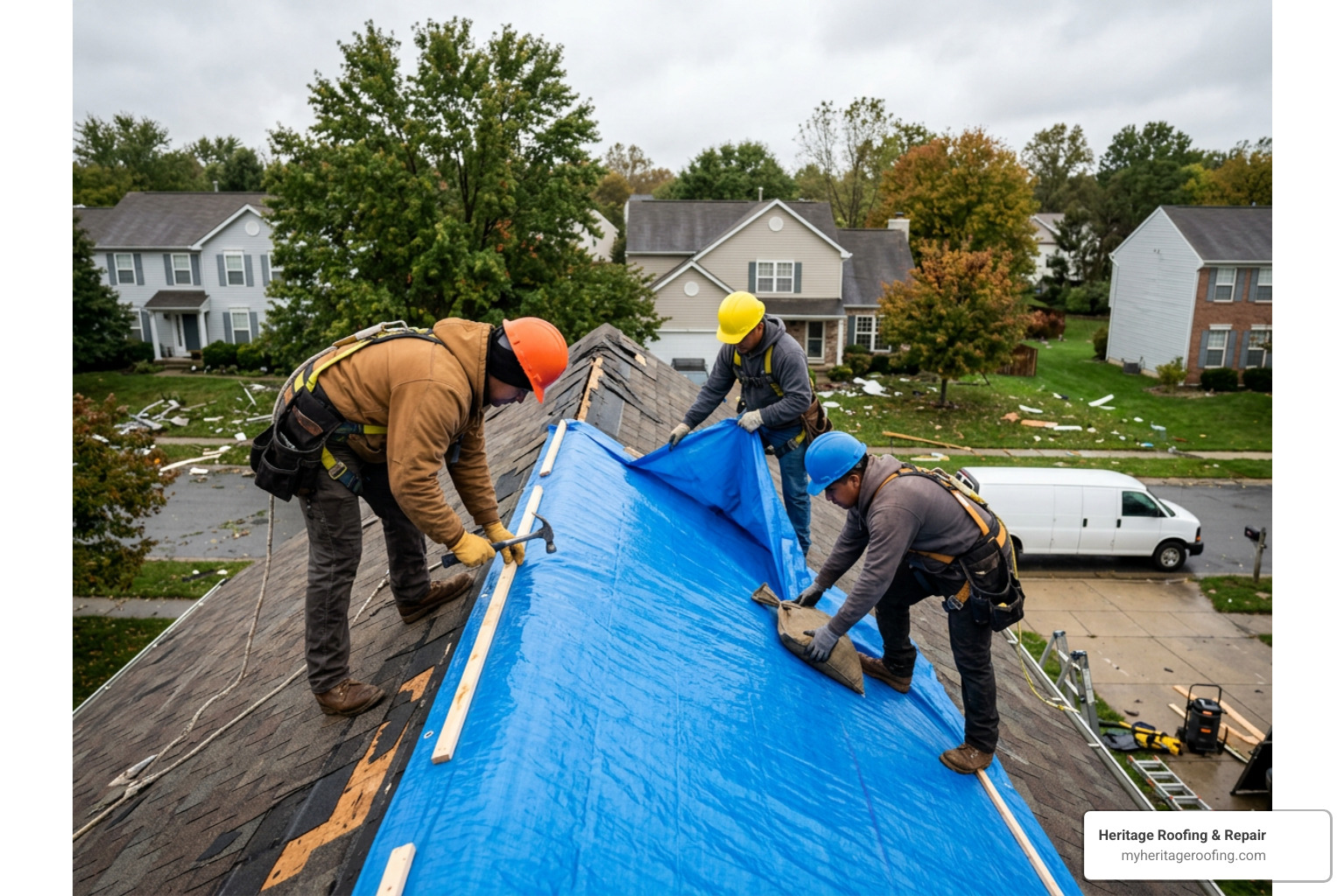
When severe weather strikes, having a clear, structured plan prevents panic and ensures your home is protected. The first 48 hours after a storm are critical; taking the right steps quickly can mean the difference between a simple repair and a catastrophic interior mold problem. To understand the overall recovery timeline, review The Most Effective Solution for Storm Damage Repair.
Immediate Steps After Discovering a Storm Damaged Roof
If you step outside after a storm and realize your roof has been compromised, your immediate priority must be safety and damage mitigation.
- Ensure Safety First: Check for downed power lines near your home. If water is actively leaking into your living space near electrical outlets or light fixtures, shut off the main power breaker immediately.
- Contain the Water: Place buckets, plastic bins, or towels under active ceiling drips to protect your flooring and furniture. Move valuables out of the affected rooms.
- Document the Scene: Take clear, wide-angle and close-up photos of all interior water damage, fallen debris in your yard, and any visible roof damage from the ground. Do not touch or clean up anything until you have recorded it.
- Arrange for Emergency Tarping: If your roof has exposed decking or active leaks, call a professional to install a heavy-duty tarp. This temporary barrier stops water intrusion while you coordinate permanent repairs.
For a comprehensive checklist of what to do in the hours following a storm, reference our Storm Damage Home Repair Complete Guide.
Professional Restoration vs. DIY Repairs
We understand the temptation to grab a ladder, a tube of roofing cement, and a few spare shingles to patch a leak yourself. However, DIY storm roof repairs are highly discouraged for several reasons:
- Safety Hazards: Falling from a roof is a leading cause of severe household injuries. Wet wood, loose granules, and wind gusts make the roof environment incredibly unforgiving.
- Warranty Voiding: Most roofing material manufacturers will void their product warranties if repairs or installations are not performed by a licensed, certified contractor.
- Hidden Damage Missed: A DIY patch might stop the immediate drip, but it won’t address the structural decay, wet insulation, or mold growing silently beneath the surface.
- Insurance Complications: Insurance companies rarely accept DIY repair receipts as proof of professional mitigation, which can lead to future claim denials.
Hiring a professional, certified Home Storm Repair Company ensures the work is done safely, backed by warranties, and documented correctly for your insurer.
Repair vs. Full Replacement Decisions
How do you know if your storm-damaged roof needs a few targeted repairs or a complete replacement? The decision generally comes down to three main factors:
- The Extent of the Damage: If the damage is isolated to a single slope or a small area (less than 25% of the roof), targeted repairs are usually the most cost-effective solution. However, if wind or hail has compromised multiple slopes, a full replacement is safer.
- The Age of the Roof: If your asphalt shingle roof is over 15 years old, the materials are already nearing the end of their natural lifespan. Investing thousands in repairs on an old roof is often a waste of money; a full replacement is a wiser long-term investment.
- Structural Integrity: If falling debris has cracked your roof rafters or compromised the structural decking, the entire affected section must be rebuilt, which often necessitates a full replacement to ensure safety.
To help you weigh these options and make an informed decision, read our comprehensive From Chaos to Clarity A Storm Damage Roof Replacement Checklist.
Navigating Insurance Claims for Roof Damage
Filing an insurance claim for a storm damaged roof can feel like learning a foreign language. However, with the right preparation and documentation, you can navigate the process smoothly and secure the compensation you deserve. To understand the basics of this process, read our guide on Hail Wind or Wear Tear Navigating Roof Damage Insurance Claims.
Essential Documentation and the 48-Hour Window
The success of your insurance claim depends entirely on the quality of your documentation. You must prove to your insurance carrier that the damage was sudden, accidental, and caused directly by a specific weather event.
Start by recording the exact date and time of the storm. Insurance adjusters will cross-reference your claim with local meteorological data to verify that severe wind or hail occurred in your ZIP code on that date. Next, compile your photo and video evidence. Take photos of the hail on the ground (ideally next to a ruler or coin for scale), the fallen tree limbs, the damaged shingles, and any interior water stains.
Most insurance policies require you to report damage within a specific window—often within one year of the storm event—but we highly recommend initiating your claim and scheduling a professional inspection within the first 48 hours. Prompt action prevents secondary damage (like mold) which insurers may refuse to cover if they believe you neglected basic mitigation. Learn more about capturing the right evidence in our guide to Weathering the Storm Assessing Damage and Filing Claims.
Working with Adjusters and Avoiding Claim Denials
Once you file a claim, your insurance company will send an adjuster to inspect your roof. While adjusters aim to be fair, they represent the insurance company’s financial interests and may overlook subtle signs of storm damage.
To ensure an accurate assessment, we recommend having your trusted roofing contractor present during the adjuster’s visit. We can walk the roof with the adjuster, point out hard-to-see hail bruises or lifted shingles, and provide a professional, line-itemed estimate that aligns with industry standards. This collaborative approach minimizes the risk of claim denials or underpayments. For more tips on navigating this relationship, read our Roof Damage Insurance Guide.
Choosing a Reputable Contractor and Avoiding Scams
Unfortunately, severe storms often bring out “storm chasers”—unscrupulous, out-of-state contractors who travel from city to city following severe weather events. They knock on doors, promise “free roofs,” collect insurance checks, and disappear, leaving homeowners with shoddy work or unfinished projects. Protecting yourself requires vigilance and a commitment to hiring local. For a comprehensive look at how to protect your investment, read Dont Get Ripped Off How to Handle Storm Damaged Roofs.
Red Flags of Post-Storm Roofing Scams
To keep your home and wallet safe, watch out for these common warning signs of a roofing scam:
- Unsolicited Door Knockers: Be wary of contractors who knock on your door out of the blue offering free inspections, especially if they have out-of-state license plates or phone numbers.
- High-Pressure Sales Tactics: Avoid anyone who pressures you to sign a contract immediately or claims a “special deal” is only valid for 24 hours.
- Demands for Upfront Payment: Reputable contractors will never ask you to sign over your entire insurance check or pay for the project in full before work begins.
- Vague Contracts: Never sign a contract that doesn’t clearly outline the scope of work, the specific materials to be used, and a clear timeline for completion.
For more advice on keeping your peace of mind during a stressful storm recovery, read our article on How to Handle Severe Weather Damage Without Losing Your Mind.
Why Local Expertise Matters in Northwest Arkansas
Hiring a local roofing contractor with deep roots in Northwest Arkansas is the best way to guarantee quality work. Local contractors understand the specific building codes of Carroll, Washington, and Boone counties. We have established relationships with local code inspectors and use materials designed to withstand NWA’s rapid temperature swings and high humidity.
Furthermore, if you ever experience an issue with your roof down the road, a local contractor will actually be there to honor their workmanship warranty. When the Berryville mayor reported severe storm damage to a local school in recent years (as covered by 4029 News), it was local teams who stepped up to restore safety. We live in this community, and we treat our clients like neighbors because you are. You can learn more about our commitment to our community by reading Fixing Storm Damage in NWA.
Frequently Asked Questions About Storm Damage
Will homeowners insurance cover a roof damaged by a storm?
Yes, most standard homeowners insurance policies cover roof damage caused by sudden, accidental weather events, including windstorms, hailstorms, lightning strikes, and falling tree limbs. However, coverage depends on the age of your roof, the specific terms of your policy, and whether the damage was caused by neglect or normal wear and tear.
How soon should I get my roof inspected after a storm?
You should schedule a professional roof inspection within 48 hours of a severe storm. Even if you don’t see water leaking into your home, wind and hail can cause hidden damage—such as bruised shingles or compromised flashing—that will lead to major leaks and mold growth if left unaddressed. Prompt inspections also ensure you meet your insurance policy’s filing deadlines.
Can wind damage a roof without causing immediate leaks?
Absolutely. High winds can lift shingles and break their adhesive seals, or crease them near the top. While this might not cause an immediate leak during the storm, it leaves the shingles highly vulnerable to blowing off during the next wind event, and allows wind-driven rain to seep beneath the shingles over time, causing slow, hidden rot.
Conclusion
A storm damaged roof is a serious challenge, but you don’t have to face it alone. By acting quickly, documenting the damage, and partnering with a reputable, local professional, you can restore your home’s safety and protect your family for decades to come.
At Heritage Roofing & Repair, we have spent over 50 years helping our neighbors in Berryville, Fayetteville, Harrison, and across Northwest Arkansas recover from severe weather. We pride ourselves on providing honest assessments, quality craftsmanship, and stress-free insurance claims support. If your roof took a hit in the latest storm, don’t wait for a small leak to become a major headache. Contact us today to schedule your free, professional storm damage inspection.