When a Storm Hits Your Roof: What to Do in the First 24 Hours
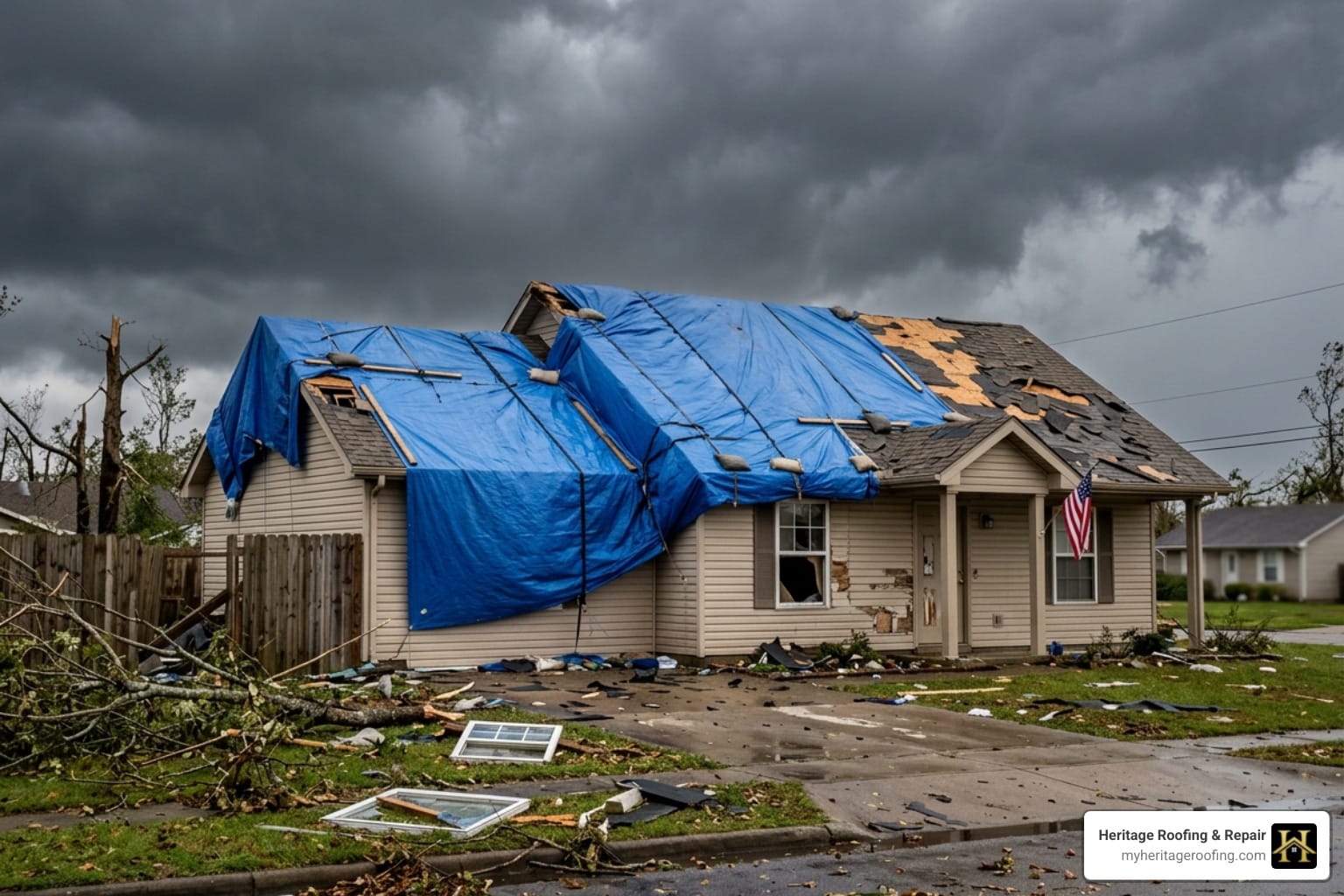
Emergency roof tarping is the fastest and most effective way to protect your home after storm damage. When a storm tears off shingles, sends a branch through your roof, or leaves your attic exposed to the sky, every hour without protection increases the risk of costly secondary damage.
In May 2026, Arkansas homeowners are no strangers to sudden, severe weather. Getting a dependable roofing service on the job fast is the single most important step you can take to protect your home and keep your insurance claim on solid ground.
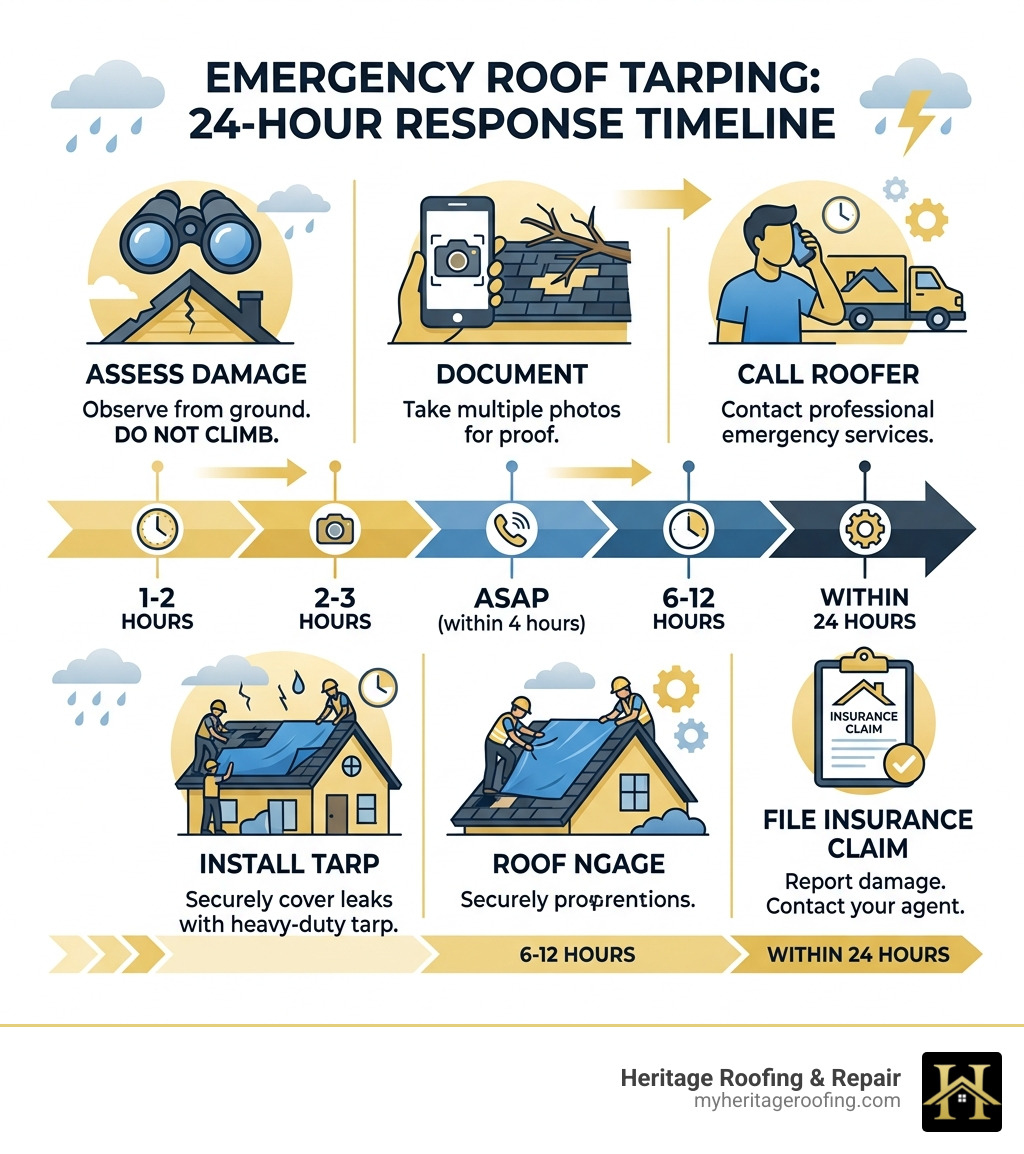
I’m Rex Wisdom, owner of Heritage Roofing & Repair, a family-owned business with over 50 years of collective roofing experience serving Berryville and Northwest Arkansas — including countless emergency roof tarping jobs in the aftermath of severe storms. In this guide, I’ll walk you through exactly what to do, step by step, so you can protect your home without losing your mind.
Emergency roof tarping terminology:
Why Emergency Roof Tarping is Your First Line of Defense

When your roof is breached, the damage doesn’t stop at the shingles. It moves inward, affecting insulation, drywall, and your family’s personal belongings. This temporary waterproof barrier prevents a bad situation from becoming a catastrophe.
Beyond just stopping a leak, an emergency tarp service provides several critical layers of protection. It shields your home from UV damage that can further degrade exposed underlayment and keeps out unwanted “guests” like squirrels or raccoons that look for storm-damaged openings to enter your attic.
The Risks of Delayed Action
The primary enemy after a storm isn’t just the initial hole—it’s the clock. Mold can begin growing within 24 to 48 hours of water intrusion. If a roof leak emergency is left unaddressed, water travels along rafters and can saturate ceiling joists, leading to a sudden ceiling collapse. By the time you see a brown spot on the drywall, the structural integrity of your ceiling may already be compromised. Tarping stops this progression immediately and is the essential first step in storm damage roof repair.
The Financials: Emergency roof tarping Cost and Insurance Coverage
Understanding the costs upfront helps you make informed decisions during a high-stress moment. While a DIY kit might seem cheaper, the long-term protection of a professional install often pays for itself.
| Service Type | Estimated Cost | Estimated Lifespan |
|---|---|---|
| DIY Tarping | $50 – $200 | 14 – 30 Days |
| Professional Tarping | $300 – $750 | 30 – 90 Days |
| Emergency/Urgent Rate | $1.00 – $2.80/sq. ft. | Up to 180 Days |
Professional emergency roof tarping is typically priced between $0.70 and $2.00 per square foot for standard service. However, during active storm seasons or for after-hours calls, rates can increase to $2.80 per square foot. According to the East Coast Roofing Guide, the total cost for most residential homes falls in the $150 to $1,500 range. Several variables dictate the final invoice for an emergency roof repair, such as roof pitch and accessibility.
Will Homeowner’s Insurance Cover the Cost?
Yes, in the vast majority of cases. Most homeowners don’t realize that their insurance policy includes a “mitigation of loss” clause. This means you are legally required to take “reasonable steps” to prevent further damage to your property after a loss occurs. Since tarping is a required mitigation step, insurance companies view it as a necessary expense to avoid a $20,000 mold remediation bill later.
Be sure to follow a roof leak repair guide that emphasizes documentation—keep your receipts and take photos of the damage before the tarp goes on. Most policies will reimburse the cost of professional tarping as part of your dwelling coverage. If you leave a hole in your roof for days and it rains again, the insurance company might deny coverage for the subsequent water damage because you didn’t act to protect the home.
Step-by-Step Guide to Proper Installation
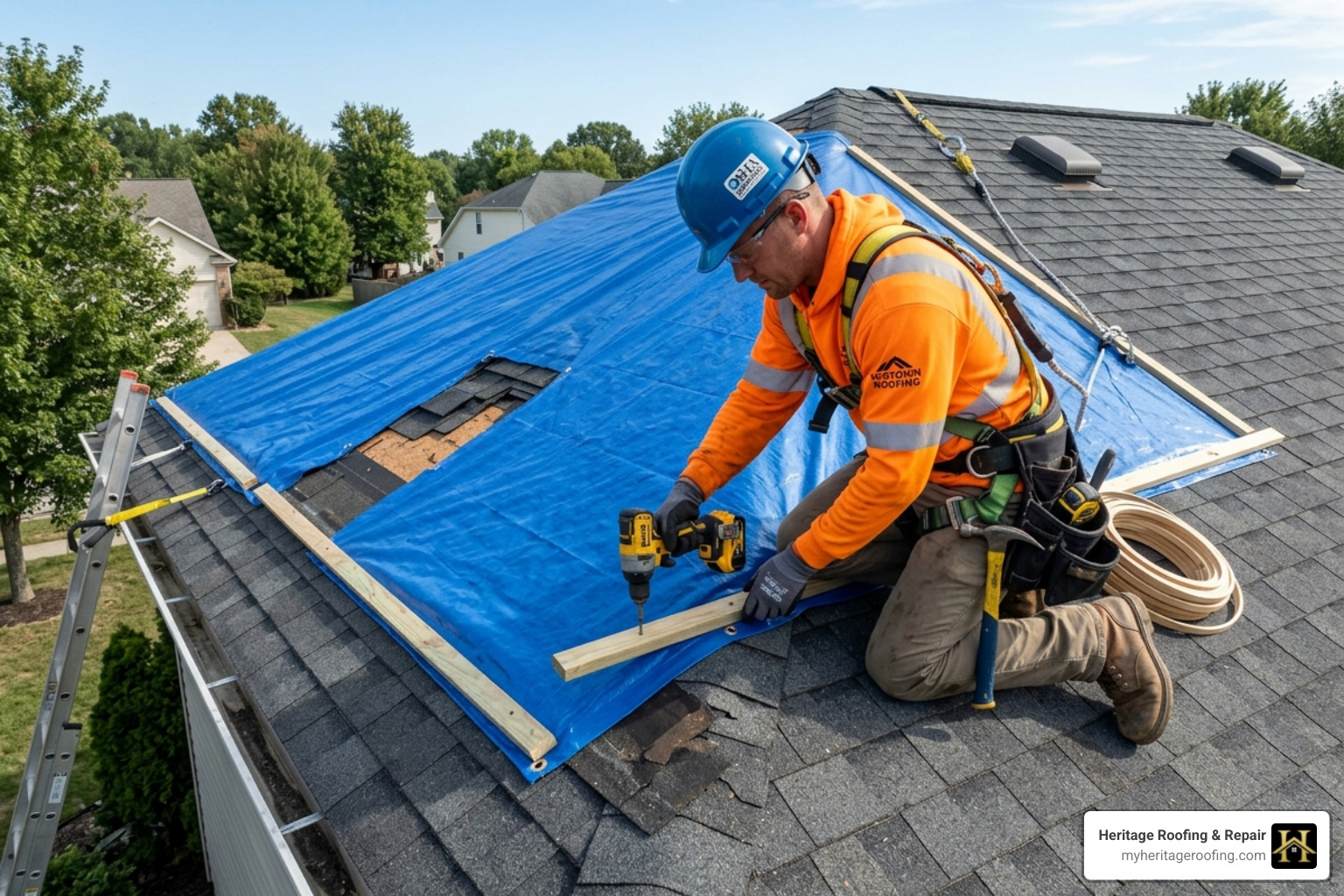
If you must attempt a temporary fix before a professional arrives, it’s critical to do it correctly. A poorly installed tarp can actually trap moisture or act like a sail, pulling more shingles off your roof during the next wind gust.
Materials Needed for Emergency roof tarping
Don’t settle for the thin blue tarps found at general hardware stores. For real protection, you need:
- 10-12 mil Polyethylene Tarp: These are heavy-duty and UV-resistant.
- 2×4 or 1×4 Lumber: Used for anchor boards.
- 3-inch Deck Screws: These provide better wind resistance than nails.
- Safety Harness: Essential for any roof work.
You can find more detailed material specs in our emergency roof tarping guide.
Securing the Tarp for High Winds
The “Sandwich Method” is the industry standard for securing a tarp. Instead of nailing through the tarp (which creates holes), you wrap the edges of the tarp around a 2×4 board. You then screw the board directly into the roof deck.
- Clean the Area: Remove branches and loose shingles so the tarp lies flat.
- Overlap the Damage: The Roofs Wiki recommends extending the tarp at least 4 feet beyond the damage on all sides.
- Wrap the Peak: If the damage is near the top, pull the tarp over the ridge (the peak) and secure it on the other side. This prevents water from running under the top edge.
- Tensioning: Pull the tarp taut to prevent water from pooling in the middle.
For a deeper dive into these techniques, check out our emergency roof repair complete guide.
Critical Safety Precautions and Common Mistakes
Safety is the most important part of any roofing project. Falls from residential roofs cause thousands of serious injuries every year, and those risks multiply after a storm.
Avoiding DIY Tarping Pitfalls
- Inadequate overlap: If the tarp is too small, wind-driven rain will simply blow under the edges.
- Solo installation: Never attempt to tarp a roof alone. You need a spotter for the ladder and someone to help manage the tarp in the wind.
- Ignoring power lines: Always look up. Metal ladders and power lines are a fatal combination.
If your roof has been hit by large hail, you might have hidden damage that isn’t immediately visible. Our hail damage roof repair resources can help you spot these subtle signs before you climb up.
When to Call a Professional Immediately
There are times when DIY isn’t just difficult—it’s dangerous. You should call us immediately if:
- Structural Sagging: This indicates the roof deck is compromised and could collapse under your weight.
- Tree Impacts: If a tree is still on the roof, the structure is unstable.
- Extreme Pitch: Any roof with a pitch steeper than 6:12 (a 26-degree angle) should be handled by pros with OSHA-compliant fall protection.
Choosing Professional Emergency roof tarping in Berryville
At Heritage Roofing & Repair, we’ve spent over 50 years helping our neighbors in Berryville, Harrison, and Fayetteville recover from Arkansas storms. We understand that a roofing emergency is a high-stress event, which is why we specialize in rapid response and seamless insurance claim assistance. We don’t just throw a tarp on and leave; we provide a full assessment to ensure your home is stabilized for the long haul.
Heritage Roofing & Repair 3458 Arkansas State Hwy 221, Berryville, AR 72616
Frequently Asked Questions
What size tarp do I need for roof damage?
Always buy a tarp larger than you think you need. You must account for a 4-foot perimeter around the actual damage. For example, if you have a 2×2 foot hole, you need at least a 10×10 foot tarp to allow for proper anchoring and water runoff. If the damage is near the ridge, add another 3 feet to ensure you can wrap it over the peak.
Can I install a roof tarp during a storm?
No. You should never attempt to tarp a roof while it is raining, or if winds exceed 15-20 mph. Wet shingles are incredibly slippery, and a tarp can act like a sail, pulling you off the roof. While the storm is active, focus on interior containment—use buckets to catch drips and move valuables away from the leak.
Conclusion
Emergency roof tarping is the critical “bandage” that keeps your home’s interior safe while you prepare for a permanent fix. By acting quickly, you protect your structural integrity and ensure your insurance company has no reason to deny your claim.
Storm damage is overwhelming, but you don’t have to handle it alone. From the initial tarp to the final shingle, our team is here to provide the peace of mind you deserve. For more help navigating the aftermath of a storm, check out our Expert Insurance Claims Guidance.