When Hail Hits: What Every Northwest Arkansas Homeowner Needs to Know
Hail storm roof damage is one of the most costly — and most misunderstood — threats a residential roof faces. Here is what you need to know at a glance:
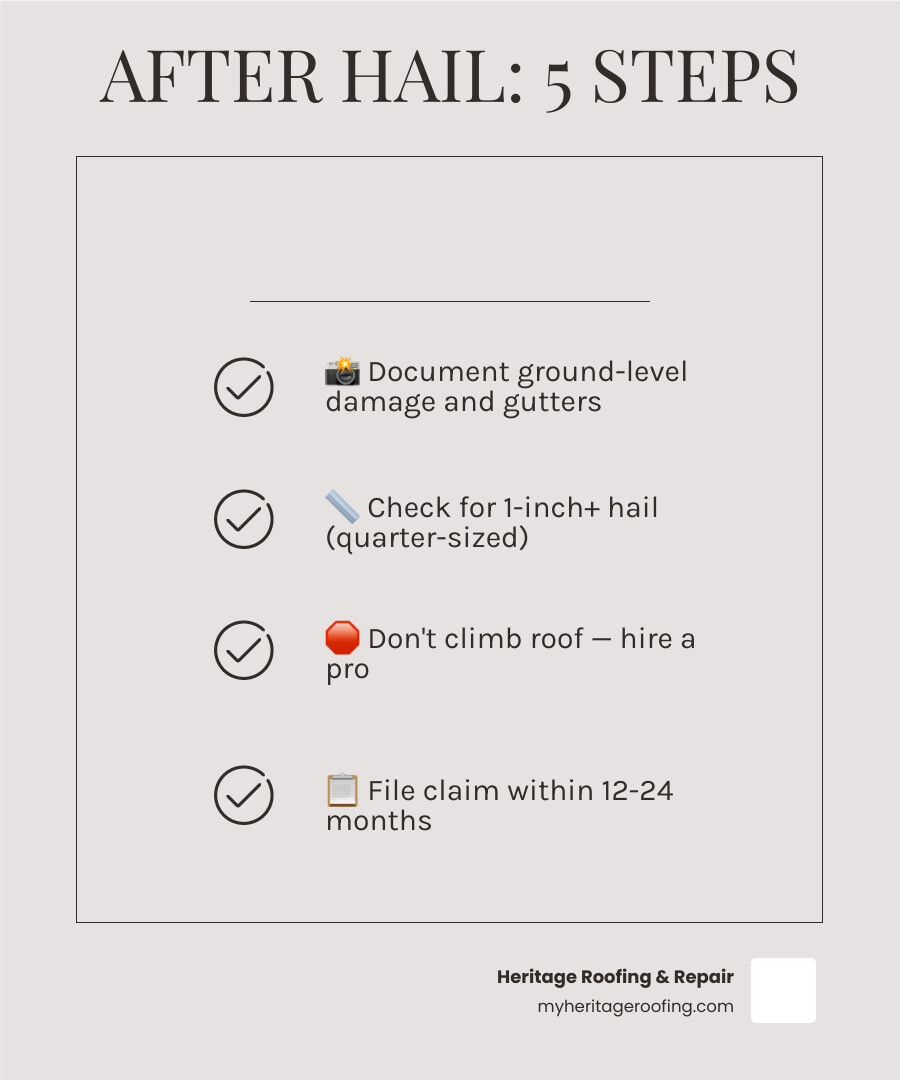
Quick answers for homeowners after a hailstorm:
- 1 inch (quarter-sized) hail is the minimum threshold most insurers use to validate a roof damage claim
- Key visual signs include dark bruised spots on shingles, granule loss in gutters, and dents on metal surfaces
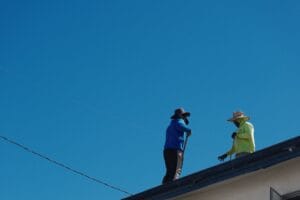
- Do not climb the roof — inspect from the ground first, then hire a licensed contractor
- Document everything with photos and weather data before calling your insurer
- File your claim promptly — most policies require notice within 12 to 24 months of the storm
A hailstorm can be over in ten minutes. The damage it leaves behind can follow you for months — or cost you tens of thousands of dollars if you handle the aftermath incorrectly. In 2025, severe convective storms caused $51 billion in U.S. insured losses, with hail accounting for up to 80% of those claims. When a storm sweeps through Northwest Arkansas, identifying damage early is critical to preventing leaks, mold, and a denied insurance claim. If you suspect your home has been hit, getting a professional assessment from a trusted roofing contractor is the most reliable first move you can make.
I’m Rex Wisdom, owner of Heritage Roofing & Repair, and over the past 50+ years our family business has helped hundreds of homeowners across Berryville and Northwest Arkansas identify and recover from hail storm roof damage. In this guide, I’ll walk you through exactly what to look for, how to document it, and how to navigate the insurance process so you get a fair outcome.
Helpful resources for finding local assistance:
How to Identify Hail Storm Roof Damage by Hailstone Size
When assessing potential hail storm roof damage, the physical properties of the hailstones determine the severity of the impact. Hailstones rarely have perfectly smooth edges, and their ability to cause functional damage depends on a combination of diameter, terminal velocity, wind speed, and the age of your roofing materials.
According to the InterNACHI Hail Damage Assessment Standards, the physical threshold for damage varies significantly by shingle quality and roof age:
- 3/4-Inch Hail (Dime-Sized): At this size, hail typically only damages roofs that are already severely deteriorated, brittle, or near the end of their lifespan. Healthy shingles will easily withstand impacts of this size.
- 1-Inch Hail (Quarter-Sized): This is the baseline standard minimum threshold insurance carriers use to validate a claim. Lightweight composite shingles may show functional damage, such as minor bruising or granule displacement, after being struck by 1-inch ice stones.
- 1.25-Inch to 1.5-Inch Hail (Half-Dollar Sized): A technical paper on asphalt shingle hail performance found that the probability of functional damage rises sharply once stones reach this size. Heavy composite shingles and wood shake shingles can sustain substantial damage under these conditions.
- 1.75-Inch Hail (Golf Ball-Sized) and Larger: Hail of this magnitude falls at a high terminal velocity (often exceeding 40 to 70 miles per hour when driven by severe convective winds) and consistently causes immediate, severe damage to almost all standard residential roof types, including heavy architectural shingles.
For an exhaustive analysis of how different storm intensities impact your property, refer to our Hail Damage Roof Complete Guide.
Material-Specific Signs: What Hail Damage Looks Like on Different Roofs
Different roofing materials respond uniquely to the kinetic energy of falling ice. While one material may crack, another might dent or lose its protective coatings. It is vital to recognize these differences to avoid misidentifying cosmetic blemishes as structural failures.
| Roofing Material | Primary Hail Damage Indicators | Cosmetic vs. Functional |
|---|---|---|
| Asphalt Shingles | Dark bruised spots, localized granule loss exposing black asphalt mat, soft-to-the-touch craters. | Functional (compromises waterproofing layer). |
| Metal Roofing | Visible dings, dimples, and paint chipping that exposes raw metal to oxidation. | Often Cosmetic (unless seams split or coatings fail, leading to rust). |
| Wood Shakes | Sharp, split edges along the grain, fresh orange-brown cracks, impact bruises. | Functional (leads to immediate decay and water paths). |
| Clay & Concrete Tile | Star-shaped fractures, chipped edges, clean breaks, or missing tile corners. | Functional (breaks the shedding system, exposes underlayment). |
Spotting Asphalt Shingle Hail Storm Roof Damage
Asphalt shingles are the most common roofing material in Northwest Arkansas, and they are highly susceptible to hail strikes. When hail hits an asphalt shingle, it knocks away the ceramic-coated stone granules embedded in the surface. This loss of granules exposes the underlying asphalt-saturated fiberglass mat to harmful ultraviolet (UV) radiation.
Over a period of 12 to 18 months, exposed matting degrades, cracks, and eventually leaks. To spot this damage early, look for:
- Dark Bruised Spots: These are circular areas where granules have been blasted away, exposing the dark asphalt underneath.
- Mat Bruising: Press your thumb gently on the dark spot. If it feels soft and spongy, like a bruised apple, the fiberglass mat underneath has fractured. This is a clear indicator of functional damage.
- Granule Accumulation: Check your gutters and downspout splash blocks. Piles of loose shingle granules are a strong secondary indicator of heavy storm impact.
To see visual examples of what this looks like in the field, explore our gallery of Hail Damage to Roofs: Real Examples and Photos.
Identifying Damage on Metal, Wood, and Tile Roofs
On metal roofs, hail leaves distinct dings and dimples. While small dents are usually cosmetic, larger impacts can compromise fasteners, open seams, or chip protective paint coatings, leading to rust.
To reveal subtle, hard-to-see hail dings on a metal roof, local roofers use the chalk test: lay a piece of sidewalk chalk flat on the metal panel and rub it gently up and down. The chalk will highlight the high points and leave the indentations dark, making the dents instantly visible. For advice on handling metal roof claims, review our guide to Metal Roof Hail Damage Insurance.
Wood shakes react to hail by splitting. You can distinguish hail damage from normal aging by examining the color of the split. A fresh, hail-induced split will run along the wood grain, showing a bright, orange-brown color with sharp, clean edges. Older, weathered splits will appear gray and rounded.
Clay and concrete tiles are highly durable, but severe hail will cause star-shaped fractures, spalling, or clean breaks. Any cracked or chipped tile must be replaced immediately to protect the underlying waterproof membrane.
Hail Damage vs. Normal Wear and Tear: Distinguishing the Signs
Insurance carriers will only pay for direct physical loss caused by a sudden storm event. They will not cover pre-existing wear, manufacturing defects, or lack of maintenance. Homeowners must understand the differences between these issues to avoid filing unsuccessful claims.
According to the FEMA Wind and Hail Mitigation Guidelines, distinguishing between weathering and storm damage requires evaluating both the physical structure of the blemish and its distribution across the roof.
Asphalt Blisters vs. Hail Bruises
Asphalt blisters are a common manufacturing defect caused by moisture trapped within the shingle during fabrication. When the sun heats the roof, this trapped moisture expands, creating a raised bubble that eventually pops.
- Blisters: Popped blisters leave circular craters with clean, hard, and glazed asphalt bottoms. The surrounding shingle mat is completely intact and firm to the touch.
- Hail Bruises: A true hail strike leaves a soft, indented crater with a fractured, spongy fiberglass mat underneath. There is no raised, hollow rim around the edge of a hail impact.
Weathering, Cracking, and Thermal Splitting
As shingles age, they naturally shrink, harden, and lose flexibility. This leads to normal wear and tear that is frequently misidentified as hail storm roof damage:
- Thermal Cracking: This appears as long, horizontal, or vertical cracks running across multiple shingles. It is caused by the natural expansion and contraction of the roof during temperature swings, not hail.
- Craze Cracks: These are tiny, superficial surface cracks that look like spiderwebs. They are a sign of natural weathering and do not compromise the waterproofing of the shingle.
- Diagonal Deterioration: If you notice a diagonal pattern of wear across three tabs of shingles, this indicates a manufacturing splice or installation defect rather than random, wind-driven hail impacts.
The Insurance Adjuster’s Playbook: Test Squares, ACV, and RCV
When you file a claim, the insurance company will send an adjuster to evaluate the extent of the damage. To ensure a fair assessment, you should understand the specific metrics and policy types they use.
According to the Insurance Information Institute, clear documentation and a thorough understanding of your policy’s structural limits are the most critical factors in securing a successful property claim settlement.
The 10×10 Test Square Methodology
To determine if your roof qualifies for a full replacement, adjusters use a standardized sampling method known as the test square:
- The adjuster outlines a 10-foot by 10-foot area (100 square feet, or one “roofing square”) on a representative slope.
- They inspect this square for verified hail impacts that have caused functional damage (such as fractured mats or split shakes).
- Most major insurance carriers require a minimum threshold of 8 to 10 verified hail impacts within this single test square, across at least two or more slopes, to approve a full roof replacement.
Understanding ACV vs. RCV Policies
Your financial recovery depends heavily on whether you have an Actual Cash Value (ACV) or a Replacement Cost Value (RCV) policy:
- Actual Cash Value (ACV): An ACV policy pays only the depreciated value of your roof at the time of the storm. For example, if your 15-year-old roof is damaged and a full replacement costs $15,000, your insurer will subtract 15 years of depreciation plus your deductible. This can leave you with thousands of dollars in out-of-pocket expenses.
- Replacement Cost Value (RCV): An RCV policy covers the actual cost to replace your roof with materials of like kind and quality at current market prices. The insurer will pay the ACV portion first, and once the work is completed and invoiced, they will release the remaining depreciated funds (the “recoverable depreciation”) minus your deductible.
If your claim has been unfairly undervalued or turned down, read our strategic guide on how to handle a Hail Damage Roof Claim Denied.
Repair vs. Full Replacement: Making the Right Decision
Deciding whether to perform localized spot repairs or invest in a full roof replacement depends on the age of your roof, the extent of the damage, and long-term economic factors.
- When Spot Repair Makes Sense: If your roof is less than 10 years old, the damage is isolated to a single slope, and matching shingles are still manufactured, localized repairs can be a cost-effective option. Typical spot repairs in 2026 range from $300 to $1,500.
- When Full Replacement Is Necessary: If your roof is older than 12 to 15 years, has sustained damage across multiple slopes, or the shingles are discontinued, a full replacement is the only logical choice. Attempting to repair brittle, aged shingles often causes more damage to the surrounding area than it fixes. Average 2026 roof replacements for standard homes range from $9,000 to $15,000 before deductibles.
To help you choose the best path forward, read our complete resource on Hail Damage Roof Repair or consult From Dents to Done: The Ultimate Hail Damage Repair Handbook.
Upgrading to Class 4 Impact-Resistant Shingles
If you are replacing your roof, we highly recommend upgrading to Class 4 impact-resistant shingles. Tested under the rigorous UL 2218 standard, these shingles are subjected to a test where a 2-inch steel ball is dropped twice from a height of 20 feet onto the exact same spot without cracking the shingle’s backing mat.
Class 4 shingles are manufactured using polymer-modified asphalt (often called SBS modified asphalt), which behaves like rubber to absorb and deflect the kinetic energy of hail. While upgrading to Class 4 shingles adds roughly $1,500 to $4,000 to your replacement cost, they offer an exceptional return on investment:
- Insurance Premium Discounts: Many major insurance carriers offer annual premium discounts of 20% to 35% for homes with Class 4 roofs, allowing you to recoup the upgrade cost in 3 to 6 years.
- Enhanced Longevity: These shingles resist cracking and wind damage far better than standard shingles, protecting your home from future storms.
Frequently Asked Questions
How long do I have to file a hail damage claim?
Most standard homeowners insurance policies include a “prompt notice” clause, which typically requires you to file a claim within 12 to 24 months of the storm event. We recommend filing within 30 to 60 days of the storm. This ensures the physical evidence remains fresh and makes it easier to cross-reference your claim with official weather radar data from the National Weather Service.
Will my insurance premium increase if I file a hail claim?
No. Legally, insurance companies cannot raise your individual premium rates solely because you filed a claim for a “peril of nature” (often called an Act of God), such as a hailstorm. However, if a major storm impacts your entire ZIP code, your insurer may raise regional rates across the board, regardless of whether you personally filed a claim.
How do I choose a reliable roofing contractor after a storm?
To avoid “storm chasers” who travel from state to state after severe weather, always look for a contractor with:
- A permanent local office address and local phone number in Northwest Arkansas
- Active general liability insurance and workers’ compensation coverage
- Strong local references and positive community reviews
- Manufacturer certifications (such as GAF or Owens Corning) that allow them to offer extended warranties
Local Office Contact Information
Heritage Roofing & Repair
3458 Arkansas State Hwy 221, Berryville, AR 72616
Conclusion
Identifying and addressing hail storm roof damage early is the single best way to protect your home’s structural integrity and avoid costly out-of-pocket repairs. At Heritage Roofing & Repair, we have spent over 50 years helping families in Berryville, Fayetteville, Harrison, and across Northwest Arkansas safely navigate storm damage restoration and the insurance claims process.
Our team provides dependable, affordable, and high-quality craftsmanship. If your property was recently hit by a storm, do not wait for a leak to show up on your ceiling. Schedule a professional roof inspection with us today to ensure your home remains completely protected.