Emergency Tarp Service: Immediate Roof Protection and Damage Mitigation
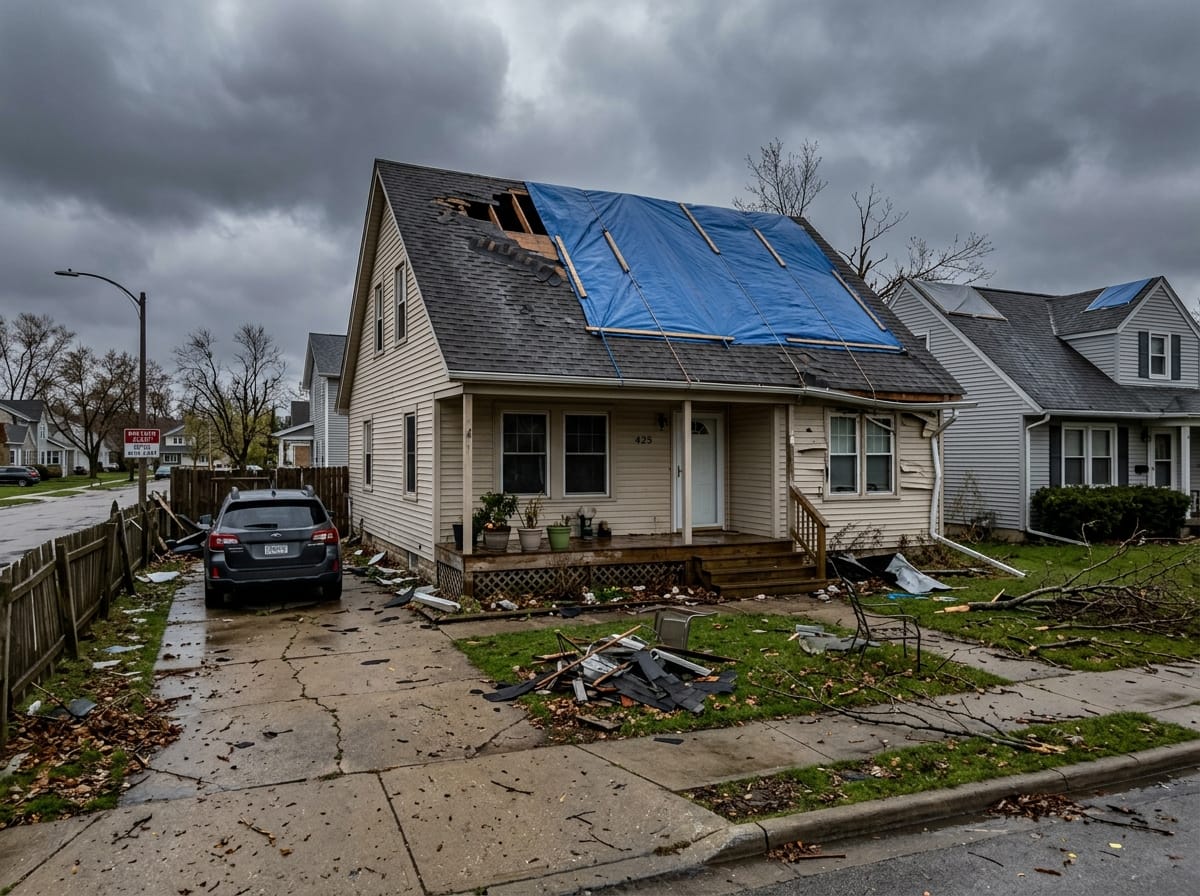
Emergency tarp service is the fastest and most effective way to protect a storm-damaged roof from turning into a much larger interior loss. If your home has missing shingles, exposed decking, tree impact, or active leaks, the priority is to stop water intrusion immediately. Homeowners looking for trusted local roofing contractors in Northwest Arkansas should know that a properly installed tarp is not a cosmetic fix. It is an essential damage-control step that helps preserve insulation, framing, ceilings, flooring, and personal property while permanent repairs are arranged.
As expert roofing contractors in Northwest Arkansas, we prioritize rapid response to prevent escalating interior losses. Here are the critical facts regarding emergency roof stabilization:
- Response Time: Professional tarps are typically installed within 2-4 hours of the initial call.
- Insurance Compliance: Most homeowners insurance policies mandate tarping under “mitigation of damages” clauses.
- Cost Efficiency: Professional installation ranges from $600 to $2,000, a fraction of the cost of mold remediation.
- Durability: A high-quality, 10-mil tarp secured with furring strips lasts 30 to 90 days.
- Risk Factor: Mold colonization begins within 24-48 hours of moisture exposure.
Acting fast is the single most important thing you can do to protect your home and your insurance claim. Water entering through even a small roof opening can travel along rafters, wiring, and insulation before it appears on a ceiling, which means visible stains often understate the true extent of the damage. In practical terms, a same-day tarp can save thousands of dollars in drywall replacement, insulation removal, flooring repairs, and mold treatment.
This guide provides a definitive resource for homeowners in Berryville and surrounding areas dealing with storm-related roof breaches, emergency stabilization, and the next steps after a loss.
I’m Rex Wisdom, owner of Heritage Roofing & Repair – a family-owned business with over 50 years of combined roofing experience. I’ve personally overseen hundreds of emergency tarp service calls, and the pattern is consistent: when homeowners respond quickly, the damage is usually contained; when they wait, the repair scope expands fast. A well-secured tarp buys critical time for inspections, insurance communication, and permanent material ordering without leaving the structure exposed.
Similar topics to Emergency tarp service:
The Critical Role of Roof Tarping in Preventing Secondary Home Damage
Data from the National Centers for Environmental Information (NCEI) indicates that severe weather events are increasing in frequency, making immediate mitigation essential. Professional tarping reduces secondary damage costs by approximately 60% by preventing water from reaching light fixtures, ceiling fans, attic wiring, insulation, and wall cavities. Documenting temporary repairs shows that the homeowner acted responsibly, making adjuster inspections more straightforward and reducing disputes over what was storm-related versus what was avoidable.
At Heritage Roofing & Repair, we provide 24/7 emergency roof repair to ensure your temporary fix is sturdy enough to last until permanent repairs are scheduled.
How to Choose a Reliable Emergency Tarp Service
Not every tarp installation provides the same level of protection. Homeowners should look for a company that offers 24/7 response, uses mechanical fastening rather than loose edge weighting, documents damage before and after installation, and understands the insurance process well enough to support the claim. Local knowledge matters too, because wind exposure, storm patterns, and common roof types vary by region.
A dependable emergency tarping contractor should be able to explain how long the tarp is expected to last, what conditions could affect it, and when a permanent repair or replacement should begin. Clear communication, photos, and a written scope of work are all signs of a professional response.
Heritage Roofing & Repair 3458 Arkansas State Hwy 221, Berryville, AR 72616 Phone: (870) 654-1164
Common Scenarios Requiring Urgent Roof Stabilization
According to the NOAA Storm Events Database, Arkansas experiences high-velocity wind events that frequently compromise residential roofing systems. An emergency tarp service is required when the roof’s integrity is breached by:
- Wind and Hail: High winds peel shingles like an orange rind, while large hail punctures roofing membranes.
- Impact Damage: Fallen trees create structural openings that allow both water and pests into the home.
- Fire Suppression: Firefighters often cut holes in the roof for ventilation; these must be secured immediately after the fire is extinguished.
- Equipment Failure: Dislodged HVAC units or solar panels leave exposed decking that requires storm stabilization techniques to seal.
- Vandalism or Sudden Openings: In rare cases, intentional damage or an unexpected collapse around penetrations can leave the roof exposed and vulnerable to rapid interior loss.
In real-world storm recovery, homeowners often underestimate how little damage it takes to justify urgent tarping. A breach does not need to cover half the roof to become an emergency. A torn valley, lifted ridge cap, punctured low-slope membrane, or missing section around flashing can be enough to let water into decking layers and attic cavities. Once those materials become wet, each additional rainfall event compounds the problem.
Signs You Need an Emergency Tarp Service
Immediate inspection is required if you notice missing shingles, sagging ceilings (indicating pooling water), visible daylight in the attic, or active leaks requiring buckets to catch water. Other warning signs include wet insulation, sudden musty odors after a storm, bubbling paint on ceilings or walls, and debris impact visible from the ground. If a tree limb has hit the home or you can see exposed wood from outside, the safest assumption is that emergency stabilization is needed until a full repair plan is in place.
For homeowners in the Berryville area, the best rule is this: if the roof is open to the weather, tarping should happen as soon as conditions are safe.
The 5-Step Professional Protocol for Secure Roof Tarping
Professional tarping is a technical process designed for high-wind resistance. Unlike DIY attempts, professional installation follows a strict safety and engineering protocol:
- Comprehensive Assessment: Identifying all entry points and checking for structural instability.
- Debris Clearance: Removing branches and loose materials to ensure a flush seal against the roof surface.
- Strategic Overlap: Extending the tarp 3-4 feet beyond the damage and over the ridge to prevent water from running under the top edge.
- Mechanical Fastening: Using furring strips screwed into the rafters to create a tight seal and prevent wind uplift. We avoid using nails alone, as they pull through the tarp easily.
- Documentation: Providing high-resolution photos for insurance adjusters to verify the initial damage extent before the tarp was applied.
For an emergency tarp service, we utilize heavy-duty polyethylene or UV-resistant canvas, typically 6 to 10 mils thick, which is significantly stronger than standard hardware store alternatives.
Why the Installation Method Matters
The performance of a tarp depends less on the sheet itself than on the way it is installed. Most failures happen at the edges, corners, and upper attachment points where wind can catch loose material and peel it back. That is why professionals focus on proper overlap, tight tension, and secure anchoring into stable structural members whenever possible.
A correctly installed tarp is designed to shed water, resist uplift, and remain in place through changing weather conditions. A poorly installed tarp may still look acceptable from the ground while allowing wind-driven rain to enter around the edges. For that reason, professional emergency tarping should always be approached as a temporary roof system, not just a plastic cover thrown over the damaged area.
Materials Used in Professional Tarping
Professional crews typically choose materials based on roof slope, roof type, size of the damaged section, and expected weather exposure before permanent repairs begin. Common materials include:
- Reinforced polyethylene tarps for durable short-term weather protection
- UV-resistant canvas in select applications where sun exposure is a major factor
- Furring strips to clamp tarp edges securely and distribute wind load
- Screws or approved mechanical fasteners for stronger holding power
- Sandbags or specialty anchors on roof types where direct fastening must be limited
This methodical approach is one reason professionally installed tarps routinely outperform improvised emergency coverings.
Investment and Insurance: Understanding Emergency Tarping Costs
While emergency tarping is an upfront expense, research on roof replacement costs confirms that temporary mitigation prevents much larger restoration bills. Factors influencing the final price include roof pitch, height, the size of the damaged area, accessibility, and whether structural hazards or debris removal are involved. A steep or multi-story roof generally requires more labor, more safety equipment, and more installation time than a simple single-story roof with a small affected section.
Most standard homeowners insurance policies cover the cost of tarping under “reasonable and necessary repairs.” Homeowners should keep invoices, photographs, and any communication with the contractor, since good records make reimbursement much easier.
How Long Does a Professionally Installed Tarp Last?
A professionally installed tarp provides a protection window that allows sufficient time for adjusters to inspect the property and for homeowners to order specialized materials for permanent repairs. That lifespan depends on exposure, roof shape, fastener method, and weather severity. Heavy rain, repeated wind events, or debris impact can shorten the service life, which is why periodic visual checks from the ground are a smart precaution.
It is also important to remember that a tarp is temporary by design. It is meant to stabilize the home, not replace the damaged roofing system. Once the structure is protected, the next priority should be scheduling a permanent repair or replacement plan before the temporary barrier reaches the end of its useful life.
Professional Tarping vs. DIY: Safety Risks and Performance Data
Attempting to tarp a roof during or after a storm presents significant safety risks. Professional crews utilize OSHA-compliant fall protection and industrial-grade materials that outperform retail alternatives.
| Feature | Professional Tarping | DIY Attempt |
|---|---|---|
| Safety | OSHA-compliant fall protection | High risk of falls/injury |
| Security | Mechanical fastening with furring strips | Often held down by bricks or loose nails |
| Longevity | 30-90 days | Often fails within 48 hours |
| Insurance | Documents mitigation for claims | Risk of claim denial for negligence |
| Materials | 10-mil reinforced poly | Standard 3-mil utility tarp |
The difference is not just convenience. It is risk management. Wet roofs are slippery, damaged decking may be unstable, and overhead power hazards can exist after severe weather. For homeowners, climbing onto a compromised roof is one of the most dangerous decisions they can make during the recovery process.
Professional crews also understand how to protect the roof from additional damage while securing the tarp. Improper nailing patterns, poorly placed fasteners, and loose material can turn a small opening into a wider failure zone during the next wind event. In contrast, a trained crew installs the covering with the goal of preserving as much of the surrounding roof system as possible.
Expert Answers to Common Emergency Roofing Questions
Can you tarp a metal or tile roof?
Yes. Specialized techniques, such as ridge-wrapping and weighted anchors, are used on tile and metal roofs to provide security without causing additional damage to the roofing material.
Should you wait for the insurance adjuster before tarping the roof?
No. Homeowners should not leave a roof open to the weather while waiting for an inspection. Emergency tarping is considered a protective measure, and clear photo documentation before and after installation usually provides the evidence adjusters need.
What should homeowners do while waiting for the crew to arrive?
If it can be done safely from inside the home, move valuables away from active leaks, place containers under drips, and avoid rooms with sagging ceilings or water near electrical fixtures. Do not climb onto the roof, and do not attempt interior demolition unless your insurer or contractor specifically advises it.
Securing Your Property: Next Steps for Storm Recovery
An emergency tarp service is the first line of defense in a comprehensive recovery plan. It provides the necessary time to navigate the roofing insurance claims ultimate guide and secure a permanent solution.
Don’t let a bad storm turn into a total loss. If you suspect your roof has been compromised, act immediately to secure your home and your future. For expert help navigating the complexities of storm damage, apply for assistance with our roofing insurance claims ultimate guide. We are here to help you get back to normal, one shingle at a time.