Your Roof Claim Starts Here: What Every Homeowner Needs to Know
A roof inspection for insurance claim purposes is the single most important step you can take after storm damage — and getting it right determines whether your claim gets paid or denied.
Here is a quick overview of how the process works:
- Schedule a professional inspection within 48 hours of a storm event
- Document all damage with timestamped photos before anything is touched
- Obtain a written inspection report that includes cause of damage, photos, and repair estimates
- File your claim promptly — most policies require notification within days or weeks
- Have your contractor present during the insurance adjuster’s walkthrough
- Review the adjuster’s estimate against your contractor’s independent assessment before accepting any settlement
Storm damage to your roof is stressful enough without navigating a complex insurance process alone. Nearly half of all home insurance claims in high-risk states are closed without payment — most often because homeowners lacked the documentation to prove their loss. The difference between a paid claim and a denied one usually comes down to one thing: the quality of your inspection report.
That is why partnering with trusted roofing experts in Berryville, AR before you call your insurance company is the smartest first move you can make.
I’m Rex Wisdom, owner of Heritage Roofing & Repair, a family business with over 50 years of combined experience helping Northwest Arkansas homeowners navigate the roof inspection for insurance claim process from start to finish. In this guide, I’ll walk you through exactly what inspectors look for, how to protect your claim, and how to avoid the mistakes that cost homeowners thousands of dollars every year.
Simple guide to roof inspection for insurance claim terms:
- How to file roof replacement insurance claim with adjuster
- Roofing contractors and insurance adjusters
Why a Professional Roof Inspection for Insurance Claim Success is Mandatory
When you file a claim, the “burden of proof” lies with you, the homeowner. You must prove that a specific weather event caused sudden, accidental damage to your property. A casual glance from the driveway isn’t enough to satisfy an insurance carrier’s requirements.
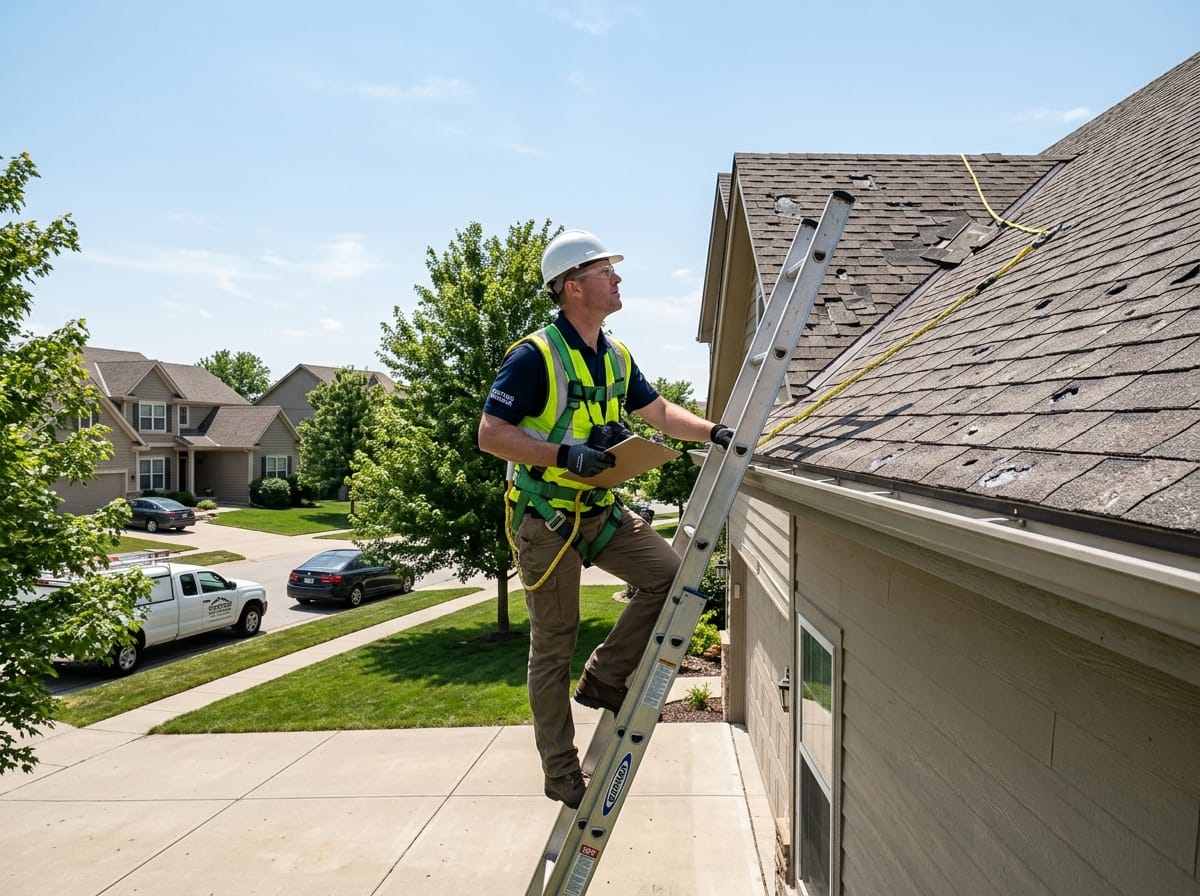
A professional roof inspection for insurance claim success acts as a forensic evaluation. Carriers look for evidence-based filing. If your report lacks high-resolution photos, precise measurements, and a clear “date of loss,” your claim is much more likely to be undervalued or outright rejected. Furthermore, having a professional roofer conduct the initial assessment provides you with an advocate. When the insurance adjuster arrives, your contractor can point out subtle damage that an adjuster—who may be looking at dozens of houses a day—might accidentally overlook.
According to the National Roof Certification and Inspection Association, a certified inspection report is often the deciding factor in complex negotiations. We specialize in providing this level of insurance claim support, ensuring that the data presented to your insurer is accurate, professional, and difficult to dispute.

The Difference Between Professional and DIY Assessments
We often see homeowners attempt to inspect their own roofs to “see if it’s worth filing.” This is risky for two reasons. First, safety is a major concern; climbing a roof after a storm is dangerous, especially if structural integrity is compromised. Second, homeowners often miss “functional damage.” While you might notice a missing shingle, you likely won’t see the microscopic fractures in the asphalt matting caused by hail.
The International Association of Certified Home Inspectors notes that professional inspectors are trained to identify these hidden issues. A DIY check might lead you to believe your roof is fine, only for leaks to develop six months later when it is too late to file a claim.
Telltale Signs During a Roof Inspection for Insurance Claim
During a professional examination, we look for specific markers that distinguish a “covered peril” (like a storm) from “general wear and tear.” Insurance companies do not pay for old age; they pay for sudden damage.
| Damage Type | Storm Damage Indicators | Normal Wear and Tear Signs |
|---|---|---|
| Hail | Dark, circular bruises; soft spots; fresh granule loss in gutters. | Blistering from heat; uniform thinning of shingles; “bald” spots. |
| Wind | Creased shingle tabs; broken seals; missing sections; uplifted edges. | Brittle shingles snapping from age; curling or clawing at the edges. |
| Metal | Dents in vents, flashing, and valleys with sharp edges. | Oxidation; rust; fading paint from UV exposure. |
What Inspectors Look For: Identifying Covered Perils
When we perform a roof inspection for insurance claim purposes, we are looking for “functional damage.” This is damage that affects the roof’s ability to shed water or shortens its expected lifespan. The National Roofing Contractors Association defines these standards strictly. According to the Texas Department of Insurance, documenting these patterns immediately is vital for storm damage inspections.
Distinguishing Maintenance Issues from Sudden Loss
One of the most common reasons for a denied claim is “pre-existing damage” or “lack of maintenance.” If an inspector finds wood rot that has clearly been there for years, or heavy algae growth that indicates long-term moisture retention, the insurer may argue that the roof failed due to neglect rather than the storm. The Texas Department of Insurance warns that if a small leak was ignored and led to major structural failure, the carrier might only pay for a portion of the repair.
Heritage Roofing & Repair 3458 Arkansas State Hwy 221, Berryville, AR 72616 (870) 654-1164
The Critical Role of the Attic and Interior Examination
A common mistake homeowners make is thinking a roof inspection for insurance claim documentation only happens on the shingles. In reality, the most compelling evidence often sits in your attic.
We use moisture detection tools to find “hidden” leaks. Sometimes, a roof breach doesn’t result in a drip on your living room floor right away. Instead, water seeps into the insulation or runs down a rafter. By the time you see a stain on your ceiling, mold may have already started to grow.
Why Interior Leaks Strengthen Your Claim
If we find water stains on the underside of the roof deck or damp insulation, it proves that the exterior “envelope” of the home has been compromised. This is what adjusters call secondary evidence. It makes it much harder for an insurance company to claim the damage is merely cosmetic. For a complete roof inspection, we always check ventilation health as well, as poor airflow can accelerate shingle damage and is a frequent point of contention in insurance disputes.
Understanding Your Policy: ACV, RCV, and the 80% Rule
Before you schedule your roof inspection for insurance claim filing, you need to know what kind of policy you have. This determines how much money you will actually receive.
- Actual Cash Value (ACV): This pays the depreciated value of the roof. If your 20-year roof is destroyed, the insurer subtracts the “used up” value. You might only get 50% of the cost of a new roof.
- Replacement Cost Value (RCV): This is the gold standard. The insurer pays what it actually costs to replace the roof today. You usually receive an initial ACV check, and then “recoverable depreciation” is paid once the work is finished.
- The 80% Co-Insurance Rule: Most policies require you to insure your home for at least 80% of its total replacement value. If you are under-insured, your payout for a roof claim could be penalized.
Understanding these terms is essential for any roof insurance guide.
How Depreciation Affects Your Payout
Let’s look at the math. If a new roof costs $20,000 and your roof is 10 years old (halfway through its life), an ACV policy might only pay you $10,000 minus your deductible. An RCV policy would eventually pay the full $20,000 (minus deductible). This is why a professional inspection is so important—we help you calculate these numbers so you aren’t caught off guard by a small check.
Step-by-Step: Preparing for Your Roof Inspection for Insurance Claim
To ensure your roof inspection for insurance claim goes smoothly, preparation is key. You don’t want to be scrambling for paperwork while the inspector is on the ladder.
- Gather Maintenance Logs: Show that you have taken care of the roof. Receipts for gutter cleaning or minor repairs prove you aren’t a “neglectful” owner.
- Clear the Perimeter: Ensure the inspector can get a ladder to all sides of the house. Trim back any low-hanging branches that might be in the way.
- Secure Pets: It sounds simple, but a barking dog can distract an inspector or adjuster from doing a thorough job.
- Organize Photos: If you have “before” photos of your roof from a year ago, have them ready. This is the ultimate proof that the damage is new.
Check out our roof inspection checklist for a more detailed breakdown.
Scheduling Your Roof Inspection for Insurance Claim
Timing is everything. Most insurance policies have a “statute of limitations” for storm claims—often one year from the date of the storm. However, you should aim to have your inspection done within days. The longer you wait, the more the damage looks like “old wear.” If you are in Northwest Arkansas, our expert roofers in Berryville, AR can usually be on-site within 24-48 hours of your call.
Navigating Denials and the Role of Independent Inspectors
What happens if your claim is denied? First, don’t panic. Denials happen frequently, often because the insurance adjuster was in a rush or lacked the specialized tools to see hidden damage.
If you disagree with the adjuster’s findings, you have the right to a second opinion. This is where a third-party or forensic inspector comes in. These experts provide a non-biased, highly detailed report that can be used to “re-open” a claim. The National Roof Certification and Inspection Association provides specialized forensic inspections for exactly this purpose. If you’ve been turned down, read our guide on denied roof claims to learn about your rights.
When to Hire a Third-Party Inspector
You should consider an independent inspector if:
- The insurance company says there is “no damage” but your roof is leaking.
- The payout offered is significantly lower than local repair costs.
- The adjuster refused to get on the roof and only did a “ground-level” check.
A third-party inspection provides the legal evidence needed for an appraisal or a formal appeal.
Local Expert Support in Berryville, AR
Heritage Roofing & Repair provides specialized assistance for homeowners navigating the complexities of storm damage. Our team ensures your roof is evaluated with the precision required for insurance approval. We have been serving the Berryville, Harrison, and Fayetteville areas for decades, and we treat every roof as if it were our own. Our local presence allows us to respond quickly after a storm, providing the documentation you need to secure your home’s future.
Frequently Asked Questions about Roof Inspections
How much does a roof inspection for an insurance claim cost?
Most professional roofing contractors, including us, offer free initial storm damage assessments to help you determine if a claim is necessary. However, if you require a certified third-party forensic inspection for legal or appeal purposes, those typically cost between $200 and $500 depending on the roof’s size and complexity.
Can I choose my own contractor for the repairs?
Yes! This is a common misconception. You are not required to use the “preferred vendors” suggested by your insurance company. Homeowners have the legal right to choose any licensed and insured contractor to perform their repairs. We always recommend choosing a local company that will be around to honor their warranty long after the “storm chasers” have left town.
What happens if the insurance adjuster misses damage?
This happens more often than you might think. If your contractor finds additional damage while performing the repairs, they can submit a “supplemental claim.” This includes photo evidence of the newly discovered damage and a line-item estimate. Most insurance companies are accustomed to this process and will issue a secondary check once the evidence is reviewed.
Conclusion
Mastering the roof inspection for insurance claim process is about more than just looking at shingles; it is about building a strong, evidence-based case for coverage. With over 50 years of combined experience, Heritage Roofing & Repair brings the local knowledge, storm damage expertise, and quality craftsmanship Northwest Arkansas homeowners need when every detail matters. We have been serving the Berryville, Harrison, and Fayetteville areas for decades, ensuring every roof is evaluated with the precision required for insurance approval.
From the first inspection to reviewing the adjuster’s scope, having an experienced roofing partner can help reduce errors, strengthen documentation, and improve the odds of a fair settlement. We specialize in storm damage restoration and work hard to help our neighbors in Berryville and across the region protect their homes and move forward with confidence.
Don’t leave your home’s future to chance. Let us help you master the roof insurance claim process and get your roof back to peak condition. Contact Heritage Roofing & Repair today for a professional evaluation you can trust.