Why Immediate Action After a Hailstorm Protects Your Home and Wallet
Hail damage roof inspection is the critical first step homeowners must take after a storm to identify hidden damage, prevent costly leaks, and secure insurance coverage before filing deadlines expire.
Quick Answer: How to Identify Hail Damage on Your Roof
- Check from the ground first – Look for dented gutters, damaged siding, shredded plants, and AC unit dents
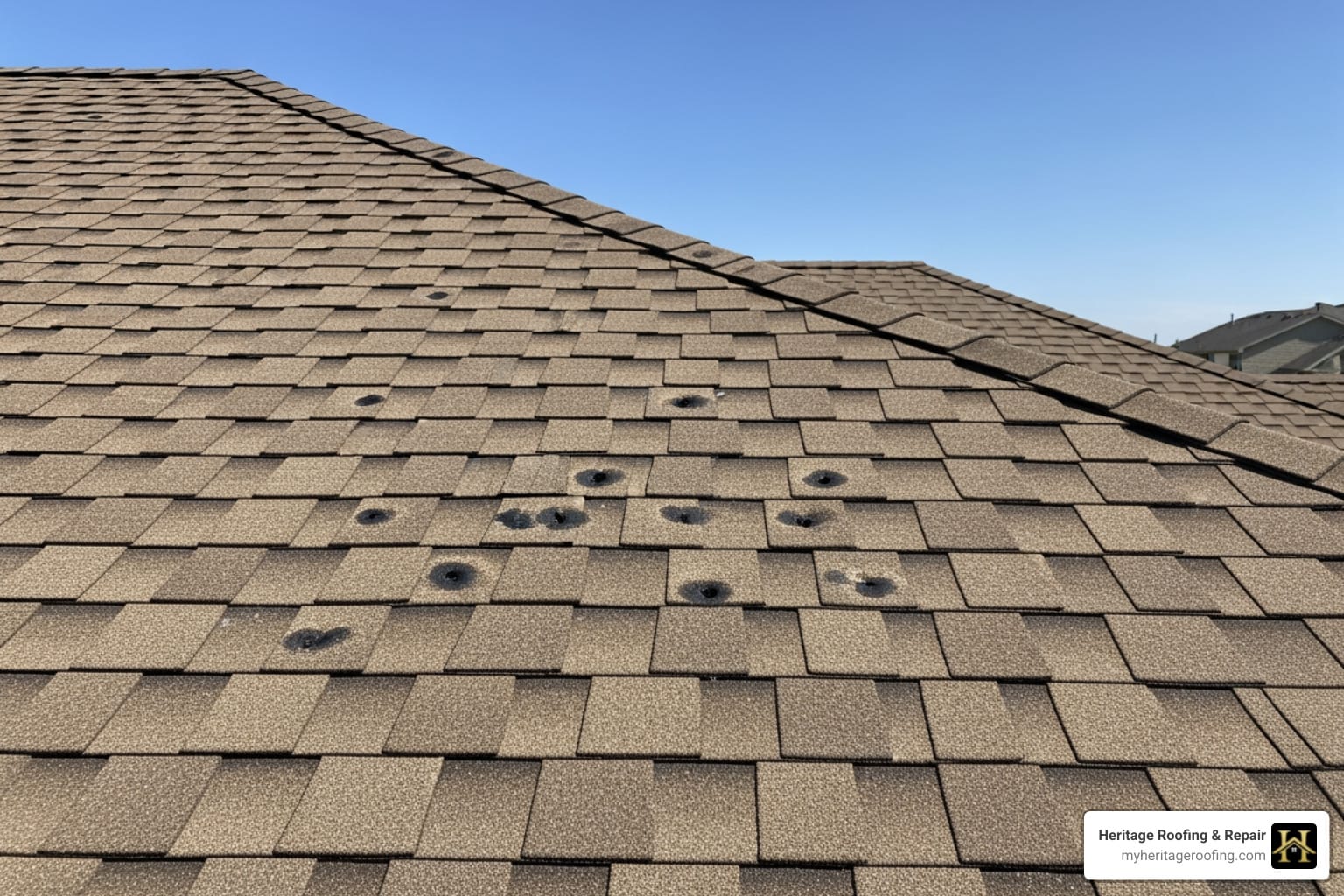
- Inspect shingles for granule loss – Black spots where granules are missing expose the underlying asphalt
- Look for circular impact marks – Hail creates round or oval bruises, not irregular damage
- Examine metal components – Vents, flashing, and chimney caps show dents more easily than shingles
- Schedule a professional inspection – Certified inspectors use test squares to document functional damage for insurance claims
In 2020 alone, the United States experienced 4,611 large hail storms, causing an average of $1 billion in annual repair costs. Even hail as small as one inch in diameter can compromise your roof’s integrity, leading to leaks, mold growth, and structural damage that worsens over time.
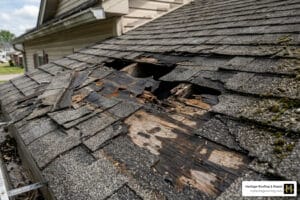
The challenge? Hail damage is notoriously difficult to spot from the ground. Unlike missing shingles or obvious holes, hail creates subtle bruises and granule displacement that homeowners often miss until water stains appear on their ceilings months later.
For comprehensive roofing solutions after storm damage, visit our roof repair services page.
I’m Rex Wisdom, and through Heritage Roofing & Repair, my family has conducted thousands of hail damage roof inspections across Northwest Arkansas over five decades of service. Our systematic approach to hail damage roof inspection combines certified training with hands-on local experience to help homeowners protect their most valuable investment.
Hail damage roof inspection terms simplified:
Ground-Level Clues: Spotting Damage Before You Climb
Before you grab a ladder, we always recommend starting your hail damage roof inspection from the safety of the ground. Hail doesn’t just hit your shingles; it leaves a trail of “collateral damage” across your entire property. If you see dents on your car or shredded leaves in your yard, there is a high probability your roof took a hit too.
We look for these primary indicators on the ground:
- Gutters and Downspouts: Check for small “dings” or dents. Aluminum gutters are soft and show impact marks easily. Also, check for heavy granule accumulation in the troughs, which indicates shingle impact.
- AC Condenser Fins: The thin metal cooling fins on your outdoor air conditioning unit are extremely fragile. Hail can flatten these fins, which is a major red flag for roof damage.
- Window Screens and Siding: Look for tears in screens or “spatter marks” on siding. Spatter marks are areas where hail has cleaned away oxidation or algae, leaving a temporary bright spot.
- Soft Metals: Check mailbox posts, metal lawn furniture, and garage doors for indentations.
How to Perform a Preliminary Hail Damage Roof Inspection Safely
Safety is our number one priority. In Northwest Arkansas, our roofs can be steep and slick. If you decide to do a preliminary check, start with a pair of binoculars. You can often see “bruises”—dark, circular spots on the shingles—without ever leaving the ground.
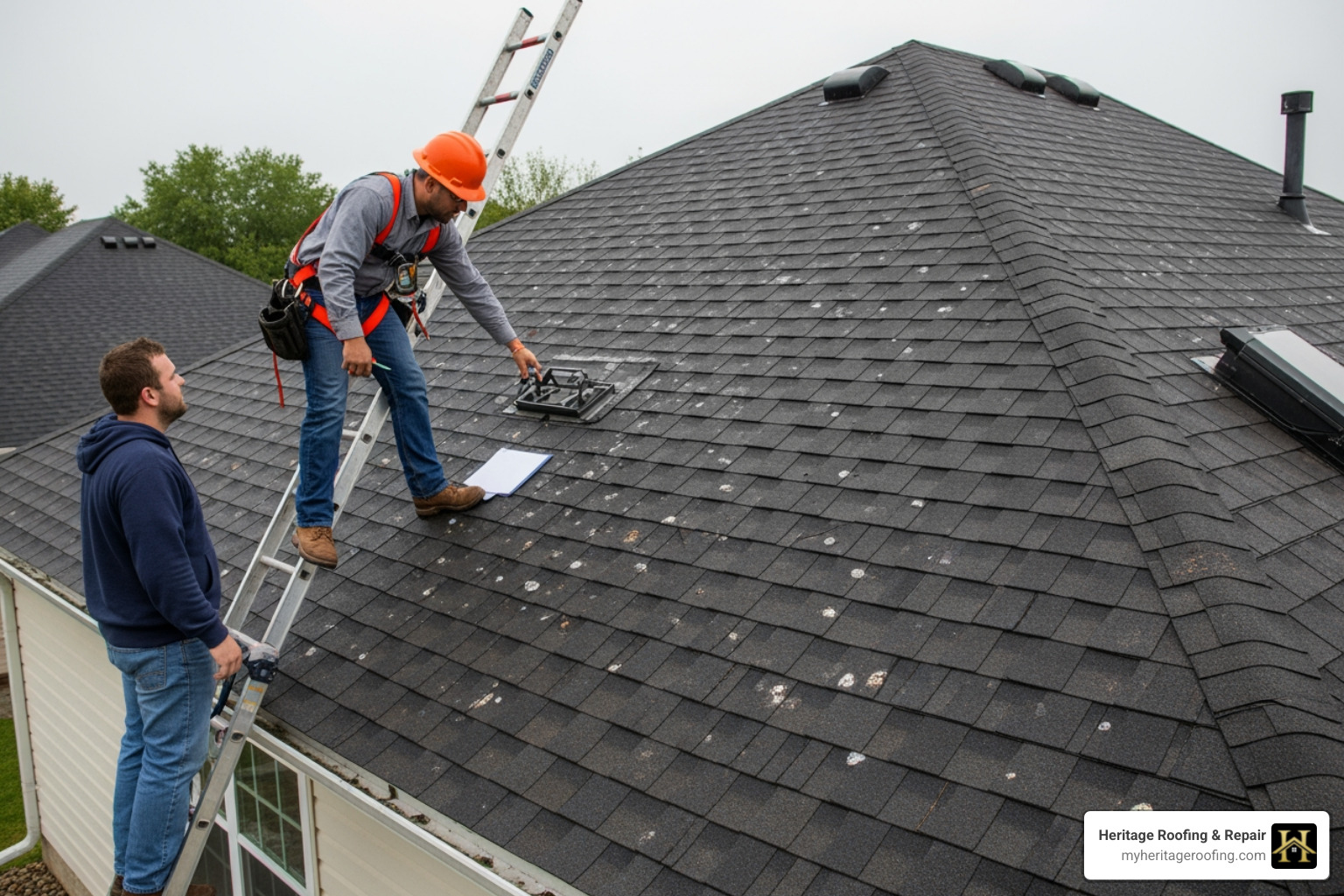
If you must use a ladder, ensure it is on level ground and extends at least three feet above the roof edge. We recommend wearing roofing boots or soft-soled shoes to maintain traction and prevent further damage to the shingles. A simple trick we use is to carry a piece of sidewalk chalk. If you suspect a dent on a metal vent or flashing, rubbing the chalk flat across the surface will highlight the indentation clearly.
The Professional Standard for a Hail Damage Roof Inspection
While a homeowner can spot the obvious signs, a professional hail damage roof inspection follows a scientific protocol used by insurance adjusters. At Heritage Roofing & Repair, we align our methods with industry leaders like HAAG and the NRCIA to ensure our reports are indisputable.
The gold standard for quantifying damage is the Test Square Method. We mark off a 10-foot by 10-foot area (100 square feet) on at least three different slopes of your roof. Inside these squares, we look for “functional damage.”
What counts as a hit?
According to Mastering Roof Inspections: Hail Damage, Part 12, functional damage must involve a physical compromise of the shingle’s integrity, such as a fracture in the mat or significant granule displacement. Most insurance companies require seeing 8 to 10 of these hits within a single test square to justify a full roof replacement.
Our team utilizes scientific research on ice stone impact tests to distinguish between a fresh hail hit and natural weathering. This forensic approach is why our inspections carry weight with insurance carriers.
Why Professional Documentation is Vital for a Hail Damage Roof Inspection
An insurance adjuster’s job is to verify the “date of loss” and the extent of the damage. Without a professional roof inspection, it’s your word against theirs. We provide a comprehensive report that includes:
- High-resolution photos of test squares and collateral damage.
- Documentation of the storm date using documented 2020 hail storm data and NOAA reports.
- An Xactimate estimate, which is the same software adjusters use to calculate repair costs.
Having third-party proof from a Hail Damage Roof Inspection for Insurance guide ensures you aren’t left paying out of pocket for a storm that should be covered.
Material-Specific Indicators: What Hail Does to Your Roof
Not all roofs react to hail the same way. The age of your roof and the material it’s made of will dictate what we look for during an inspection.
- Asphalt Shingles: Look for “bruises” that feel soft to the touch, like a bruise on an apple. These spots indicate the internal mat is fractured. Over time, these spots will lose all granules and develop leaks.
- Metal Roofing: Hail rarely punctures metal, but it can cause significant “dings.” While often considered cosmetic, large dents can loosen fasteners or break the seal on lap joints. For more details, see our guide on Metal Roof Hail Damage Insurance.
- Wood Shakes: Hail causes wood to split along the grain. If the split has a bright orange or tan color inside, it’s a fresh hit from a recent storm.
- Tile and Slate: These materials are tough but brittle. Hail creates “star fractures” or clean breaks.
- TPO and Flat Roofs: On commercial buildings, we look for “crow’s feet” cracks or circular fractures in the membrane. You can learn more about this on our TPO Roofing Hail Damage page.
The CASMA Technical Bulletins emphasize that even if a shingle isn’t punctured, the loss of protective granules exposes the asphalt to UV rays, which causes the shingle to become brittle and fail prematurely.
Navigating the Insurance Claim Process for Storm Damage
Filing an insurance claim can feel like a full-time job. Most homeowners in Arkansas have between 6 and 24 months to report storm damage, but the sooner you act, the better.
When you suspect damage, your first step should be to contact your insurance company to start the process. Hail is considered an “Act of God.” In most cases, filing a single claim for storm damage will not cause your individual premiums to rise, as these are typically adjusted based on the risk level of the entire zip code.
If your Hail Damage Roof Claim is Denied, don’t panic. This often happens if the adjuster missed subtle bruising. We can meet with your adjuster for a re-inspection to point out the functional damage they might have overlooked. For a deeper dive, check out our Insurance Hail Damage Roof guide.
Distinguishing Functional Damage from Cosmetic Wear
One of the biggest points of contention in a hail damage roof inspection is the difference between “functional” and “cosmetic” damage. Since 2013, many insurance companies have added “Cosmetic Damage Exclusions” to policies. This means they may not pay to fix a dent in a metal roof if it doesn’t cause a leak.
We also have to distinguish hail from other issues:
- Heat Blistering: These are small, hollow bubbles caused by poor attic ventilation. Unlike hail hits, blisters usually have a “cap” of granules still attached or show a clean, hard crater.
- Mechanical Damage: This is damage caused by foot traffic or tools. It usually looks like a “scuff” rather than a circular impact.
- UV Degradation: As roofs age, they naturally lose granules. This is uniform across the roof, whereas hail damage is localized to impact points.
To avoid surprises, read our article Don’t Get Caught Off Guard: A Complete Guide to Roof Inspections.
Frequently Asked Questions about Hail Damage
What size hail causes functional roof damage?
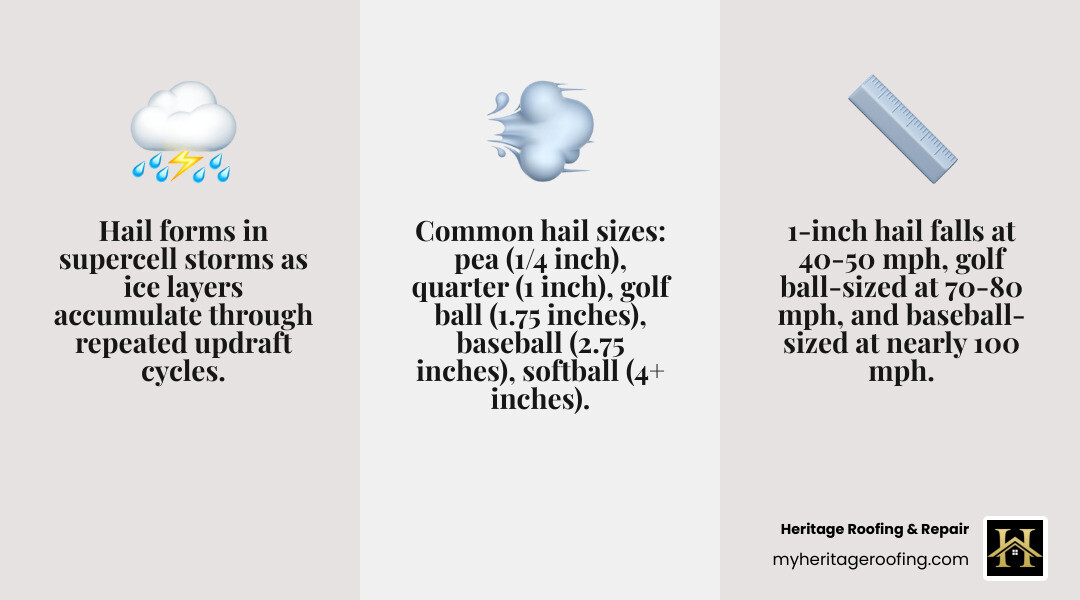
On average, hail 1 inch in diameter (the size of a quarter) is enough to cause functional damage to standard 3-tab asphalt shingles. For thicker, laminated architectural shingles, the threshold is typically 1.25 inches. However, if the storm is accompanied by high winds, even smaller hail can cause significant granule loss.
Can small hail or “hail spatter” cause claimable damage?
“Hail spatter” refers to the marks left when hail knocks dirt, lichen, or oxidation off a surface. While spatter is great forensic evidence that hail hit your home, it is generally considered cosmetic. However, if that small hail is dense and high-velocity, it can lead to “scouring,” which removes enough granules to warrant a Hail Damage Roof Repair.
How soon after a storm should I schedule an inspection?
We recommend scheduling a hail damage roof inspection within 24 to 48 hours. This allows us to document the damage before it is obscured by bird droppings, dust, or further weathering. Prompt action also ensures you stay well within your insurance company’s filing window.
Conclusion
A hailstorm is a stressful event, but your roof’s recovery doesn’t have to be. Whether you need a minor roof repair or a full replacement, the key is accurate identification and professional documentation.
Deciding between a patch job and a new roof depends on the density of the hits and the age of your current system. For a step-by-step look at the restoration process, see From Dents to Done: The Ultimate Hail Damage Repair Handbook.
At Heritage Roofing & Repair, we’ve spent 50 years helping our neighbors in Berryville, Fayetteville, and Harrison navigate the aftermath of Arkansas storms. We provide honest, transparent assessments so you can make the best decision for your home.
Heritage Roofing & Repair
3458 Arkansas State Hwy 221, Berryville, AR 72616
Click to call: (870) 654-1164