Roof Storm Damage: The Definitive Emergency Response Guide for Homeowners
Roof storm damage demands immediate action within the first 24 hours to prevent structural failure, mold growth, and insurance claim denial. Recent industry data shows U.S. storm-related roofing repair costs have reached $31 billion, a 30% increase in just two years, driven by the rising frequency of extreme weather events. Wind and hail damage account for over 50% of all residential insurance claims annually. For homeowners in Northwest Arkansas, Heritage Roofing & Repair provides expert storm damage repair services backed by over 50 years of hands-on experience.
If your roof was just hit by a storm, follow this protocol:
- Prioritize Safety – Stay clear of downed power lines and sagging ceilings.
- Ground-Level Visual Check – Identify missing shingles, gutter dents, or debris.
- Interior Inspection – Check the attic for damp insulation and ceilings for water rings.
- Document Evidence – Capture high-resolution, timestamped photos of all damage.
- Initiate Insurance Claim – Contact your carrier immediately to obtain a claim number.
- Professional Assessment – Schedule a certified inspection before the adjuster arrives.
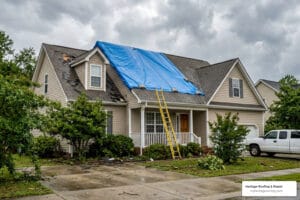
- Mitigate Further Loss – Tarp active leaks; these costs are typically reimbursable.
This guide provides the definitive roadmap for storm recovery, authored by Rex Wisdom, owner of Heritage Roofing & Repair, with over 50 years of industry expertise serving Berryville, Harrison, Fayetteville, and surrounding communities.
Relevant articles related to roof storm damage:
How to Identify Roof Storm Damage: Wind Uplift, Hail Impact, and Hidden Vulnerabilities

Roof storm damage primarily manifests as wind uplift, shingle displacement, and hail-induced granule loss. When severe weather rolls through Northwest Arkansas, it brings a cocktail of forces that can compromise your home’s primary shield. Often, the most insidious damage is the kind you can’t see from your driveway.
According to meteorologists, Hurricane-force winds are classified as 74 mph or greater, but even gale-force winds (39–54 mph) are enough to tear shingles and break the water-tight seals that keep your attic dry. In places like Harrison and Fayetteville, we see everything from straight-line winds to localized hailstorms that rarely last longer than 15 minutes but leave behind a lifetime of repair needs.
Recognizing Wind and Water Intrusion
Wind creates “uplift,” which peels back shingles at the edges or lifts tabs enough to break the sealant strip. Once that seal is broken, wind-driven rain can get underneath. If you notice shingles that look curled, loose, or are missing entirely, your roof’s integrity is compromised.
Water intrusion is the immediate consequence. Look for water spots on your ceilings or “polka-dot” staining in the attic. These are clear signs that wind has created a pathway for moisture. For more specific details on how wind affects your home, check out our guide on wind damage roof.
Identifying Hail and Debris Impact
Hail is the leading cause of insurance claims in the U.S. According to the National Oceanic and Atmospheric Administration (NOAA), severe hailstorms cause approximately $10 billion in property damage each year. When hailstones hit an asphalt shingle, they knock off the protective granules that shield the underlying bitumen from UV rays. Without them, the sun will “cook” your shingles, leading to cracks and leaks within months.
Debris damage is more blunt. Fallen branches can puncture the roof deck or crush the metal flashing around chimneys and vents. Even if a branch didn’t poke a hole, the impact can bruise the shingle matting. You can find a deeper dive into these indicators in our Hail Damage Roof Complete Guide.
Post-Storm Roof Inspection: How to Assess Damage Safely From the Ground
Safety is the primary concern following any weather event. Homeowners should never climb onto a storm-damaged roof, as structural integrity may be compromised and surfaces are often slick. Instead, perform a comprehensive ground-level assessment using binoculars to walk the perimeter of your property.
Look for these definitive signs of damage:
- Missing shingle tabs or scattered debris in the yard.
- Impact marks or dents in gutters, downspouts, and metal vents.
- Granule accumulation at downspout exits (resembling coarse dark sand).
- Cracked or detached fascia and soffit boards.
If you identify these issues, professional verification is necessary. Our storm damage repair services utilize advanced diagnostics to find hidden vulnerabilities. For residents needing roofers in Harrison, AR, we provide rapid-response inspections. You can also consult FEMA guidance for temporary repairs regarding safety protocols for debris removal.
Documenting Roof Storm Damage for Insurance
Precise documentation is the foundation of a successful insurance payout.
- Temporal Data: Record the exact date and time of the event, cross-referencing the NOAA Storm Events Database.
- Visual Evidence: Capture wide-angle shots of the structure and macro photos of specific impacts.
- Scale Reference: Use a coin or ruler in photos to provide context for hail size or tear length.
- Communication Log: Maintain a detailed record of all interactions with adjusters and contractors.
For further guidance, see our article on how to repair storm damage to your home.
Professional Inspection Technology
A professional inspection identifies ‘latent’ damage—issues like fractured fiberglass mats or compromised flashing that are invisible to the untrained eye. We often employ drone technology for high-resolution mapping of steep-slope roofs. Learn more about our local storm damage assessment protocols here.
Insurance Claims for Roof Storm Damage: RCV vs. ACV Policies, Timelines, and Payout Strategies
Filing a claim for roof storm damage requires proving that the loss was “sudden and accidental” rather than the result of wear and tear. You’ll hear terms like “deductibles,” “depreciation,” and “supplements.” Insurance companies generally won’t pay for neglect, so timely filing is essential.
We recommend having your contractor present when the insurance adjuster arrives. This ensures that everyone is looking at the same damage and agrees on the “scope of work.” For a full breakdown of this process, read our article on Hail, Wind, or Wear & Tear: Navigating Roof Damage Insurance Claims.
Understanding RCV vs. ACV Policies
- Replacement Cost Value (RCV): The insurance company pays to replace the roof at today’s prices. They might hold back recoverable depreciation until the work is finished, but you eventually get the full amount (minus your deductible).
- Actual Cash Value (ACV): The company pays you what the roof was worth at the time of the storm. If you have a 20-year-old roof, they will subtract 20 years of “life” from the payout, leaving you to cover the rest out of pocket.
Check your “Declarations Page” to see which one you have. Our Home Storm Repair Complete Guide explains how these policies impact your final bill.
The Step-by-Step Filing Timeline
- Day 1: Inspect and document. Call your insurance to open the claim.
- Days 3–10: Meet with the adjuster and your contractor.
- Days 10–14: Receive your first check (ACV payment) and the “scope of loss” document.
- Weeks 2–6: Schedule and complete the storm damage roof repair.
- Completion: Your contractor sends a final invoice to the insurance company to “release” the remaining depreciation.
Roof Storm Damage Repair Costs: Pricing Data, Scam Prevention, and Contractor Vetting
The average cost for minor roof storm damage repairs typically ranges from $392 to $1,929, while full replacements often average $7,500 or more depending on roof size, pitch, and material. According to HomeAdvisor, the national average for a complete asphalt shingle roof replacement now exceeds $9,000 for homes over 2,000 square feet. Choosing a local, reputable team is vital to ensuring your investment is protected by a valid warranty.
We’ve seen too many “storm chasers” come through Berryville and Fayetteville, take insurance checks, and leave behind shoddy work. For the best results, consult The Most Effective Solution for Storm Damage Repair. If you’re in the Fayetteville area, visit our Fayetteville Storm Damage page for local help.
Avoiding Post-Storm Roofing Scams
The National Insurance Crime Bureau reports that roofing fraud increases by 50% or more in the weeks following major storms. Beware of door-knockers who offer to “waive your deductible.” In many states, this is illegal and can be considered insurance fraud. Always check for:
- A local physical address (not a P.O. Box).
- A valid license and insurance certificate.
- Good reviews on the BBB.
- A written warranty that covers both materials and labor.
Our Storm Damage Home Repair Complete Guide has more tips on spotting these “tailgate” contractors.
Emergency Mitigation Costs
Professional tarping services typically range between $500 and $1,500. As noted in the emergency protocol, these costs are generally covered by insurance, so maintain a file of all receipts for your adjuster. For more on hail-specific fixes, see our Hail Damage Roof Repair guide.
Storm-Proofing Your Roof: Impact-Resistant Materials and Preventive Maintenance That Cut Claims by 50%
The most effective way to mitigate roof storm damage is through preventive maintenance and the installation of impact-resistant materials. While you can’t stop a tornado, you can make your roof much more resilient. Simple things like trimming overhanging tree branches and keeping your gutters clear can prevent 50% of common roof issues.
We also recommend looking into IBHS FORTIFIED Roof standards. These standards involve using specific nail patterns and “sealed roof decks” so that even if shingles blow off, water doesn’t get into your house. Many insurers offer premium discounts of up to 30% for FORTIFIED-certified roofs. For a deep dive into hail resilience, check out From Dents to Done: The Ultimate Hail Damage Repair Handbook.
Upgrading Materials to Prevent Roof Storm Damage
When it’s time for a new roof, consider upgrading to Class 4 impact-resistant shingles. These are tested by dropping a 2-inch steel ball from 20 feet to simulate large hail, and they must show no cracking to earn the rating. Metal roofing is another fantastic option for high-wind areas like Harrison and Berryville, offering wind resistance rated up to 140 mph. Explore these future-proof options in our Hail Damage Roof Guide 2025.
Long-Term Maintenance Strategies
Consistency is key. We recommend a professional roof inspection twice a year — once in the spring before storm season and once in the fall. Check your flashing seals, look for “popped” nails, and ensure your attic ventilation is working correctly. For ongoing support, keep our storm damage roof repair resources handy.
Roof Storm Damage FAQ: Data-Backed Answers to the Most Common Homeowner Questions
Most insurance carriers allow 12 to 24 months to file a storm damage claim, though immediate action is recommended to prevent complications like mold or wood rot that insurers might attribute to neglect rather than the storm event.
Will my insurance premium go up if I file a claim?
Generally, insurance companies cannot raise your individual rates for a claim caused by an “Act of God” (like weather). However, if an entire zip code is hit by a massive hailstorm, the insurance company may raise rates for that entire region to cover their increased risk. According to the Insurance Information Institute, wind and hail claims accounted for 34.5% of all homeowners insurance losses between 2018 and 2022.
Can I repair storm damage myself?
We strongly advise against it. DIY repairs often fail to meet local building codes and can void your shingle manufacturer’s warranty. Furthermore, if the insurance company sees a “patch job,” they may deny future claims on that area of the roof because it wasn’t professionally restored.
How do I know if I need a full roof replacement or just repairs?
If storm damage affects more than 30% of the roof surface, most roofing professionals and insurance adjusters will recommend a full replacement rather than patchwork repairs. A certified inspection is the only reliable way to make this determination. Learn more about the residential roof maintenance steps that extend your roof’s lifespan between storms.
Your Trusted Partner in Northwest Arkansas Storm Recovery
When the clouds clear and you’re left looking at a damaged home, you don’t have to navigate it alone. Heritage Roofing & Repair has over 50 years of experience helping neighbors across Northwest Arkansas recover from storm damage. We provide dependable, affordable, and quality craftsmanship, specializing in the complex world of insurance claims.
Whether you’re in Berryville, Fayetteville, or Harrison, we are your local experts. We’ll handle the inspection, talk to your adjuster, and ensure your roof is stronger than it was before the storm.
Heritage Roofing & Repair 3458 Arkansas State Hwy 221, Berryville, AR 72616