
The Definitive Guide to Storm Damage Repair Services: Recovery and Restoration
Storm damage repair services are the end-to-end restoration steps that return a property to its pre-loss condition after hail, wind, tornadoes, ice, or severe rain. According to the National Oceanic and Atmospheric Administration (NOAA), severe weather events caused over $92 billion in damages across the U.S. in 2023. The fastest way to reduce long-term structural risk is to work with a local, established restoration team such as trusted roof repair experts in Northwest Arkansas who can secure the structure quickly, document damage correctly, and coordinate repairs.
These services typically span emergency mitigation, comprehensive inspections, and full reconstruction. Professional crews handle everything from roof tarping and debris removal to interior drying, rebuild, and final inspections.
What Storm Damage Repair Services Include:
- Emergency Response – 24/7 availability for immediate property protection and tarping
- Damage Assessment – Thorough inspection of visible and hidden structural issues
- Insurance Assistance – Documentation, claim filing, and adjuster coordination
- Exterior Repairs – Roofing, siding, gutters, windows, and debris removal
- Interior Restoration – Water extraction, drying, mold prevention, and reconstruction
- Quality Guarantee – Workmanship warranties and final inspections
When to Call for Storm Damage Repair:
- After any significant storm event (hail, high winds, tornado, ice storm)
- When you notice roof damage, water leaks, or structural concerns
- Before filing an insurance claim (professionals document damage properly)
- Within 24-48 hours to prevent secondary damage like mold growth
I’m Rex Wisdom, and for over 50 years, my family has helped Berryville and Northwest Arkansas homeowners and businesses recover from storm damage through dependable, high-quality storm damage roof repair. Whether you’re dealing with hail-damaged shingles, wind-lifted roofing, or water intrusion, understanding the restoration process helps you make informed decisions during a stressful time.
Storm damage repair services terms to know:
Identifying Property Damage: From Hail Impacts to Wind Uplift
When a storm rolls through Northwest Arkansas, it rarely leaves a single type of footprint. The Insurance Information Institute (III) reports that hail damage alone results in billions of dollars in insured losses annually, affecting approximately 1 in 40 insured homes each year. Understanding exactly what hit you is the first step in a successful recovery.
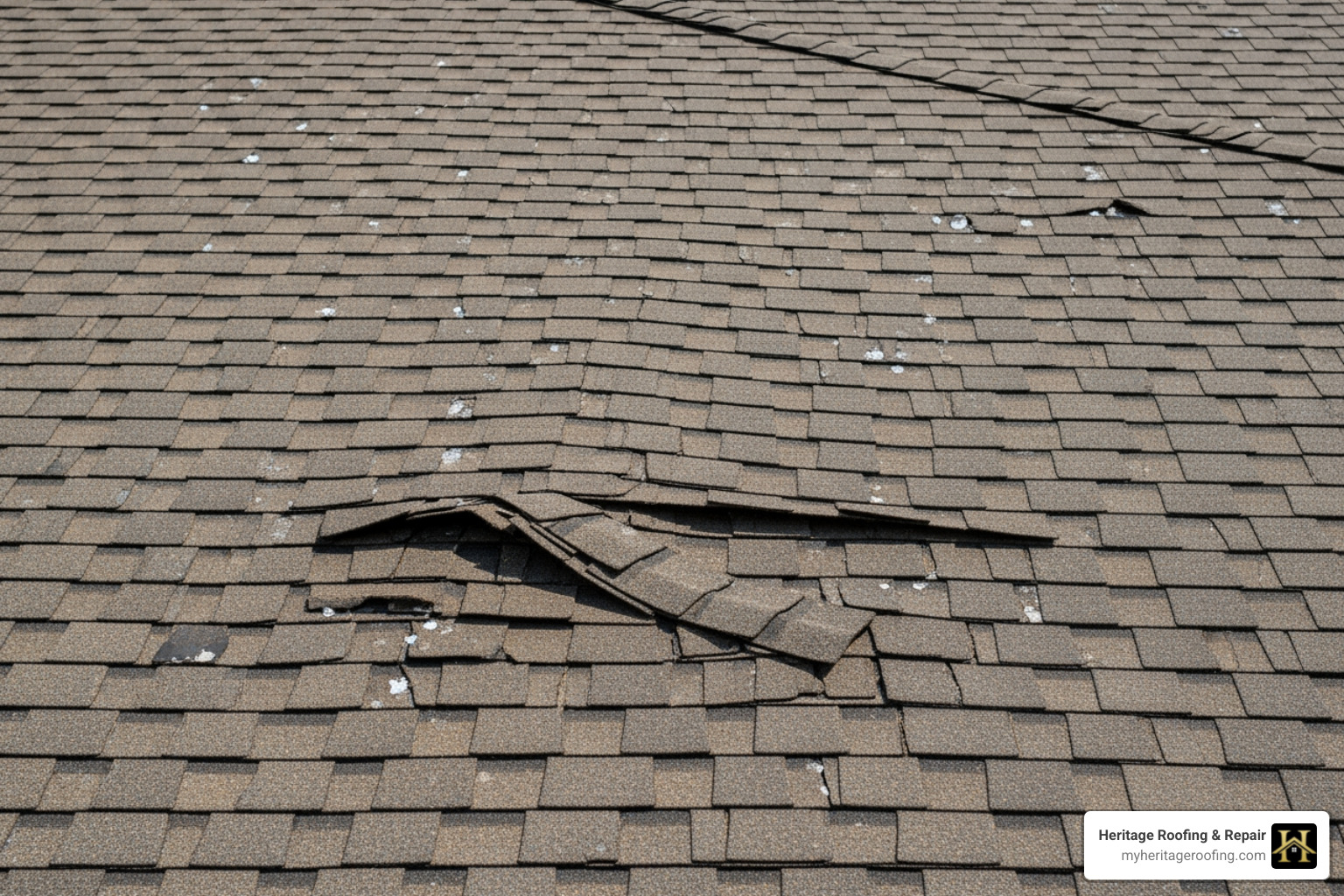
Hail Damage: The Silent Shingle Killer
Hail is perhaps the most deceptive form of storm damage. Even small stones can cause “bruising” on asphalt shingles. This impact knocks away the protective granules, exposing the underlying bitumen to harsh UV rays. Over time, these spots become brittle and eventually lead to leaks. For a deep dive into identifying these marks, check out our complete guide to hail damage roof.
Wind Uplift and Structural Stress
High winds don’t just blow things over; they create pressure differentials that can literally lift shingles or entire roof sections. Wind damage roof issues often manifest as creased shingles, missing tabs, or broken seals. If wind speeds are high enough, flying debris can puncture siding or roofing materials, creating immediate paths for water intrusion. You can learn more about identifying these specific issues in our article on wind damage roof.
Table: Wind Damage vs. Hail Damage Characteristics
| Feature | Wind Damage | Hail Damage |
|---|---|---|
| Primary Sign | Missing or creased shingles | Circular “bruises” or dents |
| Visible Debris | Tree limbs, shingles in yard | Dented gutters, cracked siding |
| Hidden Risk | Broken seal strips (lifting) | Granule loss and UV exposure |
| Pattern | Often occurs at roof edges/ridges | Random distribution across slopes |
Post-Storm Emergency Mitigation: Immediate Steps for Property Safety
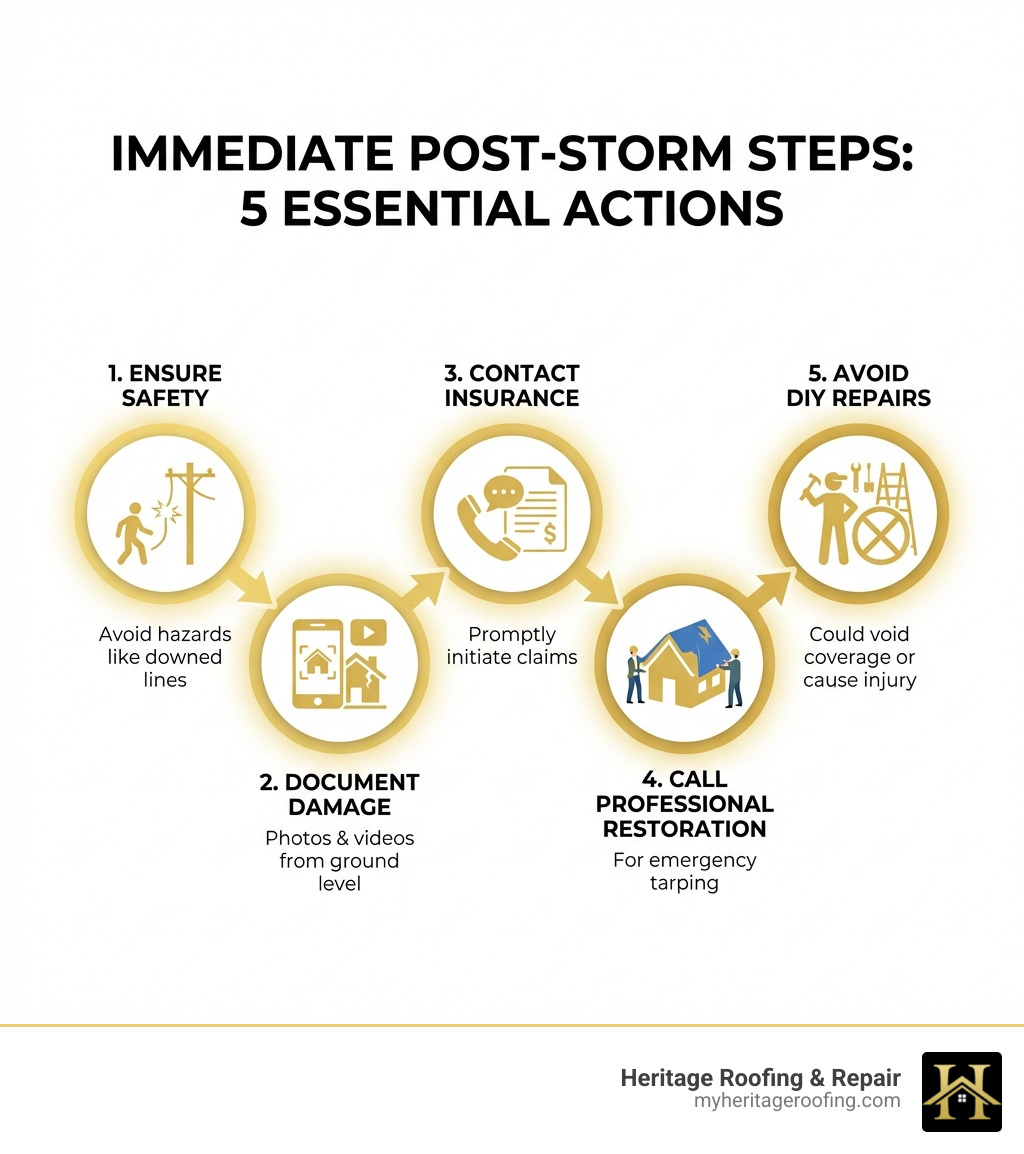
The moments following a major storm are often chaotic, but your actions during this window can determine the cost and complexity of your eventual repairs. Safety must always be your absolute priority.
Safety and Documentation
Before you even think about the roof, check for downed power lines. If you see structural damage, such as a sagging ceiling or a tree resting on the house, do not enter the building. Once it is safe, perform a ground-level inspection. Take photos and videos of everything—dented downspouts, shingles on the lawn, and any interior leaks. This documentation is gold for your insurance claim.
Why You Need 24/7 Emergency Response
Water doesn’t wait for business hours to start causing damage. Storm damage repair services that offer round-the-clock availability are essential because they can provide “mitigation”—the process of stopping secondary damage. This usually involves emergency roof tarping and boarding up broken windows to prevent rain from soaking your insulation and drywall.
Essential Post-Storm Safety Checks:
- Electrical Hazards: Stay away from standing water if you suspect electrical lines are compromised.
- Gas Leaks: If you smell gas, leave the premises immediately and call the utility company.
- Structural Integrity: Look for cracks in the foundation or leaning walls.
- Avoid DIY Roof Climbing: Wet roofs are incredibly slick, and storm-damaged structures may be unstable. Always refer to a complete guide to emergency roof repair rather than risking a fall.
The Professional Restoration Workflow: From Assessment to Reconstruction
When you hire a professional team, the process is much more scientific than just “fixing a leak.” A comprehensive approach ensures that hidden moisture doesn’t turn into a mold nightmare months later.
Initial Assessment and Moisture Monitoring
We begin with a thorough inspection of both the exterior and interior. Professionals use specialized tools like infrared cameras and moisture meters to find water that has trapped itself behind walls or under flooring. This step is crucial because identifying the full scope of damage early prevents the need for more expensive roof leak repair later on.
Debris Removal and Stabilization
After the assessment, the heavy lifting begins. This includes removing fallen trees, clearing away shattered glass, and disposing of ruined materials. If the structure is compromised, we use temporary supports to stabilize the building while permanent repairs are planned. For more details on the specific steps, see our guide on how to repair storm damage to your home.
Navigating Insurance Claims for Storm Damage Repair Services
Dealing with insurance adjusters can be the most stressful part of a disaster. Most homeowners aren’t experts in “Xactimate” (the software adjusters use) or building codes, which can lead to underpaid claims. We act as your advocate, providing the detailed documentation and line-item estimates that insurance companies require. For a smoother experience, read our homeowners insurance roof damage claim guide and look for roofing companies that work with insurance claims to handle the heavy lifting.
Selecting a Certified Storm Damage Contractor: Timelines and Expectations
The surge in demand after a storm often brings out “storm chasers”-unlicensed contractors who travel from state to state looking for quick insurance payouts. Choosing a local, established company is the most reliable way to ensure code-compliant repairs and that workmanship warranties can be honored.
Repair Duration and Influencing Factors
How long will it take? A simple roof repair might take only 1-2 days, but a full restoration involving interior water damage can take several weeks.
Factors that influence your timeline include:
- Extent of Damage: Structural repairs take longer than cosmetic ones.
- Insurance Approval: Repairs usually can’t begin until the claim is processed.
- Weather Conditions: We can’t install a new roof in a downpour.
- Material Availability: Large-scale regional disasters can sometimes lead to material shortages.
Choosing a Reliable Contractor for Storm Damage Repair Services
When looking for a home storm repair company, verify they are licensed, insured, and carry manufacturer certifications. A credible contractor will also provide clear documentation, explain scope line-by-line, and set expectations for scheduling and inspection milestones.
Heritage Roofing & Repair 3458 Arkansas State Hwy 221, Berryville, AR 72616
Expert Answers: Frequently Asked Questions on Storm Restoration
How long does the storm damage repair process typically take?
The storm damage repair process typically takes between two days and six weeks, depending on the severity of the structural impact and the speed of insurance approval. Minor storm damage repair services like replacing a few shingles can often be completed in a single day. However, if the storm caused interior flooding, the drying and reconstruction process will extend the timeline significantly.
Will my homeowners insurance cover all storm damage repairs?
Most standard homeowners insurance policies cover damage from “sudden and accidental” events like wind, hail, and fallen trees. However, they generally do not cover damage resulting from a lack of maintenance. You will be responsible for your deductible, and coverage limits apply. We recommend a free roof inspection to document the damage professionally before you file.
Are emergency storm damage repair services available 24/7?
Yes. Rapid response is critical to preventing secondary damage. Professional restoration companies maintain emergency crews 24/7/365 to provide immediate mitigation, such as roof tarping and window board-ups. This protects your belongings until permanent repairs can be scheduled.
Securing Your Property’s Future After a Major Storm
Recovering from a storm is a process, but the winning strategy is consistent: act quickly, document thoroughly, and repair completely. Fast mitigation prevents secondary damage, and thorough restoration protects resale value and long-term structural performance. If you suspect your property has been affected by recent weather, don’t wait for the next rain to confirm it.
Use our contact page to schedule a professional assessment and get a clear scope for expert storm damage roof repair services.