Why Storm Damage Repair Requires Immediate Action
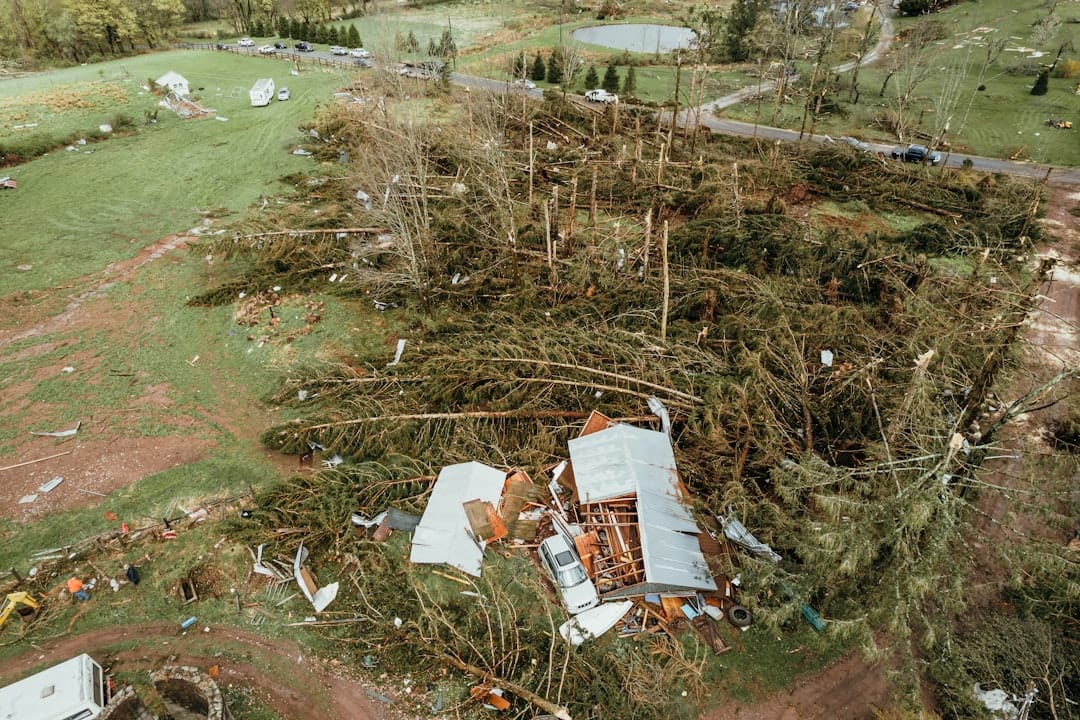
Storm damage repair is a critical service that protects your home from escalating problems and costly structural issues. When storms strike Northwest Arkansas, homeowners face a narrow window of opportunity to prevent minor roof damage from becoming a major disaster.
The stakes are high: Water damage can lead to mold growth within 24-48 hours, and prompt action after a storm can reduce overall repair costs by up to 50%. In 2023 alone, the U.S. experienced 28 separate billion-dollar weather disasters, totaling $177.3 billion in damages. These statistics underscore why immediate professional assessment is not optional—it’s essential.
Every storm creates unique challenges, from missing shingles and hail dents to hidden water intrusion that threatens your home’s structural integrity. The difference between a simple repair and a complete roof replacement often comes down to how quickly you act after the storm passes.
I’m Rex Wisdom, owner of Heritage Roofing & Repair, and for over 50 years, my family has helped Berryville homeowners steer the complexities of storm damage repair, from emergency tarping to complete roof restoration and insurance claim assistance. Our hands-on approach ensures you get the swift, quality repairs that protect your home and your investment.
Storm damage repair terminology:
Immediate Post-Storm Safety and Action Checklist
After a storm rips through Berryville, Fayetteville, or Harrison, Arkansas, your immediate priority must be safety. The temptation to assess damage right away is strong, but unseen hazards can turn a stressful situation into a dangerous one. We always advise our clients to proceed with extreme caution.
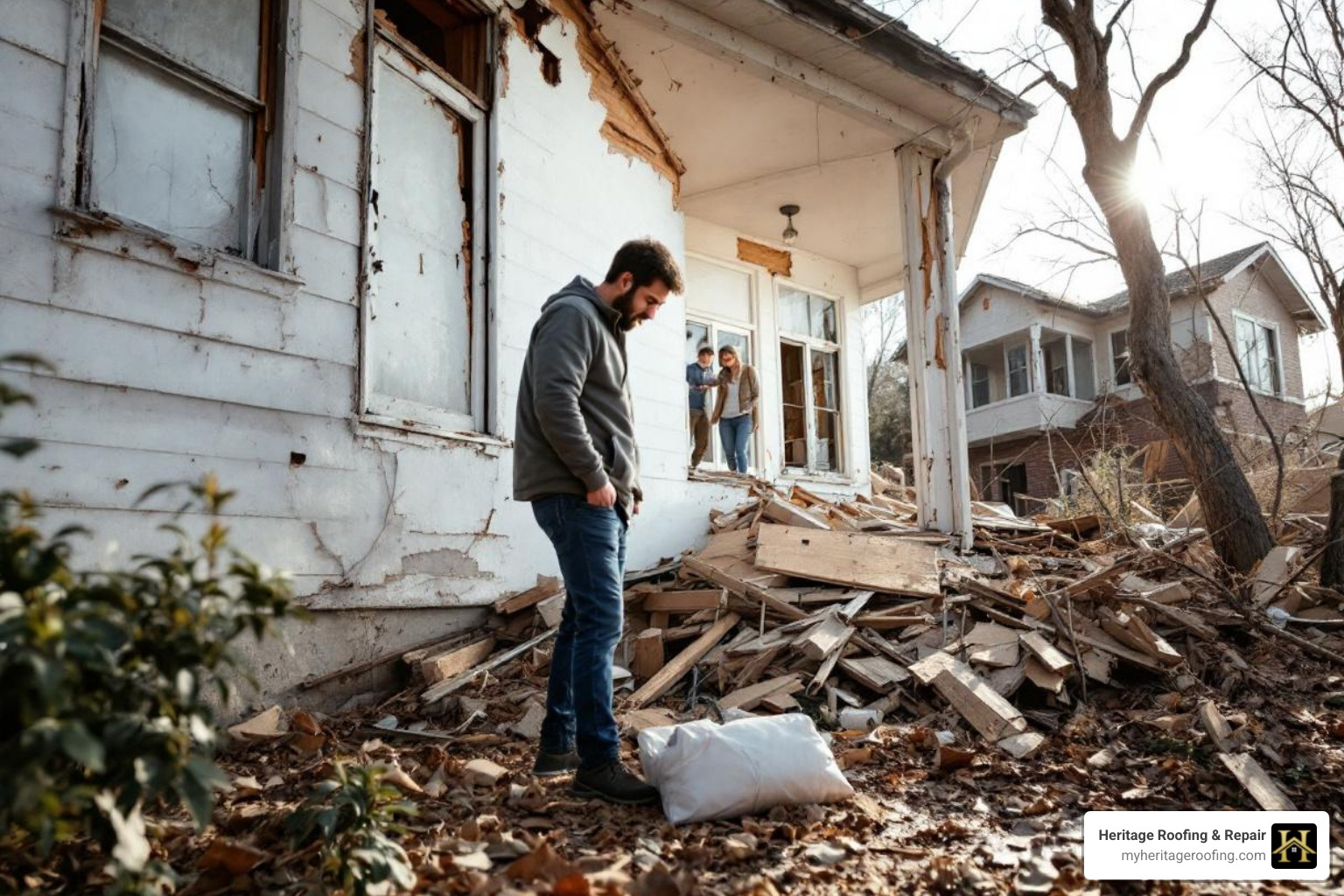
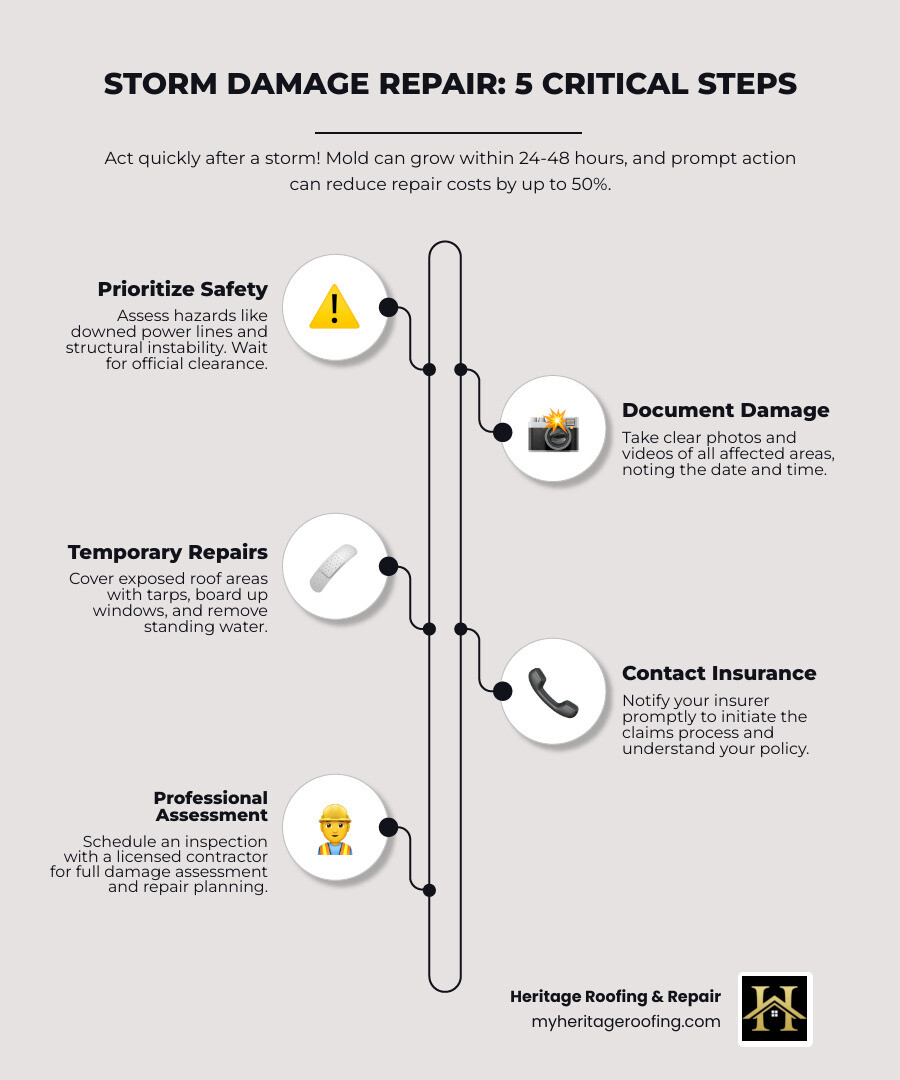
- Prioritize Safety: Before stepping outside, ensure it’s safe to do so. Watch for downed power lines, which are extremely dangerous and can be live. Be aware of structural instability in your home or surrounding buildings – if you suspect your home is structurally compromised, do not enter. Check for gas leaks (a rotten egg smell) and other potential hazards. Keep an emergency kit handy, stocked with first-aid supplies, bottled water, non-perishable food, and flashlights. If you use a generator, position it outdoors and away from doors and windows to prevent carbon monoxide buildup. Most importantly, wait for official clearance from local authorities before re-entering any evacuated areas. Your life and the lives of your family are far more valuable than any property.
- Document Damage: Once it’s safe to move around, begin documenting all observable damage. Take clear photos and videos of every affected area, inside and out. This includes your roof, siding, windows, doors, gutters, and any interior water stains or structural issues. Don’t forget to photograph any debris that has impacted your property. Note the date and time for each record. This comprehensive documentation is crucial for your insurance claim and will serve as undeniable evidence of the storm’s impact. As experts in roofing insurance claims, we can attest that thorough documentation significantly streamlines the claims process.
- Make Temporary Repairs: Even before your insurance adjuster arrives, taking steps to prevent further damage is essential. Use tarps to cover exposed roof areas, board up broken windows, and remove standing water from your property. These temporary fixes are vital to mitigate issues like mold growth, which can start within 24-48 hours, and to protect your home from additional rain or wind. Keep meticulous records of all expenses related to these temporary repairs, including receipts for materials and any emergency services you hire. Do not make permanent repairs before the adjuster has seen the damage, unless explicitly instructed by your insurance company.
- Contact Your Insurance Provider: As soon as you’ve addressed immediate safety concerns and documented the damage, notify your insurance company. Prompt communication is key to initiating the claims process smoothly. Be ready to answer questions about the damage, and keep a record of everyone you speak with. Ask about advance payments if you need quick help, and inquire about living expenses if your home is uninhabitable. Most policies cover some costs if you’re displaced due to covered damage.
- Call a Local Roofing Professional: Don’t delay in scheduling a prompt inspection with a reputable, licensed roofing contractor. An experienced professional can assess the full extent of the damage, including issues not visible to the untrained eye. We offer free roof inspection services for homeowners in Berryville, AR, and surrounding areas, which is a crucial first step in your storm damage repair journey.
How to Accurately Assess Storm Damage to Your Property
After a storm, a thorough and accurate assessment of your property’s damage is paramount. While some damage might be obvious, hidden issues can lead to more significant problems down the line if not identified and addressed.
- Exterior Inspection: Start with a careful exterior inspection. Look for missing, torn, or curled shingles on your roof. Check for dented flashing around chimneys, vents, and skylights. Examine gutters for dents, detachment, or debris accumulation. Inspect siding for cracks, holes, or impact marks. Windows and doors should be checked for cracks, broken glass, or compromised seals. Also, look for large debris, such as tree branches, that may have struck your home. For specific concerns about your roof, our team offers detailed roof inspection services.
- Interior Inspection: Move inside to evaluate interior spaces for water damage. Look for water stains on ceilings and walls, bubbling paint, warped flooring, and any signs of mold growth, which can start rapidly. Pay close attention to attics, as water often collects there first before becoming visible in living areas. The presence of water inside is a clear indicator of a compromised building envelope.
- Foundation and Structural Check: Inspect your home’s foundation for any new cracks, gaps, or shifting. Check for water pooling near the foundation, which can indicate drainage issues or a breach in the foundation’s integrity. If you notice slanted walls, broken pilings, or unlevel floors, these could be signs of significant structural damage. In such cases, consulting a professional structural engineer is highly recommended.
- Hidden Damage: Some issues, like moisture intrusion within walls or insulation, may not be immediately visible. Water can seep into unseen areas, leading to rot, mold, and weakened structural components over time. This is why a professional assessment is so vital; our experts use specialized knowledge to identify these hidden threats before they become catastrophic.
Common Signs of Storm Damage to Your Roof
Your roof is your home’s first line of defense against the elements. Recognizing the common signs of storm damage is crucial for timely storm damage repair.
- Missing or broken shingles: High winds can easily rip shingles from your roof, leaving the underlayment exposed.
- Curled or lifted shingles: Wind can also lift shingles, breaking their seal and making them vulnerable to future damage and water intrusion.
- Granule loss on shingles: Hail and heavy rain can dislodge the protective granules on asphalt shingles, exposing the asphalt to harmful UV rays and accelerating aging. This often looks like black spots where granules are gone or granules accumulating in gutters.
- Dented or damaged flashing: Flashing, the metal strips around chimneys, vents, and skylights, can be dented by hail or bent by wind, creating pathways for water.
- Punctures from debris: Falling branches or wind-blown debris can create holes or punctures in your roofing material.
- Leaks and water stains inside the home: Any water spots on your ceiling or walls are a direct sign of a roof leak, requiring immediate attention. For more information, see our guide on roof leak detection.
How Different Storms Affect Roofing Materials
Different types of storms inflict unique forms of damage on various roofing materials. Understanding these distinctions helps in accurate assessment and targeted storm damage repair.
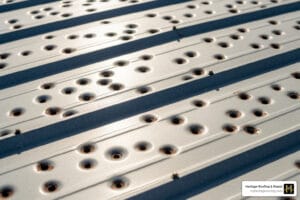
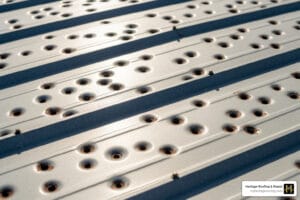
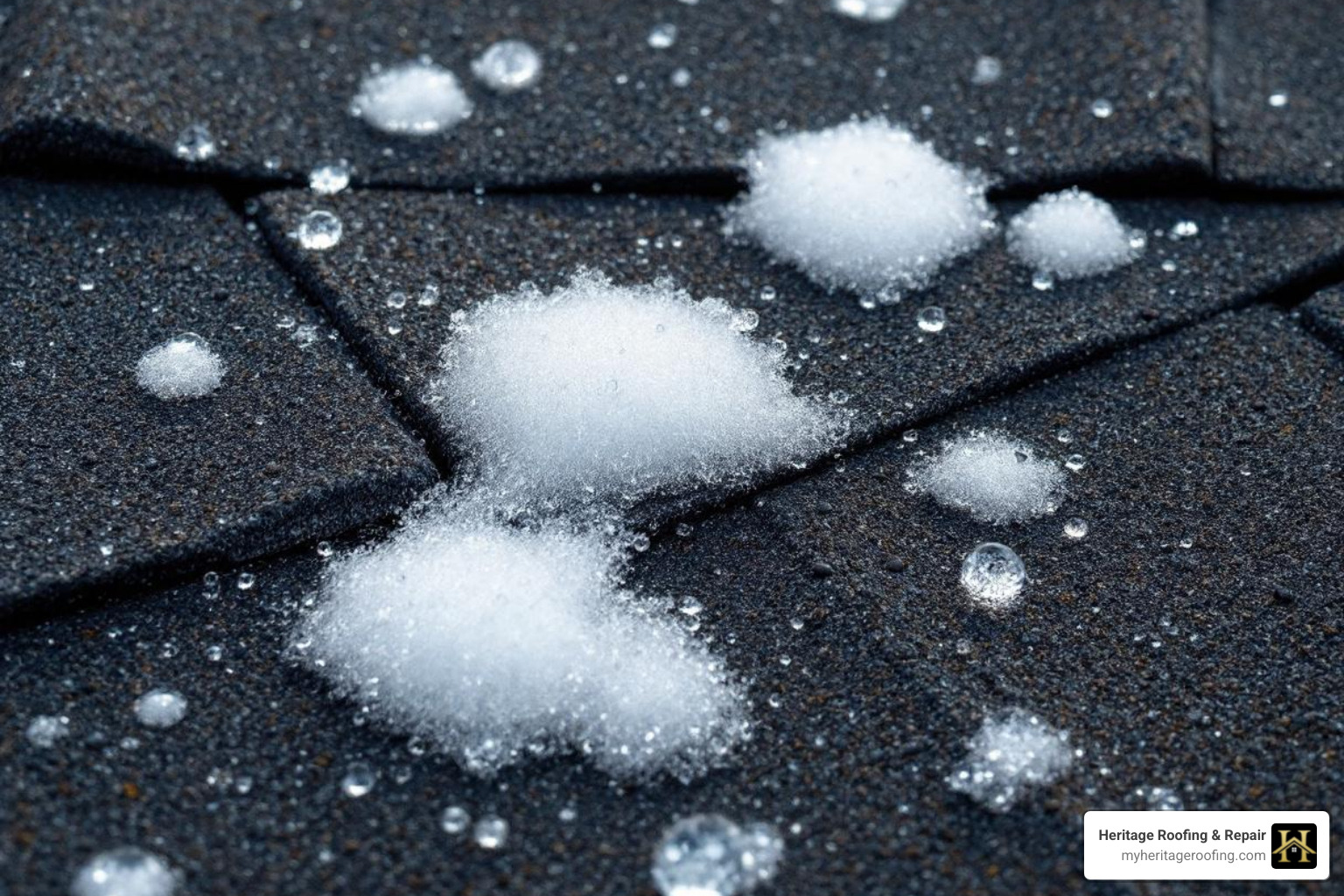
- Hail: Hail damage can affect millions of homes annually, leading to costly roof repairs and replacements. For asphalt shingles, hail causes bruising, which weakens the shingle’s mat, and extensive granule loss. It can also create punctures if hailstones are large enough. Metal roofs may suffer dents and cosmetic damage, potentially compromising protective coatings. TPO roofing hail damage can manifest as impact marks or surface cracks.
- Wind: Wind damage is a significant component of storm-related insurance claims. High winds can lift, tear, or completely remove shingles, especially those with weakened seals. This exposes the underlying roof deck to water. Wind can also damage flashing, loosen or detach gutters, and, in extreme cases, cause structural damage to the roof deck or rafters. Our team specializes in wind damage roof repair for all roofing types.
- Heavy Rain: While rain itself doesn’t typically damage the roof structure, it exploits any existing vulnerabilities. Heavy, prolonged rainfall can lead to leaks if shingles are missing, flashing is compromised, or seals around penetrations have failed. This leads to water intrusion, which, if left unaddressed, can cause wood rot, interior water stains, and significant mold growth. Addressing these issues often requires comprehensive residential roof leak repair.
- Material Types:
- Asphalt Shingles: Vulnerable to granule loss, cracking, and lifting from hail and wind.
- Metal Roofing: Highly durable against wind and fire, but can dent from large hail or impact from debris. Its seams can also be compromised in severe winds.
- TPO Roofing: Generally resistant to punctures and tears, but extreme hail or sharp debris can cause damage. Its seams can be vulnerable if not properly installed or maintained.
Navigating the Insurance and Professional Storm Damage Repair Process
- Review Your Insurance Policy: Before anything else, understand your homeowner’s insurance policy. This means knowing your coverage limits, deductibles, and any specific requirements for filing a claim. Most homeowners insurance policies typically cover storm damage, but flood damage often requires separate coverage. Knowing these details upfront will save you headaches later. If you need help understanding your policy, our team is experienced in roof insurance claims and can assist.
- Avoid Storm Chasers: Unfortunately, after a major storm, “storm chasers” often descend upon affected areas. These are often unlicensed contractors who perform shoddy work, demand upfront payment, and disappear before issues arise. Unlicensed contractors can pose a significant risk, leading to poor quality work and financial loss. Always verify a contractor’s license, insurance, and local presence. Be wary of anyone offering to waive your deductible, as this is illegal in many places and can be a sign of fraud. A reputable contractor, like our team at Heritage Roofing & Repair, will never ask you to do anything illegal or unethical.
The Professional Storm Damage Repair Workflow
Our comprehensive storm damage repair process is designed to be efficient, transparent, and effective, getting your home back to normal as quickly as possible.
- Initial inspection and damage assessment: Our experienced roofing contractor will conduct a thorough roof inspection to identify all visible and hidden storm damage, providing you with a detailed report and photographic evidence.
- Debris removal and temporary repairs: We’ll safely clear your property of hazardous debris and implement immediate temporary fixes, such as tarping, to prevent further water intrusion while we finalize repair plans.
- Material selection and permanent repairs: Based on the assessment and your preferences, we’ll help you select the best materials for durable, long-lasting repairs. Our skilled crew will then execute the permanent repairs with quality craftsmanship.
- Final inspection to ensure quality and code compliance: Once repairs are complete, we conduct a rigorous final inspection to ensure all work meets our high standards, manufacturer specifications, and local building codes.
Repair vs. Replacement: Making the Right Financial Decision
One of the most common questions we hear after a storm is whether to repair or replace a damaged roof. The answer isn’t always straightforward, and it depends on several key factors that we help our Berryville, Fayetteville, and Harrison, AR clients evaluate.
Repair vs. Replacement: Key Factors
| Factor | Roof Repair | Roof Replacement |
|---|---|---|
| Cost | Lower upfront cost, Avg. $379 – $1,755 for minor repairs | Higher upfront cost, Avg. $7,500-$11,655+ for new roof |
| Time | Quicker turnaround, often a few days | Longer duration, typically 1-2 weeks or more |
| Safety | Less disruptive, fewer safety concerns | More extensive work, requires professional safety protocols |
| Quality/Warranty | Limited warranty on repaired sections | Full manufacturer and labor warranty on new roof |
| Code Compliance | May not bring older roof up to current codes | Ensures full compliance with current building codes |
- Cost-Effectiveness: Minor, localized damage, such as a few missing shingles or small punctures, may only require repairs. However, if the damage is widespread or affects the roof’s structural integrity, a full replacement is often more cost-effective in the long run. Constantly patching a severely damaged roof can lead to recurring problems and ultimately cost more than a single, comprehensive replacement. The cost to repair storm-damaged roofs can vary widely, from a few hundred dollars for minor repairs to tens of thousands for a full replacement.
- Roof Age: The age of your roof plays a significant role. If your asphalt shingle roof is approaching its expected lifespan (typically 15-20 years) and suffers significant storm damage, replacement is usually the wiser choice. An older roof, even with minor damage, may not withstand future storms, making a replacement a more prudent investment.
- Insurance Payout: Your insurance company’s assessment will be critical. If the damage is extensive enough, your insurance may cover a full roof replacement, especially if the repair cost exceeds a certain percentage of the roof’s value or if local codes require a full replacement after a certain level of damage. We can help you steer the homeowners insurance roof damage claim guide to maximize your claim.
- Long-Term Value: Investing in a new roof can significantly increase your property’s value, improve its curb appeal, and provide superior protection against future weather events. Modern roofing materials often come with improved durability and longer warranties, offering greater peace of mind.
When is a Full Roof Replacement Necessary?
Sometimes, a repair simply isn’t enough. Here are scenarios where a full roof replacement becomes the most effective solution:
- Widespread or severe damage: If a large portion of your roof has sustained damage (e.g., extensive granule loss, multiple missing shingles across different sections, or significant impact damage), spot repairs may not be sufficient to restore its overall integrity.
- Structural issues or sagging: Any signs of sagging in the roof deck, broken rafters, or compromised structural components indicate a need for a full replacement to ensure the safety and stability of your home.
- Roof is near or past its expected lifespan: An older roof is more brittle and less resilient to storm impacts. If your roof is already at the end of its typical lifespan, even moderate storm damage can be the final straw, making replacement the most economical choice.
- Multiple previous repairs: A roof that has undergone numerous repairs over the years may be a patchwork of different materials and ages, compromising its uniform protection. A full replacement provides a consistent, reliable barrier.
- Desire to upgrade to more durable materials: A storm can present an opportunity to upgrade to more resilient roofing materials, such as impact-resistant shingles or metal roofing, which offer improved protection against future weather.
Preventative Measures to Minimize Future Storm Damage
While we can’t stop storms, we can certainly prepare for them. Taking preventative measures is key to minimizing future storm damage repair needs and protecting your investment in Berryville, Fayetteville, and Harrison, AR.
- Install impact-resistant roofing materials: When considering a new roof or replacement, opt for materials designed to withstand severe weather. Impact-resistant shingles, for example, are specifically engineered to resist damage from hail and wind-driven debris. Investing in storm-hardening upgrades can reduce future repair costs and potentially lower insurance premiums.
- Reinforce roof decking and flashing: Ensuring your roof deck is properly secured with hurricane clips and using robust flashing around all penetrations significantly improves your roof’s resistance to high winds and water intrusion. This critical step ensures a complete load path, strengthening your home against extreme weather.
- Regularly clean gutters and trim overhanging trees: Clogged gutters can cause water to back up, leading to fascia damage, roof leaks, and even foundation issues. Regularly cleaning them is a simple yet effective preventative measure. Similarly, trimming tree branches that overhang your roof removes potential debris that could cause significant damage during high winds.
- Schedule annual professional roof inspections: Regular, proactive inspections by a qualified roofing contractor can identify minor issues before they escalate into major problems during a storm. An annual inspection allows us to address loose shingles, compromised flashing, or other vulnerabilities, ensuring your roof is always in optimal condition. This early detection can be a game-changer, saving you significant storm damage repair costs down the line.
Frequently Asked Questions about Storm Damage Repair
What are the most common causes of roof leaks after a storm?
The leading causes of post-storm roof leaks are missing or broken shingles, damaged flashing, punctures from hail or debris, and compromised seals around roof penetrations. High winds can lift shingles, breaking their seal and allowing water intrusion. Additionally, heavy rainfall can exacerbate any existing weaknesses, making small cracks or gaps a source of significant leaks. Often, the path of water can be difficult to trace, requiring an expert to pinpoint the exact source.
How long do I have to file an insurance claim for storm damage?
Claim deadlines vary by state and policy, but it is critical to contact your insurer immediately after a storm. Prompt action ensures you meet all requirements and prevents further damage that may not be covered. While some policies might offer a grace period of up to a year, delaying the claim can make it harder to prove the damage was storm-related and can lead to complications. Always check your specific policy details or consult with an experienced contractor who can assist with filing roof insurance claims.
What are the risks of delaying storm damage repairs?
Delaying repairs can result in water intrusion, structural rot, electrical hazards, and toxic mold growth within 24-48 hours. Minor leaks can escalate into major structural issues, increasing costs and potentially voiding insurance coverage. This is not just about the roof; water damage can affect insulation, drywall, flooring, and even the electrical system. Prompt action after a storm can mitigate further damage and reduce overall repair costs by up to 50%. Ignoring damage can also lead to your insurance company denying future claims if they deem the damage was exacerbated by negligence.
Your Local Partner for Storm Damage Recovery in Berryville, AR
After a storm, swift and informed action is the most effective way to protect your property and restore your peace of mind. From immediate safety steps and thorough damage assessment to navigating insurance claims and hiring a trusted professional, each phase is crucial. By investing in quality repairs and preventative measures, you can secure your home against future weather events. If you need storm damage roof repair in Northwest Arkansas, contact the experts at Heritage Roofing & Repair for a comprehensive inspection and expert guidance.
Heritage Roofing & Repair
3458 Arkansas State Hwy 221, Berryville, AR 72616
(870) 654-1164
Let us help you restore your home to its pre-storm condition with reliable storm damage roof repair services.