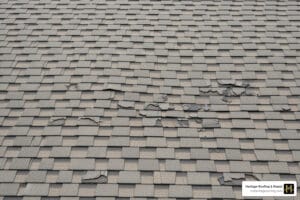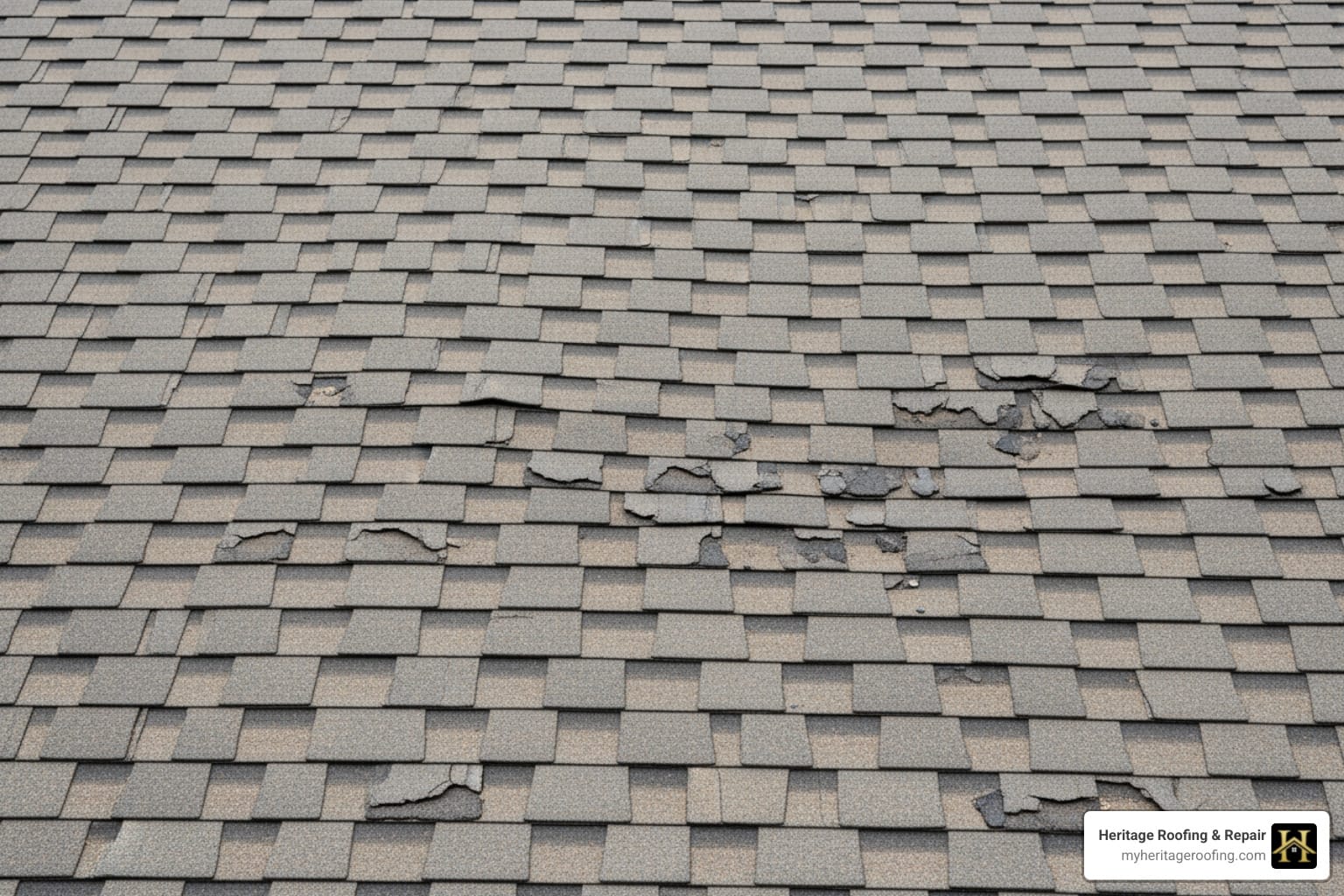
Why Hail Damaged Roofs Pictures Help You Catch Costly Problems Early
Hail damaged roofs pictures reveal something most homeowners miss entirely: the damage is often invisible from the ground until it becomes a leak. If you are trying to confirm whether a recent storm damaged your home, start with this visual guide and, if needed, schedule help from a trusted local roofing company that understands storm-related failures.
Hail causes over $1 billion in property damage across the United States every year. Nearly half of all homeowner insurance claims involve hail or wind. Yet many homeowners walk outside after a storm, see nothing obvious, and assume everything is fine.
That assumption is expensive.
Here is a quick visual reference for what real hail damage looks like:
| Roof Material | What Hail Damage Looks Like |
|---|---|
| Asphalt shingles | Round dark bruises, missing granules, exposed black mat |
| Metal roofing | Dents, dimples, chipped paint exposing bare metal |
| Wood shakes | Splits with fresh wood exposed, cracks along the grain |
| Gutters | Random dents, dings, granule buildup inside the channel |
| AC unit fins | Flattened or bent aluminum fins from impact |
Damage to asphalt shingles often looks like subtle dark spots or soft bruises – easy to miss from a driveway, but serious enough to shorten your roof’s life by years. And because storm damage roof repair needs to happen quickly to prevent leaks and mold, knowing what to look for matters.
I’m Rex Wisdom, owner of Heritage Roofing & Repair, and I’ve spent decades in Northwest Arkansas inspecting roofs after hailstorms, including situations where subtle hail damaged roofs pictures told the whole story before any interior leak appeared. In the sections below, I’ll walk you through exactly what real hail damage looks like across different roof types so you can act fast and protect your home.
Visualizing Impact: What Hail Damaged Roofs Pictures Reveal
When people search for hail damaged roofs pictures, they usually want one simple thing: proof. They want to know whether the marks on their home match real storm damage or just normal wear.
The fastest answer is this: hail damage usually appears in random impact patterns, not neat lines. Wind damage tends to lift or crease shingles in a direction. Age causes more uniform wear. Hail leaves scattered hits.
For a broader overview of repair decisions after a storm, see this helpful outside resource on hail damage signs, costs, and insurance in 2026.
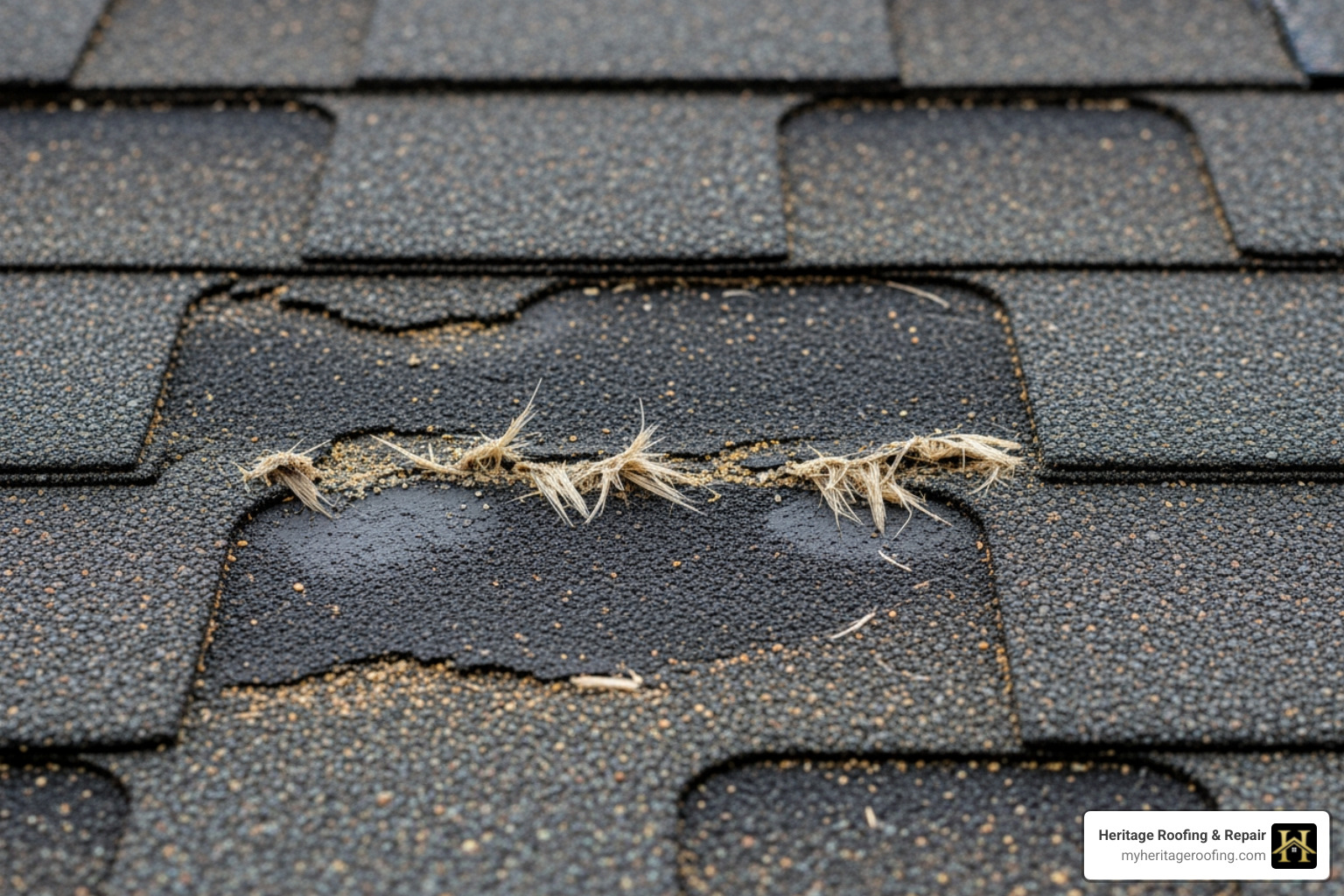
Identifying Hail Damaged Roofs Pictures on Asphalt Shingles
Asphalt shingles are the most common residential roofing material we inspect in our service area, and they also produce some of the most misunderstood hail damage.
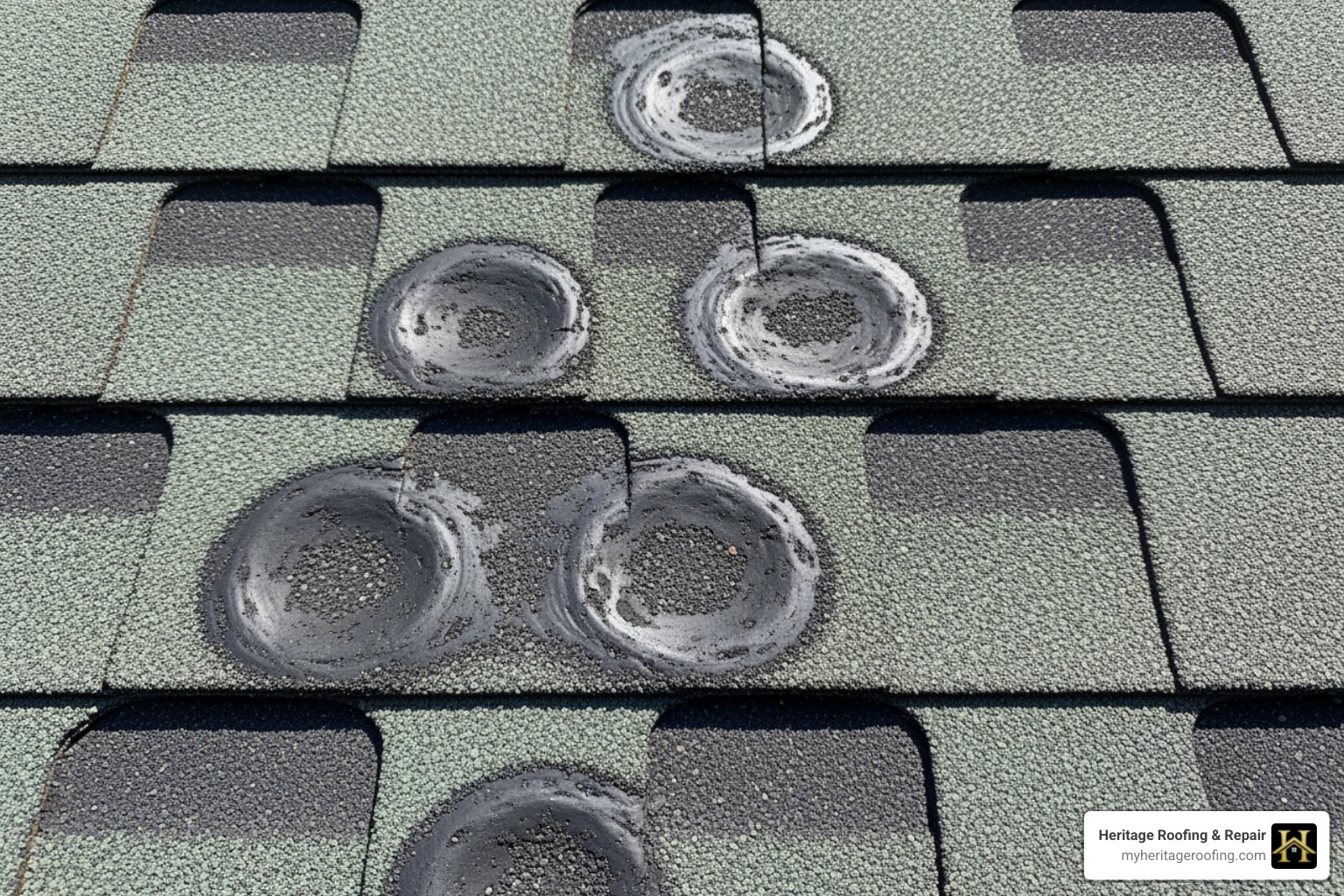
What does hail damage look like on asphalt shingles?
Answer first: random round spots where granules are knocked away, leaving darker areas, shiny compressed asphalt, or soft bruises.
Typical signs include:
- Circular bruises with no consistent pattern
- Missing granules in isolated impact zones
- Exposed black mat beneath the protective surface
- Spots that look slightly shiny or freshly scuffed
- Cracks that form after the bruised area begins to age
- Granule buildup in gutters after the storm
A good hail hit does not always create a dramatic hole. More often, it bruises the shingle. That bruise weakens the protective surface, and then sun, rain, and temperature swings do the rest. Think of it like a cracked windshield that starts as a tiny chip. The problem grows.
Hail as small as 1 inch in diameter can cause granule loss and bruising on asphalt shingles. On older roofs, even smaller stones can matter if the shingles are already brittle. Once the granules are gone, UV exposure accelerates aging and makes the shingle more likely to crack.
Another clue in hail damaged roofs pictures is randomness. Hail impacts do not usually line up in tidy rows. If you see damage scattered over a slope, especially around soft metals and roof accessories too, that is more consistent with hail than with foot traffic or manufacturing defects.
For a deeper breakdown of what homeowners should look for, read our hail damage roof complete guide.
Analyzing Hail Damaged Roofs Pictures on Metal and Wood
Metal and wood roofs show hail differently.
On metal roofing, hail damage is usually easier to see from a distance. The classic signs are:
- Dents
- Dimples
- Impact marks near seams
- Paint chips exposing bare metal
- Damage on flashing, vents, ridge caps, and skylight trim
Metal does not lose granules, of course, so the story is more about deformation. A dented panel may be cosmetic, but chipped coating or seam damage can become a functional problem. If water-shedding areas or fastener points are affected, the issue is more than appearance. We cover this in more detail in our metal roof hail damage insurance guide.
Wood shakes are different again. Hail tends to create:
- Splits along the grain
- Sharp-edge cracks
- Fresh wood exposed where the surface breaks open
- Impact points that look like crushed or fractured edges
Fresh hail hits on wood often have a brighter or cleaner look than surrounding weathered wood. Some inspectors describe these as orange or raw-looking splits because the newly exposed wood contrasts with the older surface.
This is where photos really help. Written descriptions are useful, but side-by-side hail damaged roofs pictures make it much easier to separate fresh storm damage from old weathering.
Ground-Level Clues: How to Spot Damage Without a Ladder
Most homeowners should not climb on the roof after a storm. We mean that literally. Wet shingles, loose granules, hidden fractures, and steep slopes are a bad combination. A hospital trip is a lousy way to inspect a roof.
The safer answer is to inspect from the ground.
Start by walking the perimeter of the home and looking for supporting evidence. Often, the easiest storm clues are not on the shingles at all, but on softer exterior surfaces.
Use binoculars if you have them. Stand back and compare different roof slopes. Hail damage is often heavier on the windward side of the home, but the exact pattern depends on wind direction during the storm.
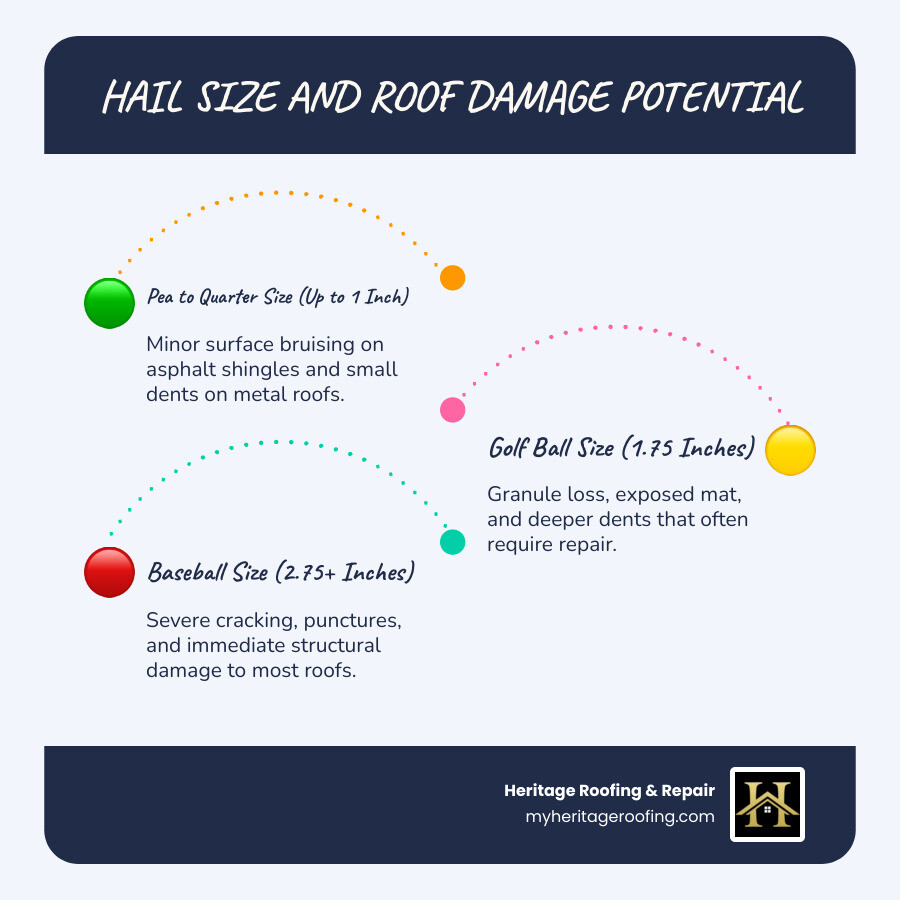
Here is a quick comparison of hail size and likely damage potential:
| Hail Size | Approx. Comparison | Likely Damage Potential |
|---|---|---|
| 0.5 inch | Pea to marble | May cause minor granule loss on vulnerable or older shingles |
| 1.0 inch | Quarter | Common threshold for functional asphalt shingle damage |
| 1.75 inch | Golf ball | Often causes significant bruising, cracks, and metal dents |
| 2.0 inch+ | Hen egg or larger | Severe, widespread damage is likely on standard roofing materials |
As a rule, hail of 2 inches or larger almost always causes extensive damage to standard roofing systems and exterior components.
For a broader homeowner checklist, visit our best home hail damage repair guide.
Collateral Damage Indicators
Collateral damage is one of the best ways to confirm possible roof damage from the ground. Because hail rarely damages only one thing, roof damage often comes with matching evidence on softer exterior surfaces. In fact, many claims gain strength when the roof findings line up with these ground-level clues.
If you see random dents on gutters and downspouts, the roof deserves attention too. If your AC fins are mashed flat, the storm had enough force to hit more than just the lawn furniture. If siding has chips or window screens are punctured, that storm was not playing around.
Key collateral indicators to check include:
- Gutter dents and downspout dings
- Metal mailbox dents or chipped paint on trim
- Flattened AC condenser fins
- Siding chips, punctures, or screen tears on windows and porches
- Cracks in patio covers, deck rails, or plastic fence caps
If your building has a low-slope membrane area, our page on TPO roofing hail damage explains how impact signs can differ from steep-slope residential roofs.
Distinguishing Storm Damage from Normal Roof Aging
Not every ugly roof has hail damage. Sometimes a roof is just old, tired, and ready for retirement.
This distinction matters because normal aging and storm damage do not look the same, and insurance carriers care deeply about that difference.
What is not considered hail damage?
Answer first: blistering, age-related cracking, algae staining, and foot traffic scuffs are usually not hail damage.
Here is how they differ:
- Blistering appears more uniform and is caused by internal moisture or manufacturing issues. It often looks raised or popped, not randomly bruised.
- Age cracking develops over time and usually follows a broader wear pattern across many shingles.
- Algae streaking creates dark stains but does not produce impact bruises.
- Foot traffic scuffs tend to occur in walk paths near valleys, chimneys, or service points.
- Mechanical damage from branches or tools usually has a directional or isolated pattern rather than random impacts.
True hail damage is random. That is one of the most important stand-alone facts in this article.
Another clue is touch. A fresh hail bruise on asphalt can feel softer than the surrounding shingle. Aging issues typically feel dry, brittle, or uniformly worn instead.
For another visual explanation of common look-alikes, see this outside guide on what hail damage looks like on a roof, and our own hail damage roof guide 2025.
The Insurance Claim Process and Documentation Strategy
If you suspect hail damage, documentation starts immediately.
The best claim files tell a simple story:
- When the storm happened
- What was damaged
- What the damage looked like
- How the damage matches local storm reports
Start with photos from the ground:
- Wide shots of each side of the house
- Close-ups of dents on gutters and downspouts
- AC unit fin damage
- Siding chips
- Screens, trim, or metal vent damage
- Any interior signs that appeared after the storm
Make notes with the storm date and approximate time. Save weather alerts, local hail reports, and neighborhood photos if available. For homeowners near Harrison, this hail map for Harrison, AR can help support the storm timeline.
Best practices for documentation:
- Take photos as soon as it is safe.
- Use good lighting and multiple angles.
- Include both overview shots and close-ups.
- Keep timestamps enabled if possible.
- Do not throw away damaged detached items until they are documented.
- Get a professional inspection report before meeting the adjuster when possible.
This matters because adjusters often need evidence that damage is storm-related, not just old wear. A clear timeline and consistent photo set can make that distinction easier.
If you run into trouble with a disputed claim, our page on hail damage roof claim denied explains common reasons claims stall and what to do next.
Filing Timelines and Professional Inspections
How long do you have to file a hail damage claim?
Answer first: many policies and carriers expect action within 1 to 2 years of the storm, but the exact deadline depends on your policy and state law. In Florida, homeowners have a three-year claim window from the date of the storm, but that rule is not the standard to assume elsewhere.
Because we serve Arkansas homeowners, the safest advice is simple: do not wait.
Delays create three big problems:
- Damage gets harder to tie to a specific storm
- Minor bruises turn into obvious wear and tear
- Leaks may appear after the claim window becomes harder to prove
Professional inspections matter because hail damage is often subtle. Many homeowners do not notice anything from the ground, especially on asphalt roofs. A trained inspection typically includes test areas, close-up photo evidence, soft metal checks, and documentation of whether the damage is cosmetic or functional.
Insurance carriers often evaluate damage density in test squares, sometimes using a 10-by-10-foot area to count impacts. Widespread hits across multiple slopes can influence whether a roof qualifies for repair or replacement.
For next steps after a storm, read When Hail Strikes: Everything You Need to Know About Roof Replacement and From Dents to Done: The Ultimate Hail Damage Repair Handbook.
Local Expertise in Northwest Arkansas
Northwest Arkansas storms can be deceptively rough on roofs. In communities like Berryville, Harrison, and Fayetteville, we often see hail events that leave obvious dents on gutters but much subtler bruising on shingles. That is exactly why visual education matters.
Recent local storm tracking and hail reporting for the region show that our area is no stranger to damaging weather. For regional context, you can review Northwest Arkansas hail and storm roof damage information and local storm reporting near Harrison through StormerSite hail reports. Local news coverage also reminds homeowners that hail can cause real property damage in our part of Arkansas, as seen in this report on hail damage affecting Bella Vista residents.
At Heritage Roofing & Repair, we bring over 50 years of trusted experience to storm damage inspections and insurance claim support. We focus on dependable recommendations, clear documentation, and quality repair work for local homeowners and businesses. If you are specifically looking for help nearby, our Harrison, AR roofing page is a helpful starting point, and our metal roof hail damage insurance guide covers another specialty scenario we are asked about.
Heritage Roofing & Repair
3458 Arkansas State Hwy 221, Berryville, AR 72616
Frequently Asked Questions about Hail Damage
What size hail typically causes damage to roofs?
Hail as small as 1 inch in diameter, roughly quarter-sized, is the standard threshold for functional damage to asphalt shingles. It can knock off granules and create bruising. Hail 2 inches or larger almost always causes severe damage to standard roofing materials and other exterior components.
Will my insurance rates go up if I file a hail damage claim?
Usually, a hail claim is treated as an Act of God event. A single claim is less likely to raise your individual premium than a negligence-related loss. However, after widespread storm events, insurers may adjust rates across an entire region, including parts of Northwest Arkansas.
What are the long-term consequences of ignoring hail damage?
Ignoring hail damage speeds up granule loss and exposes the asphalt mat to UV rays. Over roughly 12 to 18 months, damaged shingles become brittle and more likely to crack. That can lead to leaks, mold, underlayment deterioration, and wood rot in the roof decking.
Conclusion
Identifying storm impact through hail damaged roofs pictures is the first step in protecting your home’s value. Because many signs of damage are invisible from the ground, a professional assessment is essential to ensure your insurance claim is filed accurately and within the required timeline. Heritage Roofing & Repair brings over 50 years of trusted experience to every inspection, specializing in navigating the complexities of storm damage for homeowners in Berryville and the surrounding Northwest Arkansas area. If you suspect your roof has been compromised, do not wait for a leak to appear.
Schedule your professional inspection with Heritage Roofing & Repair today.