Is Installing a Metal Roof Over Existing Shingles Actually Worth It?
Metal roofing over existing shingles — also called a “roof-over” — is a legitimate, code-compliant option for most homeowners with a single layer of structurally sound asphalt shingles. As a premier roofing company in Berryville, AR, Heritage Roofing & Repair provides expert guidance on whether this retrofitting method is the right choice for your home’s structural integrity. Here’s the quick answer:
Can you do it? Yes, in most cases. Should you? It depends on four key factors:
- Shingle layers: Only one existing layer is permitted under most building codes
- Roof condition: No rot, sagging, active leaks, or severely curled shingles
- Structural capacity: Your home’s framing must support the combined weight
- Local codes: Most jurisdictions follow the IRC two-layer maximum rule
A metal roof overlay can save homeowners $2,000–$5,000 compared to a full tear-off, cuts installation time by several days, and delivers a roof that lasts 40–70 years — roughly three times longer than asphalt shingles. But skip the proper prep work, and you risk trapped moisture, hidden rot, and voided warranties.
This guide covers everything you need to make a confident decision — from building codes and structural safety to installation steps, costs, and long-term performance. Whether you’re dealing with an aging roof after an Arkansas storm or simply planning ahead, our professional roof replacement services can help you evaluate the right path forward.
I’m Rex Wisdom, owner of Heritage Roofing & Repair, a family-owned business with over 50 years of roofing experience serving Berryville and Northwest Arkansas — including dozens of metal roofing over existing shingles projects across the region. If there’s one thing that experience has taught me, it’s that the difference between a 50-year roof and a 10-year headache almost always comes down to preparation and expertise.
Code Requirements and Structural Safety
The short answer is a definitive “yes,” but it comes with several legal and structural caveats. Most jurisdictions in Northwest Arkansas follow the International Residential Code (IRC), which dictates specific rules for reroofing. The most significant of these is the “two-layer rule.”
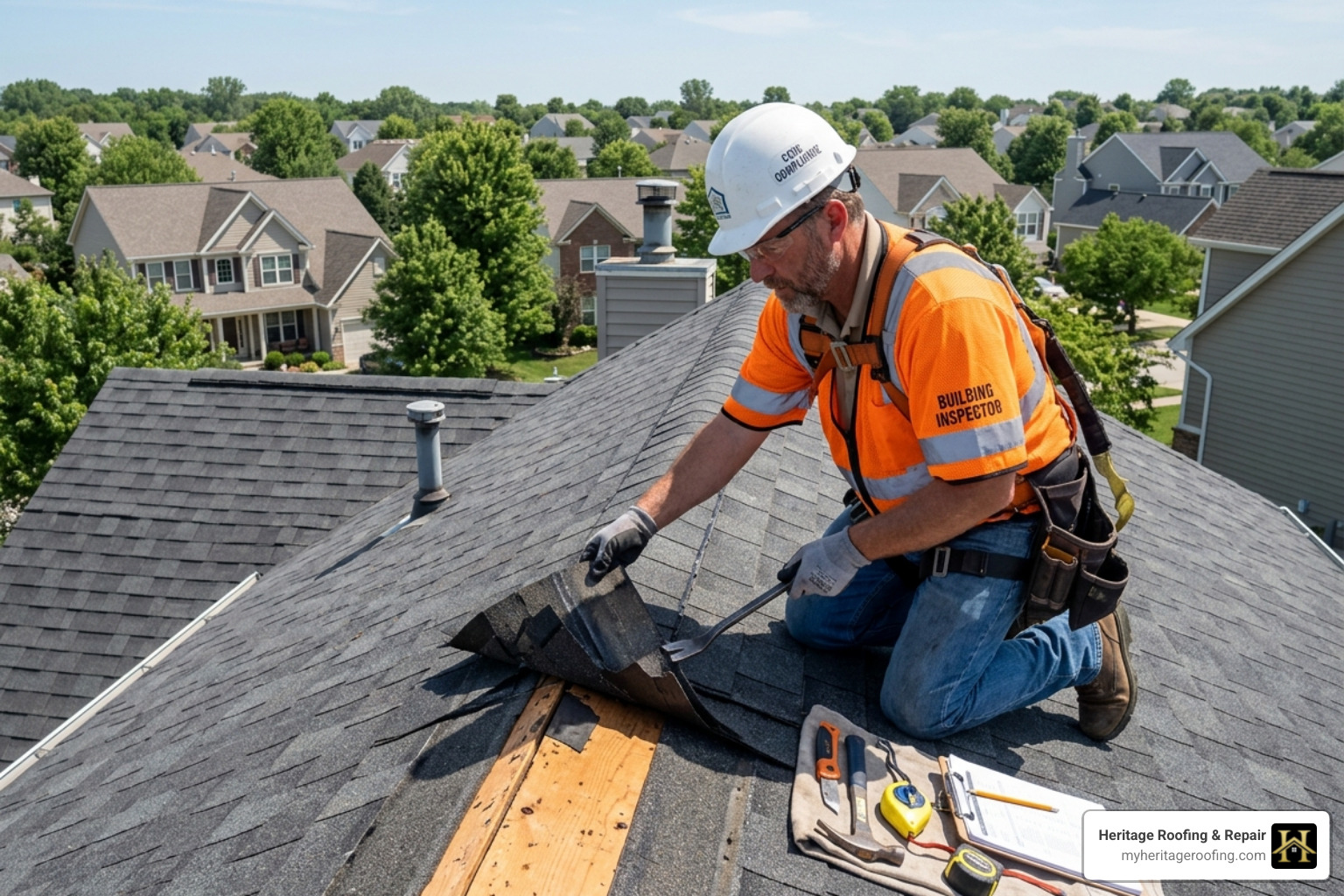
According to Can You Put a Metal Roof Over Shingles? | Angi, building codes generally permit a maximum of two roof coverings on a residential structure. If you already have two layers of asphalt shingles, a third layer of metal is strictly prohibited. This is to ensure the structural load does not exceed the design capacity of your home’s rafters or trusses.
Before we even think about hauling panels onto your roof, we must perform a thorough moisture inspection. We look for signs of soft spots or sagging in the roof decking. If the underlying plywood is rotted, the metal panels won’t have a secure foundation to grab onto. Installing a heavy-duty metal system over rotted wood is like building a mansion on quicksand—it might look pretty for a month, but the foundation will eventually fail. If you have leaks that have already damaged the deck, we need to address what is replaced when you get a new residential roof.
For homeowners in Northwest Arkansas, our Metal Roofing Northwest Arkansas Guide provides more localized details on how our humidity and storm patterns affect these decisions.
Weight Considerations and Structural Safety
One of the biggest myths we hear is that adding metal over shingles will make the roof collapse. In reality, metal is incredibly lightweight.
- Asphalt shingles weigh between 230 and 250 lbs per square (100 sq. ft.).
- Metal roofing weighs only 50 to 150 lbs per square.
Even with both layers combined, the “dead load” is often still within the safety margins of modern home construction. However, we always verify the rafter strength, especially on older homes in Harrison or Berryville that may have seen decades of settling. You can find more engineering insights in our Residential Metal Roof Replacement Guide 2025.
Heritage Roofing & Repair
3458 Arkansas State Hwy 221, Berryville, AR 72616
Phone: (870) 654-1164
Pros and Cons of Installing Metal Roofing Over Shingles
Every roofing choice involves trade-offs. Here is the breakdown of why homeowners choose (or avoid) the overlay method.

The Pros:
- Labor Savings: Skipping the tear-off process can result in a 25% cost reduction on the total project.
- Environmental Impact: Asphalt shingles account for roughly 11 million tons of landfill waste annually. By leaving them in place, you keep that waste out of the dump.
- Energy Efficiency: A metal roof acts as a thermal barrier. Combined with the air gap created by furring strips, this can lead to 40% cooling savings in the heat of an Arkansas summer.
- Faster Installation: Without the need to strip the old roof, we can often finish a project in 1–3 days rather than a full week.
The Cons:
- Hidden Damage: You can’t see the decking. If there’s a small patch of rot you didn’t know about, it stays there.
- Trapped Moisture: If installed without proper ventilation, condensation can form between the layers.
- Warranty Issues: Some manufacturers are picky. If the installation doesn’t follow their exact specifications for underlayment, the warranty could be voided.
- Future Insurance Claims: It’s vital to know how your Metal Roof Hail Damage Insurance handles overlays, as some adjusters may view the double layer differently.
Step-by-Step Installation Process
If we determine your roof is a good candidate, the process follows a very specific technical path to ensure longevity.
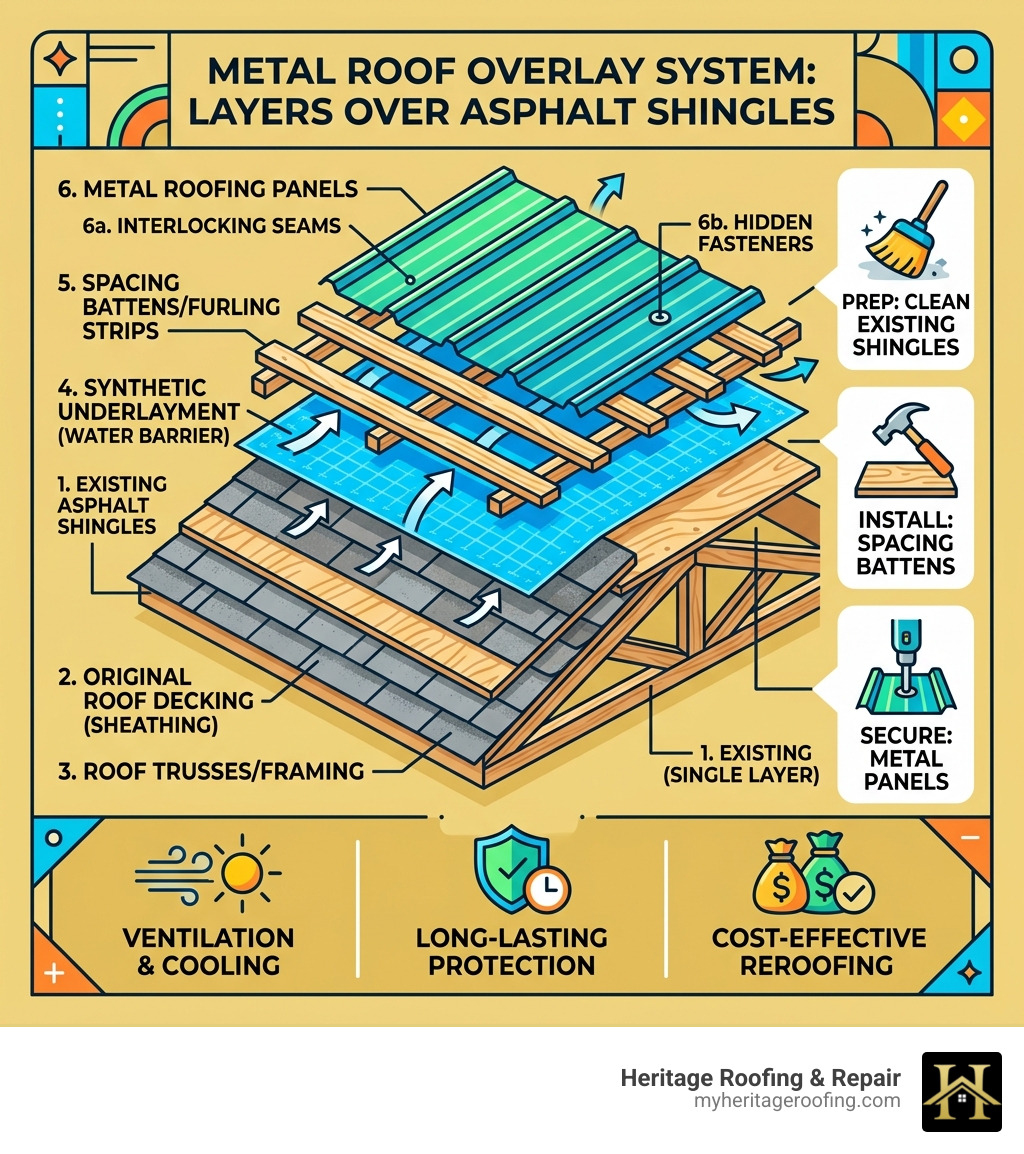
- Surface Preparation: We clean the existing shingles of moss and debris and secure any loose tabs.
- Underlayment: We apply a new layer of synthetic felt or high-temp underlayment. This acts as a secondary water barrier and prevents the abrasive asphalt granules from scratching the back of the metal panels (the “sandpaper effect”).
- Furring Strips (Purlins): We install 1×4 wood purlins or battens horizontally, typically spaced 24 inches on-center. This is the most critical step. These strips create a level surface and, more importantly, a ventilation gap.
- Panel Alignment: We start the layout from eave-to-ridge. For standing seam systems, we use floating clips to allow for thermal expansion—metal can grow and shrink by inches as temperatures swing from 20°F in January to 100°F in August.
- Fastening: Using screws with neoprene washers, we secure the panels. These washers create a watertight seal that lasts for decades.
For a deeper dive into the technical specs, check out the How to Install Metal Roofing Over Shingles: Complete Guide 2025.
Cost Comparison: Overlay vs. Full Tear-Off
When you choose a roof-over, you aren’t just saving on labor; you’re saving on disposal. Here is how the numbers typically break down for a standard 2,000 sq. ft. home in May 2026.
| Expense Category | Full Tear-Off & Replacement | Metal Roof Overlay |
|---|---|---|
| Tear-Off Labor | $1,500 – $3,000 | $0 |
| Disposal/Dumpster Fees | $500 – $1,500 | $0 |
| Materials (Metal + Prep) | $8,000 – $12,000 | $9,000 – $13,000* |
| Installation Labor | $4,000 – $6,000 | $3,500 – $5,000 |
| Total Estimated Cost | $14,000 – $22,500 | $12,500 – $18,000 |
*Overlay materials often include the cost of furring strips and specialized underlayment.
By opting for an overlay, most homeowners see a total project savings of $2,000 to $5,000. When you consider the 40-70 year lifespan of a professional roof replacement, the return on investment is significantly higher than a standard shingle replacement.
Technical Requirements for Success
To avoid the “horror stories” of metal roofs, we focus on the science of the build.
Above-Sheathing Ventilation (ASV)
This is the “secret sauce.” By using furring strips, we create a 1.5-inch air gap between the old shingles and the new metal. This allows air to flow from the eaves up through the ridge vent, whisking away moisture and heat. Without ASV, the metal can reach extreme temperatures, potentially cooking the old shingles and causing condensation rot.
Condensation Control
We use vapor-permeable underlayment. This allows the roof to “breathe,” ensuring that any moisture trapped in the attic can escape rather than becoming trapped between the two roof layers.
Galvanic Isolation
If we are using different types of metal (like aluminum panels with copper flashing), we must ensure they don’t touch. Galvanic isolation prevents the chemical reaction that causes dissimilar metals to corrode each other.
Our team follows the strict guidelines found in our Metal Roof Installation Guide 2025 to ensure every screw and strip is perfectly placed.
Regional Considerations
From the heavy winds in Fayetteville to the hail-prone ridges of Harrison, we know how to build roofs that last in Northwest Arkansas. We specialize in storm damage and can help you navigate insurance claims if your current shingle roof has been compromised.
If you are looking for the Best Certified Metal Roofing Company in Berryville, AR near me, look no further than our local team.
Frequently Asked Questions
Does installing metal over shingles void the manufacturer warranty?
It depends on the manufacturer, but generally, no—as long as you follow their installation specifications. Most require a layer of underlayment and often the use of furring strips to ensure the metal isn’t resting directly on the abrasive shingles. We always check the specific requirements for the brand we are installing to protect your investment.
Will a metal roof overlay make my house louder during rain?
Surprisingly, no. When metal is installed over existing shingles, the shingles actually act as an extra layer of acoustic insulation. Between the shingles, the underlayment, the air gap, and your attic insulation, the sound of rain is typically no louder than it was with just shingles.
Can I install any type of metal roof over shingles?
While many styles work, we often recommend Standing Seam Roofing or stone-coated steel. Standing seam is particularly good for overlays because the floating clips handle the unevenness of an old roof better than exposed fastener “screw-down” panels.
Conclusion
Installing metal roofing over existing shingles is a smart, sustainable, and cost-effective way to upgrade your home’s protection. When done correctly with proper ventilation and underlayment, it provides a 50-year solution that keeps waste out of landfills and money in your pocket.
However, because you are building over an existing structure, a professional inspection is non-negotiable. At Heritage Roofing & Repair, we take pride in our quality craftsmanship and our ability to tell you honestly whether an overlay is right for your home or if a full roof replacement is the safer bet.
Don’t leave your home’s safety to chance. Schedule your professional metal roof installation today and let us help you build a roof that will last for generations.