Roof Replacement Quotes: A Definitive Guide to Costs and Contractor Selection
Roof replacement quotes typically range from $6,000 to $19,000 nationwide, with a national average of about $9,500 for many homeowners. At Heritage Roofing & Repair, homeowners can compare pricing with confidence because accurate estimating starts with correct measurements, clear scope definitions, and honest communication. As a trusted provider of professional roof replacement in Northwest Arkansas, Heritage Roofing & Repair helps property owners understand what they are paying for before work begins.
A roof is not just a layer of shingles. It is the system that protects decking, insulation, ceilings, walls, and the structural framing below. When that system fails, the cost of interior water damage often exceeds the initial cost of replacement. That is why a detailed estimate matters. A strong quote should explain material type, tear-off requirements, ventilation upgrades, flashing replacement, labor, cleanup, and warranty coverage.
| Cost Factor | Typical Range |
|---|---|
| National average roof replacement | $9,500 |
| Most homeowners spend | $6,000 – $19,000 |
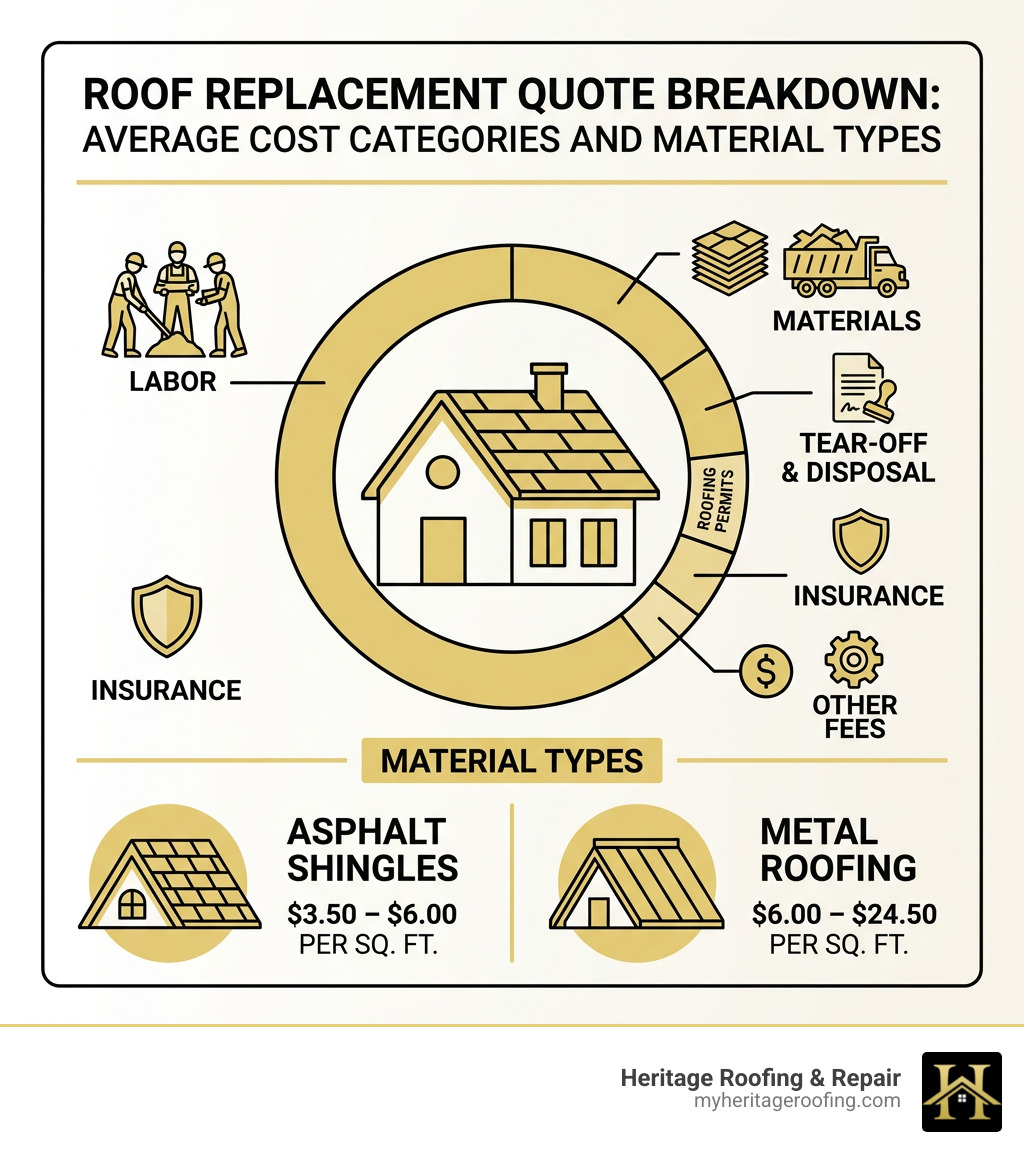
| Asphalt shingles (per sq. ft.) | $3.50 – $6.00 |
| Metal roofing (per sq. ft.) | $6.00 – $24.50 |
| Labor as % of total cost | ~60% |
| Project duration | 1 – 3 days (average) |
A useful quote should also account for the variables that drive the final price. Labor alone often makes up about 60% of the total bill because roofing is specialized, physically demanding, and safety-intensive work. Hidden line items such as scaffolding, tear-off, decking replacement, permit fees, and waste hauling can add thousands of dollars if they are not addressed up front. Homeowners who compare quotes line by line usually make better long-term decisions than those who compare only the bottom number.
I am Rex Wisdom, owner of Heritage Roofing & Repair. Our family-owned business has helped homeowners in Berryville and Northwest Arkansas navigate roof replacement quotes for more than 50 years. That hands-on experience allows us to provide fair, transparent estimates that reflect current market conditions, local code requirements, and the real needs of each property.
This guide is designed to help you evaluate pricing with clarity. It covers the national average, the cost impact of size and slope, material-specific price ranges, hidden replacement variables, and the contract details that should appear on every professional roofing estimate.
Terms related to roof replacement quotes:
Understanding the National Average for Roof Replacement Costs
The clearest answer is this: most roof replacement quotes fall between $6,000 and $19,000, and the national average is about $9,500. That figure is useful as a starting benchmark, but no serious contractor should rely on national averages alone. Roof pricing depends on measurable job-site conditions, material selection, local labor rates, roof complexity, and the condition of the system underneath the shingles or panels. High-end materials such as slate, premium tile, or specialized standing seam metal can raise the total to $47,000 or more.
Labor typically represents around 60% of the total average roof replacement cost because roofing crews need proper training, fall protection, insurance coverage, and specialized installation experience. In practical terms, homeowners are not only paying for shingles or metal panels. They are paying for safe tear-off, deck preparation, weatherproofing details, ventilation balancing, flashing installation, and cleanup that protects the property during and after the project.
Another reason estimates vary so widely is that two roofs with the same square footage can require very different amounts of labor. A simple, low-slope roof with one layer of old shingles is far less labor-intensive than a steep roof with multiple valleys, dormers, chimneys, skylights, and water-damaged decking. A good quote should reflect those site-specific conditions rather than forcing every home into a generic pricing template.
How Roof Size and Pitch Affect Roof Replacement Quotes
Roofing contractors price projects using “squares,” with one square equal to 100 square feet of roof surface. A roof measuring 1,700 square feet equals 17 squares. This unit helps contractors estimate material quantities, labor requirements, and disposal volume. It also allows homeowners to compare bids more accurately when different companies use slightly different wording.
Pitch matters just as much as size. The slope of the roof directly affects how quickly a crew can move, what safety systems are needed, and how difficult material staging becomes.
- Walkable Roofs: Lower-pitch roofs are generally faster and safer to install, which usually reduces labor cost.
- Steep Slopes: High-pitch roofs require additional harnessing, roof jacks, staging, and slower installation speeds, all of which increase labor and risk.
- Complex Roof Geometry: Multiple ridges, hips, valleys, and penetrations create more cutting, more waste, and more detail work.
- Accessibility: Homes with limited driveway access, landscaping obstacles, or detached structures may require more time for delivery and debris handling.
For detailed metrics, refer to our roof replacement cost ultimate guide.
Material Selection and Its Impact on Roof Replacement Quotes
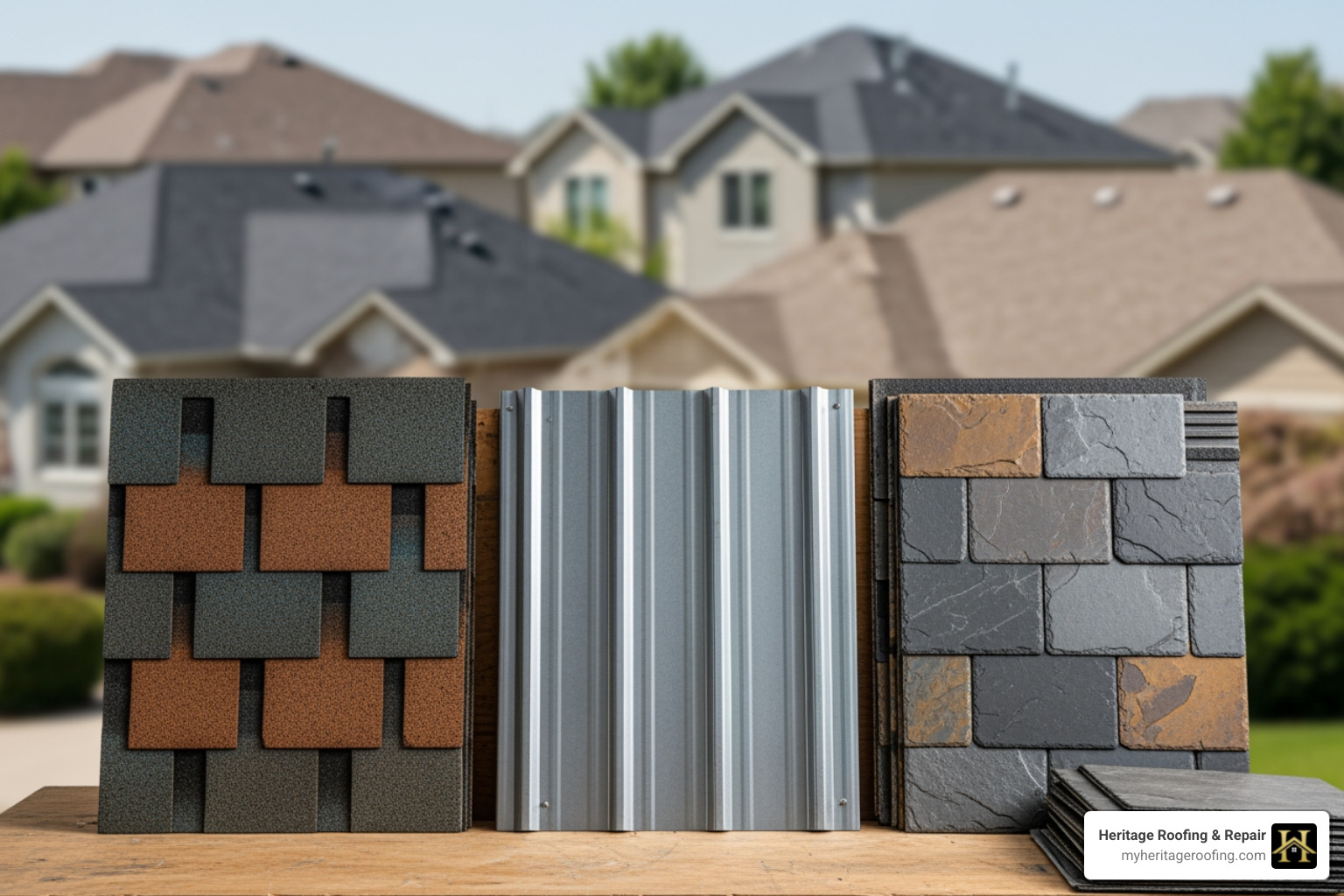
Material choice is the single biggest pricing variable in most roofing estimates because it affects upfront cost, installation method, maintenance profile, and expected service life. The 2025-era pricing ranges below remain a practical baseline for comparing modern roof replacement quotes:
| Material Type | Estimated Cost (Installed) | Typical Lifespan |
|---|---|---|
| Asphalt Shingles | $3.50 – $6.00 | 20 – 30 Years |
| Metal Roofing | $6.00 – $24.50 | 40 – 70 Years |
| Slate / Tile | $10.00 – $25.00+ | 50 – 100+ Years |
Asphalt shingles remain the most common residential choice because they offer a strong balance of affordability, appearance, and availability. Metal roofing has become increasingly popular in Berryville and across Northwest Arkansas because of its long service life, strong wind performance, and energy-efficiency benefits. Slate and tile offer exceptional longevity, but they require a structure capable of supporting more weight and usually come with a higher installation cost.
For homes with low-slope or flat sections, EPDM rubber can be a durable and cost-effective solution. Material selection should always be matched to the roof design, the climate, and the homeowner’s long-term goals. The cheapest material is not always the most economical over the full life of the roof, especially when future maintenance and replacement intervals are considered.
See our roof replacement cost complete guide for a full comparison.
5 Critical Variables That Determine Professional Roofing Estimates
A professional roof replacement quote should explain more than the price of shingles. The final number is shaped by several secondary variables that have a direct effect on durability, labor hours, and job-site safety. Homeowners who understand these items are better equipped to compare bids accurately and avoid surprise charges after work begins.
- Tear-Off and Disposal: Removing an existing roof generally costs between $0.40 and $2.00 per square foot. Full tear-off is often necessary so the contractor can inspect the decking underneath for rot, trapped moisture, soft spots, or previous repair issues. Disposal pricing can also rise when there are multiple old layers to remove.
- Decking Repair: Replacing water-damaged roof decking commonly costs $2.20 to $3.00 per square foot. This step is essential because new roofing materials should never be installed over compromised wood. If the deck is weak, the entire roofing system above it is weakened as well.
- Underlayment and Flashing: Synthetic underlayments, ice-and-water barriers, drip edge, pipe boots, valley metal, and chimney flashing are not minor accessories. They are core water-management components that often determine whether a roof performs well during storms. Premium waterproofing details can increase upfront cost but reduce leak risk substantially.
- Ventilation: Proper attic airflow helps control heat and moisture buildup. Inadequate ventilation can shorten shingle life, contribute to mold risk, and even affect manufacturer warranty compliance. Ridge vents, intake vents, and balanced ventilation design should be addressed in a complete estimate.
- Logistics: Scaffolding hire may cost between $700 and $1,300 depending on structure height and complexity. Additional logistical costs may include dump trailers, magnetic cleanup, driveway protection, material lift equipment, and extra labor for difficult site access.
Waste removal is another overlooked factor. Roofing generates significant debris, including old shingles, nails, flashing, and damaged decking. A quality contractor should explain how debris will be contained, removed, and cleaned up to protect vehicles, landscaping, and walkways.
Contractors should also follow recognized safety practices and maintain the proper qualifications for the work they perform. For broad guidance on worker standards and site credentials, review Industry safety standards and hold proper certifications. For repair-specific scenarios, consult our roof-repair-estimate-complete-guide.
Standard Requirements for a Legally Binding Roofing Contract
A reliable roof replacement quote should function as a detailed written agreement, not just a price on a sheet of paper. The strongest roofing contracts reduce misunderstandings by defining exactly what will be installed, what will be removed, who is responsible for permits, how change orders will be handled, and what warranty protection applies after completion.
Avoid estimates that are vague or incomplete. A professional contract should include:
- Itemized Costs: A clear breakdown of materials, labor, tear-off, disposal, and any known upgrade items.
- Material Specifications: The exact manufacturer, product line, color, and performance class of the materials being installed.
- Scope of Work: A plain-language explanation of what is included and excluded, including flashing details, ventilation work, and cleanup.
- Permit Fees: Confirmation of who is responsible for obtaining local permits and scheduling inspections where required.
- Warranty Terms: A clear distinction between the manufacturer’s material warranty and the contractor’s workmanship guarantee.
- Payment Schedule: Defined deposit, progress payment, and final payment terms.
- Change Order Process: A written procedure for approving additional charges if hidden deck damage or other unforeseen conditions are discovered.
- Projected Timeline: Expected start and completion windows, including how weather delays will be addressed.
A strong contract protects both the homeowner and the contractor. It creates a shared understanding of expectations before materials are delivered and work begins. That level of clarity is especially important for insurance-related replacements, where the final scope may need to match adjuster documentation.
We recommend selecting contractors who meet NFRC accredited contractor standards. Prepare for your project with our free-roof-estimate-guide-2025.
Local Roofing Solutions for Northwest Arkansas Homeowners
Northwest Arkansas roofs face unique challenges, including heavy winds in Fayetteville and hail in Harrison. Storm damage is the primary driver for roof replacements in this region. Heritage Roofing & Repair specializes in navigating insurance claims, providing the detailed inspection reports required by adjusters to approve claims.
Whether you require Fayetteville roofing services or expert assistance in Berryville, we understand local building codes and climate demands.
Heritage Roofing & Repair
3458 Arkansas State Hwy 221, Berryville, AR 72616
(870) 654-1164
Expert Answers to Common Roofing Estimate Questions
What are the signs I need a full roof replacement?
A full replacement is necessary if you observe widespread curling, cracking, missing granules in gutters, or interior water stains. Roofs exceeding 20 years of age are typically at the end of their functional life. Visible daylight through attic roof boards is a critical indicator of failure. For further details, see our guide on roof-replacement-for-homeowners.
How long does a typical roof replacement take?
Installation for a standard 2,000 sq. ft. home typically takes 1 to 3 days. Total duration is influenced by weather conditions and architectural complexity.
Does homeowners insurance cover a new roof?
Insurance covers replacement if damage results from a covered peril, such as wind, hail, or fallen trees. It does not cover standard wear and tear. We can provide a roof replacement estimate for your insurance provider to facilitate the claims process.
Secure a Transparent Roof Replacement Quote Today
Understanding what drives roof replacement quotes, including roof size, pitch, materials, tear-off requirements, ventilation, and decking condition, helps homeowners compare estimates on facts instead of guesswork. The best quote is not always the lowest number. The best quote is the one that clearly explains the scope, uses quality materials, and is backed by dependable workmanship.
Heritage Roofing & Repair brings more than 50 years of experience to homeowners across Northwest Arkansas, with a focus on quality craftsmanship, affordable solutions, and responsive service after storms. If you want a roof estimate that is detailed, transparent, and tailored to your property, get your free Fayetteville roof estimate today. We provide clear proposals so you can make an informed decision with confidence.