Quick answer
The soffit is the flat panel under your roof overhang, and the fascia is the board along the roof edge where the gutters hang. Both keep water and animals out, and vented soffit lets your attic breathe. If you see sagging gutters or soft wood on a home around Berryville or Harrison, book a free roof inspection.
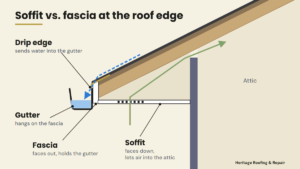
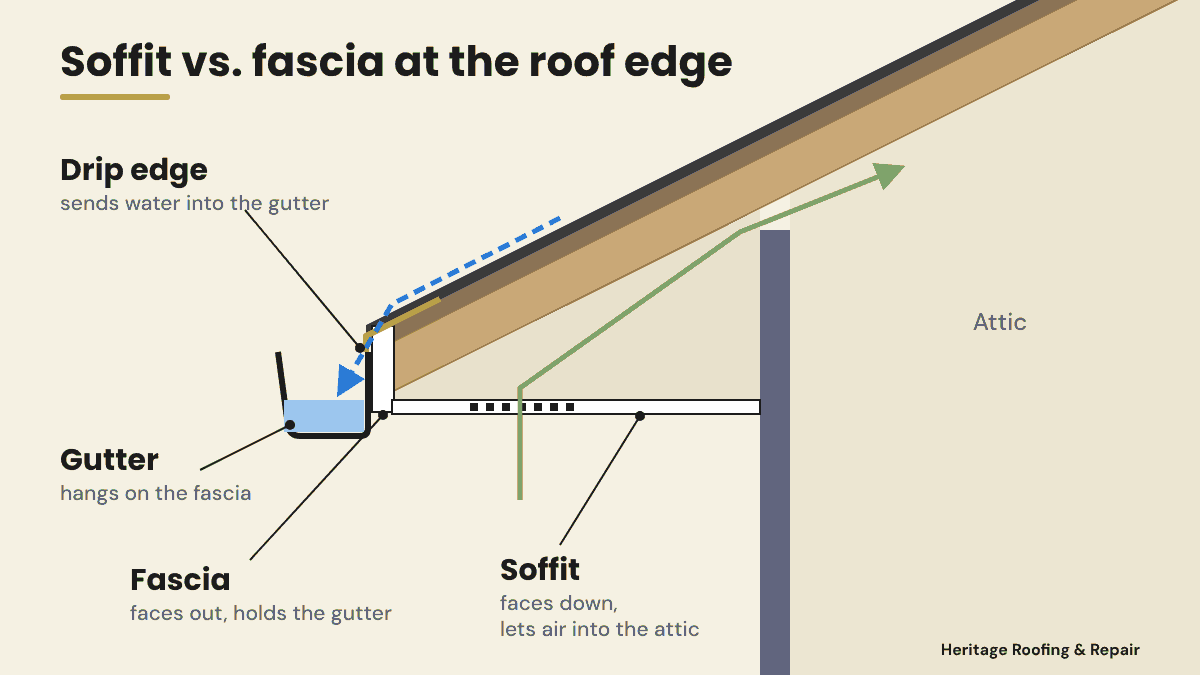
The soffit is the flat panel on the underside of your roof overhang. The fascia is the long board that runs along the edge of the roof, where the gutters hang. An easy way to remember it: the soffit faces down, the fascia faces out. They work as a pair to close off the roof edge from rain and animals, and on most homes the soffit is also where your attic breathes in fresh air.
Most people never think about either one until a gutter starts pulling away or a wasp nest shows up under the eaves. Here is what each part does, how to spot trouble from the ground, and what actually fixes it.
What the fascia does
The fascia is the board you see at the very edge of the roof, standing up and facing the street. It caps the ends of the roof rafters and gives the gutters something solid to fasten to.
- It holds the gutters. Every gutter hanger screws into the fascia, so soft fascia means loose gutters.
- It seals the roof edge. It keeps rain and wind-driven water out of the rafter ends and the edge of the roof deck.
- It finishes the look of the house. A straight, clean fascia line is a big part of curb appeal.
What the soffit does
The soffit runs underneath the overhang, between the fascia and the wall of the house. Stand in the yard and look up at the eaves, and the soffit is what you see.
- It keeps animals out. Birds, squirrels, bats and wasps all look for gaps under the eaves.
- It lets the attic breathe. Vented soffit panels are where outside air enters the attic on many homes, and that air leaves through vents near the ridge.
- It protects the rafter tails from weather.
That airflow matters more than most homeowners realize. Blocked or missing soffit vents can trap heat and moisture in the attic. We cover that side of it in our post on attic ventilation problems.
Soffit vs. fascia at a glance
| Fascia | Soffit | |
|---|---|---|
| Where it is | Along the roof edge, facing out | Under the overhang, facing down |
| Main job | Holds the gutters and seals the rafter ends | Closes the eaves and lets air into the attic |
| First sign of trouble | Sagging gutters, soft or peeling wood | Stains, sagging panels, animals getting in |
| Usual cause of damage | Water from gutters or the roof edge | Water from above, or pests |
Signs your soffit or fascia needs repair
You can check most of this from the ground with a pair of binoculars. Walk all the way around the house, because the shady north side and the corners where gutters meet usually go first.
- Gutters pulling away or sagging. When the fascia behind them rots, the hangers lose their grip.
- Peeling paint or dark water stains along the roof edge or on the soffit.
- Soft, crumbling or split wood. If you can reach it safely, press with a screwdriver. Sound wood pushes back.
- Sagging soffit or gaps between panels.
- Birds, squirrels, bats or wasps going in and out under the eaves.
- Mildew or a musty smell in the attic, which can point to blocked soffit vents or water getting in at the edge. The EPA’s guide to mold and moisture in your home explains why that moisture is worth taking seriously.
Ozark weather is hard on the roof edge. Long wet stretches, leaves and pine needles packing the gutters, and spring storms all push water toward the fascia. If you have had high winds or hail recently, look for loose or dented soffit panels too, and see our page on storm damage roof repair or wind damage. To know when a storm is coming, Berryville’s forecast comes from the National Weather Service office in Tulsa, and Harrison’s comes from the National Weather Service office in Little Rock. Both post current weather hazards for the area.
Why soffit and fascia rot: it is almost always water
Rotted fascia nearly always has a water source behind it. The common ones are:
- Clogged or overflowing gutters that spill water down the back of the gutter and onto the board.
- A missing drip edge, the metal strip that sends water off the roof and into the gutter instead of behind it.
- A leak at the roof edge, such as worn shingles or flashing near the eaves.
Here is the part that saves money: new boards over the same water problem rot again. That is why our crews check the gutters and the roof edge on every soffit and fascia job, not only the boards. If the gutters are the problem, see seamless gutters and gutter guards. If the roof edge is leaking, see roof repair.
Aluminum, vinyl or wood?
Heritage installs and repairs soffit and fascia in all three. Each one fits a different house and a different amount of upkeep.
- Aluminum fascia wrap and soffit cover the edge in metal that does not rot and never needs painting.
- Vinyl is low-maintenance and comes in colors that match vinyl siding.
- Wood suits older and historic homes and can be painted any color, but it needs regular painting to keep moisture out.
If you are planning new siding or new gutters, that is a good time to do the soffit and fascia too. With the gutters off, the roof edge is open, and doing it all at once keeps colors and materials matched. Inside Berryville city limits, check the permit rules first. The city’s Altering Your Property page lists siding, and repairing 50% or more of a roof, among the jobs that need a permit before work starts.
Can you just fix a section?
Often, yes. When the damage is limited to a few boards or panels, those sections can usually be replaced without redoing the whole run. The key is finding where the water came from first, so the new section lasts. Our soffit and fascia repair page covers what that job looks like.
When to call a roofer
Call when gutters are pulling loose, when wood is soft to the touch, when animals are getting in, or when stains keep coming back after you clean the gutters. Leave ladder work at the roof edge to a crew with the right gear, especially on two-story homes.
Heritage Roofing & Repair has worked on Ozark homes since 1968. Our free roof inspection looks at the roof, the siding and the gutters in one visit, so the soffit and fascia get checked along with everything that drains onto them. Schedule a free roof inspection, call or text our Berryville office at (870) 654-1164, or call our Harrison office at (870) 293-0737.
Soffit and fascia FAQs
What is the difference between soffit and fascia?
The fascia is the board along the edge of the roof that faces out and holds the gutters. The soffit is the panel under the roof overhang that faces down and closes off the eaves. Vented soffit also lets air into the attic.
What is the purpose of a roof soffit?
A soffit closes the underside of the roof overhang so weather and animals stay out, and on many homes its vents are where fresh air enters the attic. Good attic airflow helps keep heat and moisture from building up.
Does fascia or soffit go on first?
On most homes the soffit panels slide into a channel along the wall and rest against the fascia board, and any aluminum or vinyl fascia wrap goes on last to cover the edge. The exact order depends on the material, which is one reason it helps to replace them together.
What causes fascia boards to rot?
Water. Clogged or overflowing gutters, a missing drip edge and leaks at the roof edge are the usual sources. Fixing the source is what keeps new fascia from rotting again.
Can soffit and fascia be replaced at the same time as gutters or siding?
Yes, and it is a good time to do it. With the gutters or siding off, the roof edge is already open, and replacing everything together keeps the colors and materials matched.
Want a second set of eyes on your roof edge? Heritage checks the roof, siding and gutters for free. Read more about keeping your attic dry with ENERGY STAR’s seal and insulate guide, then request your free inspection.
Heritage Roofing & Repair, 3458 Hwy 221 N, Berryville, AR 72616. Call or text (870) 654-1164. Harrison office: 1414 Goblin Drive, Suite #2, Harrison, AR 72601, (870) 293-0737. Book your free roof inspection.