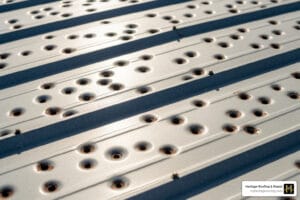
Why Quick Action After Hail Damage Matters Most
Hail damage repair is the process of restoring your vehicle or property after a hailstorm causes dents, cracks, broken glass, or structural damage.
A severe hailstorm leaves behind a trail of destruction that’s hard to ignore. With the insurance industry facing between $8 billion and $14 billion in annual hail damage costs, you’re far from alone if your car looks like a golf ball or your roof has taken a beating. The path from damage to complete restoration doesn’t have to be overwhelming. At Heritage Roofing & Repair, we simplify this journey for you.
This guide breaks down the entire repair journey into clear, manageable steps. You’ll learn how to spot damage on both vehicles and roofs, understand the difference between Paintless Dent Repair (PDR) and conventional methods, steer insurance claims, and avoid storm-chaser scams. If your home has suffered storm damage, understanding your options for storm damage roof repair is the first step toward peace of mind.
The numbers tell the story: Between 2017 and 2019, nearly 735,000 automotive hail damage claims were filed. State Farm alone paid out $3.1 billion in hail-related claims in 2020. Repair costs range from $750 for minor dings to over $10,000 for severe damage requiring extensive bodywork. Texas, Colorado, and Nebraska consistently see the highest claim volumes, though severe hailstorms can strike anywhere.
I’m Rex Wisdom, owner of Heritage Roofing & Repair, where my family has provided trusted hail damage repair services to Northwest Arkansas communities for over 50 years. Our team has guided hundreds of homeowners and business owners through the entire repair process, from initial inspection to final insurance settlement, ensuring quality workmanship and fair treatment every step of the way.
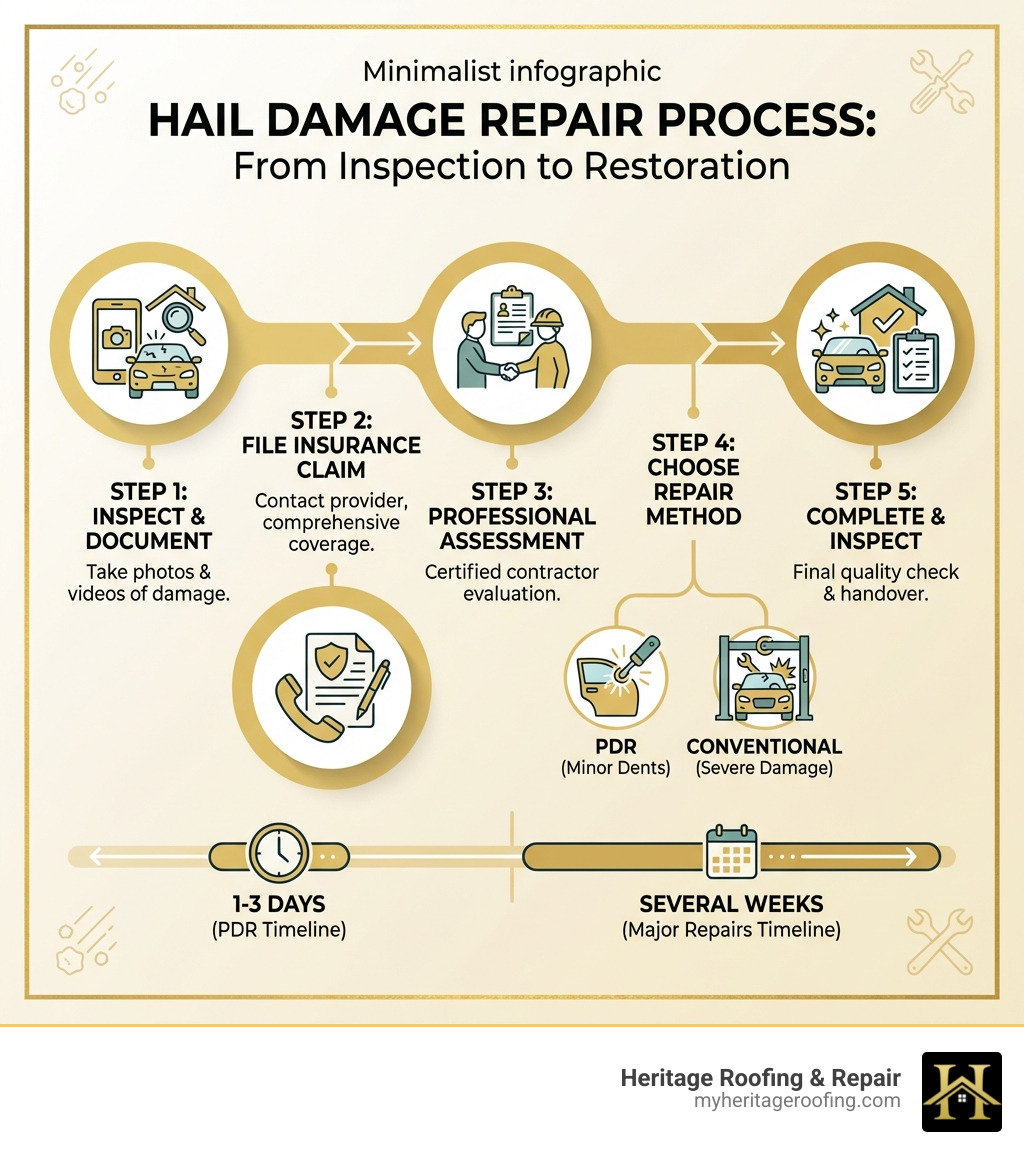
Easy hail damage repair glossary:
First Look: Identifying and Assessing Hail Damage
The moments after a hailstorm are critical for assessing the damage to your vehicle and home. Knowing what to look for and what to do immediately can significantly impact the success of your repair and insurance claim process. The first rule is to prioritize safety; wait until the storm has completely passed before going outside to inspect your property.
What to Do Immediately After a Hailstorm
A hailstorm typically lasts only about 5-6 minutes, but the damage can be extensive. As soon as it’s safe to venture outside, swift action is key to protecting your property and ensuring a smooth claims process.
Here’s what you should do:
- Prioritize Safety: Never go outside while the storm is still active. If you’re in your car, seek shelter under an overpass or in a structure with a strong roof. If you can’t find shelter, pull to the side of the road and cover your face to protect yourself from potential broken glass.
- Document Everything: This is your best friend when dealing with insurance. Take clear, close-up photos and videos of all visible damage to your vehicle and home. Don’t forget to get wide-angle shots to show the overall impact. Make a detailed list of all damaged items, inside and out. Remember the advice from the Texas Department of Insurance: “Don’t throw any damaged items away until your insurance company tells you.” You can find helpful claim tips to guide your documentation process.
- Prevent Further Damage: If your car’s windows are broken, cover them to protect the interior from rain and debris. For your home, if your roof has leaks, we recommend emergency tarping to prevent further water intrusion, which can lead to mold and more extensive structural issues. Save all receipts for any temporary repairs you make.
- Contact Your Insurance Provider: File an insurance claim as soon as possible. You’ll need your policy number, vehicle details (year, make, model, body style), and the date of the incident.
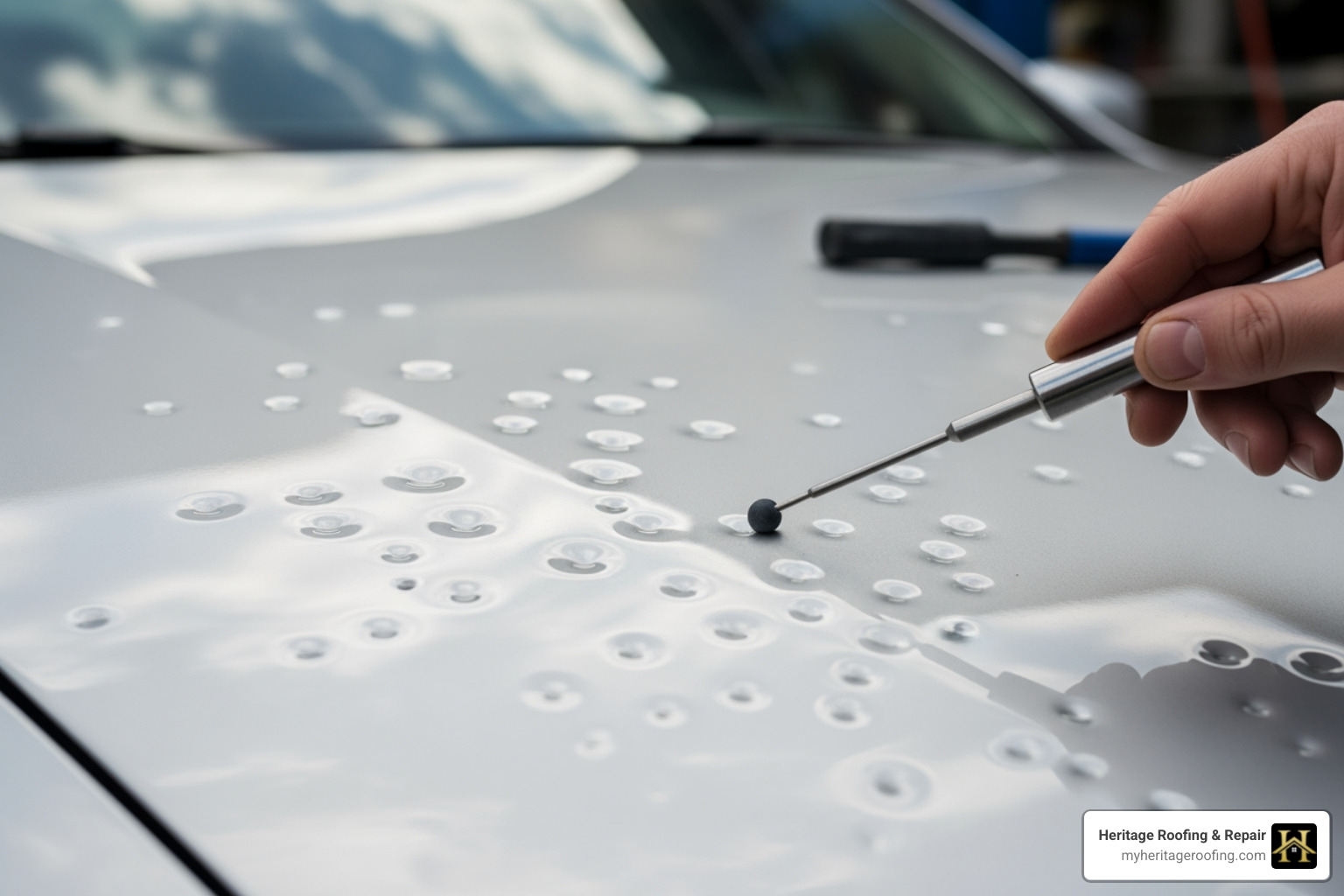
Spotting Damage on Your Vehicle
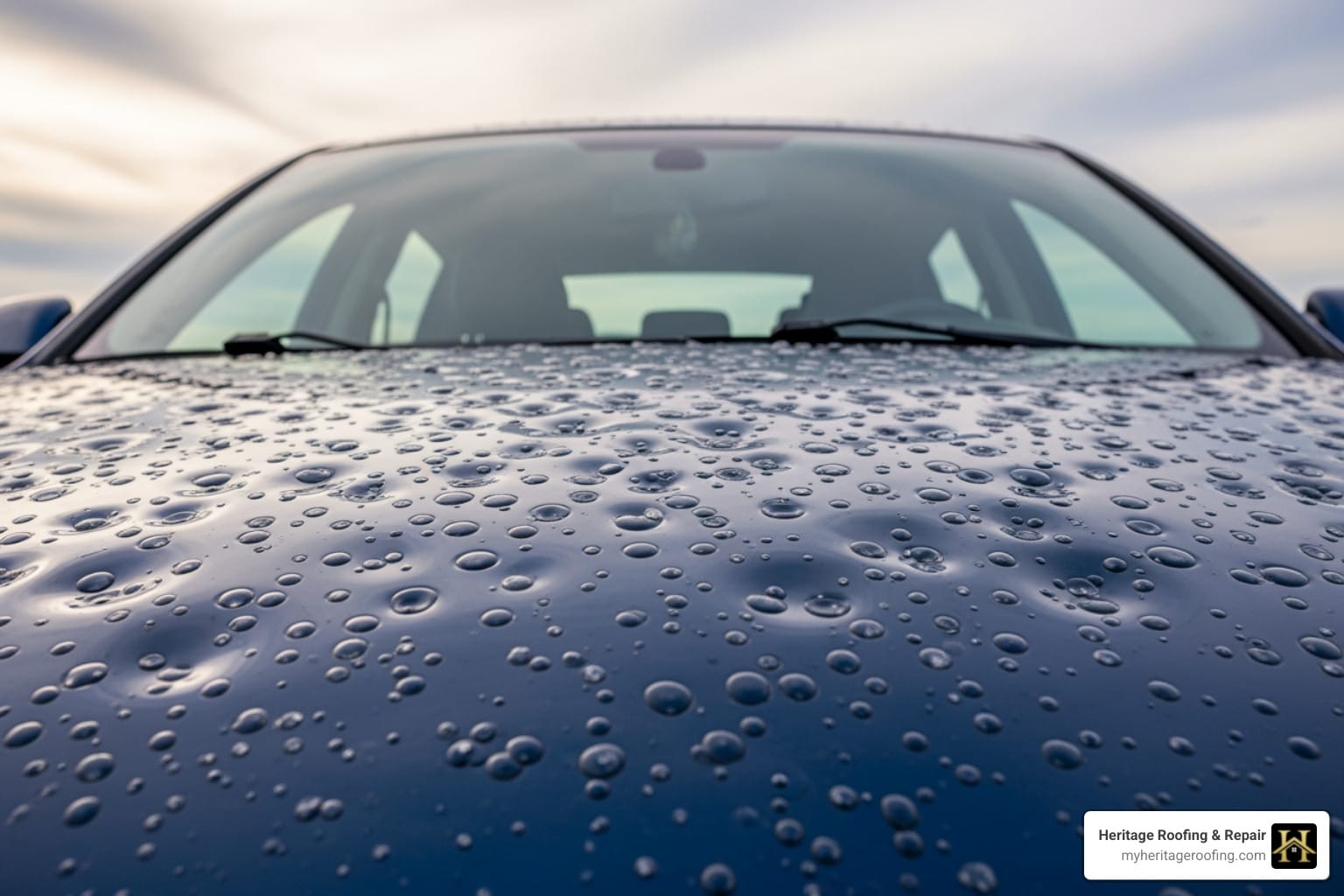
Hail damage on a car can range from tiny pockmarks to significant dents and shattered glass. Here’s how to thoroughly inspect your vehicle:
- Dents and Dings: These are the most common signs. Look for dents on the hood, roof, trunk, and doors. They can be small or large, often circular, and may not always damage the paint. The article “Car Hail Damage: How To Spot It and What To Do” from State Farm highlights that these dents are frequently non-uniform.
- Cracked or Broken Glass: Your windshield, side windows, and rear window are vulnerable. Even small chips can spread, requiring repair or replacement.
- Broken Mirrors and Lights: Side mirrors and headlights/taillights can crack or shatter from larger hailstones.
- Paint Scratches or Chips: While PDR is ideal for dents without paint damage, severe impacts can chip or scratch the paint, which will require more extensive repair.
- Interior Water Damage: If windows or sunroofs were broken, check for water stains on upholstery, carpets, or the dashboard. This can lead to mold and electrical problems if not addressed promptly.
Assessing Damage on Your Roof and Home
Hail can be just as devastating to your roof as it is to your car, and often the damage isn’t immediately obvious from the ground. As your local roofing experts in Northwest Arkansas, we know exactly what to look for.
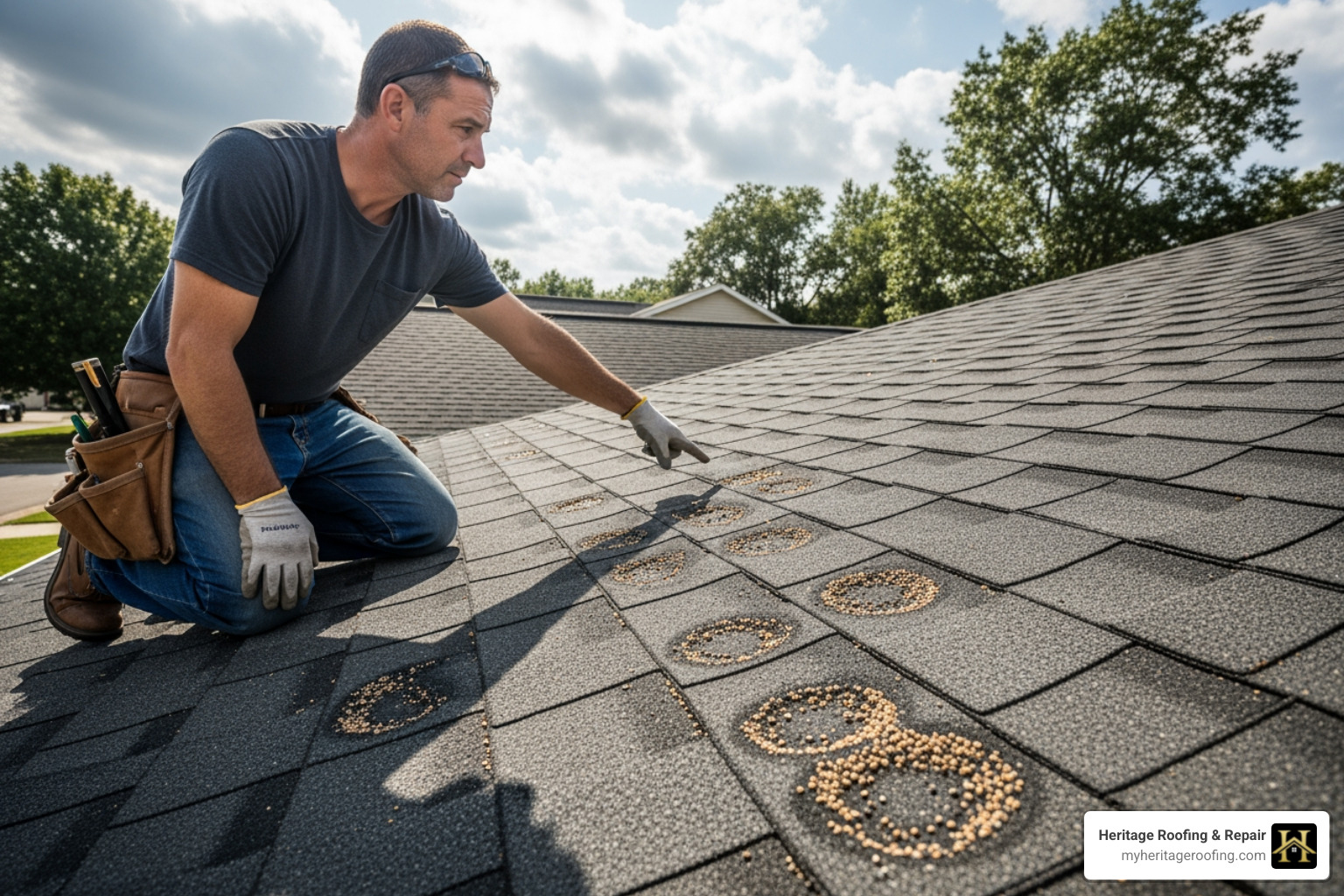
- Granule Loss: Check your gutters and downspouts for an accumulation of asphalt shingle granules. This is a tell-tale sign that hail has impacted your shingles, dislodging their protective layer.
- Dented Gutters and Downspouts: Hail often leaves dents in metal gutters and downspouts. This can also indicate the size and intensity of the hailstones that hit your home.
- Cracked or Missing Shingles: Large hail can crack shingles directly, making them brittle and compromising their waterproofing. In severe cases, shingles can be completely torn off.
- Bruised Shingles (Soft Spots): Hail impacts can create soft spots on asphalt shingles, even if the granules aren’t completely gone. These “bruises” weaken the shingle, making it susceptible to future leaks and premature aging. A professional hail damage roof repair inspection can identify these subtle but critical issues.
- Damaged Siding: Depending on the material, siding can also show dents, cracks, or chips from hail impacts.
- Window Screen Damage: Look for tears or holes in window screens. This is another indicator of hail activity.
Roof damage can lead to leaks, structural issues, and mold if not addressed quickly. We recommend an inspection at least once a year and after any major storms to catch issues early.
The Repair Roadmap: PDR vs. Traditional Hail Damage Repair Methods
Once the damage is assessed, the next step is understanding the repair options. The method used depends heavily on the type and severity of the damage. For vehicles, the primary methods are Paintless Dent Repair (PDR) and conventional bodywork. For homes, repairs can range from simple shingle replacement to more extensive work.
How Paintless Dent Repair (PDR) Restores Your Vehicle
Paintless Dent Repair (PDR) is often the hero for many hail-damaged vehicles. It’s a specialized technique that allows us to remove minor to moderate dents from your car’s body without disturbing the original factory paint.
Here’s how it works:
- Specialized Tools: Highly skilled technicians use a variety of specialized tools – rods, picks, and levers – to access the underside of the damaged panel.
- Gentle Massaging: From behind the dent, the technician gently massages and pushes the metal back into its original shape. For some dents, glue-pulling and light tap-downs on the outside are also used to correct high spots.
- No Repainting: The magic of PDR is that it doesn’t require sanding, body fillers, or repainting. This preserves your vehicle’s original finish, which is a huge plus for its long-term value.
- Benefits: PDR offers faster turnaround times (often hours instead of days), is typically more affordable than conventional repairs, and is environmentally friendly as it uses no harsh chemicals or paint. It’s ideal for minor hail damage where the paint is intact.
When Conventional Auto Body Repair is Necessary
While PDR is fantastic, it’s not a cure-all. Sometimes, the hail damage is simply too severe for PDR alone. This is where traditional auto body repair steps in.
Conventional repairs are needed when:
- Deep Dents and Stretched Metal: If the hail impacts are very deep or have stretched the metal beyond its elastic limit, PDR won’t be able to fully restore the panel.
- Cracked or Chipped Paint: If the hail impact has cracked, chipped, or otherwise compromised the paint, repainting will be necessary.
- Extensive Damage: Large or sharply creased dents, or those in hard-to-access areas, often require conventional methods.
- Body Filler and Repainting: The process involves pulling out dents, using body filler (like “Bondo”) to smooth out irregularities, sanding, priming, and then color-matching and repainting the affected area. This might also include blending into adjoining panels for a seamless finish.
- Panel Replacement: In extreme cases, if a panel is too severely damaged, it may need to be replaced entirely. Companies like Caliber Collision offer comprehensive services for such severe impacts.
Repairing Hail-Damaged Glass and Roofing
Hail doesn’t just target metal; glass and roofing materials are also highly vulnerable.
For Vehicles:
- Windshield Chips and Cracks: Small chips or cracks (often smaller than a quarter) can often be repaired using a resin injection process, preventing them from spreading.
- Full Glass Replacement: For larger cracks, shattered glass, or if the damage obstructs the driver’s view, the windshield or windows will need to be replaced. Our partners can often provide efficient glass repair or replacement services.
For Homes:
- Shingle Replacement: For cracked, bruised, or missing shingles, individual shingles or sections of the roof can be replaced. This is a common part of shingle roof repair.
- Flashing Repair: Hail can damage flashing around chimneys, skylights, and vents, leading to leaks. Repairing or replacing damaged flashing is crucial.
- Siding Repair: Dented or cracked siding will need to be repaired or replaced to maintain your home’s aesthetic appeal and weather protection.
- Gutter and Downspout Replacement: Dented or broken gutters can impede proper water drainage, leading to foundation issues. These often need to be replaced after a hailstorm.
- Roof Leaks: Any leaks resulting from hail damage must be addressed immediately to prevent further interior damage. Our Roof Leak Repair Guide provides more detailed information on this critical repair.
Navigating the Numbers: Cost, Timelines, and Insurance Claims
The financial and logistical aspects of hail repair are often the most stressful for property owners. Costs can vary dramatically, and the insurance process can be complex. Understanding these factors will help you manage expectations and steer the journey smoothly.
Factors That Influence the Cost of Hail Damage Repair
The cost of hail damage repair can feel like a roll of the dice, but several factors play a significant role. For vehicles, repairing hail damage can cost anywhere from $750 to over $10,000, depending on the extent of the damage.
| Cost Factor | Paintless Dent Repair (PDR) | Conventional Repair (Auto Body) | Roofing Repair (Home) |
|---|---|---|---|
| Number of Dents | More dents = higher cost, but PDR is per-dent cost-effective. | Many dents = significantly higher labor and material costs. | More damaged shingles/panels = higher material and labor costs. |
| Size & Depth of Dents | Small to medium dents are ideal. Deep, sharp dents may not be suitable. | Larger, deeper dents require more filler, sanding, and paint. | Larger hail impacts cause more extensive shingle bruising/cracking. |
| Vehicle Make & Model | Luxury/high-end vehicles may have higher labor rates. | Specialized parts and labor for luxury vehicles increase cost. | Material cost varies (asphalt, metal, tile). |
| Panel Material | Aluminum is harder to work with than steel, increasing PDR cost. | May require specialized techniques for different metals. | Type of roofing material (asphalt, metal, tile) impacts cost. |
| Labor Rates | Skilled PDR technicians command fair rates for their expertise. | Varies by shop, region, and complexity of work. | Varies by region and complexity of roof. |
| Roof Material Type | N/A | N/A | Asphalt shingles are generally less expensive than metal or tile. |
| Location of Damage | Dents on the roof or hood are often more costly due to access. | Dents on complex body lines or hard-to-access areas increase labor. | Roof pitch, accessibility, and complexity affect labor. |
| Paint Condition | Only for undamaged paint. | Necessary if paint is chipped, cracked, or scratched. | N/A |
| Glass Damage | Separate repair/replacement cost. | Separate repair/replacement cost. | N/A |
The roof and hood of a vehicle often tend to be more costly to repair compared with other areas due to their large surface area and structural components. For homes, the type of roofing material (asphalt, metal, tile) and the overall complexity of the roof significantly impact the final repair cost.
How Long Does the Repair Process Take?
“How long does hail damage repair take?” is one of the most common questions we hear. The answer, like cost, depends on several variables.
- PDR Timeline (Vehicles): For minor to moderate hail damage, PDR is impressively fast. It can take anywhere from a few hours for isolated dents to 1-3 days for a vehicle with multiple dents, as highlighted by Dent Mechanic Group.
- Conventional Repair Timeline (Vehicles): If your vehicle requires traditional bodywork and repainting, the process can take several days to a few weeks. Factors like paint curing times, panel replacement, and blending colors add to the duration.
- Roof Repair Timeline (Homes): Minor roof repairs, like replacing a few shingles, can often be completed in a few hours. More extensive hail damage repair involving larger sections or multiple components can take 1-5 days, depending on the scope.
- Factors Affecting Timeline:
- Extent of Damage: A few isolated dents versus dense clusters of damage.
- Parts Availability: If replacement parts are needed for vehicles or specific roofing materials are on backorder.
- Shop Workload: After a major hailstorm, repair shops (both auto and roofing) experience high demand, which can create backlogs and extend wait times.
- Insurance Approval Speed: Delays in adjuster inspections or claim approvals can push back the start of repairs.
The Insurance Claims Process for Hail Damage Repair
Navigating insurance claims can be daunting, but it’s a necessary step for hail damage repair. Most hail damage is covered under your comprehensive auto insurance policy for vehicles and homeowners insurance for your property.
Here’s a general overview of the process:
- Confirm Coverage: Ensure you have comprehensive coverage for your vehicle, as this typically covers “acts of God” like hail. For your home, most homeowners policies cover hail damage. You can file an auto claim directly with your provider.
- File Your Claim: Contact your insurance company as soon as possible after finding the damage. You can usually do this online, through an app, or by phone.
- Adjuster Inspection: Your insurance company will send an adjuster to assess the damage and provide an initial estimate. For large-scale hail events, some insurers, like Nationwide, even deploy Automated Mobile Hail Estimating units for rapid assessment.
- Important Note: Initial adjuster estimates often fall 20% or more below the actual cost of repair. This is common, and a reputable repair shop will account for it.
- Deductibles: You will be responsible for paying your deductible before your insurance coverage kicks in.
- Supplements for Hidden Damage: It’s common for repair shops to find additional damage once they begin work or conduct a more thorough inspection. This is called a “supplement.” Your chosen repair shop will document this extra damage and submit a supplemental claim to your insurance company. This ensures all damage is addressed without compromising quality or requiring you to pay more out-of-pocket.
- Choosing a Repair Shop: You have the right to choose your own repair shop, even if your insurance company recommends one. We believe in empowering homeowners to select the best professionals for their needs.
- Payout Process: Once repairs are approved and completed, your insurance company will issue payment, minus your deductible. For a deeper dive into roofing claims, consult our Roofing Insurance Claims Ultimate Guide.
Choosing Your Champion: How to Select a Reputable Repair Specialist
The quality of your hail damage repair depends entirely on the skill of the technician and the integrity of the repair shop. After a major storm, “storm chaser” contractors with questionable credentials often appear. Choosing a local, established, and reputable specialist is your best defense against poor workmanship and fraud.
Tips for Finding a Trustworthy Contractor
When your home or vehicle is damaged by hail, you want peace of mind that the repairs will be done right. Here’s how to find a reputable professional:
- Check Online Reviews and Ask for References: Look for businesses with a strong track record and positive feedback from past customers. Ask for local references you can contact.
- Verify Licenses and Insurance: Ensure the contractor is properly licensed and insured in Arkansas. This protects you in case of accidents or shoddy workmanship.
- Get Multiple Estimates: Don’t settle for the first quote. Get at least two or three detailed estimates. This helps you compare costs and understand the scope of work.
- Avoid Door-to-Door Solicitations: Be wary of contractors who show up uninvited after a storm, especially if they pressure you to sign a contract immediately or offer to waive your deductible (which is illegal in Arkansas). The Texas Department of Insurance offers advice on how to find a good contractor after a storm, much of which applies here in Northwest Arkansas.
- Ensure They Have a Physical Local Address: “Storm chasers” often operate without a local presence. A physical office means they’re invested in the community and available for follow-up.
- Detailed Contract: Make sure any contract you sign is complete, with no blank spaces. It should clearly outline the work to be done, materials, timelines, and payment schedule.
Your Local Storm Damage Experts in Northwest Arkansas
For homeowners in Berryville, Fayetteville, Harrison, and the surrounding areas, having a trusted local partner is essential. We’ve been serving these communities for over five decades, building a reputation for honest, high-quality hail damage repair.
Heritage Roofing & Repair
3458 Arkansas State Hwy 221, Berryville, AR 72616
(870) 654-1164
Preventative Measures to Minimize Future Damage
While we can’t control the weather, we can certainly take steps to minimize the impact of future hailstorms.
- Garage Parking: The simplest and most effective solution for vehicles. If you have a garage or carport, use it!
- Hail-Specific Car Covers: If garage parking isn’t an option, invest in a padded, hail-resistant car cover. Even thick blankets can offer some protection in a pinch.
- Impact-Resistant Shingles: For your home, consider upgrading to impact-resistant shingles when it’s time for a roof replacement. These are designed to withstand hail better and may even qualify you for insurance discounts.
- Regular Roof Inspections: Proactive inspections, ideally once a year and after any major storm, can help identify vulnerabilities before they become major problems. Our Roof Maintenance Plans Guide offers valuable insights into keeping your roof in top shape.
- Keeping Trees Trimmed: Trim tree branches near your home to prevent them from falling onto your roof during severe weather, adding to potential damage.
Frequently Asked Questions about Hail Damage Repair
We understand you likely have many questions when facing hail damage. Here are some of the most common ones we encounter:
Will filing a hail damage claim raise my insurance rates?
Typically, no. Hail damage is considered a “no-fault” or “act of God” claim under comprehensive coverage. Unlike collision claims, which involve fault, these types of claims generally do not result in an increase in your insurance premiums. Insurance companies view them as unavoidable natural events.
What if the repair shop finds more damage after the initial estimate?
This is a very common scenario, especially with hail damage, and it’s handled through a process called a “supplement.” A reputable repair shop will carefully document any additional damage finded after the initial estimate or once work begins. They will then submit a supplemental claim to your insurance company. This covers the extra costs for the newly identified damage, ensuring a complete and proper repair without additional out-of-pocket expense to you. We work closely with all major insurance providers to manage this process seamlessly.
Can I keep the insurance money and not repair the damage?
While you technically can, we generally do not recommend it. Here’s why:
- Reduced Value: Unrepaired hail damage significantly lowers your vehicle’s or home’s resale value. Potential buyers will factor in the cost of repairs, if they are even willing to purchase a damaged property.
- Future Claims: If the same area is damaged in a future hail event, your insurance company will likely deduct the amount of the previous unpaid claim from any new settlement. This could leave you with a much larger bill to pay yourself.
- Further Deterioration: For vehicles, paint damage associated with hail can lead to rust down the road. For roofs, compromised shingles can lead to leaks, mold, and more extensive structural damage over time, which could be far more costly than the original hail damage repair.
Conclusion
From the first dent to the final polish, navigating hail damage repair is a journey that requires patience and knowledge. By promptly assessing the damage, understanding your repair options like PDR and conventional methods, and confidently managing the insurance process, you can turn a stressful situation into a successful restoration. The most critical decision is choosing a trustworthy, local professional to handle the work. With over 50 years of experience, Heritage Roofing & Repair specializes in helping homeowners restore their property with quality craftsmanship. If you’re in Northwest Arkansas and need an expert assessment, our team is ready to help.
Get your property back to its pre-storm condition by contacting our Harrison, AR roofing experts today for a free inspection.