Start With a Qualified Hurricane Repair Contractor
Hurricane repair contractors help restore a damaged home or business by securing exposed areas, documenting damage, coordinating needed trades, and completing code-compliant repairs. The right contractor is licensed, insured, locally accountable, clear about permits and pricing, and willing to provide a written scope and workmanship warranty.
For fast, reliable help after storm damage, Heritage Roofing & Repair provides prompt roof inspections, emergency repair support, and insurance claim assistance for property owners in Berryville and Northwest Arkansas.
Local service is available from Heritage Roofing & Repair at 3458 Arkansas State Hwy 221, Berryville, AR 72616, with click-to-call support at Phone: (870) 654-1164.
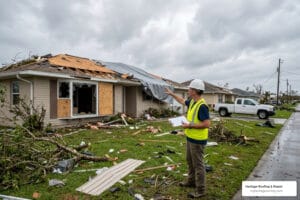
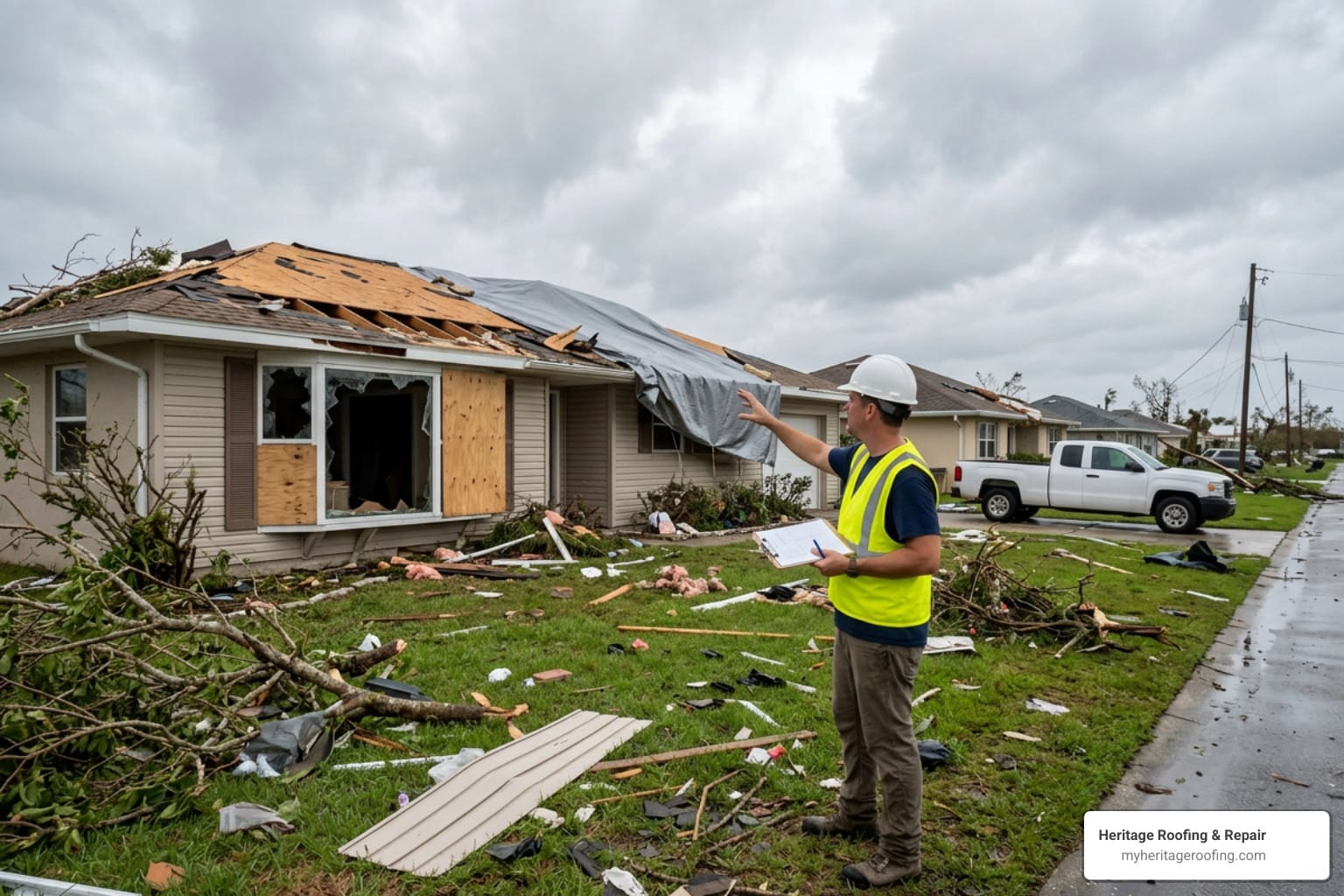
After a hurricane, time matters. Wind-driven rain can enter through lifted shingles, damaged flashing, broken siding, or cracked windows. Mold can begin growing within 24 to 48 hours when water remains in a building. A qualified contractor helps stop additional damage first, then builds a documented plan for safe, lasting restoration.
I am Rex Wisdom, owner of Heritage Roofing & Repair, a family-owned roofing company backed by more than 50 years of community-based experience. Our work with hurricane repair contractors and storm-damaged roofs has taught us that clear communication, proper credentials, and durable workmanship matter most when a property owner needs answers quickly.
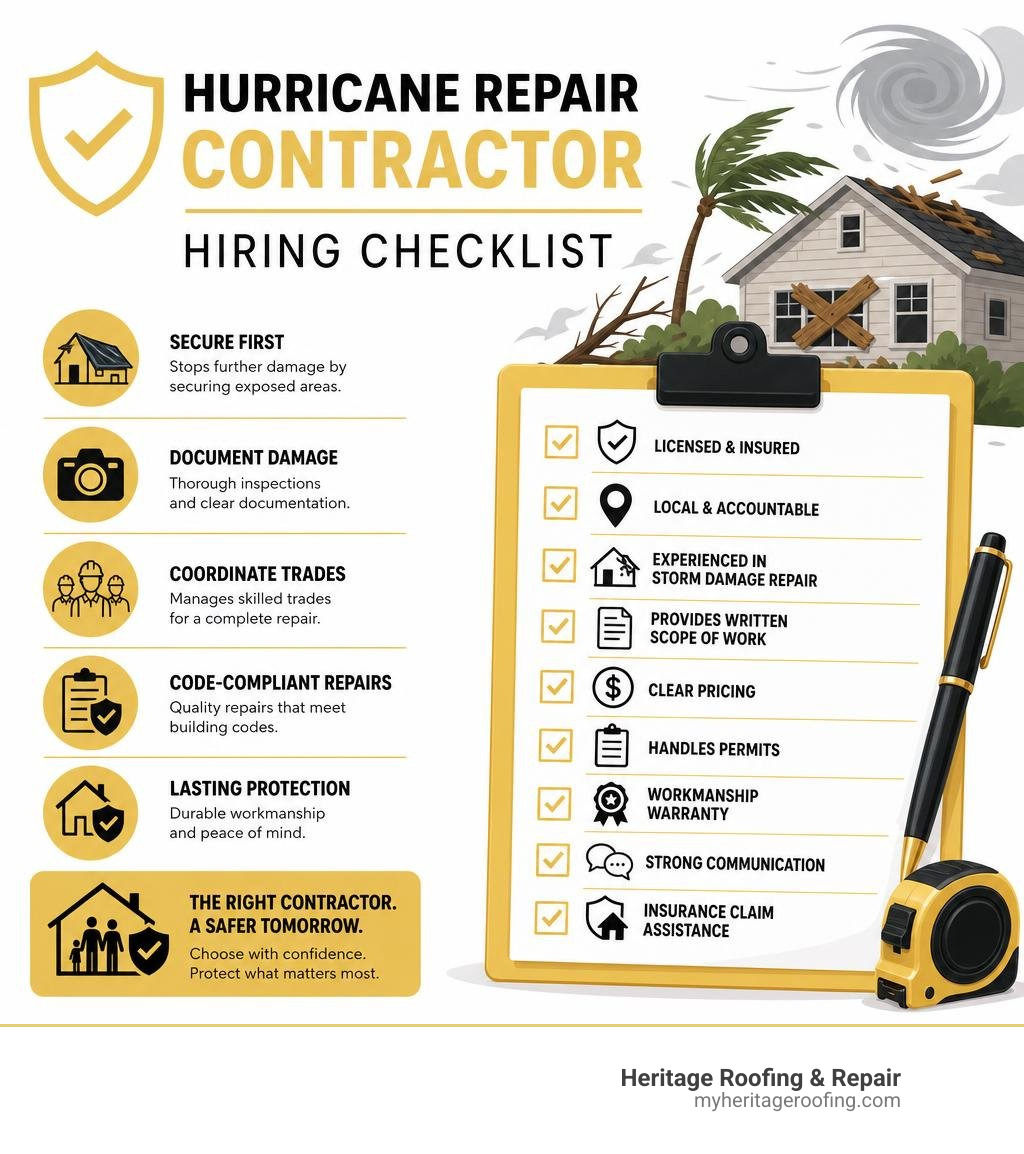
Hurricane repair contractors terms you need:
- Storm damage repair services
- Storm damaged roof
- Commercial storm damage
Essential Credentials to Look For in Hurricane Repair Contractors
Hiring qualified hurricane repair contractors requires confirming trade credentials before signing contracts or approving scopes of work. Standard commercial liability coverage, worker’s compensation policies, and specialized trade endorsements form the baseline of proper contractor protection. Property owners must demand proof of active coverage sent directly from the contractor’s insurance agent.
Trade Licensing and State Certification Requirements
State-certified general contractors and residential specialty contractors possess legal authority to perform structural and exterior storm restoration work. State certification demonstrates that a contractor passed comprehensive technical examinations, proved financial stability, and carries required liability coverage.
In contrast, state-registered contractors operate under local municipal examinations and remain restricted strictly to specific geographic jurisdictions. General contractor licensing covers broad structural overhead, allowing a primary firm to manage roofing, siding, framing, and interior reconstruction under a unified legal agreement.
Verifying License History and Checking Disciplinary Records
Homeowners and commercial property managers must verify contractor credentials through official regulatory licensing databases before signing agreements. State labor departments and licensing boards maintain publicly searchable electronic registries detailing license history, active status, and formal disciplinary actions.
You can inspect verified trade credentials through local resources like the Find Contractors in Berryville, AR – Procore Construction Network. Checking public records ensures the contractor maintains clean regulatory standing without unresolved building code violations, fraudulent claim complaints, or administrative suspensions.
Vetting Local Expertise vs. Out-of-State Storm Chasers
Transient operations, commonly called storm chasers, follow severe weather across regional boundaries to capture high volumes of disaster recovery work. These companies deploy aggressive sales tactics, execute minimal structural fixes, and relocate long before installation deficiencies or roof leaks emerge.
Local accountability guarantees that your contractor maintains a physical storefront, local office staff, and ongoing community investments in Berryville and Northwest Arkansas. When severe weather hits, contacting a trusted local contractor for emergency roof repair guarantees long-term support and rapid emergency mobilization.
Red Flags When Evaluating Hurricane Repair Contractors
Unscrupulous operators exploit post-storm stress by using coercive sales maneuvers. Homeowners must reject contractors displaying these common red flags:
- Unsolicited Door-to-Door Sales: High-pressure salespeople canvassing neighborhoods immediately following severe windstorms.
- Unmarked Vehicles: Work crews operating without company branding, permanent phone numbers, or state license numbers displayed on trucks.
- Demands for Upfront Cash: Contractors requiring complete upfront payment or personal check endorsement prior to material delivery.
- Illegal Deductible Absorption: Offers to pay, absorb, or waive home insurance deductibles, which constitutes illegal insurance fraud in multiple state jurisdictions.
- Vague Scopes of Loss: Refusal to provide line-item pricing or detailed itemization of structural repairs.
Workmanship Warranties and Long-Term Contractor Guarantees
Comprehensive hurricane damage restoration requires dual-layer warranty protection. Manufacturer material warranties cover product manufacturing defects for 20 to 50 years, but exclude coverage for improper installation practices.
Reputable contractors provide written labor guarantees, including multi-year or 5-year leak-free workmanship warranties. Our team stands behind every installation with transparent written guarantees that outlast seasonal weather patterns.
Building Permits, Building Codes, and Legal Compliance
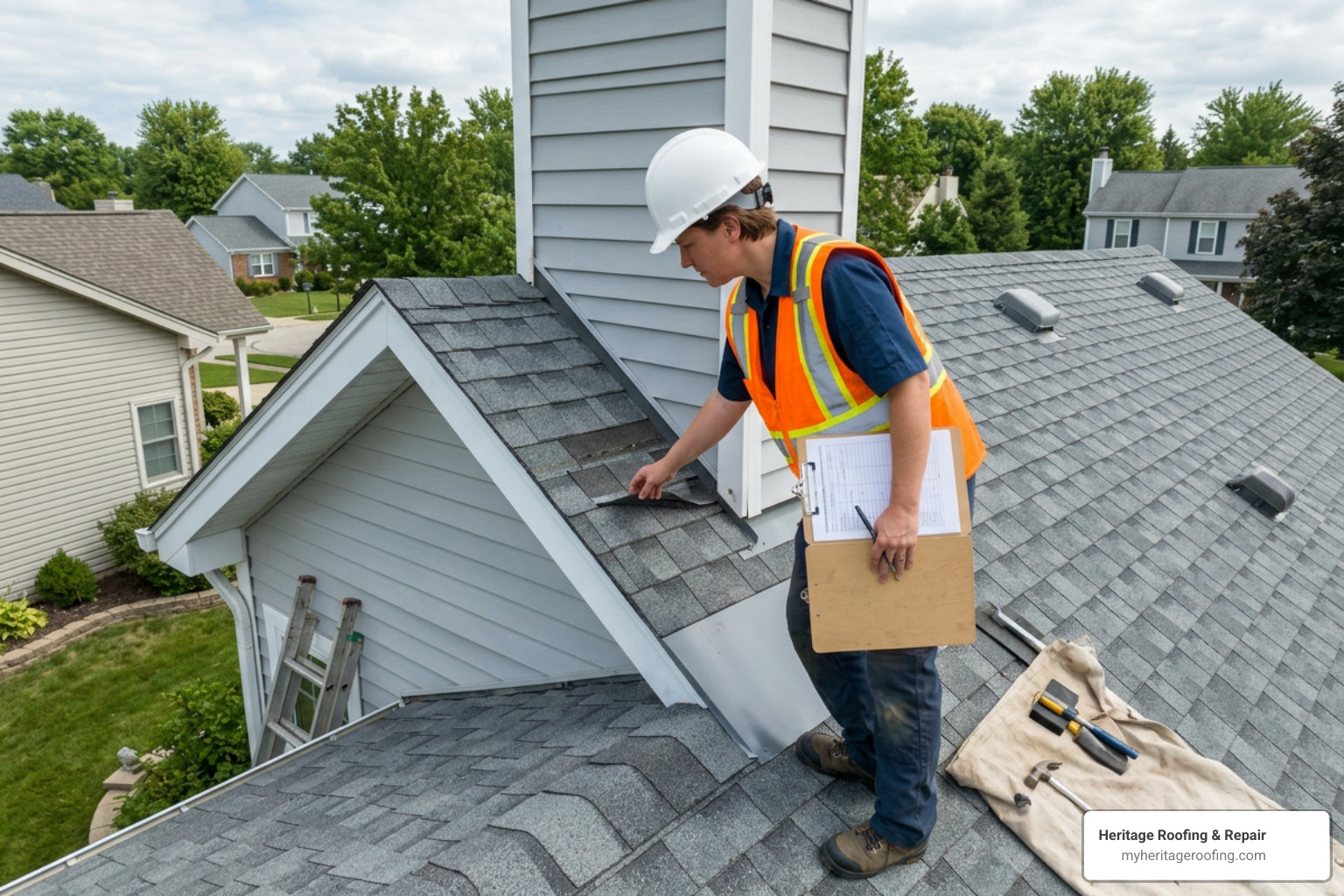
Building permits safeguard property owners by ensuring structural repairs comply with modern safety standards and regional building codes. Following severe weather events, local building departments enforce strict structural, wind-load, and impact-resistance requirements on all property restoration.
Permitting Thresholds and Potential Risks of Unpermitted Work
Permit requirements kick in for major structural, mechanical, electrical, and roofing restoration. Standard permit applications for routine storm damage repairs—such as roofing, plumbing, and electrical—are routinely processed by municipal building departments within 24 hours.
Executing structural or exterior repairs without proper building permits creates severe financial and legal liabilities:
- Insurance Claim Denials: Property insurance carriers routinely deny claim payouts or refuse future policy renewals for unpermitted construction.
- Code Enforcement Fines: Municipal authorities issue stop-work orders and levy thousands of dollars in code compliance penalties.
- Resale Interference: Unpermitted work blocks future real estate transactions, forcing property owners to perform costly tear-outs and retrofits prior to closing.
For detailed guidelines on structural code compliance and permit management, consult our Home Storm Repair Complete Guide.
Specialized Permits and Flood Zone Substantial Improvement Rules
Properties located in designated floodplains face specific federal and municipal rebuilding criteria. Under FEMA guidelines, if the total cost of storm damage restoration equals or exceeds 50 percent of the structure’s pre-damage market value, the substantial improvement rule is triggered.
This mandate requires the entire structure to be brought into compliance with current flood protection standards, which may include elevating the building foundation above base flood elevations. Furthermore, temporary power re-energization after severe flooding requires specialized Meter Reset permits to verify electrical safety prior to utility connection.
Navigating Insurance Claims and the Restoration Process
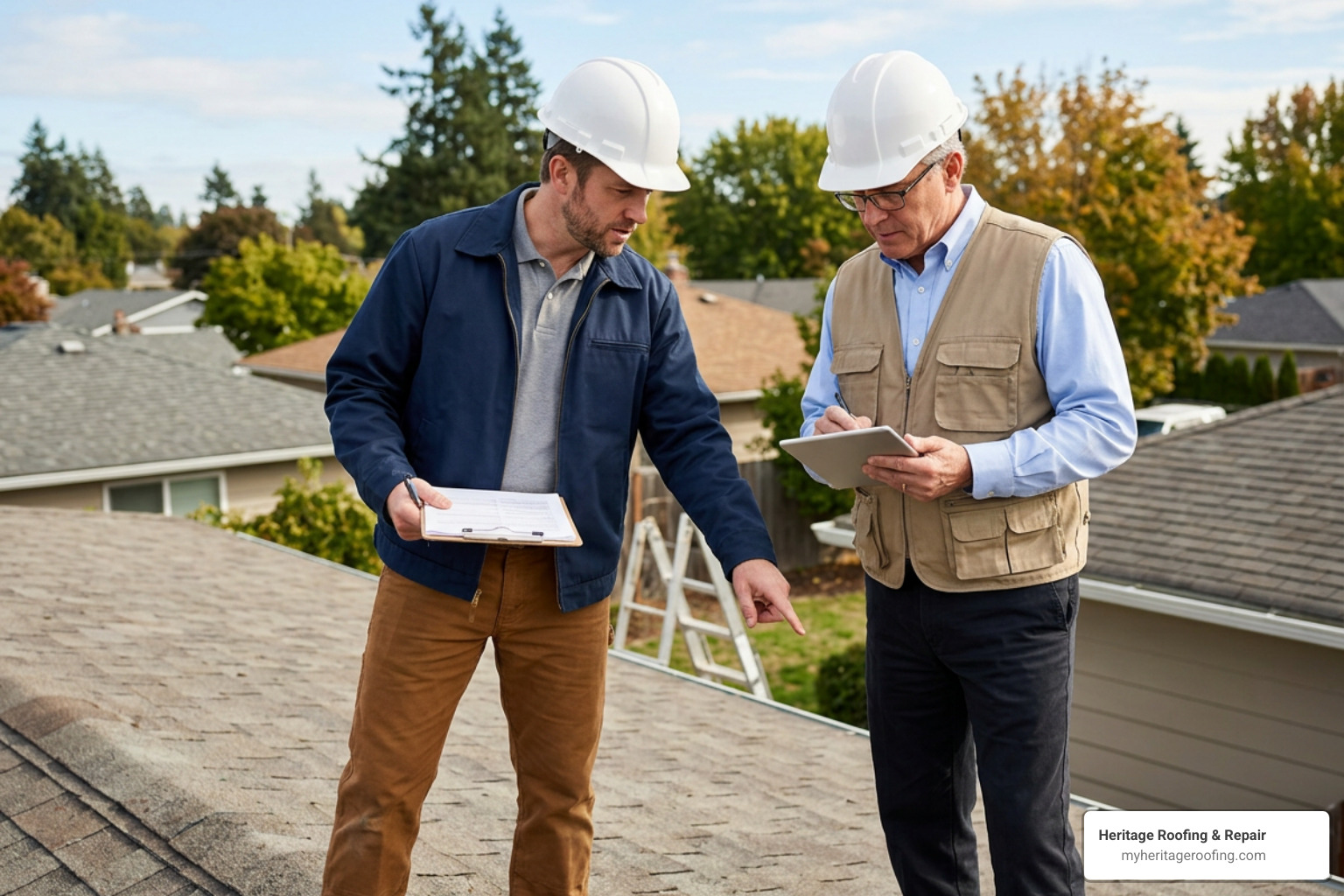
Navigating property insurance claims after major storm events demands meticulous administrative precision. Professional hurricane repair contractors act as technical advocates, generating carrier-ready documentation that mirrors the software tools used by insurance adjusters.
Insurance carriers calculate repair scopes using standard estimation software like Xactimate. Experienced contractors generate comprehensive line-item scopes of loss featuring detailed measurements, high-resolution damage photography, and structural moisture readings.
Insurance carrier scope approvals take between 2 to 8 weeks on average. Qualified contractors work directly with field adjusters to verify that policy limits cover required law and ordinance code upgrades, ensuring the home is rebuilt to current structural standards without improper scope reductions.
To ensure your policy covers full reconstruction costs, review our Insurance Claim Support Complete Guide.
| Restoration Stage | Emergency Stabilization | Full Reconstruction |
|---|---|---|
| Primary Goal | Stop active water intrusion | Restore property to pre-loss condition |
| Typical Actions | Roof tarping, window board-up, pumping water | Decking replacement, re-roofing, drywall |
| Turnaround Time | 24 to 48 hours | 1 to 14 months (based on damage) |
| Permit Required | No (Emergency Exemption) | Yes (Mandatory Building Permit) |
Step-by-Step Hurricane Restoration Process and Typical Timelines
Disaster recovery follows a structured chronological workflow designed to minimize secondary property loss:
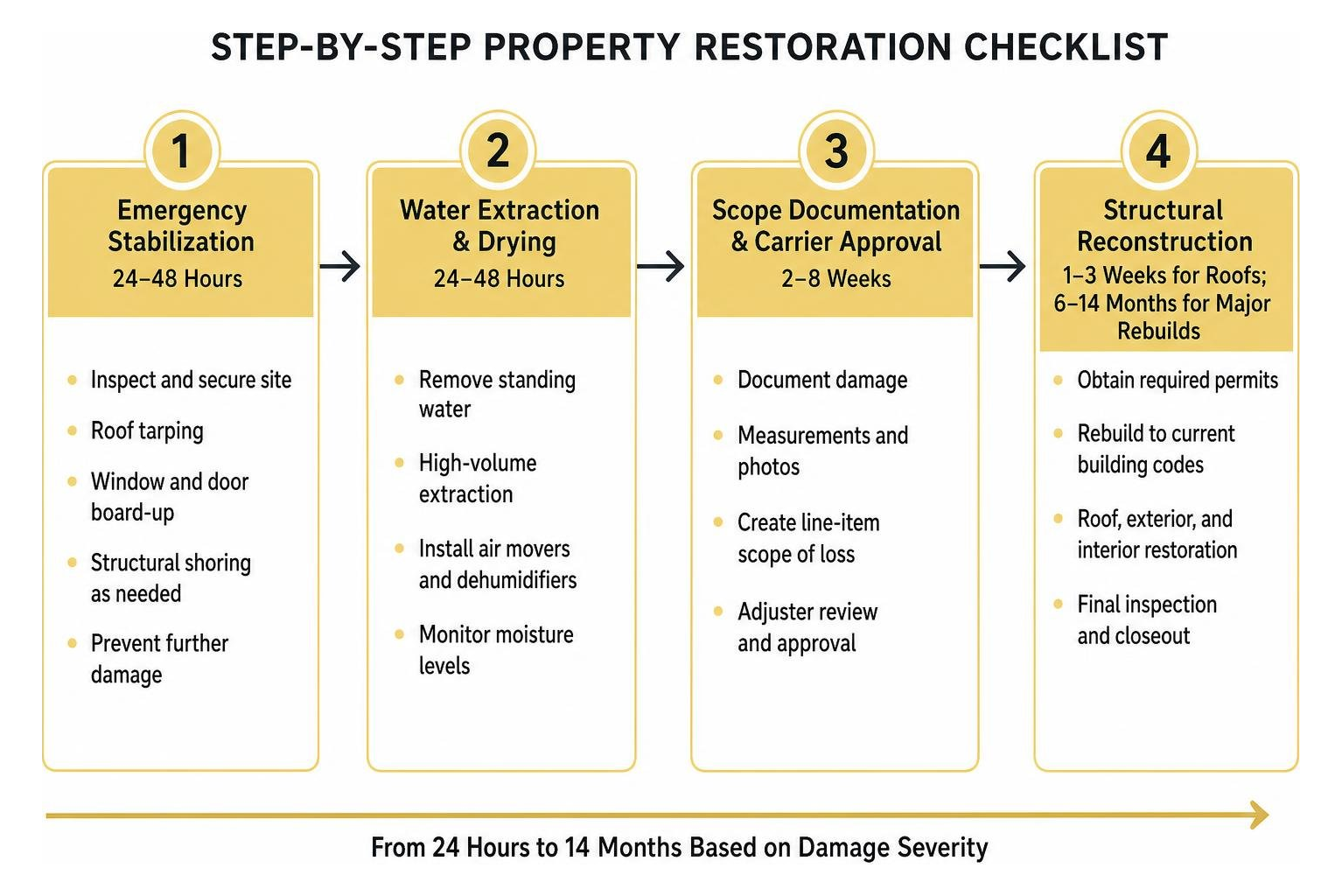
- Emergency Site Stabilization (24–48 Hours): Immediate deployment of protective tarps, board-ups, and structural shoring prevents ongoing weather intrusion. Review our Emergency Roof Tarping Guide to understand temporary weatherproofing steps.
- Water Extraction and Structural Drying: High-volume air movers and industrial dehumidifiers eliminate standing water before mold establishes within the critical 24 to 48 hour window.
- Scope Documentation and Carrier Approval (2–8 Weeks): Contractor and adjuster align on complete line-item specifications.
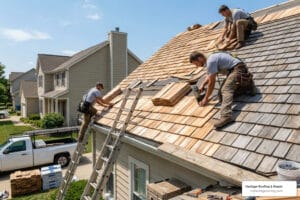
- Structural Reconstruction (1–3 Weeks for Roofs; 6–14 Months for Major Gut Rebuilds): Full trade execution following local building code compliance.
Historic recovery data shows that comprehensive restoration after major hurricane disasters averages 14 months across impacted regions.
Multi-Trade Coordination and Specialty Contractor Oversight
Severe storm damage rarely impacts a single building system. Wind forces and wind-driven rain destroy roofing materials, puncture exterior siding, shatter windows, compromise electrical meters, and saturate interior drywall simultaneously.
A certified general contractor oversees 14+ distinct trade specialties—including certified roofers, master electricians, structural engineers, and mechanical technicians. Centralized trade management ensures synchronized construction scheduling, transparent trade billing, and strict safety enforcement across every rebuilding phase.
Frequently Asked Questions About Hurricane Repairs
What distinguishes local contractors from out-of-state storm chasers?
Local contractors maintain permanent physical offices, verifiable local trade licenses, decades of community experience, and accessible customer support teams. Storm chasers operate temporarily out of unmarked vehicles, pull transient licenses right after a storm hits, and relocate quickly, leaving property owners without warranty enforcement when defects occur later.
How long does complete hurricane damage restoration typically take?
Minor roof repairs take between 1 and 3 weeks once insurance scopes and materials are approved. Standard roof replacements take several days, while comprehensive gut-and-rebuild projects involving structural framing, electrical overhauls, and interior finishes take between 6 and 14 months.
Why are building permits strictly required for post-storm repairs?
Building permits ensure all construction work strictly meets regional safety codes, structural wind-load requirements, and fire safety standards. Performing major repairs without permits risks insurance claim denials, code enforcement fines, forced tear-outs, and legal complications during future property sales.
Conclusion
Selecting reliable hurricane repair contractors safeguards your property investment, secures fair insurance settlements, and ensures lasting structural integrity. By verifying state credentials, checking regulatory background records, demanding line-item scopes, and partnering with locally established professionals, property owners avoid common post-disaster pitfalls and fraudulent schemes.
When severe weather impacts your home or business, trust our local team for dependable craftmanship, transparent insurance guidance, and prompt emergency response. Visit our dedicated Storm Damage Roof Repair resource page to schedule a professional damage assessment today.
For reliable local service in Berryville and across Northwest Arkansas, visit us at:
Heritage Roofing & Repair
3458 Arkansas State Hwy 221, Berryville, AR 72616