What to Do When a Storm Damages Your Roof (And How Not to Get Ripped Off)
Storm damage roofing services cover everything from emergency inspections and temporary tarping to full roof replacement and insurance claim support — all performed by Heritage Roofing & Repair, a licensed professional team, after severe weather hits your home.
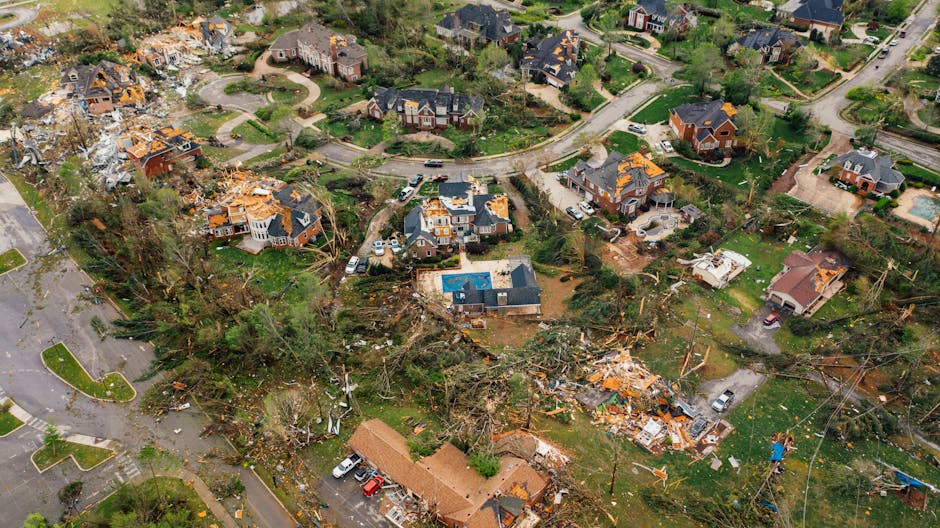
A severe storm can leave your roof looking fine from the street — while hiding serious damage underneath. That hidden damage is exactly what storm chasers and fly-by-night contractors count on. They show up after every major storm, promise quick fixes, and disappear before the problems resurface.
This guide will help you avoid that trap — and know exactly what to do, what to look for, and who to trust when your roof takes a hit.
I’m Rex Wisdom, owner of Heritage Roofing & Repair — a family-owned roofing business with over 50 years of combined experience providing storm damage roofing services across Northwest Arkansas. Our roots in Berryville mean we’re here long after the storm chasers have moved on to the next zip code.
Similar topics to storm damage roofing services:
When the clouds clear after a nasty Arkansas squall, your first instinct is probably to look up and hope for the best. But “hoping” isn’t a maintenance plan. At Heritage Roofing & Repair, we’ve seen how quickly a small oversight can turn into a massive renovation bill. Whether you are dealing with the aftermath of a tornado near Fayetteville or a hailstorm in Berryville, getting reliable professional assistance is the only way to ensure your home remains the sanctuary it’s meant to be.
Immediate Steps for Safe Post-Storm Roof Inspection

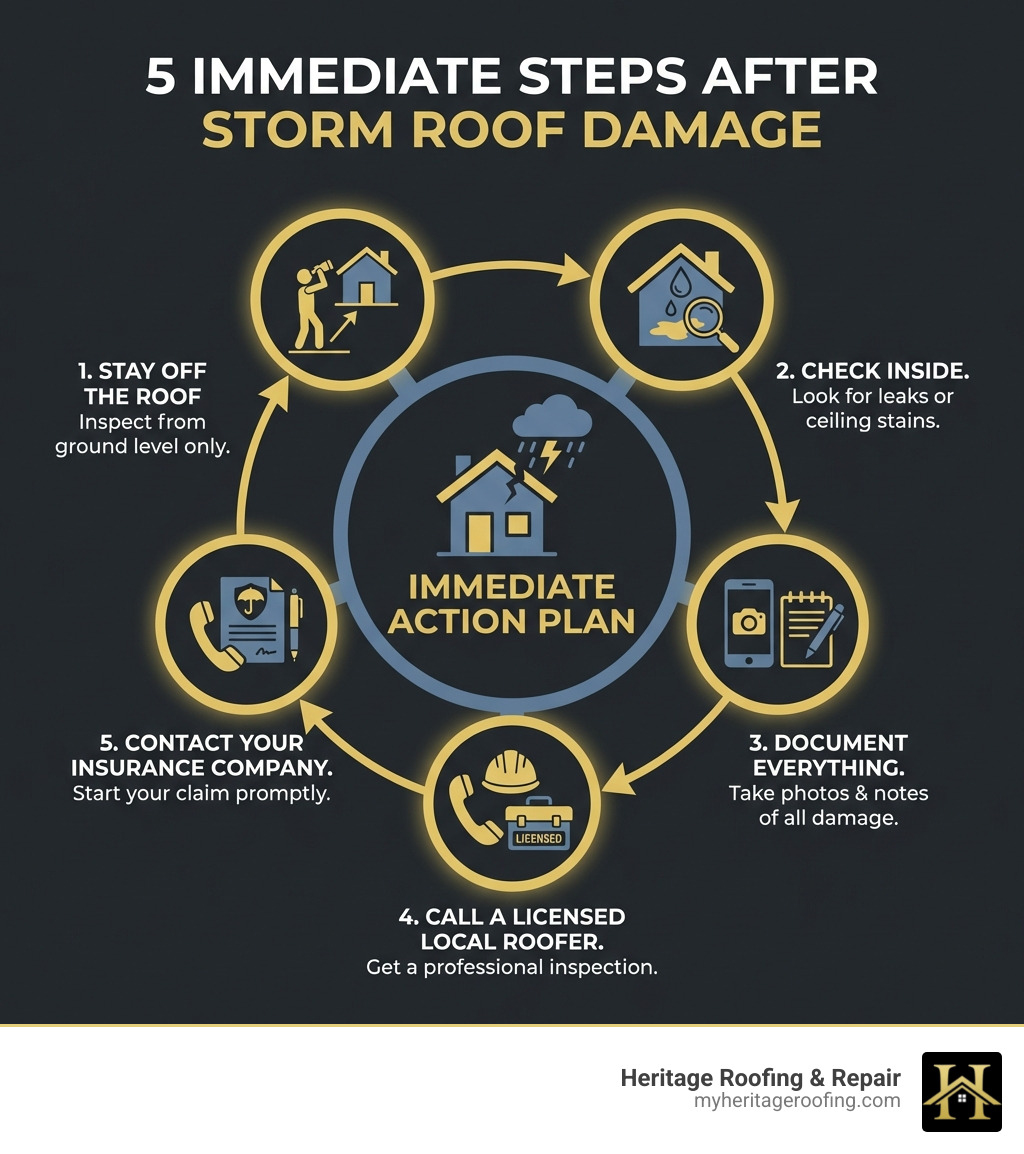
Safety isn’t just a buzzword; it’s the most important part of your post-storm checklist. The National Roofing Contractors Association (NRCA) strongly advises property owners to assess damage only from the ground. Climbing a ladder after a storm is incredibly dangerous—shingles may be loose, the roof deck could be compromised, and power lines might be down nearby.
Ground-Level Assessment
Grab a pair of binoculars and walk around your property. You aren’t looking for every tiny scratch; you’re looking for obvious red flags. Check for:
- Missing Shingles: Areas where the dark underlayment or wood decking is exposed.
- Debris: Large branches or foreign objects resting on the roof.
- Fascia and Gutters: Look for dents or sections that have been pulled away from the house.
For a more detailed walkthrough of these steps, check out our Storm Damage Home Repair Complete Guide.
Interior Leak Checks
Sometimes the best way to see the roof is to look at your ceiling. Check your attic with a flashlight. Look for damp insulation, water staining on the rafters, or sunlight peeking through where it shouldn’t be. In your living areas, look for “bubbling” paint or yellow/brown rings on the ceiling. These are surefire signs that you need professional storm damage roof repair.
Documenting the Scene
Before you move a single branch, take photos. Your insurance company will want to see the “before” state of the debris. If a tree limb is resting on your roof, photograph it from several angles. This documentation is vital for a smooth claims process. For more professional advice on these initial moments, GAF offers an excellent resource on what to do after a storm damages your roof.
Identifying Common Types of storm damage roofing services Needs
Not all storms are created equal. A high-wind event requires a different repair approach than a heavy hailstorm. Understanding what hit you helps us determine the best course of action.
| Damage Type | Primary Characteristics | Common Signs |
|---|---|---|
| Wind Damage | Lifting, curling, or removal of shingles. | Missing shingles, broken seals, exposed underlayment. |
| Hail Damage | Impact-based bruising and granule loss. | Dents in metal, “pockmarks” on shingles, granules in gutters. |
| Debris Damage | Structural impact from falling objects. | Cracked tiles, punctured shingles, damaged chimneys. |
| Standing Water | Moisture penetration due to drainage failure. | Clogged gutters, leaks near the eaves, mold growth. |
The Power of the Wind
Meteorologists classify hurricane-force winds as 74 mph or greater, while gale-force winds sit between 39-54 mph. However, we’ve found that wind speeds as low as 45 mph can cause significant Wind Damage Roof issues. High gusts create a “suction” effect that lifts shingles, breaking the water-tight seal. Even if the shingle lays back down, the seal is gone, leaving your home vulnerable to the next rainstorm.
The Stealth of Hail
Hail is the “silent killer” of roofs. A hailstorm rarely lasts longer than 15 minutes, but the damage can be permanent. Hailstones knock the protective granules off your shingles. These granules are essentially the “sunscreen” for your roof; without them, the asphalt layer is exposed to UV rays, which causes it to become brittle and crack. If you see what looks like piles of dark sand at the bottom of your downspouts, you likely have significant granule loss.
Specific Damage Indicators and the Professional Advantage
Some signs of damage are subtle, while others are like a neon sign screaming for help. If you notice any of the following, don’t wait for a leak to start:
- Dented Soft Metals: Check your gutters, downspouts, and vents. If the metal has “dings” in it, your shingles definitely took a hit too.
- Fractured Membranes: On flat roofs or certain shingle types, hail can actually puncture the waterproofing layer.
- Chimney and Flashing Issues: High winds can pull the metal flashing away from chimneys or valleys, creating a direct path for water to enter your home.
- Curling Edges: If your shingles look like they are trying to peel away from the roof, the adhesive has failed.
For an exhaustive look at identifying these issues, read our Hail Damage Roof Complete Guide.
Why Professional storm damage roofing services Outperform DIY
We get it—Arkansans are handy. But storm damage roofing services are not a DIY project. Here is why:
- Hidden Damage Detection: We use advanced moisture sensors and infrared technology to find water trapped under the shingles that the naked eye can’t see.
- Safety Equipment: We have the harnesses, specialized footwear, and training to navigate steep pitches safely.
- Warranty Preservation: Many manufacturers will void your warranty if repairs aren’t performed by a certified professional.
- Temporary Tarping: If your roof is leaking, we provide emergency tarping to stop the damage immediately while we wait for the insurance adjuster. This is a critical step in our Emergency Roof Repair Complete Guide.
Navigating the Insurance Claim Process for Storm Damage
Dealing with insurance can feel like trying to solve a Rubik’s cube in the dark. According to a Forbes catastrophe report, extreme weather events are becoming more costly, which means insurance companies are becoming more meticulous.
The Role of the Contractor
We don’t just fix roofs; we act as your advocate. We meet with the insurance adjuster on-site to ensure they see every bit of damage. Adjusters are human—they can miss things. We provide a detailed “scope of work” and often submit “supplement claims” if we find more damage once the old shingles are removed.
Understanding Your Policy
It is vital to understand your deductible. Some policies have a separate, higher deductible for wind and hail damage. We help you navigate these details so there are no surprises when the bill comes. For a deep dive into this, see our Roof Insurance Claims Ultimate Guide or talk to our Insurance Claim Specialists.
Regional Storm Risks and Local Expertise in Arkansas
Northwest Arkansas has a unique climate. We deal with high humidity, sudden temperature swings, and a high frequency of hailstorms. This regional volatility means your roof needs to be built to a higher standard than a roof in a calmer climate.
In areas like Fayetteville, we see specific wind patterns that can wreak havoc on older roofing systems. We understand the local building codes in Berryville and Harrison, ensuring that every repair or replacement meets or exceeds legal requirements. Our Local Storm Damage teams are ready to respond rapidly because we know that in Arkansas, if you don’t like the weather, you just wait five minutes—but your roof can’t wait that long for a repair.
If you’re in the Berryville area and need an honest assessment, come visit us:
Heritage Roofing & Repair
3458 Arkansas State Hwy 221, Berryville, AR 72616
Phone: (870) 654-1164
Frequently Asked Questions about Storm Damage
How long do I have to file a storm damage insurance claim?
Most policies require you to file within one year of the storm event, but this varies. The sooner you file, the better. Delaying a claim can lead to secondary issues like mold or rot, which the insurance company might refuse to cover because you didn’t “mitigate the damage.” As a trusted Home Storm Repair Company, we recommend starting the process within 30 days.
Should I replace my roof if it only has minor hail dents?
It depends on the severity. Minor dents often mean significant granule loss. Over time, the sun will bake those exposed spots, causing the shingles to fail prematurely. Even if it isn’t leaking today, it might be un-repairable in two years. It’s always best to get a professional storm damage roof repair assessment to see if a full replacement is warranted.
Conclusion
A storm is stressful enough without having to worry about the roof over your head. By following the steps in this guide—staying safe, documenting the damage, and choosing a reputable local partner—you can ensure your home is restored to its former glory without getting ripped off.
At Heritage Roofing & Repair, we take pride in our 50 years of service to the Arkansas community. We aren’t here for a quick buck; we’re here to build relationships and roofs that last. If you suspect your home has been hit, don’t leave it to chance. Contact us today for a comprehensive storm-damage-roof-repair inspection. We’ll give you the straight talk, the quality craftsmanship, and the peace of mind you deserve.