Why Residential Roof Maintenance Protects Your Home and Your Investment
Residential roof maintenance is the practice of regularly inspecting, cleaning, and repairing your roof to prevent damage and extend its lifespan. Research shows that 31% of the most common problems found during home inspections are related to roofs. Yet most damage is preventable through simple seasonal care. A standard asphalt shingle roof lasts 15 to 30 years with proper maintenance, while neglected roofs fail years earlier—costing homeowners thousands in premature replacement.
Your roof faces constant assault from Arkansas weather: spring storms, summer UV rays, fall debris, and winter ice. Without regular attention, small issues like a loose shingle or clogged gutter escalate into major problems like water damage, mold growth, and structural rot.
I’m Rex Wisdom, and for over 50 years my family has built lasting relationships through dependable roofing service in Northwest Arkansas. Our hands-on approach to call Heritage Roofing & Repair for residential roof maintenance ensures homeowners catch problems early, avoid costly repairs, and maximize their roof’s lifespan through proper seasonal care.
The Foundation of Residential Roof Maintenance
Understanding the anatomy of your home is the first step toward effective residential roofing care. Many homeowners view their roof as just a layer of shingles, but it is actually a complex, multi-layered system designed to shed water and regulate your home’s temperature. When one part of this system fails, the rest is soon to follow.
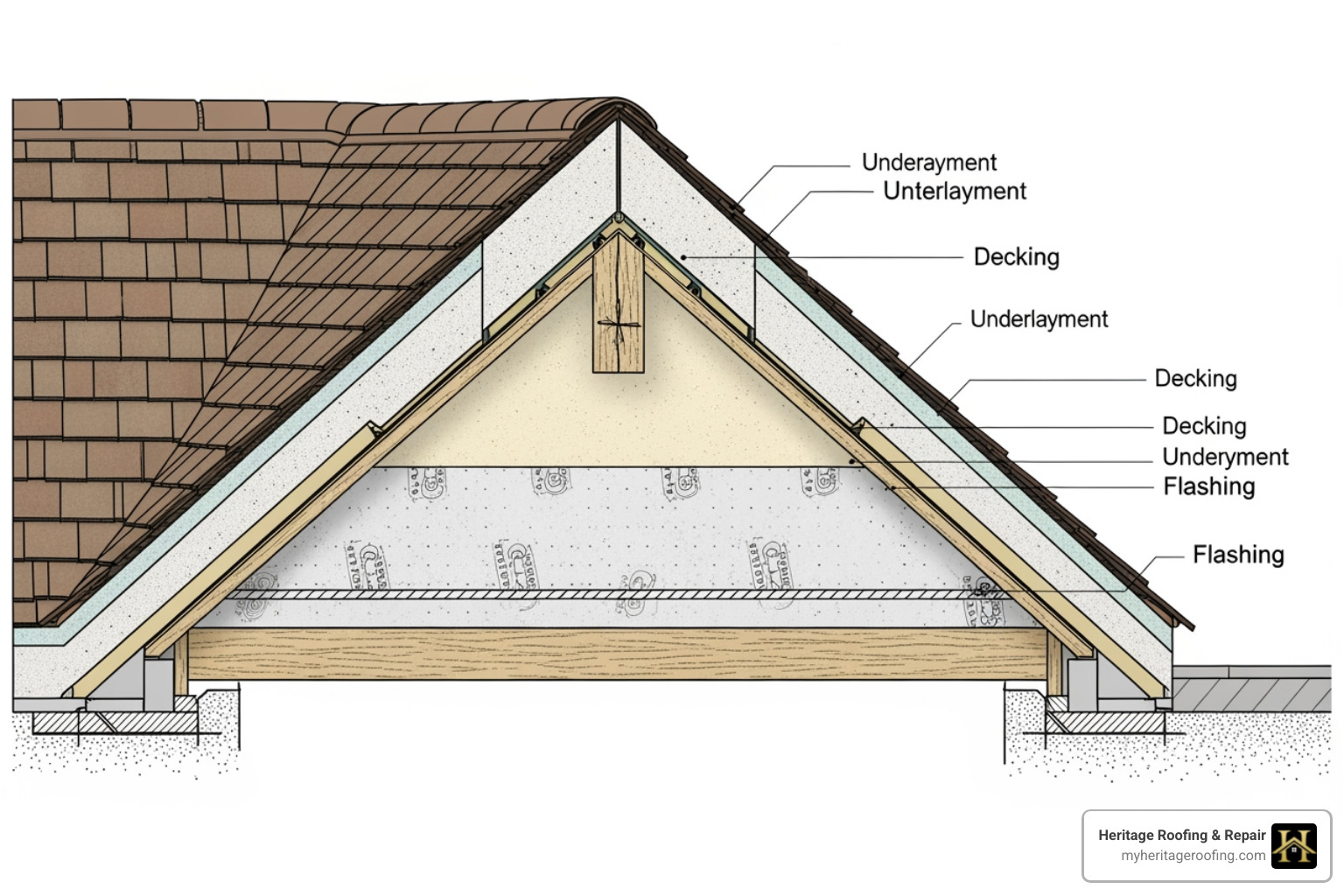
By understanding the components below, you can better identify where your maintenance efforts should be focused.
- Roof Decking: The structural wood base (usually plywood or OSB) that supports the weight of the roofing materials.
- Membrane Underlayment: A water-resistant or waterproof barrier installed directly onto the deck to provide a second line of defense.
- Flashing: Thin metal pieces (often galvanized steel) installed around chimneys, vents, and valleys to direct water away from seams.
- Attic Ventilation: A system of intake and exhaust vents that allows air to flow through the attic, preventing heat and moisture buildup.
Implementing these Roofing Maintenance Tips helps ensure water-tight seals and intact drip edges, which are essential for keeping the interior of your Berryville or Fayetteville home dry.
Essential Components of a Healthy System
A healthy roof isn’t just about the shingles; it’s about how all the parts work together. For instance, your gutters and downspouts are the “drainage pipes” of your roof. If they are clogged, water can back up under the shingles, leading to rot in the roof deck. Other critical parts include soil stacks (pipes that vent your plumbing) and ridge capping (the shingles at the very peak of the roof). These areas are prone to leaks because they involve “penetrations” or sharp angles in the roofing surface. Regular residential roof maintenance ensures that pipe boots and sealants remain pliable and intact.
A Year-Round Guide to Seasonal Roof Care
The climate in Northwest Arkansas, from Harrison to Fayetteville, puts unique stresses on your home. Residential roof maintenance is not a “one and done” task; it changes with the seasons.
- Spring: Focus on clearing debris left by winter storms and checking for shingles that may have been loosened by high winds.
- Summer: The intense UV rays can cause shingles to curl or “blister.” This is also the time to ensure your attic ventilation is working to reduce HVAC strain.
- Fall: This is the most important time for gutter cleaning. Falling leaves are the primary cause of clogged downspouts.
- Winter: Focus on ice dam prevention and monitoring snow loads.
Following Annual Maintenance and Roofing Tips ensures your home remains a sanctuary regardless of the weather outside.
Spring and Fall: The Critical Windows for Residential Roof Maintenance
Spring is the ideal time for a “winter damage assessment.” Check for cracked shingles, loose flashing, and ensure that spring rains are draining properly through your gutters. Using Roof Maintenance Guides can help you identify if your shingle integrity has been compromised.
In the fall, the goal is preparation. A Comprehensive Roof Maintenance Checklist should include organic debris removal. Leaves and twigs trap moisture against the roof surface, which can lead to rot or moss growth. While you’re at it, do a sealant inspection—check the caulk around your chimney and vents to ensure it hasn’t dried out or cracked.
Winter Protection and Ice Dam Prevention
Ice dams are a common winter headache. They form when heat escapes from your attic, melting the snow on the upper parts of the roof. This water then runs down to the colder eaves and refreezes, creating a “dam” that prevents further drainage. This trapped water can be forced under your shingles and into your walls.
To prevent this, refer to our guide: Don’t Get Caught Off Guard: A Complete Guide to Roof Inspections. The key is attic temperature regulation. By ensuring proper insulation and ventilation airflow, you keep the roof surface at a consistent temperature, preventing the melt-freeze cycle. In extreme cases, heat cables can be installed along the eaves to keep drainage paths open.
Proactive Steps to Prevent Costly Repairs
Prevention is always cheaper than a cure. One of the simplest proactive steps is tree trimming. Overhanging branches can scrape shingles, removing the protective granules that shield the asphalt from the sun. Furthermore, branches provide a “highway” for pests like squirrels and raccoons to access your roof.
Identifying Early Signs of Damage During Residential Roof Maintenance
You don’t need to be a pro to spot trouble. If you see curled shingles or a “bald” look on your roof, it’s time to act. Missing granules often show up as “sand” in your gutters. Inside the home, keep an eye out for ceiling water stains or musty attic odors—these are classic signs of a slow leak.
If you find a problem, consult our Residential Roof Leak Repair Guide. Catching a leak early might mean a simple Asphalt Shingle Repair Complete Guide fix rather than a full replacement.
The Role of Gutters and Ventilation
Gutters do more than keep your head dry at the front door; they protect your foundation. When gutters fail, water pours directly onto the ground next to your home, which can lead to foundation cracks and basement flooding.
Proper ventilation is equally important. It reduces moisture buildup in the winter (which prevents rot) and lowers attic temperatures in the summer. This not only protects your shingles but also reduces the strain on your HVAC system, lowering your energy bills. For long-term peace of mind, many homeowners choose to enroll in Roof Maintenance Plans Guide programs to ensure these systems are checked professionally.
Material-Specific Care and Professional Standards
Different materials require different care. While asphalt is the most common, metal and tile are popular choices in Arkansas for their durability.
| Material | Lifespan | Key Maintenance Focus |
|---|---|---|
| Asphalt Shingles | 15-30 Years | Granule loss, curling, wind damage |
| Metal Roofing | 40-70 Years | Fastener tightness, bimetallic corrosion |
| Clay/Concrete Tile | 50+ Years | Cracking, debris in valleys |
| Cedar Shakes | 20-30 Years | Moss growth, woodpecker damage, fire treatment |
For asphalt users, our Shingle Roof Repair Guide 2025 offers deep insights into modern repair techniques. Metal roof owners should be wary of bimetallic corrosion, which happens when two different types of metal touch and cause a chemical reaction that eats through the roof.
Safety First: Why Professional Residential Roof Maintenance Matters
Roofing is dangerous work. In the United States, construction accounts for nearly 20% of annual fatalities, with the vast majority resulting from falls from height. This is why we advocate for “ground-level” DIY maintenance using binoculars.
When it comes to actually getting on the roof, hiring a professional for a Roof Inspection is the smartest move. Professionals use specialized safety gear and have the “trained eye” to spot subtle issues like failing flashing or pest entry points. A Free Roof Inspection Complete Guide can help you understand what a pro looks for that you might miss.
When to Transition from Repair to Replacement
Eventually, every roof reaches the end of its “leak-free life.” If you find yourself calling for repairs every time it rains, or if your asphalt roof is over 20 years old and losing significant amounts of granules, it may be time for a change.
Chronic leak patterns and extensive storm damage are clear indicators. Modern replacements offer significantly better energy efficiency and wind resistance. If you’re at this crossroads, our Residential Roofing Replacement Guide 2025 provides a step-by-step walkthrough of the process.
Frequently Asked Questions about Residential Roof Maintenance
How often should I realistically inspect my roof?
You should perform a visual inspection from the ground at least twice per year (Spring and Fall) and after any major storm involving hail or high winds. A professional assessment should be done annually to catch hidden issues.
Can I remove moss and algae myself?
Yes, you can use a mixture of water and chlorine bleach (usually a 50/50 mix) to kill algae and moss. However, never use a power washer, as the high pressure will strip the protective granules off your shingles. Use a soft-bristle brush and rinse gently with a garden hose.
What are the most common signs of a hidden roof leak?
Look for water stains on attic rafters, damp or matted insulation, and dark “trails” on the underside of the roof decking. Outside, peeling paint near the roofline or sagging ceilings inside the home are major red flags.
Conclusion
At Heritage Roofing & Repair, we believe that a little bit of residential roof maintenance goes a long way. With over 50 years of experience serving Berryville, Harrison, and Fayetteville, we’ve seen how proactive care saves homeowners thousands of dollars. Whether you need a simple shingle repair or help navigating an insurance claim after a storm, our team provides the dependable, quality craftsmanship your home deserves.
Don’t wait for a drip to turn into a flood. Schedule your inspection in Fayetteville, AR or contact our main office today to ensure your roof is ready for whatever the Arkansas sky throws at it.
Local Office Information: Heritage Roofing & Repair 3458 Arkansas State Hwy 221, Berryville, AR 72616 (870) 654-1164