Commercial Building Roof Systems (2026 Buyer’s Guide): Real-World Lifespans, Cost Drivers & Best Options for Northwest Arkansas
A commercial building roof is the building’s primary weather barrier – and it must reliably handle rooftop HVAC loads, frequent service foot traffic, long-term UV exposure, and repeat storm cycles without disrupting tenants or production.
If you’re evaluating materials, budgeting a reroof, or planning inspections, start with a contractor who works on these systems every day. Visit our commercial roof replacement specialists in Northwest Arkansas to compare assemblies, documentation requirements, and storm-ready details.
Quick Answer: Top Commercial Roofing Options (Typical Real-World Lifespans)
- TPO (Thermoplastic Polyolefin): Commonly specified for low-slope new construction; reflective “cool roof” performance; 20-year warranties are common
- EPDM (Rubber Membrane): Proven long-term membrane; 25-30 years is achievable with proper detailing and maintenance
- Built-Up Roofing (BUR): Multi-ply redundancy and puncture resistance; 25-30 years when properly installed
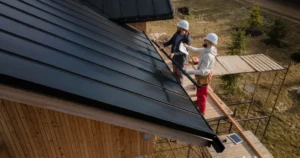
- Metal Roofing: Longest life cycle for many facilities; 40-60+ years is common with correct detailing
- Modified Bitumen: Durable asphalt-based system with improved flexibility; often 20+ years
Northwest Arkansas adds real complexity: high summer heat, winter freeze-thaw cycles, spring hail, and high-wind events. System choice – and details like insulation thickness, edge securement, drains/scuppers, and penetration flashing – often decides whether a roof lasts two decades or fails early.
I’m Rex Wisdom, owner of Heritage Roofing & Repair. Our family has delivered commercial roofing and storm repair across Berryville, Harrison, Fayetteville, and surrounding communities for over 50 years.

Explore more about commercial building roof systems and construction details:
The evolution of the commercial building roof has been driven by one measurable goal: longer service life at lower total cost of ownership. Built-Up Roofing (BUR) dominated low-slope construction for decades because it delivered redundancy and toughness before modern factory-made membranes became widespread.
Built-Up Roofing (BUR): The Redundancy Advantage
What are the advantages and disadvantages of Built-Up Roofing (BUR) systems? Built-Up Roofing (BUR) has been used in North America for over 100 years. A BUR system is created by layering multiple plies of roofing felt with asphalt (bitumen), then protecting the surface with aggregate (gravel) or a reflective coating. Multi-ply redundancy is why BUR routinely reaches 25 to 30 years when installed correctly and maintained.
Advantages:
- Durability: Thick, multi-layer protection resists hail impacts, foot traffic, and punctures.
- Redundancy: Multiple plies provide “backup” waterproofing if the top surface is damaged.
- UV protection: Gravel or coatings shield asphalt from sunlight degradation.
- Serviceability: Once a leak path is identified, repairs are typically straightforward.
Tradeoffs:
- Labor and disruption: Installation is slower and can involve odor/fumes from asphalt.
- Weight: BUR is heavier than most single-ply systems and may affect structural design.
- Leak tracing complexity: Water can travel between plies before showing inside.
For deeper technical guidance, see the NRCA roofing resources and our More info on commercial flat roofs guide.
What are the key differences between Modified Bitumen (Mod Bit) and Built-Up Roofing (BUR) systems? Modified Bitumen evolved from BUR by adding polymers (SBS or APP) to improve flexibility and temperature performance. Unlike BUR’s multiple field-built plies, Mod Bit is typically installed in one or two factory-made sheets and can be applied with hot asphalt, cold adhesive, or self-adhered methods (torch systems exist but require strict fire controls).
Key differences:
- BUR: multiple plies, heavier, very impact-resistant
- Mod Bit: fewer plies, more flexible, generally faster repairs
Single-Ply Solutions: TPO, EPDM, and PVC for your Commercial Building Roof
Single-ply membranes displaced many traditional assemblies by offering lighter weight, consistent factory production, and faster installation. The Single Ply Roofing Industry (SPRI) standards provide widely referenced definitions and performance concepts.
What are the benefits of single-ply membrane roofing systems like TPO, EPDM, and PVC?
- Lower structural load: single-ply membranes are lighter than multi-ply asphalt systems
- Flexibility: accommodates building movement and temperature swings
- Energy performance: white reflective membranes can reduce roof surface temperatures
- Speed: large sheets reduce seams and can shorten installation time
What are the advantages of TPO and EPDM single-ply membranes for commercial applications?
TPO
- Market leader: roughly 40% share of low-slope new construction
- Reflective “cool roof” performance: commonly used to reduce summer heat gain
- Heat-welded seams: strong, monolithic seam welding when installed correctly
- Learn more in our detailed TPO roofing overview.
EPDM
- Long service history: widely used “rubber roof” membrane with excellent UV and ozone resistance
- Typical lifespan: commonly 25-30 years with proper detailing and maintenance
- Additional technical info is available through The EPDM Roofing Association.
PVC / KEE
- Chemical and grease resistance: strong fit for restaurants and certain industrial uses
- Heat-welded seams: excellent watertight performance when welded correctly
- KEE-improved PVC: improved long-term flexibility and chemical resistance in certain formulations
The Longest-Life Option: Metal Commercial Building Roof Systems
Metal remains a premium commercial option because it pairs durability with very long service life.
What are the key features and benefits of metal roofing for commercial buildings?
- Longevity: metal roofs commonly last 40-60+ years
- Fire resistance: metal is non-combustible
- Wind and weather performance: engineered metal systems can perform well in high-wind regions
- Low maintenance: periodic inspections and fastener/detail checks are typical
- Recyclability: most metal roofing contains recycled content and is recyclable at end of life
Standing seam profiles are widely used in commercial applications; for technical resources, see the Metal Construction Association resources. You can also explore our services for Metal Roofing.
Comparing Performance: Flat Roofs vs. Sloped Systems
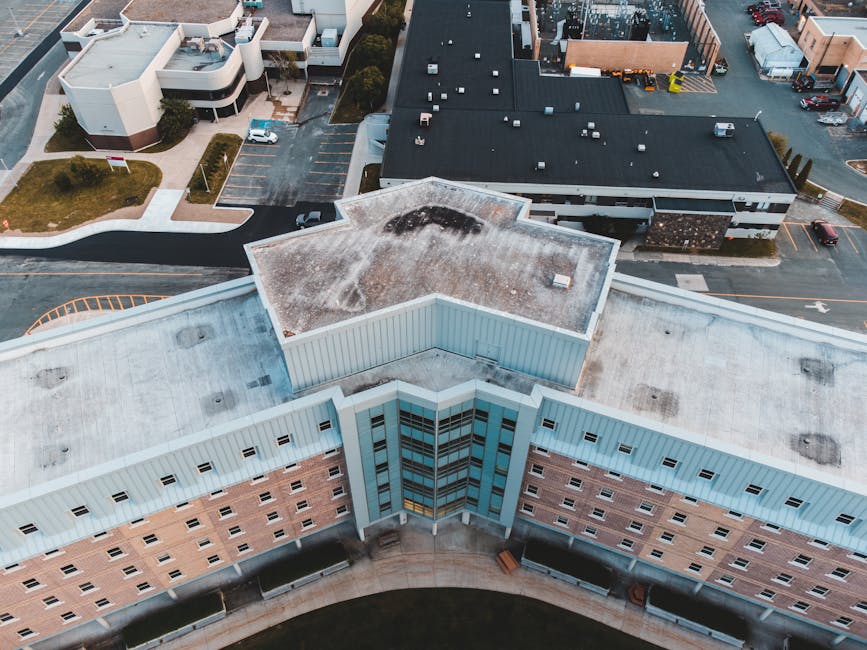
When considering a commercial building roof, the fundamental distinction often comes down to flat versus sloped systems. While most commercial buildings in our region feature low-slope or “flat” roofs, understanding the differences, advantages, and factors influencing your choice is critical.
How does commercial roofing differ from residential roofing in terms of materials, construction, and maintenance? Commercial and residential roofing are, in many ways, “different ball games.”
- Materials: Residential roofs predominantly use asphalt shingles, tiles, or shakes. Commercial roofs, especially flat or low-slope ones, use specialized membranes like TPO, EPDM, PVC, Modified Bitumen, or BUR. While metal can be used in both, the application and scale differ significantly.
- Construction: Residential roofs are designed with steep pitches to shed water and debris quickly, often over a simple plywood deck. Commercial roofs are typically large and flat or very low-sloped. Their construction is often more complex, involving multiple layers of insulation, vapor retarders, decking, and protective coatings to handle water ponding and support heavy rooftop equipment.
- Maintenance: Commercial roofs require routine, professional inspections and maintenance due to their complexity, the presence of HVAC units, and exposure to heavy foot traffic. Residential roofs generally require less frequent care, often only addressed by homeowners when issues become visible. Commercial roofers specialize in flat roofing and large accessories, while residential roofers focus on slopes and shingles.
What are the benefits of flat roofs specifically for commercial properties? Flat roofs are a common and highly beneficial choice for commercial properties in Fayetteville, Harrison, Berryville, and across Arkansas:
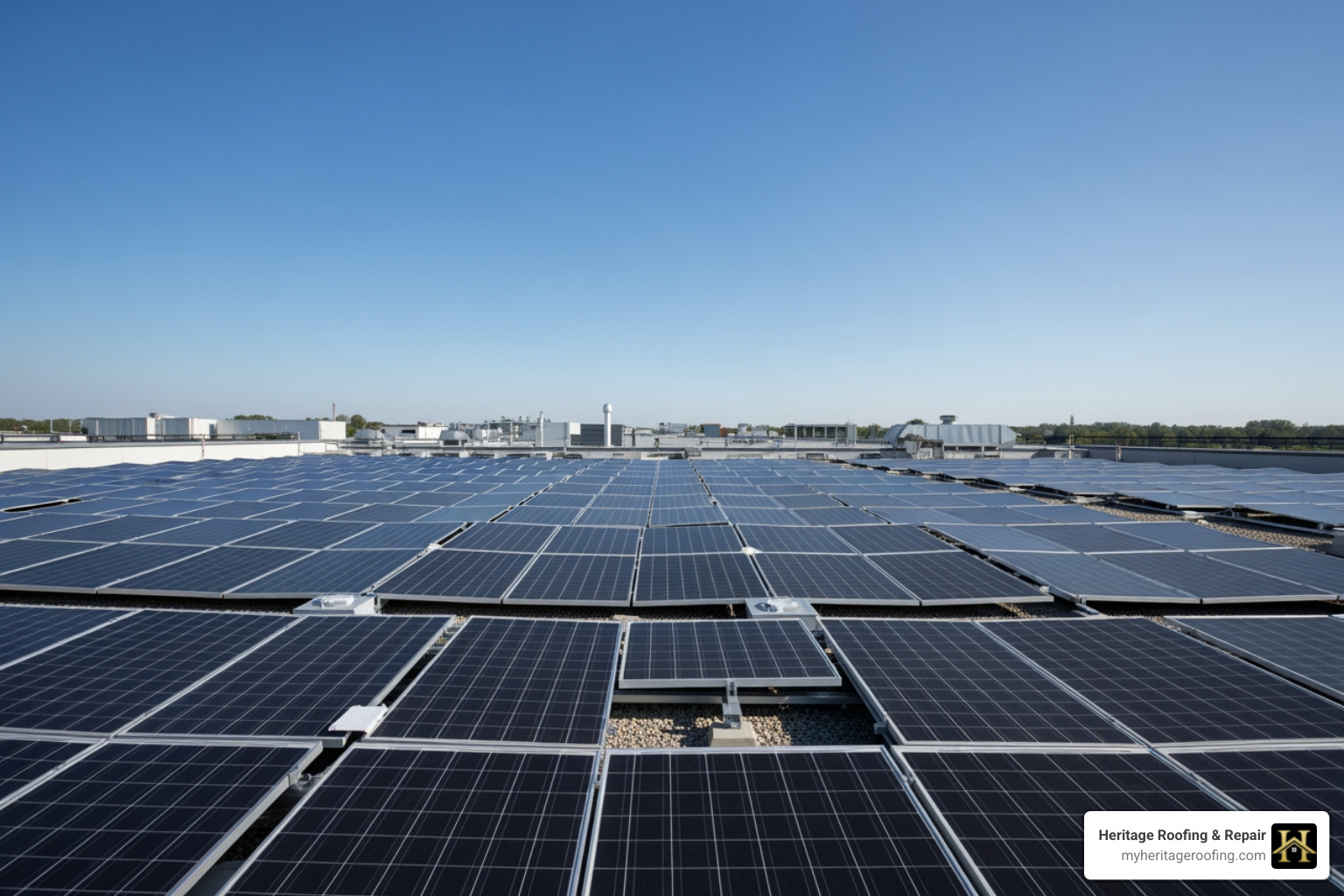
- Optimizable Space: One of the most significant advantages is the usable space they provide. Flat roofs can accommodate heavy HVAC systems, ventilation units, solar panels, and even recreational patios or rooftop gardens without impacting ground-level space.
- Cost-Effectiveness: Generally, flat roofs are more affordable to install per square foot than pitched roofs, and their accessible surface makes maintenance easier and often less expensive.
- Durability and Wind Resistance: Flat roofs tend to resist wind uplift better than steeply pitched roofs, an important consideration in our region prone to strong storms.
- Energy Efficiency: With the right materials, such as reflective TPO or PVC membranes, flat roofs can significantly reduce heat absorption, contributing to lower cooling costs. This “cool roof” effect is recognized by organizations like the Cool Roof Rating Council (CRRC), which provides data on roof surfaces to improve building energy efficiency.
- Efficient Drainage: While called “flat,” these roofs always have a slight slope (typically 1/4 inch per foot) to ensure proper drainage, often into internal drains, preventing water accumulation.
What factors influence the choice of a commercial roofing system (e.g., climate, budget, building use)? Selecting the right commercial roofing system is a multifaceted decision that involves carefully weighing several factors:
- Climate: Our local climate in Northwest Arkansas, with its hot summers, cold winters, and potential for hail and high winds, heavily influences material choice. For instance, hail-prone areas might favor more durable options like KEE or robust metal.
- Budget (Upfront vs. Life Cycle Cost): While initial installation cost is a factor, we always encourage clients to consider the long-term “life cycle cost,” which includes maintenance, repairs, energy savings, and expected lifespan. A cheaper upfront roof might cost more over its lifetime.
- Building Use: A restaurant roof exposed to grease and chemicals will need a different system (like PVC) than a warehouse or an office building. Buildings with heavy foot traffic for maintenance of rooftop equipment will benefit from durable surfaces like BUR.
- Building Structure: The structural capacity of the building determines how much weight the roof can support, influencing choices like heavy BUR or vegetative roofs.
- Energy Efficiency Goals: If reducing energy consumption is a priority, reflective “cool roof” materials like white TPO, PVC, or coated metal are excellent choices.
- Local Building Codes: All choices must comply with local building codes and regulations in Berryville, Fayetteville, and Harrison, AR.
- Sustainability Goals: For businesses aiming for LEED certification or environmental responsibility, options like green roofs or recyclable single-ply membranes become attractive.
- Warranty: Understanding manufacturer and contractor warranties is crucial for long-term peace of mind.
Here’s a simplified comparison of some popular commercial roofing systems:
| Roofing System | Typical Lifespan (Years) | Initial Cost (Relative) | Maintenance (Relative) | Key Benefits |
|---|---|---|---|---|
| Built-Up Roofing (BUR) | 25-30 | Medium-High | Medium | Durable, multi-layered waterproofing, UV resistance, fire resistance |
| Modified Bitumen | 20-30 | Medium | Medium | Flexible, good cold weather performance, various installation methods |
| TPO Membrane | 15-20 (up to 30) | Medium | Low | Highly reflective (“cool roof”), lightweight, heat-welded seams, cost-effective |
| EPDM Membrane | 25-30 | Low-Medium | Low | Durable, flexible, UV/ozone resistant, long lifespan |
| PVC Membrane | 20-30 | High | Low | Chemical/grease resistant, fire resistant, strong heat-welded seams, reflective |
| Metal Roofing | 40-60+ | High | Low | Exceptional longevity, fire resistant, energy efficient, durable against weather, recyclable |
| Spray Polyurethane Foam (SPF) | 10-20 (with recoats) | Medium | Medium | Seamless, excellent insulation, lightweight, conforms to irregular shapes |
| Green Roofs | 40+ (membrane) | Very High | High | Insulation, stormwater management, urban heat island reduction, aesthetic, habitat |
Strategic Maintenance and the Repair vs. Replace Decision
A commercial building roof lasts longest when it’s managed like equipment, not ignored like wallpaper. The most cost-effective strategy is simple: inspect on a schedule, document conditions, and repair details before water reaches insulation or the deck.
What are the essential considerations for the installation and maintenance of commercial roofs?
- Professional installation: Correct attachment, seam work, and flashing details determine whether the roof performs to its intended life.
- Routine inspections: Schedule inspections twice per year (spring/fall) and after major wind or hail events.
- Drainage and debris control: Keep scuppers, gutters, and internal drains clear to prevent ponding.
- Detail checks: Most failures start at penetrations, curbs, edges, or transitions, not in the open field.
- Documentation: Photos and written reports support warranty compliance and insurance claims.
A practical guide is our Roof inspection checklist.
What are the benefits of regular roof inspection and maintenance for commercial buildings?
- Longer service life: Maintenance delays premature replacement by preventing small defects from becoming saturated insulation and structural damage.
- Lower total cost: Planned repairs are cheaper than emergency leak calls and interior damage.
- Better energy performance: Dry, intact insulation performs closer to its rated R-value.
- Warranty protection: Many manufacturer warranties require documented maintenance.
What are the considerations for choosing between repairing or replacing a commercial roof?
Replace is usually the smarter financial decision when any of the following are true:
- The roof is at or beyond typical service life (for example, many BUR systems are designed for 25-30 years).
- Damage is widespread or recurring (a common threshold is when roughly 25-30% of the surface is compromised).
- Wet insulation or deck deterioration is confirmed.
- You need a major energy upgrade (new insulation levels or a “cool roof” surface) that isn’t feasible as a patch strategy.
Repair is usually appropriate when defects are localized, the assembly is dry, and the system still has meaningful remaining life.
What role do insulation and vapor retarders play in commercial roofing systems?
- Insulation: Drives energy performance and code compliance; common materials include polyiso and cover boards.
- Vapor retarders: Control moisture migration into the roof assembly where condensation can occur; this protects insulation performance and reduces mold risk.
Protected Membrane Roof Assemblies (PMR) and Green Roofs
What are Protected Membrane Roof Assemblies (PMR) and how do they differ from conventional flat roofs? A PMR (inverted roof) places the waterproofing membrane directly on the deck, with insulation above it, then protection fabric and ballast. The assembly shields the membrane from UV exposure and thermal cycling.
How do green roofs contribute to sustainability and what are their advantages? Green roofs add vegetation above a waterproofing system to improve stormwater management and thermal performance. They can also protect the membrane from UV exposure. Structural capacity and maintenance planning are required. For research and standards, see Green Roofs for Healthy Cities.
Berryville, AR Commercial Roofing Support
For commercial building roof inspections, emergency leak response, storm-damage documentation, and long-term maintenance planning in Northwest Arkansas, work with a contractor who can support your roof for its entire life cycle – not just install it.
Heritage Roofing & Repair
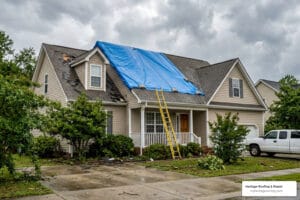
Our team understands the local realities that drive commercial roof performance here – hail impacts, wind events, drainage issues, and the documentation needed for insurance claims and warranty compliance. Contact us today to schedule an inspection or consultation.
Frequently Asked Questions about Commercial Roofing
What is the most common type of commercial roof?
The most common type of commercial roof, especially for new construction, is TPO (Thermoplastic Polyolefin). According to recent industry surveys, TPO garners a 40 percent share of the new construction market and 30 percent of the reroofing market for low-slope applications. Its popularity stems from its cost-effectiveness, energy efficiency due to reflective white surfaces, and strong, heat-welded seams.
How long does a commercial flat roof typically last?
The lifespan of a commercial flat roof varies significantly depending on the material, installation quality, and maintenance regimen. However, with proper care and regular inspections, most commercial flat roofs are designed to last between 20 to 30 years. Built-Up Roofing (BUR) systems and EPDM membranes are particularly known for often reaching or exceeding this three-decade mark.
What are the benefits of a green roof for commercial buildings?
Green roofs offer a multitude of benefits for commercial buildings, contributing significantly to both sustainability and operational efficiency. They provide superior thermal insulation, which helps reduce energy consumption for heating and cooling. These vegetative systems also effectively mitigate the urban heat island effect by absorbing sunlight instead of reflecting heat. Furthermore, green roofs manage stormwater runoff by absorbing rainwater, reducing the load on municipal drainage systems. While they require careful structural design due to their weight, their environmental advantages are substantial. You can learn more about these innovative systems from organizations like Green Roofs for Healthy Cities.
Conclusion: Partnering for a Fantastic Commercial Building Roof
Choosing the right commercial building roof is one of the most important decisions you’ll make for your business. It’s about more than just keeping the rain out; it’s about optimizing energy efficiency, ensuring structural integrity, and protecting your investment for decades to come. From the time-tested reliability of BUR and Modified Bitumen to the modern efficiency of single-ply membranes like TPO, EPDM, and PVC, and the enduring strength of metal, the options are diverse. Each system offers unique advantages custom to specific needs, budgets, and environmental considerations.
At Heritage Roofing & Repair, we understand that navigating these choices can be overwhelming. That’s why our family has dedicated over 50 years to providing expert advice, quality craftsmanship, and dependable service to commercial property owners across Berryville, Fayetteville, Harrison, and the surrounding Northwest Arkansas communities. We’re not just installing roofs; we’re building lasting relationships and ensuring your business stays protected, come rain or shine, hail or high winds. We specialize in storm damage repair and helping you through insurance claims, ensuring a smooth and stress-free process.
Don’t leave your most critical asset to chance. Partner with us for comprehensive commercial roofing solutions that are built to perform and last. Reach out today for a consultation, and let’s make your commercial building roof fantastic.