Why Understanding Insurance Roof Damage Coverage Matters
Navigating insurance roof damage claims can be overwhelming. Your policy is designed to cover sudden, unexpected events, but not gradual wear and tear. Understanding this distinction is the key to a successful claim. As a leading roofing company in Berryville, AR, Heritage Roofing & Repair has over 50 years of experience helping homeowners get the coverage they deserve.
Quick Answer: What Insurance Typically Covers
| Usually Covered | Usually NOT Covered |
|---|---|
| Storm damage (wind, hail) | Normal wear and tear |
| Falling trees or debris | Poor maintenance |
| Fire damage | Cosmetic damage |
| Ice dams and snow weight | Flooding (needs separate policy) |
| Vandalism | Neglect or old age damage |
Your policy covers damage that is accidental, not preventable. The type of coverage you have—Replacement Cost Value (RCV) versus Actual Cash Value (ACV)—can also mean a difference of thousands of dollars in your final payout. With the average roof leak repair costing between $360 and $1,550, knowing if your damage qualifies is critical.
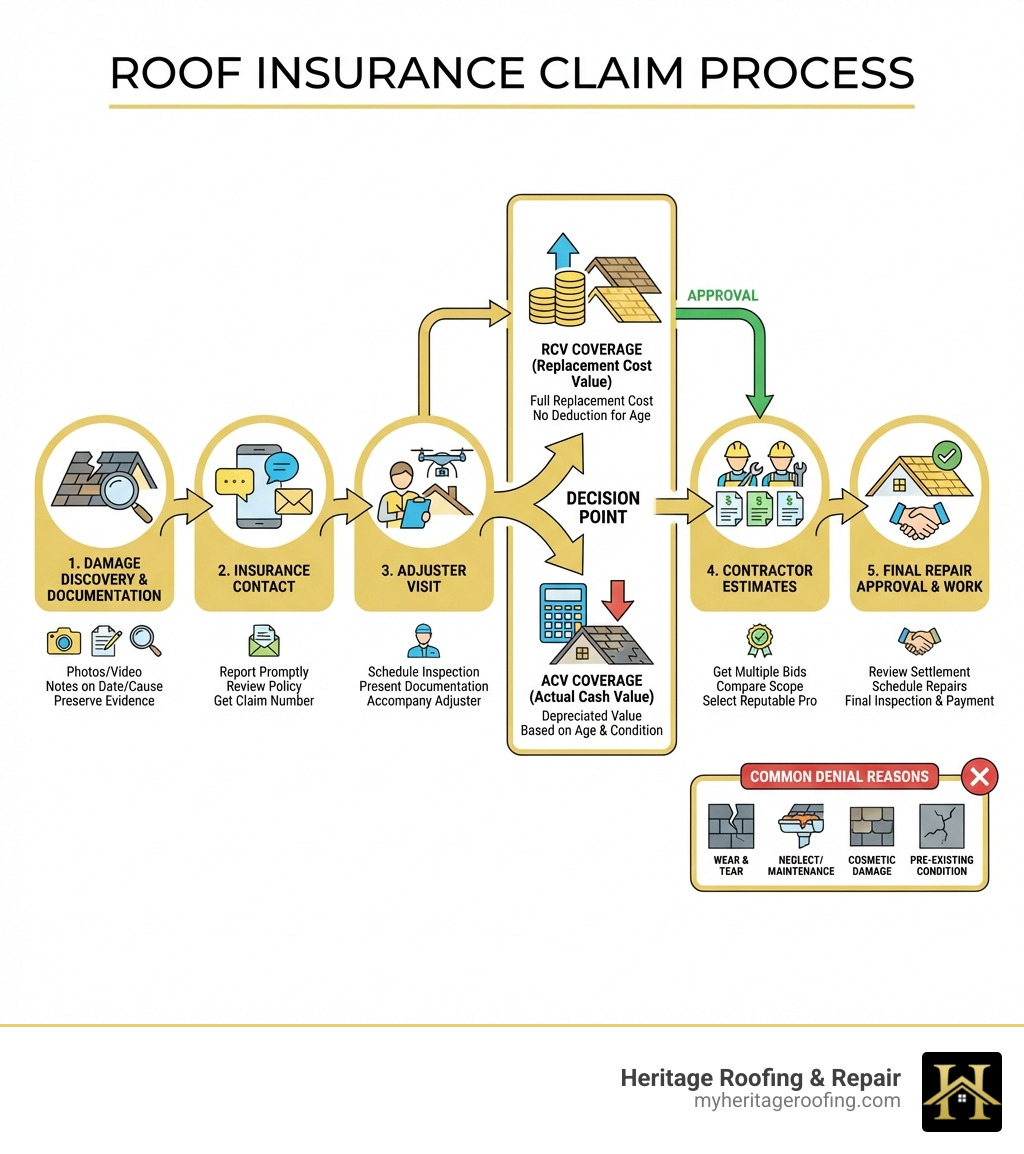
Insurance roof damage vocab to learn:
Decoding Your Policy: Is Your Roof Damage Covered?
Understanding your homeowners insurance policy is the first and most important step when dealing with insurance roof damage. Policies are designed to cover damage that is “sudden and accidental.” Knowing what is a “covered peril” versus an “exclusion” is essential.
Covered Perils: What Your Policy Protects Against
Standard policies are comprehensive for damage from nature’s fury. If an event is unforeseen and causes immediate damage, it’s typically covered.
- Fire: Damage from fire is almost always covered.
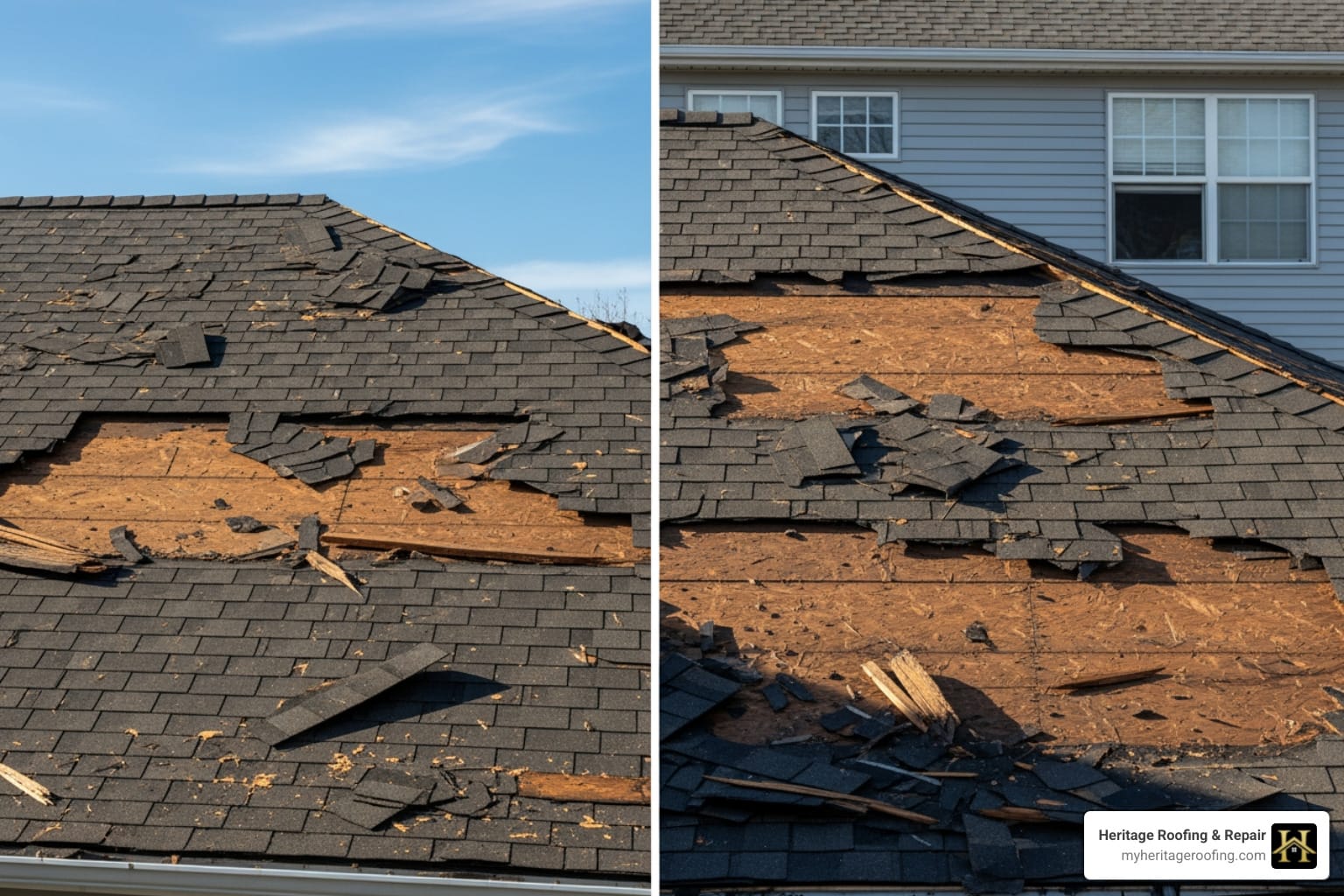
- Wind and Hail: High winds that tear off shingles or hailstorms that bruise them are common covered perils.
- Snow and Ice: The weight of heavy snow or ice can cause structural damage or ice dams, which force water under shingles. This is typically covered.
- Falling Objects: A tree or branch falling on your roof during a storm is usually covered, often including the cost of removal.
- Vandalism: Malicious damage to your roof is a covered event.
Policy Exclusions: When You’re Not Covered
Your policy is not a maintenance plan. Claims for damage related to a roof’s predictable lifecycle or homeowner negligence will likely be denied.
- Wear and Tear: Shingles naturally age, curl, and crack over time. This is considered maintenance, not accidental damage.
- Neglect and Poor Maintenance: Failing to perform routine upkeep, like cleaning gutters or repairing small leaks, can lead to a denied claim if it contributes to larger damage. Keeping a file of all roof repairs and inspections serves as proof that you’ve been a responsible homeowner.
- Old Roofs: While age itself isn’t an exclusion, some insurers may deny claims for roofs over 20 years old if the damage is deemed primarily due to age. For older roofs, it can be difficult to distinguish new storm damage from pre-existing wear, making a professional assessment critical.
- Cosmetic Damage: Minor dents on vents or shingles that don’t affect the roof’s function may be considered cosmetic and not covered.
- Catastrophic Events: Flooding, earthquakes, and landslides require separate, specialized insurance policies.
Policy Types and Deductibles
- Policy Types: Most homeowners have an Open Peril (HO-3) policy, which covers all causes of loss unless specifically excluded. A Named Peril policy only covers events explicitly listed.
- Deductibles: This is the amount you pay before insurance kicks in. It can be a fixed amount (e.g., $1,000) or percentage-based (e.g., 1-5% of your home’s insured value).
For more detailed information, visit our page on More info about roof insurance claims.
Actual Cash Value (ACV) vs. Replacement Cost Value (RCV)
This is one of the most critical distinctions in your policy, determining how much you receive for a claim.
- Replacement Cost Value (RCV): This policy pays the full cost to replace your damaged roof with new materials of similar quality, minus your deductible. It provides the highest payout. As a general rule, roofs under 10 years old often receive full RCV coverage, though this varies by insurer.
- Actual Cash Value (ACV): This policy pays only the depreciated value of your roof. The insurer reduces the payout based on the roof’s age and condition, which can leave you with significant out-of-pocket costs. For older roofs, coverage may shift to ACV.
With an RCV policy, the insurer often pays the ACV first, then releases the remaining amount (the “withheld depreciation”) after you complete the repairs.
Sample Claim Payout: ACV vs. RCV for a 15-Year-Old Roof
Let’s assume a $15,000 storm damage claim on a 15-year-old roof with a 20-year lifespan and a $1,000 deductible.
| Feature | Replacement Cost Value (RCV) Policy | Actual Cash Value (ACV) Policy |
|---|---|---|
| Total Repair Cost | $15,000 | $15,000 |
| Deductible | -$1,000 | -$1,000 |
| Depreciation (est. 75%) | $0 (covered) | -$11,250 (you pay) |
| Initial Payout | $14,000 (often ACV first, then RCV) | $2,750 |
| Final Payout | $14,000 (after repairs completed) | $2,750 |
| Your Out-of-Pocket | $1,000 (deductible) | $12,250 (deductible + depreciation) |
Other Key Policy Terms
- Policy Limits: The maximum amount your policy will pay for a covered loss under your dwelling coverage.
- Endorsements (Riders): Add-ons that provide extra coverage for specific situations not included in the base policy.
- Loss of Use: If your home is uninhabitable due to covered damage, this may cover temporary housing and living expenses.
While sudden leaks are often covered, damage from floods or sewer backup typically requires separate policies. You can Learn more about water damage and flood protection.
The Step-by-Step Guide to Filing an Insurance Roof Damage Claim
Filing a claim for insurance roof damage requires a methodical approach to ensure a successful outcome. The average roof leak repair costs between $360 and $1,550, so a successful claim can save you significant expense.
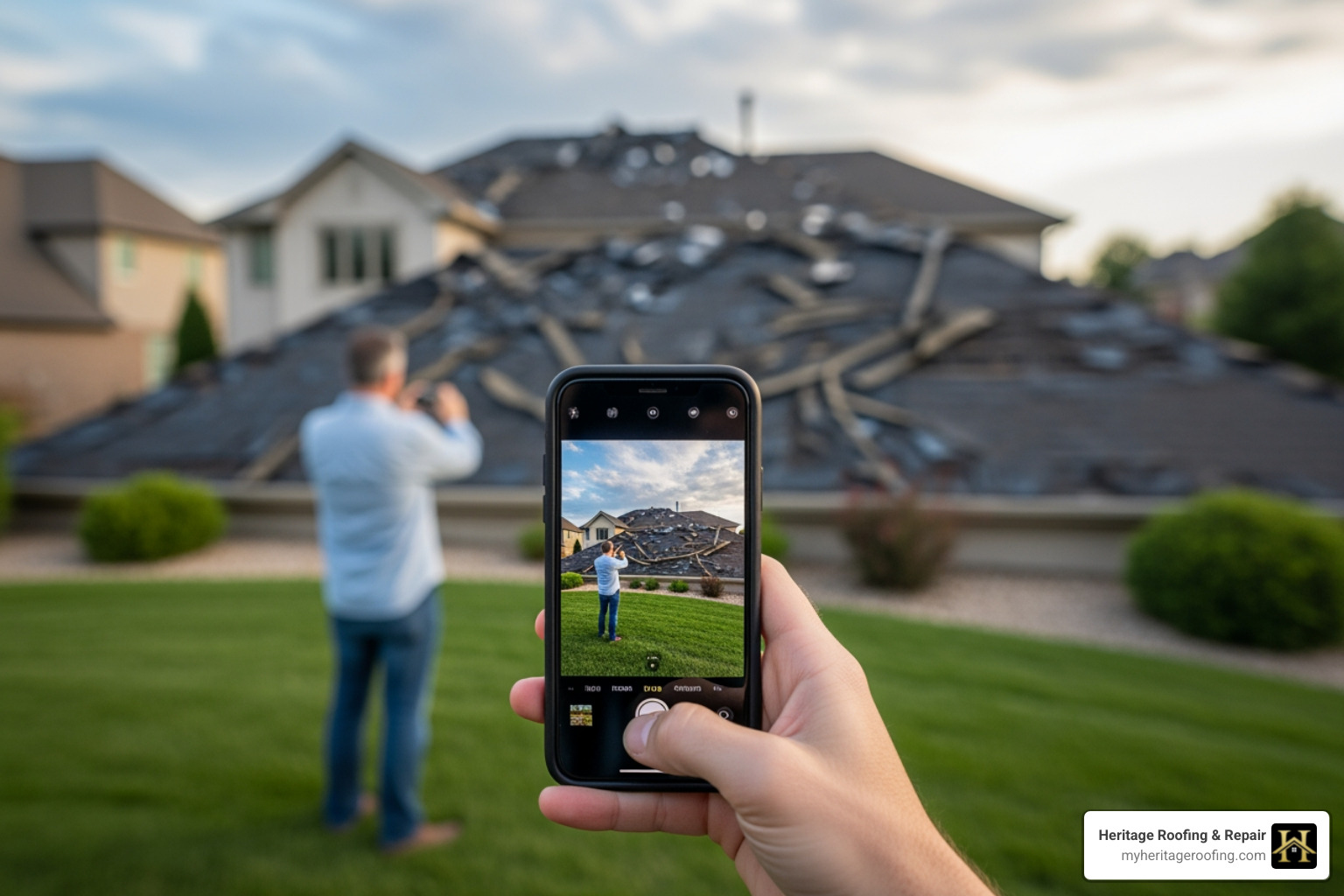
Step 1: Document All Damage
Your first action is to create evidence. Use your smartphone to take clear photos and videos of all visible damage, including wide shots of the roof, close-ups of damaged areas, and any interior water stains. Check for damage to siding, fences, and anything else affected by the event.
Step 2: Mitigate Further Damage
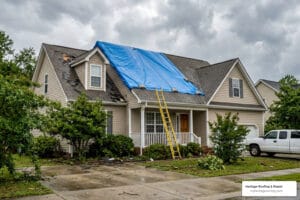
Your policy requires you to take reasonable steps to prevent more damage. This does not mean performing unsafe repairs yourself. Safely placing a tarp over a hole can prevent water intrusion. We offer Emergency Roof Tarping to help secure your home. Keep all receipts for temporary repairs, as your insurer may reimburse these costs.
Step 3: Contact Your Insurer Promptly
Report the incident to your insurance company as soon as possible, as some policies have filing deadlines. You will be assigned a claim number—keep it handy for all communications.
Step 4: Prepare for the Adjuster’s Visit
An insurance adjuster will assess the damage. Have your photos, videos, and policy documents ready. We highly recommend having a trusted roofing contractor present during the inspection. A professional can point out damage the adjuster might miss and ensure a comprehensive assessment.
Step 5: Get Repair Estimates
Always get estimates from licensed, reputable roofing contractors. Obtaining multiple quotes is a good practice to ensure you receive a fair price for quality work.
Essential Documents for Your Claim
- Your insurance policy declarations page
- Dated photos and videos of all damage
- Receipts for temporary repairs
- Roof maintenance records
- Repair estimates from licensed contractors
- A written timeline of events
For more advice, you can View other best practices when filing a claim.
Before You File: A Note on Your Deductible
It is not advisable to file a claim if the estimated repair cost is less than your deductible. In this scenario, the insurance company will not pay anything, and you will cover the full cost yourself. Even with no payout, the claim is recorded in your policy history, which can lead to future rate increases. It is more strategic to pay for minor repairs out-of-pocket and save insurance for major, costly events.
How Roof Age and Maintenance Affect Your Claim
Your roof’s age and maintenance history significantly impact your insurance roof damage claim. Insurers view a well-maintained roof as your first line of defense and a reflection of your diligence as a homeowner.
Maintenance History: Your Proof of Care
Keep a file of all roof repairs and inspections. This documentation proves you’ve been a responsible homeowner. Simple tasks like regular gutter cleaning and trimming overhanging tree branches reduce risk and show proactive care. If an inspector finds that damage was worsened by neglect (e.g., an unrepaired small leak that caused major water damage), your claim could be denied.
Wear and Tear vs. Storm Damage
Distinguishing between natural aging and specific storm damage is critical. This is where a professional assessment is invaluable.
- Wear and Tear: Brittle, curled, or cracked shingles are classic signs of an aging roof and are generally not covered.
- Storm Damage: A professional can identify hail “bruises,” wind-lifted shingles, or damage to flashing that indicates a recent, covered event.
The Role of Roof Age and Depreciation
The age of your roof is a major factor in your claim payout.
- The 10-Year Rule: While it varies by insurer, roofs under 10 years old often receive full replacement cost (RCV). For older roofs, coverage may shift to Actual Cash Value (ACV), meaning the payout is reduced for depreciation.
- Depreciation: An older roof has less value to an insurer. If your 15-year-old roof is damaged, its depreciated value will be far less than its replacement cost, which is a common reason for insufficient payouts. For more insights, check our guide on Why Do Insurance Companies Deny Roof Claims?.
Professional Roof Inspections: Your Best Advocate
A professional roof inspection before you file can determine if you have a legitimate claim. A detailed report from an independent inspector serves as powerful, objective evidence for your insurer, clearly differentiating new storm damage from pre-existing conditions. For more on this, refer to Your Guide to a Roof Inspection for Insurance Claim.
What to Do if Your Insurance Roof Damage Claim is Denied
A denial letter for your insurance roof damage claim is not the final word. You have the right to appeal the decision.
Common Reasons for Denial
Understanding why your claim was denied is the first step to an effective appeal. Common reasons include:
- Lack of Maintenance or Neglect
- Damage Attributed to Wear and Tear
- Insufficient or Cosmetic Damage
- Damage Predates the Policy
- Cause of Damage is a Policy Exclusion
- Failure to Report the Claim Promptly
How to Appeal a Denied Claim
Request a Second Adjuster (Internal Appeal): Contact your insurance company and ask for a different adjuster to reassess the damage. Provide any new evidence you have, such as a report from an independent roofing contractor.
Hire a Public Adjuster: If the internal appeal fails, a public adjuster works for you, not the insurance company. They conduct an independent assessment, prepare a detailed estimate, and negotiate with your insurer on your behalf. They are motivated to get you a fair settlement, as they are typically paid a percentage of the final payout.
If you continue to face issues, seeking legal counsel may be the next step. For more detailed guidance, review our Homeowners Insurance Denied Roof Claim Guide.
Proactive Protection: Preventing Damage and Lowering Premiums
The best way to handle an insurance roof damage claim is to avoid one. Proactive maintenance protects your home and can even reduce your insurance premiums.
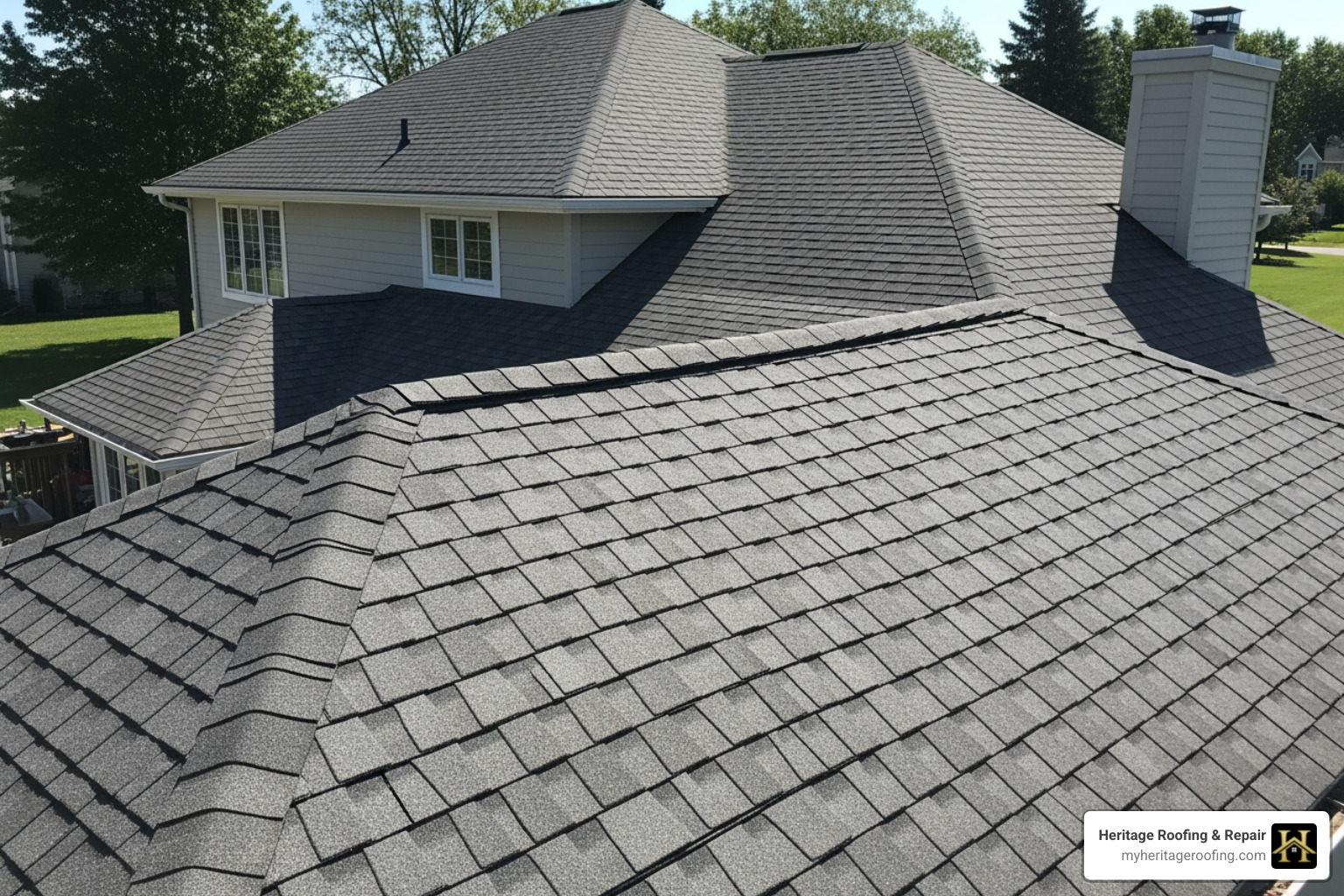
Prevention Best Practices
- Regular Inspections: Annual professional inspections are crucial for identifying minor issues before they become major problems.
- Gutter Cleaning: Keep gutters clear to prevent water from pooling on your roof, which can lead to rot and ice dams.
- Proper Attic Ventilation: Good ventilation prevents heat and moisture buildup that can degrade roofing materials from the inside out.
- Tree Trimming: Trim overhanging branches to reduce the risk of falling debris during storms.
Early Signs of a Roof Leak
Catching a leak early can save you from costly interior repairs. Look for:
- Water stains on ceilings or walls
- Peeling or bubbling paint
- Musty odors in your attic
- Missing, cracked, or curled shingles
Upgrades for Better Protection
- Impact-Resistant Roofing: In hail-prone areas like Arkansas, consider UL 2218 Class 4 shingles. These are tested to withstand large hail and may qualify you for insurance discounts.
- FORTIFIED Roof™ Program: This program strengthens your roof against high winds and severe weather. A FORTIFIED designation may also qualify you for significant Insurance discounts and grants.
For local expertise in assessing your roof’s condition, consult a trusted professional. Heritage Roofing & Repair helps homeowners in Berryville, Fayetteville, and Harrison, AR make informed decisions.
Heritage Roofing & Repair 3458 Arkansas State Hwy 221, Berryville, AR 72616 (870) 654-1164
Frequently Asked Questions about Roof Damage Insurance
Homeowners often have similar questions about insurance roof damage. Here are clear, direct answers to the most common ones.
Does homeowners insurance cover roof leaks?
Yes, if the leak is caused by a sudden, covered event like a storm or falling tree. However, insurance will not cover leaks that result from old age, gradual wear and tear, or poor maintenance. The cause of the leak is the key factor: it must be accidental, not preventable.
How often will insurance pay for a new roof?
Insurance pays for a new roof based on damage from a covered peril, not on a set timeline. You can file a claim for each qualifying storm event. However, whether you get a full replacement depends on the extent of the damage, your roof’s age, and whether your policy is for Replacement Cost Value (RCV) or Actual Cash Value (ACV). Filing multiple claims in a short period can lead to higher premiums or non-renewal, so it’s best reserved for significant damage.
Should I file a claim if the repair cost is less than my deductible?
No, it is not advisable. If the repair cost is less than your deductible, the insurance company will not pay anything, and you will cover the full cost yourself. Even with no payout, the claim is recorded in your policy history, which can lead to future rate increases. It is more strategic to pay for minor repairs out-of-pocket and save insurance for major, costly events.
Your Partner in Storm Recovery
Navigating an insurance roof damage claim requires a clear understanding of your policy and a strategic approach. By documenting damage, knowing the difference between covered perils and exclusions, and performing regular maintenance, you can protect your home and ensure a fair outcome.
Dealing with roof damage is stressful, but you don’t have to do it alone. The insurance claim specialists at Heritage Roofing & Repair have over 50 years of experience helping homeowners in Berryville, Fayetteville, and Harrison restore their peace of mind. We guide you through every step, from assessment to final repairs.
Contact us today for a comprehensive storm damage roof repair assessment and let our expertise work for you. Find us in Berryville at Heritage Roofing & Repair.