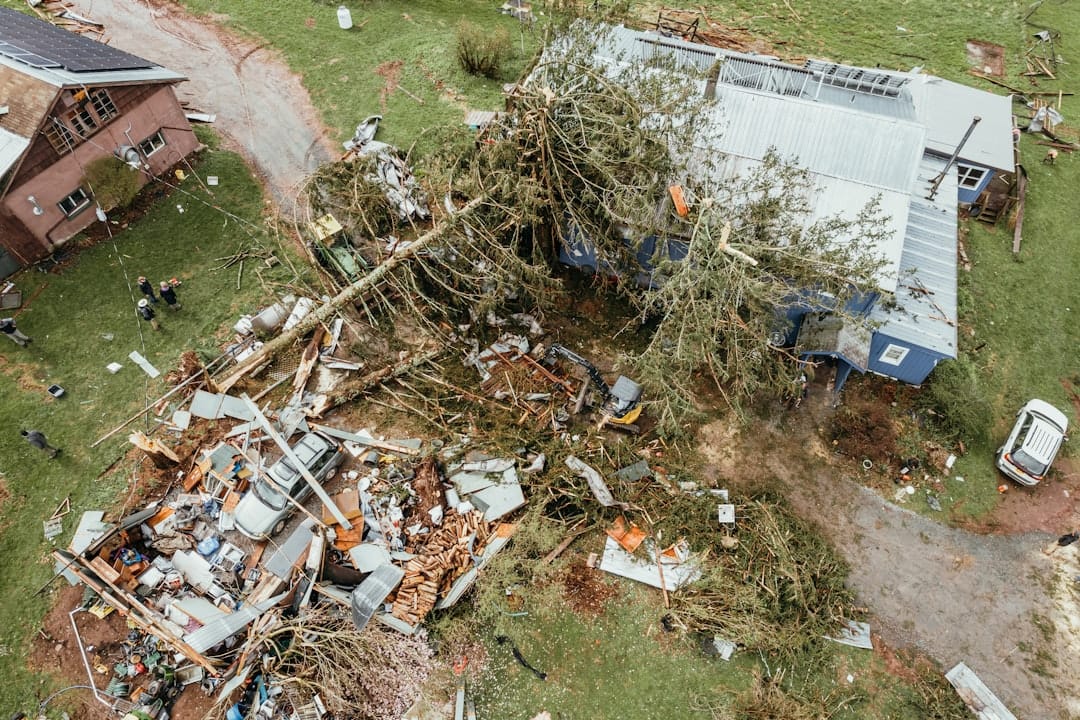
When Your Roof Is Damaged, Does Insurance Actually Pay?
Roof wear and tear insurance is one of the most misunderstood topics in homeownership — and the confusion can cost you thousands.
Here is the short answer most homeowners need right away:
Does homeowners insurance cover roof wear and tear?
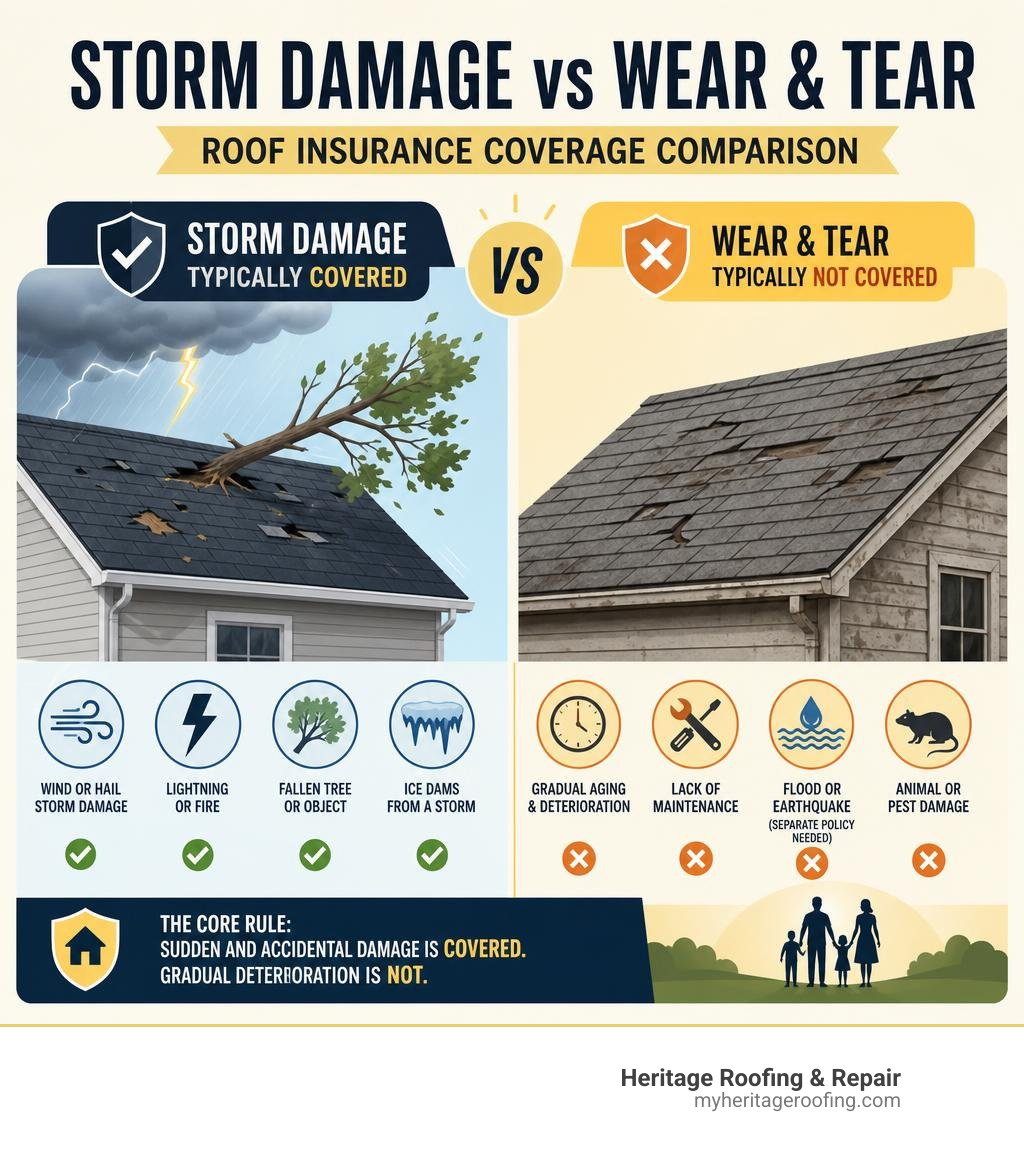
| Damage Type | Typically Covered? |
|---|---|
| Wind or hail storm damage | Yes |
| Lightning strike or fire | Yes |
| Fallen tree or object | Yes |
| Ice dams from a storm event | Usually yes |
| Gradual aging and deterioration | No |
| Lack of maintenance or neglect | No |
| Flood or earthquake damage | No (separate policy needed) |
| Animal or pest damage | No |
The core rule: sudden and accidental damage is covered. Gradual deterioration is not. Your insurer will look at the cause of the damage first — not just the damage itself.
This distinction matters more than ever. In 2023, 37% of building insurance claims were denied — up from 32% the year before — with insurers frequently citing wear and tear as the reason. When you are already dealing with a damaged roof, a denied claim on top of that is the last thing you need. Finding a dependable roofing partner early in the process can make a real difference in how your claim plays out.
I’m Rex Wisdom, owner of Heritage Roofing & Repair, a family-owned business with over 50 years of roofing experience serving Berryville and Northwest Arkansas — including hands-on assistance with roof wear and tear insurance disputes and storm damage claims. In this guide, I’ll walk you through exactly how insurers draw the line between covered storm damage and excluded wear and tear, so you know where you stand before you file.
Important roof wear and tear insurance terms:
- homeowners insurance roof damage
- how much roof damage for insurance claim
- why do insurance companies deny roof claims
Understanding Roof Wear and Tear Insurance vs. Storm Damage Coverage
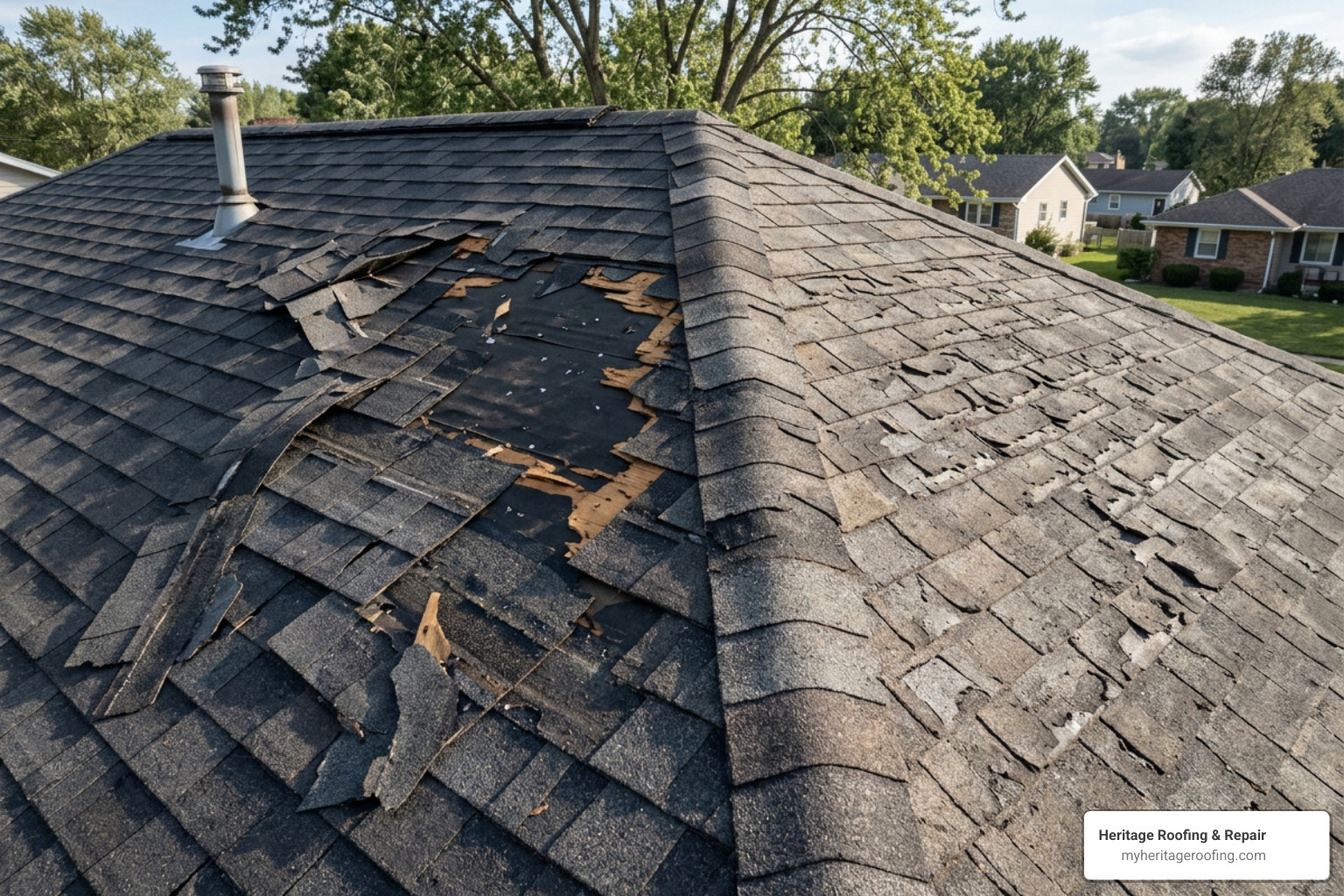
When a roof begins to leak or lose shingles, homeowners naturally look to their insurance policy for financial relief. However, standard homeowners policies are built around the concept of “sudden and accidental” occurrences. To protect your home and your wallet, you must understand where your policy’s protective umbrella ends and where your personal maintenance responsibilities begin. For a deeper look at this dynamic, check out our Roof Damage Insurance Guide.
What Does Standard Homeowners Insurance Actually Cover?
Standard HO-3 homeowners insurance policies cover roof damage that is directly caused by specific, covered perils. These perils are sudden, unexpected, and accidental events that cause immediate physical damage to an otherwise functional roof.
The primary covered perils that trigger insurance payouts include:
- Windstorms and Tornadoes: High-velocity winds that rip shingles off, bend metal panels, or compromise the underlying roof structure.
- Hail Damage: Large hailstones that impact the roof surface, fracturing shingles, bruising the underlayment, or denting metal.
- Lightning Strikes and Fires: Direct strikes or resulting fires that destroy roofing materials.
- Falling Objects: Trees, heavy branches, or debris knocked down by severe weather that physically crush or puncture the roof.
- Ice Dams: When snow melts and refreezes at the eaves, forcing water backward under the shingles, standard policies usually cover the resulting interior water damage.
According to industry data, wind and hail claims occurred at a frequency of 2.80 per 100 insured homes over the 2019-2023 period. When these sudden events occur, your policy’s dwelling coverage is designed to step in and pay for repairs or a complete replacement, minus your deductible. For more details on the scope of this coverage, you can read Does Homeowners Insurance Cover Roof Replacement? | Investopedia.
Why Standard Policies Exclude Roof Wear and Tear Insurance
Insurance is a risk-transfer mechanism designed for unexpected disasters, not a home maintenance plan. Consequently, standard homeowners policies strictly exclude coverage for gradual deterioration, aging, and lack of maintenance.
Insurers exclude roof wear and tear insurance because a roof is expected to degrade over time. The natural breakdown of asphalt shingles, rusting of metal flashing, and weathering of sealants are predictable events. Property owners are legally and contractually obligated to perform regular upkeep to prevent gradual damage.
If an insurer determines that a leak or structural failure was caused by long-term neglect — such as ignoring a slow drip, allowing moss to rot the shingles, or failing to replace worn-out flashings — they will deny the claim. They view these issues as preventable maintenance problems rather than sudden losses. To learn more about navigating these complex boundaries, see our guide on Hail Wind or Wear Tear Navigating Roof Damage Insurance Claims.
How Insurance Adjusters Distinguish Sudden Storms from Gradual Aging

When you file a claim, the insurance company sends a licensed adjuster to inspect the roof. Adjusters do not look at your roof in a vacuum; they act as forensic investigators. They use physical evidence, weather databases, and structural patterns to determine whether the damage is a direct result of a recent storm or simply the consequence of an aging roof. If you want to know what to look for before they arrive, review Spotting Trouble: A Homeowners Guide to Roof Damage.
Identifying Functional Damage vs. Cosmetic Exclusions
One of the primary battlegrounds in roof claims is the distinction between functional damage and cosmetic damage.
- Functional Damage: This is damage that compromises the roof’s water-shedding ability or shortens its expected lifespan. For asphalt shingles, this includes physical bruising, deep fractures, or major granule loss that exposes the underlying fiberglass mat. For a comprehensive look at how these rules apply in our region, consult the Complete Guide to Filing Hail Damage Claims in Arkansas .
- Cosmetic Damage: This refers to alterations that affect the appearance of the roof but do not impact its structural integrity or waterproofing capability. A classic example is minor denting on a metal roof or soft metal vents caused by hail.
Many modern policies contain “cosmetic damage exclusions.” If your policy has this exclusion, the insurer will refuse to pay for repairs if the metal roof is dented but still successfully keeps water out of your home. Adjusters look for sharp, clean edges on damaged shingles, which indicate recent storm impact, whereas rounded, weathered edges suggest older, gradual wear.
The Role of Hidden Decking Damage in Claims
Another complex situation arises when the roof decking (the plywood substrate beneath the shingles) is found to be rotted or damaged during a covered repair.
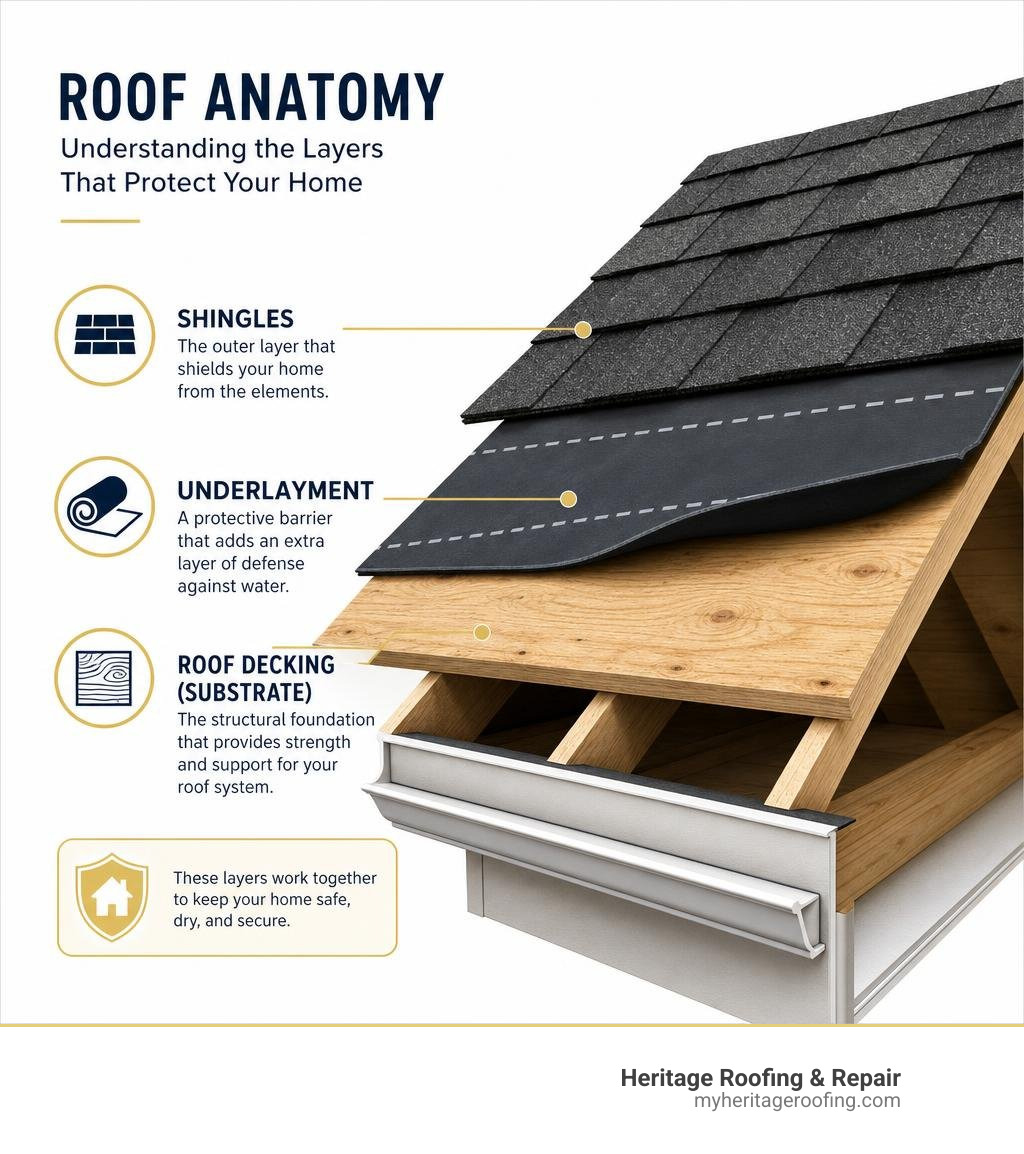
When we tear off storm-damaged shingles and discover rotted decking, the question of coverage becomes highly technical.
- Without Anticoncurrent Causation: If your policy does not have “anticoncurrent causation” language preceding the wear and tear exclusion, the cost to replace the rotted decking is typically covered if it must be replaced to complete the covered shingle repair.
- With Anticoncurrent Causation: If this strict language is present, the insurer may deny coverage for the decking entirely, arguing that the wear and tear (rot) occurred over time, regardless of the sudden storm that damaged the shingles above it.
This legal distinction is discussed in detail in When the Roof needs Repair – What about the Decking . As professional contractors, we know how to document these hidden issues to ensure your insurer treats you fairly.
The Financial Impact of Roof Age: ACV vs. RCV Payouts
The age of your roof is one of the most critical factors dicting how much money you will receive from a claim. The difference between Actual Cash Value (ACV) and Replacement Cost Value (RCV) can mean thousands of dollars out of your own pocket. To estimate your potential out-of-pocket expenses, refer to our Roof Replacement Cost Ultimate Guide.
| Payout Metric | Actual Cash Value (ACV) | Replacement Cost Value (RCV) |
|---|---|---|
| Definition | Pays the depreciated value of the roof based on its age and condition. | Pays the actual cost to repair or replace the roof at current market rates. |
| Depreciation Deducted | Yes (often up to 80% for older roofs) | No (depreciation is withheld initially, then released upon completion) |
| Out-of-Pocket Cost | High (you must pay the difference to get a new roof) | Low (you only pay your policy deductible) |
| Premium Cost | Lower annual premiums | Higher annual premiums |
Actual Cash Value vs. Replacement Cost Value
Under an RCV policy, the insurer pays the full cost to replace your damaged roof with materials of like kind and quality at today’s prices. The insurer typically issues a two-stage payment: the first check covers the depreciated value, and the second check (the depreciation holdback) is released once the contractor submits the final invoice proving the work is complete.
Under an ACV policy, the insurer only pays what the roof was worth right before the storm hit. If a new roof costs $15,000, but your 20-year-old roof has depreciated by 80%, your insurer will deduct $12,000 for depreciation. After subtracting a $1,000 deductible, your final payout is only $2,000. You are responsible for coming up with the remaining $13,000 to complete the replacement. You can read more about how these calculations are structured in Roof Damage Insurance: What’s Covered, What’s Not, and When to File (2026) .
How Roof Age Limits Your Coverage Options
As your roof crosses the 10-to-15-year threshold, insurance companies begin to limit their risk. Many insurers automatically convert replacement cost policies to actual cash value policies upon renewal once a roof reaches a certain age.
Furthermore, some insurance companies will refuse to renew your policy entirely if your roof is over 20 years old and has not been replaced, even if there is no active storm damage. On the bright side, installing a brand-new roof using impact-resistant or fire-resistant materials can qualify you for premium discounts ranging from 5% to 35%, making a proactive replacement financially savvy. For a deeper understanding of how aging roofs are treated by underwriters, read our Roof Insurance Guide 2025.
When Are Roof Claims Approved and When Do They Get Denied?
Filing a claim is not a guarantee of payment. Navigating the claims process requires careful attention to detail, timely action, and an understanding of policy limitations. If your claim has already run into roadblocks, our guide on What to Do If Insurance Denied Roof Claim provides actionable next steps.
Common Reasons for Roof Claim Denials
Understanding why claims get rejected is the best way to prevent a denial on your own home. The most frequent culprits include:
- Pre-Existing Damage: If the adjuster finds evidence of old leaks, unaddressed rot, or previous improper repairs, the entire claim may be denied.
- Lack of Maintenance: If the roof failed because of clogged gutters, heavy moss growth, or rusted flashing that was never maintained, the insurer will cite the wear and tear exclusion.
- Delayed Filing: Waiting too long to file a claim after a storm is a major red flag. Over time, storm damage begins to weather, collect dirt, and look exactly like gradual wear and tear. Most policies require you to report damage within a specific window (often 365 days from the date of the loss).
A classic real-world example of this tension occurred when a couple’s flat roof was completely ripped off during a severe windstorm. The insurer initially denied the payout, claiming the failure was due to gradual wear and tear. However, after independent roofing assessments and an ombudsman review, it was proven that the roof was in fair condition prior to the storm and was torn off by extraordinary wind speeds, forcing the insurer to pay the claim in full. You can read the full case study in Insurer denied payout after claiming roof blown off by storm was ‘wear and tear’ .
Navigating State-Specific Rules and Deductibles
Insurance regulations and deductible structures vary significantly by state. If you live in Northwest Arkansas, you need to be aware of how local rules affect your coverage.
Unlike coastal states that have complex windstorm pools, Arkansas homeowners generally deal with standard deductibles or specialized wind and hail deductibles. A wind and hail deductible is often structured as a percentage of your home’s total insured value (usually 1% to 5%) rather than a flat dollar amount. For instance, if your home is insured for $300,000, a 2% wind/hail deductible means you must pay $6,000 out of pocket before your insurance kicks in.
Additionally, the Arkansas Insurance Department sets strict guidelines regarding claim filing timelines and consumer protections. Knowing these rules can prevent you from missing critical deadlines. You can learn more directly from the Arkansas Insurance Department Consumer Services.
Frequently Asked Questions About Roof Wear and Tear Insurance
Navigating insurance policies can feel like reading a foreign language. Here are clear, direct answers to the most common questions we hear from homeowners in Northwest Arkansas.
Does homeowners insurance cover a leaking roof?
Yes, but only if the leak is caused by a covered peril.
If a severe storm blows off shingles or a falling tree limb punches a hole in your roof, the resulting leak and any interior water damage to your ceilings or walls will be covered under your dwelling policy. However, if the leak is caused by rusted flashing, aging sealants, or shingles that have reached the end of their natural lifespan, insurance will not pay for the roof repair. In some cases, they may cover the interior drywall damage under “sudden and accidental” discharge rules, but the roof repair itself will be your responsibility. For step-by-step guidance on handling leaks, see our Homeowners Insurance Roof Damage Claim Guide.
Can I get specific roof wear and tear insurance?
No, standard insurance companies do not offer “wear and tear” insurance for roofs.
Because a roof is guaranteed to degrade over time, insuring it against normal aging would be a guaranteed financial loss for insurance companies. Instead of insurance, homeowners looking for protection against wear and tear often turn to home warranties. However, be highly cautious: most home warranties have strict caps on roof coverage (often limiting repairs to $500 or $1,000) and completely exclude full roof replacements or pre-existing wear.
What should I do if my roof claim is denied?
Do not accept the first denial as the final word.
If your insurer denies your claim citing wear and tear, you have the right to dispute the decision. We recommend obtaining an independent inspection from a trusted local contractor to document the actual condition of your roof. For a complete, step-by-step breakdown of how to appeal a decision and fight back against a wrongful denial, read our comprehensive guide on What to Do If Insurance Denied Roof Claim.
If you need professional assistance with your roof inspection or insurance claim, you can reach our Berryville office:
Heritage Roofing & Repair
3458 Arkansas State Hwy 221, Berryville, AR 72616
Phone: (870) 654-1164
Conclusion
At Heritage Roofing & Repair, we believe that navigating roof wear and tear insurance shouldn’t feel like a battle. For over 50 years, we have provided honest, dependable, and high-quality craftsmanship to our neighbors in Berryville, Fayetteville, Harrison, and across Northwest Arkansas.
We specialize in storm damage restoration and insurance claim assistance, helping you document legitimate storm damage clearly so your insurance company has the facts they need to approve your claim. If you are dealing with a damaged roof, let our experienced team inspect your property and guide you through the process. For more tips on managing your roof claims successfully, read our Roofing Insurance Claims Ultimate Guide.
If you need a reliable local roofer near Harrison, Arkansas, or the surrounding Northwest Arkansas region, we are here to help.