What Every Homeowner Must Know About a Roof Replacement Insurance Claim
A roof replacement insurance claim is the formal process of asking your homeowners insurance company to pay for a damaged roof. When you partner with Heritage Roofing & Repair, getting it right can mean the difference between a full replacement and a costly out-of-pocket bill.
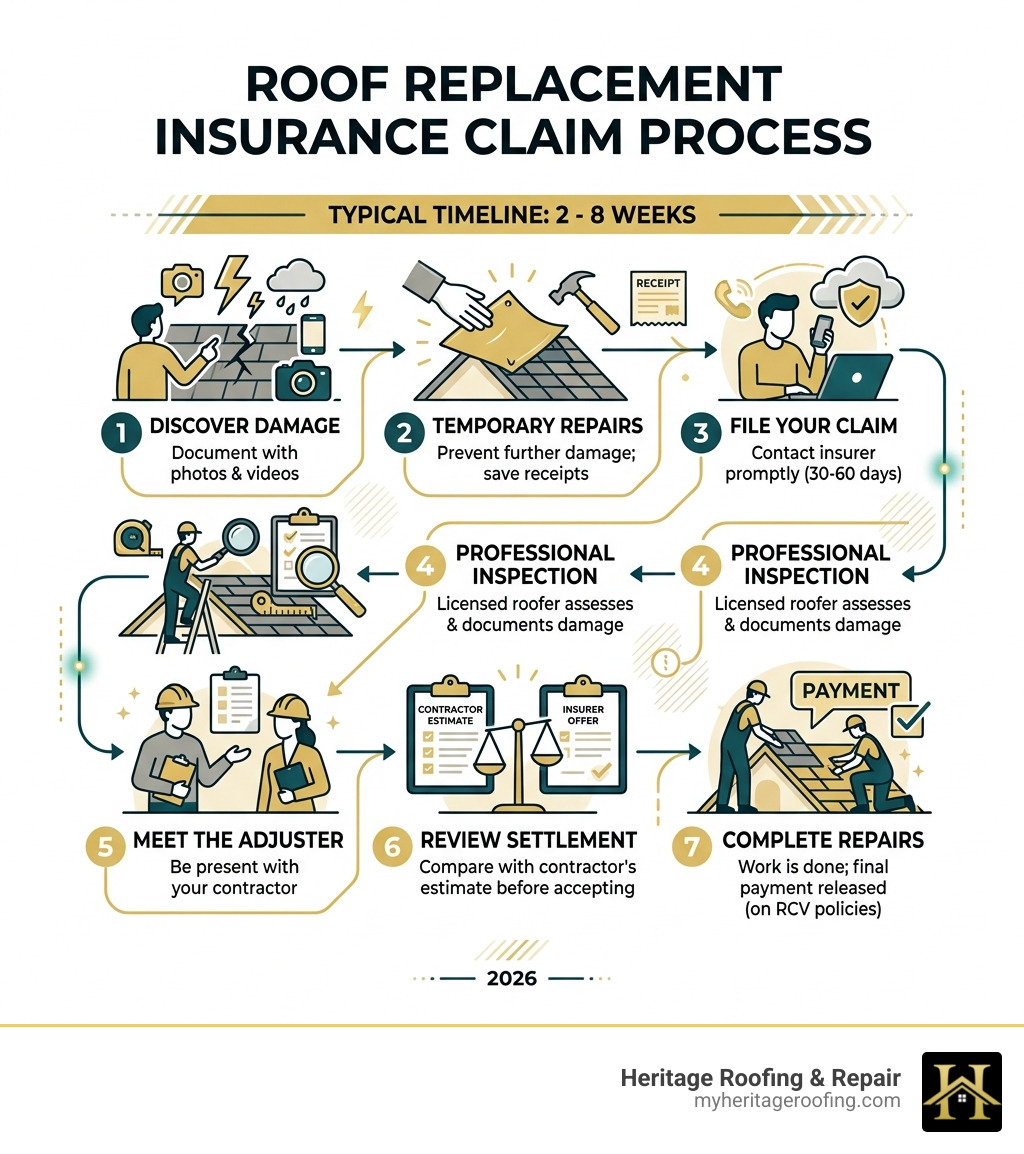
Here’s how the process works, at a glance:
- Discover damage – Document it immediately with photos and videos
- Make temporary repairs – Use tarps to prevent further damage; save all receipts
- File your claim – Contact your insurer within 30-60 days for the best outcome
- Get a professional inspection – Have a licensed roofer assess and document the damage
- Meet the adjuster – Be present and have your contractor there too
- Review the settlement – Compare it against your contractor’s estimate before accepting
- Complete repairs – Work is done; final payment is released (on RCV policies)
The entire process — from filing to finished roof — typically takes two to eight weeks.
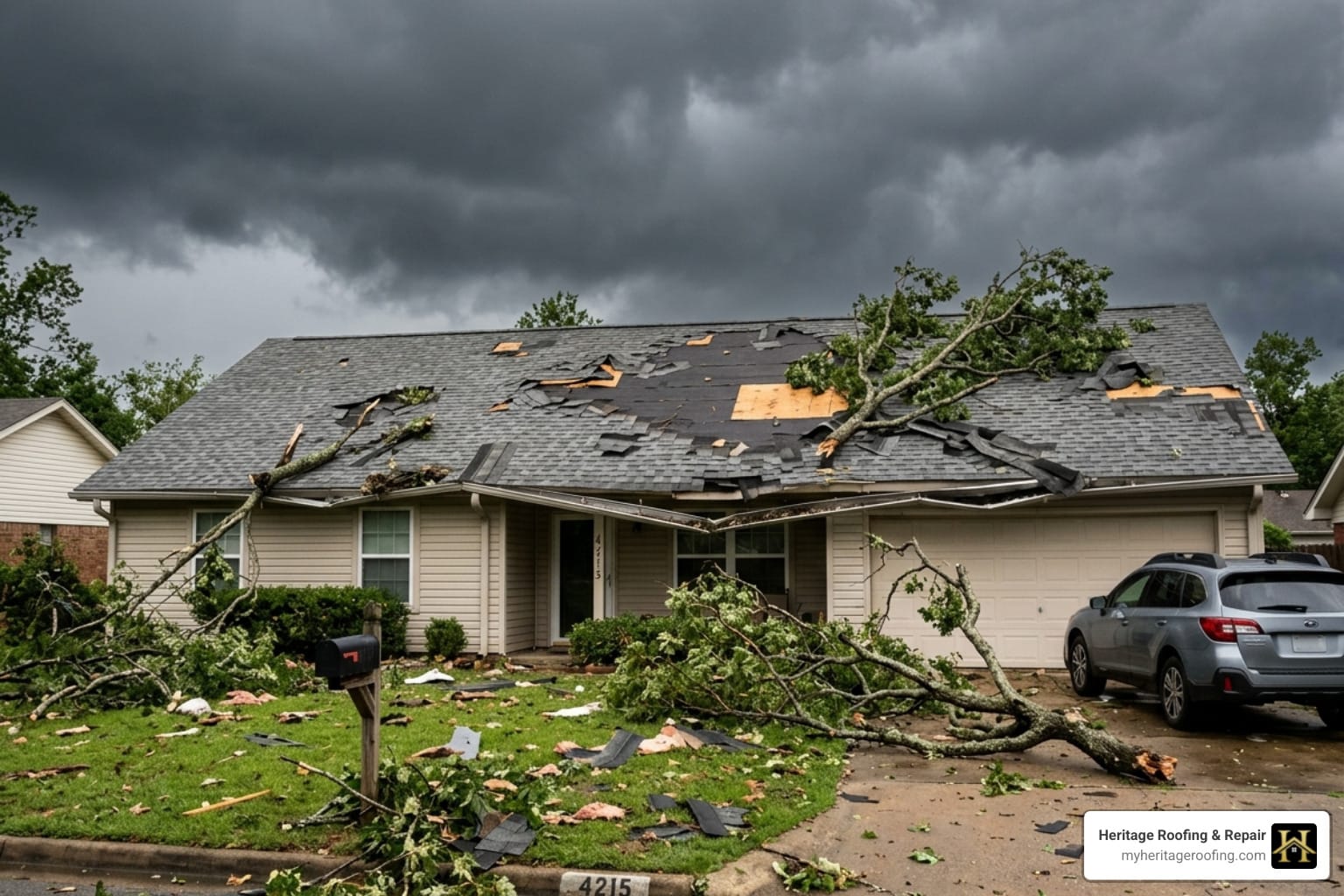
Most standard homeowners insurance policies cover sudden, accidental damage from events like hailstorms, high winds, falling trees, fire, and lightning. What they don’t cover is just as important: wear and tear, poor maintenance, and gradual deterioration are almost always excluded. Knowing that distinction upfront shapes every step you take.
As of April 2026, the average cost to install a new roof runs around $8,500, with full re-roofing projects exceeding $10,000 depending on size and materials. The stakes are high — and the process is more nuanced than most homeowners expect. For Northwest Arkansas homeowners, working with trusted local roofing experts gives you a critical advantage when navigating insurer negotiations.
I’m Rex Wisdom, owner of Heritage Roofing & Repair, and with over 50 years of collective family experience in roofing across Berryville and Northwest Arkansas, I’ve helped hundreds of homeowners successfully navigate the roof replacement insurance claim process from first inspection to final payout. In this guide, I’ll walk you through every step — so you don’t leave money on the table.
Key roof replacement insurance claim vocabulary:
Understanding Coverage and Policy Types

Before you pick up the phone to call your agent, you need to know exactly what kind of safety net you’re standing on. Not all insurance policies are created equal. Heritage Roofing & Repair, located at 3458 Arkansas State Hwy 221, Berryville, AR 72616, has helped hundreds of homeowners navigate these complexities. You can reach our team at (870) 654-1164.
In our experience helping folks with their claims, the biggest surprises usually come from a misunderstanding of “covered perils.”
Standard policies in Arkansas typically cover damage from:
- Windstorms and Tornadoes: High winds that lift shingles or cause structural damage.
- Hail: Impact damage that bruises shingles or knocks off protective granules.
- Falling Objects: Most commonly, tree limbs brought down by a storm.
- Fire and Lightning Strikes: Sudden events that cause immediate destruction.
However, insurance is not a maintenance plan. It won’t cover a roof that has simply reached the end of its life or damage caused by pests or a lack of basic upkeep. Understanding this distinction is the first step in how to get insurance to pay for roof replacement: A step-by-step guide.
How Roof Age Impacts Your roof replacement insurance claim
Age isn’t just a number when it comes to your roof; it’s a financial factor. Most insurance carriers view roofs over 20 years old as high-risk. If your roof is in that “senior” category, you might find your coverage is severely limited.
Insurance companies use depreciation to determine how much they owe you. Consider the real-world example of the Lawson family: they had a 5-year-old roof with a 25-year expected lifespan. Because the roof had already used up 20% of its life, the insurance company prorated the payout, reducing the claim value significantly. If you have an older roof, you need to be prepared for a lower settlement or a policy that only covers “Actual Cash Value.” For more clarity, you can read more info about professional roof replacement.
The Difference Between ACV and RCV Policies
This is perhaps the most critical part of your policy to understand. It determines how much money actually hits your bank account.
| Feature | Replacement Cost Value (RCV) | Actual Cash Value (ACV) |
|---|---|---|
| Payout Basis | Cost to buy a brand-new roof today | Current value of the roof (Cost minus depreciation) |
| Out-of-Pocket | Just your deductible | Deductible + the value lost to age (often 20-25% less) |
| Premiums | Generally higher | Generally lower |
| Best For | Total peace of mind | Lowering monthly insurance costs |
With an RCV policy, the insurer pays the full cost to replace your roof at today’s prices, minus your deductible. However, they usually send the money in two checks. The first is for the ACV (the depreciated value), and the second — called “recoverable depreciation” — is sent only after you provide proof that the work is finished. ACV policies, on the other hand, often pay out 20% to 25% less than the actual replacement cost, leaving you to cover the gap.
The Step-by-Step Guide to Filing Your roof replacement insurance claim
When a storm hits Fayetteville or Harrison, the clock starts ticking. While most carriers allow up to one year to file a claim, filing within the first 30 to 60 days gives you the highest chance of success. Memories fade, and damage can worsen over time, making it harder to prove the storm was the direct cause.
Your first priority is “mitigation.” This is a fancy insurance term that means you must stop things from getting worse. If you have a hole in your roof, you are expected to put a tarp over it. If you don’t, and rain ruins your living room furniture two weeks later, the insurance company might deny the claim for the furniture because you didn’t protect the property. Always keep your receipts for these temporary repairs; they are usually reimbursable! For a deep dive, check out how to get insurance to pay for roof replacement.
Documenting Damage for a Successful roof replacement insurance claim
Documentation is your best friend. Before the adjuster arrives, you should act like a detective.
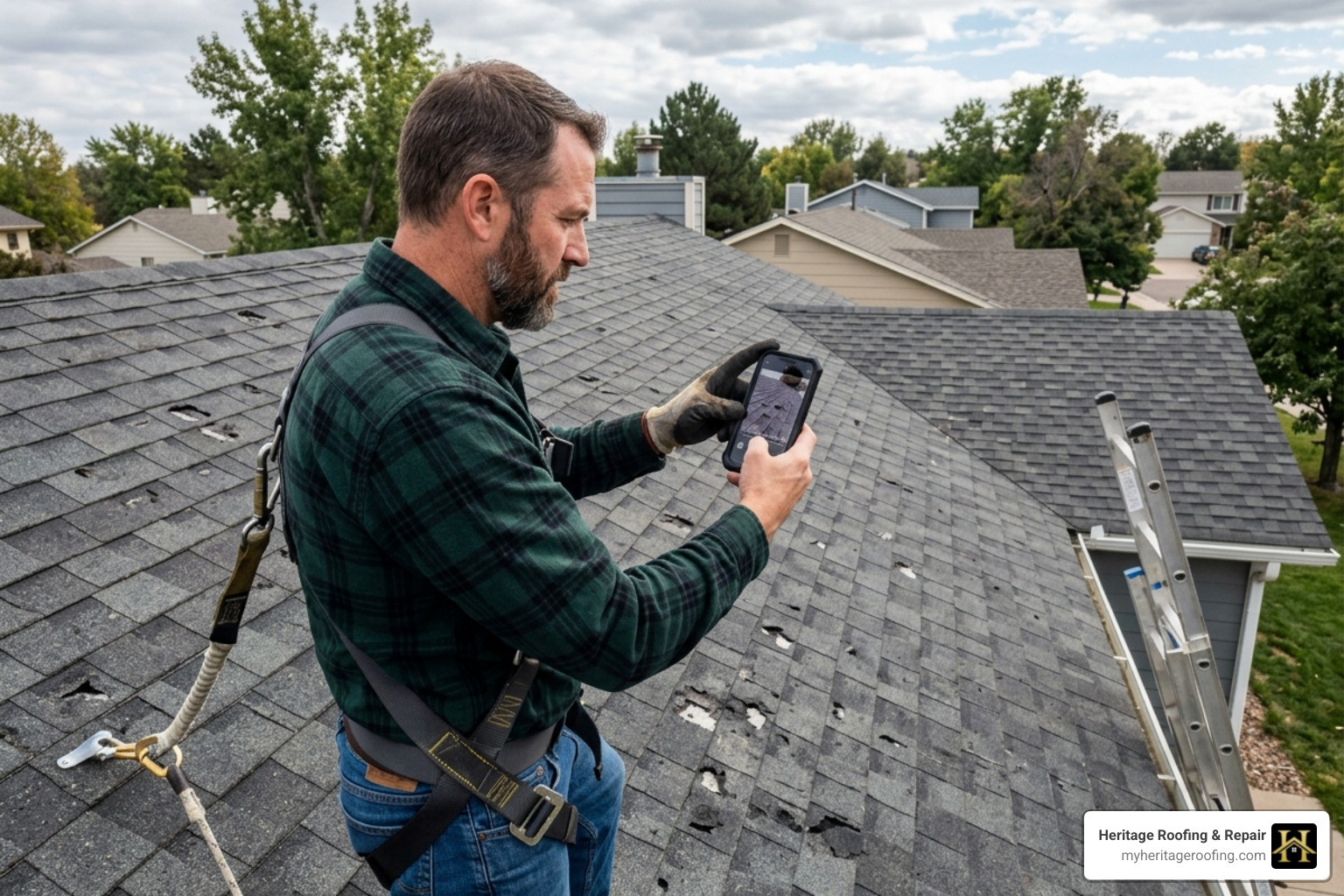
- Take Photos: Capture wide shots of the house and close-ups of the damage. Use a coin or a ruler next to hail dents to show scale.
- Date Everything: Use a camera app that adds a date and time stamp to your photos.
- Look for Clues: Check your gutters for “granule loss” (it looks like dark sand). This is a major sign of hail damage.
- Record the Interior: If you have water stains on your ceiling, photograph them immediately.
Having a filing roof insurance claim guide handy can help you ensure no detail is missed during this hectic time.
Filing the Formal Claim with Your Carrier
Once you have your evidence, call your insurance company’s claims department. They will assign you a claim number — keep this number in your phone and on a notepad. You’ll need to provide the date of the storm and a brief description of what happened.
Be aware of the “80% Rule.” This rule states that if your home is not insured for at least 80% of its total replacement value, the insurance company can legally reduce your payout. For example, if your home would cost $300,000 to rebuild but you only have $200,000 in dwelling coverage, you might only get a fraction of your roof claim paid. Our insurance claim support complete guide explains these technicalities in more detail.
Navigating the Adjuster Inspection and Payout
The adjuster inspection is the “make or break” moment of your roof replacement insurance claim. The adjuster works for the insurance company, and while most are fair, their job is to find the most cost-effective solution for the carrier.
Pro Tip: Never meet the adjuster alone. We always recommend having your roofing contractor present. Why? Because we speak the same technical language. We can point out subtle damage, like “bruised” shingle mats or bent flashing, that an adjuster might overlook. This ensures the “scope of work” includes everything needed for a code-compliant, high-quality roof. Learn more about this dynamic in how to file roof replacement insurance claim with adjuster.
Preparing for the Adjuster’s Visit
Before the adjuster arrives, have your contractor provide you with a detailed, line-item estimate. This gives you a benchmark to compare against the adjuster’s report. We focus on identifying hidden damage that isn’t visible from the ground, ensuring that the insurance company sees the full picture. You can read more about the relationship between roofing contractors and insurance adjusters to see how this helps your claim.
Understanding Deductibles and Payout Timelines
Your deductible is the amount you pay out of pocket before insurance kicks in. In Northwest Arkansas, deductibles are usually either a fixed dollar amount (like $1,000 or $2,000) or a percentage of your home’s insured value (usually 1% to 2%).
Warning: It is illegal for a contractor to “waive” your deductible. If a company offers to do this, they are asking you to participate in insurance fraud.
Once approved, the timeline for payment usually looks like this:
- Initial Check: Sent within a week or two of approval. This is usually the ACV amount.
- Repairs: You use the initial check to start the work.
- Final Settlement: Once we send the final invoice and photos of the completed roof to your insurer, they release the remaining funds (the recoverable depreciation).
For more on managing these funds, see our guide on insurance roof claims.
Handling Denials and Local Arkansas Regulations
Getting a denial letter is frustrating, but it isn’t necessarily the final word. Common reasons for denial include:
- Wear and Tear: The insurer claims the damage was pre-existing.
- Maintenance Neglect: They argue the damage happened because you didn’t clean your gutters or fix minor leaks.
- Exclusions: Some policies in storm-prone areas exclude cosmetic hail damage.
If you disagree with the decision, you have rights. You can request a re-inspection with a different adjuster or hire a public adjuster to represent you. In extreme cases, you can file a complaint with the Arkansas Department of Insurance (DOI). Our guide on what to do if insurance denied roof claim covers your next steps in detail.
Why Claims Get Denied and How to Appeal
Most denials happen because of “insufficient documentation.” This is why that first professional inspection is so vital. If we can provide weather reports showing a hailstorm on the exact date you reported, and photos of the impact marks, it becomes much harder for the insurer to claim it was just “old age.” We dive deeper into this in why do insurance companies deny roof claims.
Local Expertise for Northwest Arkansas Homeowners
Weather in Northwest Arkansas is unique. We deal with everything from straight-line winds in Fayetteville to massive hailstones in Berryville and Harrison. Because we live and work here, we know the local building codes and the specific storm patterns that hit our neighborhoods. Whether you need Harrison, AR roofers or help in Berryville, we are here to support our community.
Frequently Asked Questions
Does insurance cover roof leaks?
Yes, but only if the leak was caused by a “covered peril.” If a tree limb falls on your roof and creates a hole, that’s covered. If ice dams form during an Arkansas winter and push water under your shingles, that’s usually covered. However, if your roof leaks because the shingles are 30 years old and brittle, insurance will likely deny the claim. You can find more answers in can I claim a roof leak on insurance.
Will filing a claim increase my insurance rates?
This is a complex question. Generally, insurance companies cannot raise your individual rates just because you filed a claim for a “natural event” (like a hailstorm). However, they can raise rates for an entire ZIP code if that area is frequently hit by disasters. Also, filing multiple claims in a short period can lead to non-renewal. Before you file, it’s worth asking: should I file an insurance claim for my roof?
How long do I have to file a claim after a storm?
While most policies give you up to a year, we recommend filing within 30 to 60 days. The longer you wait, the harder it is to prove the damage was caused by a specific storm rather than gradual wear. Prompt reporting is the hallmark of a successful claim. Check out our homeowners insurance roof damage claim guide for more timeline tips.
Conclusion
Navigating a roof replacement insurance claim doesn’t have to be a solo battle. At Heritage Roofing & Repair, we’ve spent over five decades mastering the art of quality craftsmanship and insurance advocacy. We understand that your home is your biggest investment, and we treat every roof as if it were our own.
If you suspect storm damage, don’t wait for a leak to tell you there’s a problem. Contact us today for a professional, honest inspection. We’ll help you document the damage, navigate the paperwork, and ensure your home in Berryville, Harrison, or Fayetteville gets the protection it deserves. For more information, explore our roofing insurance claims ultimate guide.