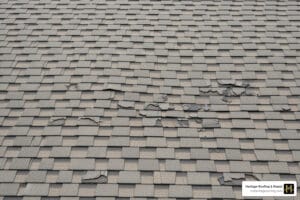
Why Should I File an Insurance Claim for My Roof is One of Your Biggest Financial Decisions
Should I file an insurance claim for my roof? The answer depends on three factors: the type of damage, your deductible, and your policy type. After a storm, homeowners in Northwest Arkansas often face this stressful choice, and making the right call can save you thousands. For over 50 years, Heritage Roofing & Repair has provided expert guidance to local families navigating this complex process.
The stakes are high. File a claim unnecessarily, and you risk premium hikes or policy cancellation. Don’t file when you should, and you could face a $15,000 repair bill that insurance would have covered. The average wind and hail claim payout is between $10,000 and $15,000, but only if you make the right decision. This guide provides the framework to make that choice confidently.
First, Assess the Damage: What Does Your Insurance Actually Cover?
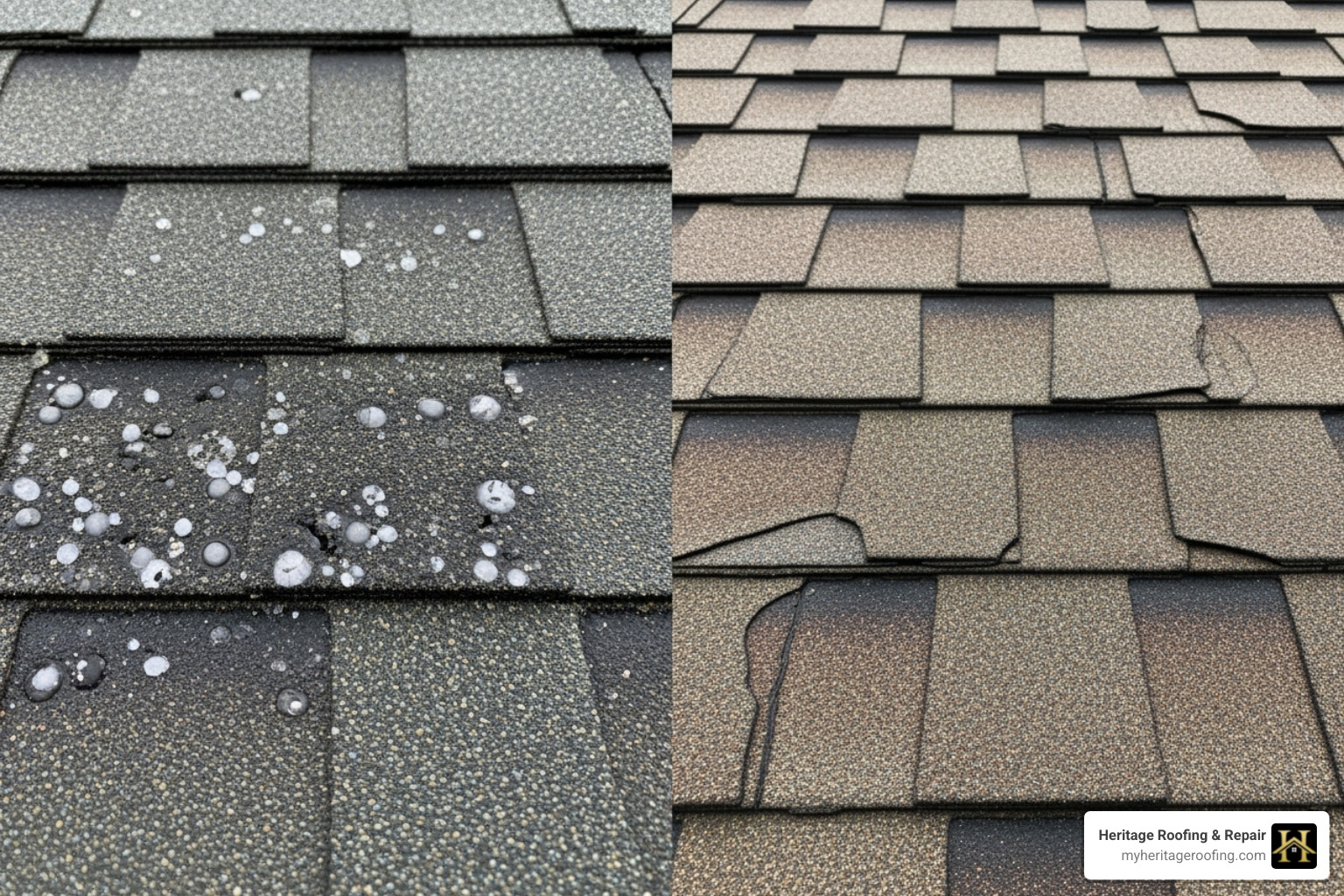
Before calling your insurer, understand this core principle: homeowners insurance is for sudden disasters, not a maintenance plan. Your policy covers “covered perils”—sudden, accidental events outside your control. A tree falling on your roof during a storm is covered; shingles deteriorating over 15 years is not.
Types of Roof Damage Typically Covered by Insurance
Your policy is designed to cover sudden and accidental damage, including:
- Wind and Hail Damage: In Northwest Arkansas, severe storms can tear off shingles or leave dents that compromise your roof. If damage is tied to a specific storm, it’s a covered peril. This is the most common reason for Storm Damage Roof Repair claims.
- Fire and Lightning: These are classic examples of sudden, catastrophic events that are almost universally covered.
- Falling Objects: Damage from trees or large branches that fall during a storm is covered. This does not apply if the tree was dead and you neglected to remove it.
- Weight of Ice and Snow: Structural damage from heavy winter precipitation is typically covered.
- Vandalism: Intentional damage to your roof is treated as a covered peril.
The common thread is that these events are sudden, unexpected, and unpreventable.
Types of Roof Damage Typically NOT Covered
Insurance is not a maintenance plan, and claims for the following are almost always denied:
- Normal Wear and Tear: Shingles naturally age, curl, and lose granules. This is expected deterioration, not an insurable event.
- Old Age: If your roof is past its rated lifespan (e.g., a 20-year roof that is 22 years old), even storm damage claims may be denied or heavily depreciated.
- Neglect and Poor Maintenance: Failure to clean gutters, trim branches, or fix small leaks can lead to bigger problems that your insurer will not cover.
- Pest Damage: Damage from rodents or birds is considered a preventable maintenance issue.
- Mold and Rot: If a small leak is ignored, the resulting mold and rot are considered consequential to neglect and are not covered.
- Faulty Workmanship: If a previous roofer did a poor job, you must pursue their warranty, not your homeowners policy.
- Floods and Earthquakes: These perils require separate, specialized insurance policies.
Understanding this distinction is the foundation for deciding should I file an insurance claim for my roof.
The Financial Equation: Deductibles, Policy Types, and Repair Costs
Deciding to file a claim is a financial calculation. It’s about your deductible, policy type, and the long-term impact on your premiums. The average wind and hail claim is $10,000-$15,000, but that doesn’t mean every damaged shingle warrants a claim.
Understanding Your Policy: Actual Cash Value (ACV) vs. Replacement Cost Value (RCV)
Your policy type is the most important factor in your payout.
- Replacement Cost Value (RCV): This is the gold standard. An RCV policy covers the full cost to replace your roof with new materials of similar quality, minus your deductible. It pays for what it costs today to restore your roof.
- Actual Cash Value (ACV): An ACV policy only pays the depreciated value of your roof. It factors in age and condition, meaning you get paid for what your old roof was worth, not what a new one costs.
Real-World Example: For a $15,000 roof replacement with a $2,000 deductible:
- RCV Policy: Insurance pays $13,000. You pay your $2,000 deductible.
- ACV Policy (on a 10-year-old, 50% depreciated roof): The depreciated value is $7,500. Insurance pays $5,500 ($7,500 minus your $2,000 deductible). You pay $9,500 out-of-pocket.
This $7,500 difference is a shock to many homeowners. Always review your policy to know if you have RCV or ACV coverage.
How Your Deductible Drives the Decision
Your deductible is what you pay before insurance kicks in. If the estimated roof repair cost is less than or only slightly more than your deductible, filing a claim is not financially wise.
A good rule of thumb: if the repair cost is less than your deductible or only a few hundred dollars over, pay out of pocket. You’ll avoid a claim on your record for a minimal payout.
Should I File an Insurance Claim for My Roof if the Damage is Minor?
The answer is usually no. Every claim you file is recorded in a CLUE report (Comprehensive Loss Underwriting Exchange), which insurers use to assess risk. Filing too many claims in a short period (3-5 years), even for small amounts, can lead to:
- Higher Premiums: Your insurer may view you as a higher risk and raise your rates.
- Non-Renewal: Your policy might not be renewed.
- Difficulty Finding New Coverage: Other insurers may be hesitant to cover you.
Save your claims for significant damage. It’s better to pay for minor repairs yourself to maintain a clean claims history and be seen as a low-risk policyholder.
The Claims Process: A Step-by-Step Guide to Filing
If you’ve done the math and decided to file, proper preparation is key. Following these steps can make the difference between a smooth approval and a frustrating denial.
What to Do Before You Call Your Insurance Company
The actions you take immediately after damage occurs are critical.
- Mitigate Further Damage: Your policy requires you to prevent more harm. Tarp active leaks and move belongings away from water. Save all receipts for temporary supplies.
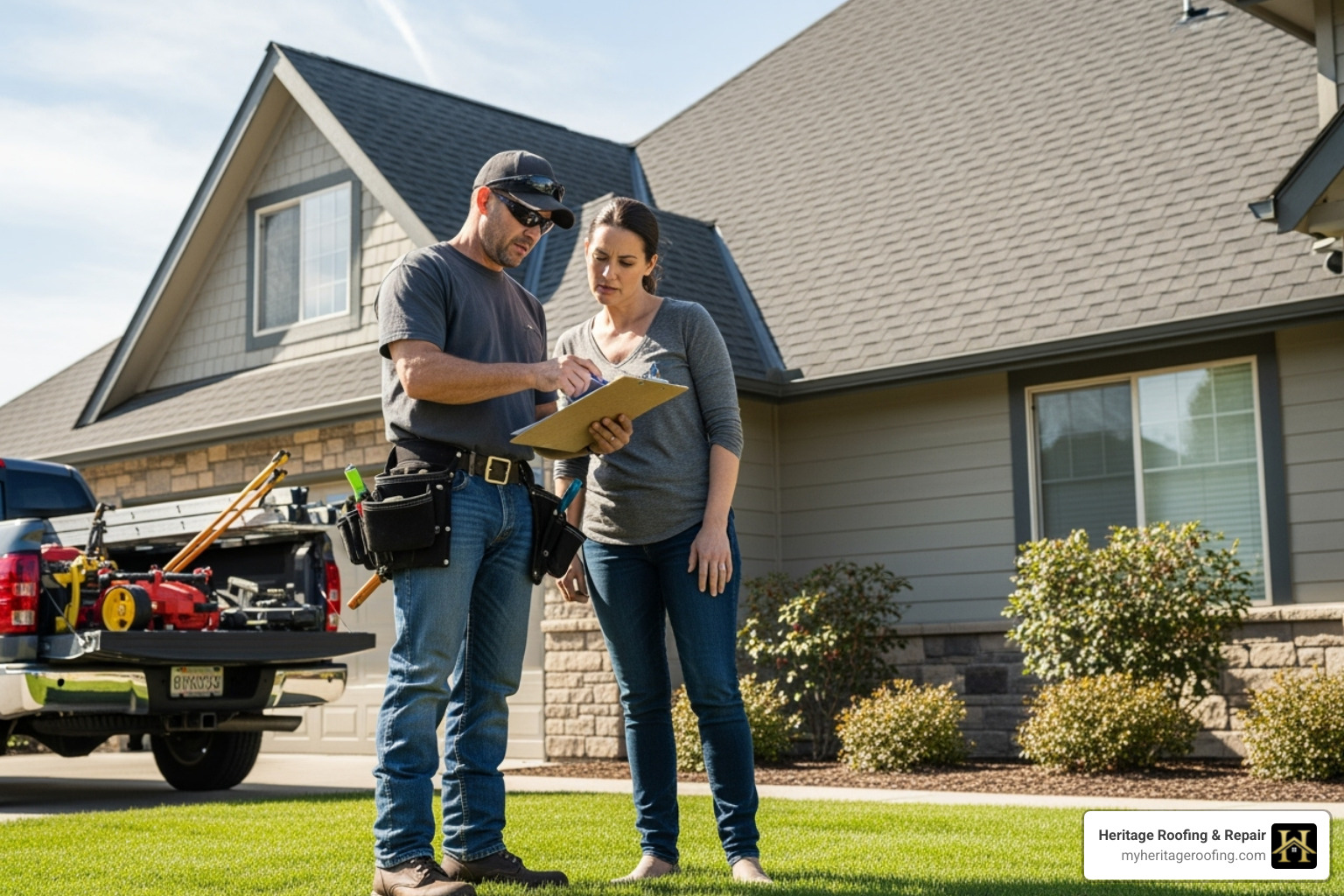
- Get a Professional Inspection: Before calling your insurer, have a reputable local contractor provide a detailed assessment. This gives you a realistic repair estimate and leverage when the adjuster arrives. You’ll know if the damage is storm-related or just wear and tear.
- Document Everything: Create an undeniable record of the damage.
- Photos and Video: Take wide-angle shots of the roof and close-ups of all damage (missing shingles, dents, interior water stains). A narrated video walkthrough is powerful evidence.
- Date the Storm: Note the exact date and time of the storm, and verify it with local weather reports.
- Keep Receipts: Save receipts for tarps or other emergency materials.
Navigating the Claim with an Adjuster and a Reputable Contractor
Your insurance company will assign an adjuster to inspect your property. The adjuster works for the insurance company to validate the claim and determine the payout. Their goal is to protect the insurer’s interests.
A reputable roofing contractor works for you. Having a qualified roof inspector on your side during the adjuster’s visit is your best strategy for a fair assessment. A contractor can:
- Identify All Damage: An expert eye catches subtle hail or wind damage that adjusters might miss.
- Ensure an Accurate Scope of Work: Contractors are familiar with estimating software like Xactimate and can verify that the adjuster’s assessment includes all necessary repairs at current labor and material costs. This is crucial for getting a fair settlement for Storm Damage Roof Repair.
- Act as Your Advocate: If the initial offer is too low, your contractor can provide documentation and technical explanations to support a fair settlement. Having a professional present streamlines the process and often leads to better outcomes.
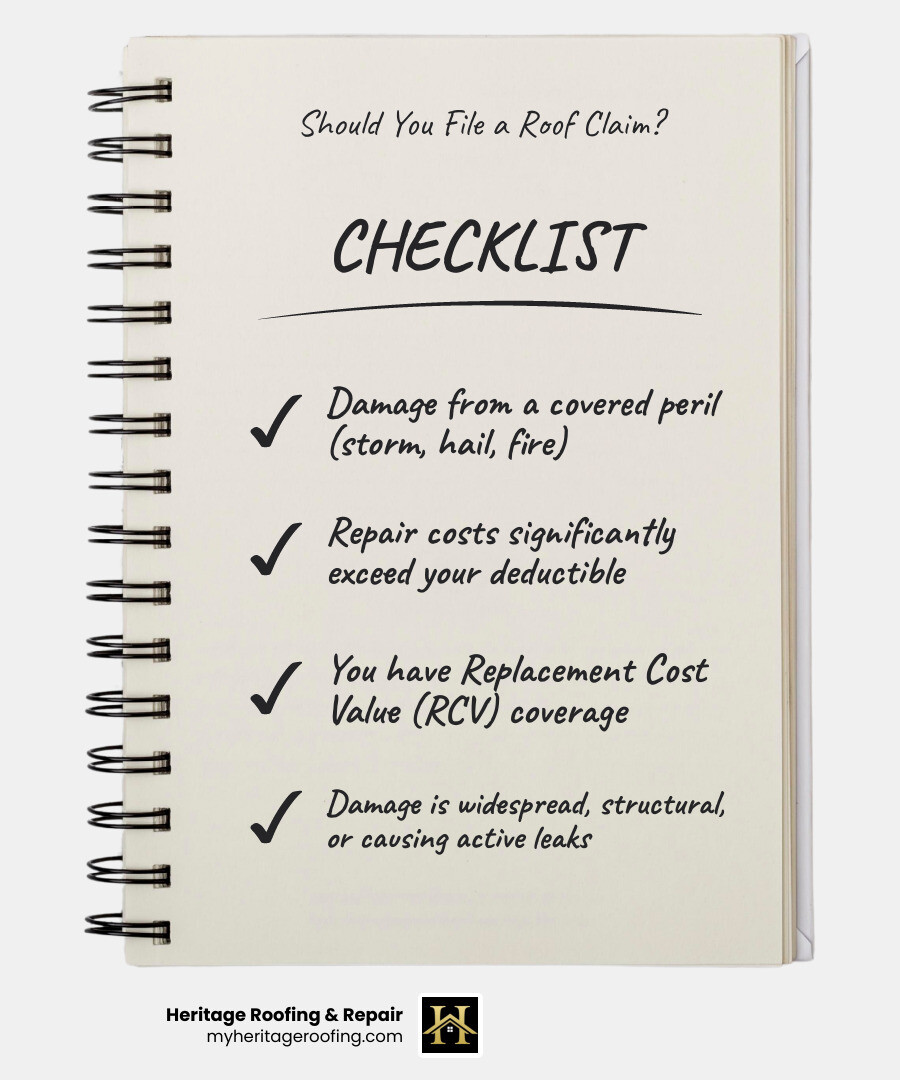
So, Should I File an Insurance Claim for My Roof? A Final Checklist
The decision to file balances your immediate repair needs against the long-term impact on your insurance. Use this framework to make the right choice.

File a Claim If…
- The damage was caused by a covered peril. Your policy is designed for sudden events like storms, hail, fire, or falling trees.
- The repair cost is significantly higher than your deductible. If repairs are $10,000 and your deductible is $1,500, filing makes clear financial sense.
- The damage is widespread, structural, or causing active leaks. This is major damage that insurance is meant to cover. Delaying a claim could lead to more problems classified as neglect.
- You have a Replacement Cost Value (RCV) policy. RCV coverage ensures you get the full amount needed for a new roof, minus your deductible, without depreciation.
Think Twice or Pay Out-of-Pocket If…
- The damage is minor and the repair cost is near or below your deductible. Filing a claim for a payout of a few hundred dollars (or zero) isn’t worth the mark on your record.
- The damage is from old age or wear and tear. A claim for a roof that has simply reached the end of its life will be denied, but the attempt still goes on your CLUE report. Learn more in our Roof Replacement Cost Ultimate Guide.
- You have an Actual Cash Value (ACV) policy on an older roof. Depreciation can slash your payout, leaving you with a large out-of-pocket expense that may not be worth the claim.
- You have filed multiple claims in the last 3-5 years. A pattern of frequent claims can brand you as high-risk, leading to premium hikes or non-renewal.
The bottom line: File when the damage is significant, sudden, and the cost clearly exceeds your deductible. When in doubt, get a professional, honest assessment before making a decision.
What If My Claim is Denied or the Payout is Too Low?
A claim denial or a lowball settlement offer is frustrating, but it’s not the end of the road. Understanding why claims are denied is the first step to successfully challenging the decision.
Common Reasons for Claim Denial
Insurers deny claims based on specific policy language. Common reasons include:
- Not a Covered Peril: The adjuster determines the damage was from an excluded event, like a flood, or was purely cosmetic.
- Pre-Existing Damage: The adjuster claims the damage was due to age or poor maintenance, not the recent storm. This is where a pre-claim inspection from a contractor is invaluable.
- Failure to Mitigate Damage: If you didn’t take reasonable steps (like tarping a leak) to prevent further harm, the insurer might deny coverage for the subsequent damage.
- Claim Filed Too Late: Policies have deadlines, often one year from the date of loss. Missing this window is an automatic denial.
Your Next Steps After a Denial or Lowball Offer
You have options. Don’t give up.
- Request a Second Opinion: Ask the insurance company for a different adjuster to re-evaluate the claim. A fresh set of eyes can make a difference.
- Provide Your Contractor’s Report: Submit your roofer’s detailed inspection report, photos, and estimate. This professional documentation can highlight damage the adjuster missed and justify a higher settlement.
- Demand a Written Explanation: Ask for a clear, written explanation citing specific policy language for the denial or low offer. This helps you identify weak points in their argument.
- Consider a Public Adjuster: A public adjuster works for you, not the insurance company, to negotiate a fair settlement. They charge a percentage of the payout but often secure significantly higher amounts.
- Legal Consultation: As a last resort for a wrongfully denied claim, you can consult an attorney specializing in insurance disputes.
With persistence and professional support, many denials can be overturned. Learn more in our Roofing Insurance Claims Ultimate Guide.
Your Partner in Navigating Roof Insurance Claims in Berryville, AR
The question of should I file an insurance claim for my roof is complex. It requires balancing your policy details, the extent of the damage, and your financial situation. While this guide gives you the framework, the most valuable asset in this process is a trusted, local roofing contractor who can advocate on your behalf.
At Heritage Roofing & Repair, we don’t just fix roofs. We stand with you during adjuster visits, translate insurance jargon, and fight for the fair coverage you deserve. For over 50 years, we have helped Northwest Arkansas families turn stressful claim situations into straightforward solutions.
Contact Heritage Roofing & Repair
When you’re facing roof damage and aren’t sure what to do next, you don’t have to figure it out alone. We’re here to provide clarity with a free, no-obligation inspection.
Heritage Roofing & Repair
3458 Arkansas State Hwy 221, Berryville, AR 72616
Contact us for honest advice from a team that has served this community for decades. Let our experience work for you.