
Why Understanding the Roof Insurance Claim Process Matters
The roof insurance claim process can be overwhelming, especially when you’re already stressed about damage to your home. For over 50 years, my family at Heritage Roofing & Repair has provided dependable roofing services in Northwest Arkansas, helping homeowners steer this exact challenge. Understanding the process is the key to getting the full coverage you deserve.
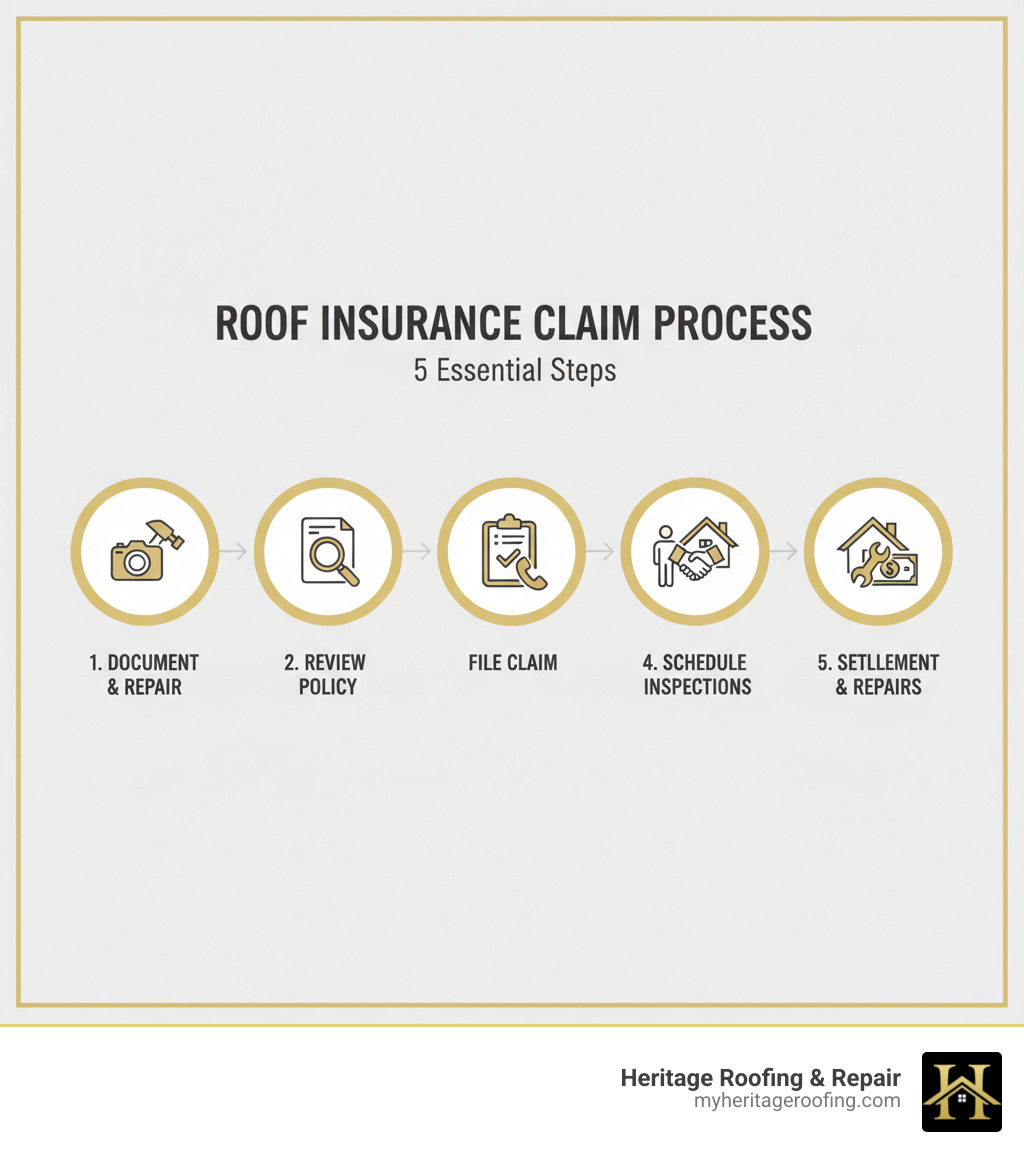
The 5 Essential Steps:
- Document the Damage – Take photos and videos from the ground; make temporary repairs.
- Review Your Policy – Understand your coverage (RCV vs. ACV), deductible, and deadlines.
- File Your Claim – Contact your insurer immediately and get a claim number.
- Schedule Inspections – Meet with your insurance adjuster and a professional roofer.
- Negotiate and Repair – Review the settlement, supplement if needed, and complete repairs.
With the average roof replacement costing between $7,000 and $15,000, a mismanaged claim can cost you thousands. Insurance estimates often omit critical items like code upgrades or overhead and profit, requiring a supplement. Knowing what to expect at each stage helps you avoid common pitfalls and ensures a fair settlement.
Explore more about roof insurance claim process:
- can i claim a roof leak on insurance
- homeowners insurance denied roof claim
- should i file an insurance claim for my roof
Step 1: Immediate Actions After Suspecting Roof Damage
Your first priority after a storm is safety. Once it’s safe to do so, immediately document the damage and take steps to prevent it from worsening. This initial diligence is the foundation of a successful claim.
Assess and Document from the Ground
Before anything else, create a detailed record of the damage. This evidence is your most powerful tool when filing a claim.
- Visible Damage: Look for missing, cracked, or dented shingles, granules in gutters, or any visible holes. Also, check for “collateral damage” like dings on downspouts or garage doors, which indicate hail impact.
- Photo and Video Documentation: Take clear photos and videos of all visible damage from multiple angles. Use a ruler for scale and ensure your photos have date and time stamps. Save all receipts for temporary repairs.
Thorough records strengthen your claim and provide undeniable proof of loss. For a comprehensive guide on inspecting your roof, check out our complete guide to roof inspections.
Make Temporary Repairs to Prevent Further Damage
Your insurance policy requires you to mitigate further damage. Making temporary repairs is a critical step that protects your home and shows the insurance company you are acting responsibly.
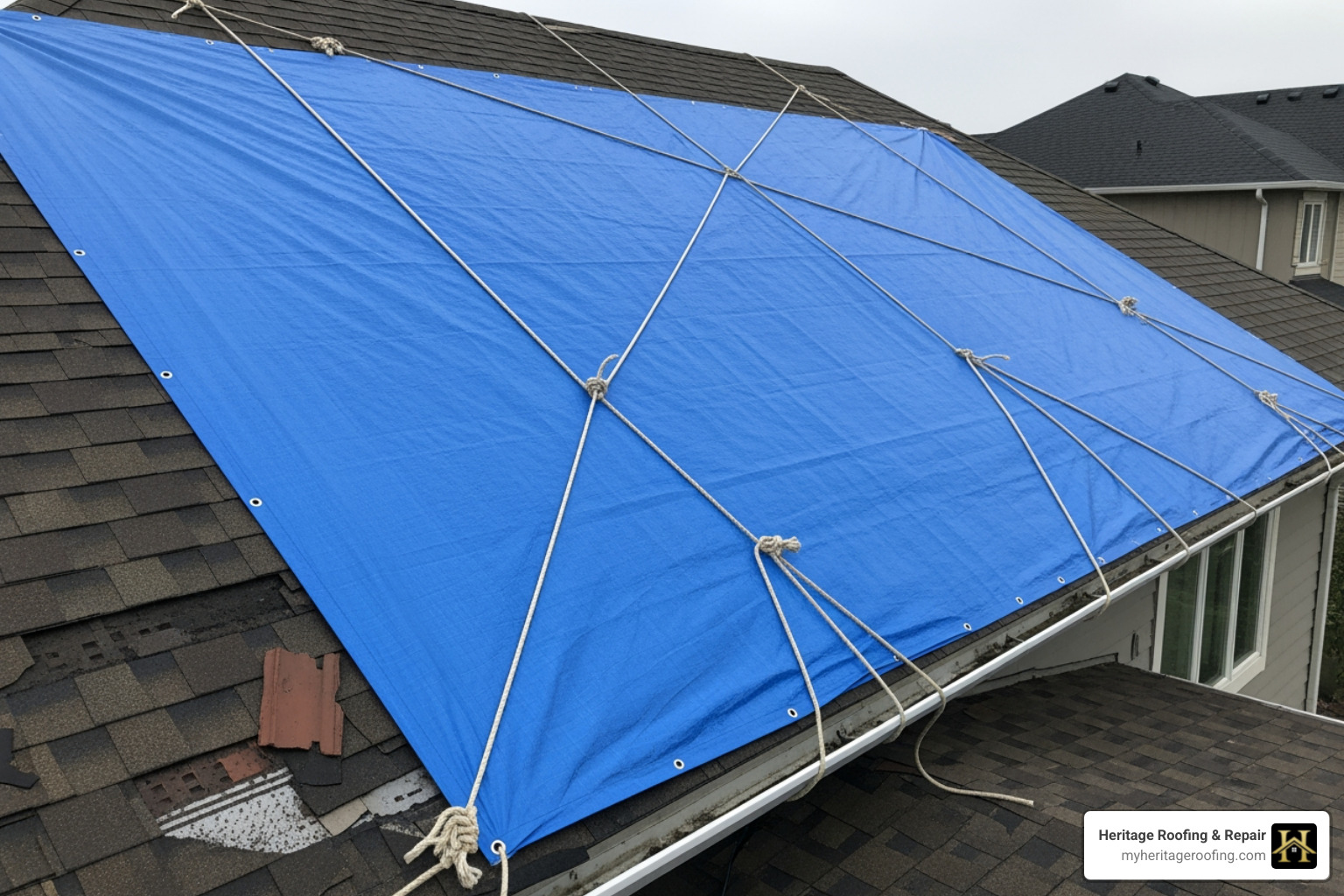
- Tarping Leaks: If you have leaks, securely tarping the damaged area is crucial to prevent water from entering your home and causing more extensive interior damage.
- Saving Receipts: Keep meticulous records of all expenses related to temporary repairs, including materials and labor. Your insurance policy may reimburse you for these costs.
Ignoring this step could lead to your insurance company denying coverage for subsequent damage, arguing you failed to protect your property.
Step 2: Understanding Your Policy & Initiating the Claim
Before you call your insurance company, review your homeowners insurance policy. Understanding your coverage is essential when a typical roof replacement costs between $7,000 and $15,000. Your policy is the rulebook for the roof insurance claim process, outlining what’s covered, your out-of-pocket costs, and filing deadlines (often six months to a year). Pay close attention to your coverage limits—the maximum amount your policy will pay. For a deeper dive, see our guide to homeowners insurance and roof damage.
Replacement Cost Value (RCV) vs. Actual Cash Value (ACV)
Your policy type is the single biggest factor determining your payout.
- Replacement Cost Value (RCV): This is the preferred coverage. It pays to repair your roof at today’s prices, without deducting for depreciation. You typically receive an initial check for the depreciated value (ACV), and the rest (recoverable depreciation) is paid after repairs are complete.
- Actual Cash Value (ACV): This policy pays the depreciated value of your roof. The insurer subtracts for age and wear, meaning your payout will likely be significantly less than the cost of a new roof, leaving you with substantial out-of-pocket expenses.
The difference can be thousands of dollars. Check your policy for these terms or call your agent. This helpful video series on understanding your policy can also clarify these concepts.
Understanding Your Deductible
Your deductible is the amount you pay before insurance kicks in. It’s subtracted from your total settlement.
- Fixed-Dollar: A set amount, like $1,000.
- Percentage-Based: A percentage (e.g., 1-2%) of your home’s insured value. A 1% deductible on a $300,000 home is $3,000. Some policies have separate wind/hail deductibles.
A critical warning: Never work with a contractor who offers to “waive” or “eat” your deductible. This is insurance fraud and can void your claim. If the repair cost is only slightly more than your deductible, consider paying out-of-pocket to avoid a claim on your record. Our guide on should I file an insurance claim for my roof can help you decide.
Step 3: The Professional Inspection and Adjuster Meeting
After you file your claim, your insurance company will send an adjuster to inspect the damage. You have the right to have your own professional roofing contractor present during this meeting. Having an expert advocate in your corner is a critical part of a successful roof insurance claim process.
The insurance adjuster’s role is to assess the damage and estimate repair costs based on your policy. A reputable roofing contractor acts as your advocate, conducting their own inspection and preparing a detailed estimate to ensure nothing is missed. We recommend scheduling your contractor to be present with the adjuster. This teamwork minimizes discrepancies and speeds up the claim. For more guidance, see our article on how to file a claim with an adjuster.
What to Expect During a Professional Roof Inspection
A professional inspection is a comprehensive assessment that provides the foundation for your claim.
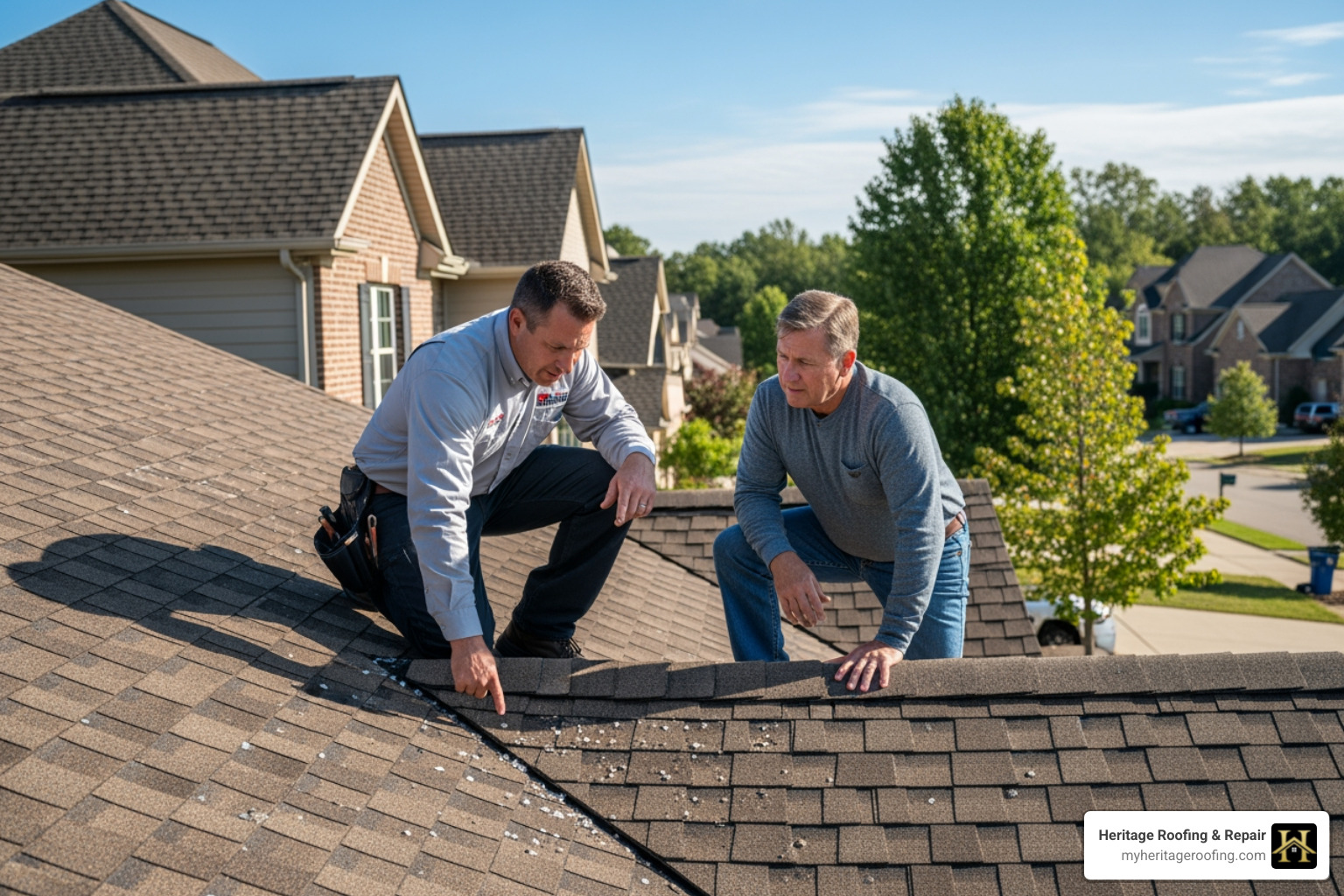
A thorough inspection includes:
- Safety Procedures: Using proper equipment to safely access and inspect the roof.
- Damage Identification: Checking for all issues, from hail dents and wind-lifted shingles to subtle leaks.
- Documentation: Taking detailed photos, notes, and precise measurements.
- Written Estimate: Providing a detailed document outlining the scope of work, materials, and costs to compare with the adjuster’s assessment.
A detailed roof inspection ensures all damage is identified and your estimate is accurate.
The Insurance Adjuster’s Visit
The adjuster’s goal is to verify that the damage is from a covered event (like a storm) and determine the scope of repairs. Having your contractor present helps ensure proper damage verification. It’s common for an adjuster’s initial report to have discrepancies or miss items. Your contractor can point out missed damage, discuss local building codes, and negotiate on your behalf for a fair settlement. It’s far easier to resolve differences on-site than to appeal a claim later. Our team in Berryville, AR is ready to assist.
Step 4: Reviewing the Settlement and Supplementing the Claim
After the inspection, your insurer provides a “scope of loss” detailing approved repairs and payment. This is a critical moment in the roof insurance claim process where an expert review can save you thousands.
Insurance Estimate Review: What to Look For
Carefully compare the insurer’s estimate with your contractor’s. Initial insurance estimates commonly miss items like permits, waste disposal fees, specific flashing details, or necessary code upgrades. An experienced contractor can spot these omissions and lowball figures immediately. Our free roof estimate guide details what a comprehensive estimate should include.
Choosing a Reputable Roofing Contractor
Your choice of contractor is paramount. They are not just installers but your advocates.
- Local Presence: Choose a company with a physical office and a long-standing local reputation.
- Licensing and Insurance: Verify they hold all necessary licenses and carry both liability and workers’ compensation insurance. Some states require roofing companies to be certified.
- Insurance Claim Experience: Select a contractor who specializes in storm damage and has a proven track record with insurance claims.
- Reviews and References: Check Google, the BBB, and ask for local references.
- Manufacturer Certifications: Certifications from brands like GAF indicate high standards and often provide better warranties.
- Avoid Red Flags: Beware of high-pressure tactics or offers to “waive your deductible” (insurance fraud).
Supplementing Your Claim
The first insurance estimate is a starting point, not the final word. A supplement is a request for additional funds to cover legitimate costs that were initially overlooked.
- Commonly Missed Items: Supplements often cover specialized flashing, proper ventilation, or disposal costs.
- Code Upgrades: If your roof was built under older codes, repairs must meet current standards. Your policy should cover these upgrades, but they must be documented and requested.
- Overhead and Profit (O&P): These are legitimate business expenses that should be included in claims involving significant work.
Your contractor prepares and submits the supplement with detailed justification. This process is essential to ensure you receive a fair settlement that covers the full cost of a proper repair. Our storm damage roof repair services include expert management of the entire claim, including supplements.
Step 5: Claim Approved! Now What? (And What If It’s Denied?)
Once you and your insurer agree on the scope and cost, the final phase of your claim begins. Understanding the payment timeline and your options for a denial is key.
The Repair and Payment Timeline
The entire process, from filing to completion, can take a few weeks to several months.
- First Check (ACV): With an RCV policy, you’ll get an initial payment for the Actual Cash Value (minus your deductible) to start the work.
- Scheduling: Your contractor orders materials and schedules the installation, which typically takes a few days to complete.
- Final Payment (RCV): After work is done, your contractor provides a final invoice. You submit this to your insurer to release the remaining funds (recoverable depreciation). Your mortgage company may need to endorse the checks.
Understanding this timeline helps manage expectations for a smooth project.
What to Do If Your Insurance Claim is Denied
A denial is not the end of the road. You have the right to appeal.
- Understand the Reason: First, find out why the claim was denied (e.g., wear and tear, dispute over cause).
- Request a Second Opinion: You can ask for a different adjuster from your insurance company to re-inspect.
- Provide New Evidence: Submit any new evidence your contractor found, such as photos or reports.
- Hire a Public Adjuster: A public adjuster works for you, not the insurer, to re-evaluate and negotiate the claim for a fee.
- Consult an Attorney: As a last resort, an attorney specializing in insurance law can help if you believe the denial was unfair.
Many claims are successfully overturned on appeal. Our homeowners insurance denied roof claim guide offers more detailed information.
Frequently Asked Questions About Roof Insurance Claims
Will filing a roof insurance claim affect my premiums?
Filing a single claim for storm damage—an “Act of God”—typically won’t raise your individual premium. However, when a major storm causes widespread damage, insurers may raise rates for everyone in that geographic area to offset their losses. In contrast, claims related to poor maintenance or negligence can directly impact your premiums.
Are there specific considerations for filing claims in certain states like Arkansas?
Yes. In storm-prone areas like Northwest Arkansas, adjusters are experienced with weather-related damage. However, this also attracts “storm chasers”—out-of-town contractors who perform substandard work and then disappear. Always work with a local company with a physical address and a long-standing reputation. Our team in Berryville, AR has served this community for over 50 years. Arkansas also has specific laws regarding claim timelines and contractor licensing that a reputable local roofer will understand.
What are the benefits of using specialized software for managing claims?
Modern technology has streamlined the roof insurance claim process. Professional roofing contractors use specialized software for:
- Accurate Measurements: Satellite imagery provides precise roof dimensions for accurate estimates.
- Detailed Documentation: All photos, videos, and notes are organized in one place for a comprehensive evidence package.
- Streamlined Communication: The software facilitates efficient information sharing between you, your contractor, and the insurer.
This technology leads to faster, more accurate settlements by providing clear and professional documentation that adjusters appreciate.
Your Trusted Partner in the Claim Process
Navigating the roof insurance claim process is a complex journey that you shouldn’t face alone. The most important decision you’ll make is choosing a trustworthy, local roofing contractor to be your advocate. An experienced partner understands how to work with insurance adjusters and will ensure your home is restored correctly, protecting you from the shoddy work of transient “storm chasers.”
Heritage Roofing & Repair has been that trusted partner for Northwest Arkansas families for over 50 years. We specialize in storm damage restoration and manage the roof insurance claim process from start to finish, ensuring every cost is accounted for. We are your advocate, from the initial inspection to the final payment.
Heritage Roofing & Repair
3458 Arkansas State Hwy 221, Berryville, AR 72616
(870) 654-1164
If you’re facing roof damage, don’t wait. For a complete overview and expert assistance, explore our Roofing Insurance Claims Ultimate Guide.