Understanding the Fundamental Differences in Roofing Systems
Residential and commercial roofing are fundamentally different disciplines, each defined by distinct materials, designs, and maintenance protocols. While both systems protect a structure from the elements, their core purposes diverge: residential roofs prioritize aesthetics and water shedding on steep slopes, while commercial roofs focus on functionality and structural support on flat or low-slope surfaces. For property owners in Northwest Arkansas, understanding these differences is the first step toward making a sound investment in either their home or business. Heritage Roofing & Repair has provided expert residential & commercial roofing solutions for over 50 years, ensuring every project meets the unique demands of the property.
Residential & commercial roofing terms you need:
The Architectural Divide: Roof Design and Structure
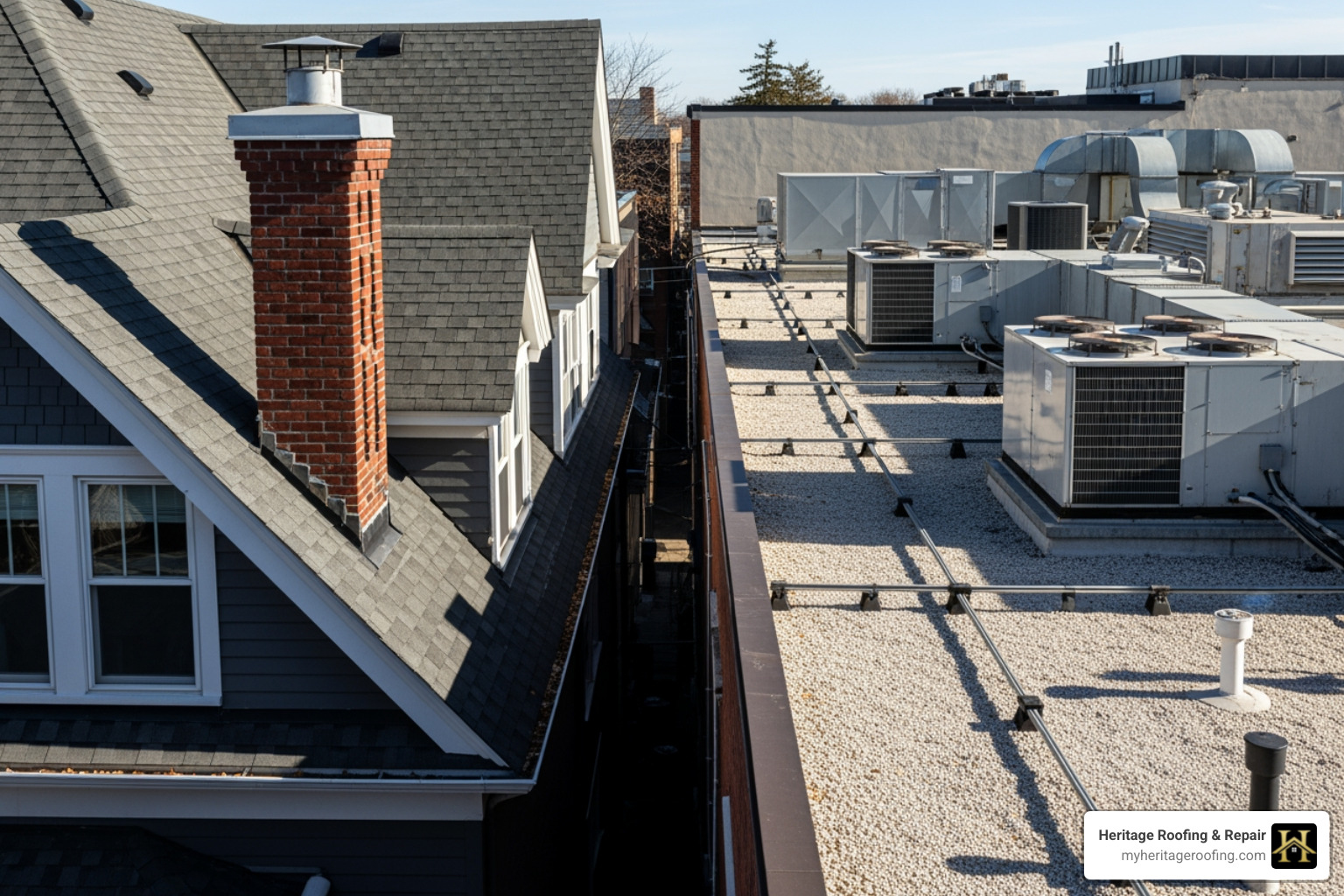
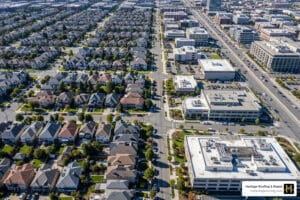
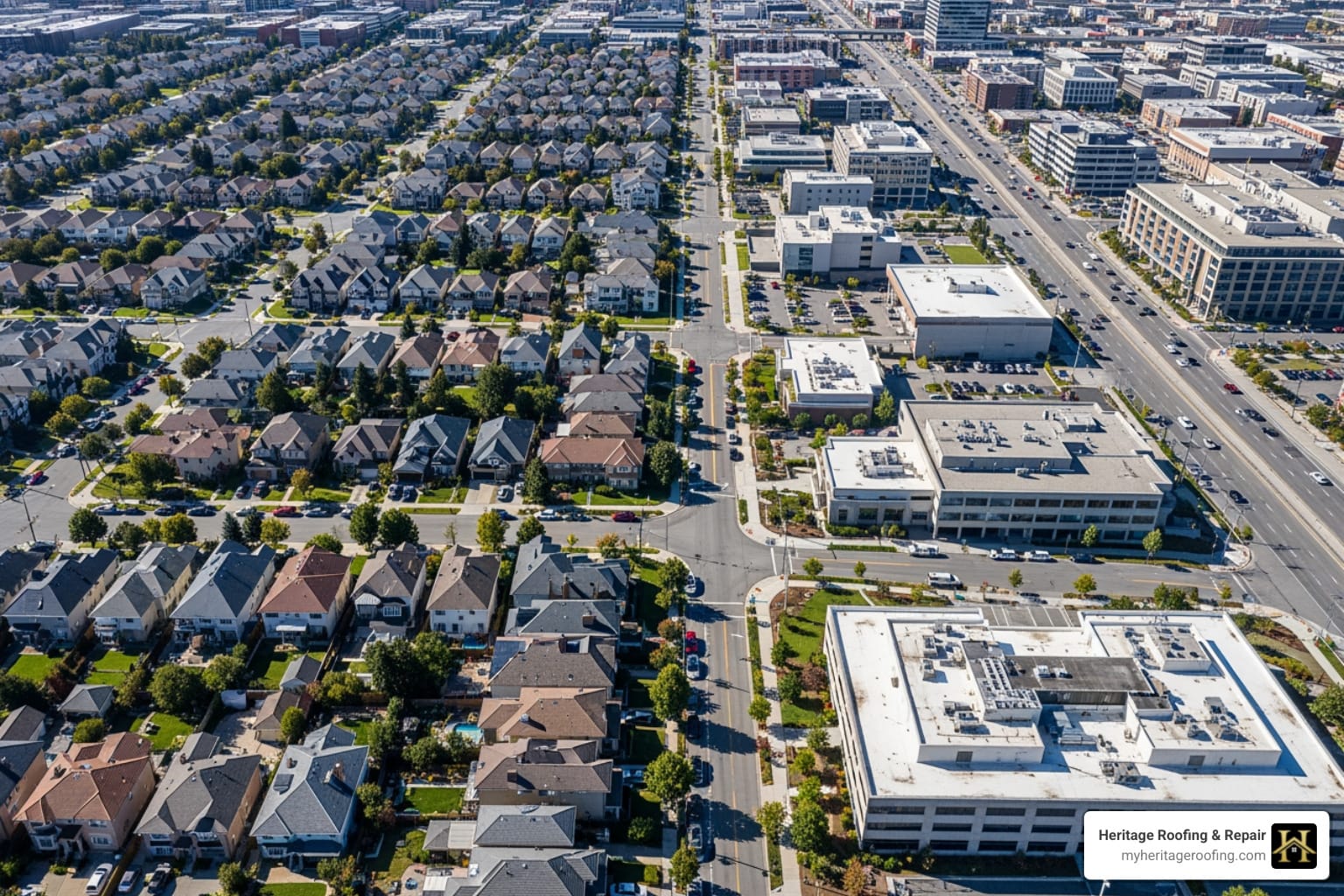
Roof design is the most visible difference between residential and commercial properties, and it’s driven by function, not just form. Residential roofs are typically steep-sloped, designed to shed water and snow quickly while enhancing the home’s curb appeal. Commercial buildings, in contrast, usually feature vast flat or low-slope roofs. This practical design maximizes usable space for heavy equipment like HVAC systems, vents, and pipes, requiring a structure with significant load-bearing capacity.
Residential Roof Design: Aesthetics and Efficiency
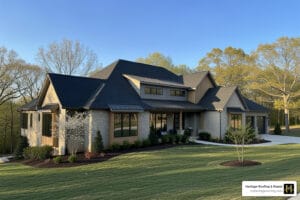
Residential roofs are primarily designed to complement the architectural style of a home while effectively shedding water and snow. Their steep pitch is not just for aesthetics; it plays a crucial role in preventing water pooling and minimizing the impact of snow accumulation, a common concern in regions like Northwest Arkansas during winter.
The most common types of residential roof designs include:
- Gable roofs: Characterized by two sloping sides that meet to form a ridge, creating a triangular extension below. These are highly effective at shedding water and are a classic, versatile choice.
- Hip roofs: Feature slopes on all four sides that meet at a ridge. They offer excellent stability against wind and are prevalent in various architectural styles.
These designs prioritize efficient water runoff and are integral to a home’s curb appeal. The structural requirements for residential roofs focus on supporting the chosen material and withstanding local weather conditions, ensuring long-term protection for your family. For a deeper dive into residential roofing options, explore A comprehensive guide to residential roof replacement.
Commercial Roof Design: Functionality and Space
Commercial roofs, by contrast, are engineered for functionality and utility. The vast majority are flat or low-slope, a design choice driven by several practical considerations:
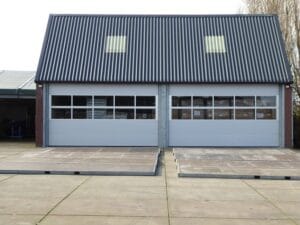
- Accommodating HVAC and other equipment: Flat roofs provide ample, accessible space for heavy mechanical systems, such as HVAC units, ventilation systems, and communication equipment, without impacting the building’s interior. Commercial buildings often feature flat or low-slope roofs designed for functionality and to support heavy equipment.
- Maximizing interior space: A flat roof allows for more usable interior volume within the building, which is critical for businesses.
- Structural support: Commercial roofs require robust structural support to bear the weight of heavy equipment, foot traffic for maintenance, and potential snow loads. This often involves more complex framing and structural engineering than residential roofs.
- Internal drainage systems: While appearing flat, these roofs are designed with a slight pitch to direct water towards internal drains, preventing pooling. Proper internal drainage is crucial for the longevity of commercial roofing systems.
The design and structural requirements of commercial roofs are inherently more complex, focusing on durability, accessibility for maintenance, and the integration of essential building systems.
A Symphony of Materials: Comparing Residential & Commercial Roofing Systems
The materials used are custom to the unique structural demands of each roof type. Residential roofing often prioritizes aesthetics and comes in a variety of materials to match a home’s style. Commercial roofing materials are engineered for immense durability and seamless coverage over large, flat surfaces, where water pooling is a primary concern.
Common Materials for Residential Roofing
The U.S. steep-slope roofing market is dominated by asphalt shingles, holding an overwhelming share. However, homeowners in Berryville, Fayetteville, and Harrison, AR have a diverse palette of options, each with distinct benefits.
- Asphalt Shingles:
- Pros: Affordable, easy to install, wide variety of colors and styles, good fire resistance (Class A, B, or C). Most fiberglass shingles have Class A fire ratings, while most organic shingles have Class C fire ratings. They are the most popular choice for residential roofing due to affordability and ease of installation.
- Cons: Shorter lifespan than other materials (typically 20-30 years), can be susceptible to high winds and hail damage over time.
- Benefits: Provide reliable protection and curb appeal. Copper-coated granules can be applied to prevent algae growth.
- Metal Roofing:
- Pros: Exceptional longevity (50-70 years, potentially up to 70 years), highly durable, excellent weather resistance (wind, fire, corrosion), energy-efficient (reflects solar radiant heat, lowering cooling costs), and often made from recycled materials. Metal roofing is a fast-growing segment in home improvement, offering longevity, weather resistance, and aesthetic appeal.
- Cons: Higher upfront cost than asphalt, can be noisy during rain/hail if not properly insulated.
- Benefits: Modern, sleek, designed to withstand extreme weather, and can lower energy bills.
- Tile (Clay/Concrete):
- Pros: Very durable, long lifespan (50+ years), fire-resistant, excellent aesthetic appeal (Mediterranean charm, French and English styles), and can help keep homes cooler by absorbing less heat.
- Cons: Heavy (may require additional structural support), higher upfront cost, can be brittle and break if walked on improperly.
- Benefits: Offers a beautiful, long-lasting solution, especially in warmer climates.
- Slate:
- Pros: Best durability and longevity (100+ years), exceptional aesthetic value, fire-resistant, environmentally friendly.
- Cons: Very expensive, extremely heavy (requires significant structural support), challenging to install (requires specialized skill and experience).
- Benefits: Adds timeless beauty and best durability, often found on historic and upscale homes.
- Wood Shakes/Shingles:
- Pros: Natural, rustic aesthetic, good insulation properties.
- Cons: Require more maintenance, can be susceptible to fire (many only Class C fire ratings or none at all), shorter lifespan (20-30 years) compared to metal or tile. Local building codes may limit their use due to fire resistance concerns.
- Benefits: Provides a natural aesthetic. Wood shakes are handmade and have rougher surfaces than machine-sawn wood shingles.
The lifespan of residential roofs can range from 20 to 50 years, with metal roofing potentially lasting up to 70 years.
Common Materials for Commercial Roofing
Commercial buildings typically feature flat or low-slope roofs designed for functionality and to support heavy equipment. Common commercial roofing materials are engineered for these specific demands, focusing on waterproofing, durability, and resistance to environmental factors.
- TPO (Thermoplastic Olefin):
- Pros: Energy-efficient (highly reflective, reducing cooling costs), durable, flexible, resistant to punctures and tears, relatively easy to install.
- Cons: Seam integrity can be a concern if not installed correctly, quality can vary between manufacturers.
- Benefits: A popular choice for its balance of performance and cost-effectiveness. A Firestone TPO roofing system is known for fantastic durability and UV resistance.
- EPDM (Ethylene Propylene Diene Monomer):
- Pros: Extremely durable, flexible (accommodates building movement), long lifespan (up to 30 years), excellent resistance to UV radiation and weathering.
- Cons: Dark surface can absorb heat (unless specially coated), can be punctured by sharp objects.
- Benefits: Often called “rubber roofing,” it’s a reliable, cost-effective solution for flat roofs.
- PVC (Polyvinyl Chloride):
- Pros: Exceptional resistance to chemicals, grease, and fire; strong seams, long lifespan, highly reflective.
- Cons: Higher upfront cost, can be brittle in very cold temperatures if not formulated properly.
- Benefits: Ideal for restaurants or manufacturing facilities where chemical exposure is a concern.
- Modified Bitumen:
- Pros: Excellent waterproofing, durable, flexible, good resistance to foot traffic, can be installed in multiple layers for added protection.
- Cons: Installation can be labor-intensive (torch-applied methods), can be less reflective than TPO or PVC.
- Benefits: A multi-layered asphalt-based material suitable for flat or low-sloped roofs, offering robust protection.
- Built-Up Roofing (BUR):
- Pros: Proven track record (in use for over 100 years), highly durable, excellent waterproofing with multiple layers.
- Cons: Heavy, messy installation, can be expensive.
- Benefits: Offers a seamless, robust barrier against water.
| Material | Energy Efficiency | Durability | Key Benefits |
|---|---|---|---|
| TPO | High (reflective) | High | Reduces cooling costs, puncture-resistant |
| EPDM | Moderate (can be coated) | Very High | Flexible, long lifespan, UV resistant |
| PVC | High (reflective) | High | Chemical/fire resistant, strong seams |
| Modified Bitumen | Moderate | High | Excellent waterproofing, flexible |
These materials are chosen for their ability to form seamless membranes and withstand the unique challenges of flat roofing, including standing water and UV exposure.
The Performance Piece: Installation, Maintenance, and Cost
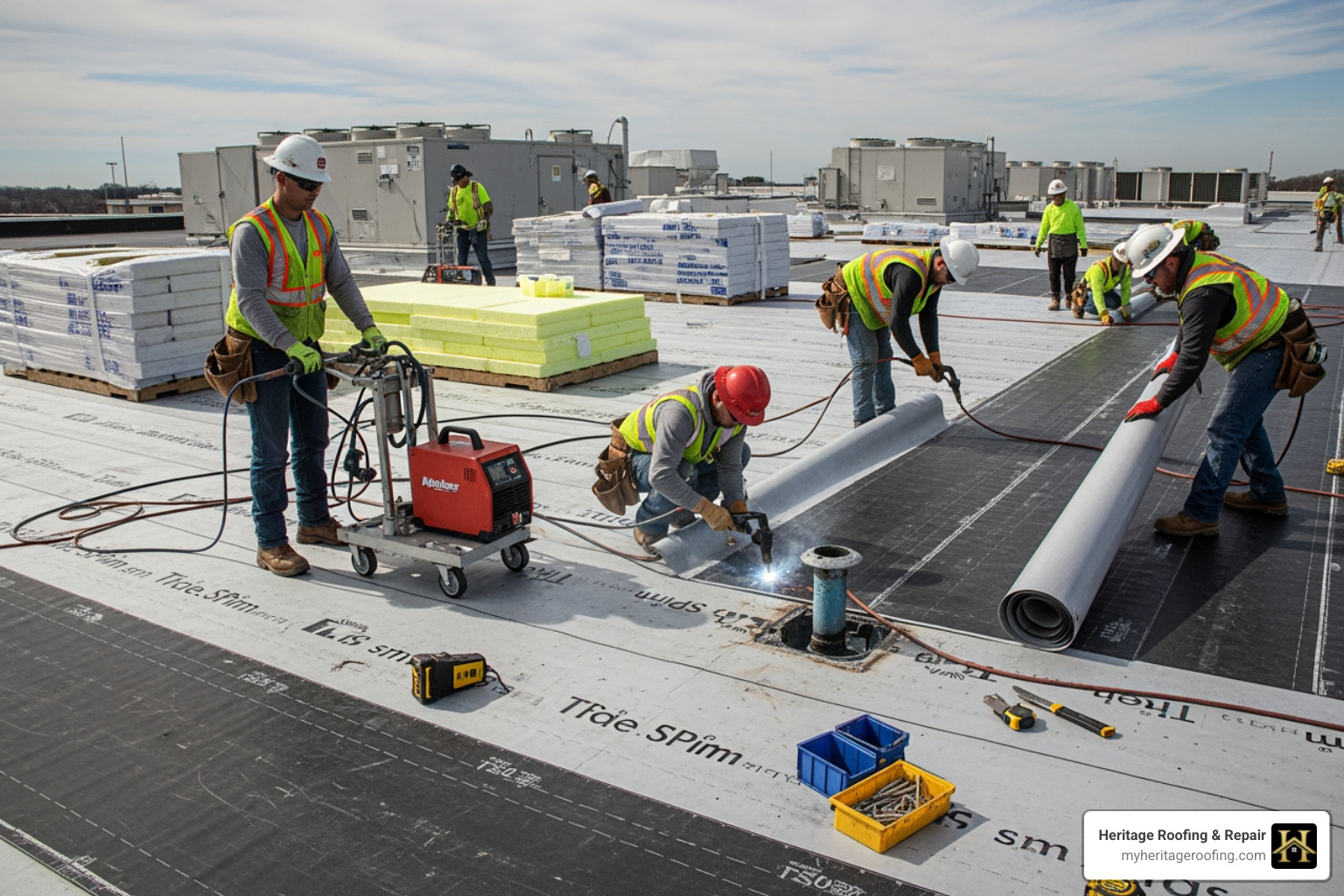
Installation quality and ongoing maintenance are the two strongest predictors of how long a roof will last, regardless of whether it is residential or commercial. Industry data from multiple manufacturers shows that improper installation and lack of maintenance account for the majority of premature roof failures, far more than material defects. For property owners who want a long-term, low‑stress solution, partnering with a reputable contractor for both installation and professional roofing services is the single most important decision in the entire project.
The processes for installing and maintaining residential and commercial roofs are vastly different, directly impacting their cost and lifespan. Residential projects are typically smaller, faster, and less complex. Commercial installations are large-scale operations requiring specialized equipment, larger crews, and meticulous attention to detail to create a single, seamless membrane. This complexity extends to maintenance, where flat commercial roofs demand more frequent inspections to prevent catastrophic failures from minor issues like clogged drains.
Installation and Maintenance Distinctions
Installation Complexity:
- Residential: Generally more straightforward. Projects involve smaller crews and can often be completed within 1-2 days, depending on the roof size and material. For instance, most residential roof installations are completed in as little as two days. The focus is on precision for shingle alignment and aesthetic integration.
- Commercial: Requires larger teams, specialized equipment (e.g., cranes for material delivery, hot asphalt kettles for BUR, welding tools for TPO/PVC), and often takes longer due to the vast surface area and complexities of integrating with HVAC units and other rooftop equipment. Commercial roofing installation often requires larger teams, specialized equipment, and more time than residential projects.
Maintenance Distinctions:
Regular maintenance is the key to maximizing the lifespan of any roof. However, the nature of this maintenance varies significantly.
- Residential Maintenance:
- Routine checks: Annual inspections are recommended, along with checks after major storms.
- Gutter cleaning: Crucial to prevent water buildup and damage to fascia and foundations. Exterior services like gutter cleaning fit into a comprehensive roofing strategy by preventing water damage to the roof structure and foundation.
- Shingle checks: Replacing missing or damaged shingles, sealing small cracks, and ensuring proper attic ventilation.
- Skylight maintenance: Checking seals and flashing around skylights to prevent leaks. Skylight installation and maintenance also fit into a comprehensive roofing strategy by ensuring waterproof integrity and energy efficiency.
- Commercial Maintenance:
- Frequent inspections: Commercial roofs, especially flat ones, require more frequent inspections (quarterly or bi-annually) to identify potential issues like membrane damage, compromised seams, or clogged drains before they escalate. Commercial roofs require more frequent inspections and maintenance, especially flat roofs, to ensure longevity.
- Drain clearing: Absolutely critical to prevent water pooling, which can lead to structural damage and leaks. Addressing any drainage blockages or damages on commercial roofs immediately is essential.
- Seam checks: Regular inspection and repair of seams in single-ply membranes (TPO, EPDM, PVC) are vital for waterproofing.
- Equipment checks: Ensuring flashing around HVAC units and other rooftop penetrations remains intact.
The importance of routine roof maintenance cannot be overstated for either property type, but the intensity and specifics differ.
Cost Considerations
The financial investment is a major consideration for any roofing project.
- Upfront Investment:
- Residential Cost: Generally lower per project due to smaller roof size and simpler installation. However, premium materials like slate or high-end metal can significantly increase the cost. For an in-depth look, consult An ultimate guide to roof replacement costs.
- Commercial Cost: Higher upfront costs due to the sheer size of the roof, specialized materials, and larger labor teams. However, the cost per square foot can sometimes be lower than residential, especially for large-scale projects, due to economies of scale.
Considering the long-term investment and maintenance requirements is essential when selecting roofing materials, as commercial roofs generally involve a higher total project cost but can offer competitive cost per square foot on large, efficiently managed installations.
Navigating the Score: Codes, Warranties, and Finding a Pro
Building codes and warranty terms determine whether a roof will perform safely and efficiently for decades or fail long before its time. Modern roofing systems are regulated by detailed structural, fire, wind, and energy standards, and the strongest warranty coverage is only available when certified contractors follow manufacturer specifications precisely. Property owners who understand these rules can make more informed decisions and better protect their investment in both residential and commercial roofing.
Both roofing types are governed by strict regulations, but commercial codes are far more stringent, covering fire safety, wind resistance (uplift), and energy efficiency standards. Warranties also play a critical role, protecting your investment. Manufacturer warranties cover the materials, while workmanship warranties cover the installation—a crucial factor when choosing a contractor.
Regulatory and Warranty Requirements
Navigating the legal and protective aspects of roofing is crucial for both residential and commercial property owners in Berryville, Fayetteville, and Harrison, AR.
- Regulatory Differences:
- Residential: Primarily governed by local building codes and potentially homeowners’ association (HOA) rules concerning materials, pitch, and color. These codes ensure structural integrity and safety for single-family dwellings.
- Commercial: Faces significantly more stringent regulations. This includes complex zoning laws, specific requirements for fire safety (e.g., Class A fire ratings for many commercial materials), wind resistance (uplift standards are critical for large, flat surfaces), and structural integrity to support heavy rooftop equipment. The National Roofing Contractors Association (NRCA) provides extensive roofing guidelines and manuals that cover industry standards for both property types.
- Warranty Importance:
- Manufacturer Warranties: Provided by manufacturers like GAF, these warranties cover defects in the roofing products. GAF is North America’s largest roofing manufacturer, and its warranties are a testament to material quality.
- Workmanship Warranties: Offered by the roofing contractor, this warranty guarantees the quality of the installation. A strong workmanship warranty ensures that if any issues arise from faulty installation, the contractor is responsible for the repairs, often for a period of 5-10 years.
- Combined Protection: The most comprehensive protection comes from a combination of a robust manufacturer warranty and a solid workmanship guarantee from a reputable contractor. For more on protecting your investment, see this guide to understanding your roof insurance options.
Choosing the Right Local Roofing Contractor
Selecting a trustworthy contractor is the most critical step in any roofing project. Property owners should prioritize locally owned companies with deep roots in the community, such as those serving the Fayetteville, AR area, as they have a vested interest in maintaining a strong local reputation.
Key indicators of a high-quality contractor include:
- Certifications and Reputation:
- GAF Master Elite Certification: This elite status is held by only the top 2% of residential roofing contractors in North America. It signifies that a contractor meets rigorous standards for professionalism, is continuously trained on the latest technologies, and can offer superior lifetime limited warranties that non-certified roofers cannot.
- Community Standing: Always check reviews and ratings on trusted platforms. The Better Business Bureau (BBB) is an excellent resource for verifying a company’s history of customer satisfaction.
- Local Expertise and Accountability:
- A local contractor understands the specific climate challenges of Northwest Arkansas, from summer heat to winter storms, and can recommend the most durable materials.
- They are also more accessible for follow-up questions, maintenance, and any unexpected issues that may arise.
- Thorough Vetting Process:
- Ask for References: Speak directly to past clients about their experience.
- Verify Insurance and Licensing: Confirm the contractor is fully insured and licensed to operate in Arkansas.
- Get Detailed Estimates: A reputable contractor provides a transparent, itemized estimate outlining all costs, materials, and project timelines.
For property owners in Northwest Arkansas, a local expert provides invaluable guidance, ensuring a residential & commercial roofing project is handled with the highest level of expertise and care.
Heritage Roofing & Repair
3458 Arkansas State Hwy 221, Berryville, AR 72616
Conclusion: Your Property’s Crowning Achievement
Whether for a home or a business, a roof is a complex system that demands professional expertise. From the steep, stylish slopes of a residence to the vast, functional expanse of a commercial building, every choice in design, material, and installation plays a critical role in its long-term performance. By understanding these key differences, you can make a confident decision that protects your property for decades. If you’re a business owner ready to invest in a durable, high-performance roof, exploring professional commercial roofing solutions is the next step to securing your investment.
At Heritage Roofing & Repair, we pride ourselves on our over 50 years of trusted experience in residential & commercial roofing across Berryville, Fayetteville, and Harrison, AR. We combine dependable, affordable, and quality craftsmanship with specialized expertise in storm damage repair and insurance claims, ensuring local homeowners and businesses receive the best possible protection. We are dedicated to delivering not just a roof, but peace of mind, knowing your property’s crowning achievement is built to last.