Why Understanding Flat Roof Replacement Matters for Property Owners
Flat roof replacement is a major decision that affects your property’s safety, value, and operating costs. If you’re seeing persistent leaks, pooling water, or visible damage, you need a solution from a team of dependable Northwest Arkansas roofers. Deciding between repair or a full replacement is a critical choice for any property owner.
Flat roofs require specialized knowledge because they face unique challenges. Unlike pitched roofs that naturally shed water, flat roofs must rely entirely on proper drainage systems and waterproof membranes. When these systems fail, water can pool on the surface, leading to accelerated deterioration and potentially catastrophic leaks.
The good news? Today’s flat roofing materials are far superior to systems installed even a decade ago. A properly installed roof replacement using modern materials can protect your property for 20-30 years while reducing your energy costs.
I’m Rex Wisdom, owner of Heritage Roofing & Repair, and my family has been serving Berryville and Northwest Arkansas for over 50 years. We’ve handled hundreds of flat roof replacement projects for both residential and commercial properties, and we understand exactly what works in our local climate.
Common flat roof replacement vocab:
7 Telltale Signs Your Flat Roof Needs Replacement
Deciding between a repair and a full replacement can feel overwhelming. Here’s a helpful guideline: the “50% Rule” states that if more than half of your roof is damaged or it’s nearing the end of its expected lifespan, replacement is typically the smarter investment. Delaying a necessary replacement can lead to severe structural damage, mold growth, and significantly higher costs down the line.
After five decades of serving Berryville and Northwest Arkansas, we’ve seen what happens when property owners wait too long. Let’s walk through the seven key indicators that tell you it’s time for a new roof.
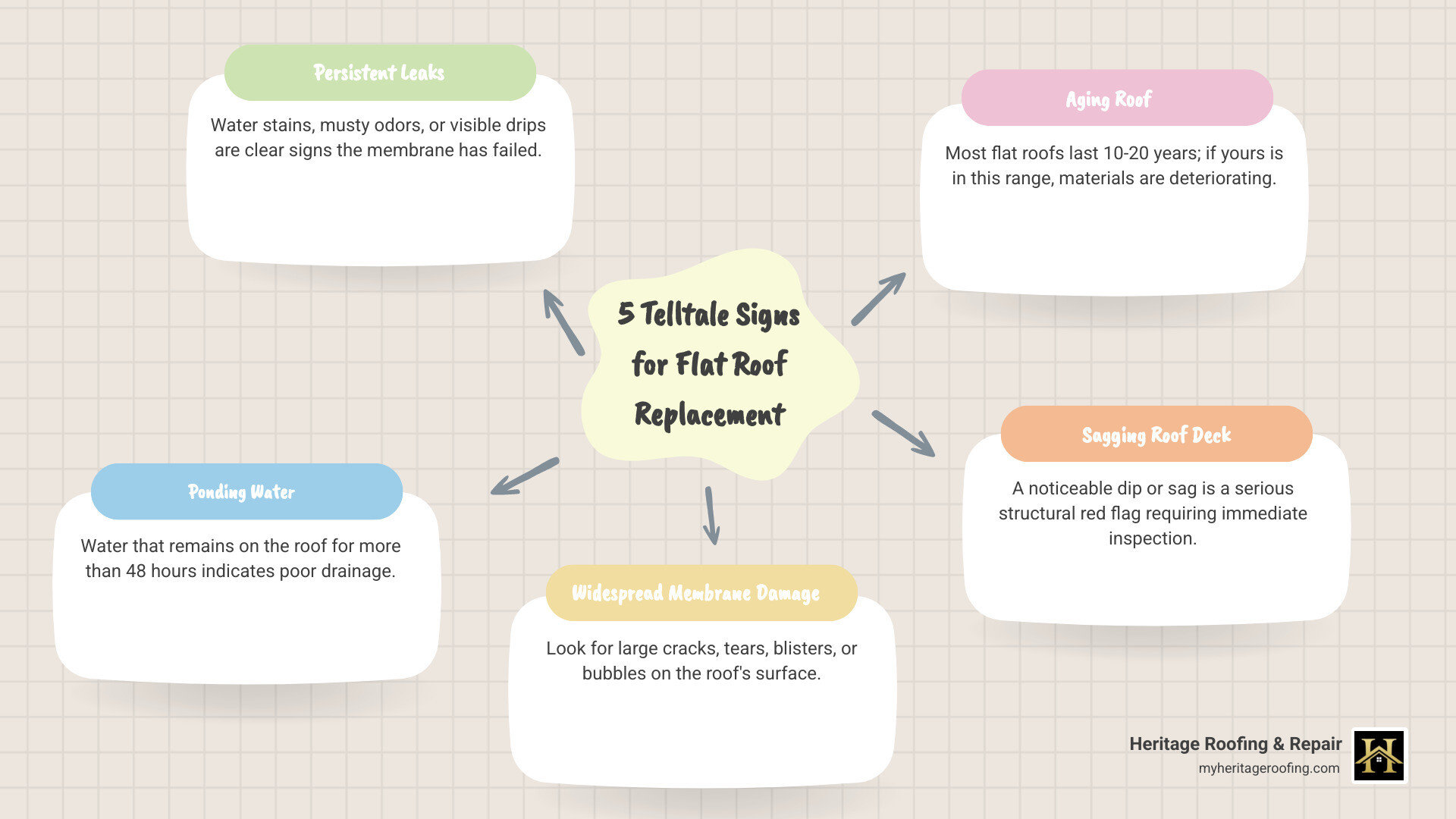
Persistent Leaks & Water Damage are often the most obvious and alarming signs. Water stains on ceilings or walls, bubbling paint, or visible drips clearly indicate your roof’s waterproof membrane has failed. You might also notice a musty odor or even mildew on ceilings or exterior walls, signaling moisture intrusion.
Flat roofs are particularly vulnerable to leaks because they don’t shed water as easily as sloped roofs. This makes an impenetrable membrane absolutely critical. If you’re constantly patching leaks, it’s a strong sign that a full flat roof replacement is needed rather than another temporary fix.
Significant Ponding Water is another serious warning sign. Water that remains on your flat roof for more than 48 hours after rainfall indicates inadequate drainage and puts immense stress on both the roofing materials and the structure beneath. Ponding water accelerates material deterioration, eventually leading to sagging and leaks. It’s a clear sign that your roof isn’t performing its primary function of shedding water effectively.
Visible Membrane Damage requires a simple visual inspection. Look for large cracks, tears, blisters, or bubbles in the membrane. These are all signs of wear and tear that compromise the roof’s integrity, exposing underlying layers to moisture, UV radiation, and temperature fluctuations. Loose material around edges or penetrations is also a red flag. These damages often indicate that the roofing material has reached the end of its functional life.
An Aging Roof becomes a liability rather than an asset. Most flat roofs are designed to last anywhere between 10 and 20 years, though some materials like PVC can extend that to 30 years or more. If your flat roof is approaching or has exceeded this average lifespan and is starting to show any of the other signs of damage, its materials are likely deteriorating beyond economical repair. Replacing an aging roof proactively can prevent unexpected catastrophic failures and costly interior damage.
Sagging Roof Deck is a serious structural red flag that demands immediate attention. A noticeable dip or sag in your roof’s surface can be caused by long-term water saturation, excessive weight from ponding water or snow, or even structural fatigue. This indicates a fundamental problem with the roof’s support system and requires immediate professional inspection to prevent further collapse or severe structural damage.
Rising Energy Bills can be a subtle but critical sign of roof failure. A sudden and unexplained spike in your heating or cooling costs often means the roof’s insulation has been compromised by moisture, making it ineffective at regulating indoor temperatures. An old, damaged flat roof can lead to significant heat loss in winter and heat gain in summer, forcing your HVAC system to work overtime and driving up your utility bills.
Frequent Repairs signal that you’re throwing good money after bad. If you’re constantly calling for commercial roof repair or residential patch-ups, the cumulative cost of these ongoing fixes will likely exceed the cost of a full flat roof replacement. This scenario is a prime example of when replacement becomes the more economical and practical option. Investing in a new roof provides long-term peace of mind and protection, rather than a frustrating cycle of temporary fixes.
Choosing Your Material: A Comparison of Modern Flat Roofing Systems
The material you choose for your flat roof replacement directly impacts its lifespan, energy efficiency, and overall cost. Modern materials offer significant advantages over older systems, especially in a climate like Arkansas with hot summers and potential for severe weather. A TPO roofing system, for example, is a popular choice for its heat-reflective properties.
TPO (Thermoplastic Olefin) has become one of the most popular flat roofing materials in recent years, and for good reason. This single-ply membrane is known for its excellent energy efficiency. Its white surface reflects UV rays and heat, which can significantly reduce cooling costs during those scorching Arkansas summers. TPO is also heat and fire-resistant, offering a good balance of performance and affordability. You can expect a lifespan of 15-30 years with proper installation and maintenance.
EPDM (Ethylene Propylene Diene Monomer), often called “rubber roofing,” is a durable synthetic rubber membrane that has earned its reputation for reliability. It’s highly resistant to weathering, temperature extremes, and UV radiation. EPDM comes in both black and white and can be installed using fully adhered, mechanically attached, or ballasted methods. This material typically lasts 20-30+ years, with some installations reaching up to 50 years. Learn more in our EPDM roof installation complete guide.
Modified Bitumen is an asphalt-based system reinforced with polymers, applied in multiple layers for added strength. It offers excellent durability and flexibility, making it particularly resistant to foot traffic. If your building requires frequent roof access for HVAC maintenance or other equipment, Modified Bitumen is a smart choice. Its ability to withstand significant temperature fluctuations makes it well-suited for Arkansas’s variable climate. This system typically lasts 10-20 years.
PVC (Polyvinyl Chloride) represents the premium end of flat roofing materials. This single-ply membrane delivers exceptional durability, chemical resistance, and fire resistance. PVC can even withstand hurricane-level winds, making it an ideal choice if you’re concerned about severe weather protection. Its solar reflectivity helps regulate building temperature and reduce energy costs. With over 35 years of proven performance in the roofing industry, PVC typically lasts 20-30 years.
Built-Up Roofing (BUR) is the traditional “tar and gravel” roof that has protected buildings for over a century. It consists of multiple layers of bitumen alternated with reinforcing fabrics, topped with a layer of gravel. While it’s heavy and requires a robust underlying structure, BUR provides excellent waterproofing and fire resistance. See how it’s done with our built-up roofing installation services. This time-tested method offers a lifespan of 15-30 years.
The choice of material significantly influences your roof’s performance and longevity. Selecting materials like TPO or PVC with high solar reflectivity can lead to considerable energy savings, especially during Northwest Arkansas’s intense summer heat. This is a key benefit of replacing an old flat roof with a modern material.
Here’s a quick comparison of these popular options:
| Material | Lifespan | Cost (per sq ft)* | Key Benefit | Best For |
|---|---|---|---|---|
| TPO | 15-30 years | $4 – $8 | Energy efficiency, UV reflection | Hot climates, energy savings |
| EPDM | 20-30+ years | $4 – $8 | Durability, weather resistance | Versatile, long-term performance |
| Modified Bitumen | 10-20 years | $3 – $6 | Flexibility, foot traffic resistance | Areas with temperature fluctuations |
| PVC | 20-30 years | $5 – $10 | Exceptional durability, chemical/fire resist. | High-performance, demanding environments |
| Built-Up Roofing | 15-30 years | $5 – $7 | Time-tested, robust waterproofing | Traditional, heavy-duty applications |
*Costs are approximate and vary based on project complexity, location, and contractor.
At Heritage Roofing & Repair, we help property owners in Berryville and throughout Northwest Arkansas select the right material for their specific needs and budget. Each roofing system has its strengths, and the best choice depends on your building’s structure, your budget, and your long-term goals for energy efficiency and durability.
The Step-by-Step Guide to a Professional Flat Roof Replacement
Understanding the replacement process helps you know what to expect when you hire a professional contractor. A proper roof installation is critical for a long-lasting, leak-free roof. The timeline for flat roof replacement varies based on building size and material choice, but most average-sized commercial or residential buildings see completion within 1-3 days. A single garage roof? That often wraps up in just one day.
Step 1: Thorough Inspection and Assessment
Every successful flat roof replacement begins with a comprehensive evaluation. Our professional roofers carefully examine your existing roof, checking the current membrane for damage and assessing the underlying roof deck for hidden problems. We also inspect the condition of insulation and drainage systems to get a complete picture of what we’re working with.
This initial assessment is where we identify structural issues, ensure everything meets local building codes, and determine whether you need a vapor retarder or additional insulation—especially important for older properties. Think of it as a health checkup for your roof before surgery.
Step 2: Tear-Off and Deck Preparation
Now comes the heavy lifting. The existing roofing material is completely removed, often down to the structural deck. This step can be quite the undertaking. For example, a multi-layered tar and gravel roof can weigh thousands of pounds—four layers can tip the scales at 3,000 lbs per 100 square feet. That’s like removing a small car from your roof!
Once the old material is gone, our crew carefully inspects the exposed deck for any rot, water damage, or corrosion. This is especially important for commercial buildings with steel pan decking. We make all necessary repairs because a solid, clean, and even deck is the foundation for your new, watertight system. Skipping this step would be like painting over rust—it might look good temporarily, but the problems will resurface.
Step 3: Installing the New Flat Roof Replacement System
With a properly prepared deck, we begin installing your new roofing system. This phase typically starts with installing new insulation to boost your property’s energy efficiency—a smart investment that pays dividends on your utility bills.
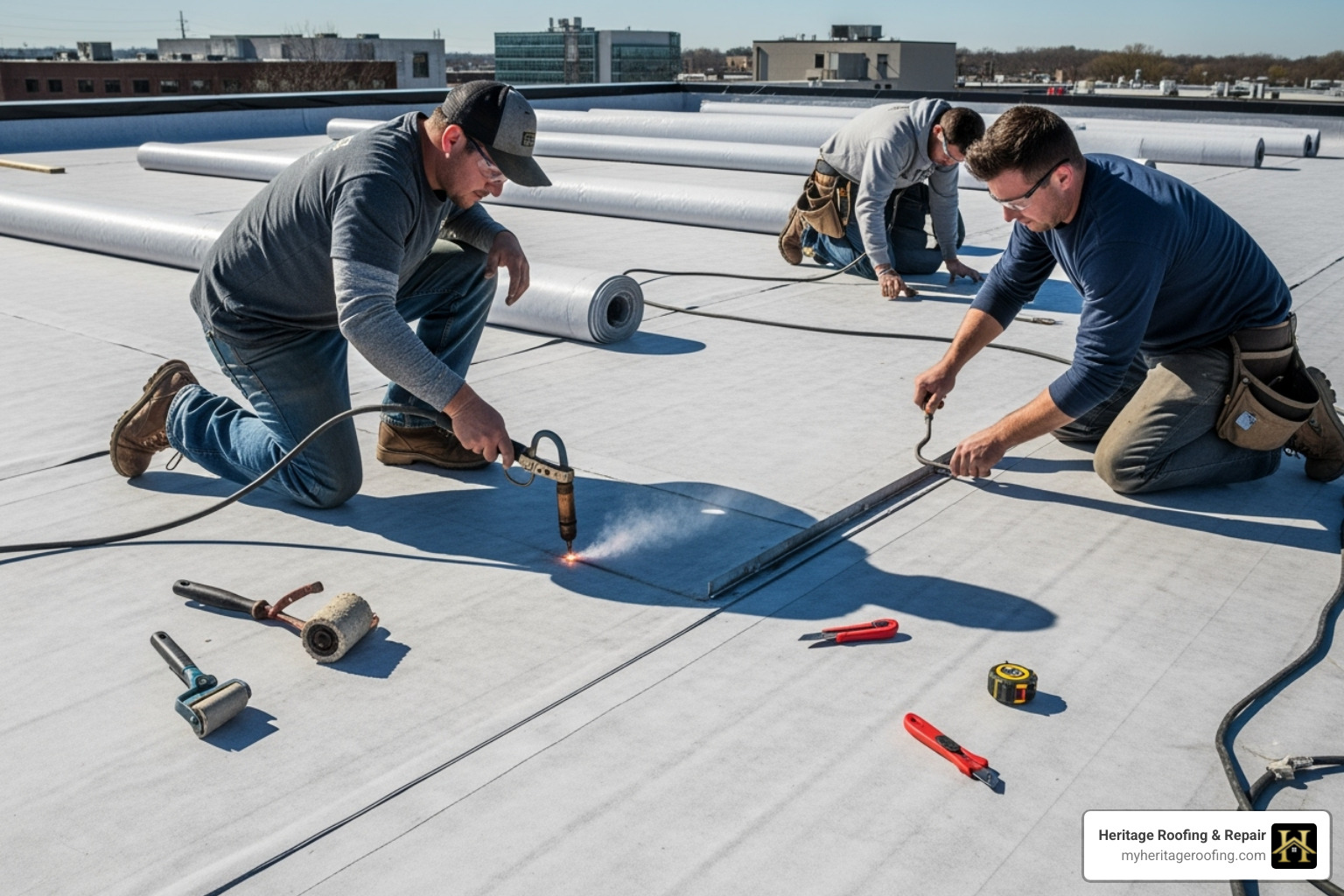
Next comes the new roofing membrane. Depending on the material you’ve chosen—whether it’s TPO, EPDM, Modified Bitumen, or PVC—the membrane is either mechanically fastened, fully adhered with adhesive, or ballasted with gravel. All seams are carefully heat-welded (for TPO and PVC) or sealed with specialized adhesives to create a monolithic, waterproof surface. This ensures no sneaky leaks find their way in, giving you complete peace of mind.
Step 4: Detailing Flashing and Penetrations for a Watertight Seal
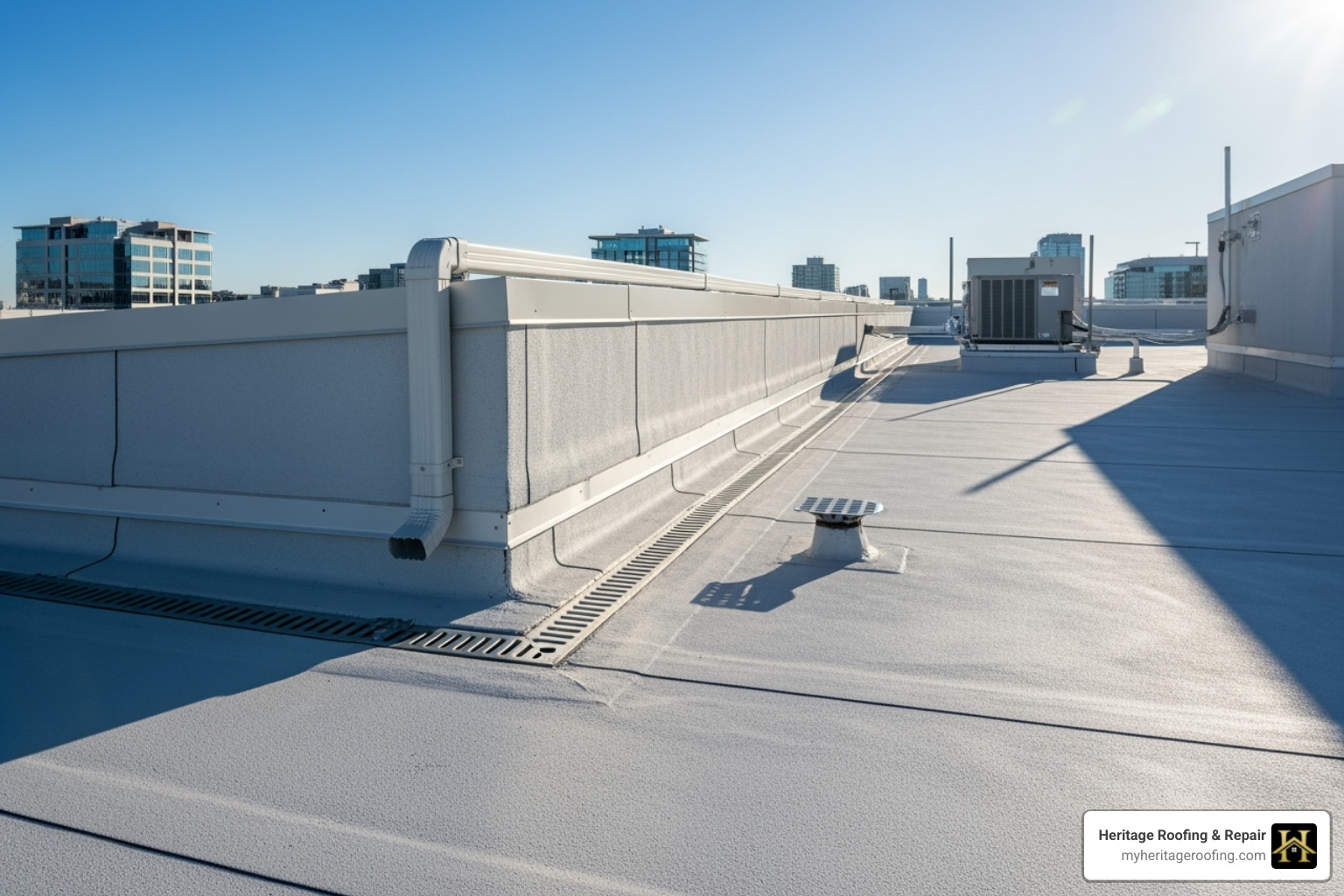
This is where attention to detail truly matters. Our crew installs new flashing around all roof penetrations—vents, pipes, skylights, and HVAC units. This custom-fit flashing acts as a protective barrier, preventing water from seeping into vulnerable areas where the roof meets other structures.
Proper detailing also involves carefully sealing around parapet walls, roof-to-wall transitions, and other critical junctions. Every edge, every corner, every penetration gets the same meticulous attention to ensure a completely watertight and durable seal across the entire roof surface. Sometimes this involves temporarily disconnecting and reconnecting HVAC equipment or gas lines, which factors into the overall project cost and complexity—but it’s necessary work to protect your investment.
Step 5: Final Inspection and Cleanup
Once the installation is complete, a project manager conducts a thorough final walkthrough. This inspection ensures that the installation meets our stringent quality standards and adheres to manufacturer specifications—because your warranty depends on proper installation.
We also make sure the job site is left immaculate, free of debris, and ready for you to enjoy your brand-new, robust flat roof. After all, you shouldn’t have to clean up after us. That’s part of the professional service you’re paying for.
Understanding the Costs and Warranties
The cost of a flat roof replacement can vary significantly, typically ranging from $4 to $12 per square foot. Understanding the factors that influence this price and the warranties that protect your investment is crucial for budgeting and making an informed decision.
Key Factors Influencing Your Flat Roof Replacement Cost
Every flat roof replacement project is unique, and several elements contribute to the overall expense. Roof size and complexity play a major role—it’s not just about square footage. A larger roof naturally costs more, but a smaller roof with numerous penetrations like skylights, vents, HVAC units, or complex parapet walls can require just as much specialized detailing and labor, driving up costs.
Your material choice makes a significant difference in price. As we discussed earlier, premium materials like PVC and high-grade TPO typically cost more per square foot than EPDM or Modified Bitumen, but they deliver improved durability and performance that can save money over the roof’s lifetime.
The number of existing layers on your roof directly impacts labor and disposal costs. Removing multiple old roof layers is time-consuming work. Older buildings might have several layers of built-up roofing, each adding to the weight and complexity of removal. Some older roofs can have four or more layers that need to be stripped away before the new system can be installed.
Structural repairs finded during the tear-off phase will add to your total investment. If our inspection reveals a rotted or damaged roof deck, corroded steel pan decking, or other structural issues, addressing these problems is vital for the longevity of your new roof. Think of it this way: installing a beautiful new roof on a damaged foundation is like putting a fresh coat of paint on a crumbling wall—it won’t last.
The type and thickness of insulation you choose affects the price, but it’s an investment that pays dividends in energy savings. Many older flat roofs lack adequate insulation by today’s standards, so upgrading this layer can dramatically reduce your heating and cooling costs. Accessibility matters too—a multi-story building requiring specialized lifts or a property with limited access for debris removal will incur higher labor costs. Sometimes, older flat roofs need drainage improvements, like re-sloping to create a minimum two percent grade for proper water runoff, which adds to both labor and material expenses.
For a detailed breakdown of all potential expenses, see our roof replacement cost ultimate guide.
What to Expect from Roofing Warranties
Your new roof should come with two crucial types of warranties, providing comprehensive protection for your investment. A manufacturer’s warranty covers defects in the roofing material itself. Depending on the material and manufacturer, these typically range from 20 to 30 years, and sometimes even longer. Here’s the catch: to keep this warranty valid, the roofing system must be installed by a certified and approved contractor. That’s where working with an established, reputable company makes all the difference.
The second layer of protection is a workmanship warranty, which is provided by the contractor and covers any installation errors or deficiencies. At Heritage Roofing & Repair, our workmanship warranties typically range from 5 to 10 years, reflecting our confidence in our skilled crews. An established company like ours, with over 50 years in the business, stands firmly behind its work. We’re not going anywhere—we’ll be here if you ever need us.
Rebates and Financing
Investing in a new, energy-efficient flat roof can sometimes lead to financial benefits beyond just lower utility bills. Energy-efficient materials like white TPO or highly insulated systems may qualify for local or federal tax credits, rebates, or utility company incentives. We recommend checking with local authorities and energy providers in Northwest Arkansas for any available programs—these incentives can help offset your initial investment.
We also understand that a flat roof replacement is a significant expense. That’s why many roofing contractors, including us, offer flexible roofing financing options to help manage the cost of this important property upgrade. Don’t let budget concerns prevent you from protecting your property with a quality roof—let’s talk about options that work for your financial situation.
Why a Professional Roofer is Crucial for Your Project in Berryville, AR
Hiring an experienced, local roofing contractor is the most important decision you’ll make for your flat roof replacement. This isn’t a DIY weekend project or something to trust to the lowest bidder. Your roof is your property’s first line of defense against the elements, and in Northwest Arkansas, those elements can be pretty fierce—intense summer heat, relentless UV radiation, torrential rains, and severe storms that seem to come out of nowhere.
A professional roofer brings expertise that goes far beyond simply laying down material. They understand the science of water drainage, the importance of proper flashing, and how different materials perform in our specific climate. They know that a flat roof in Berryville faces different challenges than one in, say, Phoenix or Seattle.
Proper installation is everything. Even the highest-quality roofing material will fail prematurely if it’s not installed correctly. A professional ensures that every seam is properly welded, every penetration is sealed, and every detail is executed to manufacturer specifications. This attention to detail validates your manufacturer’s warranty—most warranties are void if the roof isn’t installed by a certified contractor.
Safety is another critical consideration. Roofing work involves significant risks, from falls to equipment accidents. Our professionals are trained, equipped with proper safety gear, and fully insured. This protects you from liability if an accident occurs on your property. It also means our crew knows how to work safely around electrical lines, HVAC equipment, and other roof-mounted systems.
Local expertise matters immensely. We understand the building codes for roofing in Berryville, AR inside and out, ensuring your new roof is compliant with all local regulations. We also know how Arkansas’s climate impacts different roofing materials. For example, we can tell you why a white TPO roof might save you hundreds on cooling costs during our brutal summers, or why proper drainage is even more critical in areas that experience our heavy spring rains.
If your property has suffered storm damage, navigating insurance claims can feel overwhelming. As specialists in storm damage repair and insurance claims, we provide detailed inspections and documentation that help you get the coverage you deserve. We’ve worked with virtually every insurance company and understand exactly what they need to see.
Beyond the installation itself, we provide guidance on maintenance practices that can extend your roof’s lifespan by years. Simple steps like twice-yearly inspections, keeping drainage systems clear, and addressing minor issues before they become major problems can make the difference between a roof that lasts 15 years and one that lasts 30.
We also take a comprehensive approach to your project. Sometimes a flat roof replacement is an opportunity to improve other aspects of your building—adding better insulation, upgrading drainage systems, or even preparing the roof structure for future solar panels or rooftop amenities.
For a trusted local expert in Berryville with over 50 years of proven experience, contact Heritage Roofing & Repair. We’re not just contractors—we’re your neighbors, and we stand behind every roof we install.
Heritage Roofing & Repair
3458 Arkansas State Hwy 221, Berryville, AR 72616
(870) 654-1164
Secure Your Property with a New Flat Roof
A flat roof replacement is more than just a construction project—it’s a strategic investment in your property’s future. When you replace an aging or failing flat roof with a modern system, you’re immediately increasing your property’s market value while dramatically improving energy efficiency. The right roof protects your building from Arkansas’s harsh weather while reducing those monthly utility bills that seem to creep higher every year.
The key to a successful project is partnering with an experienced contractor who understands what works in Berryville and the surrounding region. At Heritage Roofing & Repair, we’ve spent over 50 years perfecting our craft, serving homeowners and businesses throughout Berryville, Fayetteville, Harrison, and Northwest Arkansas. We understand the unique challenges of our climate—the scorching summer sun, the sudden storms, the temperature swings that stress roofing materials. This local expertise, combined with our commitment to dependable craftsmanship and quality service, means your flat roof replacement will be done right the first time.
Ready to protect your investment? We offer comprehensive assessments and free estimates for your flat roof project. Our team will evaluate your specific situation, recommend the best materials for your needs and budget, and provide a detailed plan to secure your property for years to come. Learn more about our commercial roofing services today, or contact us to schedule your inspection.
Don’t wait until a small problem becomes a costly disaster. Your property deserves the protection that only a properly installed, high-quality flat roof can provide. Contact Heritage Roofing & Repair today, and let’s get started on securing your peace of mind.