Understanding Tax Credits for Your New Roof
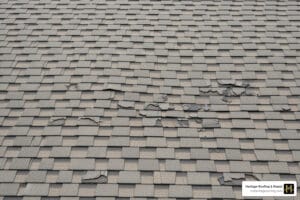
Does replacing asphalt roof shingles qualify for residential energy credit? For a standard asphalt shingle replacement in 2025, the answer is generally no. The Inflation Reduction Act of 2022 removed traditional roofing materials from eligibility for the Energy Efficient Home Improvement Credit. However, there are powerful exceptions and alternative credits that every homeowner should understand before making this significant investment. At Heritage Roofing & Repair, we’ve helped countless homeowners in Northwest Arkansas steer these complex decisions, ensuring they get quality, durable roofing that protects their homes for decades.
Here’s a quick summary of the current rules:
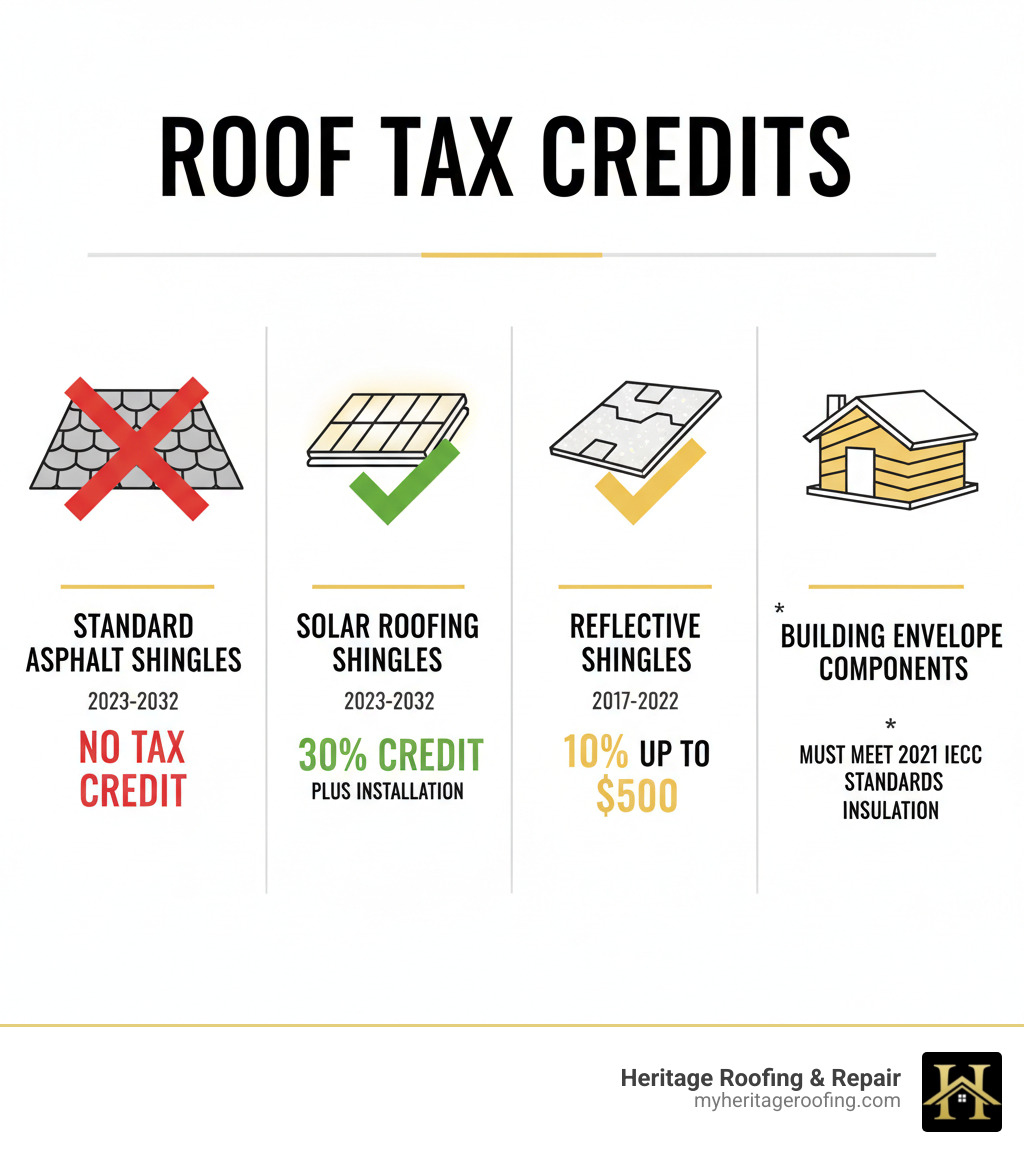
- Standard Asphalt Shingles (2023-2032): Do not qualify for federal energy tax credits.
- Solar Roofing Shingles: Qualify for the 30% Residential Clean Energy Credit, which includes installation costs.
- Past Replacements (2017-2022): May qualify for a 10% credit (up to $500) if they had cooling granules and met ENERGY STAR® standards.
The confusion around this topic is understandable, as outdated information still circulates online. The rules changed significantly in 2023, and knowing what applies today can mean the difference between leaving money on the table or maximizing your investment. With over 50 years of combined family experience, we understand both the practical and financial aspects of this important home improvement.
The Big Question: Does Replacing Asphalt Roof Shingles Qualify for the Residential Energy Credit?
Does replacing asphalt roof shingles qualify for residential energy credit? For tax years 2023 through 2032, a standard asphalt shingle roof replacement does not qualify for the federal Energy Efficient Home Improvement Credit. The Inflation Reduction Act of 2022 fundamentally changed the rules, removing the specific provision that once covered certain ENERGY STAR® rated roofing materials. The IRS issued corrections to its 2023 instructions, explicitly stating that “metal roofs and asphalt roofs with pigmented coatings or cooling granules” no longer qualify for this specific credit.
The government’s intent was to focus incentives on renewable energy generation and more direct efficiency measures. While this is disappointing for those planning a standard replacement, understanding the current rules is key to finding other savings.
Understanding the Current Rules: The Energy Efficient Home Improvement Credit (2023-2032)
The revamped Energy Efficient Home Improvement Credit covers 30% of the cost of qualifying upgrades like windows, doors, and insulation, with a $1,200 annual limit for these “building envelope components.” While traditional roofs were removed, a roof could theoretically qualify if it were part of an integrated system that meets the stringent insulation criteria of the 2021 International Energy Conservation Code (IECC). This is an exceptionally high bar that standard asphalt shingles do not meet on their own. For this credit, only the cost of materials qualifies, not installation.
What About Past Roof Replacements? (2017-2022)
If you replaced your roof between 2017 and 2022, you may still be eligible for a credit you missed. The old Non-Business Energy Property Credit was retroactively extended, allowing homeowners to claim 10% of the material cost, up to a $500 lifetime limit. This applied to specific ENERGY STAR® certified metal and asphalt roofs with cooling granules designed to reflect sunlight. If you installed a qualifying roof during this period and never claimed the credit, you may be able to file an amended tax return to get that money back. We recommend checking IRS Form 5695 for the specific year your roof was installed and consulting a tax professional.
The “Green” Exception: Solar Roofs and the Residential Clean Energy Credit
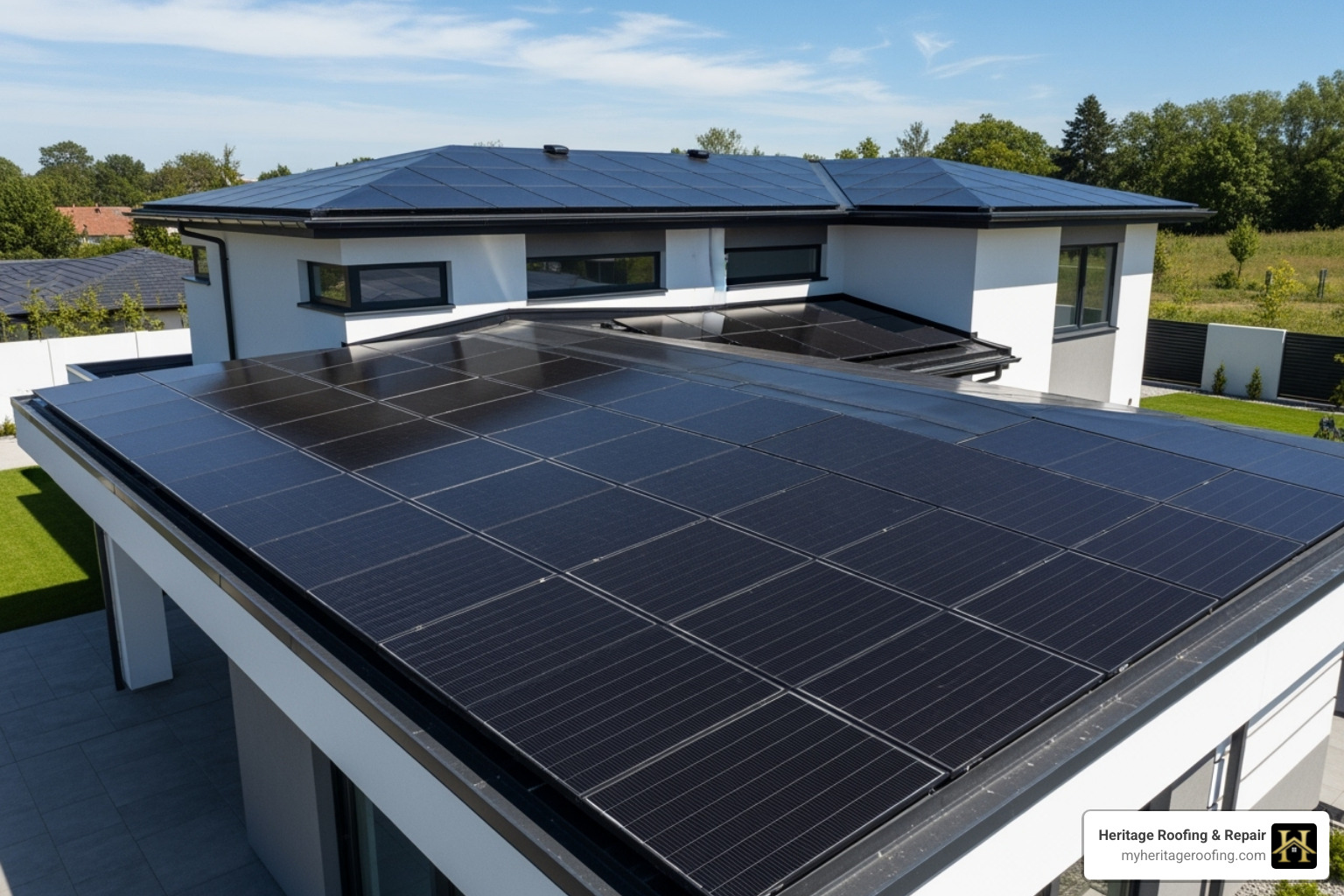
While the answer to does replacing asphalt roof shingles qualify for residential energy credit is no for standard materials, the federal government created a powerful alternative: the Residential Clean Energy Credit. This incentive offers a 30% tax credit on the entire cost of a solar energy system, with no dollar limit.
This is a game-changer. The credit covers both materials and installation for qualifying solar roofing tiles and shingles. These products serve a dual purpose: they protect your home from the elements like traditional shingles while actively generating electricity. If you invest $30,000 in a solar roof system, you are eligible for a $9,000 federal tax credit, which directly reduces your tax liability.
This is where the answer to the main question becomes a definitive “yes, if it’s a solar roof.” The distinction lies in function. Standard shingles are passive materials, while solar roofing products are active energy generators. The government is incentivizing the generation of renewable energy, not just passive heat reflection.
This credit runs through December 31, 2032, creating a significant window of opportunity. If your roof is nearing the end of its life, you can upgrade to a system that pays you back. A quality solar roof replacement not only protects your home but also generates value every day through reduced energy costs. The 30% federal credit makes this forward-thinking investment more accessible than ever, especially as the technology has become more durable, attractive, and affordable.
Tax Credits vs. Tax Deductions: What’s the Difference for Your Wallet?
Understanding the language of taxes is key to appreciating the value of these incentives. A tax deduction lowers your taxable income, and your savings are a percentage of the deduction based on your tax bracket. A tax credit, however, is a dollar-for-dollar reduction of the actual tax you owe. Credits are always more valuable than deductions of the same amount.
When you’re researching does replacing asphalt roof shingles qualify for residential energy credit information, you’ll encounter both terms frequently. Many homeowners confuse tax deductions with tax credits, but the distinction is crucial when evaluating the financial impact of home improvements like a new roof.
Think of it this way: a tax deduction is like a discount on the amount of income the IRS can tax. If you have a $50,000 taxable income and claim a $1,000 deduction, your new taxable income becomes $49,000. Your actual tax savings depend on your marginal tax bracket. If you’re in the 22% tax bracket, that $1,000 deduction would save you $220 in taxes ($1,000 × 0.22). It’s helpful, but not a huge windfall.
A tax credit, on the other hand, is like cash back directly off your tax bill. If you owe $5,000 in taxes and claim a $1,000 tax credit, your tax liability drops to $4,000. That’s a full $1,000 in your pocket. This is a much more direct and impactful saving, which is why energy tax credits are such a powerful incentive for homeowners considering upgrades like solar roofing.
For home improvements, tax credits are generally what we’re talking about when discussing energy efficiency programs. They offer a direct reduction of your tax bill, making them far more valuable than a deduction of the same dollar amount.
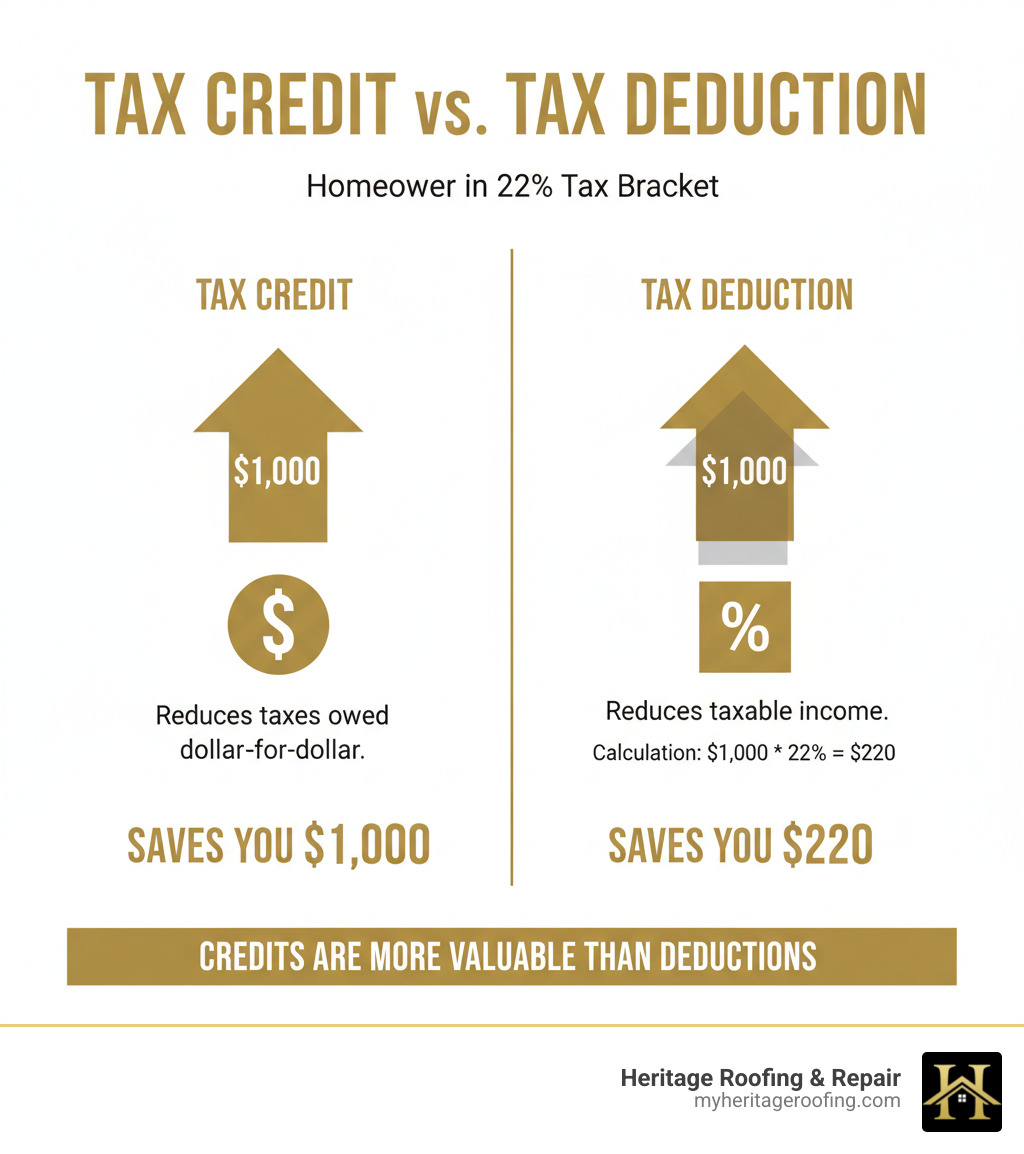
This table illustrates that a tax credit provides a significantly higher financial benefit than a deduction of the same amount. When we talk about the 30% Residential Clean Energy Credit for solar roofing, that’s a direct 30% off your tax bill, not just your taxable income. For a $30,000 solar roof installation, that’s a $9,000 credit—real money that reduces what you owe the IRS. You can see why understanding this difference matters when you’re making a major investment in your home’s protection and energy efficiency.
How to Claim Your Credit: Documentation and Filing
Properly claiming a residential energy credit requires careful record-keeping and using the correct forms. To ensure you receive your full benefit without issues from the IRS, preparation is essential.
What documentation is needed to claim a roof replacement tax credit?
To successfully claim a credit, you must have the proper paperwork. Keep these documents with your tax records in case the IRS requests verification.
- Manufacturer’s Certification Statement: This is a signed document from the manufacturer stating that their product qualifies for the tax credit. This is the most critical piece of documentation.
- Itemized Invoices and Receipts: Your invoice must clearly separate the cost of qualifying materials from installation labor. For the Residential Clean Energy Credit (solar roofs), both material and labor costs are eligible.
- Proof of Purchase and Installation Date: These records establish which tax year’s rules apply to your project.
Which tax form do I need to file?
You must file IRS Form 5695, Residential Energy Credits, with your federal tax return for the year the improvement was made. Part I is for the Residential Clean Energy Credit (solar), while Part II is for the Energy Efficient Home Improvement Credit. Given the complexity of tax law, it is always recommended to consult with a qualified tax professional to ensure you meet all requirements and correctly file your claim.
Does replacing asphalt roof shingles qualify for residential energy credit on a rental property?
No. The residential energy credits are intended for a taxpayer’s primary residence. They do not apply to rental or investment properties, which are considered business assets and fall under different tax rules for deducting expenses and depreciating improvements.
Heritage Roofing & Repair
3458 Arkansas State Hwy 221, Berryville, AR 72616
(870) 654-1164
Beyond Federal Credits: State Incentives and Local Rebates
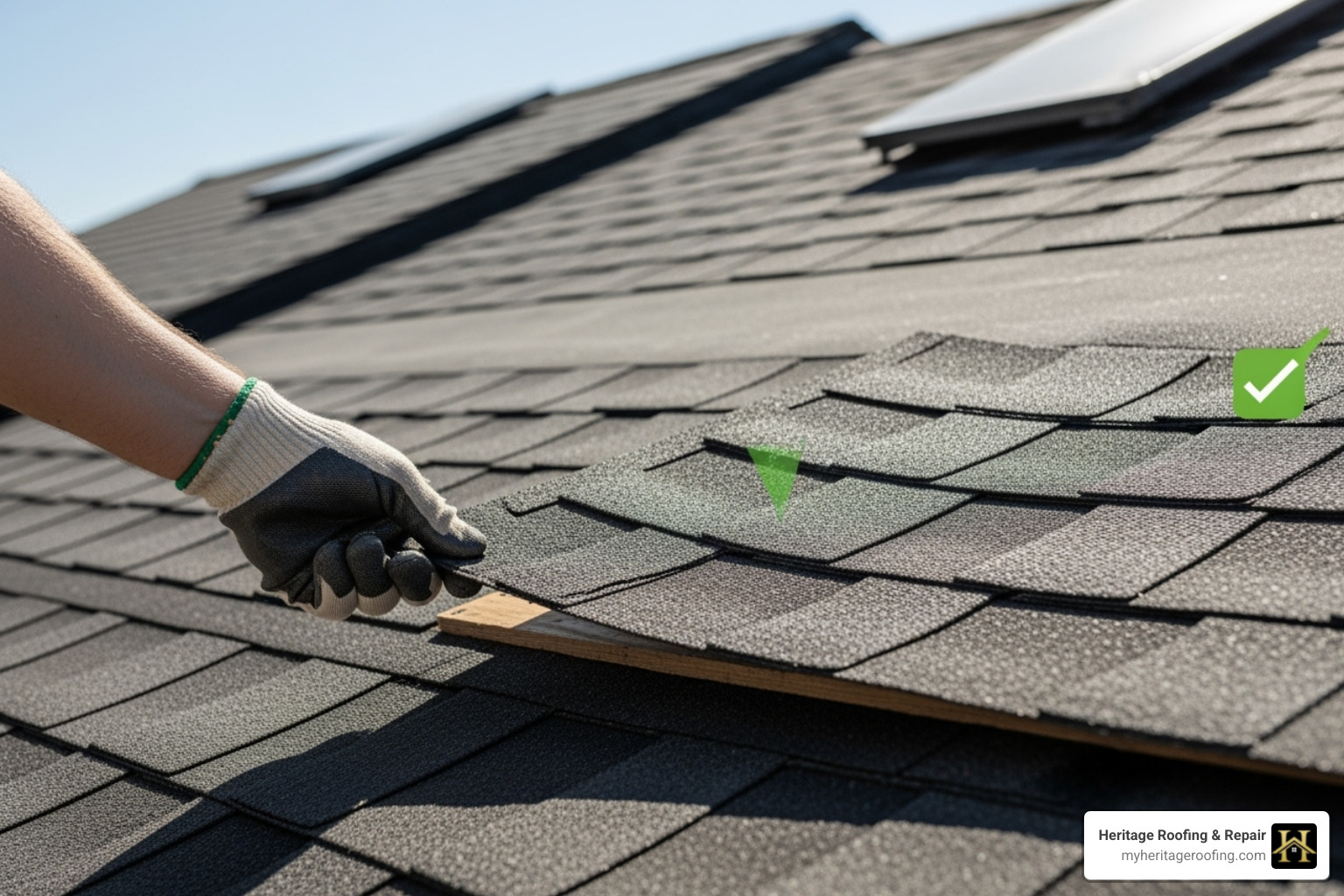
Federal tax credits are just one piece of the puzzle. Many states, local municipalities, and utility companies offer their own rebates, grants, or tax incentives that can often be combined with federal credits to further reduce your project’s cost.
These programs vary widely and change frequently. Some states offer their own credits for energy-efficient materials, while local utility companies might offer cash back for improvements that reduce energy consumption. The ENERGY STAR® Rebate Finder is an excellent starting point—just enter your zip code to see what’s available near you.
For homeowners in the Berryville area and throughout Northwest Arkansas, having a local expert who understands regional programs is invaluable. At Heritage Roofing & Repair, we keep our ears to the ground about local incentives that can help our neighbors save money. When you’re considering whether does replacing asphalt roof shingles qualify for residential energy credit or exploring other options, we can help guide you through both the federal landscape and any local opportunities that might apply.
Frequently Asked Questions
We’ve covered a lot of ground, but this topic can still be confusing. Here are direct answers to some of the most common questions we hear.
Are installation costs included in the roof replacement tax credit?
It depends on the credit. For the Residential Clean Energy Credit (solar roofs), yes, installation costs are included in the total cost used to calculate your 30% credit. For the Energy Efficient Home Improvement Credit (and the old pre-2023 credit for traditional roofs), no, installation costs are not included; the credit was based on material costs only.
Do roof coatings qualify for energy tax credits?
No. Applying a reflective coating to an existing roof does not qualify for a federal tax credit. The credits apply to the installation of new, qualifying products, not to surface treatments applied after the fact.
Where can I find the most up-to-date information on energy tax credits?
The most reliable sources are the official government websites. Always check these for the current year’s rules:
- IRS Website: IRS.gov
- ENERGY STAR Program: energystar.gov
Additionally, a qualified tax professional can provide personalized advice and ensure you file correctly. While we are roofing experts, we always encourage our customers to seek professional tax guidance.
Making a Smart Investment in Your Roof
Navigating tax credits can be confusing, but the potential savings are worth the effort. While a standard asphalt shingle replacement no longer qualifies for a federal credit, the 30% Residential Clean Energy Credit makes investing in a solar roof an exceptionally attractive option. Furthermore, homeowners who installed a qualifying energy-efficient roof between 2017 and 2022 may be able to retroactively claim a credit by filing an amended return.
At Heritage Roofing & Repair, we believe you deserve to understand all your options. A well-installed roof protects your family, can reduce energy costs, and increases your home’s value, regardless of tax incentives. Our commitment is to provide honest guidance about what will truly benefit your home and your budget.
Ready to explore your options for a new roof that protects your home and your wallet? Learn more about our roof replacement services and contact us for a free, no-obligation estimate today. We’ll walk you through every step of the process, answer all your questions, and help you make a decision you’ll feel confident about for years to come.