Why Specialized Built Up Roofing Contractors Are Essential
Working with built-up roofing systems is genuinely different from installing other commercial roofing options. The truth is, built up roofing contractors need specialized knowledge that comes only from years of hands-on experience with these multi-layer systems. When one layer is applied incorrectly, it doesn’t just affect that single ply—it compromises the entire system’s integrity. Start by consulting a Northwest Arkansas roofing contractor who understands multi-ply systems and can benchmark your options with clear, data-driven guidance.
What Built Up Roofing Contractors Do:
- Install multi-layer BUR systems using alternating layers of bitumen (asphalt or coal tar) and reinforcing felts
- Apply protective top layers including gravel, aggregate, or mineral-surfaced cap sheets
- Perform specialized repairs requiring knowledge of leak detection in multi-layer systems
- Conduct regular maintenance including UV protection layer reapplication every 5 years
- Steer complex installations using hot-mop asphalt or modern cold-applied adhesive methods
Key Qualifications for a Top-Tier Contractor
Finding the right contractor isn’t about picking the lowest bid. It’s about identifying a partner who brings the right combination of experience, certifications, and commitment to quality.
- Verifiable BUR-Specific Experience: Look for a minimum of 10+ years working directly with built-up roofing.
- Manufacturer Certifications: Proof of training from leaders like CertainTeed, GAF, or Johns Manville is essential for warranty compliance.
- Proper Licensing & Insurance: Always verify that the contractor is licensed, bonded, and fully insured to protect your property.
- Specialized Equipment & Knowledge: The contractor must own and operate equipment like asphalt kettles and understand material compatibility.
- In-Depth Knowledge of Building Codes: This ensures your roof is compliant with all local regulations for safety and permitting.
- Strong Local Reputation: Seek out verifiable references and positive testimonials from other local property owners.
- Commitment to Safety: A professional contractor will adhere to all industry safety standards to protect their crew and your property.
Finding Your Local Built Up Roofing Contractors in Berryville, AR
When searching for reliable built up roofing contractors, partnering with a local expert who truly understands Northwest Arkansas weather challenges makes all the difference. Our region experiences everything from severe thunderstorms and hail to ice accumulation and intense summer heat. A contractor familiar with these conditions knows how to build roofs that stand up to them year after year.
At Heritage Roofing & Repair, we’ve built our reputation on providing dependable, affordable, and quality craftsmanship for all your built-up roofing needs. Whether you need a new BUR installation, repairs to an existing system, or regular maintenance to extend your roof’s lifespan, our team brings the specialized expertise this roofing system demands.
We’re proud to serve businesses throughout Northwest Arkansas from our Berryville location:
Heritage Roofing & Repair
3458 Arkansas State Hwy 221, Berryville, AR 72616
(870) 654-1164
The Enduring Legacy of Built-Up Roofing
When you think about roofing technology, you might picture cutting-edge materials developed in modern laboratories. But sometimes the most reliable solutions have been around longer than anyone can remember. Built-up roofing (BUR) is one of those time-tested systems that has protected American commercial buildings for over 160 years—dating back to roughly the 1840s. That’s before the Civil War, if you’re keeping track.
The secret to BUR’s remarkable staying power lies in its multi-layer design. Unlike single-ply systems that rely on one membrane to do all the work, built-up roofing creates a redundant barrier against water intrusion. Each layer reinforces the others, providing exceptional waterproofing and durability that commercial property owners can count on decade after decade.
For building owners throughout Arkansas, understanding how this proven system works is the first step toward making a smart, long-lasting investment in your property’s protection. When you partner with experienced roofing contractors who specialize in BUR systems, you’re not just getting a roof—you’re getting decades of proven technology backed by expert craftsmanship.
The beauty of built-up roofing is that it doesn’t rely on gimmicks or untested innovations. It’s a straightforward system that works because of solid engineering principles and quality installation. Finding the right local roofing solutions means your building is shielded by a roofing technology that has literally stood the test of time through generations of American commerce.
What is a Built-Up Roofing (BUR) System?
A built-up roofing (BUR) system is a field-fabricated waterproof membrane that’s constructed right on your roof, layer by layer. You might hear old-timers call it “tar and gravel” roofing, and that nickname gives you a pretty good picture of what we’re working with.
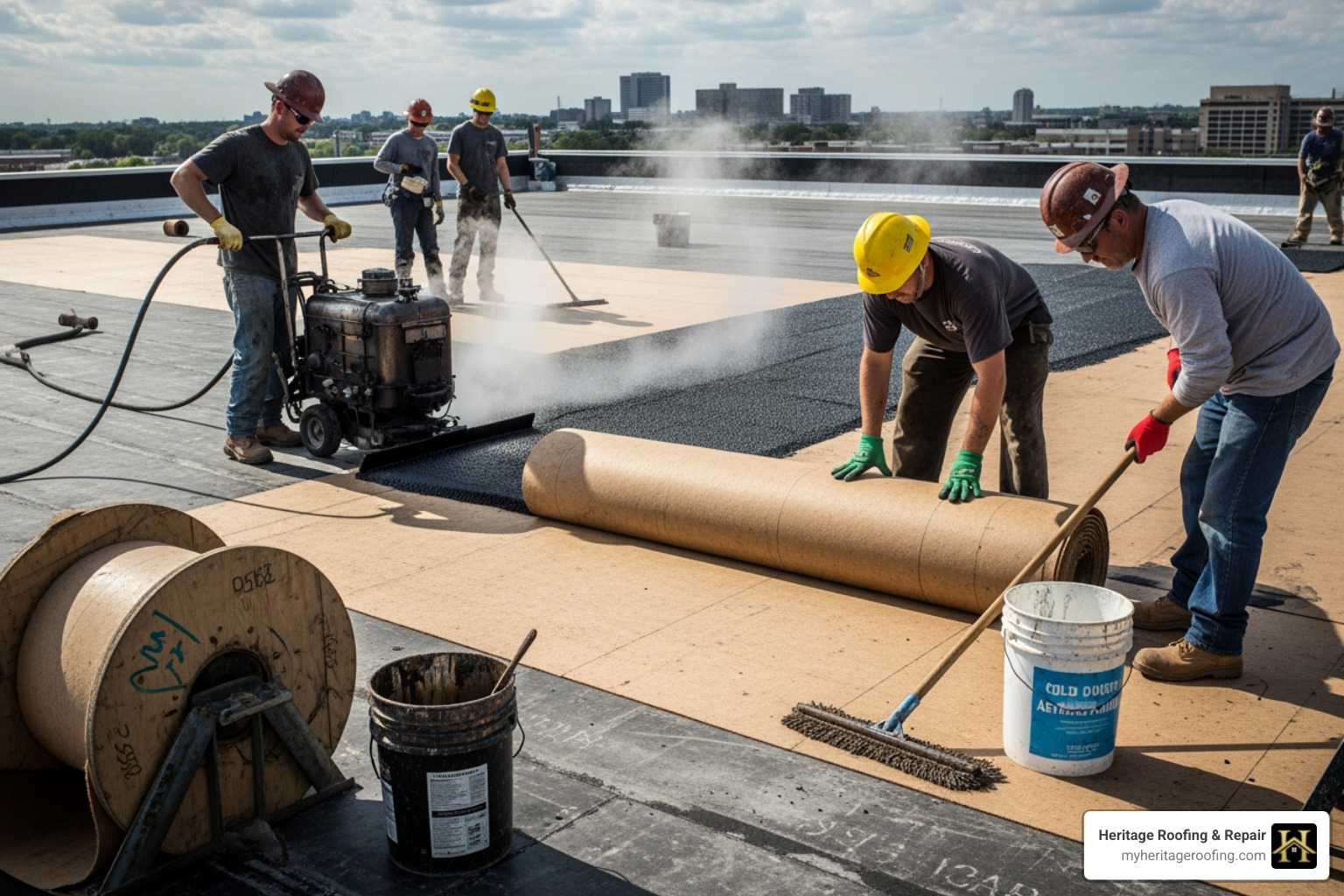
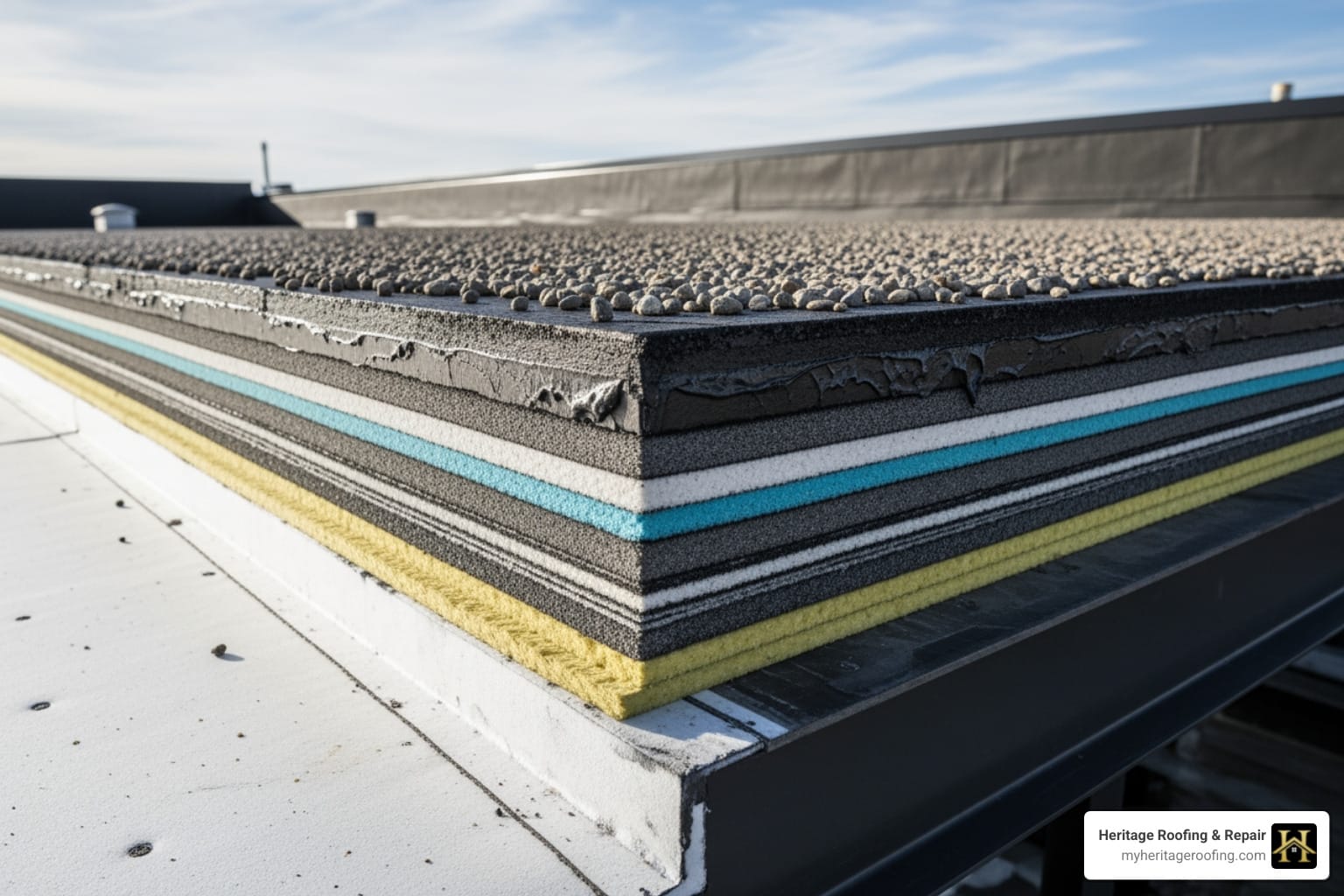
BUR systems are specifically engineered for low-slope and flat roofs, which makes them the go-to choice for many commercial properties. The magic happens in the alternating layers of bitumen (that’s asphalt or coal tar) and reinforcing fabric sheets, typically made of fiberglass. These fabric layers are called ply sheets, and when you stack them up with bitumen in between, you create a robust barrier that’s tough to beat.
The traditional method involves heating asphalt in kettles and “mopping” it onto the roof, creating that characteristic hot-tar smell many people associate with commercial roofing work. But here’s the good news: advances in manufacturing have given us modern cold-applied adhesive options too. These newer methods can speed up installation and eliminate those strong odors, while still maintaining the system’s legendary reliability.
One of the best things about BUR systems? They can handle heavy foot traffic without breaking a sweat. This makes them perfect for commercial buildings where maintenance crews need regular roof access for HVAC units, satellite dishes, or other equipment.
Advantages of Choosing a BUR System
The reason built up roofing contractors still install these systems after 160 years is simple: they work exceptionally well. Let’s talk about what makes them special.
The redundancy of layers is BUR’s secret weapon. Think of it like wearing a raincoat over a jacket over a sweater. Even if one layer fails, you’ve got backup protection underneath. This multi-ply construction means that a single puncture or tear doesn’t spell disaster for your building. The layers beneath keep doing their job while you arrange for repairs.
Superior waterproofing comes from the continuous, monolithic membrane that forms when all those layers bond together. There are no seams to worry about like you’d find in single-ply systems. For flat roofs where water wants to pool rather than run off, this waterproofing capability is absolutely critical.
High durability is built right into the system’s DNA. Between the multiple layers of felt and bitumen, plus that protective gravel or aggregate top layer, BUR systems can take a beating. Hail storms? Falling branches? Workers dropping tools? A well-installed BUR roof shrugs off damage that would compromise thinner roofing systems.
Excellent thermal performance and UV protection come courtesy of that gravel or aggregate surface layer. It acts as a natural insulator, helping keep your building cooler in Arkansas’s hot summers. More importantly, it shields the underlying membrane from the sun’s ultraviolet rays, which are the number one enemy of any roofing material. This UV protection is why BUR roofs can last decades while staying functional.
Low maintenance needs make BUR systems attractive to building owners who want reliable protection without constant attention. Once properly installed by experienced built up roofing contractors, these roofs can go years between major service needs. Regular inspections and minor upkeep are all that’s typically required.
Long lifespan is perhaps the most compelling advantage. A well-maintained BUR roof delivers 20 to 35 years of reliable service, with some systems lasting even longer. That’s a significant return on your roofing investment, especially when you factor in the minimal maintenance requirements over those decades.
For more detailed information on how these benefits can protect your commercial property, explore our Commercial Roofing services.
Potential Drawbacks and Considerations
Being straight with you about the downsides is just as important as celebrating the benefits. BUR systems aren’t perfect for every situation, and here’s what you should know before committing.
Higher installation labor costs come with the territory. Building a roof layer by layer takes time and specialized skills. You’re not just rolling out a single membrane and calling it done. Each ply needs careful attention, proper bitumen application, and quality control. This labor-intensive process costs more upfront than some modern single-ply alternatives.
Slower installation means your building might have an active work zone for longer. The layering process can’t be rushed, and if you’re using traditional hot-mop asphalt, you need proper curing time between steps. Cold weather can slow things down even more.
Strong odors during hot-mop installation are something to consider, especially if your building stays occupied during the work. That distinctive hot-tar smell can be quite powerful and may require coordination with building operations. Cold-applied adhesive systems eliminate this issue entirely, though they come with their own cost considerations.
Difficulty in pinpointing leaks is the flip side of that wonderful redundancy we praised earlier. Water can travel between layers before it shows up as a leak inside your building. Finding the actual source requires experience, specialized equipment, and sometimes a bit of detective work. This is where working with skilled built up roofing contractors becomes absolutely essential.
Weight of the system is a real structural consideration. BUR roofs are heavy, especially when topped with gravel. Before installation, you need to verify that your building’s structure can handle the load. This typically requires an engineering assessment.
Potential for ponding water affects BUR systems just like any flat roof. If your roof deck doesn’t have adequate slope or drainage, water can pool on the surface. Standing water accelerates membrane aging and can eventually lead to leaks. Proper initial design and ongoing maintenance help prevent this issue from becoming a problem.
Performance, Lifespan, and Maintenance of BUR Roofs
When you invest in a built-up roof, you’re banking on decades of reliable protection. This impressive longevity isn’t accidental—it’s the result of thoughtful engineering and the protective elements built right into the system.
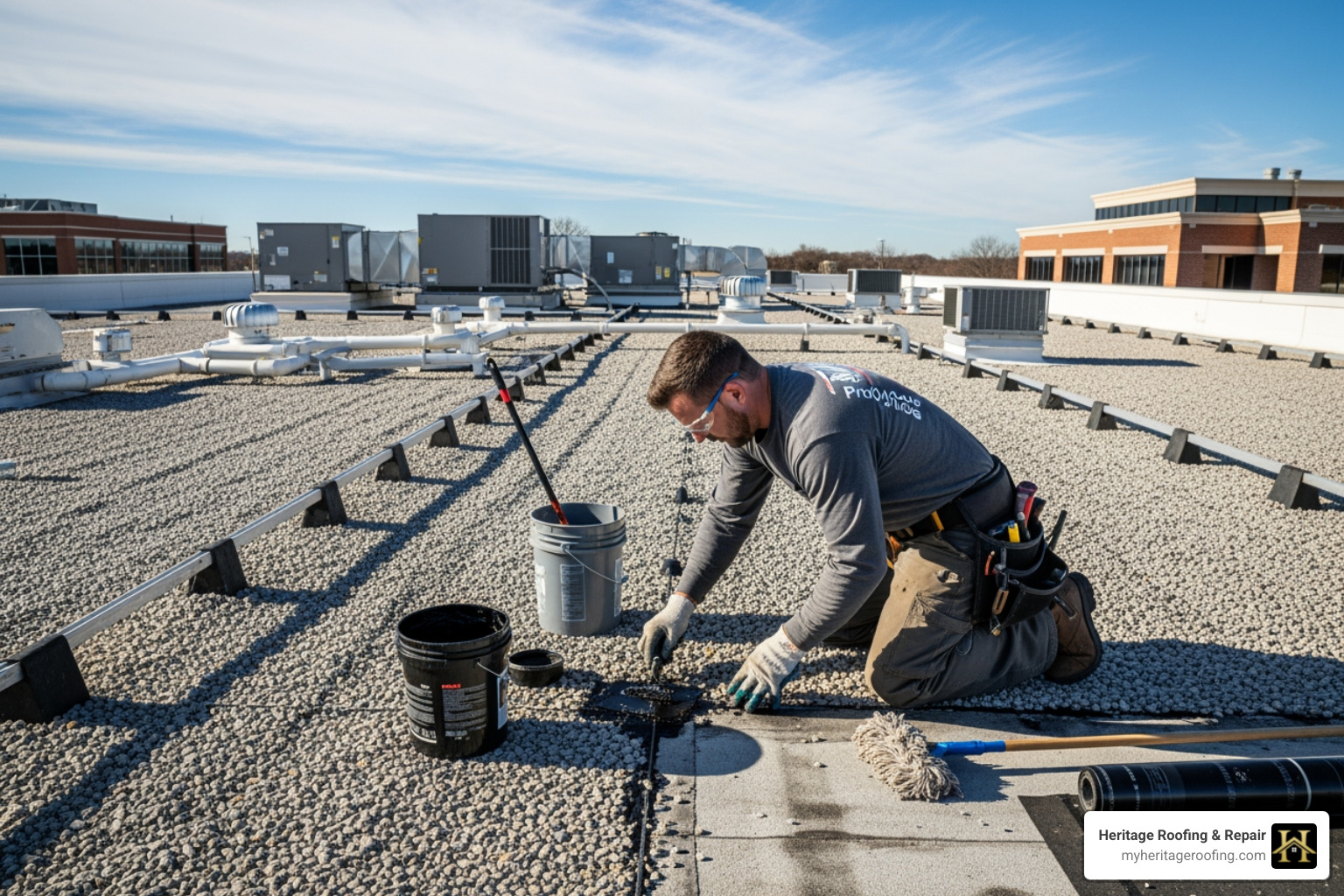
That top layer of gravel you see on most BUR roofs? It’s working harder than you might think. This aggregate surface isn’t just there for looks—it’s a multitasking workhorse that shields the underlying bitumen from UV rays, absorbs impacts from hail and debris, and even helps protect your building from fire hazards. Thanks to this protective blanket of stone, built-up roofing systems remain largely unaffected by the sun’s damaging ultraviolet radiation, which would otherwise break down the waterproofing layers beneath.
The fire resistance properties of BUR systems are particularly noteworthy. The non-combustible gravel acts as a natural fire retardant, helping prevent flames from spreading across the roof surface. Manufacturers like Tremco take this seriously—they operate the only roofing test laboratory where UL will confer a UL 790 classification, as shown in their fire test lab demonstrations. This level of testing ensures that BUR materials meet the strictest safety standards.
When it comes to weather performance, built-up roofs hold their own admirably. The layered construction handles heavy rain and snow loads with ease, while the gravel surface provides solid impact resistance against hail. High winds can occasionally dislodge some aggregate, but proper installation—especially around roof edges and perimeters—keeps this risk minimal.
Of course, no roofing system is immune to the effects of time and weather. Older BUR systems can develop blistering when moisture or air gets trapped between layers, creating those telltale bubbles. Cracking often appears as the membrane ages or goes through countless freeze-thaw cycles. You might also see exposed seams where the aggregate has shifted or wasn’t applied thickly enough. And like any flat or low-slope roof, areas where water ponds for extended periods will age faster than properly drained sections.
Essential Maintenance for Longevity
Here’s the truth: a BUR roof can absolutely reach that 30-year mark, but only with consistent care. Think of maintenance as the difference between a roof that merely survives and one that thrives for decades.
Regular inspections form the foundation of good roof care. We recommend having qualified built up roofing contractors examine your roof twice yearly—once in spring and again in fall—plus after any severe weather event. These check-ups catch small problems before they become expensive headaches.
Between professional visits, keeping your roof clear of debris matters more than you might think. Leaves, branches, and other accumulated material trap moisture against the membrane, creating the perfect conditions for premature deterioration. A clean roof is a happy roof.
Ponding water deserves special attention on any flat roof. If water sits in the same spot for more than 48 hours after a rain, you’ve got a drainage issue that needs addressing. Standing water accelerates membrane aging and can lead to leaks down the road.
The UV protection layer requires periodic renewal to maintain its effectiveness. Depending on your specific system, you may need to reapply protective coating every five years or so. Yes, it’s an added maintenance step, but it’s far less expensive than replacing a roof that failed prematurely.
Perhaps most critically, all seams and flashings—those vulnerable spots where your roof meets walls, pipes, vents, and other penetrations—need regular attention. Worn flashings must be replaced, and any cracks or separations should be repaired before applying new protective coatings. These details often make the difference between a watertight roof and a leaking one.
For more practical guidance on protecting your commercial roof investment, check out our Roofing Maintenance Tips.
Leak Detection and Repair in Multi-Layer Systems
Here’s where BUR systems present a unique challenge: finding leaks can feel like detective work. Water doesn’t always drip straight down through multiple layers. Instead, it can travel horizontally between plies, sometimes emerging inside your building far from the actual breach. This complexity is exactly why professional Commercial Roof Repair is so important for built-up roofing systems.
Experienced contractors use sophisticated detection methods to pinpoint problems. Infrared thermography reveals temperature variations that indicate trapped moisture beneath the surface. Electronic leak detection sends electrical currents across the roof to identify breaches in the waterproof membrane. In stubborn cases, core sampling—removing small cylindrical sections of the roof—shows exactly how far moisture has penetrated through the layers.
Once the leak location is confirmed, repairs involve cutting out the damaged section, thoroughly drying any trapped moisture, and rebuilding with new layers of bitumen and reinforcing felt. The patch must integrate seamlessly with the existing system to maintain that crucial redundancy. Blisters get vented and patched. Cracks are cleaned, sealed with appropriate mastics, and reinforced. Failed flashings often require complete rebuilding to restore a proper watertight seal.
At Heritage Roofing & Repair, we’ve spent over 50 years perfecting these repair techniques. Our team understands that successful BUR repairs require both specialized knowledge and the right equipment—qualities that separate true professionals from general roofers who occasionally dabble in built-up systems.
Why You Need Specialized Built Up Roofing Contractors
Working with built-up roofing systems is genuinely different from installing other commercial roofing options. It’s not something any general contractor can tackle over a weekend. The truth is, built up roofing contractors need specialized knowledge that comes only from years of hands-on experience with these multi-layer systems.
The installation process demands specific equipment that most roofing companies simply don’t have. Hot-applied systems require asphalt kettles that maintain precise temperatures—too hot and you risk damaging the materials, too cool and the layers won’t bond properly. Beyond equipment, there’s a deep understanding of material compatibility that separates excellent installations from problematic ones. Each layer must bond correctly with the one above and below it, creating that seamless, redundant waterproof barrier BUR systems are known for.
When one layer is applied incorrectly, it doesn’t just affect that single ply—it compromises the entire system’s integrity. We’ve seen roofs fail prematurely because someone used incompatible materials or rushed the application process. The result? Blistering, delamination, and expensive repairs that could have been avoided with proper installation from the start.
Let’s talk about costs, because understanding the investment helps you make informed decisions. Installation costs for BUR systems can be higher initially compared to some single-ply alternatives. The labor-intensive nature of the work and the quality materials involved contribute to this upfront expense. However, these costs are offset by the system’s exceptional durability and extended lifespan of 20-35 years. When you consider the cost per year of protection, BUR systems often prove more economical over time.
Maintenance contracts are another wise investment. Regular professional upkeep significantly prolongs your roof’s life and prevents those costly emergency repairs that always seem to happen at the worst possible moment. Many manufacturers also offer warranties of up to 20 years on BUR systems—but only when they’re installed by certified professionals who follow exact specifications.
Key Qualities of Top-Tier Built Up Roofing Contractors
Finding the right contractor for your BUR system isn’t about picking the lowest bid. It’s about identifying a partner who brings the right combination of experience, certifications, and commitment to quality.
Verifiable experience stands at the top of the list. You want a company with a proven track record specifically in BUR installation and repair, not just general roofing experience. Here at Heritage Roofing & Repair, our over 50 years serving Northwest Arkansas means we’ve seen how our regional climate—from scorching summers to ice storms—affects BUR systems over their entire lifespan.
Manufacturer certifications from industry leaders like CertainTeed, Malarkey Roofing Products, or Owens Corning aren’t just fancy pieces of paper. These certifications demonstrate that a contractor has invested time in training on the latest installation techniques and material specifications. They’re also often required to offer those extended warranties we mentioned.
Proof of insurance and licensing protects you from liability if accidents happen or if workmanship issues arise down the road. Always verify these credentials before signing any contract. A reputable contractor will provide this documentation without hesitation.
A strong local reputation tells you more than any sales pitch ever could. Look for contractors with positive testimonials from property owners in Berryville, Fayetteville, Harrison, and throughout Northwest Arkansas. Local contractors also understand regional building requirements and weather patterns that affect roof performance.
In-depth knowledge of building codes ensures your roof complies with all local regulations. This isn’t just about passing inspections—it’s about safety and avoiding future complications when you need permits for other building work.
Finally, a commitment to safety should be non-negotiable. Professional contractors prioritize safety protocols for their crew and your property, adhering to all industry standards. This protects everyone involved and demonstrates the contractor’s overall professionalism.
When you choose an Experienced Roofing Contractor who meets these criteria, you gain peace of mind knowing your significant investment is in capable hands.
Finding Your Local Built Up Roofing Contractors in Berryville, AR
When searching for reliable built up roofing contractors, partnering with a local expert who truly understands Northwest Arkansas weather challenges makes all the difference. Our region experiences everything from severe thunderstorms and hail to ice accumulation and intense summer heat. A contractor familiar with these conditions knows how to build roofs that stand up to them year after year.
At Heritage Roofing & Repair, we’ve built our reputation on providing dependable, affordable, and quality craftsmanship for all your built-up roofing needs. Whether you need a new BUR installation, repairs to an existing system, or regular maintenance to extend your roof’s lifespan, our team brings the specialized expertise this roofing system demands.
We’re proud to serve businesses throughout Northwest Arkansas from our Berryville location:
Heritage Roofing & Repair
3458 Arkansas State Hwy 221, Berryville, AR 72616
(870) 654-1164
Give us a call to discuss your commercial roofing project. We’ll provide a thorough assessment and honest recommendations based on your building’s specific needs and your budget. With our decades of experience and commitment to doing the job right, you can trust that your BUR system will deliver the long-term protection your commercial property deserves.
Frequently Asked Questions about Built-Up Roofing
How does a built-up roof’s lifespan compare to TPO or EPDM?
A well-maintained BUR system can last 20-35 years, which is comparable to or even longer than many single-ply systems like TPO or EPDM. For instance, while some TPO or EPDM roofs might offer a similar lifespan, the redundancy of BUR’s multiple layers often provides a more robust and forgiving system against minor punctures or damage. Its lifespan is heavily dependent on the quality of installation and a consistent maintenance schedule, which can sometimes push it beyond the typical range of single-ply membranes.
Is built-up roofing an energy-efficient option?
Yes, modern BUR systems can be highly energy-efficient. By using reflective cap sheets or light-colored aggregate (like white gravel or coated granules), the roof can reflect significant solar radiation. This reflectivity reduces the amount of heat absorbed by the building, lowering cooling costs, especially in warmer climates like Arkansas. Many new BUR systems are designed to reflect UV rays, increasing energy efficiency.
Can you install a new roof over an old BUR system?
In some cases, a new roofing system can be installed over an existing BUR roof, provided the underlying structure is sound and local building codes permit it. This “recover” option can be more cost-effective than a full tear-off. However, a thorough Roof Inspection by a qualified contractor is absolutely necessary to determine feasibility. The inspector will assess the structural integrity, look for moisture saturation within the existing layers, and ensure that adding another layer won’t exceed the building’s load-bearing capacity or create drainage issues.
Secure Your Investment with an Expert BUR Installation
With a long history of protecting American commercial buildings, built-up roofing has proven itself as one of the most dependable systems available. Its multi-layered construction creates a formidable barrier against rain, wind, hail, and the relentless Arkansas sun—offering decades of reliable protection when installed and maintained by true professionals.
The beauty of a BUR system lies in its redundancy. Where single-ply membranes rely on one protective layer, built-up roofing gives you multiple chances to keep water out. This layered approach provides a level of durability and peace of mind that few other commercial roofing systems can match. It’s why we’ve seen BUR roofs still performing admirably after 30 years or more.
For building owners throughout Northwest Arkansas, the key to open uping these benefits lies in partnering with built up roofing contractors who possess the specialized knowledge this time-honored system demands. Not every roofing company has the equipment, training, or hands-on experience to properly install a BUR system. The difference between a roof that lasts 20 years and one that protects your investment for 35 years often comes down to the expertise of the crew doing the work.
At Heritage Roofing & Repair, we’ve spent over 50 years mastering both residential and commercial roofing systems, including the intricate details of built-up roofing installation and maintenance. We understand how Northwest Arkansas weather patterns affect these systems, from summer heat that can soften asphalt to winter freeze-thaw cycles that test every seam. Our commitment to dependable, affordable, and quality craftsmanship means your BUR roof will be installed to manufacturer specifications—giving you the full lifespan and performance you’re paying for.
Whether you’re considering a new BUR installation, need expert repair work, or want to establish a maintenance program to protect your existing roof, we’re here to help. To ensure your commercial property is protected by experienced professionals who truly understand built-up roofing systems, explore our comprehensive commercial roofing services and schedule your consultation today. Your building deserves the proven protection that only a properly installed BUR system can provide.