What You Need to Know About Hail Damage Roof Replacement
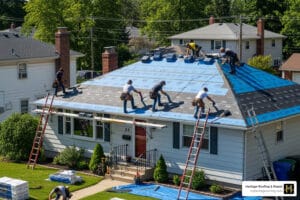
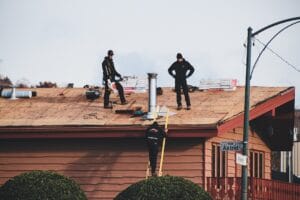
Hail damage roof replacement is one of the most common — and most stressful — home repairs a homeowner can face. As a premier roofing company in Northwest Arkansas, Heritage Roofing & Repair specializes in restoring properties after severe weather events.
The U.S. experiences an average of 3,000 hailstorms per year, and roughly 1 in every 35 insured homes files a wind or hail damage claim annually. When a storm rolls through Northwest Arkansas, the damage isn’t always obvious from the ground — but ignoring it can turn a manageable roof replacement into a costly structural nightmare involving leaks, mold, and rotted decking.
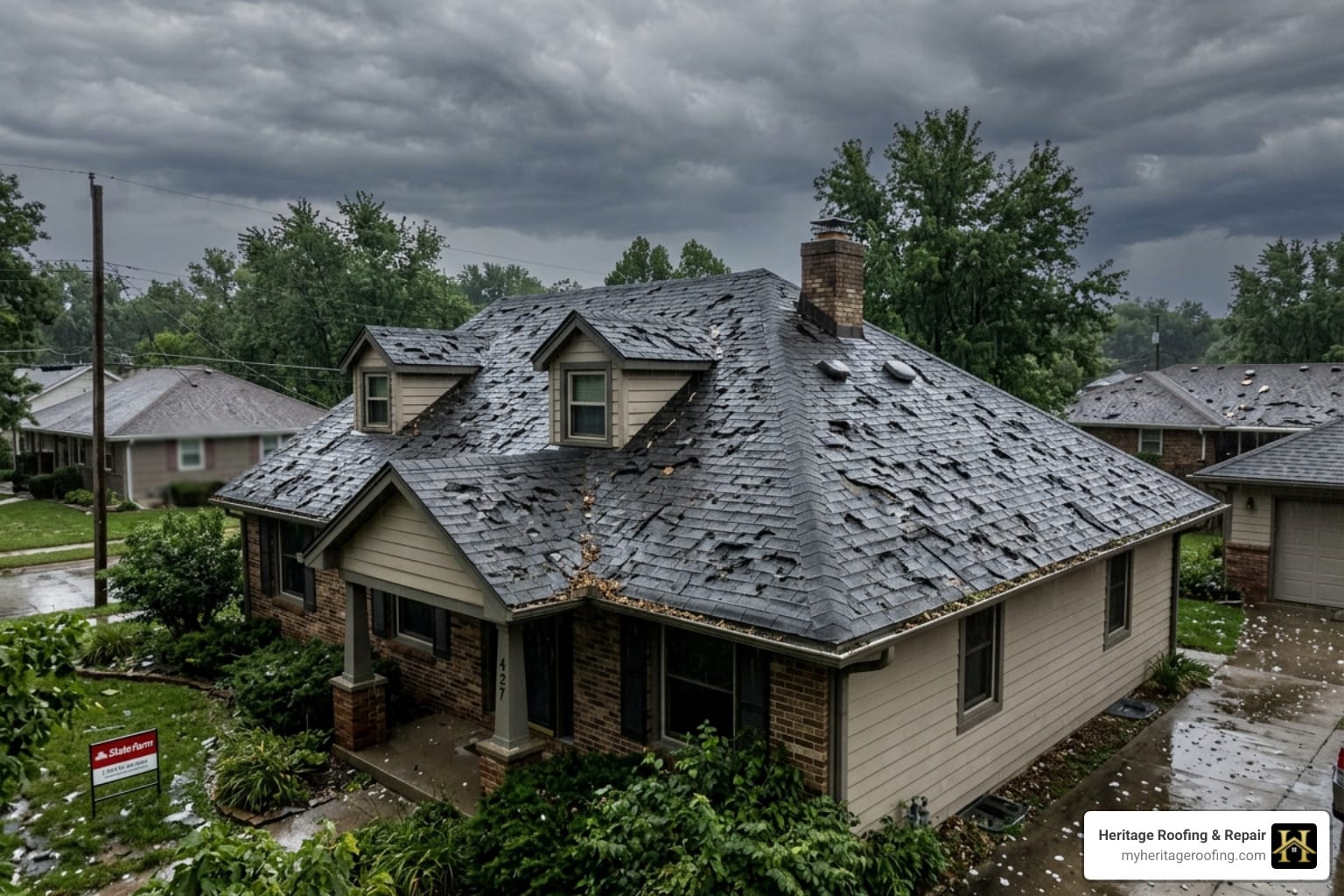
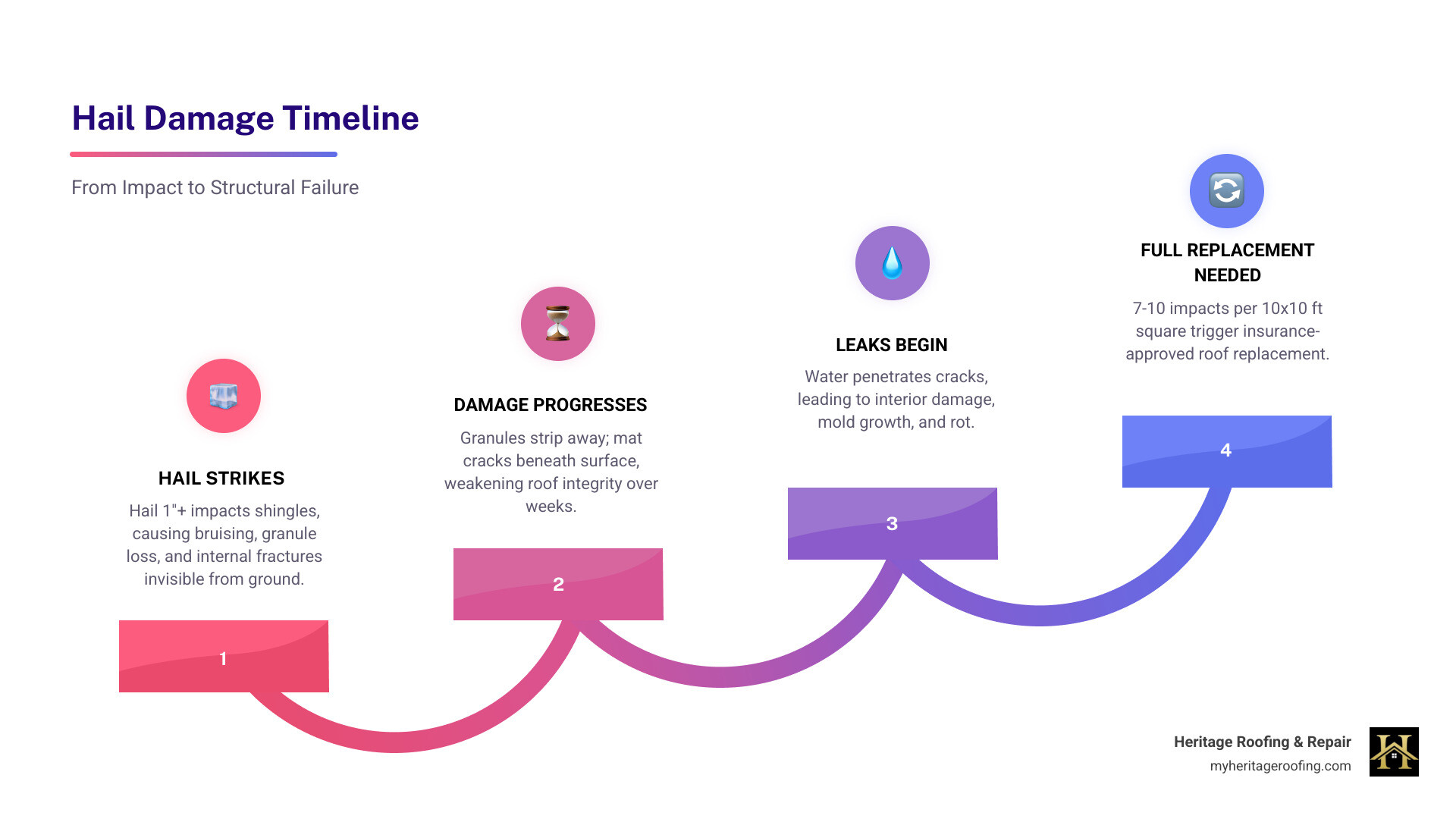
What makes hail damage especially tricky is that the most serious harm is often invisible at first. A roof can look intact from the street while harboring structural compromises that lead to leaks weeks or months later.
I’m Rex Wisdom, owner of Heritage Roofing & Repair, and over the past 50+ years our family business has helped hundreds of Northwest Arkansas homeowners navigate hail damage roof replacement — from identifying real damage to fighting for fair insurance settlements. In this guide, I’ll walk you through everything you need to make smart, confident decisions after a storm.
Hail damage roof replacement further reading:
Identifying Hail Damage on Different Roofing Materials
Identifying hail damage isn’t a “one size fits all” process because every roofing material reacts differently to the impact of frozen ice stones. While some damage is purely cosmetic, much of it is functional, meaning it compromises the roof’s ability to shed water.
Asphalt Shingles: Bruising and Granule Loss
On asphalt shingles, the most common sign is “bruising.” These are soft spots that feel like a bruise on an apple. When hail hits, it knocks off the protective granules and fractures the fiberglass mat underneath. These spots often look like dark, circular pits where the black substrate is exposed. Over time, UV rays hit these exposed spots, making the shingle brittle and prone to leaks. For a deeper look, check out our Hail Damage Roof Complete Guide.
Wood Shingles and Shakes
Wood roofs show damage through random splits. Unlike natural weathering splits, hail-induced cracks usually have sharp edges and appear orange or brown inside the split, indicating the wood was recently broken. You may also see distinct impact marks or “dents” on the surface of the wood.
Metal Roofing: Dents and Punctures
Metal is incredibly durable, but it isn’t invincible. Hail typically leaves round dents or “dings” in the panels. While small dents might be cosmetic, larger hail (golf ball-sized or larger) can actually stretch the metal or break the seals at the fasteners. If you have a commercial property, TPO Roofing Hail Damage presents differently, often appearing as small fractures or punctures in the membrane.
Clay and Concrete Tiles
Tiles are brittle. High-velocity hail causes stars, cracks, or even clean breaks through the tile. Because tiles are often more expensive to replace individually, widespread cracking usually triggers a full hail damage roof replacement.

How Much Damage Triggers a Hail Damage Roof Replacement?
Insurance adjusters don’t just look at the roof and guess; they use a standardized method called the “test square.” A square in roofing terms is a 10-foot by 10-foot area (100 square feet).
The 10×10 Test Square Method
An adjuster will typically mark off one “test square” on each slope of your roof (North, South, East, and West). They are looking for a specific number of “hits” or impact marks within that area. While every insurance company has slightly different guidelines, the industry standard is usually 7 to 10 impact marks per square to justify a full roof replacement.
Hail Size Thresholds
The size of the hail is the biggest predictor of whether you’ll need a full replacement. While wind speed and roof age play a role, here is a general breakdown of what to expect based on hail diameter:
| Hail Size | Diameter | Typical Damage Severity | Replacement Likelihood |
|---|---|---|---|
| Pea | 1/4″ | Minimal; cosmetic only | Very Low |
| Marble | 1/2″ | Minor granule loss on older roofs | Low |
| Quarter | 1″ | Cracks asphalt shingles; dents metal | Moderate |
| Golf Ball | 1.75″ | Widespread bruising; broken tiles | High |
| Tennis Ball | 2.5″+ | Punctures underlayment; severe damage | Near 100% |
Maximizing Your Hail Damage Roof Replacement Claim
One of the most important pieces of advice we give homeowners in Fayetteville and Harrison is to have your roofer present during the insurance adjuster’s inspection. Statistics show that homeowners who have a professional contractor on-site for the inspection see a 72% higher approval rate for full replacements.
We act as your advocate, pointing out “collateral damage” that adjusters might miss in a quick 15-minute walk-around. This includes looking at:
- Dented soft metal vents and flashing.
- Dents in window screens or siding.
- Dents on air conditioning condenser fins.
- Pockmarks on deck staining or fences.
Documenting these collateral signs helps prove the severity of the storm, making a much stronger case for your Filing Roof Insurance Claim Guide.
The Cost of Professional Hail Damage Roof Replacement
When looking at a Roof Replacement Cost Ultimate Guide, it is important to realize that labor typically accounts for 35-45% of the total project cost. In Northwest Arkansas, a standard architectural shingle replacement for a 2,000-square-foot roof often ranges between $8,500 and $15,000, depending on the pitch and complexity.
Many homeowners choose to upgrade to Class 4 impact-resistant shingles during a replacement. While they cost slightly more upfront, they can withstand hail up to 2 inches in diameter and often qualify you for significant discounts on your insurance premiums.
Navigating Insurance: ACV vs. RCV and Recoverable Depreciation
Understanding your policy is the difference between a “free” roof (minus your deductible) and a massive out-of-pocket bill. There are two main types of coverage:
- Replacement Cost Value (RCV): This is the gold standard. The insurance company pays the full cost to replace your roof at today’s prices. They usually send a first check for the “Actual Cash Value” and a second check (recoverable depreciation) once the work is finished.
- Actual Cash Value (ACV): This policy only pays for what your roof was worth at the time of the storm. If your 20-year roof is 15 years old, they will subtract 75% for depreciation, leaving you to cover the rest.
Recoverable Depreciation
If you have an RCV policy, the “recoverable depreciation” is the amount the insurance company holds back until the job is done. For example, if your total hail damage roof replacement costs $15,000 and your roof has $3,000 in depreciation, the insurer will pay you $12,000 initially. Once we submit the final invoice showing the work is complete, they release the remaining $3,000 to you.
A Warning on Deductibles: In many states, including Arkansas, it is illegal for a contractor to “waive” or “absorb” your deductible. This is considered insurance fraud. A reputable roofer will always require you to pay your deductible as part of the legal claim process. For more on this, see our guide on Insurance Hail Damage Roof and Metal Roof Hail Damage Insurance.
Local Expertise and Emergency Support
If a storm has recently hit your area, don’t wait for the leaks to start. We provide honest, transparent assessments to help you decide if a claim is worth filing.
Heritage Roofing & Repair 3458 Arkansas State Hwy 221, Berryville, AR 72616 (870) 654-1164
We proudly serve communities throughout the region, including our neighbors looking for Roofers in Harrison, AR.
Frequently Asked Questions about Hail Damage
Will filing a hail damage claim increase my insurance premiums?
Generally, no. Hail is considered an “Act of God,” meaning it was out of your control. In many jurisdictions, insurance companies are prohibited from raising your individual rates based on a single weather-related claim. However, if an entire zip code is hit by a massive storm, the insurance company may raise rates for the entire region to account for the increased risk. You’ll likely pay that higher rate whether you file a claim or not, so it’s usually in your best interest to get your roof fixed. Explore our Roofing Insurance Claims Ultimate Guide for more details.
How long do I have to file a claim after a hailstorm?
Most policies have a window of 6 to 12 months from the date of the storm to file a claim. We recommend acting as quickly as possible. Over time, the “fresh” signs of hail damage (like the exposed asphalt or clean wood splits) begin to weather and look like normal wear and tear. If you wait too long, an adjuster might deny the claim, attributing the damage to the age of the roof rather than a specific storm event. Our Hail Damage Roof Guide 2025 covers these timelines in depth.
Can I identify roof damage from the ground?
Yes, you can often spot “clues” without ever getting on a ladder. Check your gutters and downspouts — if you see what looks like “black sand” or a heavy accumulation of shingle granules, your roof has likely suffered significant impact. You can also look for dents in your mailbox or other soft metal fixtures around the property. If you find damage, document it with photos and contact a professional roofer for a full inspection. For a DIY checklist, see our Best Home Hail Damage Repair Guide.
Conclusion
Heritage Roofing & Repair stands as a trusted partner with over 50 years of combined experience in the roofing industry. As storm damage specialists in Northwest Arkansas, we combine local craftsmanship with unparalleled expertise to restore your home’s integrity. We believe in integrity over upsells — if your roof is in good shape, we’ll be the first to tell you. But if hail has compromised your safety, we will fight to ensure your insurance company treats you fairly. Don’t let hail damage compromise your property; trust our team for reliable hail damage roof replacement services.