Why Commercial Roof Systems Matter for Your Business
Commercial roof systems are integrated assemblies designed to protect low-slope buildings from weather, manage energy costs, and ensure structural longevity. A complete system includes a roof deck, insulation, a waterproofing membrane, and flashings. Choosing the right system is one of the most critical investments for your business, and at Heritage Roofing & Repair, we provide comprehensive commercial roofing services to protect your assets. Our expertise ensures your property is shielded from leaks, structural damage, and costly disruptions.
Your roof is your building’s first line of defense against wind, rain, and hail. Most commercial roofs last 20 to 30 years, but this lifespan depends on the material, climate, and quality of installation and maintenance. With increasingly extreme weather in Northwest Arkansas, selecting a system designed for local conditions—heavy snow, violent rain, and fluctuating temperatures—is essential for long-term durability.
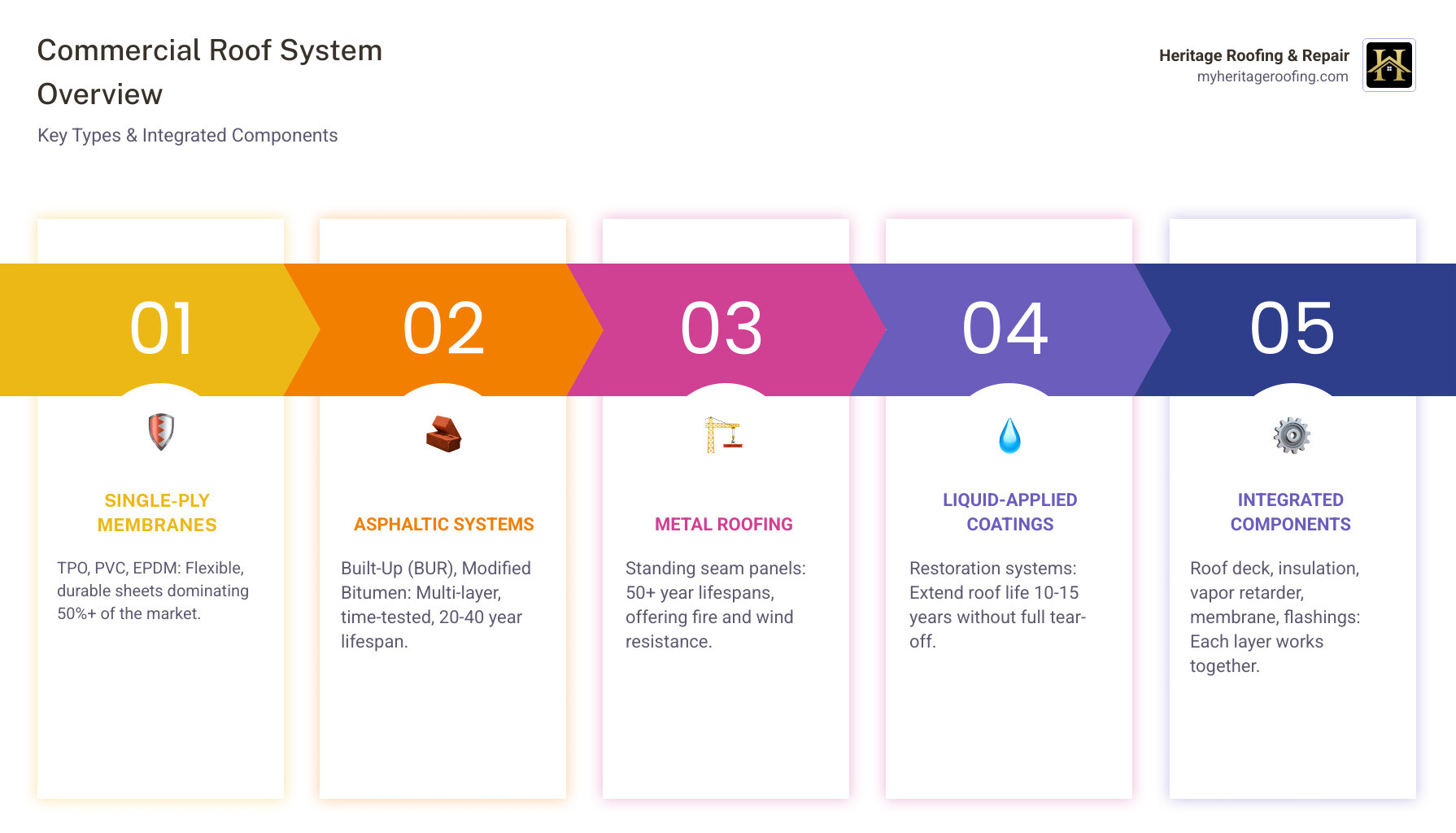
This guide explores the most common commercial roof systems, including:
- Single-Ply Membranes (TPO, PVC, EPDM): Flexible, durable sheets that dominate the market.
- Asphaltic Systems (BUR, Modified Bitumen): Multi-layer, time-tested designs lasting 20-40 years.
- Metal Roofing: Standing seam panels offering 50+ year lifespans.
- Liquid-Applied Coatings: Restoration systems that extend a roof’s life without a full tear-off.
I’m Rex Wisdom, owner of Heritage Roofing & Repair. For over 50 years, my family has specialized in commercial roof systems throughout Northwest Arkansas. Our hands-on approach guarantees superior workmanship, from installation to storm damage restoration. Let’s explore the materials that will keep your building safe and dry.
The Anatomy of a Low-Slope Commercial Roof
A commercial roof is a complete system of integrated components, each playing a vital role in protecting your building. A well-designed system from a trusted expert like Heritage Roofing & Repair works in unison to provide decades of reliable performance.
Core Components and Their Functions
At its heart, a commercial roof is a sophisticated assembly of materials. Understanding these layers is key to appreciating the resilience of modern roofing.
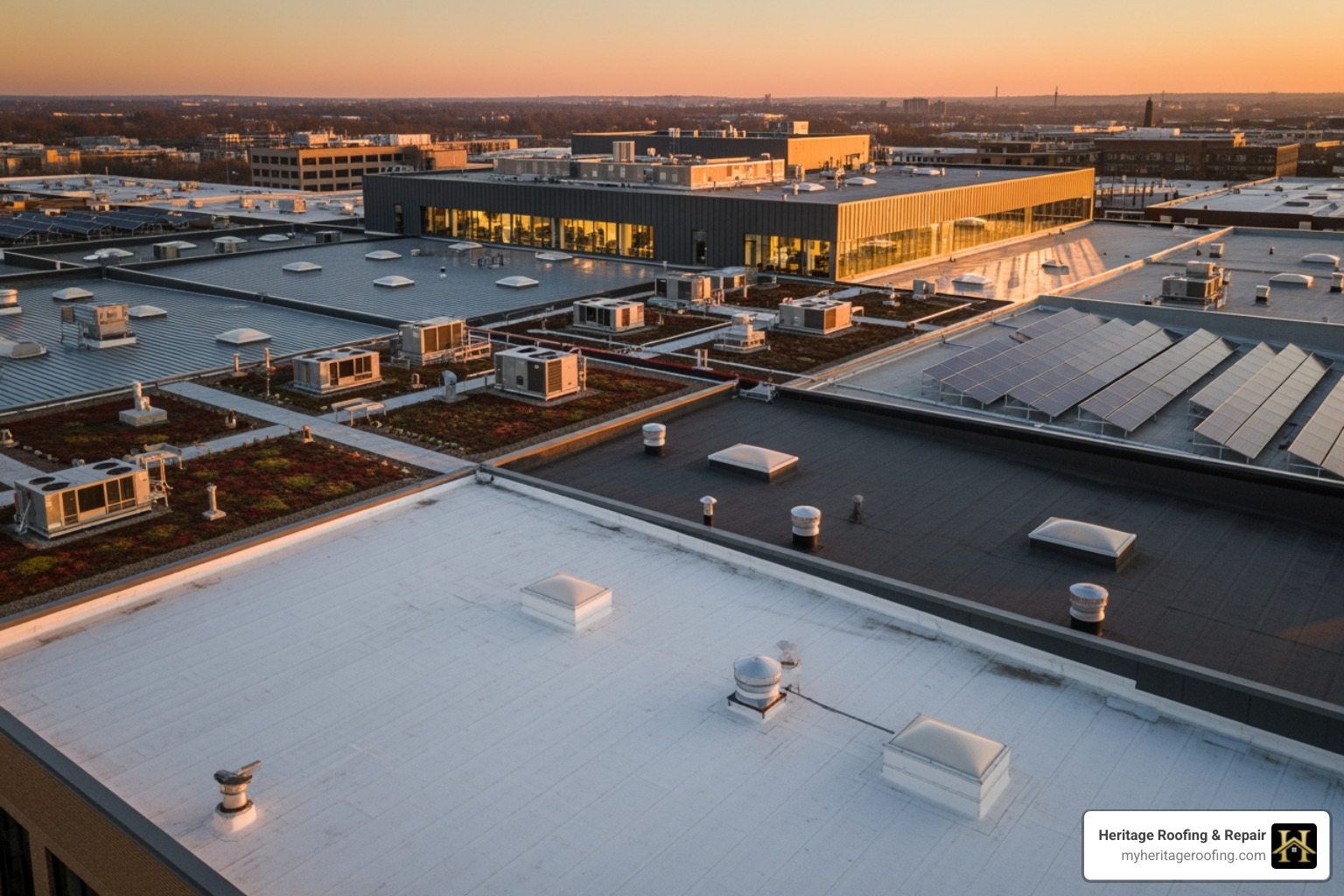
The primary components of a commercial low-slope roofing system include:
- Roof Deck: The structural foundation, typically made of steel, concrete, or wood. The deck type influences the choice of insulation and attachment method.
- Vapor Retarder: Positioned below the insulation, this layer controls moisture migration from the building’s interior into the roof assembly, preventing condensation and potential mold growth. This is especially important in climates with significant temperature fluctuations like Arkansas.
- Insulation: This component is critical for energy efficiency. Its R-value determines how well the roof prevents heat transfer, reducing HVAC load and lowering energy bills. Polyisocyanurate (polyiso) is a widely used, cost-effective insulation with a high thermal value. You can learn more about the role of insulation in commercial roofing.
- Cover Board: Installed over the insulation, a cover board adds protection against foot traffic and impact damage, provides a stable substrate for the membrane, and can improve the system’s fire rating.
- Membrane: This is the visible, waterproof layer that serves as a continuous barrier against water intrusion. We will explore membrane types in the next section.
The Unsung Heroes: Flashings and Accessories
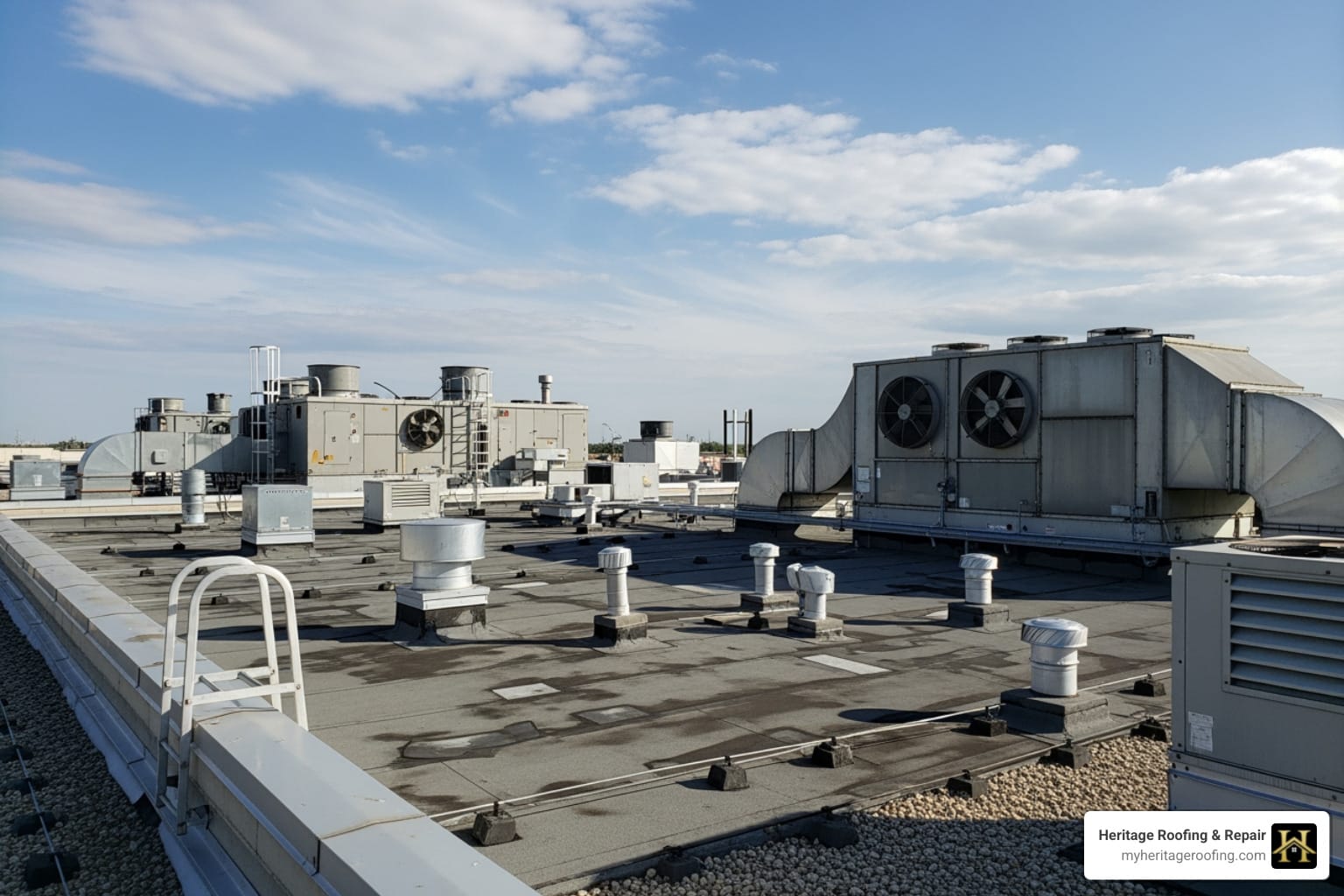
The integrity of a commercial roof often depends on its flashings and accessories. These elements waterproof the most vulnerable areas, such as transitions and penetrations.
Flashings are specialized materials installed around:
- Parapet walls
- HVAC curbs and equipment
- Skylights and vents
- Drains and scuppers
Properly installed flashings are paramount to preventing leaks. According to the National Roofing Contractors Association, the importance of proper flashing cannot be overstated for long-term performance. Other accessories like edge metal, fasteners, and adhesives are also essential for a complete, watertight system.
Exploring the Main Types of Commercial Roofing Materials
The commercial roofing market offers a wide array of materials. While single-ply membranes are the current market leaders, traditional asphaltic systems remain popular for their unique benefits. TPO, for instance, now commands a 40% share of the new construction market.
Single-Ply Membranes: The Market Leaders
Single-ply roofing systems are flexible sheets of synthetic materials known for their strength, flexibility, and durability. According to the Single Ply Roofing Industry (SPRI), these membranes are manufactured to strict quality control requirements, making them a reliable choice.
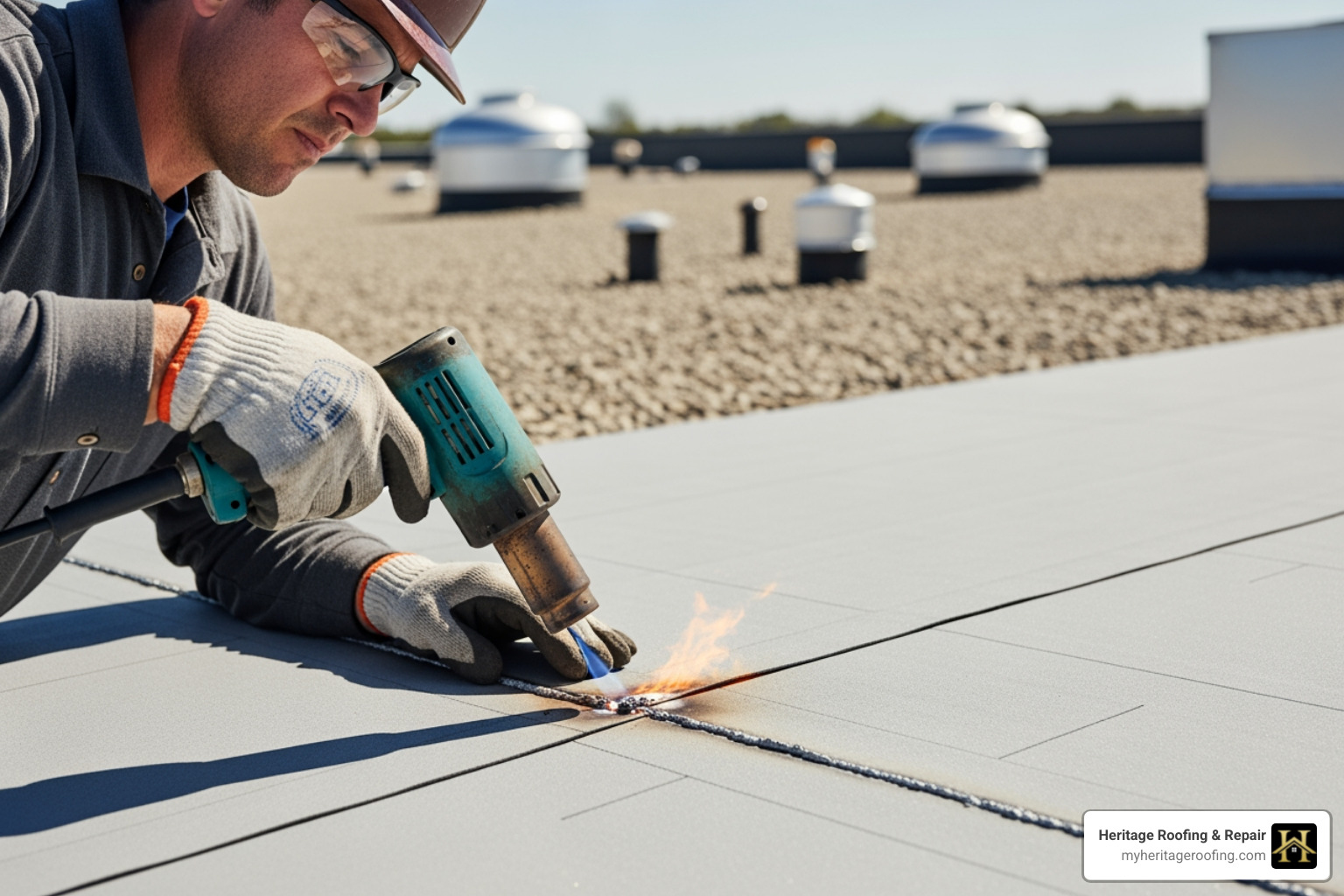
The three main types of single-ply membranes are:
Thermoplastic Olefin (TPO): TPO is the market leader, making up about 50% of the single-ply market. It is highly reflective, which improves energy efficiency—a major benefit in Arkansas’s warm climate. TPO is durable, resistant to UV rays and punctures, and its heat-welded seams create a monolithic, watertight bond. You can explore our TPO Roofing options designed for durability and energy efficiency.
Polyvinyl Chloride (PVC): Introduced in the 1970s, PVC membranes offer exceptional strength and resistance to fire, chemicals, and grease, making them ideal for restaurants or industrial facilities. Like TPO, PVC seams are heat-welded for a strong, watertight seal. Some PVC systems offer warranties up to 30 years.
Ethylene Propylene Diene Monomer (EPDM): Often called “rubber roofing,” EPDM has been used since the 1960s and is known for its incredible durability and flexibility, with a lifespan of 30 years or more. It is highly resistant to UV radiation and extreme weather. While traditionally its seams were taped, modern installation techniques have improved their reliability.
Here’s a quick comparison of these popular single-ply options:
| Feature | TPO | PVC | EPDM |
|---|---|---|---|
| Cost | Mid-range | Higher-range | Lower-range |
| Lifespan | 15-25 years | 20-30+ years | 25-30+ years |
| Installation | Heat-welded seams | Heat-welded seams | Adhered seams |
| Key Benefits | Energy-efficient, durable | Chemical/grease resistant | Highly flexible, long track record |
| Primary Use | General commercial | Restaurants, industrial | General commercial, cost-effective |
Asphaltic Roofing: Time-Tested and Tough
Asphaltic systems are among the oldest and most trusted roofing technologies, with a track record spanning over a century. These multi-ply systems are renowned for their redundancy and durability.
Built-Up Roofing (BUR): This traditional system is “built up” on-site by alternating layers of roofing felts and hot asphalt (bitumen). A typical BUR system has three to four plies, offering excellent waterproofing and redundancy. A gravel surface provides UV and fire protection, and a well-maintained system can last up to 40 years.
Modified Bitumen (Mod Bit): An evolution of BUR, Mod Bit combines asphalt with polymers to improve flexibility and performance. There are two main types: APP (plastic-like characteristics, often torch-applied) and SBS (rubber-like characteristics, often applied with hot asphalt or cold adhesive). Mod Bit offers superior flexibility, waterproofing, and puncture resistance.
Metal Roofing Systems for Commercial Buildings
Metal roofing is a robust and increasingly popular choice for commercial buildings, especially standing seam systems. They are known for:
- Durability and Lifespan: Metal roofs can last 50 years or more with minimal maintenance.
- Weather Resistance: They offer exceptional resistance to wind, fire, and hail, making them ideal for the varied weather in Northwest Arkansas.
- Energy Efficiency: Reflective coatings can reduce heat absorption and lower cooling costs.
- Sustainability: Metal is highly recyclable and can often be installed over an existing roof, reducing landfill waste. The Metal Construction Association (MCA) provides extensive resources on this option.
For more details, see our guide on metal roofing in Northwest Arkansas.
Innovative & Sustainable Options
Newer technologies offer solutions for sustainability.
Vegetative “Green” Roofs: These systems involve installing living plants on a roof, offering significant environmental benefits. They manage stormwater runoff, improve insulation, reduce the urban heat island effect, and protect the underlying membrane from UV damage, extending its life. While they require structural assessment and maintenance, they are an excellent sustainable option promoted by organizations like Green Roofs for Healthy Cities.
Key Factors for Choosing Your Commercial Roof System
Selecting the right commercial roof system involves more than just the material. A professional assessment considers your building’s needs, local climate, and long-term goals. The attachment method is especially critical for wind resistance and watertight performance.
Attachment Methods: How Your Roof Stays Put
The way a membrane is secured is as important as the membrane itself. The three primary methods are:
- Fully Adhered: The membrane is glued to the substrate. This method offers superior wind uplift resistance and a smooth, aesthetic finish, making it ideal for high-wind zones like those in Northwest Arkansas. However, it can be more labor-intensive.
- Mechanically Attached: The membrane is fastened with screws and plates. This is often faster and less expensive, offering strong wind resistance when installed correctly. The main drawback is the potential for fastener penetration points to become weak over time.
- Ballasted: The membrane is held in place by the weight of stones or pavers. While cost-effective and fast to install, it adds significant weight and is not recommended in regions with very high winds.
Making the Right Choice for Your Building and Budget
Choosing the right system impacts your building’s longevity, energy use, and operational costs. We help you evaluate these critical factors:
- Climate Considerations: For Northwest Arkansas, a roof must handle heat, humidity, hail, and high winds. Reflective membranes like white TPO are excellent for summer heat, while high wind and impact ratings (e.g., UL 2218 Class 4 for hail) are crucial.
- Building Use & Foot Traffic: An industrial facility may need a chemical-resistant membrane like PVC, while a roof with high foot traffic requires extra durability.
- Budget vs. Lifespan: While some systems have lower upfront costs, a metal roof’s 50-year lifespan may offer a better long-term value. We help you analyze the life-cycle cost.
- Energy Efficiency Goals: “Cool roofs” with high reflectivity can significantly lower cooling costs. The Cool Roof Rating Council (CRRC) provides data on product performance. Proper insulation is also key to meeting energy codes.
Finding a Local Commercial Roofing Expert in Arkansas
An experienced local roofer understands regional building codes, weather patterns, and the best systems for the area. For businesses in and around Berryville, AR, a trusted partner can make all the difference.
With over 50 years of serving the Northwest Arkansas community, we have the expertise to handle the unique challenges our local climate presents. We are dedicated to providing dependable, affordable, and quality craftsmanship.
Heritage Roofing & Repair 3458 Arkansas State Hwy 221, Berryville, AR 72616 (870) 654-1164
Protecting Your Investment: Maintenance, Restoration, and Warranties
A new commercial roof is a major capital expense, and its service life depends on proactive care. Regular maintenance and a clear understanding of your warranty are key to maximizing your return on investment.
The Importance of Regular Maintenance and Inspections
Regular inspection and maintenance are paramount to a roof’s longevity. While most commercial roofs last 20 to 30 years, proper care can extend that lifespan significantly.
- Prevent Costly Repairs: Small issues like a clogged drain or a minor crack can escalate into major water damage. Regular inspections catch these problems early.
- Ensure Proper Drainage: Ponding water is a roof’s worst enemy. Routine cleaning of drains and removal of debris are essential to prevent water buildup that stresses the membrane.
- Professional Expertise: We recommend professional roof inspections at least annually and after major storms. An expert can identify subtle signs of wear that an untrained eye might miss.
- Maintenance Plans: A comprehensive roof maintenance plan is the best way to protect your investment and ensure your roof remains in optimal condition.
Roof Coating vs. Full Replacement: When to Restore
Building owners often face the “repair or replace” dilemma. A roof coating system can be a viable alternative to a full replacement, saving time and money.
When to Consider a Coating: A coating is a great option if the existing roof deck and insulation are structurally sound but the membrane is aging. It can add 10-15 years of life at 50-70% less cost than a replacement, with minimal disruption to your business. Many coatings also improve energy efficiency.
When Full Replacement is Necessary: Replacement is required if there is extensive structural damage, widespread wet insulation, or if the roof already has two or more layers (per building codes). If the membrane is too degraded for a coating to be effective, a full replacement is the only long-term solution.
A thorough assessment by a licensed roofing inspector is needed to determine the best course of action.
Understanding Commercial Roofing Warranties
A warranty is a promise of performance. There are two main types:
Manufacturer’s Warranty: This covers defects in the roofing materials. Warranties can range from a standard 10 years to 30+ years. The most comprehensive are NDL (No Dollar Limit) warranties, which cover both materials and labor for repairs and require installation by a manufacturer-certified contractor.
Contractor’s Workmanship Warranty: This warranty, provided by the installer, covers the quality of the installation. Since even the best materials can fail if installed improperly, this warranty protects you from installation errors. It typically lasts one to two years, but reputable contractors may offer more.
Understanding why roofing warranties are important is crucial. Always read the fine print to know what is covered and what is required to keep the warranty valid, such as regular maintenance.
Your Partner in Commercial Roofing
Choosing the right commercial roof system is a critical decision for any business owner. By understanding the components, materials, and key selection factors, you can make an informed choice that protects your property for decades. A durable, well-installed roof is the foundation of a secure business.
We hope this guide has provided the knowledge you need to steer commercial roof systems. If you’re ready to explore the best roofing options for your business in Northwest Arkansas, the experts at Heritage Roofing & Repair are here to help. With over 50 years of trusted experience, we provide dependable, high-quality solutions custom to your needs. Contact our team today to discuss your project in the Fayetteville, AR area.