Why Commercial Roof Inspections Are Critical for Your Business
Your commercial roof is a significant asset protecting your entire business operation, yet it’s often overlooked until a leak disrupts business, damages inventory, or creates a safety hazard. By the time moisture is visible inside, the problem is often widespread and expensive. A proactive approach, starting with a professional evaluation from a trusted team of Northwest Arkansas roofers, is the most effective strategy to prevent catastrophic failures. A Commercial roof inspection is a systematic evaluation of your roof’s condition, identifying potential issues before they become costly emergencies. Here’s what you need to know:
What is a Commercial Roof Inspection?
- A thorough examination of all roofing components by a qualified professional
- Identifies leaks, damage, drainage issues, and structural concerns
- Typically takes 1-3 hours depending on building size and complexity
- Results in a detailed report with photos and repair recommendations
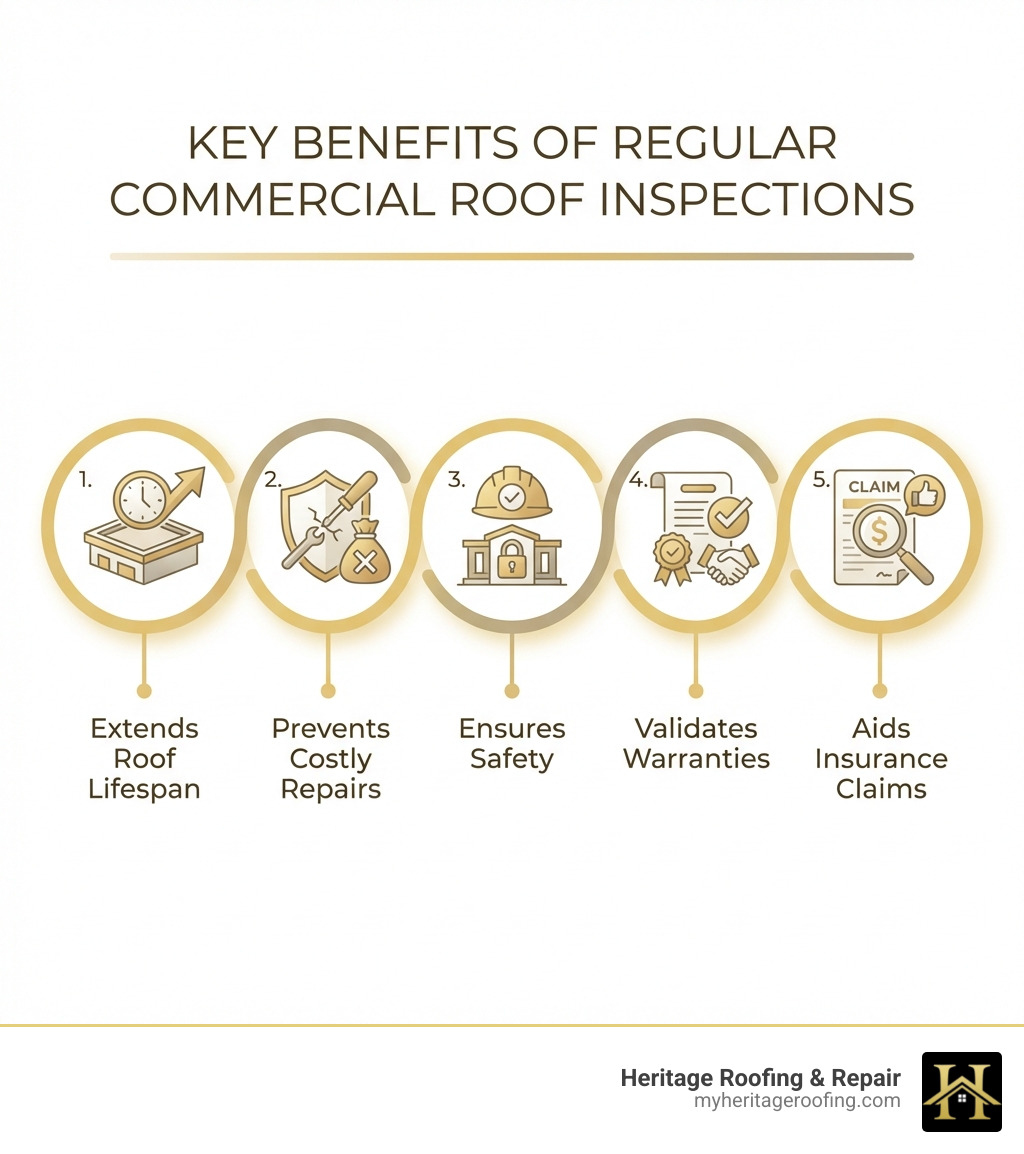
A regular inspection program can extend your roof’s life expectancy and significantly reduce the need for emergency repairs. Neglecting your roof increases the risk of leaks, structural damage, and potential business interruption, with insurance carriers often denying claims for roofs that lack a documented maintenance history.
The primary purpose of a Commercial roof inspection is proactive problem identification. We aim to discern issues before they become massive problems, saving you considerable time and money. By identifying and addressing small maintenance issues as they arise, we can improve the performance of your roof and potentially extend its service life. This small investment now can prevent larger expenses in the future and minimize the risk of property damage.
When and How Often to Inspect Your Roof
The frequency of Commercial roof inspection depends on various factors, including the roof’s age, local climate, and the type of roofing material. However, we recommend a general guideline for maximizing your roof’s performance and longevity.
Regular Schedule:
We recommend performing roof inspections every six (6) months – ideally in the spring and fall. A spring inspection helps us check for any damage that may have occurred over the winter months, while a fall inspection ensures your roof is prepared to withstand the upcoming colder weather and potential storms. This semi-annual approach aligns with best practices for maintaining roof surfaces, drains, and downspouts as a critical part of an overall building preventive maintenance program.
Triggers for Additional Inspections:
Beyond the regular schedule, several events warrant an immediate Commercial roof inspection:
- Severe Weather Events: It is imperative to assess your roof after any significant weather event, such as heavy rain, hail, high winds, or heavy snowfall. Such events can cause immediate damage that might not be visible from the ground but can quickly lead to leaks.
- After Rooftop Construction or Maintenance: Any activity on the roof, including HVAC repairs, new equipment installation, or even routine cleaning by other contractors, can inadvertently cause damage. An inspection ensures no new issues were created.
- Before Purchasing a Commercial Property: When acquiring a new commercial property, a comprehensive roof inspection is essential. It helps identify existing problems, assess the roof’s remaining lifespan, and inform your negotiations, preventing unforeseen liabilities.
- Visible Damage or Interior Leaks: If you notice any signs of damage from the ground, such as loose flashing, missing shingles, or pooling water, or if you detect moisture inside the building, an emergency inspection is crucial to pinpoint the source and extent of the problem.
For a structured approach to maintaining your roof, explore our Roof Maintenance Plans Guide.
The High Cost of Neglect
Neglecting regular Commercial roof inspection and maintenance is a gamble with potentially severe consequences. The risks can quickly escalate from minor inconveniences to significant financial burdens and operational disruptions.
Risks of Neglect:
- Interior Water Damage: Unaddressed roof issues inevitably lead to leaks. Water infiltration can damage interior finishes, office equipment, inventory, and even critical infrastructure.
- Mold Growth: Moisture inside the building creates an ideal environment for mold and mildew, posing health risks to occupants and requiring costly remediation.
- Compromised Structural Integrity: Persistent leaks can weaken the building’s structural components, leading to costly repairs and potential safety hazards.
- Damaged Inventory and Equipment: For businesses, water damage to stored goods, machinery, or electronics can result in substantial financial losses and operational downtime.
- Business Disruption: Significant roof damage can force temporary closure of your business, leading to lost revenue, customer dissatisfaction, and reputational harm.
- Voided Warranties: Many commercial roofing warranties require documented regular inspections and maintenance. Failing to adhere to these terms can void your warranty, leaving you responsible for the full cost of repairs or replacement.
- Denied Insurance Claims: Insurance carriers may deny claims following severe weather if building owners can’t show that they have regularly cared for and maintained their roof. A lack of inspection records can be a critical hurdle when seeking compensation for storm damage. Our Commercial Roof Insurance Claims Guide offers further insights into this process.
A small investment in routine inspections can prevent these minor defects from later snowballing into a considerable expense.
I’m Rex Wisdom, owner of Heritage Roofing & Repair, and for over 50 years my family has helped Northwest Arkansas businesses protect their properties through comprehensive Commercial roof inspection programs and expert roofing solutions. Our hands-on approach ensures that every inspection delivers actionable insights that keep your business running smoothly and your investment protected.
Handy Commercial roof inspection terms:
The Anatomy of a Comprehensive Commercial Roof Inspection
Unlike residential roofs, commercial systems are often larger, flatter, and house complex equipment like HVAC units, vents, and skylights, creating more potential failure points. A thorough inspection examines every component to create a complete picture of the roof’s health. We don’t just look for leaks; we dig into the entire roofing system to assess its integrity and performance.
Key Areas and Components Examined
A comprehensive Commercial roof inspection leaves no stone unturned. Our experienced inspectors carefully examine every element of your roofing system.
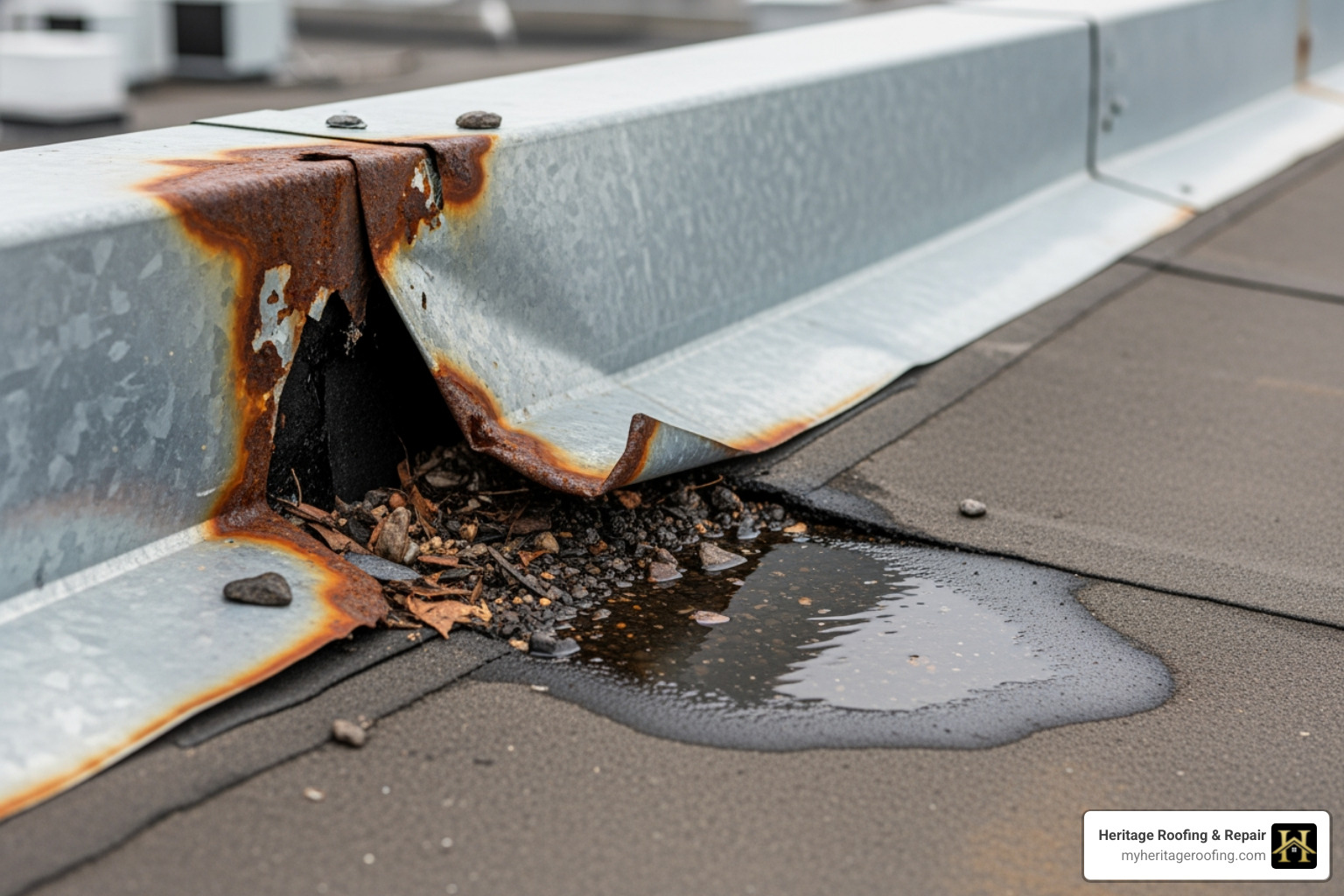
Here are the key components and areas we scrutinize:
- Roof Membrane: We check the primary protective layer for cracks, blisters, punctures, tears, or any signs of deterioration due to UV exposure or age. This includes looking for soft spots or delamination.
- Flashing and Sealants: These are critical components that provide a watertight seal around roof penetrations and edges. We inspect them for cracks, separation, drying, or improper installation, as they are common locations for leaks.
- Drains and Gutters: Proper drainage is crucial. We ensure that gutters, downspouts, and internal drains are clear of debris, functional, and properly sloped to prevent water accumulation.
- Roof Penetrations: Areas where pipes, vents, HVAC units, skylights, and other equipment penetrate the roof surface are high-risk zones. We examine their seals, curbs, and surrounding membrane for integrity and proper sealing.
- Parapet Walls and Edges: These perimeter elements are especially prone to damage from wind and water. We check for cracks, spalling, loose coping, or compromised flashing.
- Seams and Fasteners: For membrane roofs, we inspect all seams for adhesion and integrity. For metal roofs, we check fasteners for corrosion or loosening.
- Debris and Vegetation: Accumulations of leaves, branches, or other debris can block drains and trap moisture. We also look for vegetation growth (algae, moss, weeds) which can damage the membrane and indicate moisture issues.
- Ponding Water: Water that remains on the roof surface for more than 48 hours is considered ponding water and is a common problem. We identify these areas, as they can lead to accelerated membrane degradation and structural stress.
Our comprehensive commercial roof inspection checklist includes these elements and more, ensuring a thorough evaluation.
Common Problems Uncovered During a Commercial Roof Inspection
During our inspections in Berryville, Fayetteville, and Harrison, AR, we frequently encounter a range of issues that, if left unaddressed, can lead to significant damage and expense.
Common Issues We Find:
- Leaks and Moisture Infiltration: This is by far the most common and urgent problem. We investigate any signs of water entry, both visible and hidden, often indicated by interior water stains.
- Ponding Water: As mentioned, water that sits for more than 48 hours accelerates roof material breakdown, leading to leaks and potential structural issues.
- Roof Membrane Damage: This includes cracks, blisters (bubbles in the membrane), punctures from foot traffic or sharp objects, and general deterioration from UV exposure and age.
- Flashing Failure: The flashing around roof edges, penetrations, and transitions is a frequent culprit for leaks when it cracks, separates, or becomes dislodged.
- Clogged Drainage Systems: Gutters, downspouts, and roof drains become blocked by debris, leading to water backup and overflow, which can damage the roof and foundation.
- UV Degradation: Prolonged exposure to the sun’s ultraviolet rays can cause roofing materials to become brittle, crack, and lose their protective qualities.
- Vegetation Growth: Algae, moss, or weeds growing on the roof indicate moisture retention and can cause physical damage to the membrane.
Addressing these issues quickly will prevent minor defects from later snowballing into a considerable expense. Understanding the necessary steps for commercial roof repair is a critical part of managing your property after an inspection.
Commercial vs. Residential Inspections
While both commercial and residential roof inspections aim to assess the condition of a roof, they differ significantly in scope, complexity, and the specific expertise required.
| Feature | Commercial Roof Inspections | Residential Roof Inspections |
|---|---|---|
| Size & Complexity | Typically much larger, often multi-level, complex layouts. | Generally smaller, simpler structures. |
| Roof Type | Predominantly flat or low-slope (TPO, EPDM, PVC, BUR, Modified Bitumen). | Mostly steep-slope (asphalt shingles, metal, tile, slate). |
| Drainage Systems | Internal drains, scuppers, complex gutter systems to manage large volumes of water. | External gutters, downspouts, simpler drainage. |
| Penetrations | Numerous HVAC units, vents, exhaust fans, skylights, satellite dishes, complex piping. | Fewer penetrations: chimneys, plumbing vents, skylights. |
| Inspection Process | Often involves specialized equipment (drones, thermal imaging, core samples), extensive documentation, research into building plans and warranties. | Primarily visual inspection, often from the ground or a ladder. |
| Reporting | Highly detailed reports with photographic evidence, repair recommendations, cost estimates, and maintenance plans. | Simpler reports, often focusing on immediate repair needs. |
| Purpose | Asset management, warranty compliance, operational continuity, insurance claims, long-term budgeting. | Homeowner safety, property value, immediate repair needs. |
Commercial inspections require inspectors to perform research before, and sometimes after, the on-site inspection takes place. The extent of this research depends on the Scope of Work set by the client, often involving reviewing building plans, past maintenance records, and warranty documents.
The Anatomy of a Comprehensive Commercial Roof Inspection
Unlike residential roofs, commercial systems are often larger, flatter, and house complex equipment like HVAC units, vents, and skylights, creating more potential failure points. A thorough inspection examines every component to create a complete picture of the roof’s health. We don’t just look for leaks; we dig into the entire roofing system to assess its integrity and performance.
Key Areas and Components Examined
A comprehensive Commercial roof inspection leaves no stone unturned. Our experienced inspectors carefully examine every element of your roofing system.
Here are the key components and areas we scrutinize:
- Roof Membrane: We check the primary protective layer for cracks, blisters, punctures, tears, or any signs of deterioration due to UV exposure or age. This includes looking for soft spots or delamination.
- Flashing and Sealants: These are critical components that provide a watertight seal around roof penetrations and edges. We inspect them for cracks, separation, drying, or improper installation, as they are common locations for leaks.
- Drains and Gutters: Proper drainage is crucial. We ensure that gutters, downspouts, and internal drains are clear of debris, functional, and properly sloped to prevent water accumulation.
- Roof Penetrations: Areas where pipes, vents, HVAC units, skylights, and other equipment penetrate the roof surface are high-risk zones. We examine their seals, curbs, and surrounding membrane for integrity and proper sealing.
- Parapet Walls and Edges: These perimeter elements are especially prone to damage from wind and water. We check for cracks, spalling, loose coping, or compromised flashing.
- Seams and Fasteners: For membrane roofs, we inspect all seams for adhesion and integrity. For metal roofs, we check fasteners for corrosion or loosening.
- Debris and Vegetation: Accumulations of leaves, branches, or other debris can block drains and trap moisture. We also look for vegetation growth (algae, moss, weeds) which can damage the membrane and indicate moisture issues.
- Ponding Water: Water that remains on the roof surface for more than 48 hours is considered ponding water and is a common problem. We identify these areas, as they can lead to accelerated membrane degradation and structural stress.
Our comprehensive commercial roof inspection checklist includes these elements and more, ensuring a thorough evaluation.
Common Problems Uncovered During a Commercial Roof Inspection
During our inspections in Berryville, Fayetteville, and Harrison, AR, we frequently encounter a range of issues that, if left unaddressed, can lead to significant damage and expense.
Common Issues We Find:
- Leaks and Moisture Infiltration: This is by far the most common and urgent problem. We investigate any signs of water entry, both visible and hidden, often indicated by interior water stains.
- Ponding Water: As mentioned, water that sits for more than 48 hours accelerates roof material breakdown, leading to leaks and potential structural issues.
- Roof Membrane Damage: This includes cracks, blisters (bubbles in the membrane), punctures from foot traffic or sharp objects, and general deterioration from UV exposure and age.
- Flashing Failure: The flashing around roof edges, penetrations, and transitions is a frequent culprit for leaks when it cracks, separates, or becomes dislodged.
- Clogged Drainage Systems: Gutters, downspouts, and roof drains become blocked by debris, leading to water backup and overflow, which can damage the roof and foundation.
- UV Degradation: Prolonged exposure to the sun’s ultraviolet rays can cause roofing materials to become brittle, crack, and lose their protective qualities.
- Vegetation Growth: Algae, moss, or weeds growing on the roof indicate moisture retention and can cause physical damage to the membrane.
Addressing these issues quickly will prevent minor defects from later snowballing into a considerable expense. Understanding the necessary steps for commercial roof repair is a critical part of managing your property after an inspection.
Commercial vs. Residential Inspections
While both commercial and residential roof inspections aim to assess the condition of a roof, they differ significantly in scope, complexity, and the specific expertise required.
| Feature | Commercial Roof Inspections | Residential Roof Inspections |
|---|---|---|
| Size & Complexity | Typically much larger, often multi-level, complex layouts. | Generally smaller, simpler structures. |
| Roof Type | Predominantly flat or low-slope (TPO, EPDM, PVC, BUR, Modified Bitumen). | Mostly steep-slope (asphalt shingles, metal, tile, slate). |
| Drainage Systems | Internal drains, scuppers, complex gutter systems to manage large volumes of water. | External gutters, downspouts, simpler drainage. |
| Penetrations | Numerous HVAC units, vents, exhaust fans, skylights, satellite dishes, complex piping. | Fewer penetrations: chimneys, plumbing vents, skylights. |
| Inspection Process | Often involves specialized equipment (drones, thermal imaging, core samples), extensive documentation, research into building plans and warranties. | Primarily visual inspection, often from the ground or a ladder. |
| Reporting | Highly detailed reports with photographic evidence, repair recommendations, cost estimates, and maintenance plans. | Simpler reports, often focusing on immediate repair needs. |
| Purpose | Asset management, warranty compliance, operational continuity, insurance claims, long-term budgeting. | Homeowner safety, property value, immediate repair needs. |
Commercial inspections require inspectors to perform research before, and sometimes after, the on-site inspection takes place. The extent of this research depends on the Scope of Work set by the client, often involving reviewing building plans, past maintenance records, and warranty documents.
The Inspection Process: From Scheduling to Final Report
A professional inspection is a systematic process that typically takes 1-3 hours, depending on the roof’s size and complexity. It combines on-site evaluation with detailed documentation to provide actionable insights. We pride ourselves on a thorough, structured approach that gives you a complete understanding of your roof’s health.
Who Performs the Inspection and What Technology is Used?
A comprehensive Commercial roof inspection requires specialized knowledge, experience, and tools.
Who Conducts the Inspection:
- Qualified Roofing Contractors: Like us at Heritage Roofing & Repair, professional roofing contractors have extensive knowledge of various commercial roofing systems, common failure points, and repair techniques. We have the training and experience to identify issues that an untrained eye would miss.
- Certified Inspectors: Many professional inspectors hold certifications from industry organizations, signifying a high level of expertise and adherence to strict standards of practice. Our team members are experienced and continuously trained. For more on qualifications, consult our Certified Roofing Contractor Complete Guide.
- Manufacturer’s Representatives: Sometimes, a manufacturer’s rep may conduct inspections, especially as part of a warranty program, to ensure proper installation and maintenance.
Technology in Modern Inspections:
Technology plays a crucial role in enhancing the accuracy and efficiency of modern Commercial roof inspections:
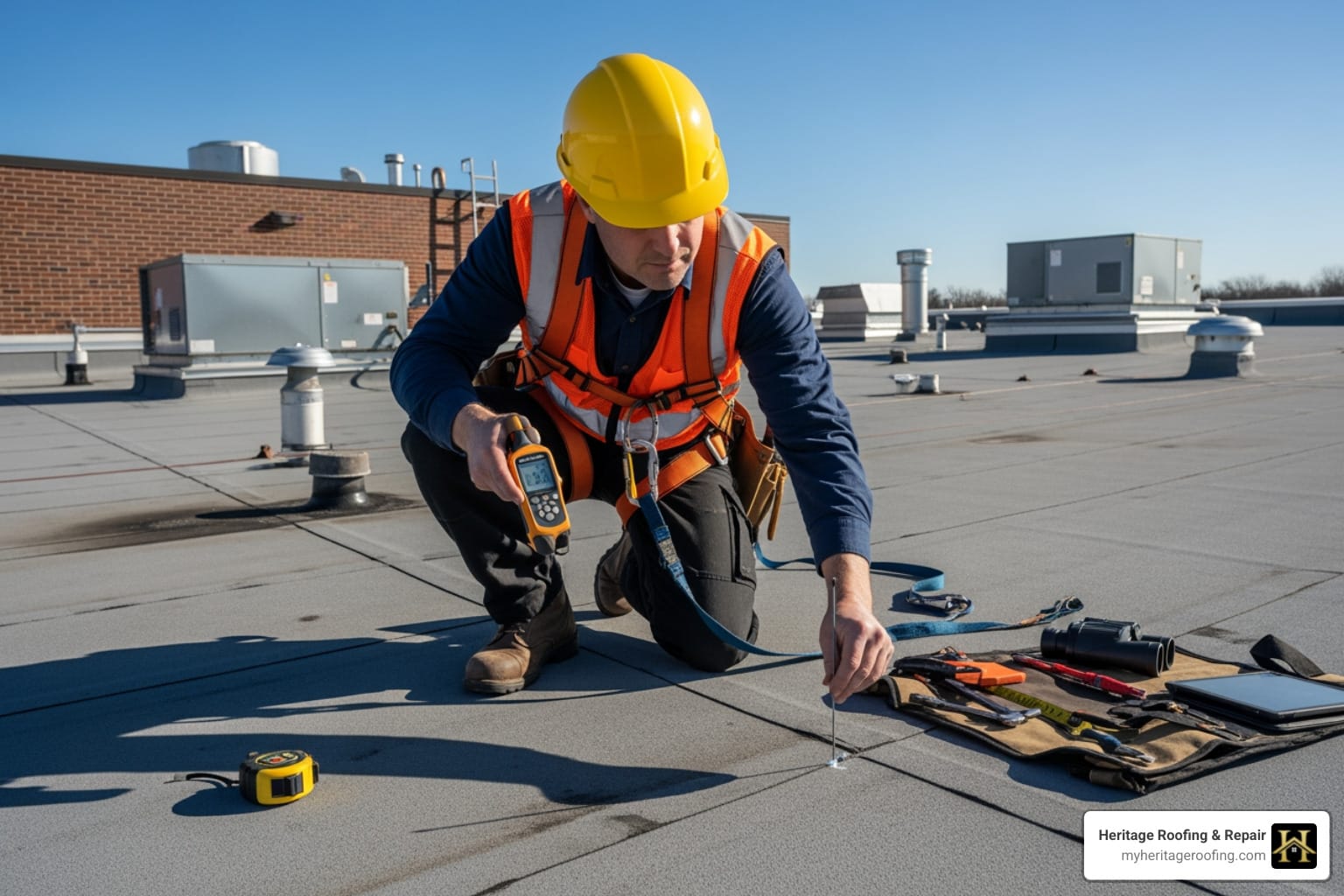
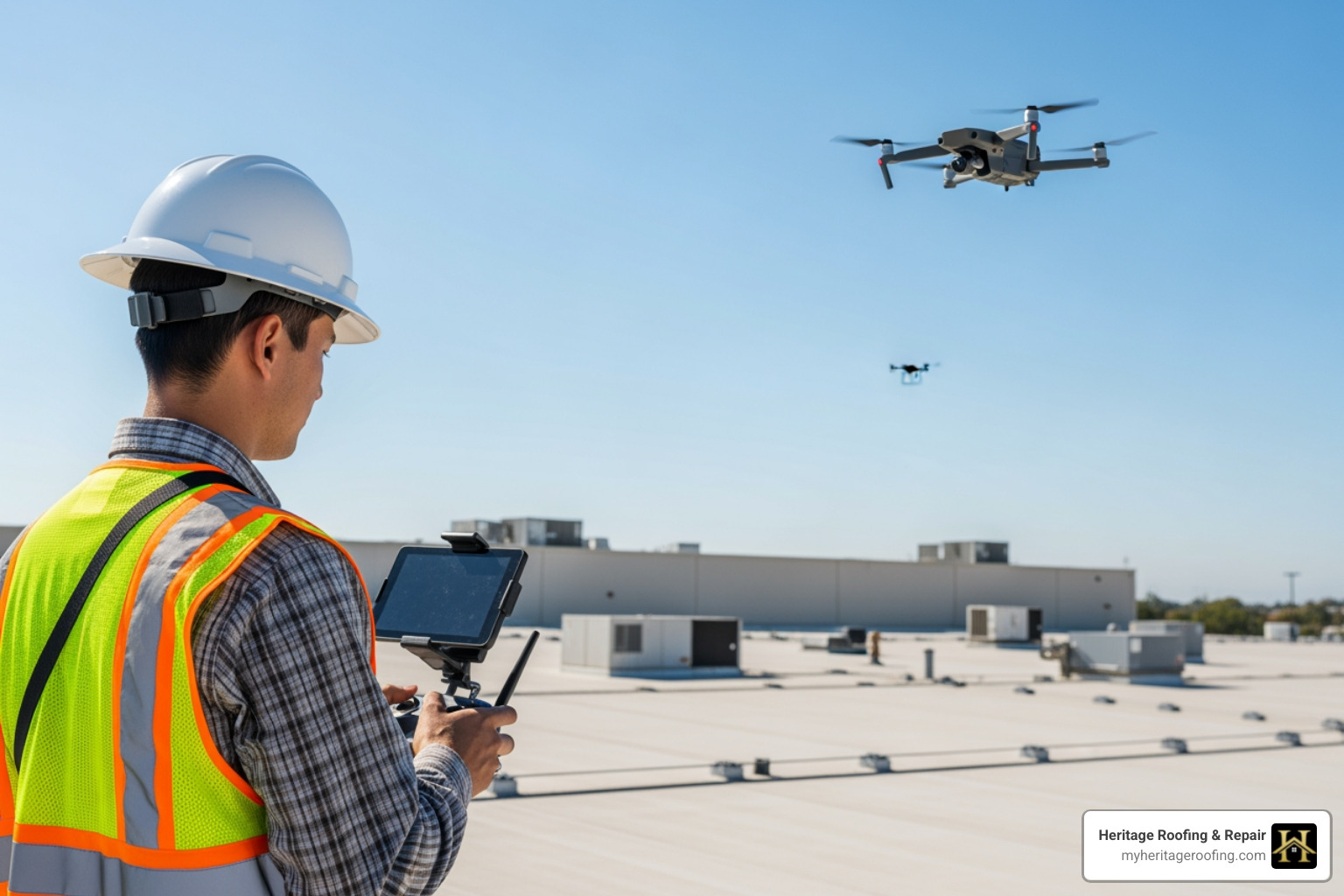
- Drones for Aerial Views: For large or multi-level buildings, drones provide a fast, clear, and safe view of the entire roof, identifying areas of concern that might be inaccessible or dangerous for manual inspection.
- Thermal Imaging Cameras / Infrared Scanning: These tools detect temperature differences on the roof surface, which can indicate hidden moisture trapped beneath the membrane. This is particularly effective at night or during temperature changes when the trapped water retains heat differently than dry areas.
- Moisture Meters: Used in conjunction with thermal imaging, moisture meters provide precise readings of moisture content within the roofing system, helping to confirm the presence of water intrusion.
- Core Sampling: For a far more comprehensive inspection, we may take small core samples to examine each individual layer of your roof system. This reveals the roof’s construction, the presence of moisture saturation, and the overall condition of the underlying components.
These tools allow us to safely and accurately assess your roof’s condition and explore potential solutions with unparalleled detail.
What to Expect: A Step-by-Step Walkthrough
When you schedule a Commercial roof inspection with us, here’s a general overview of what you can expect:
- Initial Consultation: We begin by discussing your concerns, the history of the roof (if known), and any specific areas you’d like us to focus on. We’ll also gather any available documentation, such as past inspection reports or blueprints.
- Safety Setup: Safety is our top priority. Our team will establish a safe work zone, secure ladders, and adhere to all OSHA compliance guidelines before accessing the roof.
- Interior Check: Before even stepping on the roof, we conduct an interior inspection. We look for signs of water stains, mold, or structural issues in the attic, ceiling, and walls directly below the roof. These clues often point us toward specific problem areas on the exterior.
- Exterior Walk-Through: Our inspectors will methodically walk the entire roof surface, from end to end. We pay close attention to the roof membrane, flashing, seams, penetrations, and drainage systems, visually identifying any cracks, blisters, punctures, ponding water, or debris.
- Component Testing & Advanced Diagnostics: We examine every component, including HVAC units, skylights, vents, and parapet walls. If necessary, we’ll deploy drones for high-level views, use thermal imaging to detect hidden moisture, or take core samples for deeper analysis.
- Documentation: Throughout the inspection, we carefully document all findings with detailed notes, measurements, and high-resolution photographs or videos. This creates a comprehensive record of your roof’s current condition.
- Final Report Delivery: After the on-site inspection, we compile all our findings into a clear, concise, and actionable report. This document will include photographic evidence of any issues, detailed descriptions, and our expert recommendations for repair, restoration, or replacement, along with estimated costs.
Our goal is to provide you with all the necessary information regarding your roof’s current condition, empowering you to make informed decisions. For a deeper dive into our inspection methodology, please see our Roof Inspection Service Complete Guide.
Your Local Inspection Experts in Berryville, AR
For businesses in Northwest Arkansas, having a local, experienced team is crucial for prompt and reliable service. We understand the specific weather challenges and building codes unique to our region, ensuring our inspections are relevant and effective for your property in Berryville, Fayetteville, or Harrison, AR.
Heritage Roofing & Repair
3458 Arkansas State Hwy 221, Berryville, AR 72616
(870) 654-1164
After the Inspection: Turning Insights into Action
The inspection report is more than a summary of findings; it’s a strategic tool for budgeting, maintenance, and asset management. It empowers you to make informed decisions to protect your property. Once our comprehensive Commercial roof inspection is complete, the real work of protecting your investment begins.
Understanding Your Inspection Report
After our inspection, you will receive a detailed, formal report that serves as your roadmap for roof management.
What Our Reports Include:
- Detailed Findings: A comprehensive overview of the roof’s condition, highlighting all identified issues, no matter how minor.
- Photographic Evidence: High-resolution images of problem areas, providing clear visual documentation of the damage or concerns. This is invaluable for understanding the issues and for insurance purposes.
- Repair Recommendations: Specific, actionable recommendations for addressing each identified problem, ranging from minor maintenance to significant repairs.
- Cost Estimates: Transparent and detailed cost estimates for all recommended work, helping you budget effectively.
- Priority Levels: We categorize issues by urgency (e.g., immediate attention, address within 6 months, monitor) to help you prioritize repairs and allocate resources efficiently.
This report is a critical document for understanding your roof’s health and planning future actions. It can also play a vital role in maintaining your Roofing Warranty, as many warranties require documentation of regular inspections and maintenance.
Next Steps: Repair, Restore, or Replace?
Finding issues during a Commercial roof inspection doesn’t automatically mean a costly replacement. We prioritize solutions that are the least invasive and most effective.
Addressing Minor Issues:
Many issues identified during routine inspections are minor, such as clogged drains, loose flashing, or small punctures. These can often be addressed with simple, cost-effective repairs. Proactively fixing these small problems prevents them from snowballing into significant, expensive damage.
Developing a Maintenance Plan:
Based on our report, we can help you develop a customized roof maintenance plan. This plan outlines routine tasks and a schedule for ongoing care, ensuring the longevity of your roof system. Periodic inspections are a good time to clear debris, check equipment that might be installed on the roof, and identify concerns or damage while they are still relatively new and easy to fix.
Evaluating Roof Coatings:
For roofs in good structural condition but showing signs of wear, a commercial roof coating can be an excellent option. Coatings can extend the roof’s lifespan, improve energy efficiency, and provide an additional layer of protection without the expense of a full replacement. Learn more in our Commercial Roof Coating Guide.
Planning for Replacement:
If the inspection reveals widespread damage, structural issues, or if your roof is nearing the end of its projected lifespan, replacement might be the most cost-effective long-term solution. Our report will provide the necessary information to help you plan and budget for this significant investment. Roof problems are uniquely urgent and can also be expensive to fix, so solutions are usually determined by identifying the least invasive and effective option between repairing, restoring, or replacing the roof.
The Role of Inspections in Insurance and Warranties
Regular Commercial roof inspections are not just about maintenance; they are powerful tools for protecting your investment through insurance and warranties.
Documenting Pre-Storm Condition:
Performing a comprehensive roof inspection before and after a significant weather event will simplify the insurance claim process. Our detailed reports provide objective evidence of your roof’s condition before the storm, making it easier to prove storm-related damage and expedite your claim. Insurance carriers may deny claims following severe weather if building owners can’t show that they have regularly cared for and maintained their roof.
Proving Regular Maintenance:
Many commercial insurance policies and roofing warranties require proof of regular maintenance and inspections. Our inspection reports serve as official documentation that you have diligently cared for your roof, fulfilling these critical requirements. This can be the difference between a covered claim and a costly out-of-pocket expense.
Simplifying the Claims Process:
With thorough documentation from our inspections, the insurance claims process becomes significantly smoother. We provide the detailed information—including photographic evidence and expert assessments—that adjusters need to evaluate your claim fairly and efficiently.
Fulfilling Warranty Requirements:
Most commercial roofing warranties stipulate periodic inspections and adherence to specific maintenance protocols. Failure to comply can void your warranty, leaving you unprotected against defects or premature failure. Our inspections ensure you meet these obligations, preserving your warranty coverage. A guide to roof maintenance from DisasterSafety.org emphasizes the importance of these practices.
Conclusion
A proactive Commercial roof inspection is one of the smartest investments a property owner can make. It transforms roof management from a reactive, costly emergency service into a planned, predictable, and budget-friendly process. By identifying and addressing small issues before they escalate, you not only prevent expensive damage and business disruptions but also extend the service life of your roof, ensuring it protects your assets for years to come. With over 50 years of experience, the team at Heritage Roofing & Repair provides the expertise needed to keep your commercial property secure across Berryville, Fayetteville, and Harrison, AR. We believe in craftsmanship over shortcuts, integrity over profit, and people over everything, ensuring your business’s roof is built and maintained like it’s our own.
Ready to protect your investment? Schedule your professional roof inspection in Fayetteville, AR, today