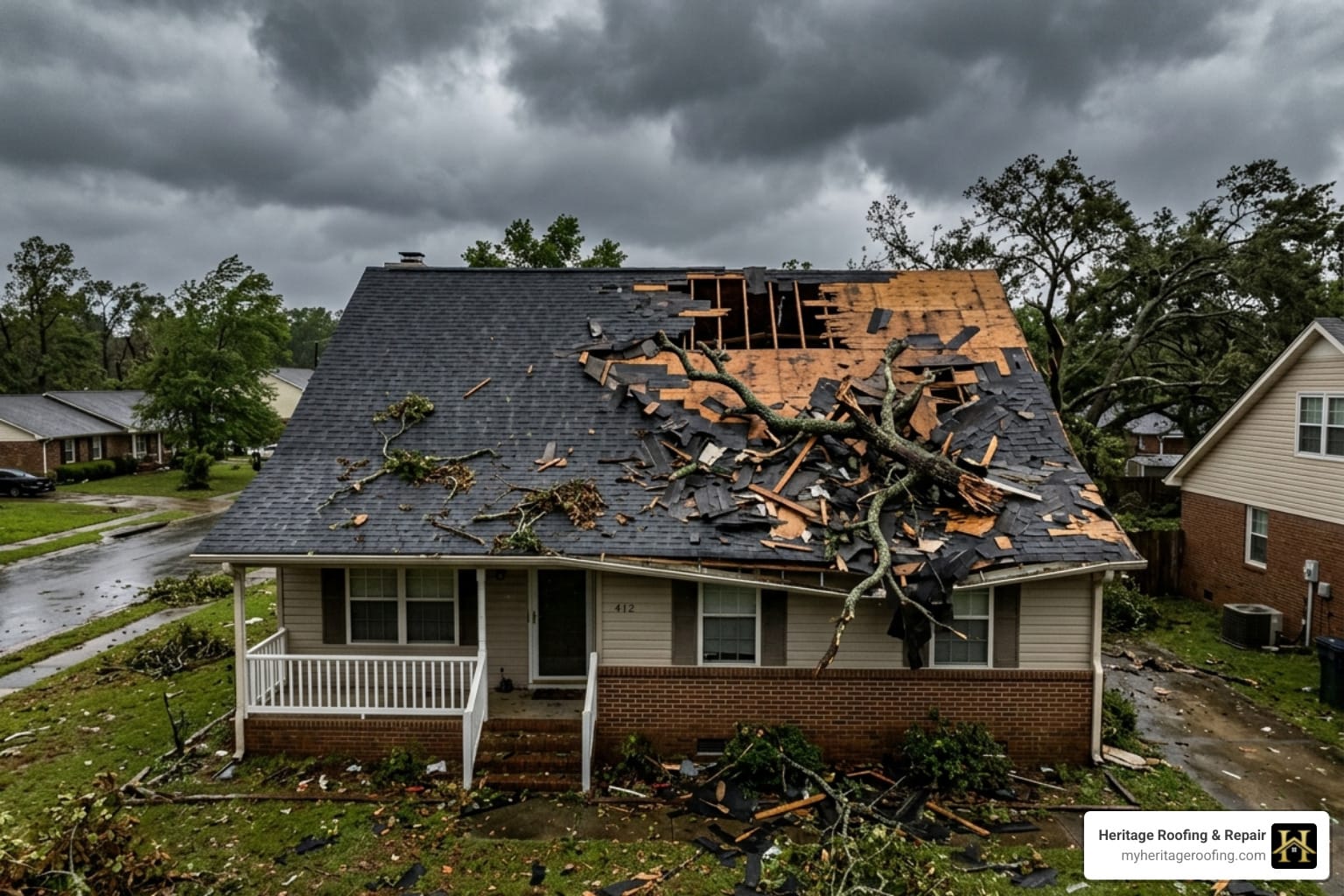
When Storms Strike: What Every Homeowner Needs to Know About Storm Damage Roof Replacement
As a premier roofing company in Northwest Arkansas, Heritage Roofing & Repair knows that storm damage roof replacement is one of the most stressful and costly repairs a homeowner can face — but knowing exactly what to do next makes all the difference.
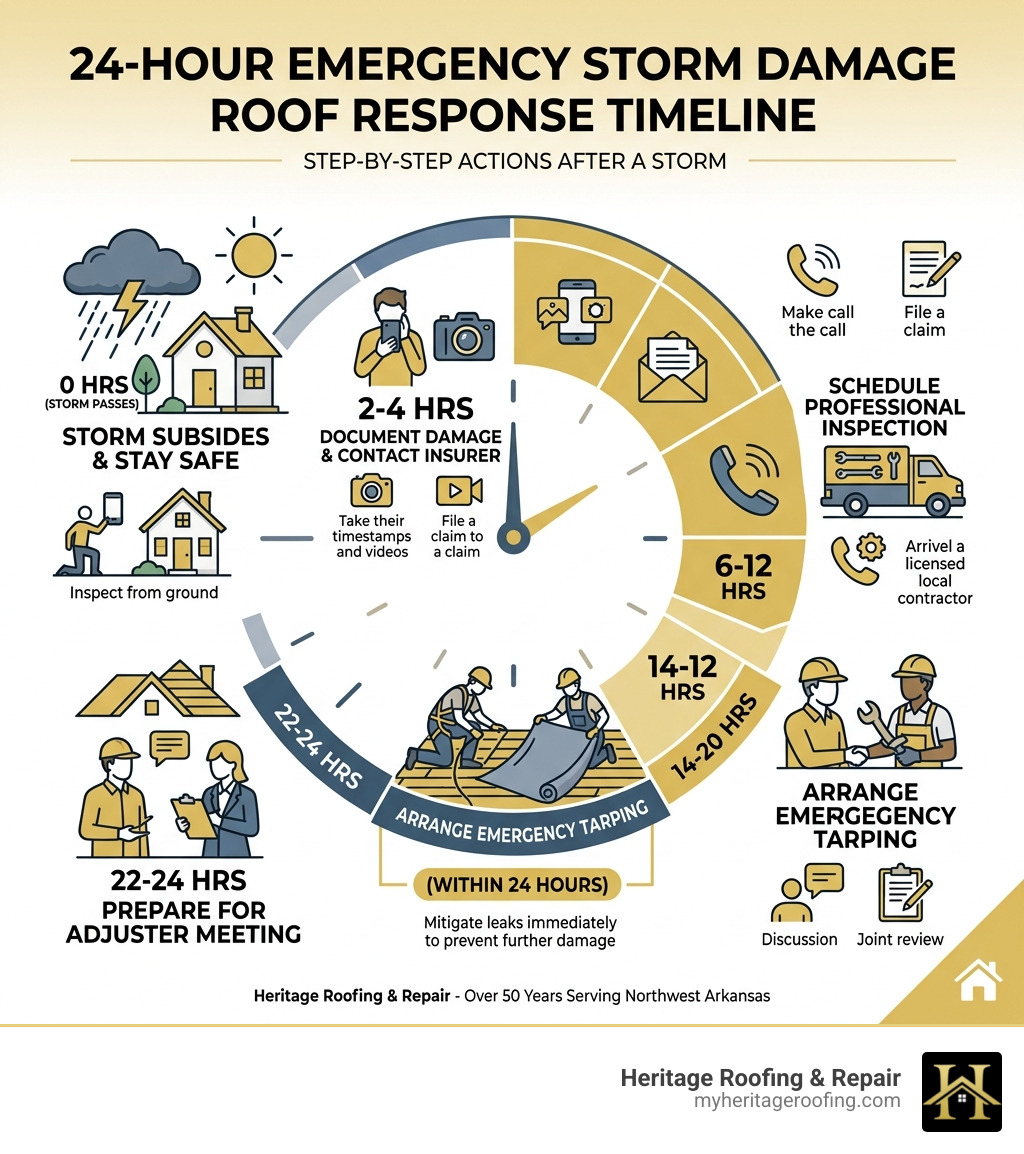
Here’s a quick overview of the key steps:
- Stay safe — avoid climbing on the roof; inspect from the ground
- Document everything — timestamped photos and videos of all damage
- Mitigate immediately — arrange professional emergency tarping within 24 hours
- File your insurance claim — contact your insurer as soon as possible
- Get a professional inspection — hire a licensed, local roofing contractor
- Attend the adjuster meeting — bring your contractor to ensure nothing is missed
- Choose your materials — decide between repair and full replacement based on damage extent and roof age
- Complete the replacement — finalize the restoration with a professional installation
In 2024, roofing repair and replacement costs reached nearly $31 billion nationwide — a 30% jump since 2022 — driven largely by wind and hail storms, which accounted for over half of all residential roofing claims. And the trend isn’t slowing down.
For homeowners in Northwest Arkansas, severe weather is a recurring reality. A single hailstorm — which typically lasts no longer than 15 minutes — can silently shave years off your roof’s lifespan. High winds can lift and curl shingles, breaking the watertight seal before you even notice a drip on your ceiling.
The chaos that follows a storm is overwhelming. But the decisions you make in the first 24 to 48 hours can be the difference between a smooth professional roof replacement and a drawn-out, expensive ordeal involving denied claims, hidden structural damage, and contractor scams.
This checklist-style guide is built to cut through that chaos — giving you a clear, step-by-step path from storm impact to full restoration.
I’m Rex Wisdom, owner of Heritage Roofing & Repair, a family-owned business that has served Berryville and the surrounding communities of Northwest Arkansas for over 50 years — and storm damage roof replacement is one of the most critical services we provide. With decades of hands-on experience navigating insurance claims, emergency repairs, and full roof restorations in this region, I’ll walk you through exactly what needs to happen and when.
Basic storm damage roof replacement vocab:
Identifying the Signs: When Do You Need a Storm Damage Roof Replacement?
As of April 2026, the threshold for deciding between a patch job and a full storm damage roof replacement has become clearer, thanks to evolving insurance standards and rising material costs. Identifying damage early is vital because “cosmetic” issues rarely stay cosmetic for long.
Wind damage is often the most visible culprit. Hurricane-force winds (74 mph+) can rip shingles clean off, but even gale-force winds (39-54 mph) are strong enough to lift shingle tabs. When a shingle lifts, the factory seal is broken. Even if the shingle lays back down, it is no longer watertight. Over time, wind-driven rain will find its way underneath, leading to wood rot in your roof deck.
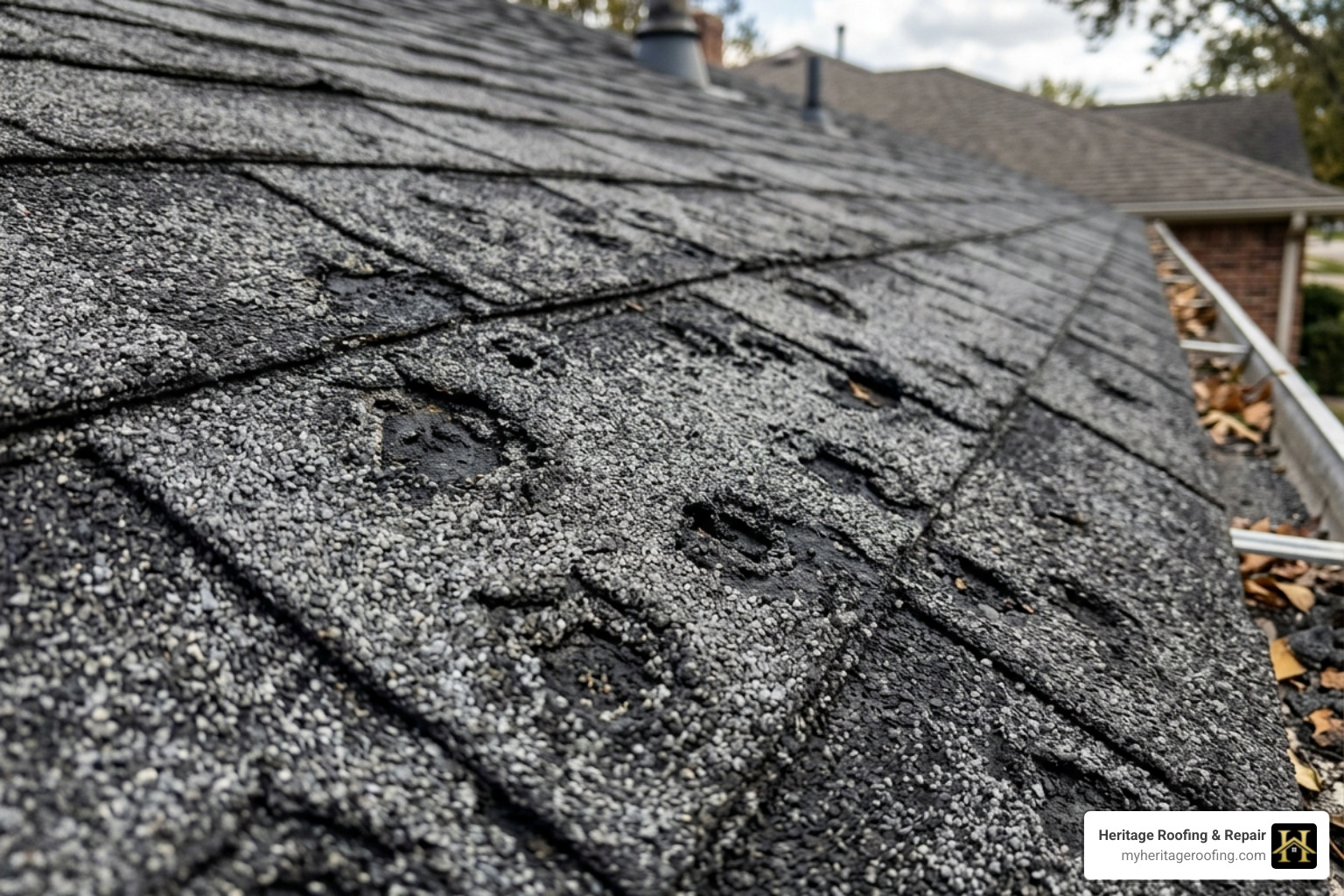
Hail damage is more insidious. When a hailstone hits an asphalt shingle, it creates a “bruise.” This impact knocks away the protective granules that shield the shingle from UV rays. Once those granules are gone, the sun bakes the exposed asphalt, making it brittle and prone to cracking. If you notice a “sand-like” buildup of granules in your gutters or at the bottom of your downspouts after a storm, your roof has likely suffered significant impact. For a deeper dive, check out our Hail Damage Roof Complete Guide.
The 25-30% Rule for Storm Damage Roof Replacement
In the roofing industry, we often use the “25-30% Rule” as a benchmark. If more than 25% to 30% of your roof surface has sustained damage, a full storm damage roof replacement is almost always the more cost-effective long-term solution.
Patching a heavily damaged roof creates a “Frankenstein” effect—different shingle colors, varying ages, and inconsistent seals. Furthermore, many local building codes in Arkansas require a full replacement if a certain percentage of the roof is compromised.
| Damage Extent | Recommended Action | Why? |
|---|---|---|
| < 10% (Isolated) | Repair | Minor shingle loss or single-impact debris. |
| 10% – 25% | Gray Zone | Depends on roof age and material availability. |
| > 30% (Widespread) | Replacement | Structural integrity is compromised; insurance usually covers full cost. |
Hidden Indicators of Severe Impact
Not all damage is visible from the curb. At Heritage Roofing & Repair, we use specialized tools to find what the naked eye misses.
- Underlayment Failure: High winds can create “chatter,” where shingles vibrate and tear the felt or synthetic underlayment beneath them.
- Water Infiltration: We look for water stains on rafters or saturated insulation in the attic.
- Professional Tools: Our teams use moisture meters and infrared cameras to detect thermal differences that indicate trapped moisture behind walls or under shingles.
The Homeowner’s Step-by-Step Insurance Claim Checklist
Filing an insurance claim can feel like learning a second language. Between deductibles, depreciation, and adjusters, it’s easy to get lost. However, successful claims are built on one thing: evidence.
The first thing you should know is the difference between RCV and ACV policies.
- Replacement Cost Value (RCV): The gold standard. Insurance pays the full cost to replace the roof at today’s prices, minus your deductible.
- Actual Cash Value (ACV): Insurance pays what the roof was worth at the time of the storm. If your 20-year roof is 15 years old, they will subtract 75% for depreciation.
For a comprehensive walkthrough of these terms, see our Roofing Insurance Claims Ultimate Guide.
Essential Documentation for a Successful Claim
Insurance companies rely on clear, timestamped evidence. Before you even call your agent, start your photo log.
- Exterior Grounds: Document downed tree limbs, dented window screens, or damaged siding.
- The “Scale” Trick: If you find hailstones, place a coin or a ruler next to them in the photo to show their size.
- Storm Validation: Note the exact date and time of the storm. We often cross-reference these with NOAA Storm Events Database records to prove the occurrence of damaging weather to the insurer.
According to industry best practices for first steps after a wind storm, documenting the interior is just as important. Take photos of any new ceiling spots or drywall cracks that appeared after the weather event.
Navigating the Adjuster Meeting for Storm Damage Roof Replacement
When the insurance adjuster arrives, you shouldn’t be alone. We always recommend having your roofing contractor present. Why? Because adjusters are human—they can miss things.
A qualified contractor can point out subtle hail bruises or “marginal” wind damage that an adjuster might overlook. We speak the same language as the adjuster, often using the same estimating software (like Xactimate), which ensures the “Scope of Work” is accurate from day one. If hidden damage is found later during the tear-off, we handle the “Supplement Claims” process to ensure the insurance company covers the additional costs.
Navigating the Replacement Process Safely and Efficiently
Once the claim is filed, the focus shifts to protecting your home from further exposure while awaiting the full restoration.
Immediate Mitigation and Temporary Repairs
Most insurance policies actually require you to take reasonable steps to prevent further damage. This is called “mitigation.” If there is a hole in your roof, you can’t just wait three weeks for a replacement while rain pours into your living room.
We provide 24-hour emergency response for:
- Emergency Tarping: Using professional-grade, breathable tarps to seal off exposed areas.
- Debris Removal: Safely removing fallen limbs that could cause further structural collapse.
- Water Catchment: Setting up interior systems to prevent secondary loss like mold or ruined flooring.
Choosing a Local Expert in Berryville, AR
In the wake of a big storm, you’ll likely see “storm chasers”—out-of-state contractors who follow storms like shadows. They offer “free roofs” and high-pressure contracts. The risk? Once the job is done, they disappear. If your roof leaks two years from now, their phone number will be disconnected.
Choosing a local expert means working with a neighbor who will be there long after the storm passes. As an established presence in Berryville, AR, Heritage Roofing & Repair is fully licensed, insured, and holds manufacturer certifications that allow us to offer extended warranties. For more tips, read Your Guide to Hiring Premier Storm Damage Repair Experts.
Heritage Roofing & Repair 3458 Arkansas State Hwy 221, Berryville, AR 72616
Future-Proofing: Storm-Resistant Materials and Preventative Care
If you’re going through a storm damage roof replacement, this is the perfect time to upgrade. Why replace your roof with the same materials that just failed?
Upgrading for Long-Term Resilience
Modern technology has made roofing materials much tougher. We recommend looking into:
- UL 2218 Class 4 Shingles: These are tested by dropping 2-inch steel balls from 20 feet. They don’t crack under hail that would shatter standard shingles. Many insurers in Arkansas offer premium discounts (up to 15-30%) for installing these.
- Standing Seam Metal: With a 50+ year lifespan and superior wind resistance (up to 140-180 mph), metal is the ultimate “set it and forget it” storm solution.
- Secondary Water Barriers: We can install a “sealed roof deck” using high-tech underlayments that stay watertight even if the shingles blow off. This is a core part of the FORTIFIED Roof standards.
Maintenance Strategies to Reduce Future Claims
You don’t have to wait for a storm to protect your home. A little preventative care goes a long way:
- Gutter Cleaning: Clogged gutters cause water to back up under your shingles (ice dams).
- Limb Trimming: Any branch within 6 feet of your roof is a potential “hammer” during high winds.
- Annual Inspections: We catch small “nail pops” or cracked flashings before they become insurance claims.
- Ventilation Upgrades: A cool roof is a flexible roof. Proper attic ventilation prevents shingles from becoming brittle and easy to damage.
Frequently Asked Questions about Storm Damage Roof Replacement
Will filing a storm damage claim raise my insurance premiums?
This is the #1 question we get. In most states, including Arkansas, insurance companies generally cannot raise your individual rates solely because you filed a “catastrophe claim” (like hail or wind). However, insurance is a shared-risk pool. If a massive storm hits Fayetteville or Berryville, rates for the entire region may go up, regardless of whether you personally filed a claim. Not filing a claim for legitimate damage just means you’re paying the higher premium without getting the benefit of a protected home.
How long does the storm restoration process typically take?
While every job is unique, we aim for a 10-14 business day timeline from the initial inspection to the final walkthrough.
- Days 1-2: Inspection and documentation.
- Days 3-7: Insurance adjuster meeting and approval.
- Days 8-10: Material ordering and scheduling.
- Days 11-14: Installation (most standard residential roofs are completed in just one day!).
Can I get a full replacement if my roof is over 15 years old?
Yes, but the payout depends on your policy type (RCV vs ACV as detailed in the checklist above). Even with an older roof, a storm claim is often the best way to offset the cost of a replacement that was already looming. For more on this, see our decision guide for repair vs. replacement.
Conclusion: Restoring Your Peace of Mind
A storm can turn your life upside down in minutes, but your recovery doesn’t have to be a nightmare. By following this checklist—prioritizing safety, documenting damage thoroughly, and partnering with a local expert—you can turn a disaster into an opportunity to strengthen your home.
At Heritage Roofing & Repair, we’ve spent half a century helping our neighbors in Berryville, Fayetteville, and Harrison navigate the complexities of storm damage roof replacement. We aren’t just here to hammer shingles; we’re here to be your advocate through the insurance process and your partner in building a more resilient home.
If your roof has taken a hit, don’t wait for the next rain to find out how bad the damage is. Contact us today for a comprehensive storm damage roof replacement assessment. We’ll provide the clarity you need to move forward with confidence.