What Every Homeowner Needs to Know When Facing a Denial
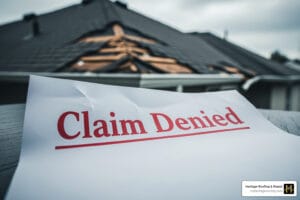
What to do if insurance denied roof claim is a question thousands of homeowners ask after severe storms damage their roofs. A denial from your homeowners’ insurance company can leave you feeling powerless, especially after you’ve diligently paid premiums expecting protection. The good news? A denial is not the final word. At Heritage Roofing & Repair, we’ve spent over 50 years helping Northwest Arkansas homeowners protect their most valuable investment—including guiding them through denied insurance claims.
If your insurance company denied your roof claim, it’s crucial to follow a systematic process to challenge the decision. Most homeowners who systematically challenge denials with proper documentation can successfully overturn them. Insurance companies often deny claims for reasons like “pre-existing damage” or “improper maintenance,” even when a storm is the clear cause. With roof repair costs ranging from $5,000 to $50,000, these denials can be financially devastating. Whether you need a complete roof replacement or just help understanding your policy, we know the denial tactics insurers use and how to overcome them.
Terms related to what to do if insurance denied roof claim:
- filing a homeowners insurance claim for roof damage
- how to file roof replacement insurance claim with adjuster
- can i claim a roof leak on insurance
Why Insurance Companies Deny Roof Claims
To understand what to do if insurance denied roof claim situations, you must first know why denials happen. Insurance companies are for-profit businesses, and they deny claims for many reasons—some legitimate, others questionable. After five decades in the roofing industry, we’ve seen every tactic.
Common Reasons for Roof Claim Denials:
- “Wear and Tear”: This is the most frequent reason. The insurer argues the damage is from normal aging, not a specific, covered storm event.
- Roof Age: Many policies limit coverage on roofs over 15-20 years old. Insurers may deny claims or only offer Actual Cash Value (ACV), which deducts for depreciation, leaving you with a fraction of the replacement cost.
- Policy Exclusions: Your policy’s fine print may exclude certain perils like floods or damage not explicitly listed in a “named perils” policy.
- Insufficient Damage: The adjuster may label the damage “cosmetic” or “minor” to avoid paying for a full repair, even if the roof’s integrity is compromised.
- Pre-existing Damage: Without proof of your roof’s prior condition, an adjuster might claim the damage was there before the storm.
- Improper Maintenance: Clogged gutters or failing to repair known issues can be used to argue your negligence contributed to the damage.
- Manufacturer Defects: If the problem stems from faulty materials, the insurer will direct you to the manufacturer’s warranty, which is often difficult to claim and rarely covers labor.
- Late Filing: Policies have strict deadlines for filing claims, often 365 days. Missing this window can result in an automatic denial.

Understanding Your Policy’s Fine Print
Your insurance policy is a legal contract. To challenge a denial, you must understand its terms. Start by reading your policy cover to cover, not just the declarations page.
- Policy Exclusions: These sections list what your policy won’t cover, such as floods, earthquakes, or mold. If your damage falls under an exclusion, an appeal is unlikely to succeed.
- Named Perils vs. All-Risk: A basic “named perils” policy only covers damage from a specific list (e.g., fire, wind, hail). A more comprehensive “all-risk” policy covers everything unless it’s specifically excluded. Know which type you have.
- Deductibles: This is your out-of-pocket cost. Be aware of percentage deductibles, which are based on your home’s total insured value, not the repair cost. As the Ohio Department of Insurance explains, a 2% deductible on a $200,000 home means you pay the first $4,000.
- Coverage Limits: This is the maximum amount your insurer will pay for a claim.
- Endorsements: These are amendments that can add or remove coverage. A “cosmetic damage exclusion” endorsement, for example, can be used to deny claims for hail dents.
Understanding your specific homeowners insurance roof damage policy is the first step to a successful claim.
The “Wear and Tear” vs. “Storm Damage” Debate
This is the central conflict in most denied roof claims. Insurers have a financial incentive to classify damage as age-related wear and tear, which is not covered. Your goal is to prove it was caused by a sudden, covered storm event.
- Wear and Tear (Not Covered): This is gradual deterioration over time. Signs include widespread granule loss, curling shingles from sun exposure, and general material breakdown across the entire roof.
- Storm Damage (Covered): This results from a specific event. Hail leaves circular impact marks that bruise or crack the shingle mat. High winds lift, crease, or tear off shingles, often in a pattern corresponding to wind direction. Differentiating this from gradual aging is critical. An expert can identify the tell-tale signs of a hail damage roof event that an adjuster might miss.
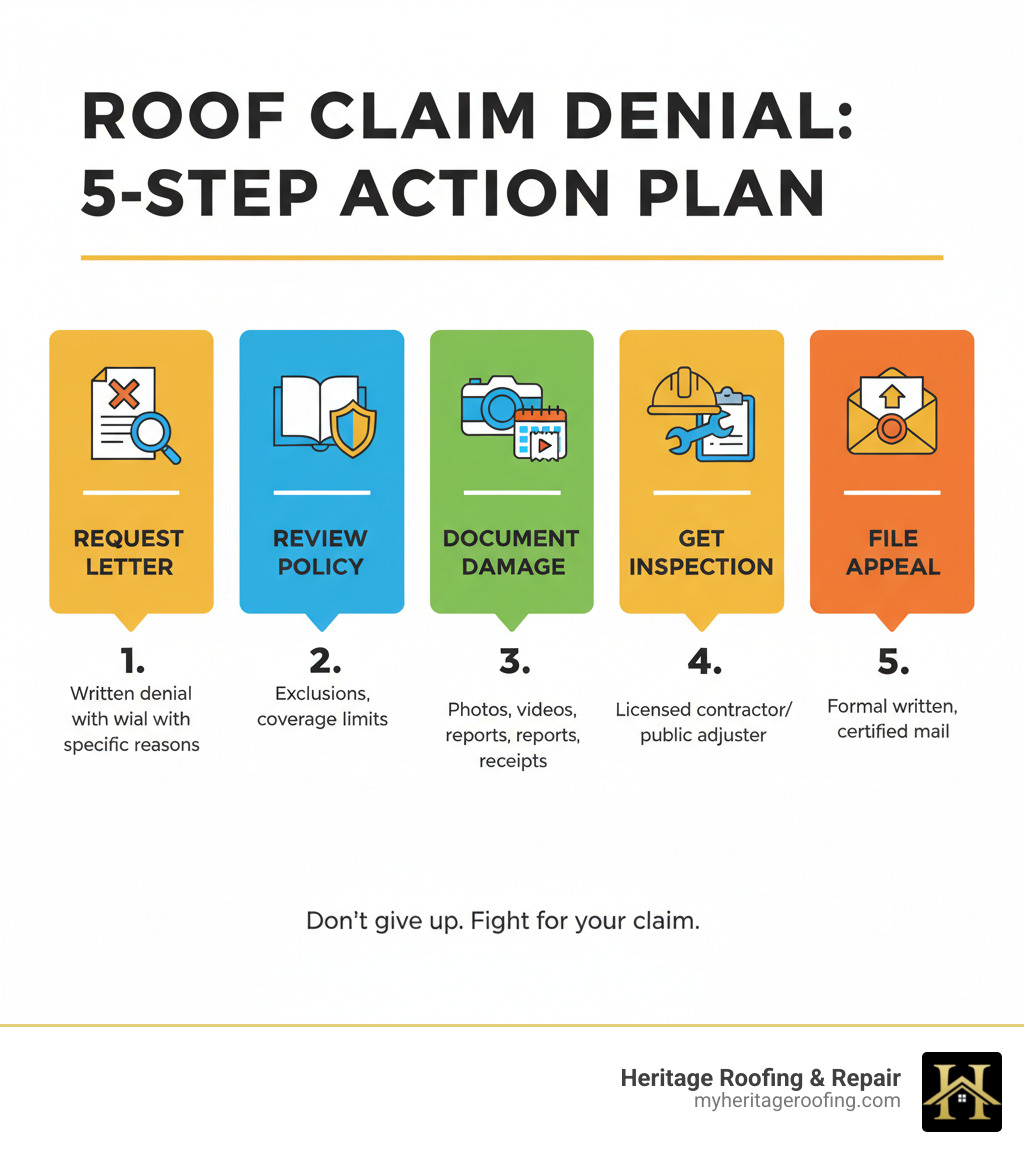
Your Immediate 5-Step Action Plan After a Denial
Receiving a denied roof claim is frustrating, but it is not the end of the road. It is the beginning of a new process. The key to overturning a denial is to remain calm, organized, and methodical. When homeowners ask me what to do if insurance denied roof claim, I tell them that organization is their superpower. Every document, photo, and conversation matters. You are building a systematic, well-documented case that leaves no room for the insurance company to deny its obligations.
Step 1: Request and Review the Written Denial Letter
This is the non-negotiable first step. If you only received a verbal denial, immediately request a formal denial letter in writing. This document is your roadmap for the appeal. It must state the specific reasons for the denial, cite the exact policy language being used, and reference the evidence the adjuster used to make their decision. Without this letter, you are fighting in the dark. It tells you exactly which arguments you need to counter.
Step 2: Review Your Insurance Policy
With the denial letter in hand, become an expert on your own insurance policy. Request a full copy of your policy, not just the summary on the declarations page. Compare the insurer’s reasoning with the actual text of your contract.
Pay close attention to the exclusions and conditions sections. Does the denial reason align with a real exclusion? Did you fail to meet a condition? Most importantly, find the section outlining your rights as a policyholder regarding appeals and dispute resolution. Understanding your roof insurance guide 2025 is critical, and highlighting any language that contradicts the denial will form the foundation of your appeal.
Step 3: Document Everything: Your Most Crucial Task
If I could give only one piece of advice on what to do if insurance denied roof claim, it would be this: document everything carefully. This is your ammunition.
- Photos and Videos: Take clear, timestamped photos and videos of all visible damage from multiple angles.
- “Before” Photos: Any photos showing your roof’s condition before the storm are invaluable for proving the damage is new.
- Repair Estimates: Get at least two detailed quotes from reputable, licensed roofing contractors. A professional free roof inspection from a company like ours provides the detailed report you need.
- Weather Reports: Obtain certified weather data from sources like NOAA to confirm a severe storm occurred on the date of loss.
- Receipts: Keep receipts for any temporary fixes, like emergency roof tarping, to show you mitigated further damage.
- Correspondence Log: Keep a detailed record of every phone call, email, and letter with your insurer.
Step 4: Get an Independent, Professional Opinion
The insurance adjuster works for the insurance company, not you. This inherent conflict of interest makes an independent, professional opinion essential.
Hire a reputable, licensed roofing contractor to perform a thorough inspection. At Heritage Roofing & Repair, we know what storm damage looks like and can identify issues an adjuster might miss or overlook. Our detailed report becomes powerful evidence for your appeal.
You can also hire a public adjuster. This professional works exclusively for you to evaluate damage, prepare estimates, and negotiate with the insurer. They typically charge a percentage of the final settlement, but their expertise often leads to a higher payout that covers their fee.
An unbiased, expert second opinion that directly counters the insurer’s assessment is a critical step in overturning a denial.
Heritage Roofing & Repair
3458 Arkansas State Hwy 221, Berryville, AR 72616
(870) 654-1164
How to Formally Dispute and Appeal a Denied Roof Claim
Once you’ve gathered your evidence, it’s time to take formal action. The appeal process requires precision and persistence. A critical point many homeowners miss is that while you may have up to two years to file an initial claim, appeal deadlines are often much shorter—sometimes just 30 to 60 days from the denial date. When figuring out what to do if insurance denied roof claim, acting quickly is essential.
Writing a Formal Appeal Letter
Your appeal letter is your opening argument—professional, fact-based, and impossible to ignore. It is not the place for emotion; it is for clear, documented facts that counter the insurer’s denial.
- Start with the Basics: Prominently display your claim and policy numbers. Reference the date of the denial letter you are appealing.
- State Your Disagreement: Clearly and respectfully state that you are appealing the decision.
- Present New Evidence: Systematically present your documentation. Attach and reference your independent inspection report, timestamped photos, and certified weather reports. For example: “Attachment A, the inspection report from Heritage Roofing & Repair, identifies clear hail impact marks inconsistent with normal wear and tear.”
- Request Specific Action: Don’t just ask them to “reconsider.” Request a specific outcome, such as: “I request that you reopen this claim, conduct a reinspection with my contractor present, and approve the necessary repairs.”
- Send via Certified Mail: Use certified mail with a return receipt requested. This provides documented proof that the insurance company received your appeal and when.
The Role of a Public Adjuster vs. an Attorney
If your denial becomes contentious, you may need professional reinforcement. A public adjuster is often the right first step for denials based on damage assessment or low settlement offers. An attorney is necessary when the insurer is unresponsive or the denial involves legal violations.
- Public Adjusters: These licensed experts work exclusively for you, the policyholder. They assess damage, negotiate with insurers, and work on a contingency fee, typically 5-15% of the final settlement. As ClaimsMate notes, public adjusters typically charge less than attorneys for claim negotiation.
- Insurance Claim Attorneys: An attorney brings legal force to your claim. They are essential for high-value claims, complex legal issues, or suspected bad faith. They can file lawsuits and pursue damages beyond the claim amount. Their contingency fees are higher, often up to 40%, but they can take legal action that public adjusters cannot. An experienced attorney can help you steer the complexities outlined in our roofing insurance claims ultimate guide.
Escalating to the State Department of Insurance
If your internal appeal fails, filing a complaint with your state’s Department of Insurance can be a powerful move. In Arkansas, you would contact the Arkansas Insurance Department. While they cannot force an insurer to pay a specific claim, they will investigate whether the company violated state insurance laws. Insurers take these investigations seriously. Grounds for a complaint include unreasonable delays, failure to properly investigate, or misrepresenting policy language. This action creates an official record and puts regulatory pressure on the insurer to re-evaluate your claim fairly.
Understanding Your Legal Options
When you’ve exhausted all other avenues and still face a denial, it’s time to understand your legal options. This is where what to do if insurance denied roof claim can escalate to involving attorneys and lawsuits. Insurance companies have a legal obligation to treat you fairly, and when they fail, bad faith insurance laws provide a remedy for homeowners.
When Should You Consider Hiring an Insurance Claim Attorney?
Bringing in an attorney is a significant step, but it becomes essential in certain situations:
- High-Value Claims: If your roof replacement costs tens of thousands of dollars, the financial stakes warrant professional legal help.
- Complex Legal Issues: If your policy language is ambiguous or the claim involves unusual circumstances, an attorney’s expertise is invaluable. They can help you steer our roofing insurance claims ultimate guide and protect your interests.
- Unresponsive Insurer: If your insurer is stalling or ignoring your communications, an attorney’s letter can command a response.
- Suspected Bad Faith: If you believe your insurer is intentionally trying to avoid paying a legitimate claim, you need legal representation.
- Exhausted Appeals: If you’ve gone through the internal and state-level appeal processes without success, an attorney is your last and best option.
Understanding Bad Faith and When You Can Sue
Insurers are bound by a “duty of good faith and fair dealing.” When they violate this duty, they act in bad faith, and Arkansas law gives you the right to sue. Examples of bad faith include:
- Unreasonable Claim Denial: Denying a clearly valid claim without a reasonable, policy-based justification.
- Failure to Investigate: Denying a claim without a thorough and timely investigation.
- Misrepresenting Policy Language: Deliberately twisting your policy’s wording to deny coverage.
- Offering Significantly Less Than Owed: Making a lowball offer without a reasonable explanation, hoping you’ll accept less than you’re due.
- Unreasonable Delays: Intentionally dragging out the process for months with no justification.
If your insurer engages in these practices, you can sue for breach of contract and potentially for bad faith.
What are the potential damages in a bad faith lawsuit?
If you prove in court that your insurer acted in bad faith, you may be entitled to more than just the original claim amount. Arkansas law allows for several types of damages:
- Full Claim Value: The entire amount the insurer should have paid for your roof damage.
- Legal Fees: The court may order the insurer to reimburse you for your attorney’s fees and court costs.
- Emotional Distress Damages: Compensation for the stress, anxiety, and emotional suffering caused by the insurer’s actions.
- Punitive Damages: These are intended to punish the insurer for egregious misconduct and deter future bad behavior. They can be substantial, sometimes several times the original claim amount.
How an Experienced Roofing Contractor Can Be Your Best Ally
When you’re figuring out what to do if insurance denied roof claim, your roofing contractor can be one of your most powerful allies. At Heritage Roofing & Repair, we act as your technical translator and advocate. We speak both “roofing” and “insurance,” bridging the gap between the actual damage and what the insurance company needs to see to approve your claim. Our deep experience with storm damage roof repair means we know how to document damage for maximum impact.
Assisting with Damage Documentation and Evidence
A seasoned roofing professional provides critical support for your appeal. While an adjuster may spend only a few minutes on your roof, we conduct a thorough inspection to find every sign of damage.
- Expert Eye for Damage: We are trained to spot subtle indicators of storm damage that an adjuster might miss, such as shingle bruising from hail or hairline cracks from thermal shock.
- Detailed Photo Reports: We provide comprehensive, timestamped photo reports that serve as clear visual evidence of the cause and extent of the damage.
- Differentiating Damage: Our technical expertise allows us to explain why the damage patterns—like asymmetrical granule loss from hail or lifted seal strips from wind—are from a storm, not normal aging. This professional documentation carries serious weight in an appeal.
Meeting with the Adjuster and Providing Accurate Estimates
Having your contractor present during a reinspection can completely change the dynamic. We attend the meeting to represent your interests as your technical expert.
We walk the roof with the adjuster, pointing out all damage in real-time and explaining its cause from a professional’s perspective. This ensures a complete scope of work is created, including any necessary code upgrades that may be covered by your policy. We then provide a detailed roof replacement estimate based on current, local material and labor costs in Northwest Arkansas, preventing the insurer from underpaying your claim with outdated or generic pricing data.
Navigating the Claims Process
The insurance claims process is intentionally confusing. We use our decades of experience working with all major insurers in Arkansas to guide you through it.
- Insurance Process Knowledge: We know what adjusters look for and how to communicate effectively in their language.
- Supplementing the Claim: If the initial estimate is too low, we provide additional documentation to ensure all necessary repairs are covered.
- Code Upgrade Requirements: If your policy includes code upgrade coverage, we ensure these necessary improvements for a full roof replacement are included in your claim, not paid out of your pocket.
From start to finish, we guide you through the entire process, explaining confusing letters and breaking down settlement offers. We are here to ensure you get every dollar of coverage you are entitled to under your policy.
Local Help for Your Denied Claim in Berryville, AR
When you’re facing a denied roof claim in Northwest Arkansas, you need a partner who understands our local challenges. At Heritage Roofing & Repair, Berryville, AR isn’t just a location on a map—it’s our home. We’ve spent over 50 years weathering the same spring hailstorms and winter ice storms you do.
Local expertise matters when figuring out what to do if insurance denied roof claim. We know local building codes, have documented countless storm events in Carroll County, and understand what area adjusters look for. When an out-of-state adjuster claims your damage is just “wear and tear,” we have the local weather data and technical expertise to prove otherwise.
We’re not just a roofing company; we’re your neighbors. We’ve helped families right here in Berryville fight unfair denials and win. When you work with us, you get a partner who will stand with you through the entire appeals process, providing the expert documentation and testimony that gives your claim real weight.
Don’t Let a Denial Be the Final Word
A denied roof claim is frustrating, but it is rarely the end of your story. Homeowners successfully overturn denials every day by following a systematic process: reviewing the denial, understanding their policy, gathering compelling evidence, and bringing in professional help. The insurance company is counting on you to give up—don’t give them that satisfaction.
Your home is your most significant investment, and protecting it is worth the fight. Well-documented appeals with professional support win far more often than they lose. The key is persistence, organization, and refusing to accept a “no” that doesn’t align with your policy.
Throughout this guide on what to do if insurance denied roof claim situations, we’ve walked through the entire strategy, from understanding denial reasons to exploring legal options. You don’t have to face this battle alone. A reputable roofing contractor, public adjuster, or attorney can transform a seemingly hopeless denial into a successful settlement.
Your insurance policy is a contract, and you have every right to hold your insurer to their end of the agreement. If you need guidance, our team at Heritage Roofing & Repair is here to help. We’ve spent over 50 years helping Northwest Arkansas homeowners steer the insurance process from start to finish.
For more comprehensive information, explore our Roofing Insurance Claims Ultimate Guide to arm yourself with even more knowledge. Don’t let a denial be the final word. Take control, gather your evidence, and fight for what’s rightfully yours.