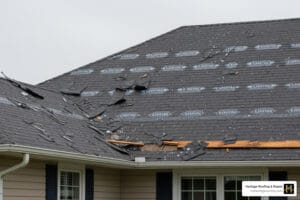
Why Storm Damage Home Repair Funding Matters After Disaster Strikes
Storm damage home repair can be financially overwhelming, with weather disasters causing over $92 billion in damages annually across the United States. If your home has been damaged, securing funding through insurance, federal aid, or other financing is essential to begin recovery. Getting help from a company that provides dependable storm damage repair is key to protecting your property from further deterioration. Understanding your funding options is the critical first step toward restoring your home and peace of mind.
Most homeowner’s insurance policies cover wind and hail, but flood damage typically requires separate coverage. Insurance payouts often factor in depreciation, meaning older roofs receive lower settlements. FEMA assistance serves as a last resort for essential repairs when insurance falls short, with a maximum of $43,600 available for home repair in Fiscal Year 2025.
I’m Rex Wisdom, owner of Heritage Roofing & Repair. For over 50 years, our family has helped Northwest Arkansas homeowners steer storm damage home repair, providing full assistance with insurance claims and emergency restoration. We’ve guided countless families through the funding process, ensuring they receive the support they deserve to rebuild.
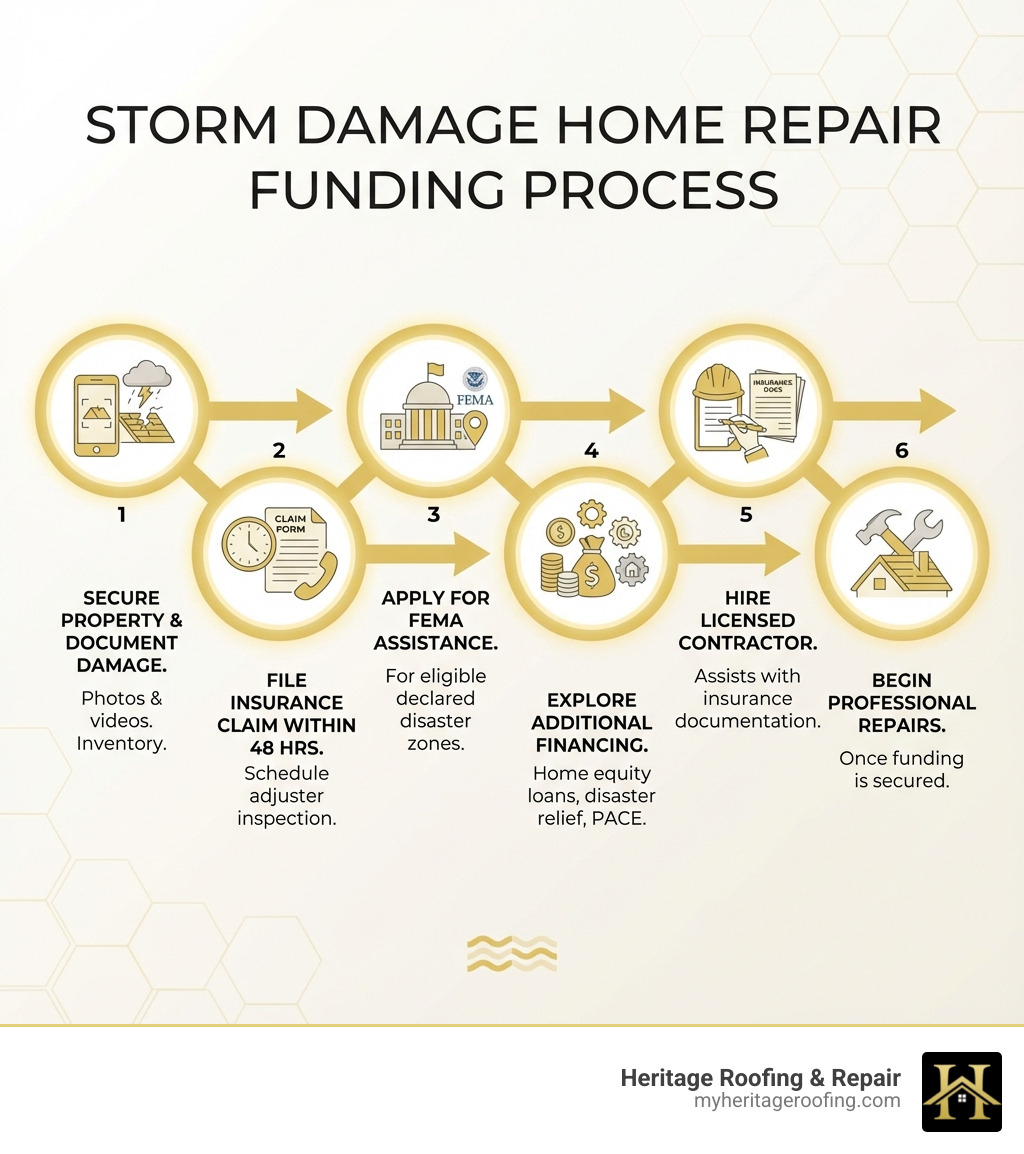
Step 1: Secure Your Property and Document Everything
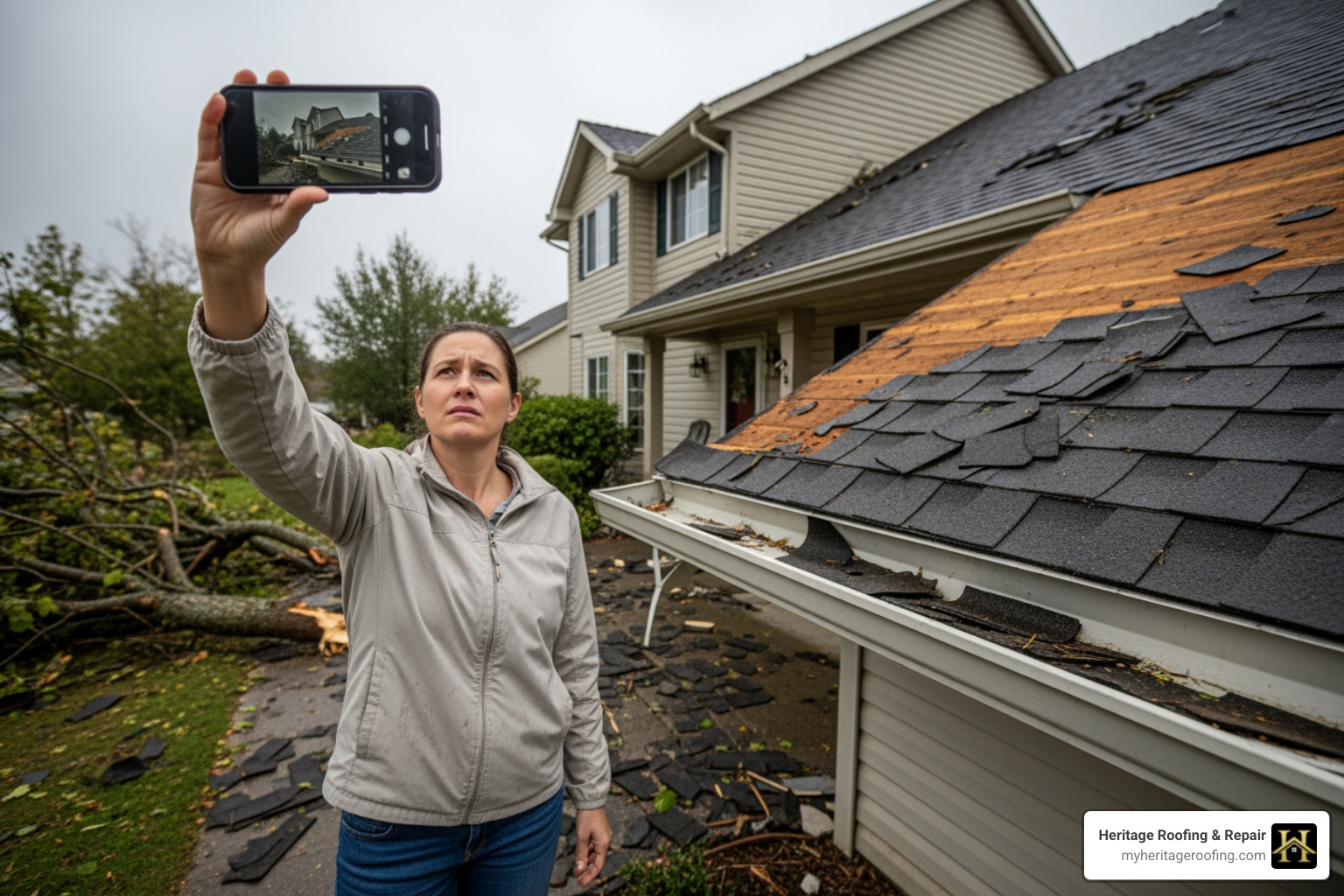
The first 48 hours after a storm are critical for safety and your insurance claim. Taking these initial steps carefully lays a strong foundation for your entire storm damage home repair journey.
Immediate Safety and Temporary Repairs
After a storm, your first priority is safety.
- Prioritize safety: Before assessing damage, check for hazards. Avoid downed power lines, evacuate if you smell gas, and look for structural instability like shifted foundations. If your home feels unsafe, do not enter. Avoid using electricity near standing water.
- Make temporary repairs: Once it’s safe, prevent further damage by covering roof holes with a tarp, boarding up windows, and securing loose elements. These measures mitigate ongoing issues like water intrusion and mold growth. Save all receipts for materials, as these costs are often reimbursable by insurance. For urgent needs, our emergency roof repair services provide a quick response to secure your property.
- Turn off utilities: If there’s any risk of leaks or electrocution, shut off your home’s main power and gas lines to prevent serious accidents.
How to Document for Your Storm Damage Home Repair Claim
Thorough documentation is essential for a smooth insurance claim process.
- Take clear photos and videos: Document all interior and exterior damage with both wide and close-up shots. Capture everything from missing shingles to water stains. Photograph the damage before making temporary repairs and also document any items you must discard for safety.
- Create an inventory of damaged property: List every damaged or destroyed item, including descriptions, brand names, model numbers, and estimated values. Gather receipts to establish the price and age of items.
- Note signs of damage: Differentiate between wind, hail, and water damage. Wind damage may include lifted shingles, while hail often leaves dents on soft metals and bruises on shingles. Water damage from ground-up flooding is distinct from rain entering through a damaged roof.
- Record the storm’s date and time: This links the damage to a specific weather event. Keep a log of all communications with your insurance company, including dates, times, and names.
- Do not discard anything: Unless it poses a health risk, keep damaged items for the adjuster’s inspection. If you must discard something, photograph it thoroughly first. For more tips, see our hail damage roof guide.
Step 2: Navigating Insurance Claims and Financial Aid

Securing funds is a crucial part of recovery. Understanding your homeowner’s policy and available aid can make all the difference, as most standard policies cover wind and hail but exclude flood damage.
Filing Your Homeowner’s Insurance Claim
Prompt action is key to a successful insurance claim.
- Contact your insurance agent promptly: Report the damage as soon as possible, as most policies require prompt notice. Use the documentation you gathered in Step 1.
- Review your policy for coverage and deductibles: Understand what your policy covers and the deductible you must pay. Be aware of special deductibles for wind or hail, which may be a percentage of your home’s value (e.g., a 2% deductible on a $250,000 home is $5,000).
- Get a claim number and schedule an inspection: Your insurer will provide a claim number and schedule an adjuster to assess the damage. You can also hire a public adjuster to represent you.
- Keep detailed records: Maintain a log of all communications and copies of all paperwork. This is vital if disputes arise. For a step-by-step guide, visit our homeowners insurance roof damage claim guide.
Understanding Insurance Coverage
Not all storm-related damage is automatically covered.
- Standard coverage: Homeowner’s insurance generally covers damage from wind, hail, and fire. For example, a tree branch falling on your roof during a thunderstorm is typically covered.
- Flood damage exclusion: Water entering your home from the ground up (e.g., storm surge, overflowing rivers) is considered flood damage and requires a separate policy, often through the National Flood Insurance Program (NFIP).
- Covered water damage: Interior water damage from a roof leak caused by a covered peril (like wind or hail) is usually covered. Damage from poor maintenance is not.
- Replacement Cost Value (RCV) vs. Actual Cash Value (ACV): RCV pays to replace items with new ones of similar quality. ACV pays the depreciated cost, providing less for older items. An RCV policy offers better protection for an aging roof.
When and How to Apply for Federal Assistance
Federal aid can be a safety net when insurance is insufficient.
- Check for disaster declaration: If your area is declared a major disaster zone by the President, you may be eligible for aid from the Federal Emergency Management Agency (FEMA).
- FEMA as a last resort: FEMA assistance helps make your home safe, sanitary, and functional, with a maximum of $43,600 for FY 2025. It can cover essential repairs to roofs, foundations, and electrical systems.
- Apply on the FEMA website: To be eligible, you or a household member must be a U.S. citizen or qualified non-citizen. An inspection will confirm the damage. You can apply and find more details on the FEMA website. You have the right to appeal a FEMA decision.
Step 3: The Professional Storm Damage Home Repair Process
Once funding is secured, professional repairs can begin. Hiring a reputable, local contractor ensures repairs are completed safely and to code, turning your damaged property back into a safe home.
Hiring a Trusted Local Contractor
Choosing the right contractor is a critical decision. Be wary of “storm chasers” who appear after a disaster and may deliver shoddy work.
- Choose a licensed and insured local contractor: Verify that your contractor is licensed and carries worker’s compensation and liability insurance to protect you from liability. A local contractor, like Heritage Roofing & Repair, has an established community reputation. We’ve proudly served Berryville, Fayetteville, Harrison, and the wider Northwest Arkansas region for over five decades.
- Get multiple written estimates: Obtain at least three detailed, written estimates outlining the scope of work, materials, timelines, and costs. Check references from previous clients.
- Read contracts carefully: Ensure the contract includes all details, such as payment schedules and warranties. Never pay the full amount upfront and be cautious about signing an Assignment of Benefits (AOB), which transfers your policy rights to the contractor.
- Heritage Roofing & Repair is a leading provider of storm damage home repair in Northwest Arkansas, offering transparent communication and quality craftsmanship.
Heritage Roofing & Repair
3458 Arkansas State Hwy 221, Berryville, AR 72616
Click to call: (870) 654-1164
Restoration vs. Remediation: What’s the Difference?
These terms refer to distinct phases of recovery.
- Restoration: This is the process of rebuilding and repairing your home to its pre-loss condition. It includes roof replacement, structural repairs, and replacing damaged drywall or siding.
- Remediation: This focuses on removing hazards and preventing further damage. It includes water extraction, drying, debris removal, and mold remediation to ensure a safe environment before restoration begins.
Deciding Between Roof Repair and Full Replacement
This decision depends on your roof’s age, the extent of the damage, and long-term value.
- When to repair: A repair is often best for a newer roof with localized damage, such as a few missing shingles.
- When to replace: A full replacement is more cost-effective for an older roof with significant damage. Signs you need a replacement include widespread granule loss after a hailstorm, a sagging roof deck, or repeated leaks. If repair costs are a large percentage of replacement costs, a new roof is a wiser investment.
- For more information, see our roof replacement cost guide. Our professionals can provide an honest assessment to help you decide.
Step 4: Long-Term Prevention and Storm-Hardening Your Home
After repairs, investing in storm-hardening upgrades can reduce future risks and may lower insurance premiums. Proactive measures protect your property and offer significant financial benefits.
Key Upgrades for a Storm-Resistant Home
Strategic improvements can dramatically improve your home’s ability to withstand severe weather.
- Impact-resistant shingles and roofing: Upgrade to Class 4 impact-rated shingles to resist hail and high winds. A reinforced roofing system with stronger sheathing and hurricane clips further improves structural integrity.
- Wind mitigation features: Hurricane straps strengthen the roof-to-wall connection, preventing lift-off in high winds. A secondary water barrier, like a peel-and-stick underlayment, provides an extra layer of protection against water intrusion if shingles are damaged.
- Upgraded gutters and windows: Ensure gutters are robust and clear of debris to direct water away from your foundation. Consider impact-resistant windows and doors to withstand flying debris.
- Regular maintenance: Proactive roof maintenance plans are a top prevention strategy. Regular inspections, trimmed trees, and clean gutters can identify small issues before they become major, costly problems.
The Financial Benefits of Storm-Hardening
These upgrades also make good financial sense.
- Insurance discounts: Many insurance companies offer discounts for homes with certified wind mitigation features. Ask your provider about potential savings.
- Reduced future repair costs: A more resilient home suffers less damage, saving you thousands in future repairs and deductibles.
- Increased property value: A storm-hardened home is a more attractive asset and provides invaluable peace of mind.
Frequently Asked Questions about Storm Damage Repair
We often hear similar questions from homeowners across Northwest Arkansas. Here are some of the most common ones, with our expert answers:
What are the most common signs of storm damage I should look for?
After a storm, inspect your home for these common signs:
- Missing, cracked, or bruised shingles: Wind can tear off shingles, while hail leaves dents or cracks.
- Dents in gutters or flashing: Soft metals are a clear indicator of hail impact.
- Water stains on ceilings or walls: These are tell-tale signs of a roof leak.
- Debris from fallen trees: Large branches can cause significant damage to your roof or siding.
Even if damage isn’t obvious from the ground, a professional roof inspection is crucial after severe weather to find hidden issues.
How long do I have to file an insurance claim after a storm?
Most insurance policies require prompt reporting of damage, often within days or weeks. To protect your claim, contact your insurer immediately after documenting the damage. Delays can jeopardize your claim, especially if the insurance company argues that further damage could have been prevented by acting sooner.
Can I perform the repairs myself?
We advise against DIY repairs for anything beyond minor temporary fixes. Here’s why:
- Safety: Working on a damaged roof is dangerous without proper training and equipment.
- Code Compliance: Major repairs require permits and must meet local building codes.
- Insurance Coverage: DIY repairs may void your warranty or cause your claim to be denied if the work is substandard.
- Expertise: Professionals have specialized equipment and can spot hidden damage an untrained eye might miss.
For comprehensive and lasting storm damage home repair, always hire licensed, insured professionals like the team at Heritage Roofing & Repair.
Conclusion: Rebuilding Stronger After the Storm
Recovering from storm damage is a challenging process, but you don’t have to face it alone. By following a structured approach—prioritizing safety, documenting damage, securing funds, and hiring trusted professionals—you can restore your home and peace of mind. Investing in storm-hardening measures provides lasting protection for the future. For expert help in Northwest Arkansas, schedule a free inspection with Heritage Roofing & Repair and let our experienced team guide you from chaos to calm.