Understanding the Unique Challenge of Flat Roof Insurance Claims
A flat roof insurance claim can be filed when sudden, covered damage occurs to your flat roof system, typically from storms, wind, hail, or falling objects. However, these claims are notoriously difficult because insurers often argue that damage stems from poor maintenance, water pooling, or gradual deterioration rather than a covered event. Success requires thorough documentation, prompt reporting, understanding your policy’s specific terms, and partnering with an experienced roofing contractor who can substantiate the damage and advocate on your behalf throughout the process.
You’ve found a damp patch spreading across your ceiling after last night’s storm. As you climb up to inspect your flat roof, you notice standing water and what looks like a tear in the membrane. Your mind races—will my insurance cover this? For property owners with flat roofs, this scenario triggers not just concern about repairs, but anxiety about navigating an insurance claim process that’s stacked against them. Research shows that insurance for a flat-roof house can cost up to 50 percent more than coverage for a sloped-roof house, and insurers routinely scrutinize flat roof claims more heavily, often denying them by attributing damage to maintenance issues rather than covered events.
The reality is stark: flat roofs face unique challenges that make insurance claims particularly complex. They frequently argue that water pooling is a maintenance issue, that seepage represents gradual intrusion rather than sudden damage, and that any neglect contributed to the loss. According to the Association of British Insurers, 2023 witnessed the worst record for weather damage claims, yet paradoxically, more insurers are finding ways to deny payouts.
Whether you own a commercial building with a flat roof system or a residential property in Northwest Arkansas, understanding how to properly document damage, what your policy actually covers, and when to engage professional help can mean the difference between a denied claim and full restoration of your property.
As Rex Wisdom, owner of Heritage Roofing & Repair, I’ve guided countless property owners through the flat roof insurance claim process over my family’s 50+ years serving Berryville and Northwest Arkansas communities. Our hands-on experience with storm damage assessments and insurance negotiations has taught us exactly what documentation insurers require and how to build claims that withstand their scrutiny.
Key terms for flat roof insurance claim:
- filing a homeowners insurance claim for roof damage
- how to file roof replacement insurance claim with adjuster
- homeowners insurance denied roof claim
Why Insurers See Flat Roofs as a High-Risk Gamble

Insurance for a home with a flat roof can cost up to 50% more than for a sloped-roof house, and for good reason. Insurers view them as a higher liability due to several inherent design characteristics that increase the likelihood of damage and subsequent claims. Understanding these factors is crucial for any property owner with a flat roof system.
The Problem with Pooling Water and Drainage
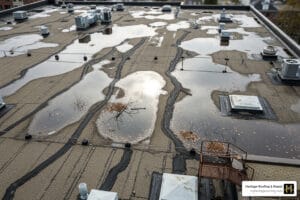
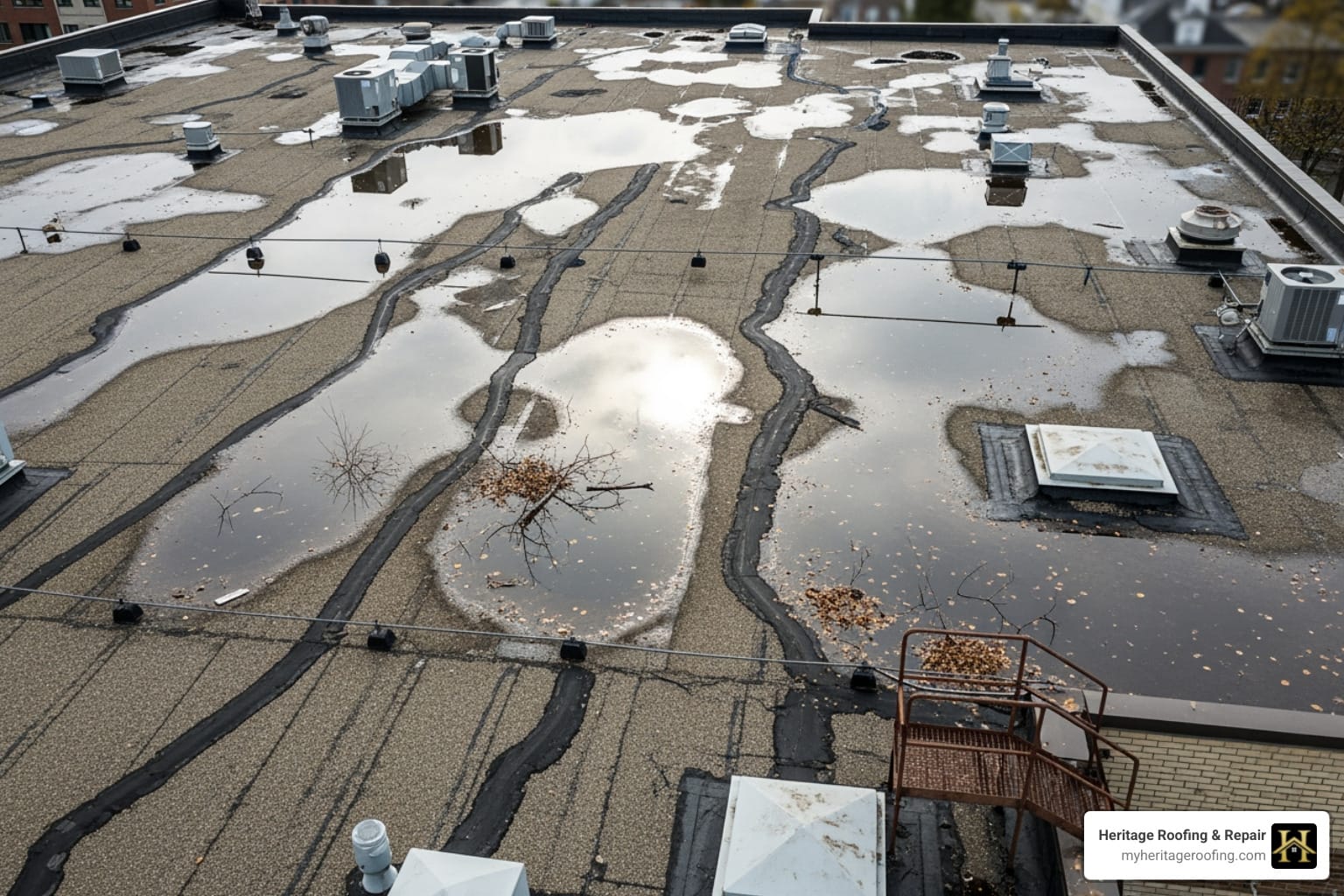
One of the most significant challenges with flat roofs is their susceptibility to water accumulation. While “flat,” these roofs are designed with a slight pitch (up to ten degrees) to encourage drainage. However, even minor imperfections, debris, or structural settling can lead to “ponding,” where water collects in depressions. Standing water on a flat roof for 12-36 hours can significantly compromise the roofing membrane, leading to leaks, mold, and structural damage.
Insurers often argue that damages from water pooling on flat roofs are the result of poor maintenance rather than sudden and accidental events. This perspective can lead to claim denials, as they might classify ponding water as a maintenance issue, not an insured peril. Similarly, “seepage,” a gradual intrusion of water, is often viewed by insurance companies as a maintenance issue rather than a sudden and accidental event, further complicating claims. Clogged drains and inadequate slopes exacerbate these issues, creating stress on the roof structure and fostering mold growth, which can be costly to remediate. More about water ponding
Shorter Lifespan and Material Vulnerability
Flat roofs generally have a shorter lifespan compared to their sloped counterparts. Insurers often require a review of flat roofs after only ten years, whereas a sloped roof might maintain coverage for 20+ years. This shorter lifespan is due to several factors:
- Material Degradation: Flat roof materials are constantly exposed to the elements, including harsh UV rays, which can accelerate their breakdown.
- Puncture Risk: The flat surface makes them more vulnerable to punctures from falling debris, tree branches, or even foot traffic during maintenance. Damage arising from material defects is also often excluded from coverage.
- Weight Bearing: Unlike sloped roofs designed to shed snow and ice, flat roofs are not meant to bear significant weight. Heavy snowfall or ice accumulation can lead to structural stress and damage.
These vulnerabilities contribute to the perception of higher risk by insurance companies, often resulting in higher premiums and stricter policy conditions.
The Wear and Tear vs. Storm Damage Debate
This is perhaps the most contentious area in flat roof insurance claims. Homeowners insurance usually covers sudden, accidental damage to roofs, but claims are commonly rejected due to poor maintenance, gradual deterioration, or the natural aging of roofing materials. Insurers may deny claims by attributing the damage to general wear and tear, even when damage occurs during severe weather conditions.
For a claim to be successful, it’s crucial to distinguish between gradual deterioration and damage caused by a “sudden and accidental event.” For insurers, a “storm” typically involves violent winds, usually accompanied by rain, hail, or snow. Some insurers even specify a minimum wind speed for an event to be classified as a storm. Proving that damage was caused by a specific storm, rather than general aging, often requires detailed documentation and expert assessment. Weather reports can serve as crucial evidence to support your claim.
A Step-by-Step Guide to Filing Your Flat Roof Insurance Claim
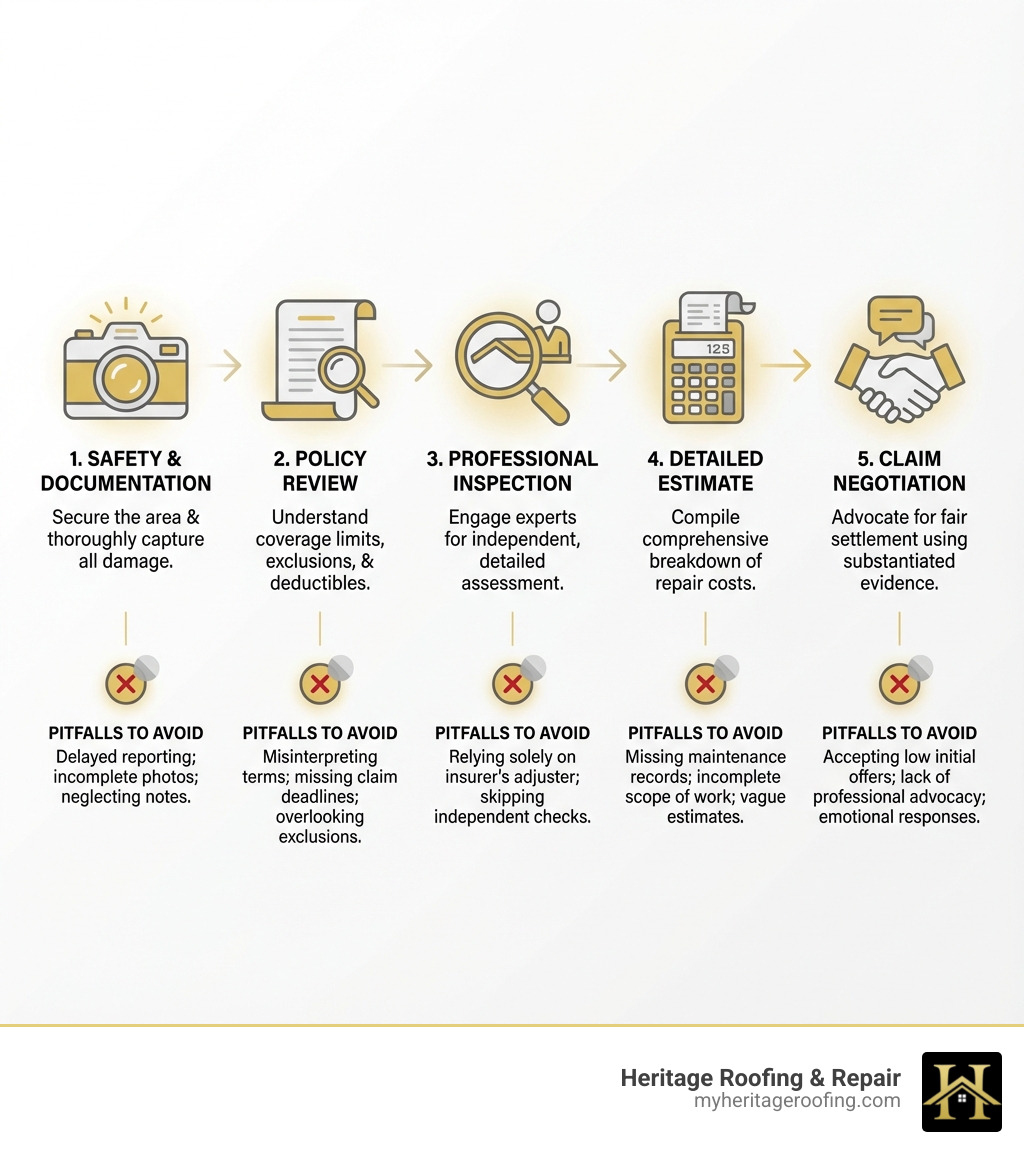
When your flat roof sustains damage, a prompt and organized approach to the insurance claim process is vital. Following these steps can significantly increase your chances of a fair and timely settlement, turning a stressful situation into a manageable one. For a general overview, you can also review our guide on filing a roof insurance claim.
Step 1: Ensure Safety and Document Everything
Your first priority should always be safety. Once the immediate danger has passed, begin documenting the damage. This involves:
- Emergency Mitigation: Take immediate steps to prevent further damage, such as tarping leaks. Keep receipts for all materials and services used for emergency repairs. Insurers can deny claims if they believe there was a failure to mitigate further damage once a leak was found.
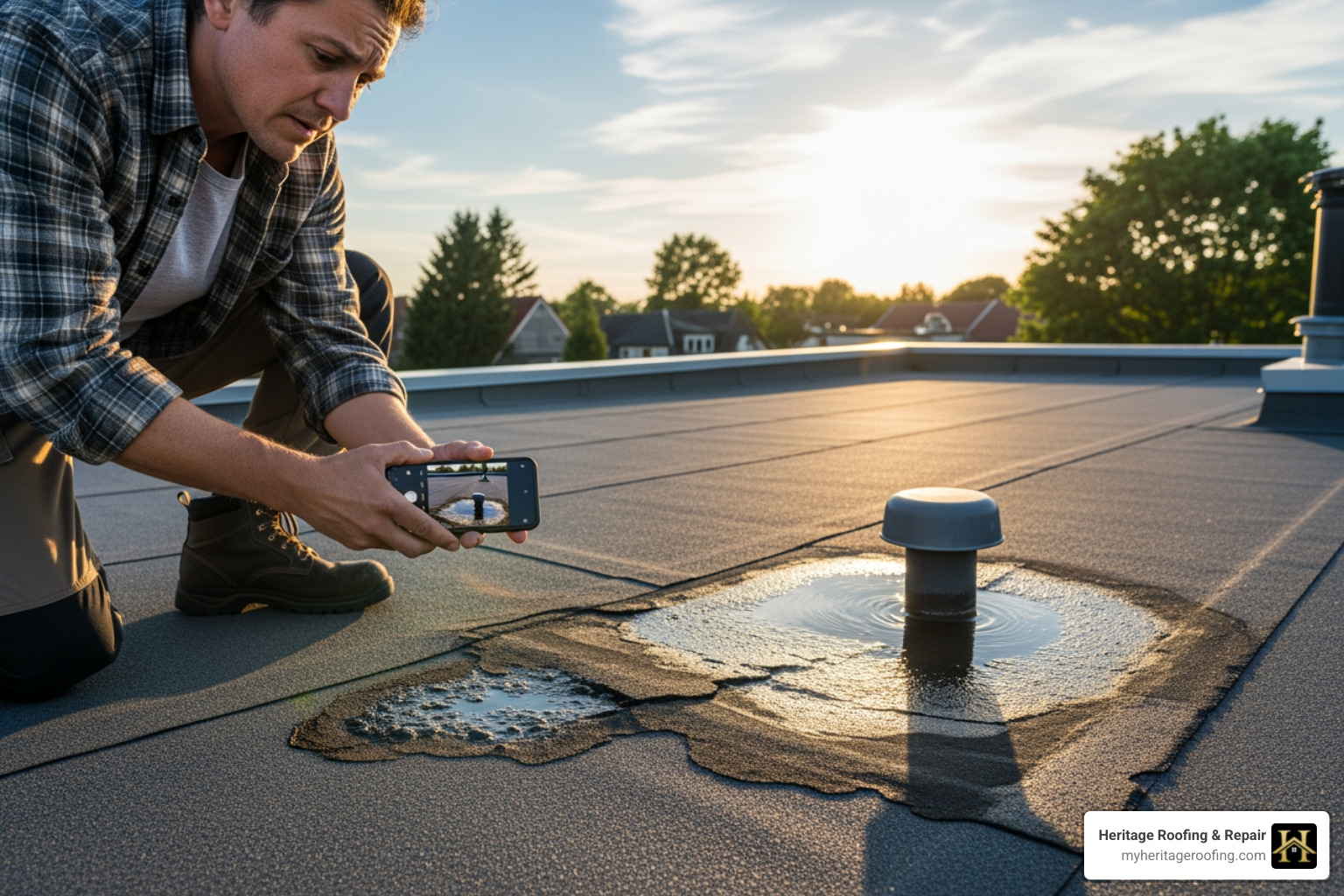
- Photo and Video Evidence: Use your smartphone to take clear, detailed photos and videos of all visible damage to your flat roof and any resulting interior damage (stains on ceilings or walls, damaged flooring, etc.).
- Date and Time Stamps: Ensure your photos and videos are date and time-stamped. This provides concrete evidence of when the damage was observed.
- Detailed Notes: Write down everything you observe, including the date and time of the incident, specific locations of damage, and any contributing factors (e.g., severe weather).
- Pre-damage Photos: If you have any photos of your roof from before the damage occurred, these can be invaluable for comparison.
Step 2: Review Your Policy and Contact Your Insurer
Before making that call, take some time to understand your policy. This will help you speak confidently with your insurance provider:
- Policy Exclusions and Coverage Limits: Understand what your policy covers and, more importantly, what it explicitly excludes. Pay close attention to clauses related to flat roofs, water damage, and maintenance.
- Deductible Amount: Know your deductible. Homeowners insurance deductibles are often a fixed dollar amount, usually $500 to $2,000 or more, or a percentage of the home’s insured value. If the estimated repair cost is less than your deductible, it might not be worth filing a claim.
- Named Perils vs. Open Perils: Understand if your policy covers “named perils” (only what’s listed) or “open perils” (covers everything unless specifically excluded).
- Timely Reporting Requirement: Insurers can deny claims if they believe the damage was not reported in a timely manner. Report the damage as soon as possible after findy.
- Claim Filing Window: Be aware of any specific timeframes within which you must file a claim.
Once you have a clear understanding of your policy, contact your insurance company to report the incident and initiate the claim process.
Step 3: Schedule a Professional Inspection
This step often involves two key inspections:
- Insurance Adjuster Inspection: Your insurance company will send an adjuster to assess the damage. Be present during this inspection and be prepared to show them all your documentation (photos, videos, notes).
- Independent Contractor Inspection: We highly recommend hiring a qualified roofing contractor to conduct their own independent inspection. A contractor has the expertise to identify the full extent of damage, including hidden issues, and provide a detailed report. Their assessment can be critical, especially since adjusters are not always roofing experts. Our team at Heritage Roofing & Repair can provide this crucial service. Hiring a qualified roof inspector can make a significant difference.
Step 4: Get a Detailed Estimate and Negotiate
Once inspections are complete, you’ll need a comprehensive repair estimate:
- Itemized Repair Scope: Ensure your roofing contractor provides a detailed, itemized estimate that outlines all necessary repairs, materials, and labor. This helps ensure transparency and accuracy.
- Labor and Material Costs: A full roof replacement can be a significant investment. While UK costs can range from £4,000 to £19,000, in Northwest Arkansas, similar substantial costs can be expected depending on the flat roof system and extent of damage.
- Comparing Estimates: If your insurer provides an estimate, compare it thoroughly with your contractor’s. Often, insurance estimates may initially fall short.
- Negotiating with the Adjuster: Your roofing contractor can act as an intermediary, helping you negotiate with the insurance adjuster to ensure all damage is accounted for and the settlement covers the full cost of repairs.
- Supplementing the Claim: If the initial settlement offer is insufficient, your contractor can help “supplement” the claim with additional documentation and justification to cover the true costs, including overhead and profit that might initially be overlooked.
Common Problems: Why Flat Roof Claims Are Denied and How to Respond
A denied claim can be disheartening, but it’s not always the final word. Insurers often deny flat roof claims by attributing damage to factors outside the policy’s scope. Knowing these common reasons can help you build a stronger initial claim or effectively appeal a denial. If you’re facing this situation, our guide for denied roof claims offers more in-depth strategies.
Top Reasons for Claim Denial
Insurers have a playbook for denying claims, especially for flat roofs. Here are the most common reasons we encounter in Northwest Arkansas:
- Poor Maintenance: This is a frequent argument. Insurers often deny claims if they determine that neglect or lack of upkeep contributed to the damage on flat roofs. They expect homeowners to keep roofs well-maintained; failure to do so can lead to claim rejection.
- General Wear and Tear: Damage attributed to the natural aging of roofing materials or gradual deterioration is typically not covered. Insurers often require a review of flat roofs after only ten years (compared to 20+ for sloped roofs) due to their shorter lifespan and vulnerability to material degradation from UV rays, punctures from debris, and stress from the weight of snow or ice. For a claim to be successful, you must prove damage was from a “sudden and accidental event.” Insurers may define a “storm” as an event with violent winds of a specific minimum speed, and will deny claims they classify as general aging.
- Gradual Seepage and Ponding Water: As discussed, gradual water intrusion (seepage) and ponding are often classified as maintenance issues rather than sudden, accidental events. Even minor imperfections or debris can cause water to collect, compromising the membrane. Insurers may refuse to cover resulting damage.
- Improper Installation: If the insurer determines the roof was improperly installed, they may deny the claim, arguing the damage is a result of faulty workmanship rather than a covered peril.
- Material Defects: Damage arising from material defects in flat roofs is often excluded from coverage.
- Pre-existing Damage: Damage that was present before the policy started or not declared is unlikely to be covered by insurance.
What to Do If Your Claim is Denied
A denial doesn’t mean the battle is over. Here’s how to respond:
- Request Written Explanation: Always demand a written explanation for the denial. This will clearly state the reasons, allowing you to address them specifically.
- Gather More Evidence: Review the insurer’s reasons and gather additional evidence to counter their points. This might include more detailed photos, expert reports, or maintenance records.
- Second Opinion from a Roofer: An independent assessment from another reputable roofing contractor can provide crucial evidence to challenge the insurer’s findings.
- Formal Appeal Letter: Write a formal appeal letter to your insurance company, citing specific policy language and presenting your new evidence.
- Contact the State Insurance Board: If your appeal is unsuccessful, you can escalate the issue to the Arkansas Insurance Department. They can mediate disputes and ensure insurers adhere to regulations.
Improving Your Chances of a Successful Flat Roof Insurance Claim
Proactive steps can significantly improve your odds:
- Meticulous Records: Keep a detailed file of all roof maintenance, inspections, and repairs, including dates, costs, and contractor information.
- Regular Maintenance Logs: Document routine cleaning of gutters and drains, and any minor repairs. This counters arguments of neglect.
- Professional Inspection Reports: Annual professional inspections, especially for flat roofs, provide ongoing documentation of your roof’s condition.
- Acting Quickly: Report damage promptly. Delayed reporting can be a reason for denial.
- Clear Communication: Maintain clear, written communication with your insurance company.
- Understanding Your Policy: Know your policy inside and out. It’s your contract, and understanding its terms is your best defense.
The Crucial Role of a Roofing Contractor and Proactive Maintenance
Your roofing contractor is your most valuable ally in a flat roof insurance claim. Their expertise goes beyond simply fixing the damage; they provide the professional validation and documentation needed to substantiate your claim. Partnering with a local, experienced roofer who understands storm damage is key.
How a Contractor Strengthens Your Claim
A skilled roofing contractor, like our team at Heritage Roofing & Repair, brings invaluable support to your claim:
- Expert Damage Assessment: We can accurately assess the full extent of damage, distinguishing between pre-existing issues, wear and tear, and new storm-related damage. We often detect hidden damage that an adjuster might miss.
- Detailed Reporting: We provide comprehensive reports with photographic evidence, precise measurements, and detailed descriptions that meet insurer requirements.
- Acting as an Intermediary: We can communicate directly with your insurance company and adjuster, speaking their language and advocating for your best interests.
- Accurate Repair Estimates: Our estimates are thorough and reflect the true cost of quality repairs or replacement, helping to ensure you receive a fair settlement.
- Meeting with the Adjuster: Having a contractor present during the adjuster’s inspection ensures all damage is identified and properly documented.
- Ensuring Code Compliance: We ensure all repairs meet current building codes, which is essential for both safety and future insurability, especially for commercial roof repairs.
Many reputable roofing companies, including GAF, offer storm restoration training for contractors to empower them to confidently handle insurance claims and advocate for homeowners. We make it our business to stay abreast of these best practices.
How Maintenance and Upkeep Affect Your Flat Roof Insurance Claim
Maintenance isn’t just about prolonging your roof’s life; it’s a critical factor in the success of your insurance claim.
| Feature | Well-Maintained Flat Roof | Poorly-Maintained Flat Roof |
|---|---|---|
| Claim Outcome | Higher chance of approval for covered perils | High risk of denial, attributed to neglect or wear and tear |
| Insurability | Better rates, easier to obtain coverage | Higher premiums, potential for policy cancellation |
| Evidence for Claim | Documented inspections, maintenance logs, repair receipts | Lack of records, making it difficult to prove sudden damage |
| Insurer’s Stance | Damage more likely viewed as sudden/accidental | Damage more likely viewed as gradual deterioration/maintenance |
| Ponding Water | Promptly addressed, less likely to cause long-term damage | Often leads to leaks, mold, and structural issues |
| Lifespan | Extended beyond typical 10-year review cycle | Premature failure, requiring early replacement |
Regular, documented inspections, clean gutters and drains, and prompt minor repairs are essential. Insurers expect homeowners to keep roofs well-maintained; failure to do so can lead to claim rejection. This proactive approach not only keeps your premiums lower but also prevents costly damage and strengthens your position during a flat roof insurance claim.
Your Local Flat Roof Insurance Claim Experts
For homeowners and businesses in Northwest Arkansas, having a trusted local expert is invaluable. Heritage Roofing & Repair provides the expertise needed to steer complex claims. With over 50 years of trusted experience, we specialize in storm damage repair and insurance claims, offering dependable, affordable, and quality craftsmanship to our communities in Berryville, Fayetteville, and Harrison.
Heritage Roofing & Repair 3458 Arkansas State Hwy 221, Berryville, AR 72616 (870) 654-1164
Frequently Asked Questions about Flat Roof Insurance
Are flat roofs always covered by homeowners insurance?
Yes, flat roofs can be covered by homeowners insurance, but often with specific conditions or higher premiums. Insurers may require proof of regular maintenance and professional inspections due to the higher risk of leaks and water damage. It is crucial to inform your insurer if you have a flat roof, as many providers have specific conditions for specialist features like flat roofs. Failure to declare it or meet professional inspection requirements can lead to claim rejection.
What’s the difference between ‘wear and tear’ and ‘storm damage’?
This distinction is fundamental to successful claims. ‘Storm damage’ refers to sudden, accidental damage caused by a specific, severe weather event like high winds, hail, heavy snow, or a fallen tree. This type of damage is typically covered by homeowners insurance. ‘Wear and tear,’ on the other hand, is the gradual deterioration of roofing materials over time due to age, environmental exposure, and normal use. It’s considered a maintenance issue, not a sudden event, and is generally not covered by insurance. Insurers often deny claims by attributing the damage to general wear and tear, even if severe weather conditions were present.
Can I claim for a roof leak on my insurance?
You can claim for a leak if it was caused by a sudden, covered event, such as a storm puncturing the roof membrane or causing sudden structural damage. Home insurance typically covers roof leaks caused by sudden events, but not leaks from wear and tear or aging. Leaks resulting from gradual deterioration, lack of maintenance, or old age are typically excluded from standard homeowners insurance roof damage claims. For instance, if a leak develops because of prolonged water ponding due to a clogged drain that wasn’t maintained, it’s likely to be denied.
Secure Your Property with an Expert by Your Side
Successfully navigating a flat roof insurance claim requires diligence, documentation, and expert support. By understanding the risks, following a clear process, and partnering with a seasoned roofing contractor, you can protect your investment and ensure your property is restored correctly. Don’t leave your claim to chance. For expert guidance and a partner who will advocate for you every step of the way, explore our Roofing Insurance Claims Ultimate Guide.