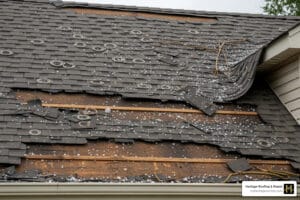
Why Understanding the Insurance Claim Process Matters After Storm Damage
The insurance claim process is your pathway to financial recovery after your property sustains damage. Whether you’re facing the aftermath of a severe storm, hail damage, or other covered losses, understanding how to steer this system directly impacts how quickly and fully you’re compensated. For homeowners in Northwest Arkansas, where weather events can strike without warning, knowing the exact steps to take can mean the difference between a smooth restoration and months of frustration. At Heritage Roofing & Repair, we provide expert roofing services in Berryville, AR to help you steer this process from start to finish.
According to the National Association of Insurance Commissioners (NAIC), most policies require you to file a claim within one year from the date of disaster. The initial payment you receive is often an advance, not the final settlement. If you find additional damage later, you can typically reopen your claim. The key is acting promptly and maintaining thorough documentation throughout the entire journey.
I’m Rex Wisdom, and I’ve guided countless homeowners through the *insurance claim process over my years leading Heritage Roofing & Repair in Berryville, AR. Our team has worked with adjusters from every major insurance carrier, helping families secure fair settlements for storm damage roof repair and ensuring no hidden damage goes unnoticed.*
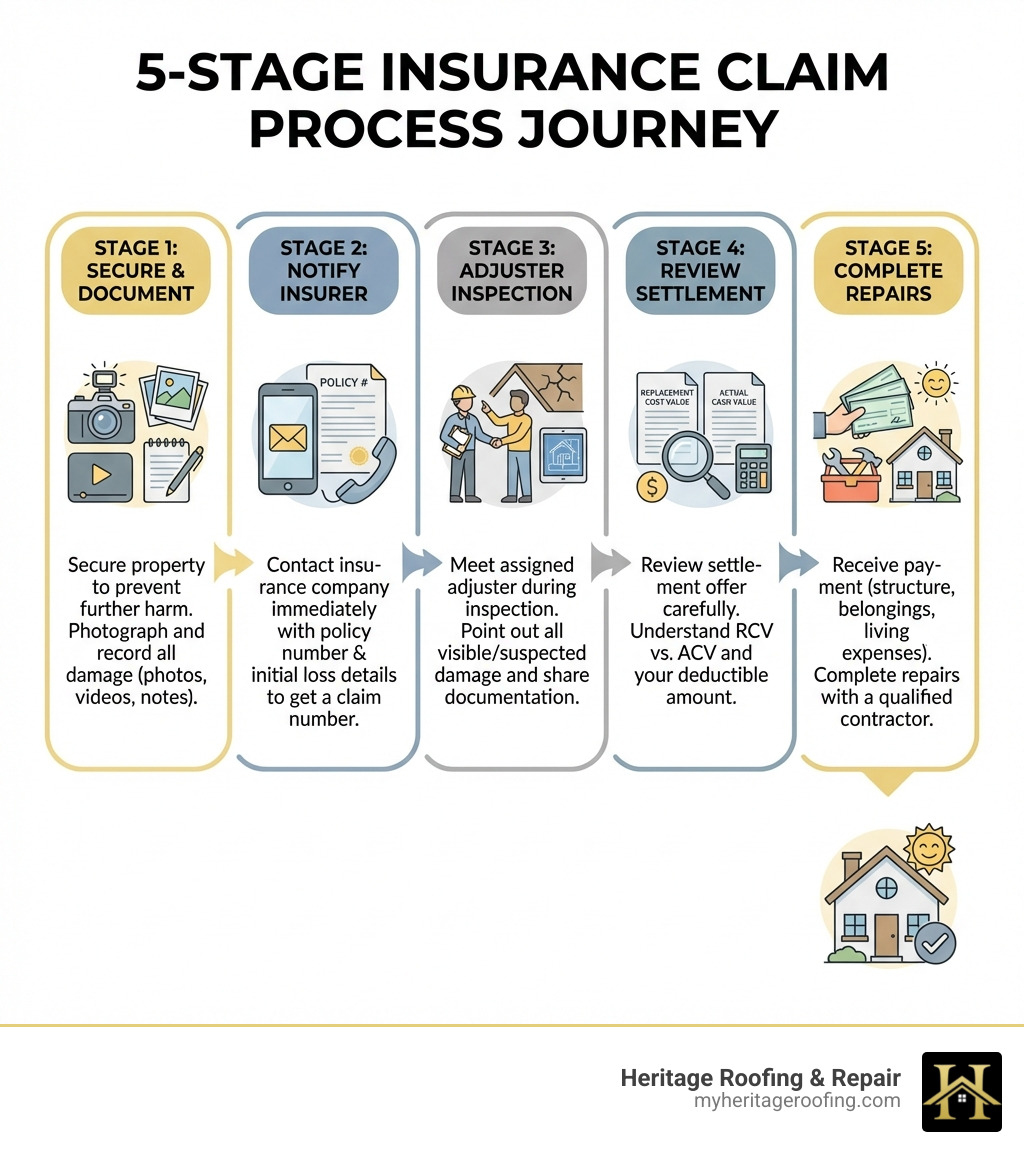
What to Do Immediately After a Loss: Secure, Document, and Report
This section outlines the critical first 24 hours. Your actions here can significantly impact your claim’s success. The primary goals are to ensure safety, prevent further damage, and create a detailed record of the loss.
Secure Your Property and Mitigate Further Damage
After a storm or incident, your immediate safety and the protection of your property are paramount. First, ensure everyone in your home is safe. Once the immediate danger has passed, your next step is to prevent any further damage from occurring. This is known as “mitigation,” and it’s a crucial responsibility of every policyholder. Many homeowners insurance policies explicitly state that they may not cover ensuing damage if you haven’t taken reasonable steps to secure your property.
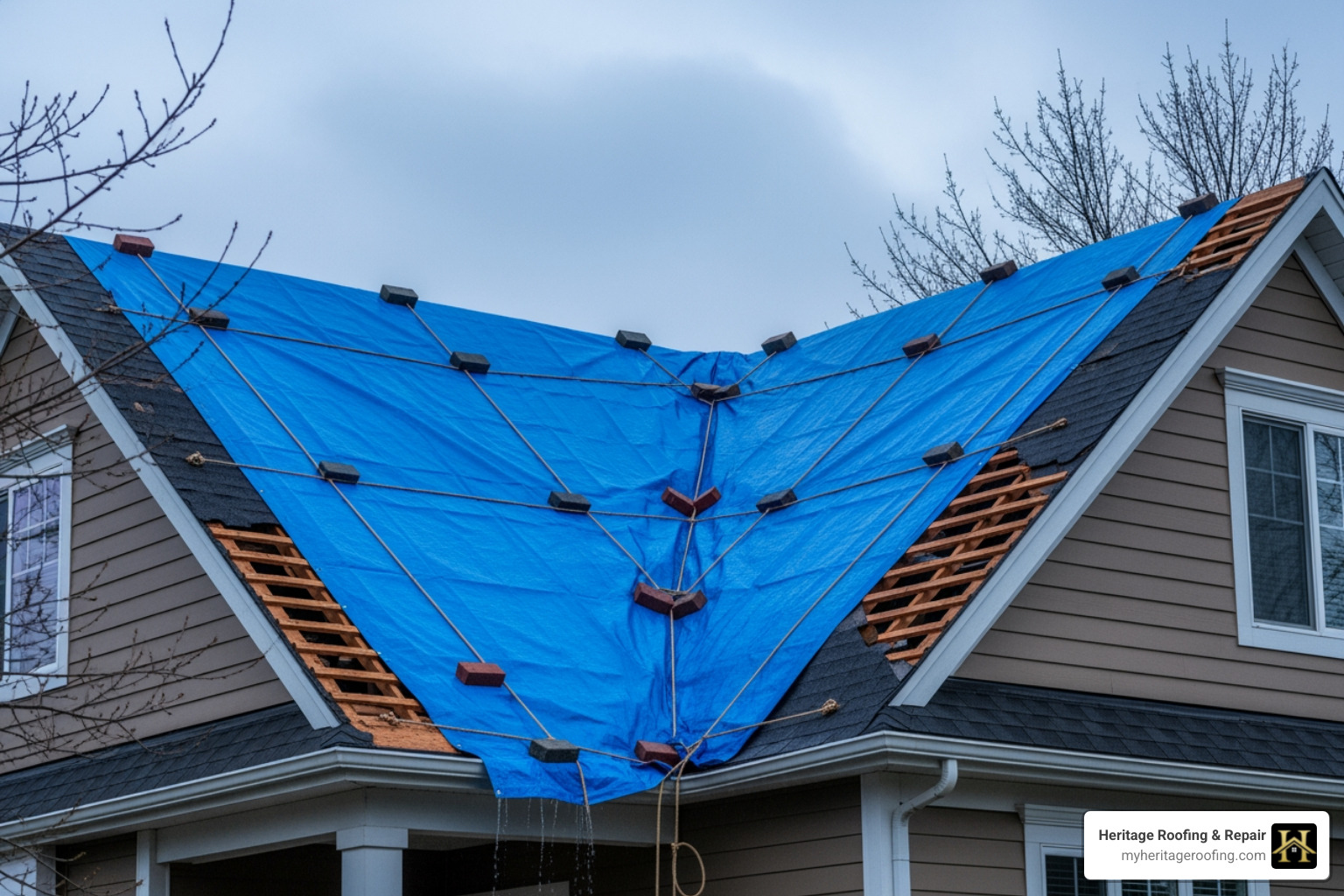
This might involve simple, temporary repairs like covering a hole in your roof with a blue tarp to stop water intrusion, boarding up broken windows, or turning off water to prevent leaks from escalating. Always keep all receipts for any materials you purchase for these temporary fixes. Your insurance policy should cover these reasonable mitigation costs. Do not attempt to make permanent repairs before your insurance adjuster has had a chance to inspect the damage, as this could lead to a claim denial.
For comprehensive guidance on these crucial first steps, check out our Emergency Roof Repair Complete Guide.
How to Carefully Document Everything for Your Claim
Documentation is your best friend throughout the insurance claim process. The more evidence you have of the damage, the smoother your claim is likely to be. Think of yourself as a detective gathering clues to present to your insurer.
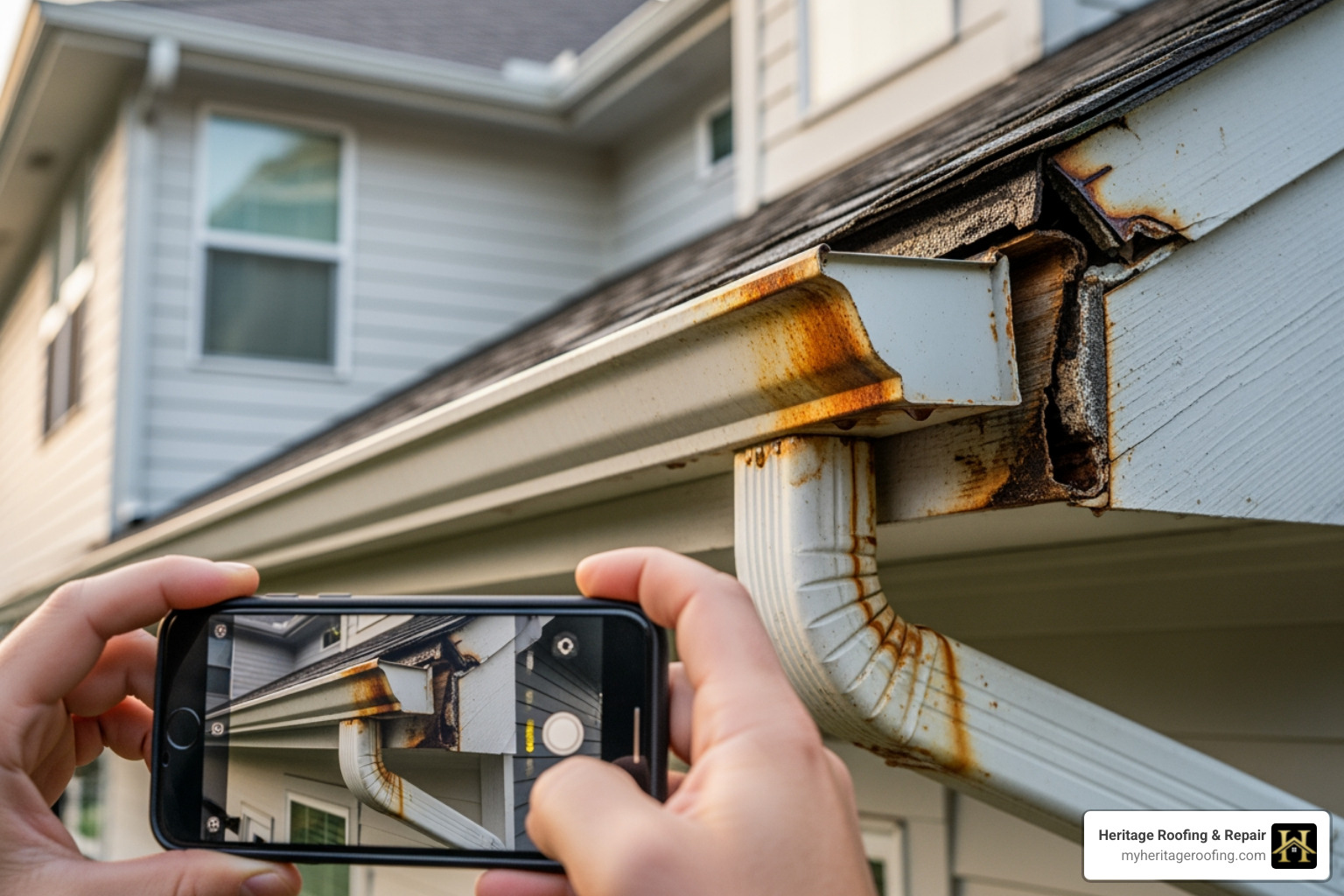
Start by taking clear, comprehensive photos and videos of all damaged areas and items. Use your smartphone to capture wide shots showing the overall context, as well as close-ups of specific damage. Don’t forget to include date and time stamps if your camera allows. A video walkthrough of your property, narrating the damage as you go, can also be incredibly helpful.
Create a detailed home inventory or list of damaged and lost property. Go room by room, noting as much detail as possible for each item, including its condition before the incident if you can recall. If you have an existing home inventory, now is the time to update it. This list, combined with your photos, will serve as vital evidence.
It’s tempting to start cleaning up immediately, but hold off on discarding damaged items unless they pose a health hazard or are required for safety. Your insurer may want to inspect these items. If you must dispose of something, take photos of it first.
Notifying Your Insurance Company
Once your property is secure and you’ve documented the initial damage, it’s time to notify your insurance company. This should be done as soon as possible, as most policies have a time requirement for reporting a claim. You can contact your agent directly or call your insurer’s claims department.
Have your policy number ready. When you call, provide clear and concise details about the loss, including the date and nature of the incident. You’ll generally receive a communication with your claim number, date of loss, and how to contact them. This claim number is essential; keep it handy for all future correspondence.
Many insurance companies now offer mobile apps or online portals that allow you to report a claim, upload photos, and track its status. Using these digital tools can often expedite the initial reporting process. Ask your insurer about their preferred filing method and what communication you can expect next. They should keep you informed throughout the process.
The Insurance Claim Process: A Step-by-Step Guide
Navigating the formal insurance claim process can feel daunting. We’ll break it down into clear, manageable steps, from the initial incident to receiving your final payment. States have regulations that set deadlines for each of these stages, ensuring insurers act in a timely manner.
Step 1: Secure, Document, and Report Immediately
After a storm or incident, your immediate safety and the protection of your property are paramount. First, ensure everyone in your home is safe. Once the immediate danger has passed, your next step is to prevent any further damage from occurring. This is known as “mitigation,” and it’s a crucial responsibility of every policyholder. Many homeowners insurance policies explicitly state that they may not cover ensuing damage if you haven’t taken reasonable steps to secure your property.
This might involve simple, temporary repairs like covering a hole in your roof with a blue tarp to stop water intrusion, boarding up broken windows, or turning off water to prevent leaks from escalating. Always keep all receipts for any materials you purchase for these temporary fixes. Your insurance policy should cover these reasonable mitigation costs. Do not attempt to make permanent repairs before your insurance adjuster has had a chance to inspect the damage, as this could lead to a claim denial. For comprehensive guidance on these crucial first steps, check out our Emergency Roof Repair Complete Guide.
Next, documentation is your best friend. The more evidence you have of the damage, the smoother your claim is likely to be. Think of yourself as a detective gathering clues to present to your insurer.
Start by taking clear, comprehensive photos and videos of all damaged areas and items. Use your smartphone to capture wide shots showing the overall context, as well as close-ups of specific damage. A video walkthrough of your property, narrating the damage as you go, can also be incredibly helpful. Create a detailed home inventory or list of damaged and lost property. It’s tempting to start cleaning up immediately, but hold off on discarding damaged items unless they pose a health hazard or are required for safety. Your insurer may want to inspect these items. If you must dispose of something, take photos of it first.
Once your property is secure and you’ve documented the initial damage, it’s time to notify your insurance company. This should be done as soon as possible. Have your policy number ready. When you call, provide clear and concise details about the loss, including the date and nature of the incident. You’ll generally receive a claim number; keep it handy for all future correspondence. Maintain a communication log, noting the date, time, and name of everyone you speak with from the insurance company, along with a summary of the discussion. This record can be invaluable if any discrepancies arise later. For specific guidance on roof claims, our Filing Roof Insurance Claim Guide offers detailed insights.
Step 2: The Adjuster’s Inspection and Damage Assessment
The insurance adjuster is the professional sent by your insurer to assess the damage to your property. They play a critical role in determining the amount of your claim settlement. It’s important to schedule the inspection at a time when you can be present. During the visit, walk through your property with the adjuster. Point out all damage you’ve identified, both obvious and subtle. Share your documentation – photos, videos, and inventory lists – to ensure nothing is overlooked. Adjusters are trained to “scope the loss,” which involves measuring the degree of damage and assessing the quality of materials and workmanship needed for repairs. After the inspection, the adjuster will prepare a report and an estimate for repairs. For more on this, explore our insights on Roofing Contractors and Insurance Adjusters.
Step 3: Understanding Your Settlement: RCV vs. ACV
Once the adjuster completes their assessment, your insurance company will present a settlement offer. This is where understanding the difference between Replacement Cost Value (RCV) and Actual Cash Value (ACV) becomes critical, especially for roof damage.
| Term | Definition |
|---|---|
| Replacement Cost Value (RCV) | The cost to replace a damaged item with a new, similar item without deducting for depreciation. This is the full amount needed to make you whole. |
| Actual Cash Value (ACV) | The value of the item at the time of the loss, considering its age and wear and tear. It’s the replacement cost minus depreciation. |
Most homeowners policies in our area offer RCV for dwelling damage, but personal property might initially be paid at ACV. If your policy includes RCV for personal property, you’ll typically receive the depreciated value first, and then the remaining amount (the depreciation holdback) once you’ve purchased the replacement items and provided proof of purchase. Always clarify your specific policy language regarding RCV vs. ACV with your agent. Don’t forget your deductible, which is the amount you pay out-of-pocket before your insurance coverage begins.
Step 4: Receiving Payment and Managing Repairs
Receiving payment for your claim often involves several checks rather than a single lump sum. You might receive separate checks for:
- Structure Damage: This covers repairs to your home’s physical structure, like the roof, walls, or foundation.
- Personal Property Damage: This covers damaged belongings inside your home.
- Additional Living Expenses (ALE): If your home is uninhabitable, this covers temporary living costs.
If your home is mortgaged, the check for structural repairs will generally be made out to both you and your mortgage lender. This is because the lender has a vested interest in ensuring the property is repaired. They may place the funds in an escrow account and release payments as repairs are completed. Once you have your settlement, it’s time to manage the repairs. We are one of the Roofing Companies That Work With Insurance Claims and can help streamline this process.
Step 5: Claiming Additional Living Expenses (ALE)
If your home is severely damaged and becomes uninhabitable due to a covered peril, your homeowners policy likely includes “Additional Living Expenses” (ALE) coverage, also known as “loss of use.” This coverage is designed to help you maintain your normal standard of living while your home is being repaired.
ALE covers costs beyond your normal expenses, such as:
- Hotel stays or temporary rental housing
- Restaurant meals (the difference between what you’d normally spend on groceries and your restaurant bills)
- Storage for your belongings
- Laundry services
- Pet boarding
It’s crucial to keep meticulous records of all these expenses, including receipts for everything. Your ALE check should typically be made out to you alone, separate from other claim payments. This allows you to manage your temporary living arrangements directly. Don’t hesitate to ask your insurer about the limits and duration of your ALE coverage.
Navigating Disputes and Protecting Your Rights
Even with a clear process, disagreements can arise. Knowing your rights and how to handle disputes is crucial for a fair outcome. This section empowers you to challenge unfair offers and protect yourself from fraud.
Your Rights and Responsibilities During the Insurance Claim Process
As a policyholder, you have important rights and responsibilities during the insurance claim process. Understanding these can help ensure a smoother and fairer experience.
Your Rights:
- Right to Timely Communication: Your insurer must respond to your claim, investigate it, and make decisions within specific timeframes set by state regulations.
- Right to a Fair Settlement: You are entitled to a settlement that reflects the actual damage and the terms of your policy.
- Right to Information: You can request specific policy language if there’s a dispute and a written explanation for any claim denial or low offer.
Your Responsibilities:
- Responsibility to Mitigate Damage: As discussed, you must take reasonable steps to prevent further damage to your property after a loss.
- Responsibility to Provide Information: You must provide complete and accurate information and documentation to your insurer.
- Responsibility to Cooperate: Work with your insurer and their adjusters throughout the investigation.
While the specific regulations vary by state, generally, state departments of insurance have resources to help consumers understand their rights. For instance, you can learn about your rights from the California Department of Insurance, which offers insights into fair claims settlement practices that are often mirrored in other states.
What to Do If You Disagree with the Settlement Offer
It’s not uncommon to disagree with an initial settlement offer. If you find yourself in this situation, don’t panic or accept an offer you feel is unfair. You have options:
- Review the Offer in Detail: Carefully examine the adjuster’s estimate. Does it include all damaged items? Are the quantities and material costs accurate?
- Request a Written Explanation: Ask your insurance company for a detailed written explanation of their offer, including any reasons for denied items or coverage limitations.
- Provide Your Own Estimates: Obtain independent bids from reputable contractors in Berryville, Fayetteville, or Harrison, AR, like us at Heritage Roofing & Repair. If our estimate is higher and more comprehensive, present it to your insurer.
- Talk to the Claims Manager: If your adjuster isn’t responsive or you still disagree, request to speak with their manager or a claims executive. Clearly state your concerns and provide your supporting documentation.
- Negotiation Tactics: Be prepared to negotiate. Highlight discrepancies between their estimate and yours, emphasizing any missed damage or insufficient pricing.
The initial payment is often an advance, and you can reopen a claim if additional damage is found or if the initial settlement was insufficient. For more specific advice on roof-related disagreements, our Homeowners Insurance Denied Roof Claim Guide can be very helpful.
When to Involve an Attorney or Your State’s Department of Insurance
While most claims are resolved amicably, some situations may warrant outside assistance.
You should consider contacting your state’s Department of Insurance if you experience:
- Significant Delays: Your insurer is not responding in a timely manner or meeting state-mandated deadlines.
- Unfair Treatment: You feel your insurer is not conducting a reasonable investigation or is treating you unfairly.
- Unresolved Disputes: After attempting to negotiate, you still cannot reach a fair agreement.
For homeowners in Arkansas, the Arkansas Insurance Department serves as the consumer protection agency and can provide assistance with insurance-related complaints.
You might also consider consulting an attorney specializing in insurance law if:
- Bad Faith Denial: Your claim is denied without a valid reason, or you believe your insurer is acting in “bad faith.”
- Lowball Offer Dispute: The settlement offer is drastically low, and your negotiations have stalled.
- Policy Ambiguity: There’s unclear language in your policy that the insurer is interpreting against you. Courts have often ruled in favor of policyholders when policy language is ambiguous.
An attorney can help interpret complex policy language, negotiate on your behalf, and, if necessary, pursue legal action.
How to Protect Yourself from Post-Disaster Insurance Fraud
After a major storm or disaster, our communities in Berryville, Fayetteville, and Harrison, AR, often see an influx of unscrupulous contractors and scammers. Home repair fraud is unfortunately common after natural disasters, and protecting yourself is paramount.
Here’s how to stay safe:
- Beware of Unsolicited Contractors: Be wary of contractors who show up at your door uninvited, pressuring you for immediate repairs. Reputable local businesses typically don’t operate this way.
- Avoid Upfront Payments: Never pay cash or write a check for the full amount before any services are rendered. A trustworthy contractor will work on an installment basis, with final payment due only when the work is completed to your satisfaction.
- Verify Credentials: Always check references, licenses, and insurance of any contractor. Ask for proof of liability and workers’ compensation insurance.
- Get Multiple Bids: Don’t settle for the first estimate. Obtain at least three written bids for the work. This helps you compare costs and ensures you’re getting a fair price.
- Check for Flood-Damaged Vehicles: Fraud isn’t limited to home repairs. Flood-damaged vehicles can be repaired and resold to unsuspecting consumers. Always check the VIN of a used car to detect prior flood damage.
For more information on staying prepared and protecting yourself, you can find resources on disaster preparedness at Insure U. We pride ourselves on being a local company committed to honest work and transparency.
Your Local Partner for Storm Damage Claims in Berryville, AR
When your roof is damaged in a storm, navigating the insurance claim process is easier with a trusted local expert on your side. A reputable roofing contractor can meet with your adjuster, ensure all damage is documented, and provide an accurate estimate for repairs. Heritage Roofing & Repair has been helping homeowners in the Berryville area with this process for over 15 years. Our team understands the nuances of storm damage, from hail dents to wind-lifted shingles, and we’re committed to making your repair process as smooth as possible. We work hand-in-hand with you and your insurance company to ensure your home is restored to its pre-loss condition, with quality craftsmanship that stands the test of time.
Heritage Roofing & Repair
3458 Arkansas State Hwy 221, Berryville, AR 72616
(870) 654-1164
Conclusion: Taking Control of Your Insurance Claim
The insurance claim process, while detailed, is a system designed to help you recover from a loss. By staying organized, documenting everything, and understanding your rights, you can steer the journey with confidence. Remember to secure your property, report the claim promptly, and work with trusted professionals for your repairs. If you’ve experienced roof damage from a recent storm, taking the next step toward restoration is critical.
Get expert help with your Storm Damage Roof Repair.