Why Finding a Certified Roofing Contractor Protects Your Home Investment
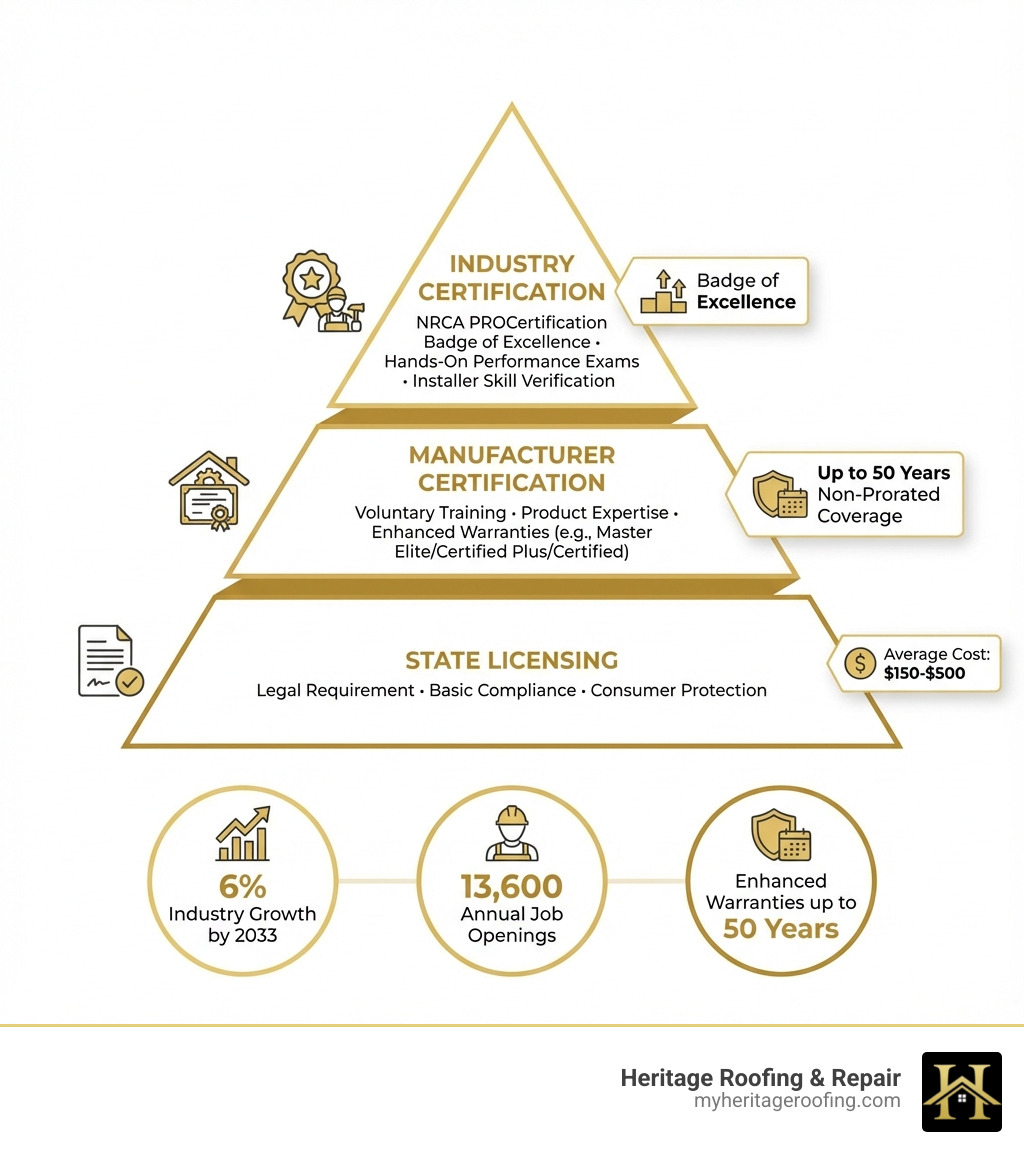
A certified roofing contractor is a professional who has earned credentials beyond basic state licensing, typically through manufacturer training programs (like GAF or Owens Corning) or industry organizations (like NRCA PROCertification®). These contractors have proven their expertise through rigorous testing, ongoing education, and verified experience, qualifying them to offer superior warranties and guaranteed workmanship that standard licensed contractors cannot provide.
Quick Checklist: What Makes a Contractor Truly Certified
- State License: Legal authorization to operate (required in most states, fees $150-$500)
- Manufacturer Certification: Training from brands like GAF (Master Elite, Certified Plus™, or Certified™)
- Industry Certification: NRCA PROCertification® badge of excellence for installers
- Insurance & Bonding: Liability coverage ($500,000+ typical) and surety bonds ($10,000-$25,000)
- Verifiable Credentials: Status can be checked through manufacturer and state databases
- Improved Warranties: Access to 50-year non-prorated coverage only available through certified contractors
Your roof represents one of your largest home investments, yet the roofing industry’s projected 6% growth through 2033—creating 13,600 annual job openings—means more contractors entering the market with varying levels of expertise. The challenge for homeowners isn’t just finding any contractor, but identifying those with verifiable certifications that translate into superior protection.
The stakes are high. Storm damage from Arkansas’s unpredictable weather, chronic leaks, or an aging roof demand more than a quick fix—they require a dependable and experienced roofing contractor who stands behind their work with manufacturer-backed guarantees. Without proper certification, you risk substandard installation, voided warranties, and costly repairs down the line.
This happens because certification is not the same as licensing. While state licensing ensures basic legal compliance, certification proves a contractor has invested in advanced training, passed rigorous examinations, and maintains relationships with major manufacturers. The difference is substantial: certified contractors can offer GAF Improved Warranties with up to 50 years of non-prorated coverage—protection unavailable through standard licensed contractors.
For Northwest Arkansas homeowners and business owners facing roofing decisions, understanding these distinctions is critical. Whether you’re dealing with storm damage, planning a roof replacement, or simply maintaining your property, working with a certified contractor ensures your investment is protected by both superior craftsmanship and industry-leading warranties.
I’m Rex Wisdom, owner of Heritage Roofing & Repair, where my family has served Berryville and Northwest Arkansas for over 50 years as a certified roofing contractor through partnerships with leading manufacturers and adherence to industry standards. Our hands-on approach combines generations of local expertise with the latest certifications to deliver the quality and warranty protection your property deserves.
What “Certified” Really Means: Decoding a Roofer’s Credentials
A contractor’s credentials can be confusing, but understanding them is key to making a safe choice. While licensing is a legal baseline, certification is a mark of superior skill and dedication. It signifies a roofer has gone above and beyond basic requirements to master their craft, as verified by leading industry authorities. For us at Heritage Roofing & Repair, we believe both are essential. A license ensures we’re legally able to operate, but certification proves our commitment to excellence in every project we undertake in Berryville, Fayetteville, or Harrison.
State Licensing vs. Manufacturer & Industry Certifications
Let’s clarify the differences between these critical credentials:
| Credential Type | Purpose | Requirements | Benefits for Homeowner |
|---|---|---|---|
| State Licensing | Legal Authorization | Varies by state; ensures minimum standards for insurance and bonding. | Basic consumer protection and legal recourse. |
| Manufacturer Certification | Product Expertise | Voluntary training and adherence to a specific manufacturer’s standards (e.g., GAF). | Access to exclusive, manufacturer-backed warranties and specialized product knowledge. |
| Industry Certification | Skill & Professionalism Verification | Voluntary, rigorous exams and proof of experience (e.g., NRCA PROCertification®). | Assurance of high-quality workmanship and adherence to industry-wide best practices. |
The Role of Local Permits and Regulations
Beyond state licensing and industry certifications, local municipalities also play a significant role in regulating roofing projects. Adherence to local rules is mandatory, even for state-licensed contractors, ensuring every project meets specific safety and construction standards set by cities like Fayetteville or counties across Northwest Arkansas. These requirements typically include obtaining necessary permits before starting work, adhering to local building codes, and sometimes even requiring local registration or business licenses.
For instance, in Fayetteville, AR, you’ll find specific regulations regarding zoning, building materials, and inspection processes. Ignoring these local mandates can lead to project delays, fines, and even the requirement to redo work, all of which can be costly and frustrating. A truly certified roofing contractor understands this intricate web of regulations and handles all necessary permits and inspections on your behalf, ensuring your project is compliant from day one. This local knowledge is invaluable, especially when dealing with the unique climate and architectural styles of our region.
The Anatomy of a Certified Roofing Contractor: What to Look For
Not all certifications are created equal. The most reputable credentials come from major manufacturers and national industry organizations that enforce rigorous standards. These programs ensure contractors are not only experienced but also up-to-date on the latest materials and installation techniques. When we talk about a certified roofing contractor, we’re looking for someone who has invested in these advanced levels of training and verification.
Top-Tier Manufacturer Certifications (e.g., GAF)
Manufacturer certifications are highly sought after because they indicate a contractor’s expertise with specific product lines and their ability to offer exclusive, manufacturer-backed warranties. GAF, for example, North America’s largest roofing manufacturer, offers a tiered certification program for roofing contractors. Each level signifies a higher degree of training, commitment, and ability to offer more comprehensive warranties:
- GAF Certified™ Contractors: These professionals can offer one of GAF’s improved warranties, specifically the System Plus Limited Warranty. This means they’ve completed foundational training and demonstrated competence in GAF product installation.
- GAF Certified Plus™ Contractors: Stepping up, these contractors can offer both the System Plus and Silver Pledge™ limited warranties. This tier indicates additional training and a deeper understanding of GAF’s diverse product range and installation techniques.
- GAF Master Elite® Contractors: This is GAF’s highest distinction, achieved by less than 2% of all roofing contractors. Master Elite contractors are entrusted to offer GAF’s strongest improved warranties, including the Golden Pledge Limited Warranty. This elite status requires ongoing training, excellent customer service, and a proven track record of quality workmanship.
These certifications aren’t just fancy titles; they require ongoing training and adherence to strict quality standards.
Premier Industry Credentials: The NRCA ProCertification®
While manufacturer certifications focus on specific products, industry certifications like the NRCA PROCertification® provide a broader stamp of approval for an installer’s skills and knowledge across various roofing systems. The National Roofing Contractors Association (NRCA) is a highly respected trade association, and their PROCertification® is recognized as the roofing industry’s official badge of excellence for roof system installers.
This certification proves that installers have the skills and extensive experience required to deliver quality installations. It’s not just about theoretical knowledge; the program often involves hands-on performance exams that determine whether roof system installers are ready to become certified. Installers can earn designations for various roof system types, including asphalt shingle systems, clay and concrete tile systems, EPDM systems, and metal panel roof systems. This credential sets a high standard for roof system installation, ensuring that a PROCertified individual possesses the necessary skills and experience for quality work.
General Requirements for Licensing and Certification
Becoming a licensed and certified roofing contractor is a multi-faceted process that goes beyond simply hanging a shingle. It involves a significant investment in time, training, and financial resources. While specific requirements can vary by state and municipality, here are the general steps and prerequisites:
- Experience: Most licensing boards and certification programs require a minimum number of years of hands-on experience in the roofing or construction industry. This often means working under an experienced contractor for several years to gain practical skills and knowledge. For instance, some states require 2-3 years of paid work in construction or home improvement.
- Written Exams: Contractors typically must pass one or more written examinations covering business and law principles, as well as trade-specific knowledge (building codes, safety practices, installation techniques). These exams ensure a comprehensive understanding of both the craft and the legal/operational aspects of running a roofing business.
- Liability Insurance: Carrying adequate general liability insurance is non-negotiable. This protects homeowners from financial loss in case of accidents, property damage, or injuries that occur during a project. Many jurisdictions require at least $500,000 in coverage, with some requiring more. This is a critical safeguard for you.
- Surety Bonds: A surety bond provides a financial guarantee that the contractor will complete the job according to the contract and adhere to all regulations. If a contractor fails to meet their obligations, the bond can compensate the homeowner. Bond amounts vary widely, from $10,000 to $25,000 or more, depending on the state and license type.
- State Registration: Beyond licensing, some states or local authorities require contractors to register their business, often for tax purposes or to track active contractors.
- Financial Responsibility: Applicants may need to demonstrate financial stability, sometimes through a minimum net worth or by providing financial statements.
- Continuing Education: To maintain certifications and licenses, many programs require ongoing education to ensure contractors stay updated on the latest materials, techniques, and safety standards.
The financial cost of these requirements can also add up. On average, state licensing fees for roofing contractors can range between $150 to $500, not including exam fees, application processing, and the recurring costs of insurance and bonds. These stringent requirements ensure that when you hire a certified roofing contractor, you’re engaging a professional who has proven their competence and commitment.
The Tangible Benefits: Why Hiring Certified Pays Off
Hiring a certified roofing contractor isn’t just about getting the job done; it’s about getting it done right with lasting protection. The benefits range from exclusive, long-term warranties to the simple peace of mind that comes from knowing an expert is on your roof. This commitment to higher standards directly translates into a better, more secure investment for your home or business in Northwest Arkansas.
Opening up Superior Warranties: Up to 50 Years of Coverage
Perhaps one of the most compelling reasons to choose a certified contractor is access to superior warranty programs. Many leading manufacturers, like GAF, offer improved warranties that are only available through their certified contractors. For instance, GAF Improved Warranties can offer up to 50 years of non-prorated coverage. What does “non-prorated” mean? It means that for the entire warranty period, the coverage value does not decrease over time, unlike prorated warranties where the coverage diminishes annually. This is an incredible level of protection for your investment.
These warranties often extend beyond just material defects to include workmanship coverage, meaning if there’s an issue due to the installation, the manufacturer will stand behind the certified contractor’s work. The GAF Golden Pledge Limited Warranty, for example, is one of the strongest in the industry and is exclusively offered by GAF Master Elite contractors. For us, offering these robust warranties means providing our customers in Berryville and Fayetteville with unparalleled long-term security.
Guaranteed Quality and Best Expertise
A certified roofing contractor operates at a higher standard. They undergo rigorous manufacturer training, ensuring they are intimately familiar with the products they install and adhere to the best practices recommended by the industry. This commitment to quality significantly reduces the risk of premature roof failure, leaks, and other costly problems down the line.
Their expertise is particularly valuable when dealing with complex projects or the aftermath of severe weather. Certified contractors are trained to handle intricate jobs, including specialized commercial roofing contractor services that require specific knowledge of flat roofs, metal systems, or energy-efficient solutions. Furthermore, their training often includes advanced techniques for storm damage assessment and repair, which is crucial for our region in Northwest Arkansas where hail and high winds are common. By choosing certified, you’re not just getting a roofer; you’re getting a highly skilled professional capable of delivering durable, high-performance results.
How to Verify a Certified Roofing Contractor
With so many claims out there, how can you be sure your chosen contractor is truly certified? Thankfully, reputable organizations and manufacturers provide easy-to-use verification tools. We always encourage our clients to do their homework, and here’s how you can verify a certified roofing contractor:
- Manufacturer Websites: For certifications like GAF, you can use the GAF verification tool by simply entering the contractor’s name or business. This will confirm their certification level directly from the source.
- Industry Organizations: If a contractor claims NRCA PROCertification®, you can check their status on the NRCA ProCertified verification page. This verifies their individual installer credentials.
- State Licensing Boards: Every state that requires licensing will have an online database where you can look up a contractor’s license status. For example, states like Illinois provide a License Look Up tool. While Arkansas has its own specific board for contractors, a quick search on your state’s Department of Labor or Contractor Licensing Board website will confirm their basic legal standing. Always ensure their license is active and check for any disciplinary actions.
Taking a few minutes to verify these credentials can save you from potential headaches and ensure you’re working with a legitimate, qualified professional. It’s a simple step that provides immense security for your roofing project.
Your Local Certified Roofing Experts in Berryville, AR
For homeowners and businesses in Northwest Arkansas, finding a local, certified expert is crucial for protecting your property against the region’s unpredictable weather. A trusted contractor understands local building codes, the unique challenges of our climate, and has a reputation to uphold within the community. We’re proud to be part of that community.
At Heritage Roofing & Repair, we are deeply rooted in Berryville and serve the surrounding areas including Fayetteville and Harrison. Our team combines over 50 years of trusted experience with the latest industry certifications, ensuring that every roof we touch is built to last. We are local experts who live and work alongside you, understanding the challenges our roofs face, from severe thunderstorms to hail damage. Our commitment extends beyond just installation; we’re also storm damage specialists, adept at assisting with insurance claims to make a difficult process as smooth as possible for our neighbors.
To learn more about our local services and how we serve our community, check out our Roofing Berryville AR Complete Guide.
You can find us at:
Heritage Roofing & Repair
3458 Arkansas State Hwy 221, Berryville, AR 72616
(870) 654-1164
Frequently Asked Questions About Certified Roofers
When considering a roofing project, it’s natural to have questions. We’ve compiled some of the most common inquiries about certified roofing contractors to help you make informed decisions.
What’s the difference between a licensed and a certified roofer?
A license is a mandatory legal credential issued by the state that allows a contractor to operate within the law. It signifies they meet minimum state-mandated requirements for business operation, insurance, and sometimes basic competence. Without a license where required, a contractor is operating illegally.
Certification, on the other hand, is a voluntary, higher-level achievement awarded by a manufacturer (like GAF) or an industry organization (like NRCA). It signifies advanced skills, specialized knowledge in specific product lines or installation techniques, and a commitment to quality that goes beyond basic legal compliance. A certified roofer has invested in additional training and often passed more rigorous, specialized exams. Think of it this way: all certified roofers should be licensed (where required), but not all licensed roofers are certified.
Can a certified roofer save me money?
Yes, absolutely! While the initial project cost from a certified roofer might sometimes appear similar to or slightly higher than an uncertified contractor, a certified roofing contractor saves you money in the long term. This happens in several key ways:
- Superior Workmanship: Certified contractors are trained in the best installation practices, leading to a roof that lasts longer and performs better. This prevents costly future repairs due to poor installation.
- Access to Improved Warranties: As discussed, certified contractors can offer manufacturer-backed warranties that provide extensive coverage for materials and workmanship, often for 25-50 years. This protects your investment from unforeseen issues, saving you thousands on potential repairs or replacements.
- Correct Installation the First Time: A certified contractor is less likely to make mistakes that could lead to leaks, mold, or structural damage, which are incredibly expensive to fix.
- Insurance Claim Expertise: Many certified contractors, like us, are experienced in navigating storm damage insurance claims, ensuring you get the maximum coverage you’re entitled to without hassle.
So, while the upfront cost might be a factor, the long-term value, durability, and peace of mind offered by a certified roofer represent significant savings.
How do I find a certified roofing contractor near me?
Finding a certified roofing contractor in your area is easier than you might think, thanks to online verification tools. Here are the best ways:
- Manufacturer Websites: If you’re interested in a specific brand of roofing material (like GAF), visit their official website. Most manufacturers have a “Find a Contractor” or “Verify a Contractor” tool where you can enter your zip code or the contractor’s name to see their certification status. For GAF, use their GAF verification tool.
- Industry Organization Directories: For broader industry certifications like NRCA PROCertification®, check the organization’s website. The NRCA, for instance, has a ProCertified verification page to confirm individual installer credentials.
- Ask Directly: Don’t hesitate to ask any potential contractor for proof of their licenses and certifications. A reputable contractor will be happy to provide this information.
- Local Searches and Referrals: For those in Northwest Arkansas, seeking out local residential roofers with proven, verifiable certifications is the best way to start. Ask neighbors, friends, or local building material suppliers for recommendations. Then, use the verification steps above to confirm their credentials.
By combining local searches with direct verification, you can confidently find a certified professional ready to handle your roofing needs.
Conclusion
Choosing a certified roofing contractor is the single most important decision you can make for the longevity and safety of your roof. Certification is your assurance of quality workmanship, superior materials, and the best warranty protection available. It transforms a potentially stressful project into a secure investment in your property’s future. It’s about building trust, ensuring durability, and protecting your hard-earned money.
At Heritage Roofing & Repair, our team is committed to upholding these high standards on every project. We understand the unique needs of homes and businesses in Northwest Arkansas, and our certifications, combined with over 50 years of experience, reflect our dedication to excellence. We don’t just put a roof over your head; we build a shield of protection backed by industry-leading guarantees. If you’re in the Fayetteville area and need a certified team you can trust, learn more about our expert roofing services in Fayetteville, AR.