Fayetteville AR Roof Repair Starts With a Clear, Local Assessment
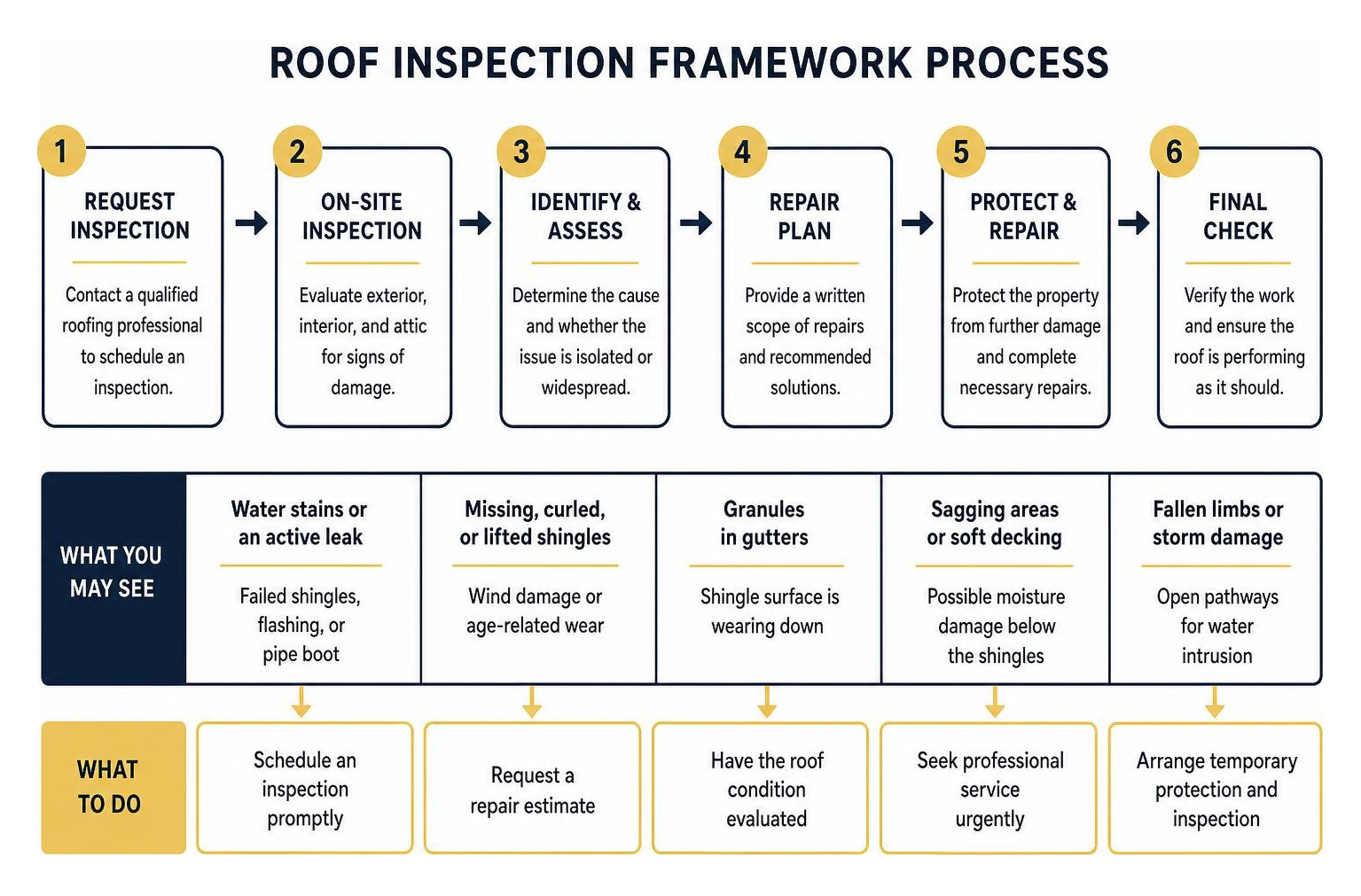
Fayetteville AR roof repair is the right next step when your roof has a leak, missing shingles, damaged flashing, or storm-related damage. A qualified local roofing contractor should inspect the roof, identify whether the problem is isolated or widespread, explain the repair scope in writing, and help protect the property from further water damage.
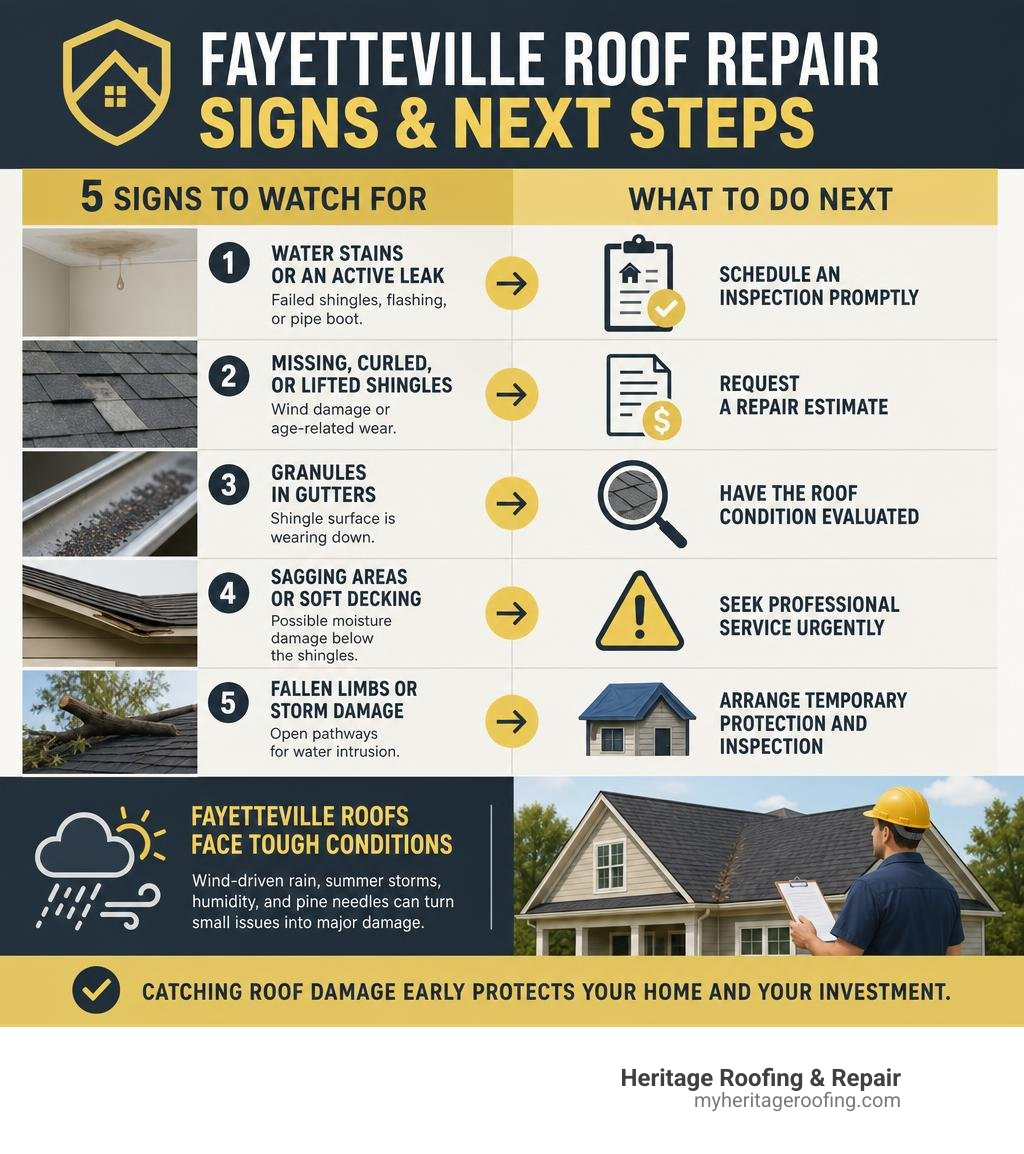
| What you see | What it indicates | What to do |
|---|---|---|
| Water stains or an active leak | Failed shingles, flashing, or pipe boot | Schedule an inspection promptly |
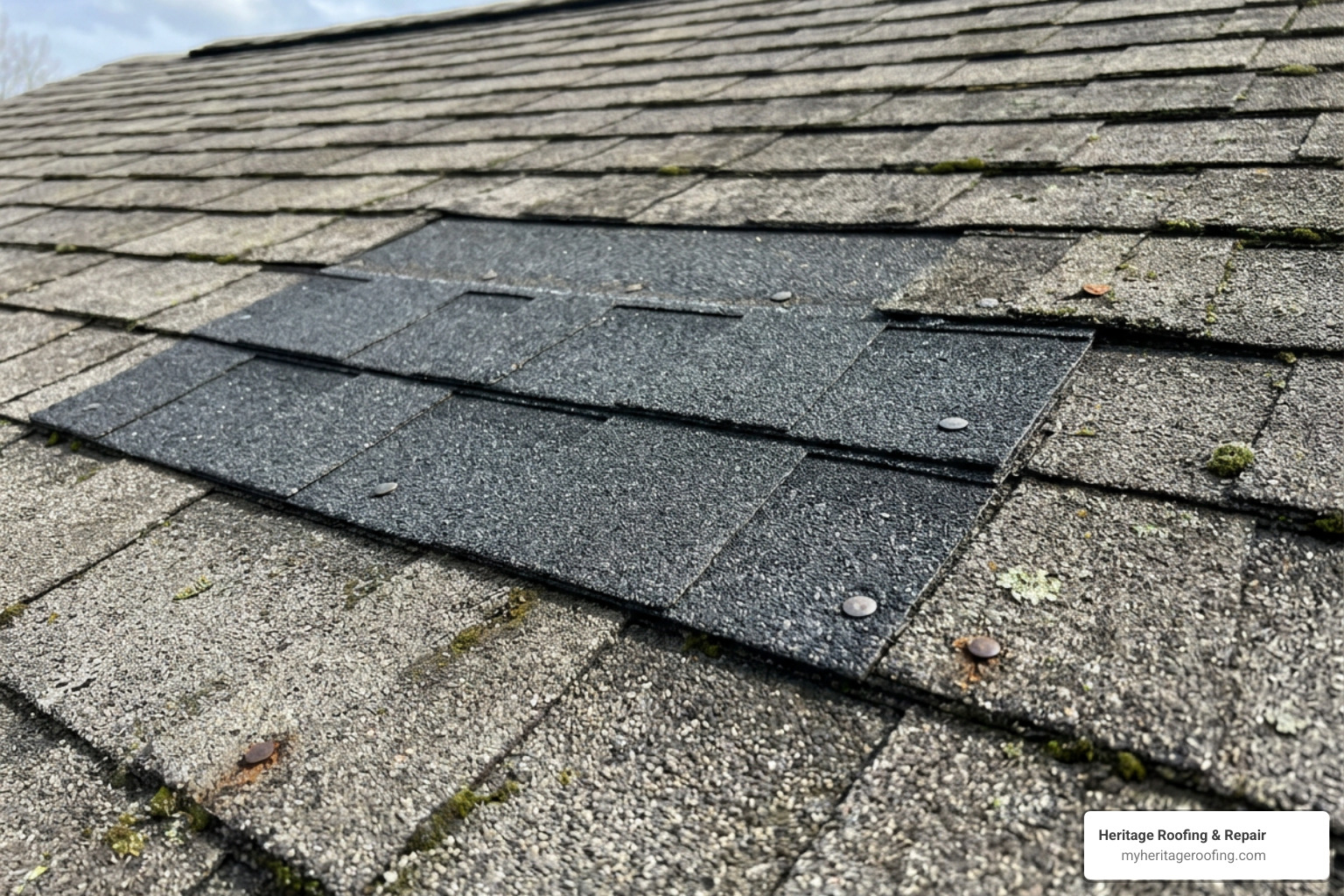
| Missing, curled, or lifted shingles | Wind damage or age-related wear | Request a repair estimate |
| Granules in gutters | Shingle surface is wearing down | Have the roof condition evaluated |
| Sagging areas or soft decking | Moisture damage below the shingles | Seek professional service urgently |
| Fallen limbs or storm damage | Open pathways for water intrusion | Arrange temporary protection and inspection |
Fayetteville roofs face wind-driven rain, severe spring storms, humidity, hail risk, and tree debris that collects in valleys and gutters. Those Northwest Arkansas conditions turn a small weak point into a leak, rot, or interior damage when repairs are delayed.
I am Rex Wisdom, owner of Heritage Roofing & Repair, with more than 50 years of family roofing experience in repairs, storm response, inspections, and insurance-related work. That practical background helps me explain Fayetteville AR roof repair in plain language, starting with what your roof is telling you.
Spotting Roof Damage: When to Call for Fayetteville AR Roof Repair
Catching roof damage early saves thousands of dollars in structural repairs. Moisture penetrates subflooring, drywall, and attic insulation when protective outer layers fail. We routinely observe how localized shingle failure creates cascading structural issues if left unaddressed.
Homeowners frequently overlook early indicators of exterior wear. Identifying vulnerability requires observing key exterior components and interior structural signs.
Key Indicators Requiring Urgent Fayetteville AR Roof Repair
Water stains on ceilings or interior walls signal active moisture migration through the roofing assembly. When flashing around chimneys or sidewalls degrades, water runs along roof rafters before dripping onto ceiling drywall. Pipe boots, the rubber collars around vent pipes, crack over time due to ultraviolet light exposure, creating direct pathways for rain.
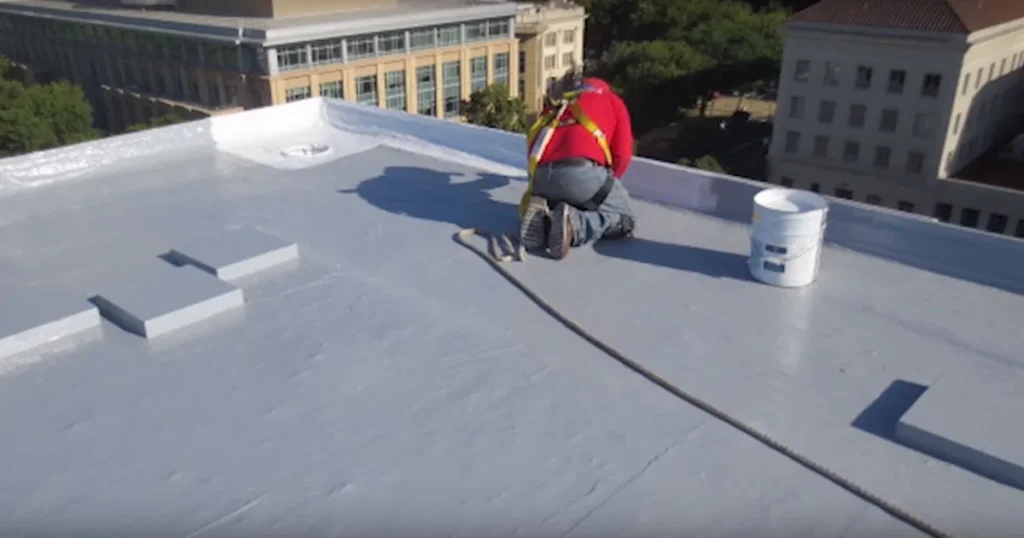
Granule accumulation in gutters indicates advanced shingle surface degradation. Asphalt shingles utilize ceramic-coated granules to shield the underlying asphalt from solar destruction. When granules wash away, exposed asphalt dries out, cracks, and permits water infiltration.
Climate Challenges in Northwest Arkansas
The Northwest Arkansas climate subjects roofing materials to severe environmental strain. High summer heat expands shingle tabs during the afternoon, while rapid overnight cooling contracts them. This thermal cycling loosens roofing nails, resulting in nail pops that lift shingle edges.
Pine needles, oak leaves, and storm debris pose a distinct hazard across Fayetteville, Springdale, Rogers, and Berryville neighborhoods. Organic debris packs tightly into roof valleys, creating dense mats that retain moisture against shingle surfaces. This persistent dampness destroys protective granules, fosters algae growth, and accelerates shingle decay.
Northwest Arkansas hail and severe spring storms, winter ice storms, and tropical remnants all create documented roofing risk across the region. The National Weather Service severe thunderstorm safety guidance identifies damaging wind and large hail as primary hazards during severe storms. Wind-driven rain drives under lifted shingle tabs, forcing moisture into non-waterproof structural zones.
Estimating Costs and Navigating Building Permits in Fayetteville
Understanding repair pricing allows property owners to budget effectively without financial anxiety. Residential roof repairs in Fayetteville, Arkansas typically cost between $300 and $1,500 for standard localized fixes.
The exact investment depends on roof pitch, accessibility, material selection, and structural damage scope.
| Repair Scope | Average Cost Range | Primary Work Involved | Expected Duration |
|---|---|---|---|
| Minor Spot Repair | $300 – $600 | Replacing a few missing shingles, resealing small flashing gaps | 2 to 4 hours |
| Moderate Leak Repair | $600 – $1,200 | Pipe boot replacement, valley repair, minor decking replacement | 4 to 8 hours |
| Extensive Storm Repair | $1,200 – $2,500+ | Large area shingle restoration, structural decking repair, multiple flashing zones | 1 to 2 days |
| Full Roof Replacement | $8,000 – $15,000+ | Complete tear-off, full decking inspection, total underlayment and shingle installation | 1 to 3 days |
Evaluating Repair Pricing vs. Full Replacement Costs
Labor rates and pitch difficulty drive repair pricing. Steeply pitched roofs require specialized safety staging and harness equipment, increasing overall labor investment. Minor repairs involving missing shingles or failing pipe boots remain highly economical compared to full replacements, which average $8,000 to $15,000 for standard asphalt architectural shingle installations.
When damage covers less than 25 percent of the overall roof surface, targeted spot repair delivers the highest return on investment.
Northwest Arkansas Building Code and Permit Rules
Building regulations dictate when permits are mandatory for roofing projects. In Arkansas, permit requirements are enforced by the local authority having jurisdiction, and structural repairs that involve replacing roof decking, rafters, trusses, or other load-bearing components require formal review before work proceeds. Standard cosmetic maintenance or limited shingle replacement without structural alteration is treated differently from structural repair.
Fayetteville property owners should verify requirements with the City of Fayetteville or Washington County before approving structural roofing work. Carroll and Benton County permit requirements also matter for homeowners and businesses in nearby Heritage Roofing & Repair service areas, especially when repairs involve structural load changes, decking replacement, or storm-related reconstruction. Professional contractors manage required municipal permitting paperwork, ensuring compliance with local safety regulations and building codes.
Choosing Between Spot Repair and Full Roof Replacement
Deciding whether to perform a spot repair or execute a complete replacement depends on material age, structural integrity, and overall wear distribution.
Expected Lifespan of Common Roofing Materials
Roofing materials exhibit distinct durability profiles under regional weather conditions:
- Standard 3-Tab Asphalt Shingles: Last 15 to 20 years before UV exposure and wind uplift require system replacement.
- Architectural Asphalt Shingles: Last 25 to 30 years due to dimensional thickness and improved wind resistance ratings.
- Standing-Seam Metal Roofs: Last 40 to 50 years, providing strong protection against extreme storm events and limb impacts.
Reviewing distinct roof repair options helps homeowners evaluate system longevity based on current roof age.
Long-Term Benefits of Timely Fayetteville AR Roof Repair
Addressing leaks immediately preserves structural wooden decking and interior support joists. Moisture intrusion encourages wood rot and dangerous mold spore growth within attic spaces.
Prompt repairs preserve existing insulation efficiency. Damp attic insulation loses its thermal resistance, driving up heating and cooling bills. Early intervention maintains healthy indoor air quality and structural stability.
Selecting a Reliable Local Contractor and Handling Storm Claims
Selecting a qualified roofing professional protects your investment. Property owners should verify credentialing, insurance coverage, and local reputation prior to signing service contracts.
Reviewing credentials through verified professional roofing services ensures high standards of site safety and craftsmanship.
Verifying GAF Certifications and BBB Accreditation
Manufacturer certifications demonstrate contractor competency and commitment to quality. GAF-certified status indicates a contractor maintains proper licensing, continuous training, and robust insurance coverage. Certified contractors offer extended manufacturer warranties that cover both materials and installation labor.
Better Business Bureau (BBB) accreditation provides third-party verification of business ethics. A strong BBB rating reflects honest pricing, transparent communication, and consistent dispute resolution.
Navigating Insurance Claims and Emergency Repairs
Storm events bringing wind damage or hail require swift action to protect structural components. Homeowners navigating severe storm damage benefit from structured support during the insurance claim process.
- Document Damage Immediately: Take photos and video of missing shingles, dented flashing, and interior water leaks.
- Secure Temporary Tarping: Arrange emergency tarping to stop active water ingress.
- Contact Your Insurance Carrier: File an official claim for sudden storm or tree impact damage.
- Schedule Professional Inspection: Have your contractor meet the insurance adjuster on-site to review affected areas together.
- Review Coverage Limits: Confirm approved scopes of work before signing construction agreements.
When sudden leaks compromise living spaces, accessing dedicated storm damage roof repair stabilizes the structure before permanent repairs begin. Requesting comprehensive roofing contractor assessments ensures every slope is evaluated accurately.
Frequently Asked Questions About Fayetteville AR Roof Repairs
What is the best season to repair a roof in Fayetteville?
Spring and autumn offer ideal weather conditions for roof repairs in Northwest Arkansas. Moderate outdoor temperatures permit asphalt shingle sealing strips to thermal-bond properly without softening the shingles under excessive summer heat or hardening them during winter cold snaps.
Do local roofers offer 24/7 emergency tarping and repair?
Professional roofing contractors provide 24/7 emergency response services. Rapid tarping prevents structural water intrusion following severe storm damage, falling tree limbs, or sudden pipe boot failures.
How long does a standard residential roof repair take?
Most standard residential roof repairs require 1 to 2 days to complete. Minor shingle replacements and pipe boot seals are routinely finished in under four hours, while structural decking repairs take slightly longer.
Conclusion
Overcoming roof repair anxiety requires working with established professionals who prioritize honest communication and quality craftsmanship. We bring over 50 years of family experience to every roofing project across Fayetteville, Springdale, Rogers, and Berryville, offering clear estimates and dependable service. Contact Heritage Roofing & Repair today for expert guidance or immediate help from our emergency roof repair services.