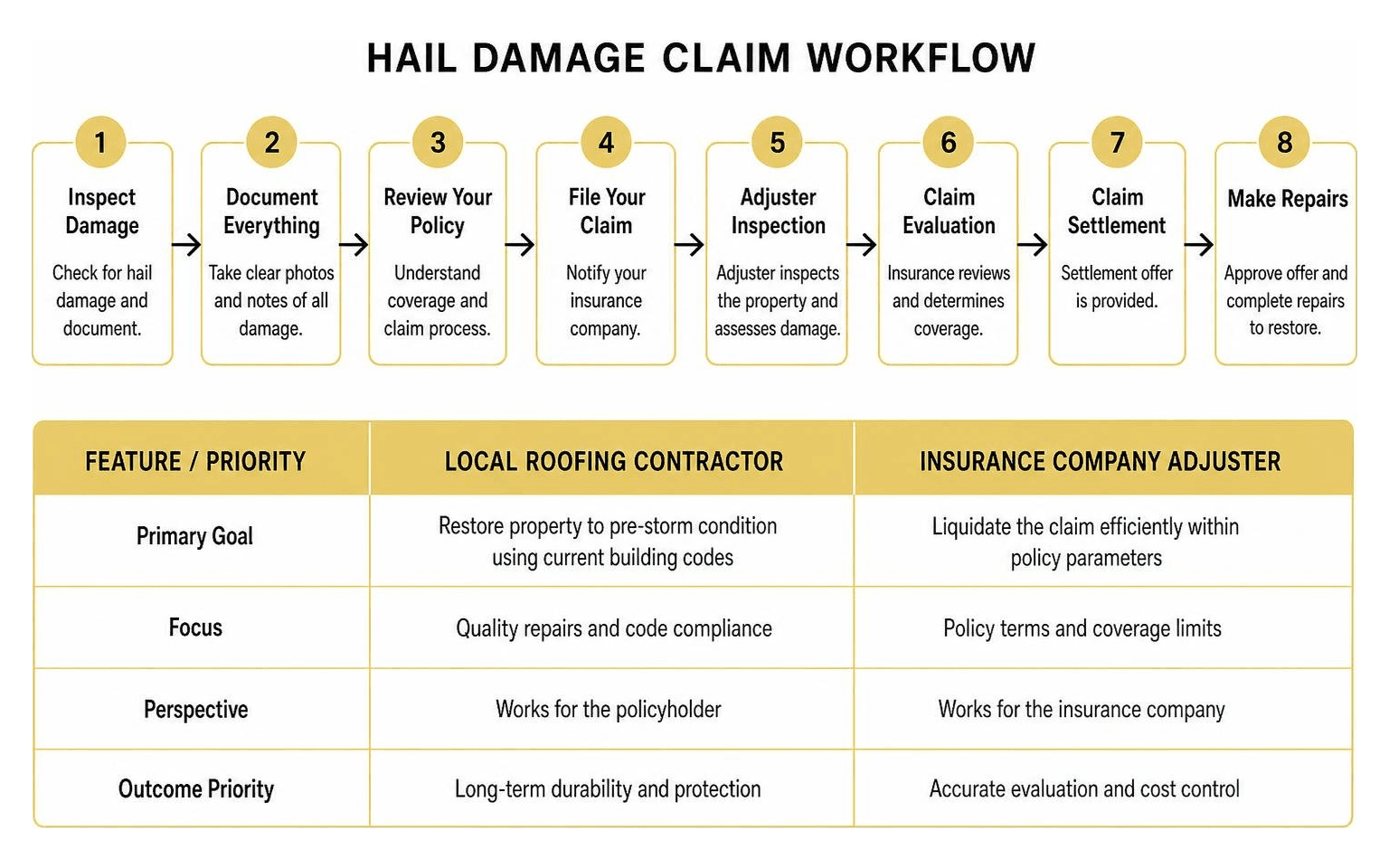
Step-by-Step Guide to Filing a Hail Damage Insurance Claim
Navigating a hail damage insurance claim requires following a strict sequence. Skipping steps or contacting your carrier without proper documentation often leads to delayed processing or underfunded repair offers. If you need assistance from trusted Berryville roofing contractors, scheduling a comprehensive roof replacement inspection before filing ensures your interests are protected.
Heritage Roofing & Repair
3458 Arkansas State Hwy 221, Berryville, AR 72616
Phone: (870) 654-1164
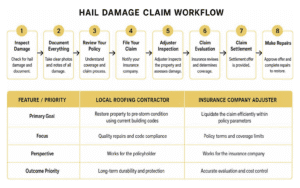
When navigating storm restoration, understanding the operational differences between contractors and adjusters helps set clear expectations:
| Feature / Priority | Local Roofing Contractor | Insurance Company Adjuster |
|---|---|---|
| Primary Goal | Restore property to pre-storm condition using current building codes | Liquidate the claim efficiently within policy parameters |
| Inspection Scope | Comprehensive analysis of roofing, flashings, metals, and code requirements | Quick assessment measuring impact density within test squares |
| Estimate Pricing | Based on local material and labor costs | Based on standardized software databases (e.g., Xactimate) |
| Initial Valuation | Includes all required labor, overhead, materials, and code upgrades | Frequently omits secondary components like ice and water shields |
What to Document Immediately After a Hailstorm
Documentation is the foundation of any successful claim. Once severe weather clears, conduct a thorough ground-level inspection of your property.
- Take Wide-Angle and Close-Up Photos: Capture clear images showing the overall elevation of your house, followed by close-ups of specific impacts on soft metals, aluminum downspouts, mailboxes, and outdoor light fixtures.
- Record Timestamped Video: Record a continuous video walkthrough documenting damage across your yard, fence line, siding, and vehicles.
- Establish Baseline Evidence: Gather pre-storm baseline photographs from recent real estate listings or home maintenance records. Comparing baseline images against new damage prevents claims adjusters from attributing storm impact to pre-existing wear.
- Log Storm Details: Cross-reference your location using official National Weather Service reports or historical databases like HailScore to verify exact hail sizes and local impact times.
Contractor or Adjuster First: Crucial Initial Steps
A common mistake homeowners make is calling their insurance provider before having their roof professionally inspected. You should always schedule an independent inspection with a trusted local roofing contractor first.
A qualified contractor establishes a comprehensive scope of loss baseline before the adjuster arrives. Initial adjuster estimates are typically 30% to 50% below actual repair costs due to omitted line items like ridge cap shingles, drip edges, and code-required underlayment. Having an expert inspection report in hand forces the insurer’s adjuster to evaluate documented physical evidence rather than writing a quick, minimal scope.
Navigating the Claims Timeline and Adjuster Inspection
Once you report the loss, your insurer assigns an adjuster and schedules an on-site inspection. This visit typically occurs within 3 to 14 days, though peak storm seasons can extend wait times up to 4 weeks.
During the site visit, adjusters use a “test square methodology.” They mark off 10-foot-by-10-foot sections on various roof slopes and count distinct impact marks within those squares. They also inspect for mat bruising—fractures in the underlying asphalt matrix that indicate functional damage.
Having your roofing contractor present during the adjuster’s inspection ensures all damaged components are identified together. Once approved, the carrier generates a formal scope of loss and issues an initial ACV settlement check, usually within 10 to 14 business days.
Understanding Roof and Auto Insurance Coverage for Hail Damage
Navigating your policy details ensures you don’t face unexpected out-of-pocket costs when hail strikes your property or vehicles.
Homeowners Policy vs. Comprehensive Auto Insurance Coverage
Your standard homeowners policy covers hail damage to your primary dwelling and detached structures under property/dwelling coverage. However, homeowners insurance never covers personal vehicles damaged in your driveway.
Automotive hail damage requires optional comprehensive coverage under your auto policy, as outlined by resources from Cribb Insurance. Between 2017 and 2019, insurance carriers handled nearly 735,000 automotive hail claims nationwide. If your vehicle is declared a total loss by your auto insurer and your settlement check falls short of what you owe on a car loan, GAP insurance covers the remaining financial shortfall.
Actual Cash Value (ACV) vs. Replacement Cost Value (RCV)
Understanding how your policy values property determines your initial payout and total recovery:
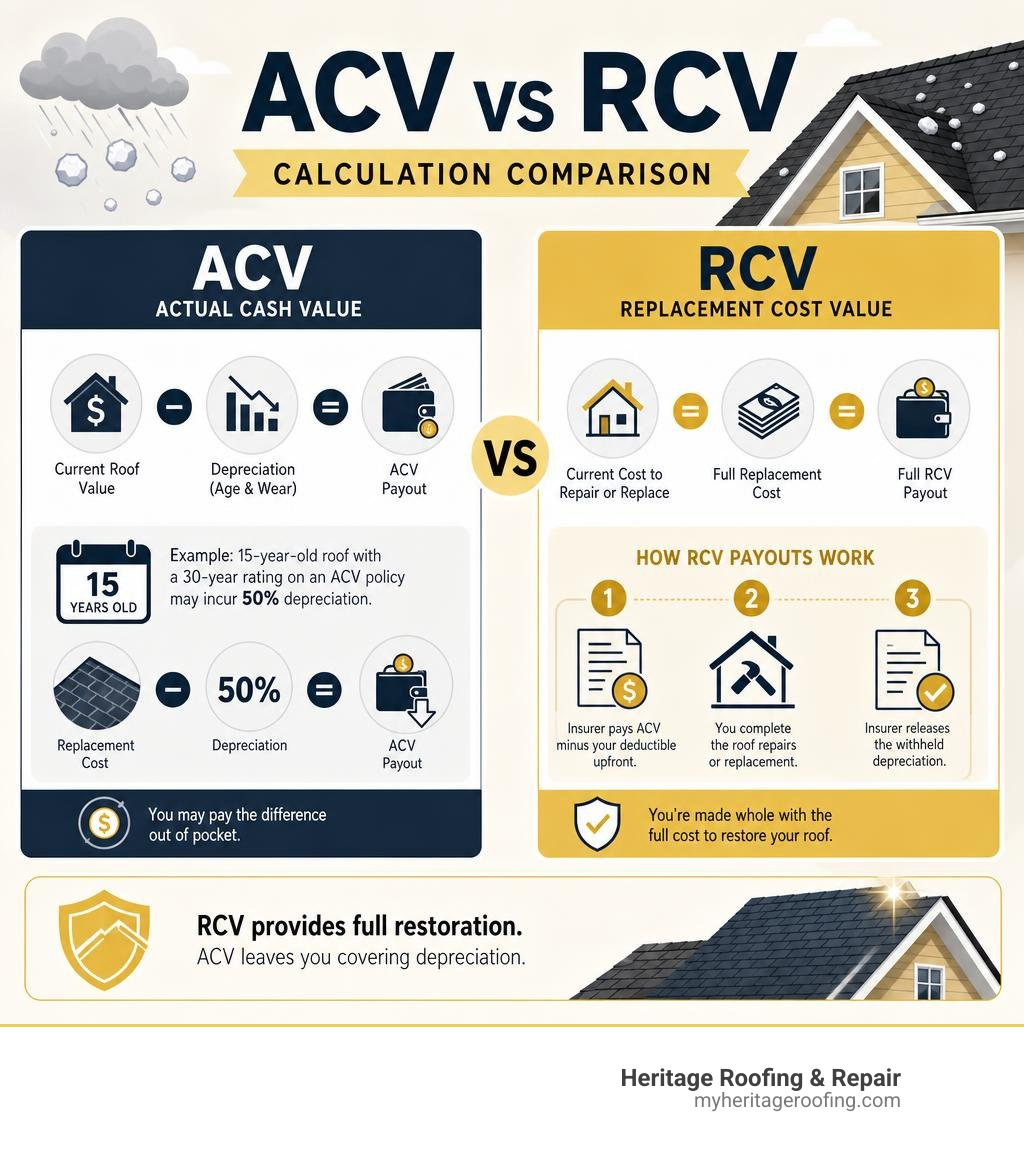
- Actual Cash Value (ACV): Pays the current value of your roof, subtracting depreciation based on age and wear. For instance, a 15-year-old roof with a 30-year rating on an ACV policy may incur 50% depreciation, leaving you to pay the difference out of pocket.
- Replacement Cost Value (RCV): Pays the actual cost to repair or replace your roof at current market rates. The carrier first releases the ACV amount minus your deductible. Once repairs are complete, the insurer releases the withheld depreciation funds. To explore payout structures in detail, read our roof insurance claims complete guide.
Additional Coverages: Matching Siding, Code Upgrades, and Other Structures
Standard policies cover basic repair costs, but supplementary endorsements offer vital protection:
- Matching Siding Coverage: If hail destroys vinyl siding on one wall and the manufacturer has discontinued that specific line or color, this endorsement helps pay to replace matching siding across undamaged walls.
- Building Code Upgrades: Covers the cost of installing mandatory code items, such as ice and water shield underlayment or drip edge flashings, which may not have been present on your original roof.
- Other Structures Coverage: Protects detached garages, tool sheds, or gazebos. Detached structures over 300 square feet often require special policy scheduling to maintain adequate coverage limits, as noted by Nationwide Property Claims.
Navigating Settlements: Supplements, Depreciation, and Denials
Initial settlement offers rarely reflect the full scope of work required to meet modern building codes and local labor rates.
How to File an Insurance Supplement for Missing Line Items
An insurance supplement is a formal request for additional payout submitted when a contractor’s actual repair costs exceed the insurance adjuster’s initial estimate.
Adjusters routinely omit essential line items such as steep-charge labor, waste factors, ridge caps, pipe boot flashings, and valley metals. Your contractor documents these missing items with clear line-item estimates and close-up photography. According to industry data, supplement recovery on hail claims averages 35% to 55% above initial adjuster estimates when a contractor actively participates in the documentation process.
Recovering Depreciation Holdback After Work Completion
Under RCV policies, insurance companies hold back 20% to 40% of the total claim payout as depreciation until all work is finished.
To recover this depreciation holdback:
- Complete all authorized roof and property repairs according to the carrier’s approved scope.
- Have your contractor submit a final invoice and proof of completion (including photos) to the claims department.
- The insurance company verifies completion and issues a final check releasing the recoverable depreciation balance.
What to Do When Your Hail Damage Insurance Claim Is Denied
If your carrier denies your claim or offers an inadequate settlement, you have clear legal and operational remedies:
- Request a Re-Inspection: Ask for a second inspection with a senior adjuster present alongside your roofing contractor to re-examine the physical damage.
- Submit Additional Evidence: Provide weather data records, professional moisture readings, and photo documentation demonstrating functional mat fractures.
- Invoke the Policy Appraisal Clause: Most policies include an appraisal clause allowing you and your insurer to hire independent appraisers who select a neutral umpire to set the binding claim value.
- File a State Insurance Complaint: If an insurer acts in bad faith, file a formal complaint with the Arkansas Insurance Department. For more details on handling claim disputes, view our guide on what to do when a hail damage roof claim is denied.
Identifying Roof Hail Damage: Cosmetic vs. Functional Damage
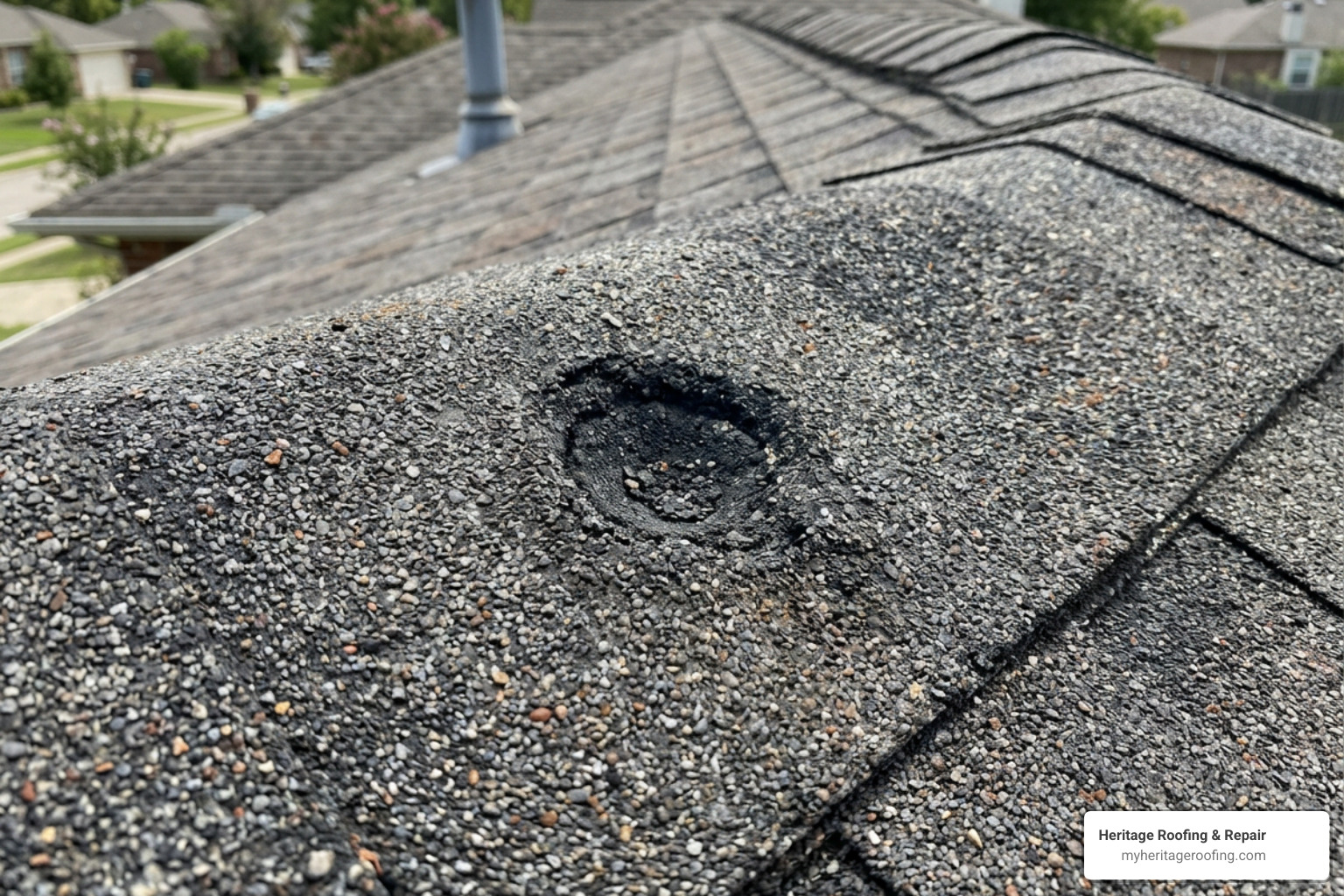
Knowing how hail affects different building materials helps you identify hidden structural threats before water enters your home.
Ground-Level Signs of Hail Damage
You don’t need to climb onto a steep roof to find evidence of severe hail strikes. Check these ground-level indicators first:
- Heavy accumulation of mineral granules washed down into downspouts and gutter aprons.
- Visible denting on soft metal items like gutter troughs, downspouts, ridge vents, and outdoor aluminum siding.
- Pitted or torn insect screens on windows and patio doors.
- Cracked or dented air-conditioning condenser fins and metal housing.
- Splintered or gouged wood fencing and exterior trim paint.
Assessing Material Impact and Structural Degradation
Insurers frequently argue that shallow dents or minor granule loss are merely “cosmetic.” However, from a structural standpoint, granule loss exposes the underlying asphalt bed to solar UV rays, which rapidly degrades the material and causes premature leaks.
Hail impacts fracture internal fiberglass mats, break critical adhesive seal strips between overlapping shingle tabs, and cause soft “bruising” in the shingle matrix that can be felt by hand. On metal panel systems, severe strikes break protective painted coatings, inviting rust and premature roof failure. For specialized information on metal systems, read our analysis on metal roof hail damage insurance, or review our overview comparing hail, wind, or wear and tear damage.
Avoiding Common Traps: Contractor Fraud and Repair Scams
Storm events often attract out-of-state entities who take advantage of stressed homeowners. Protecting yourself requires staying alert and avoiding high-pressure sales tactics.
How to Protect Yourself from Storm Chaser Scams
Out-of-state “storm chasers” routinely travel into impacted regions offering fast repairs and promising to “absorb” your deductible—a practice that violates insurance laws in Arkansas.
To safeguard your home and finances:
- Verify that the contractor maintains a physical local address and valid state licensing.
- Review their standing with local consumer organizations and check their history on the Better Business Bureau website.
- Never sign an incomplete contract containing blank spaces or vague scope details.
- Avoid signing over your entire insurance claim via an Assignment of Benefits (AOB) agreement. Always retain direct control over your claim and settlement funds. For detailed local guidelines, consult the Arkansas Insurance Department hail guide.
Critical Mistakes to Avoid During the Claim Process
Avoid these common mistakes when filing your claim:
- Making Premature Permanent Repairs: Completing full replacements before the insurance adjuster completes their inspection destroys physical evidence and can cause claim denials. Limit pre-inspection work strictly to temporary tarping to mitigate active water leaks.
- Describing Storm Damage Incorrectly: Never describe storm damage to adjusters using terms like “old,” “worn,” or “aging,” as this allows carriers to classify the loss as normal wear and tear.
- Miscalculating Deductibles: Many policies feature percentage-based wind/hail deductibles (e.g., 1% to 2% of total insured dwelling value). On a $400,000 policy, a 2% deductible equals an $8,000 out-of-pocket obligation that must be paid directly to the contractor.
Frequently Asked Questions About Hail Damage Insurance Claims
How is the total loss threshold determined for a hail-damaged vehicle?
Insurers determine vehicle total loss status by comparing estimated repair costs against the vehicle’s Actual Cash Value (ACV). If repair costs plus salvage value exceed a set percentage of the vehicle’s ACV, the carrier declares it a total loss. In many jurisdictions, vehicle total losses resulting specifically from hail are exempt from mandatory salvage title brand requirements, allowing owners to retain the vehicle after accepting a reduced payout.
Can my insurance company non-renew my policy after a hail claim?
Insurance regulations generally prevent carriers from non-renewing a policy for filing a single weather-related claim. However, if a policyholder records multiple loss claims across a short timeframe (such as combined water, liability, and hail claims), underwriting guidelines allow carriers to assess overall risk and decline policy renewal.
How long do I have to file a hail damage claim post-storm?
Most standard homeowners insurance policies mandate reporting property damage within 30 to 90 days of the storm event. However, specific state regulations or extended coverage policy endorsements may allow up to one full year from the verified date of loss to file a formal claim.
Work with Northwest Arkansas’s Trusted Storm Recovery Experts
Navigating a hail damage insurance claim doesn’t have to be overwhelming. When severe weather impacts your roof, partnering with an experienced local contractor ensures your home is restored using high-quality materials and industry-leading craftsmanship.
At Heritage Roofing & Repair, we bring over 50 years of trusted local experience to every project. We conduct thorough damage inspections, assist you through every phase of the insurance process, and restore your roof so it stands strong against future storms. Read our complete guide to hail damage roof repair to learn more about protecting your home, or find experienced Berryville roofers near me to schedule your inspection.