When Your Business Roof Takes a Hit: What to Do About Commercial Roof Damage
Commercial roof damage is one of the most costly and disruptive problems a business owner or property manager can face. As a premier roofing company serving Northwest Arkansas, Heritage Roofing & Repair understands that a roof is the first line of defense against the elements. Whether you are managing a facility in Berryville, AR or the surrounding areas, damage rarely announces itself until the situation is already serious.
This guide walks you through every stage — from identifying common causes and spotting early warning signs to filing an insurance claim and choosing the right commercial roofing contractor — so you can protect your building and keep your business running.
I’m Rex Wisdom, owner of Heritage Roofing & Repair, a family-owned business that has been serving Northwest Arkansas for over 50 years, with extensive hands-on experience assessing and repairing commercial roof damage across the region. With that background, I’ll give you the straightforward, practical guidance you need — no filler, no guesswork.
Similar topics to Commercial roof damage:
Identifying Common Types of Commercial Roof Damage
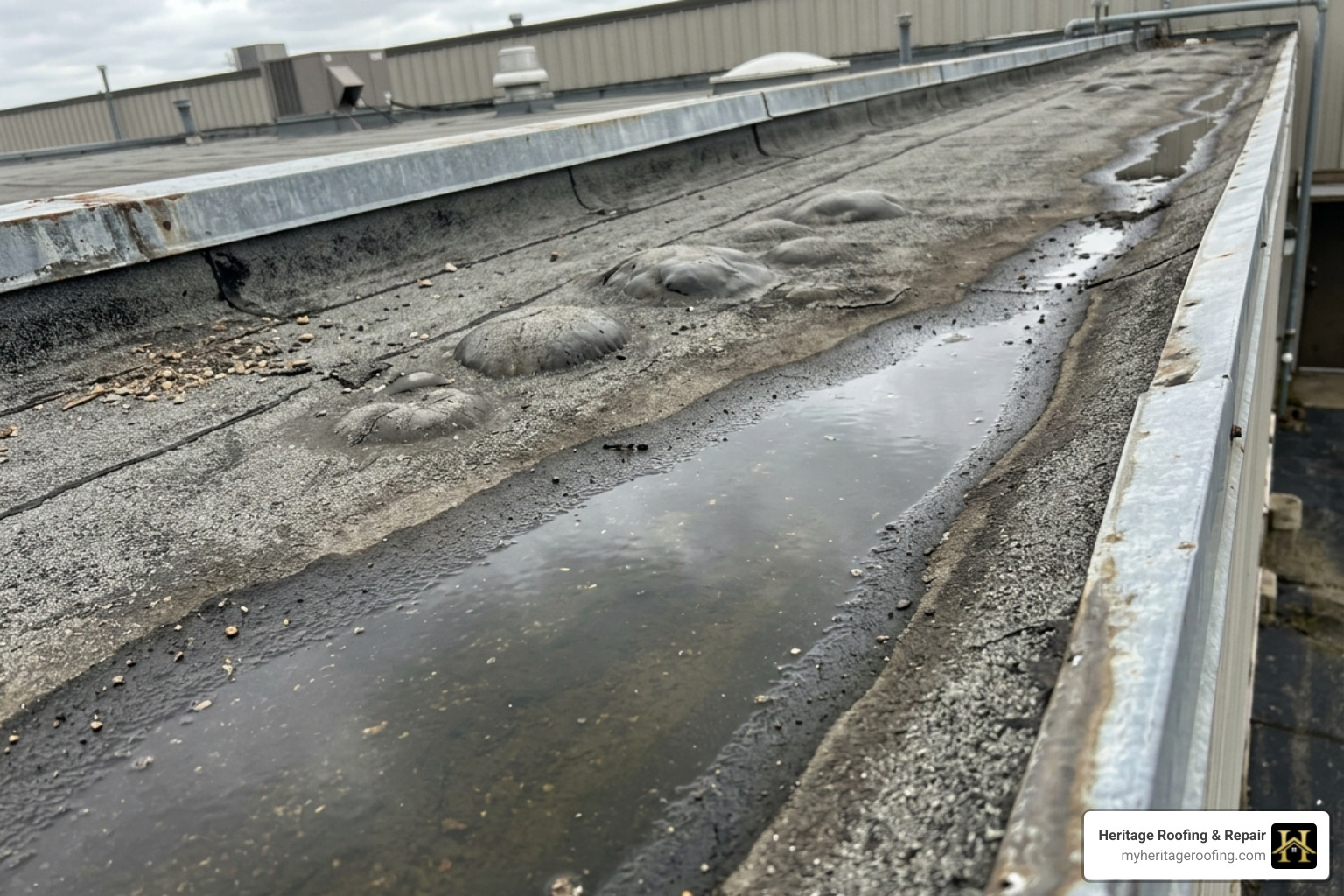
As of April 2026, managing a facility in Northwest Arkansas means staying ahead of the unique environmental stresses our region faces. Whether you are managing a warehouse in Fayetteville or a retail center in Harrison, the first step to effective management is knowing what you are looking at.
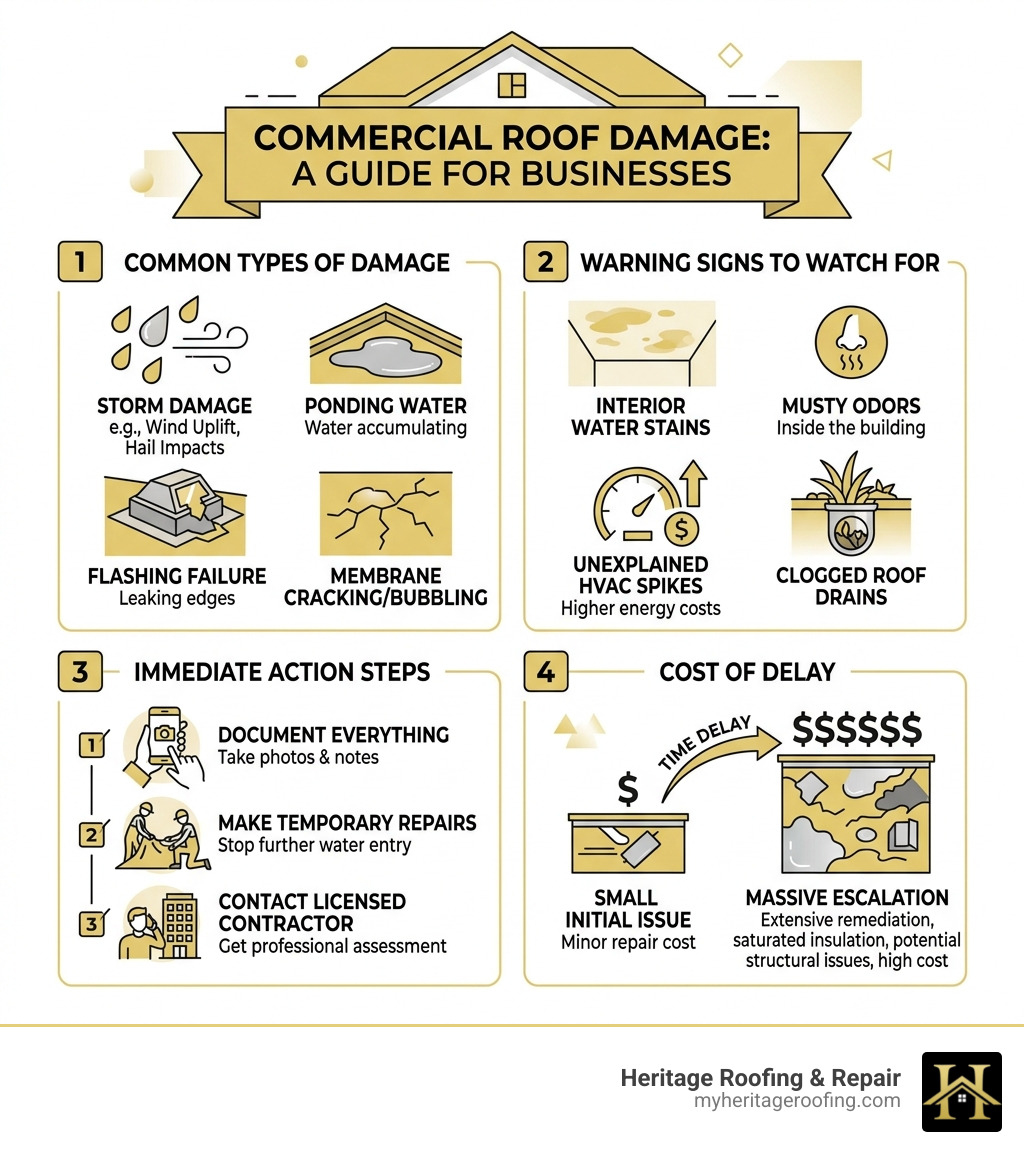
Commercial roofs, particularly flat or low-slope systems, are prone to specific failures. Ponding water is perhaps the most notorious; it occurs when water remains on the roof for more than 48 hours. This isn’t just a leak risk—it’s a structural hazard. A single gallon of water weighs 8.34 pounds, meaning 100 gallons of standing water adds over 800 pounds of dead weight to your roof deck—enough to accelerate structural damage or, in severe cases, contribute to collapse. Over time, this weight causes the roof deck to sag, creating even deeper “bowls” that collect more water, eventually leading to structural failure.
Membrane shrinkage is another silent killer. Single-ply membranes like EPDM can pull away from the edges as they age and weather, putting immense stress on the flashing. When the flashing fails, water finds a direct path into your building’s envelope. For a deeper dive into these systems, check out our Commercial Flat Roof Ultimate Guide.
Recognizing Membrane Punctures and Commercial Roof Damage
Not all commercial roof damage is caused by the sky. Human error is a leading cause of membrane punctures. HVAC technicians, plumbers, and electrical contractors frequently walk across your roof to service equipment. A dropped screwdriver or a heavy tool bag dragged across a TPO or PVC membrane can create a pinhole leak that goes unnoticed for months.
Furthermore, mechanical stress from vibrating rooftop units can loosen fasteners. When fasteners “back out,” they can actually push upward through the roofing membrane from underneath, creating a perfect entry point for rain. Understanding these common repair needs is vital for any property manager scheduling routine maintenance.
Signs of Roof Shrinkage and Seam Failure
UV exposure and thermal cycling—the constant expansion and contraction of materials as temperatures swing—eventually take a toll on single-ply membranes. In our Arkansas climate, where a summer day can reach 100°F and a spring night can drop significantly, seams are under constant pressure.
Look for “tented” seams or cracked flashing around vents and chimneys. If the membrane looks like it is pulling tight like a drum skin, it is likely shrinking. This tension eventually snaps the seals at the perimeter, leading to catastrophic leaks during the next heavy rain. For more on how to address these specific issues, see our Flat Roof Repair Complete Guide.
Weather Impacts and Environmental Stressors
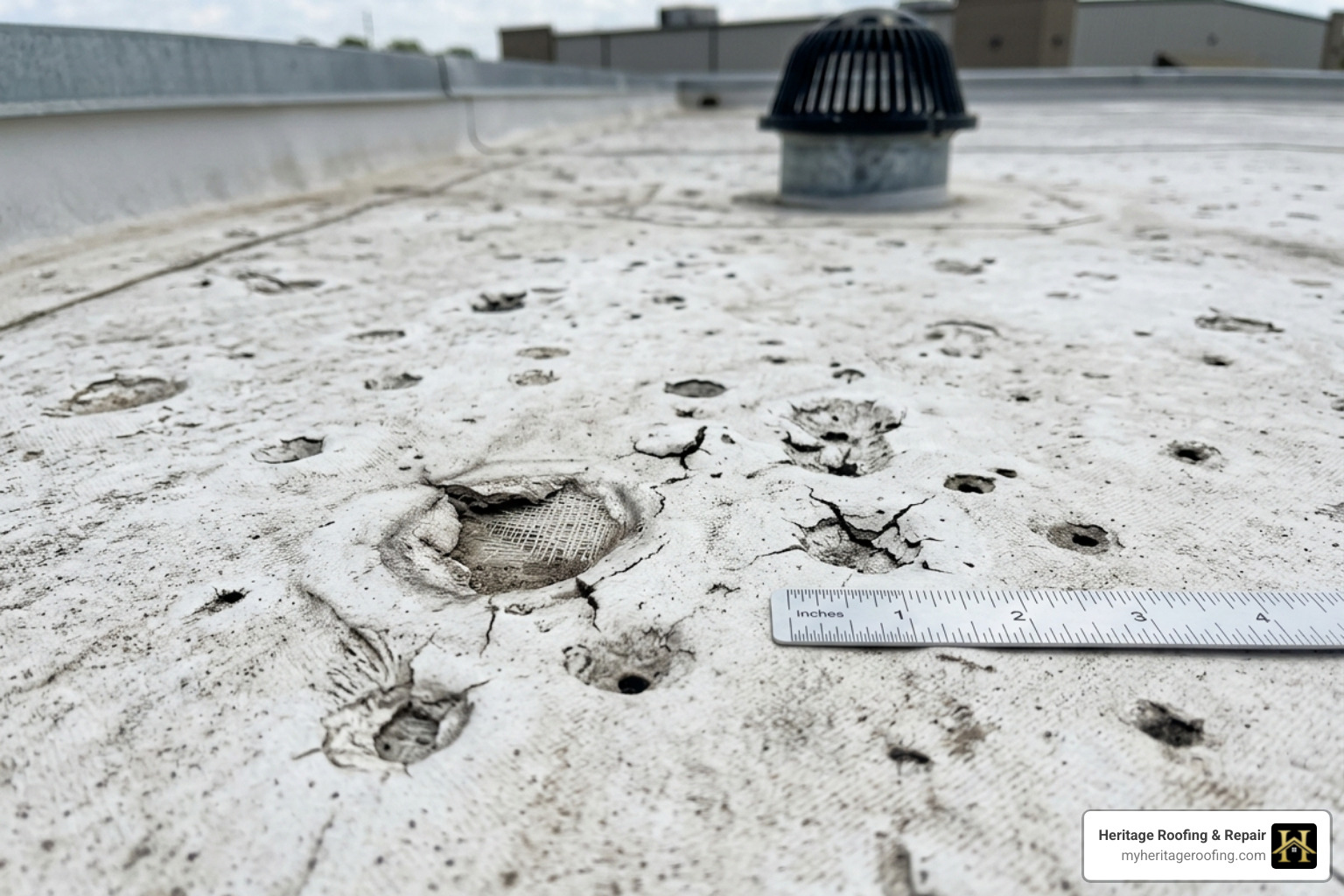
Environmental factors are the primary drivers of commercial roof damage across the Ozarks. From the intense UV rays of the summer sun to the heavy snow loads of winter, your roof is constantly under siege. Wind uplift is a particularly dangerous phenomenon; high winds create a vacuum effect that can literally peel a membrane off the deck if the perimeter securement is compromised.
Impact of Hail on Low-Slope Systems
Hail damage on a commercial roof is often “latent,” meaning you won’t see a leak immediately. On a flat roof, hail doesn’t just dent metal; it “bruises” the membrane and compresses the insulation underneath.
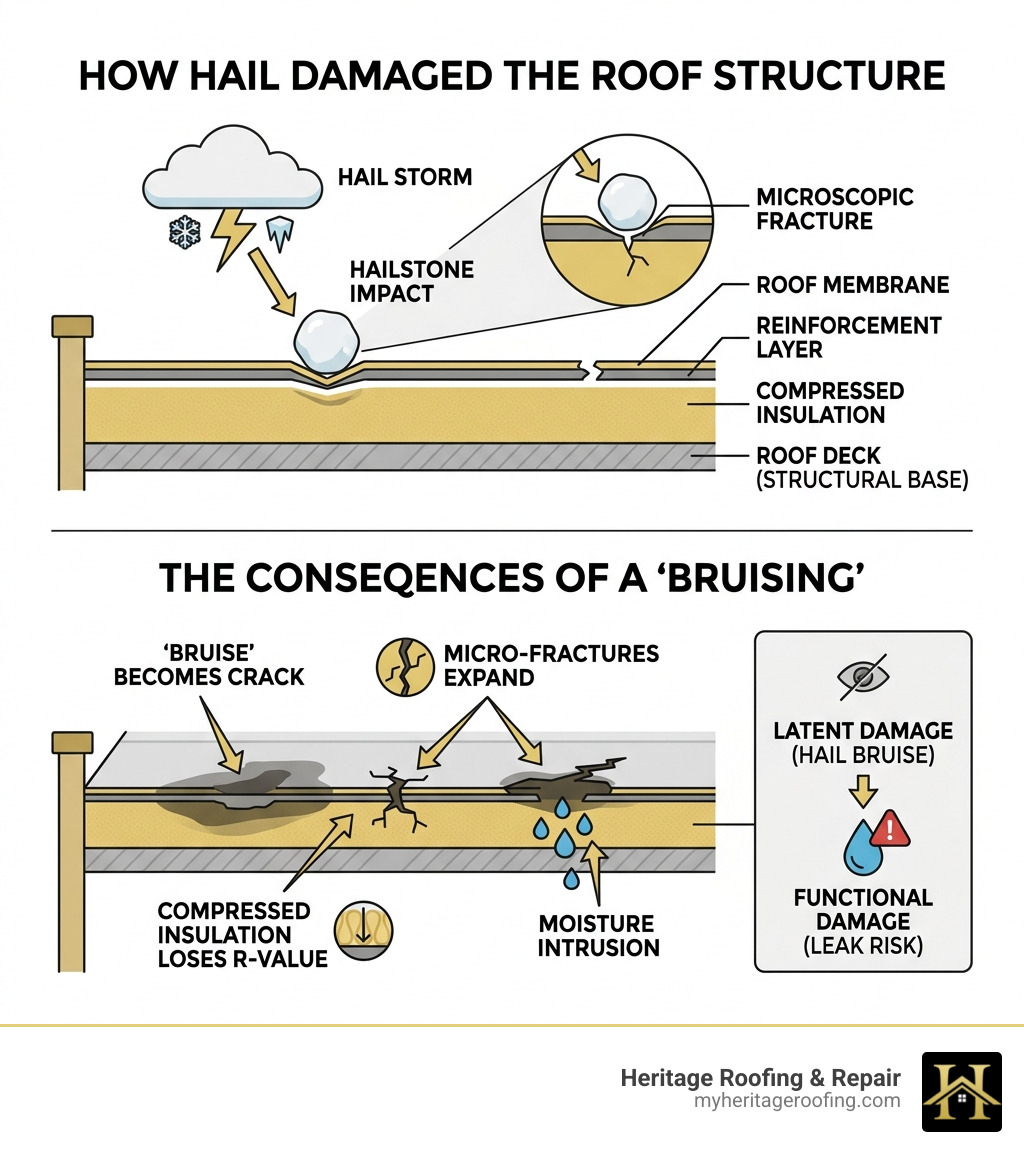
This compression creates a microscopic fracture in the membrane’s reinforcement layer. While it might look like a simple scuff, that “bruise” will eventually become a crack as the roof expands and contracts. This is why distinguishing between functional and cosmetic damage is crucial for insurance purposes. If the hail has compromised the life expectancy of the material, it is functional damage. You can read more about Commercial Flat Roof Hail Damage: What Counts (2026) to understand how these claims are evaluated. For local insights, visit our hail damage roof complete guide.
Wind Uplift and Edge Metal Failure
Storms in Northwest Arkansas, including derechos and high-wind thunderstorms, put immense pressure on “edge metal”—the strips that secure the roofing membrane at the building’s perimeter. If the wind gets under that edge, it can strip large sections of the roof in minutes. This fastener fatigue is often invisible until the moment of failure. Proactive inspections are the only way to catch loose perimeter securement before a storm hits. Learn more about our storm damage roof repair services to see how we reinforce these critical areas.
How to Spot Damage Before It Escalates
By the time you see a drip in your warehouse, the commercial roof damage has likely been there for weeks or months. Water is opportunistic; it travels the path of least resistance, often entering at one point and traveling 30 feet laterally through insulation before appearing on a ceiling tile.
Key indicators that your roof is failing include:
- Musty odors: This suggests mold growth within the insulation.
- HVAC energy spikes: Saturated insulation loses its R-value, forcing your cooling system to work harder.
- Interior mold: Mold on walls or ceilings is a clear sign of chronic moisture.
We use advanced technology like infrared thermography and nuclear moisture scanning to “see” water that is trapped beneath the membrane. These non-invasive tools allow us to map out exactly where the insulation is wet without tearing the roof apart. If you suspect an issue, getting a professional commercial roof repair assessment is the best way to avoid a total replacement.
Documenting Storm-Related Commercial Roof Damage for Claims
If a storm hits, documentation is your best friend. Take wide shots of the roof and close-ups of specific damage. Use a coin or a ruler in photos to show the scale of hail impacts. We also recommend taking core samples—small circular cuts through the roof—to prove that the insulation underneath has been compromised. This data is essential for a successful commercial roof insurance claim.
Navigating the Insurance Claim Process
The insurance process for commercial roof damage can be a maze. Most policies are written as either Replacement Cost Value (RCV) or Actual Cash Value (ACV). RCV pays to replace the roof at today’s prices, while ACV subtracts depreciation based on the roof’s age.
Understanding your policy’s “Ordinance and Law” coverage is also vital. If building codes have changed since your roof was installed, this coverage helps pay for the required upgrades. Working with an experienced commercial roofing contractor can help you navigate these nuances and ensure you aren’t leaving money on the table.
Common Insurance Exclusions and Limitations
Insurance companies are for-profit businesses, and they often look for reasons to limit payouts. Common exclusions include:
- Lack of Maintenance: If an adjuster finds that clogged drains (not the storm) caused the damage, your claim may be denied.
- Cosmetic Exclusions: Some policies now exclude hail damage that is “only cosmetic,” even if it shortens the roof’s lifespan.
Maximizing Recoverable Damages
To get the most out of your claim, don’t just look at the membrane. Consider “Business Interruption” coverage if the damage forces you to close your doors. Also, document any “Building Personal Property” (like computers or inventory) damaged by leaks. Immediate temporary stabilization, such as tarping, is often required by your policy to prevent further damage. We specialize in this type of storm damage roof repair.
Proactive Maintenance and Repair Strategies
Prevention is always cheaper than a cure. We recommend quarterly inspections to catch small issues before they become disasters. One of the best ways to protect your investment is through commercial roof coatings. These reflective coatings can reduce UV damage and extend the life of your roof by decades.
Other best practices include:
- Walkway Pads: Install these in high-traffic areas to protect the membrane from foot traffic.
- Debris Removal: Keep drains and gutters clear of leaves and trash.
- Seam Reinforcement: Regularly check and reinforce heat-welded seams.
The Financial Impact of Delayed Repairs
Ignoring commercial roof damage is a gamble you will eventually lose. A minor leak that costs $500 to patch today can easily grow into a $50,000 nightmare within two years. Once water saturates the insulation, it begins to corrode the metal roof deck. At that point, you aren’t just looking at a new roof; you’re looking at a major structural renovation.
Extending Lifespan Through Professional Care
Maintaining a detailed log of all repairs and inspections is essential for keeping your manufacturer’s warranty valid. Most warranties require proof of professional maintenance. From sealing pitch pans to reinforcing seams, professional care ensures your commercial roofing system hits that 20-to-30-year lifespan.
Choosing a Contractor and Emergency Response
When disaster strikes, you need a contractor who understands the urgency of business continuity. Look for a team with 24/7 emergency services and manufacturer certifications. In Northwest Arkansas, you need a partner who knows the local building codes and the specific weather patterns of the Ozarks.
Local Expertise and Contact Information
Our team at Heritage Roofing & Repair specializes in navigating the complexities of commercial insurance claims and providing durable, high-quality repairs. We leverage our extensive regional experience to ensure your facility remains operational regardless of the weather.
Heritage Roofing & Repair
3458 Arkansas State Hwy 221, Berryville, AR 72616
Frequently Asked Questions about Commercial Roof Damage
When should I repair versus replace my commercial roof?
Generally, if more than 25% of the roof area is damaged or if the underlying insulation is saturated with moisture, a full replacement is more cost-effective. Constant “nuisance leaks” are also a sign that the system has reached the end of its functional life.
Does insurance cover commercial roofs older than 20 years?
Most insurance carriers will not cover full damage claims for roofs 20 years or older. In many cases, they will only pay the “Actual Cash Value,” which is significantly less than the cost of a new roof, or they may exclude the roof from the policy entirely due to age-related wear and tear.
How long can water sit on a flat roof before it causes damage?
Water should never sit on a commercial roof for more than 48 hours. Standing water beyond this window—known as ponding—indicates a drainage or slope failure. This standing water accelerates the deterioration of the membrane and adds dangerous weight to the structure.
Conclusion
Your commercial roof is a vital asset that protects your livelihood. Dealing with commercial roof damage doesn’t have to be a nightmare if you have the right partner.
Don’t wait for a small drip to become a major structural failure. Schedule your professional damage assessment today and ensure your business stays protected for the long haul.